
Month: October 2012
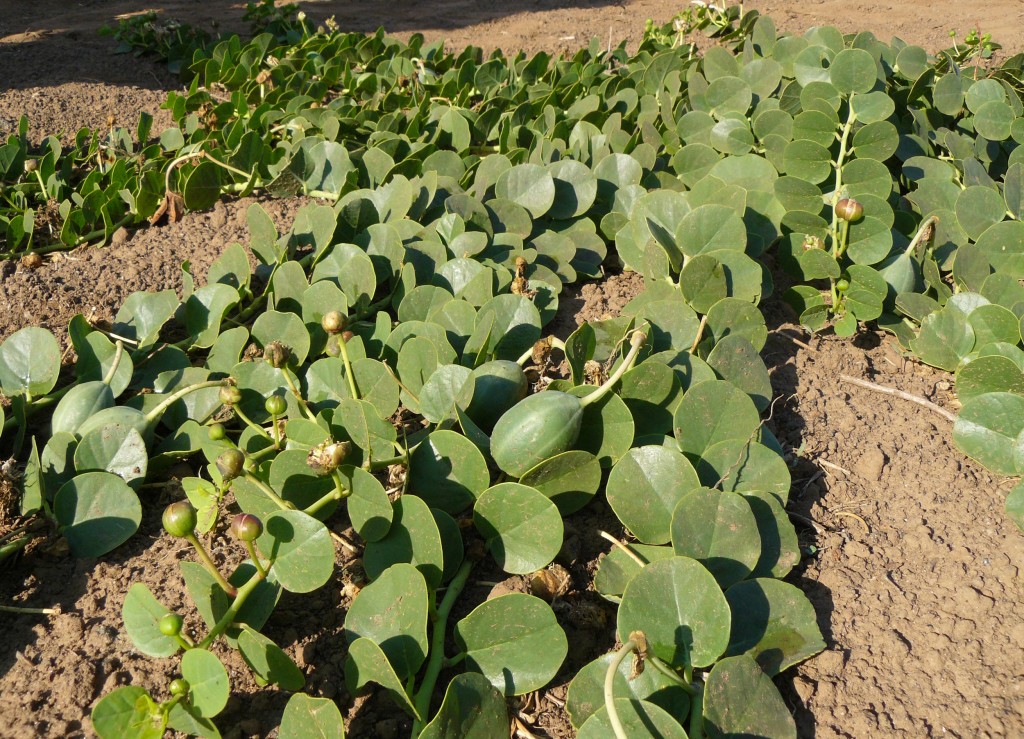
Capers are the pickled flower buds of the caper plant. Eating flower buds isn’t so weird; a quick internet search pulls up guides and recipes. However, the unique thing about the caper is that if you allow the flower buds to bloom, the plant will produce a fruit: the caperberry. So why would we prefer to eat the flower bud to the fruit? Why are capers better than caperberries?
When I was on Pantelleria last month, I asked farmers, caper producers, and caper lovers that question. Here’s what I learned:
Better Flavor
Caperberries aren’t a luscious, sweet fruit. On Pantelleria, both capers and caperberries are preserved in salt for three to four weeks before they’re ready to be used. After that time, the capers and berries can be kept for months or years. After curing, the flavor of capers and caperberries is similar, though capers tend to be more delicate and have a more floral flavor. I’ve also noticed that caperberries need more rinsing to get rid of the excess saltiness in their flavor.
Better Texture
The best caperberries are small: they ought to be less than an inch long and at most a centimeter wide. However, they can grow to be quite large: in the photo above, the fat green berry in the middle of the photo is probably an inch in diameter (compare it to the size of the caper buds just to its left!). No matter what size the berry is, it’s going to be jam-packed full of seeds. As the berry gets larger, the seeds do, too, creating a gritty, unpleasant texture. Capers, by contrast, don’t have any seeds, and the best ones have a nice firm pop when you bite them.
Tradition Taboo
On Pantelleria, the preference for capers over caperberries has led to certain taboo against the berries. Any berry or flower seen growing on a caper plant is a sign that the farmer wasn’t thorough in tending his fields and picking his capers. Flowers and berries are thus considered shameful: a sign of a lazy farmer. When farmers harvest capers (and berries), they’ll also pluck and discard any blossomed flowers.
Month: October 2012
What’s the relationship between a caper (“a crime, esp. an organized robbery”) and a caper (“a pickled flower bud of the caper plant”)? I wish I had a good story about an elaborate pickled flower bud heist, but I think it’s just a coincidence. Caper the plant comes from the Latin capparis, borrowed from the Greek kapparis, the name for the plant and the food it produces. Caper the crime comes from the Latin capra, or goat – an animal that, at least according to the English usage of its name, started with playful leaping, progressed to pranking, and finally descended into thievery.
Month: October 2012
Last month, I visited a caper farm and a capperificio – or caper producer – on Pantelleria, a small island in the Mediterranean that is renowned for the quality of its capers. The capers of Pantelleria have a delicate, floral flavor that is a result of the the fertile volcanic soil, arid conditions, and a special varietal of caper unique to the island. Here is a little of what I saw on my trip:
Flower power
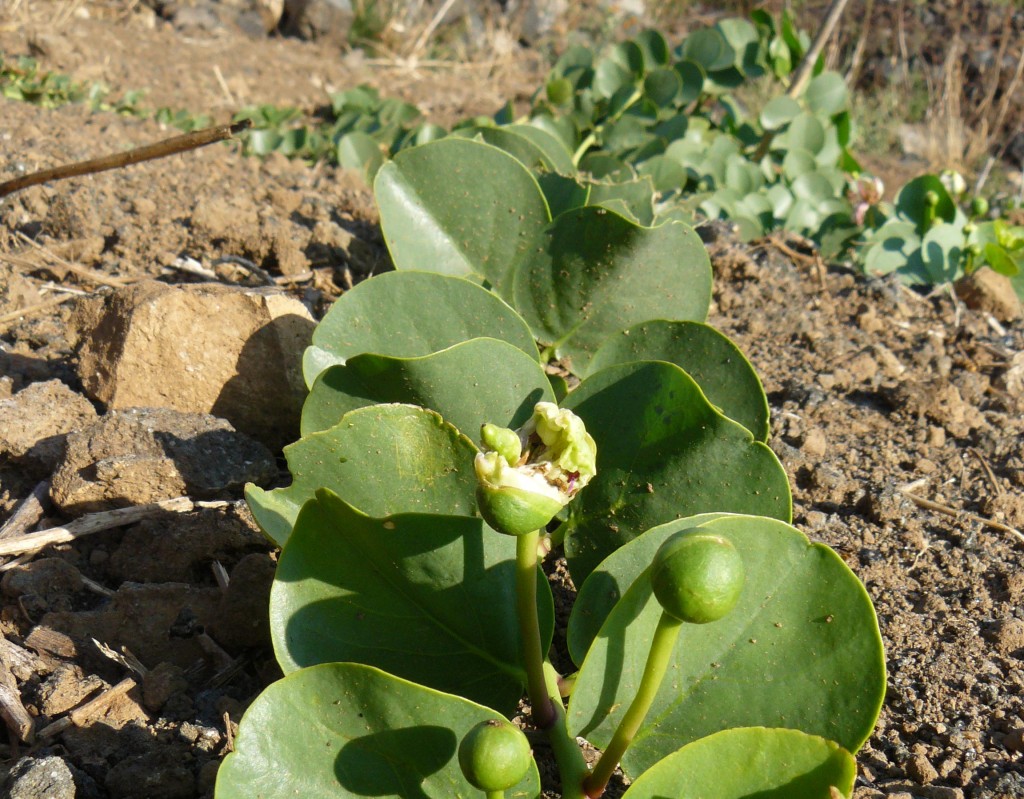
Capers are the unopened flower buds of a short, spindly bush that grows wild on rocky terrain throughout the Mediterranean. On Pantelleria farmers also cultivate caper plants in fields. The two small green balls at the bottom of the above photo are capers. In the middle of the photo is a caper that’s starting to blossom.
Picked by hand
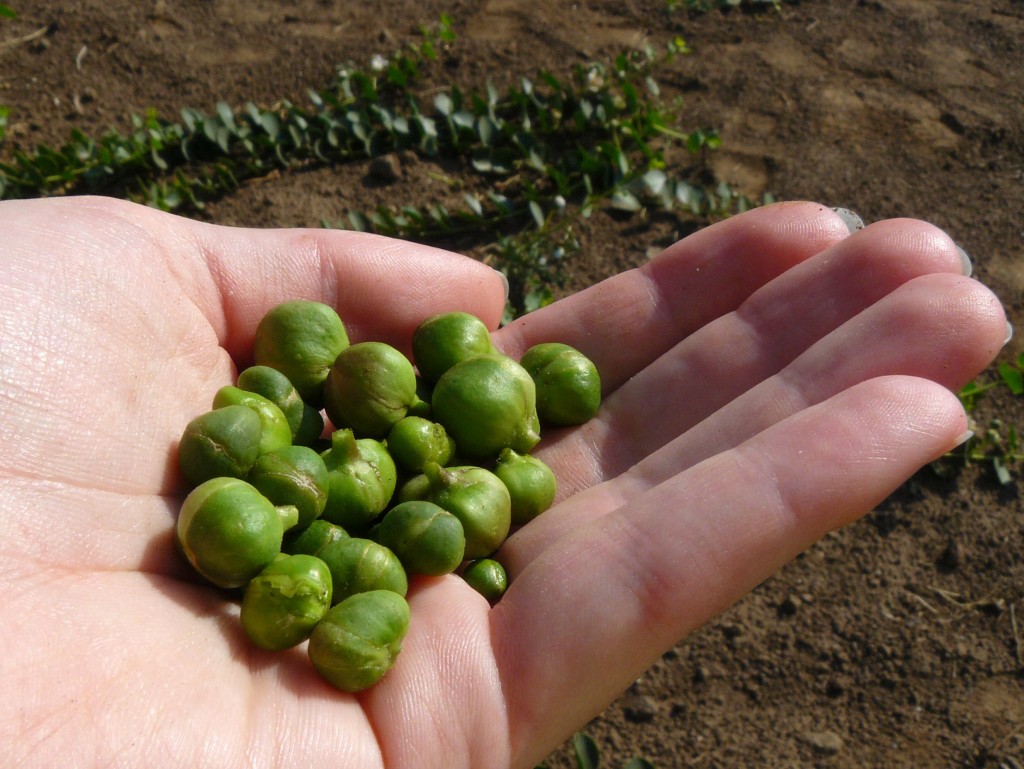
From mid-May to the end of August, a caper farmer hand picks each caper plant every ten days or so: he collects the fresh buds, and plucks and discards any blossoming flowers. The harvest starts each day around four A.M. and continues until about ten in the morning. After a siesta to avoid the worst of the hot afternoon, the harvest resumes for a few hours in the evening.
Salt-Cured
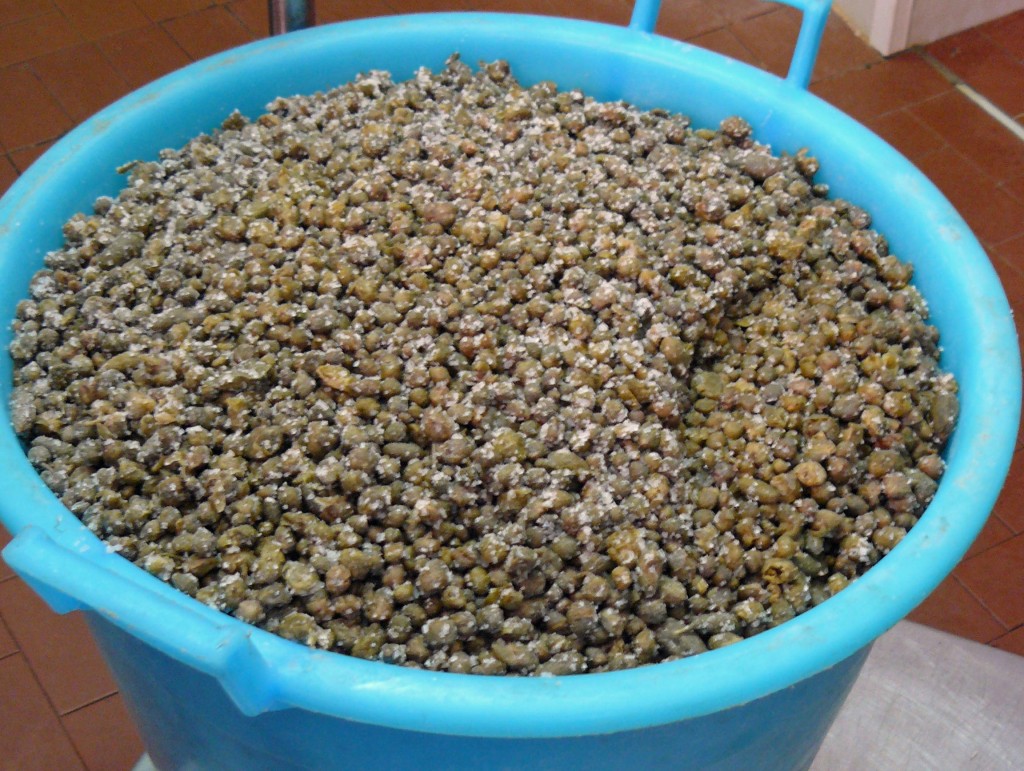
Raw capers aren’t all that appetizing. They taste kind of like a green pea, but much more bitter and with a peppery bite like arugula. No one eats raw capers; they’re all cured. In other parts of the Mediterranean, the curing may involve vinegar or a salty brine, but on Pantelleria the capperifici use only sea salt. The salt curing helps to highlight the aroma of the capers, which may be masked by vinegar. After about three weeks, the salt is drained from the capers. Then the capers sorted into three sizes: small (about the size of a pencil eraser), medium, and large (about the size of a blueberry). The capers are then packed in new sea salt and stored in enormous barrels for keeping until they are packaged to order.
Month: October 2012
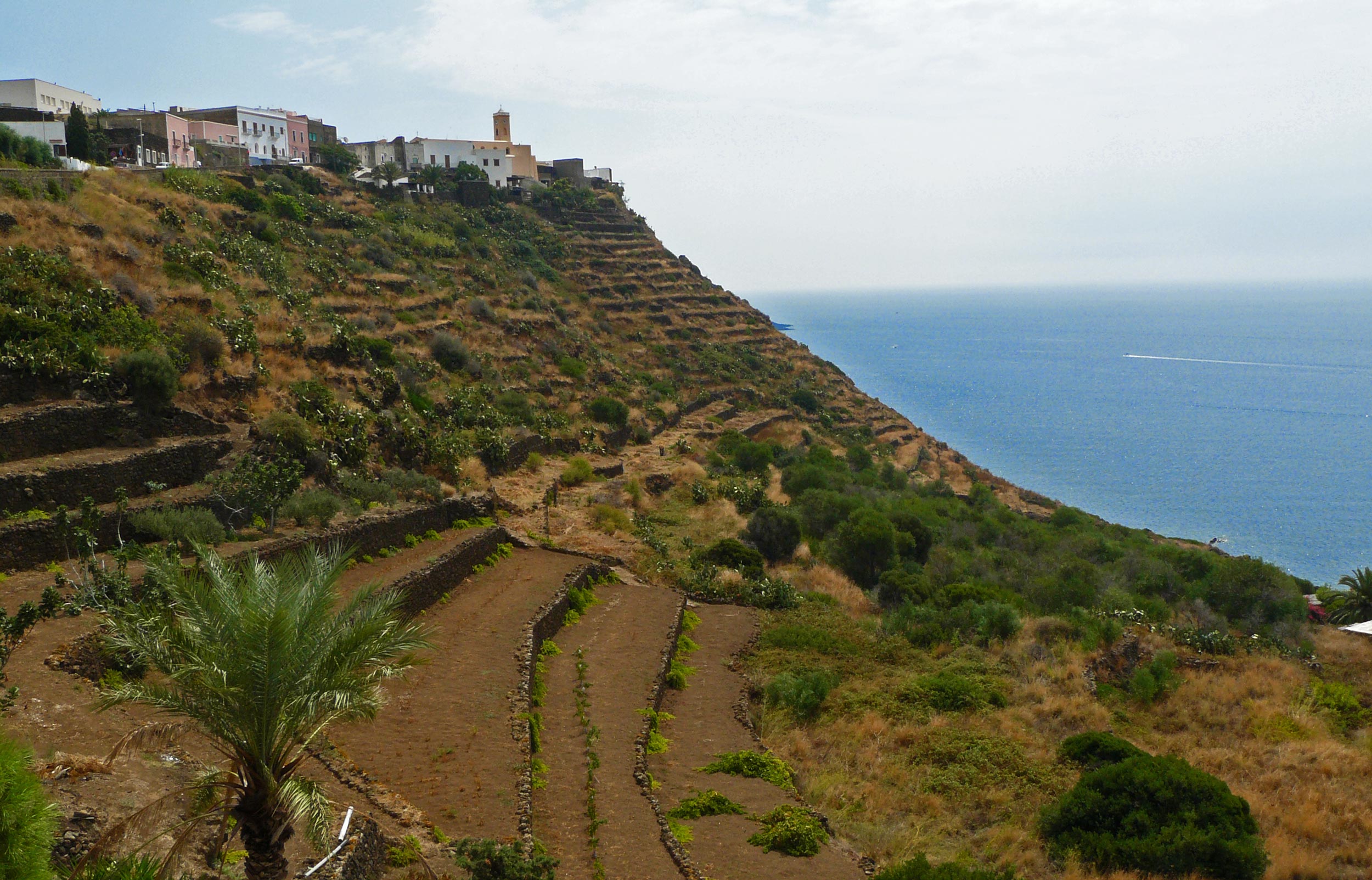
In September, I visited Pantelleria, a small island in the Mediterranean midway between
Tunisia and Sicily. With 37 miles of sea separating the island from the next closest land, it’s as
isolated as anywhere I’ve ever been. Despite its location in the middle of the sea, the people of
Pantelleria have always been farmers, not fishers.
Those farmers have their work cut out for them. The island has no source of fresh water and
gets little rain. The soil is volcanic and very fertile, but that soil stretches across steep mountain
slopes. And all year long, relentless winds blow across the island. (In fact, the name “Pantelleria”
comes from the thousand-year-old Arabic name for the island, Bent El Riah, or “daughter of the
winds.”)
To make the land arable, the people of Pantelleria (called Pantescans) have carved the
mountainsides into terraces. The terraces are held in place by walls built of the island’s
ubiquitous, charcoal-colored volcanic stone. The walls are built a few feet taller than the level
of the ground to protect the low-growing plants from the harsh winds and to help conserve the
little water that is available. Behind these walls, Pantescans tend fields of capers, squat bushes
of Zibbibo grapes, and groves of Lilliputian olive trees that reach only as high as my waist. For
home use, many families also grow eggplants, peppers, tomatoes, potatoes, herbs, and perhaps
a citrus tree.
Built and maintained over the last millennium, the stony walls define and romanticize the
landscape. Fifty years ago, the walls extended nearly to the mountaintops with 85% of the
island’s land dedicated to agriculture. Today, that number has dropped to around 17%. It’s a
pity: without active maintenance, the walls will fall into disrepair and crumble.
Month: October 2012
 Twenty years ago this September, Zingerman’s Bakehouse fired up its oven and started baking. Owner Frank Carollo had a crew of eight bakers. At first they had a simple goal: to make better bread for Zingerman’s sandwiches. But how?
In a nutshell, they’d turn back the the clock on bread baking.
Instead of baking with lots of ingredients, they’d use as few as possible. Where most breads these days seem to have dozens of unpronounceable ingredients, most of Zingerman’s breads have four: flour, water, salt, yeast.
They would also take their time. A loaf of Zingerman’s Jewish rye takes five and a half hours to make. Paesano takes fourteen hours. Farm bread takes a whopping eighteen. Meanwhile most commercial bakeries do the job in less than two hours. The quicker rise time saves money, but also cuts into the flavor.
They would bake in a stone hearth oven. Just like baking on a pizza stone makes for better pizza, a stone hearth oven makes for better bread. The masonry floor allows for more even heating, which lets the bread develop a crisper, more flavorful crust. The thing is, stone hearth ovens aren’t the easiest to maintain and they’re not the most versatile. They’re also more expensive.
For the past two decades they’ve done all that and more. And during that time bread has become one of the most popular foods we ship. Mo Frechette, Zingerman’s Mail Order’s founder often says, “I thought I started a mail order company to sell great olive oil to folks in Montana who couldn’t get it. Instead I send bread to Manhattan.”
Running a bakery isn’t like being a rock musician. You can’t just produce one great album and coast on that for the rest of your life. When you bake, every day you start with new flour and new problems. Home bakers know the recipe is just a starting point. From there the problems start. To me, even more impressive than the quality of the Bakehouse’s products is their consistency. You can’t find a bad product amongst the lot, but the real stars–like Paesano, Jewish Rye, and Farm bread – are outstanding, and getting just a tad better, every single day.
Month: October 2012
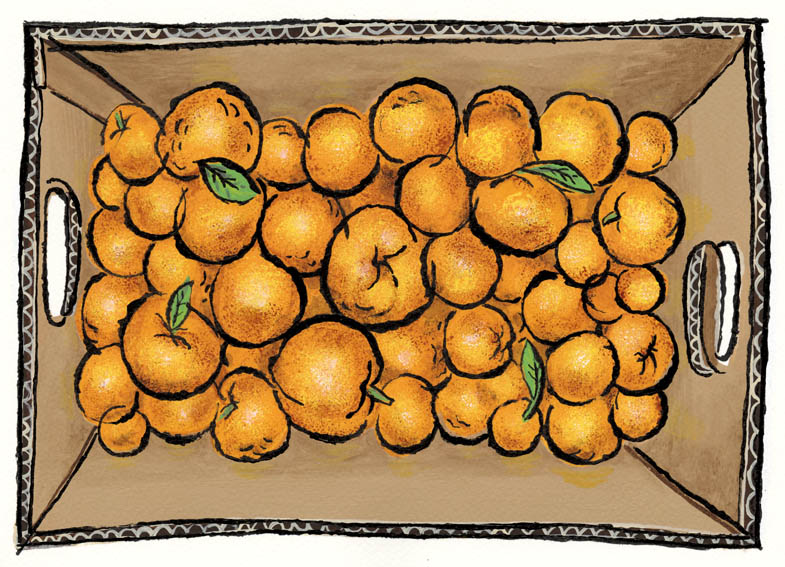 The first thing to know about Rangpur limes is that they’re not really limes at all. They’re actually a hybrid of lemons and mandarins, which they also resemble. If that’s hard to imagine, think clementines and you’re not far off: smallish, bright orange, with a smooth, thin peel that comes off easily to reveal segments that readily pull apart. The resemblance to sweet clementines ends, however, when you pop a Rangpur in your mouth. Rangpurs are intensely sour with a flavor like a smoky lime, hence the name.
The fruit originated in India where there used to be several settlements called Rangpur. The original Rangpur lime tree may have come from one of these locations, or perhaps from the modern town of Rangpur in Northern Bangladesh. Whatever the case, Rangpurs are still very much a part of Indian cuisine. For example, Rangpur lime juice is often added to mandarin juice—a regular drink around the country—to tart it up.
While Rangpur limes have had a bit of a popularity surge recently in the West thanks to Tanqueray® adding them to one of their their gins and showering it with a fantastically large marketing budget, for most of the last few thousand years they’ve been almost invisible. Rangpur limes did not make their way over to America until a seed was brought to Florida from India in the late 19th century. A century later, they’re still relatively unknown, even in California where they’re most common. They’re usually grown to be ornamental; in the summer, the trees are bedecked in small, aromatic purple flowers.
Robert Lambert, California’s resident citrus genius, learned about them and started working with Rangpurs a little less than a decade ago. He was pretty much the only one doing so, so for the time he had his pick of all of the Rangpur trees in Northern Calfornia. There weren’t many. These days he gets his Rangpurs from five or six sources, only one of which is a proper grower with land dedicated to growing Rangpur limes. Robert picks much of the citrus he uses himself, candies the peels, juices the fruit, packs the limes with salt, and does all the work to make the small array of Rangpur products available on our website. There’s nothing else like them, they make a great kitchen addition for any curious cook.