Month: January 2013
When I was growing up, my mother developed a fairly serious interest in our varied family background. She talked to the family members who held the history of our clan, researched immigration records, and read voraciously of Diasporas, migrations, and family lineage. It is because of this that I know my French-Canadian ancestors were originally Acadians, forced from their homes in eastern Canada by the British during Le Grand Dérangement (also known as The Great Upheaval or the Great Expulsion) in the mid-1700’s.
As was the case with many former Acadians, they fanned south and west, stopping to leave some settlers in the Frenchtown area of what later became Monroe, MI., then moving on to Louisiana. Once there, the language began to drift, and French-speakers who had referred to themselves “les Acadiens” shifted to the abbreviated “le ‘Cadiens”, and dropped the “A”. Later, they encountered native-born Americans who had difficulty pronouncing “Acadien” or “‘Cadien”, and so they became “Cajun.” A new culture was born out of the rich environment of the lower Mississippi Delta, and the happy result is that southern Louisiana is vibrant with a wonderful mosaic of tradition, culture, music, and delicious cuisine. According to my mother, our ancient family names are still prevalent surnames in Louisiana today.
The influence of French-Cajun culture on the cuisine of New Orleans is well documented, but Cajun ancestry also includes British, Spanish, Italian, Native American, Métis, Creole, and German roots.
Wait, (I hear you say) German?
When people think of German heritage in the U.S., the Midwest is one the first places that comes to mind. But, less well known is the impact of German immigrants on the food and culture of southeastern Louisiana. In fact, Germans were among the earliest settlers to Louisiana, and actually comprise the state’s largest cultural group. The first recorded arrivals came in 1722, most hailing from the province of Alsace-Lorraine. This province has been a disputed territory for centuries, alternating between France and Germany, which probably helps explain the ease of assimilation of Germans into the dominant French culture of the area.
The first Germans settled an area north of New Orleans, on the eastern bank of the Mississippi, known as Côte des Allemands (The German Coast). The area was plagued with frequent floods and often hurricanes, but the Germans persevered and became successful enough at farming to be credited with the ultimate survival of the early Crescent City. And the most successful crop they grew was rice.
 Rice was unknown in North America until the 1680’s where it was brought ashore in the Carolinas from British ships bringing goods from Africa and South Asia. The grain adapted well to the warm, wet environments of the southern U.S. and by 1700, South Carolina was exporting hundreds of thousands of pounds of rice annually. Cultivation of rice spread throughout the southern U.S., and eventually made its way to the fertile Mississippi River Delta.
As the Côte des Allemands began to flourish, the residents began to trade and intermarry with the families of the Acadian Coast further upstream, further assimilating and blurring the lines between their respective ethnic backgrounds in favor of the emerging Louisiana French-Cajun culture. The Acadian Coast families, in turn, began to move further southwest into the low plains and the Atchafalaya River basin region now known as ‘Cajun country.’ Rice cultivation went with them, and thus became a staple for the entire region.
In celebration of the rich culture of New Orleans, Carnival Season, and the upcoming Mardi Gras holiday, the Zingerman’s Roadhouse will hold it’s annual Acadia Parish New Orleans Dinner this coming Tuesday, February 5th at 7 p.m. Chef Alex Young has travelled back to the early 1800’s to create a menu of foods traditional to a German rice plantation farmer’s dinner. Before the dinner, Chef Alex will discuss the history of the region and the inspiration for the menu.
Please join us for this very special event. Laissez les bon temps rouler!
Or perhaps more accurately, Lassen Sie die guten Zeiten rollen…
Acadia Parish New Orleans Dinner
Tuesday, February 5, 7 p.m.
More information & reservations here.
Month: January 2013
Zingerman’s Community of Businesses would like to wish you and your loved ones a very happy and joy-filled year to come.
Zingerman’s businesses are open New Year’s Eve & Day, but some have may abbreviated hours for the holiday. Check here for Holiday Hours details.
See you next year!
Month: January 2013
For the past few years at the Zingerman’s Coffee Company, we’ve offered several different ways to have us brew your coffee. Each method, as you’d probably expect, will produce a coffee with a slightly different flavor and texture. While we’ve known all about these methods, we’ve unintentionally kept them a secret from you. But those days are over—the brewing-method bonanza is all out in the open now!
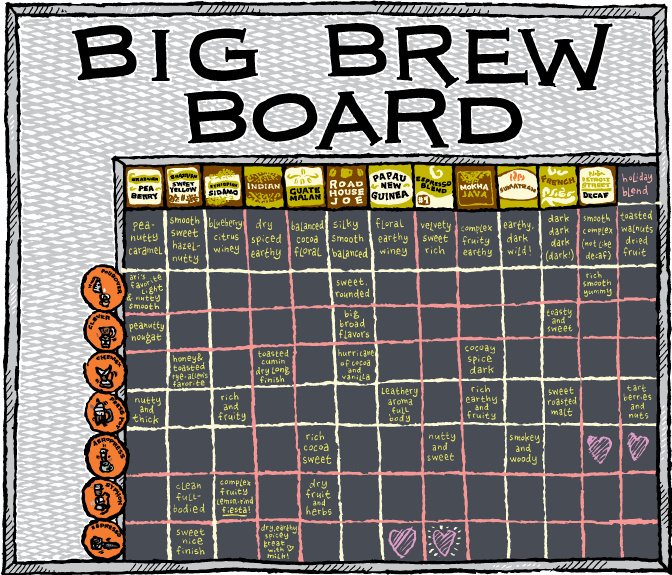
We’ve got the Big Brew Board up and mounted over the counter so you can see the brewing options for yourself. Better still, we’ve spent multiple hours of brewing, testing, and tasting to match up what we think are the best combina- tions of brewing-methods and beans.
Pourover
This is a very simple, and very tasty way of making coffee. We grind the coffee of your choice to order, pour hot water over it, which then drips down through a standard paper filter into the cup. Pourover brewing generally produces a balanced cup, and the light filtering removes some oils while retaining body. The Pourover is one of our most popular methods.
Clever
A relatively recent addition to the
world’s array of brewing methods, the
Clever is sort of a combination of a
French press and a Pourover. Originally
invented in Taiwan for making tea, it
quickly took the coffee brewing world
by storm. Hot water is poured over, and
into the ground coffee, which is then sus
pended in the hot liquid during brewing.
Then, like the Pourover, it releases the liquid coffee from the grounds so it doesn’t over-steep. The Clever makes a very well rounded cup of coffee without the density of the French press, and it works well with almost all coffees.
Chemex
Chemex is comparable to the Pourover, but uses a heavier paper filter to make for a cleaner, more ‘refined’ cup. This is Allen’s favorite way to make drip coffee at home. The name is derived from its development by German chemist, Dr. Peter Schlumbohm, PhD, back in 1941, and it’s certainly one of the most visually appealing of the alternatives. The brewing vessel looks a bit like an hourglass, and the top part holds the Chemex paper filter (originally laboratory filter paper). Hot water is poured through it into the top half of the glass, and the brewed coffee fills the bottom. Because the filter is thicker than most, we often use a slightly coarser grind than a regular cone drip. After brewing, the filter is discarded and the brewer is used as a server. The Chemex makes for a very clean cup of coffee.
Frenchpress
The French press, or press pot, was invented in France in probably the late 19th century. Freshly ground coffee and hot water are mixed in direct contact in a glass carafe. The glass has a plunger screen mounted on a moveable post. After the coffee has steeped for about 3 minutes, the post is pressed down to hold the grounds to the bottom of the carafe. The filter is a relatively coarse wire mesh with less filtration than paper, leaving more oils and a bit of coffee solids suspended in the brew. French press definitely makes for a bigger-bodied coffee. It reminds me of eating unfiltered olive oil; it leaves a bit more of the “bones” of the coffee in the brew.
Aeropress
Invented in 2005 by Alan Adler, the same guy who came up with the Aerobie disc that took the Frisbee to a new heights. The Aeropress uses a tight fitting plunger to force the brewed coffee very quickly through a filter at high pressure. It produces a small, intense cup of coffee fairly quickly.
Siphon
Other than the espresso machine, this is
the most elaborate brewing mechanism we
have. Depending on whom you ask, it was
developed in Germany in the 1830’s, or by Robert Napier in 1840. Either way, it was very much a product of its era. Scientists were messing around with their relatively new understanding of vacuums, and improved coal furnaces made quality glass much more affordable. The siphon pot uses two glass globes connected by a small glass “neck.” The initial process of water rising from the bottom globe to the top globe is driven by steam pressure created as the water approaches boiling. Once the water has been pushed into the top globe and steeps with the coffee, the heating element is removed, and the vacuum created in the bottom globe uses negative pressure to draw water down through the fine mesh filter. It produces a cup that has some of the benefits of a press pot, but with a little more filtration. We’ve found the siphon is particularly successful for coffees that are bright and fruity (it’s the staff favorite for our Ethiopian coffee). The siphon pot brewing does take a bit longer, so this isn’t one to order if you’re in a big hurry, but if you’ve got a few minutes it sure does make for pretty marvelously clean cup.
Espresso
Probably the best known
of the bunch today,
the espresso process was developed
in Italy in the late 19th and early 20th centuries. Espresso brewing forces hot water
under pressures through a small bed of coffee in very short, intense burst—about 25 to 30 seconds. The pressures and temperature produce a small amount of thick crema. The crema is an actually an emulsion of aromatic oils that form a mesh of oily bubbles on the surface. This method tends to magnify the oils, sweetness and acidity that are in the roasted coffee. We typically like coffees that are sweet and lower in brightness because of this.
Month: January 2013
While langós is almost unknown over here, in Hungary it’s almost everywhere. There are langós stands all over the country, the same way that hot dog carts cover Manhattan, or falafel stands all over the Middle East. Almost anyone who’s been to Hungary, or has Hungarian roots, gets very excited when I tell them we make it. It’s like offering a corn dog to a kid who grew up going to the county fair.
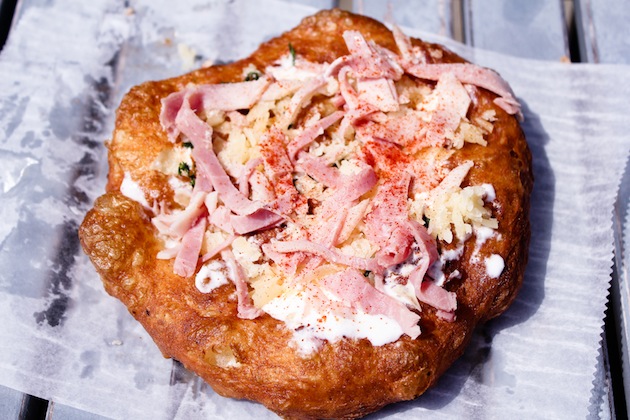
Langós is quite simply a flat disc of deep-fried bread dough. Most langós are brushed, right out of the fryer, with a wisp of garlic-flavored water, and then topped with chopped ham, sour cream, and a touch of chopped dill. Like most fritters, it’s far better eaten just a few minutes after it’s emerged from the fryer. Come in to the Bakeshop on Tuesdays for lunch and get ‘em while they’re hot!
Month: January 2013
This past week, the Zingerman’s Community of Businesses was very pleased to welcome author Toni Tipton-Martin to events at the Roadhouse and ZingTrain. Toni is an award-winning journalist, founder of the Jemima Code Project, and the author of the forthcoming Jemima Code book.
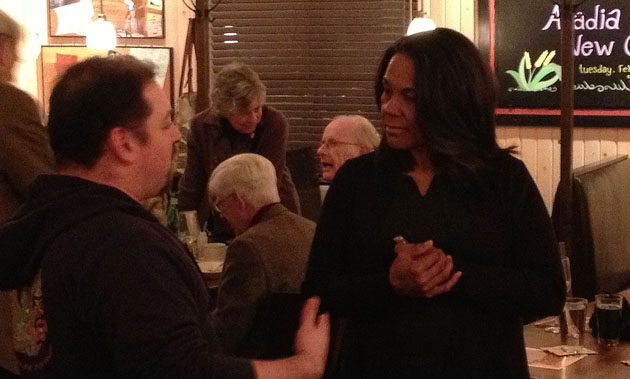
On Tuesday, Toni was the featured speaker at the 8th Annual African American Dinner, held at the Roadhouse. Guests were treated to a delicious menu created by Toni and Chef Alex, based on the recipes of Malinda Russell’s A Domestic Cook Book: Containing Useful Receipts for the Kitchen, self-published in 1866 in Paw Paw, Michigan and noteworthy for being the among first African American cookbooks.
Chef Alex began by talking about the menu, and going into detail about the creation and ingredients of each dish. Next, Ari talked about Zingerman’s long involvement with the Southern Foodways Alliance, where he was introduced to Toni and the Jemima Code Project. Finally, Toni talked about her inspiration for the Project, and her association with Jan Longone, curator of the Janice Bluestein Longone Culinary Archive at the University of Michigan’s Clements Library. Toni also spoke about her involvement with the SANDE Youth Project, a nonprofit food, nutrition, and cultural heritage program for under-served young people.
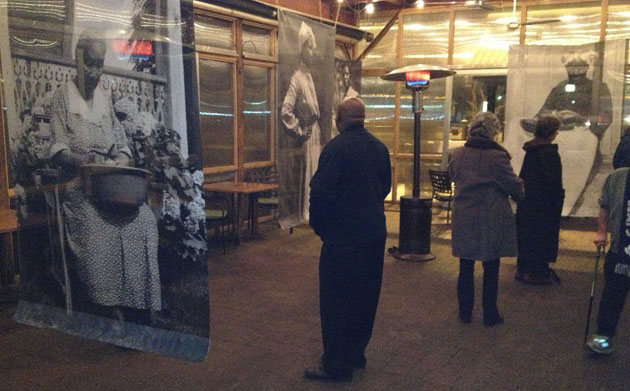
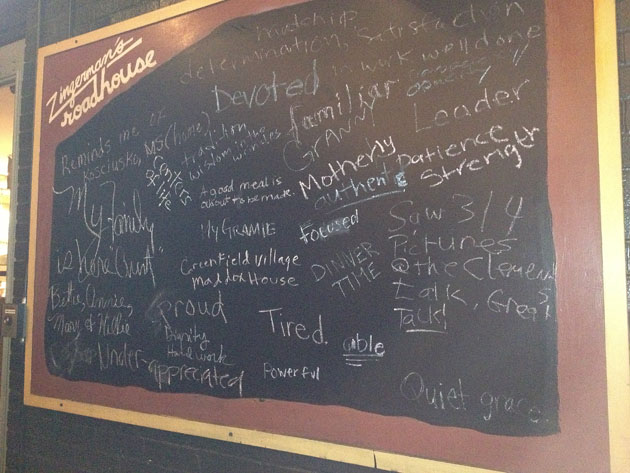
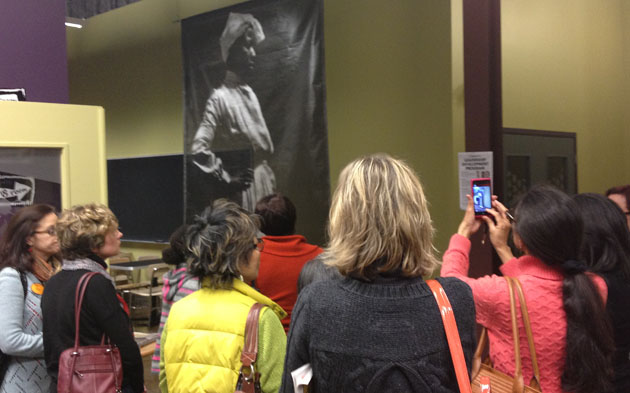
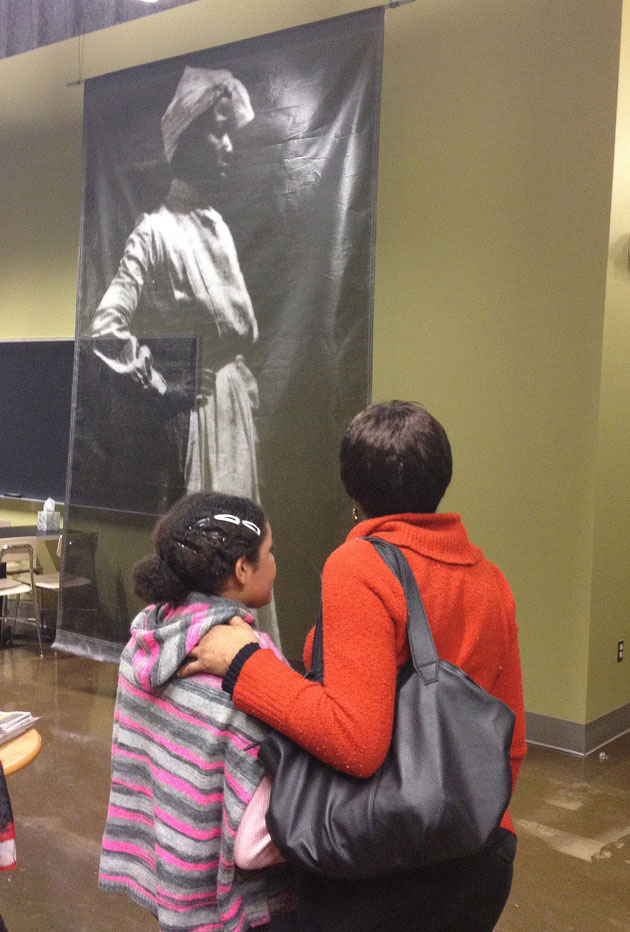
In addition, Toni was kind enough to bring “The Ladies,” eight-foot high photo blowups of the African American cooks and cookbook authors featured in the Jemima Code Project. The images were hung in a space adjacent to the dining room, and guests were encouraged to stroll through the huge portraits, and then share their impressions on a chalkboard at the far end of the exhibit. The photos were semi-transparent and evoked a powerful, almost ethereal presence in the room.
On Wednesday, Toni gave a presentation called “Deliciousness & Diversity” at the ZingTrain facility on Zingerman’s Southside campus. Toni went into more detail about the history of the Jemima Code Project, and her inspiration to begin. Her talk was accompanied by a slide show providing a primer in some of the disparaging ways African American chefs and cooks have been historically depicted in popular culture. Toni contrasted these unfortunate images with the actual histories of these talented, successful women, and illuminating their foundational and fundamental contributions to what we think of as “American cuisine.”
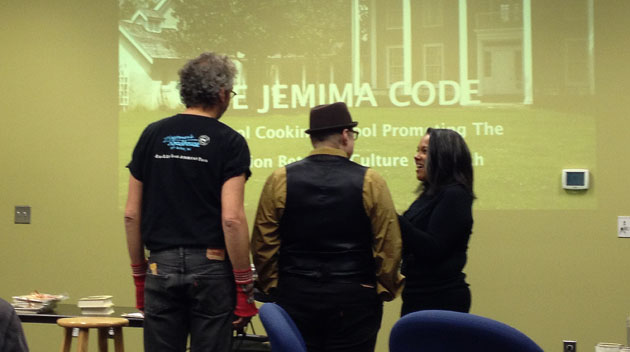
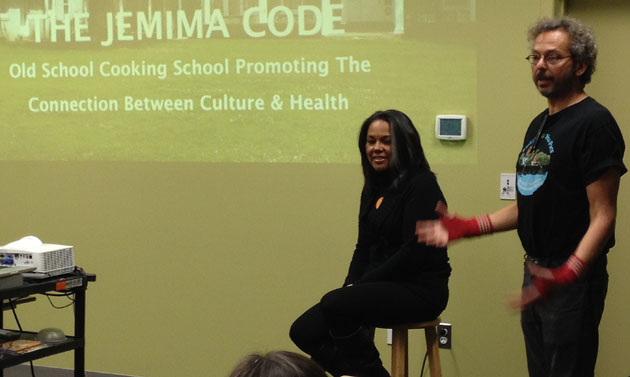
She talked further about founding the SANDE Youth Project, and the historic Austin residence currently being renovation as the organization’s new base. Next, she spoke about the Peace Through Pie program, which “provides a forum for community gatherings and community development, encouraging conversation and learning through the sharing of recipes, traditions, and pie.”
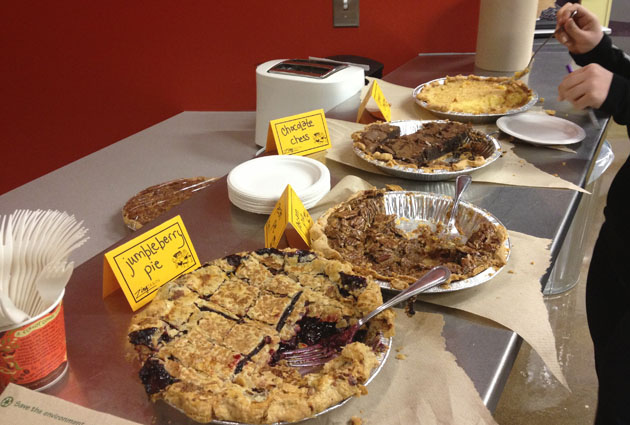
In keeping with this last theme, the Bakehouse and the Deli provided several delicious types of sweet and savory pie. And San Street and Cafe Memmi, Zingerman’s incipient Asian street food and Tunisian food businesses, also brought their own delicious variants on pie. The gathering was small and intimate, and Toni began by asking each guest to share who they were, why they’d decided to attend, and which pie(s) they’d chosen and why.
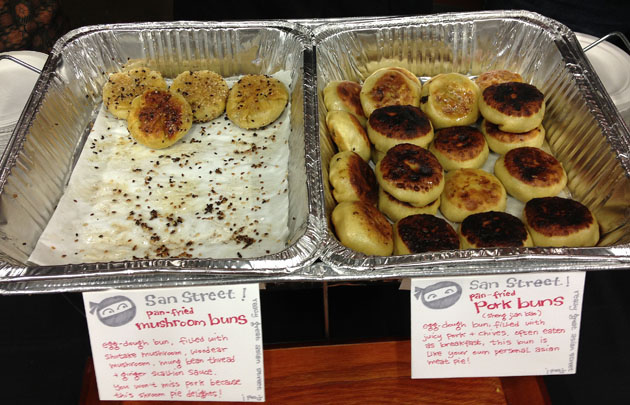
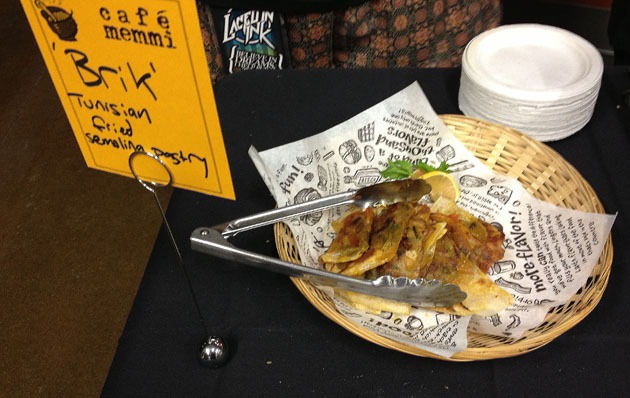
Toni elaborated on the motivation to use pie as both a metaphor, as well as a connection-building food:
- Pie is round, symbolizing inclusiveness.
- Pie is baked in a crust, which surrounds, envelopes, and comforts.
- Pie can hold vast diversity of ingredients.
- Most cultures have a form of pie.
Further, Toni talked about how food in general brings people together in mutual nourishment. Sharing food, breaking bread together, is an ancient ritual of cooperation and collaboration. It builds community. It helps bring needed social change, and it can be very empowering.
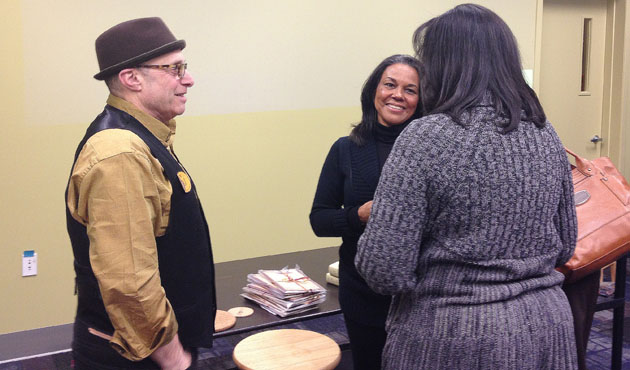
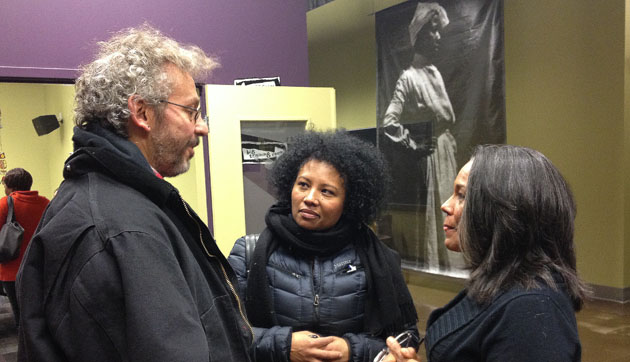
After her presentation, Toni graciously fielded questions late into the evening. Soon, the crowd drifted, still chatting, out of the conference room and into the lobby. People talked excitedly, sharing ideas and personal histories and recipes–all under the reserved, yet likely approving, gaze of one “The Ladies.”
Month: January 2013
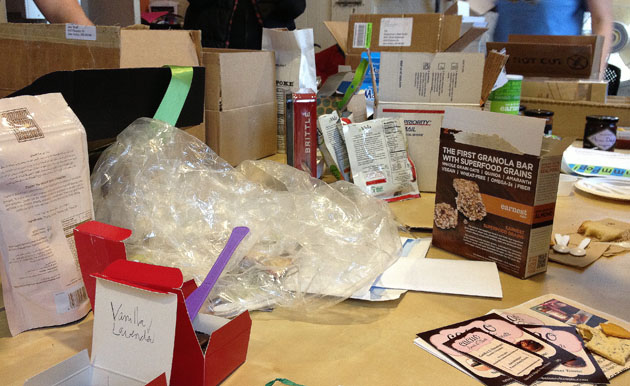
Each month, packages from across the U.S. and around the world find their way to a small room across the street from the Deli. The bundles contain olive oil, chocolate, mustard, jam, crackers, and cookies, and just about anything else a food enthusiast can imagine. The shippers of this tasty cornucopia are hoping that Zingerman’s will stock and sell their product, so they’ve sent along samples of their wares for the staff to evaluate.
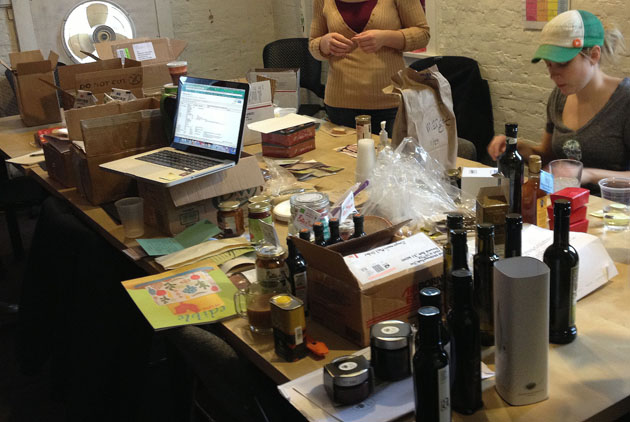
But, this can be a challenge. The Deli’s shelves are already crowded with quality goods. “Full-up,” as one staffer describes them. And the Mail Order warehouse faces a similar situation, with pallets and shelving that stretches nearly to the ceiling. The competition is stiff, but there is always the potential to discover something new and delicious. So once a month, the staff gathers here to taste and discuss the new arrivals.
When I arrive, the room is full of people standing around a table piled high with boxes, packages, and envelopes of all sizes. The staff holds tiny plastic cups of olive oil, and they immediately hand one to me, announcing the name and where it’s from. I normally have a cup of tea first thing in the morning, but when in Rome…
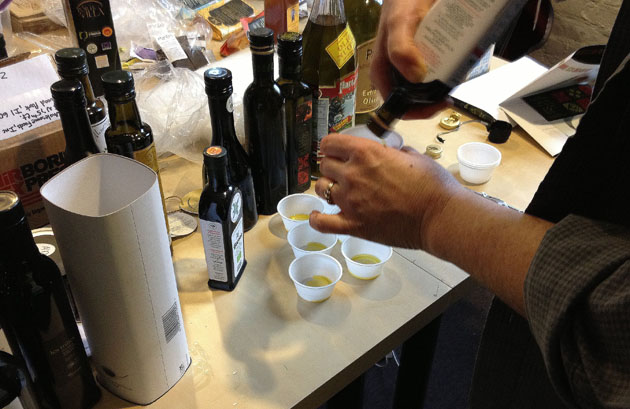
I mimic the rest of the staff as they warm the tiny cups of oil between their palms to bring to bring up the aroma. Once the oil begins to release its bouquet, tasting begins with noisy, aerating slurps as we each take in the full flavor of the oil. By doing this, we’re using our sense of smell as well as our taste buds to experience the full flavor of the oil. We taste a succession of oils, and a few generate some interest. A vanilla-flavored oil briefly raises some eyebrows, but it doesn’t quite pass muster. Three new oils are chosen for further consideration and the crew moves on.
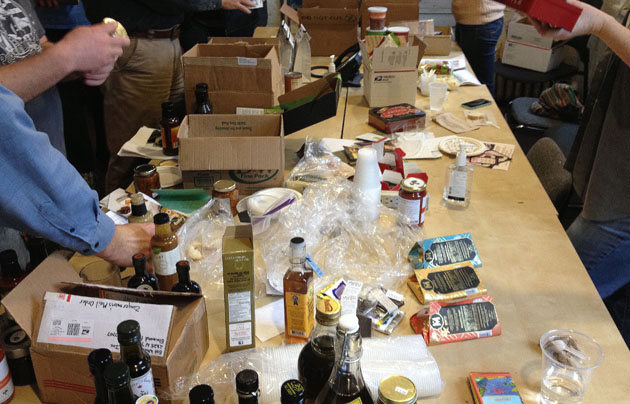
Next up is a small selection of vinegars. Unfortunately, most can’t quite compete with the existing selection, but a sweet honey vinegar from the western U.S. brings smiles all around. The staff immediately begins discussing potential uses, and the honey vinegar moves to join the favorite olive oils. Jars of condiments make their way around the table. A tomato paste seems to have potential. Next, another tomato paste, this one blended with cheese, falls short, as does a Gardiniera. Next, we try an Indian Tomato-Garlic sauce that starts with a sweet, piquant note followed by the sustained heat of chili peppers. Again, there is much discussion about possible uses, which seems to be a good barometer of a product’s potential success. The sauce is a keeper. Next, a sweet fruit chutney doesn’t fare so well, nor a mild curry sauce, and a Moroccan pepper sauce. But a toasted sesame-ginger sauce and smooth-tasting Creole mustard get everyone talking again, and they join the growing pile in the corner.
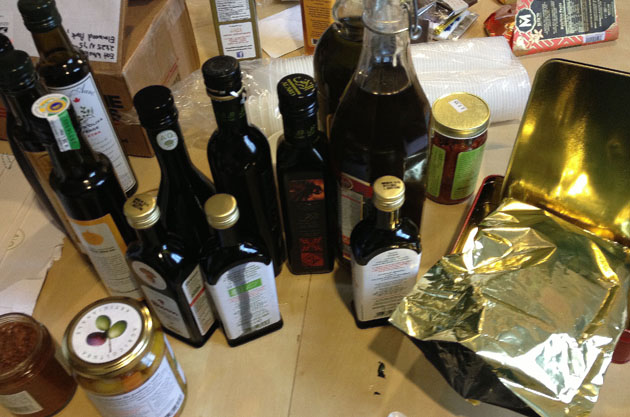
And then, a barrage of products begins to circulate. Freeze-dried fruit, ‘hot’ cashew brittle, several flavors of ‘whole oat’ crackers, crackers from Ireland, packages of ‘cheese snack crackers’ from Italy, sweet potato chips, and two or three flavors of sweet ‘biscotto’ round out the crunchy selections. The last treat to go around the table is, appropriately, chocolate, and we sample flavored dark cacao bars of varying intensities from all over the world. Of particular interest are several that hail from small-batch farms in rural Vietnam, and the staff sets these aside as well.
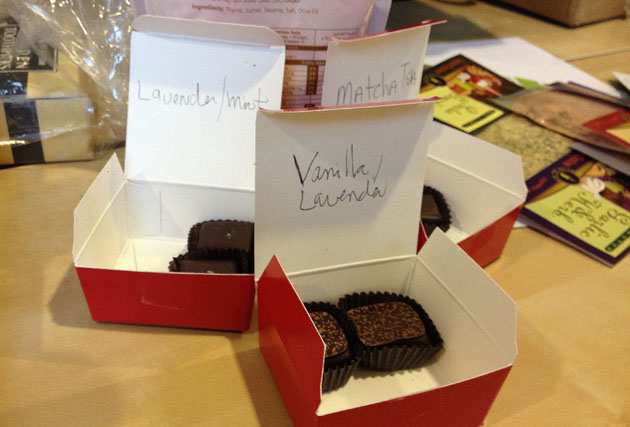
And all at once, we’re done. The table is littered with packaging and half-eaten containers of food. The goods that made it through the first pass are gathered and trundled off for more intense scrutiny and comparison to the existing stock in the Deli and the Mail Order warehouse, Their producers will be contacted, prices discussed, and details hashed out. If everyone comes to agreement, the new products will take their place on the crowded shelves.
And next month, the process will start all over again…