Month: March 2013
Chef Alex welcomes Austria’s “Rebel Farmer” Sepp Holzer to the Zingerman’s Roadhouse for a very special dinner and lecture, Wednesday, April 3 at 7:00 p.m.
Sepp Holzer is an interesting fellow. He grew up in a traditional Austrian farming family, and in 1962, he took over the running of his parents’ mountain farm business. After he was unsuccessful using traditional farming methods, he began to apply the principles of ecological farming, or permaculture, techniques at his high altitude farm.
At first, he ran afoul of local authorities who disapproved of some of his practices (such as not pruning his fruit trees), and eventually even threatened Sepp with prison. It was this experience that earned him his “Rebel Farmer” nickname, and his willingness to try unconventional farming methods have helped it stick.
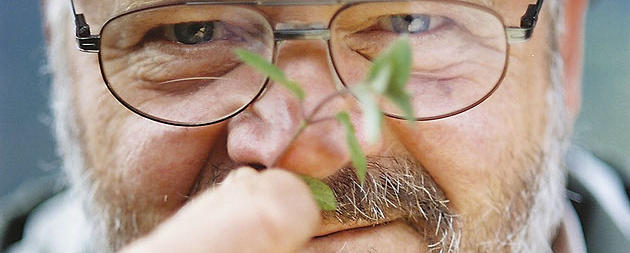
Eventually, he developed his own system, Holzer Permaculture, a natural form of agriculture based on the cycles and interactions found in nature. These strategies have proven that working in harmony with nature is not only ecologically sound, but can also be very economically successful. Sepp’s Krameterhoff farm in the Austrian Alps receives thousands of students and visitors each year.
“Learn to speak with Nature,” says Sepp, “Learn to assess her accurately. Ask yourself what she offers you. Those who learn to observe will identify niches in production and in all areas of farming, making it possible for a good living.”
You can read more about Sepp Holzer here and here.
Sepp’s latest book Desert or Paradise outlines strategies for restoring damaged ecosystems with biodiversity, organic food production, water conservation, and drought protection.
In honor of Sepp’s visit, Chef Alex has created a delicious menu of locally sourced gourmet cuisine and guests will watch a short movie highlighting Sepp’s inspirational methods. Afterward, Sepp will answer questions during the lecture Q&A.
Please join us for this very special event!
Purchase tickets and learn more about the event here
Month: March 2013

Submit your entry to the Zingerman’s Camp Bacon Facebook page by April 30, 2013.
Winner will be announced May 6!
Good Luck Campers!
Month: March 2013
San Street owner Ji Hye Kim takes her fond memories of home cooking and Asian street market treats to the streets of Ann Arbor, dishing up some really great Asian street food with the freshest ingredients. San Street is an aspiring new Zingerman’s business, which executes traditional Asian recipes with fresh, high quality ingredients- local whenever possible. The word “san” (pronounced sahn) comes the number three and is revered as one of the luckiest numbers in Asian culture, and the reason why some dishes, such as dim sum, are prepared in three’s.
Ji Hye will host a San Street POP-IN tomorrow, March 28, 5 p.m. to 9:30 p.m. at Zingerman’s Events on 4th, 415 N. Fifth Ave in Kerrytown.
No reservations required – just Pop In!
For this occasion, Ji Hye celebrates the Korean cuisine of the Gaesong region. As the ancient capital of Goryeo and a trade center, Gaesong cuisine is traditionally known for its luxuriousness. Gaesong cooks enjoyed access to various cuts of meat and made great use of cilantro, uncommon in other regions. Just beyond the Korean Demilitarized Zone and an hour from Seoul, the capital of South Korea, Gaesong is one of very few North Korean cities open for tourism.

Please join us for this delicious culinary mini-tour of the Gaesong region, courtesy of Ji Hye Kim and San Street!
MENU:
Jorangi Rice Cake Soup $7
Rice cakes in ox tail broth. Instead of more common oval shaped rice cake slices, Gaesong’s verion uses smaller, figure 8 shaped rice cakes, softer and chewier, their texture almost reminiscent of Italian gnocchi. Vegetarian version available upon request.
Meat Pyunsoo $6
Handmade dumplings in Gaesong’s traditional square shape, filled with pork, chicken, beef and kimchi.
Mushroom Pyunsoo $6
Handmade dumplings in Gaesong’s traditional triangle shape, filled with mushrooms and tofu.
Gosoo Gutjuri $5
Fresh cilantro salad in spicy dressing.
Gaesong Moo Jjim $12
Slow braise of pork, beef, chicken and moo, large Korean radish, in soy and garlic. Served with rice. Vegetarian version available upon request.
Don’t miss this event!
[tooltip title=”” content=”What is Pop In?
Zingerman’s semi-regular weekly casual restaurant, usually popping up on Wednesday evenings from 5PM-9:30PM at Zingerman’s Events on Fourth. Every week we pop up with something new–whether it’s the really great Asian street food of San Street, Tunisian fare by Cafe Memmi or tapas highlighting some of our favorites from Zingerman’s amazing retail shelves!
Are reservations needed?
Not at all. Just swing on by, grab a glass of Zingria or another of our custom cocktails and indulge in something all new while enjoying Zingerman’s great food and great service in a great new setting!
How do I know whether to Pop In?
Check out our calendar on this page for when we’ll be popping up next! You can always come back to this page for updates, sign up for Enews delivered straight to your inbox for this week’s menu, check us out on Facebook, and of course we’re always glad to answer your questions over the phone at (734) 663-3400.” type=”classic” ]What is Pop In?[/tooltip]
Register for “POP IN” announcements
Month: March 2013
Last October brought my first Zingerman’s staff scholarship, which is a really great benefit available to us, and my first trip to Germany to study bread making. I spent a week working and learning at the Dresdner Backhaus in Dresden. Let me back it up and give you all a little context of how the Zingerman’s Bakehouse got connected to the Backhaus.
The fifth-generation owner of the Dresdner Backhaus, Eli Kreutzkamm-Amueller, found out about Zingerman’s after reading Bo Burlingham’s book, Small Giants, which is about companies that aim to be great rather than big. She visited us on an American tour of small giant companies, came back for a ZingTrain seminar, and spent time with Amy Emberling, Bakehouse partner, discussing business practices and baking. Amy and Eli made plans to learn from each other. Eli came back with her production manager in January 2012 and they made their world famous stollen with us. Next I went to Dresden to learn about their bread baking tradition.
At the Dresdener Backhaus I got lots of hands-on experience with their stollen and a large variety of different rye breads. Nearly every kind of bread they make has some quantity of rye flour in it, even the French baguettes. The breads are marketed by what percentage of rye flour is in the recipe. One of the most interesting differences was their rye starter. It’s so strong that the scent of it knocked me back and made my eyes water. Rye starter is a sacred ingredient to German bakers. They even send samples from each batch to a lab to make sure that the bacteria are correctly balanced. Why are they so dedicated to rye?
The combination of the rye flour and the rye sour lends a stong rye taste to the loaf and as the percentage of rye flour increases, the longer the bread retains moisture and stays fresh. Also culturally and historically this is the most common grain. Rye is to the Germans as wheat is to us and corn is to Native Americans.
It was an exciting learning experience to see how a similarly sized bakery with a like-minded business sense operated. One very key similarity is that bakers around the world find drawing shapes and patterns on a floury bench is a great way to communicate!
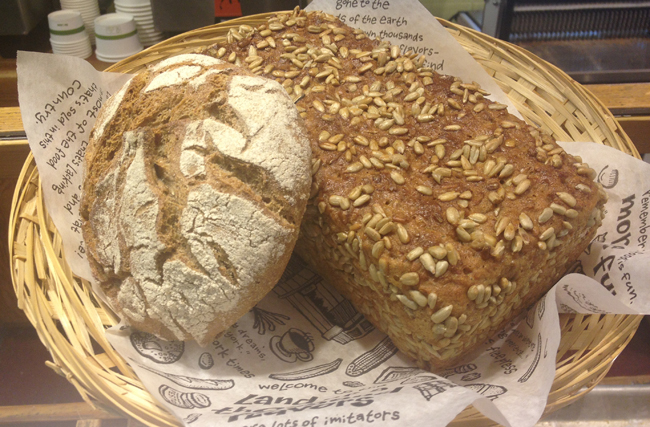
During our visit, Amy and I picked out some really great breads and pastries to teach in two BAKE! classes taught by Eli and Tino the production manager last January. The classes were a complete success and lots of fun, too. From this experience, we have decided to put a few of the recipes that I learned to the test by offering you a couple of different varieties of German-style breads this March. We are planning to make a 100% spelt loaf called Dinkelbrot. It is dense, moist, delicious, and different from most of the breads that we are all used to. We will also make a roll called Vinschgauer which is rye based and has a very German blend of spices in it to give it a unique flavor. This one quickly became one of my favorites and it makes a mean salami sandwich. Stop in so that you don’t miss your chance to try some really special German breads baked at our very own Bakehouse!
– Shawna Sloan, Zingerman’s Bakehouse Bread Department
Month: March 2013
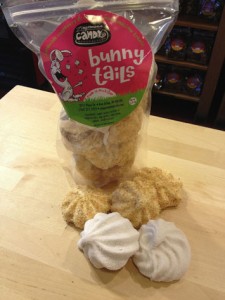
Each year, just in time for spring, the Zingerman’s Candy Manufactory creates something very special that’s sure to delight young and old alike. We’re talking about our delicious Bunny Tails! Soft pillows of tasty, handmade Candy Manufactory marshmallow in the shape of Peter Cottontail’s best-known asset! Bunny Tails come in either raspberry or coconut flavors, and are only available for a very limited time (March 1st – 31st).
We decided to take a behind-the-scenes look at how Bunny Tails are created, and Managing partner Charlie Frank was good enough to give us a tour with the cameras rolling.
Bunny Tails are only available until March 31st, then they’re gone until next year! You can find them at most Zingerman’s businesses, as well as these fine establishments:
- Bklyn Larder|
- Cheeseshop of Healdsburg
- Colony’s Quality Meats
- East Lansing Food Co-op
- Giant Eagle Market District-Oxford
- Golden Fig
- Gordon’s Ace Hardware-Clark
- Gordon’s Ace Hardware–Maple
- Gordon’s Ace Hardware-Orleans
- Gordon’s Ace Hardware-South Loop
- Gordon’s Ace Hardware-Streeterville
- Hiller’s-Ann Arbor
- Holiday Market-Royal Oak
- Joe’s Produce
- Metcalfe Market Madison Hilldale
- Plum Market-Ann Arbor
- Plum Market-Bloomfield
- Plum Market-W. Bloomfield
- Produce Station
- Southport Grocery & Cafe
- Standard Market
- Sweet Grass Dairy
- The Hills Market
- The Sugar Cube
- Walt Churchills Market-Maumee
- West Point Market
- Whole Foods Market-Sharon Road
- Whole Foods Market-Ann Arbor
- Whole Foods Market-Chapel Hill
- Whole Foods Market-Sauganash
- Whole Foods Market-Cranbrook
- Whole Foods Market-Lincoln Park
- Whole Foods Market-West Paces Ferry
- Woodstock Farmer’s Market
Month: March 2013
Part Three

It never enters into my mind that chopped liver should be made from anything other than chicken livers. I guess it’s because that’s all my grandmother ever used. Beef liver… I don’t know. I guess I’ve never really given it an honest chance, never really considered it as anything other than an inexpensive, but unacceptable, shortcut. I just humor the beef liver lovers with a cynical, raised eyebrow. Chopped liver is supposed to be made from chicken livers.
My grandmother always broiled the livers. That’s what you have to do to make them kosher, because the liver has blood in it, and the rules of Kashrut are strict here—no blood. Since Zingerman’s doesn’t keep kosher, we just brown them in the oven. But we still use only chicken livers. In a little irony of culinary inter-marriage, the livers come from Amish-raised chickens, which are much more flavorful than those from mass-produced chickens.
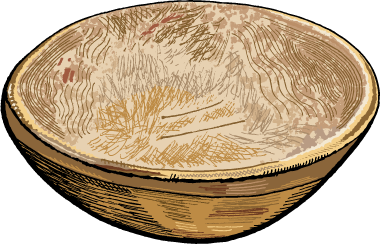
One secret of great chopped liver I learned from my grandmother is that you have to cook the hell out of the onions. Cook ‘em ‘til they’re the color of dark wood, as dark as my grandmother’s chopping bowl, streaked black, brown, and just a touch of gold left in the pan. It takes a long time to do this right, so most people don’t do it anymore. Make sure to cook ‘em in a heavy pan or the onions will burn.
And I don’t want to forget about eggs. You know how many hard-boiled eggs you have to peel to make a batch of chopped liver? For my grandmother it was just a couple at a time. But when you do liver en masse, as we do at the Deli, you’re talking a whole heckuva lot of eggshell cracking and peeling. But, what choice is there really? We could use those pre-cooked, pre-peeled eggs that come packed in white plastic pails, but they just don’t taste like fresh eggs. My grandmother would never have allowed them into her kitchen.
How finely do you chop chopped liver? Now there’s a question that’s been debated in Jewish kitchens for a couple hundred years.

As with all her cooking methods, my grandmother probably wouldn’t have given you a concrete answer. But she certainly would have shown you. She was from the school of coarse chopping. Not too coarse, not too smooth. The liver was supposed to have some texture, some life to it. Too smooth, and it became liver paste. (Sara Kasdan again says, “pheh” to too smooth.) Too coarse and the flavors of onions, eggs, schmaltz and livers won’t come together as they should. So how coarse? “Coarse enough,” my grandmother probably would have replied. Of course.
At Zingerman’s, we use a grinder to keep some of the texture my grandmother insisted should be part of a well-made chopped liver. And so the whole thing—livers, well-done onions, and hard- boiled eggs—is pushed through the grinder, a handful at a time. A little chicken schmaltz, a good bit of mixing, some salt, some ground black pepper. Now that’s chopped liver.
Every now and then, I treat myself to a chopped liver sandwich. It’s such seemingly simple fare that it gets less attention than our more glamorous sandwich combinations. And yet, spread on thick slices of hand-cut rye or challah, with a bit of yellow mustard, a chopped liver sandwich is the one that comes to mind when I need a little culinary comfort.
Although I try to taste as many items at the Deli on a regular basis, I know I can’t taste them all. But without fail, I make sure to taste the chopped liver whenever I can. Partly to check the flavor, to make sure the salt and pepper are right, that the onions were cooked long enough. Partly because I love to eat it. Taking that taste, my daily chopped liver sacrament, is my way of staying connected to where my family food memories began.
In my grandmother’s chopped liver bowl.