
Tag: AFRICAN AMERICAN DINNER
|
|
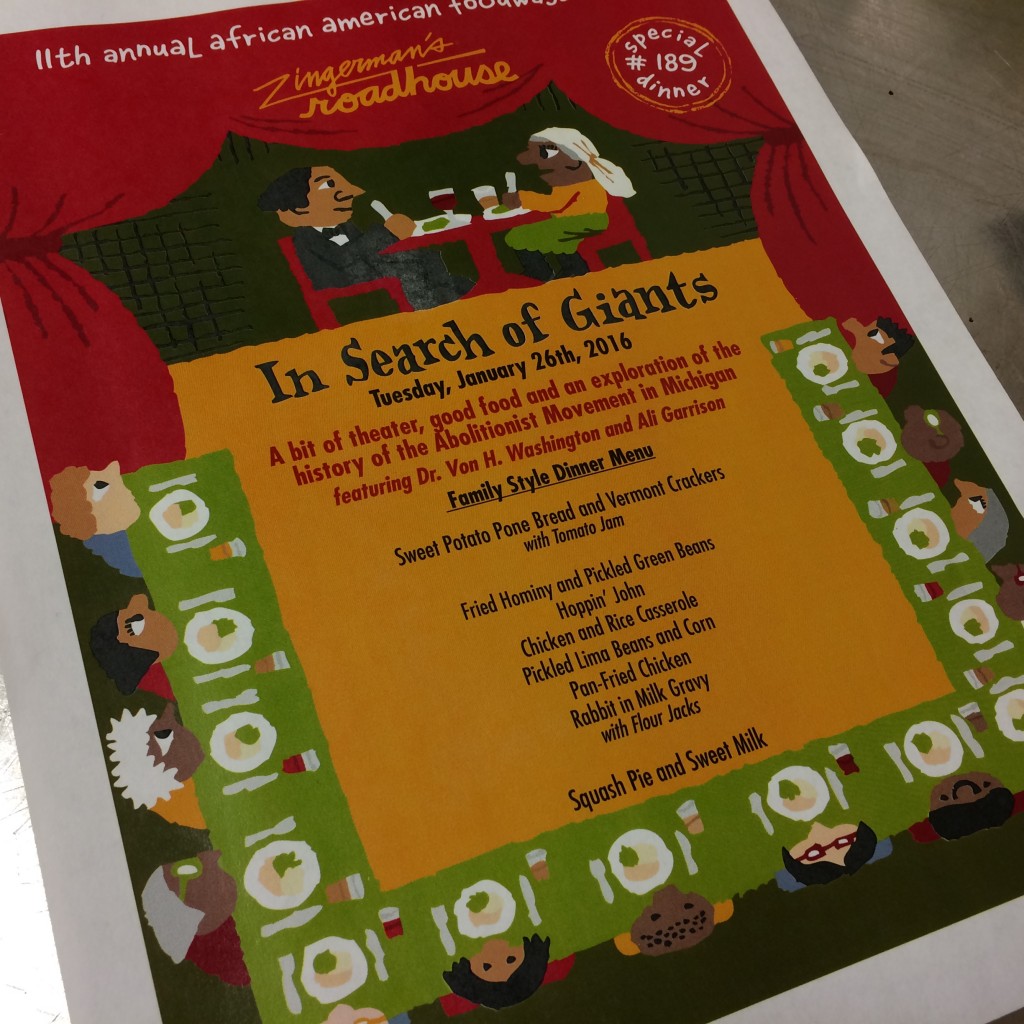
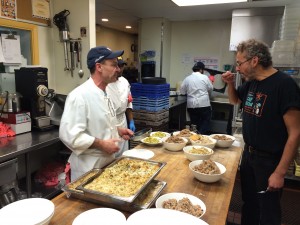
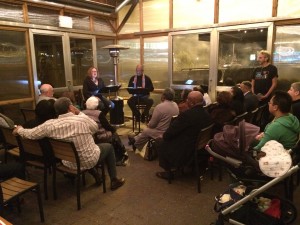
Last night’s 11th Annual African American Foodways Dinner at Zingerman’s Roadhouse was a wonderfully intimate dinner that gave a whole new meaning to the term “dinner theater.
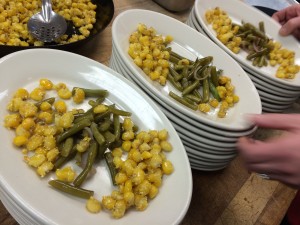
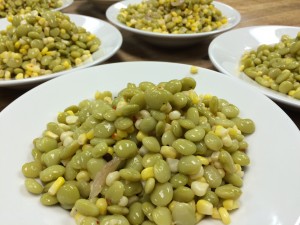
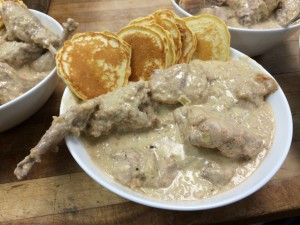
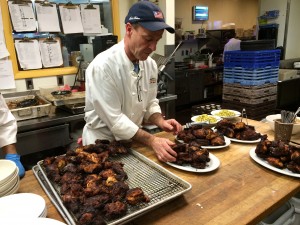
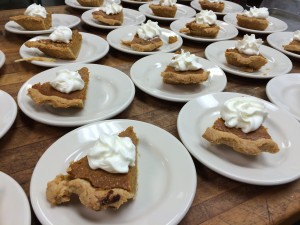
This year’s feast was based the recipes and foods common to Western Michigan in the middle of the 1800s, and Roadhouse Executive Chef Alex Young created a wonderful multi-course meal evoking this period. In keeping with the spirit of the evening, the meal was served family-style. The meal began with Sweet Potato Pone Bread and Vermont Crackers served with tomato jam, followed by fried hominy and pickled green beans, and then fresh rabbit in a rich milk gravy served with flapjacks. The next round brought big bowls of Hoppin’ John and pickled Lima beans with corn. Platters of beautifully fried chicken followed. To top it all off, diners enjoyed slices of lovely squash pies made especially for the dinner by Zingerman’s Bakehouse.
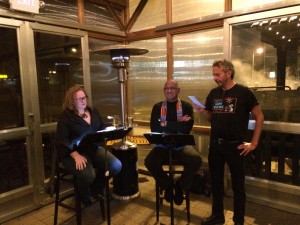
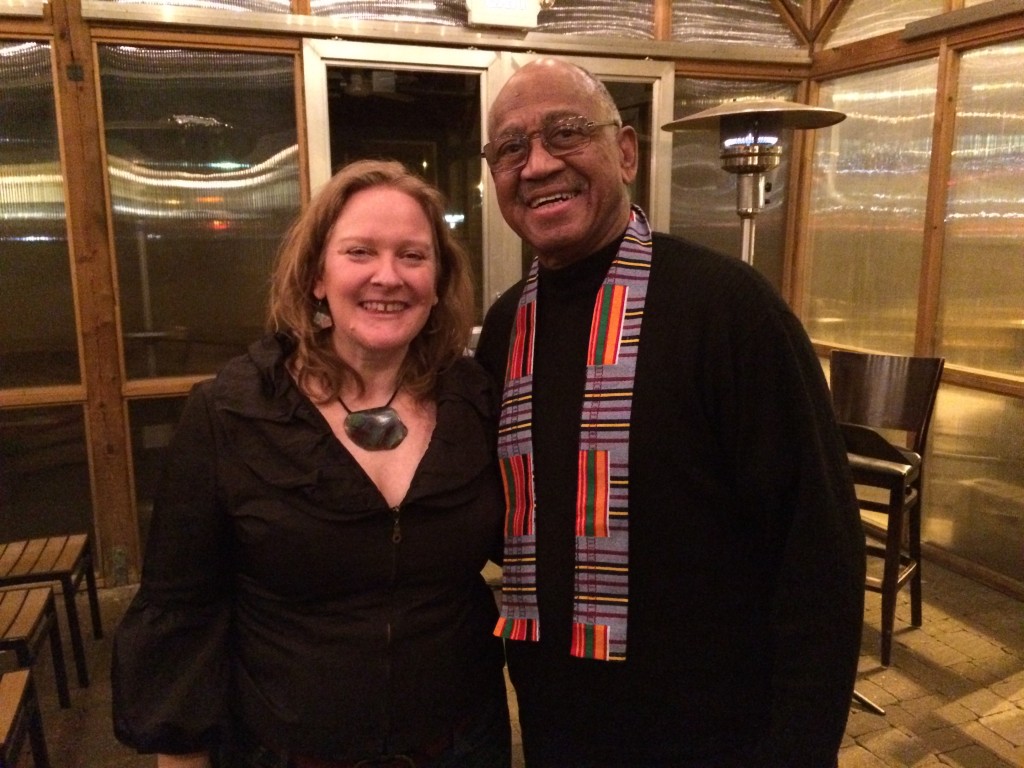
After the meal, guests were entertained this year with a special performance by Dr. Von H. Washington, a professor in Western Michigan University’s Department of Theatre, and Toronto-based mezzo-soprano (and former Zingerman’s employee), Ali Garrison. The pair presented a dramatic scene written especially for the dinner; a theatrical reading based on their research for Dr. Washington’s play, “In Search of Giants.” The play comes to the Arthur Miller Theatre on the University of Michigan’s North Campus Thursday, January 28th.
In the scene presented, Washington and Garrison play two Abolitionists, Henry Bibb and Pamela Thomas, meeting in January 1845 at the Underground Railroad Station in Schoolcraft, Michigan near Kalamazoo for a kitchen table conversation about food, freedom and human interaction. Ali Garrison is a direct descendent of Dr. Nathan Thomas, noted Michigan abolitionist whose home was a prominent stop on the Underground Railroad.
This year’s dinner was a wonderful tribute to the people of another place and time, whose contributions to the abolitionist movement through the Railroad and other activities helped bring thousands to new lives of freedom.
See you soon!
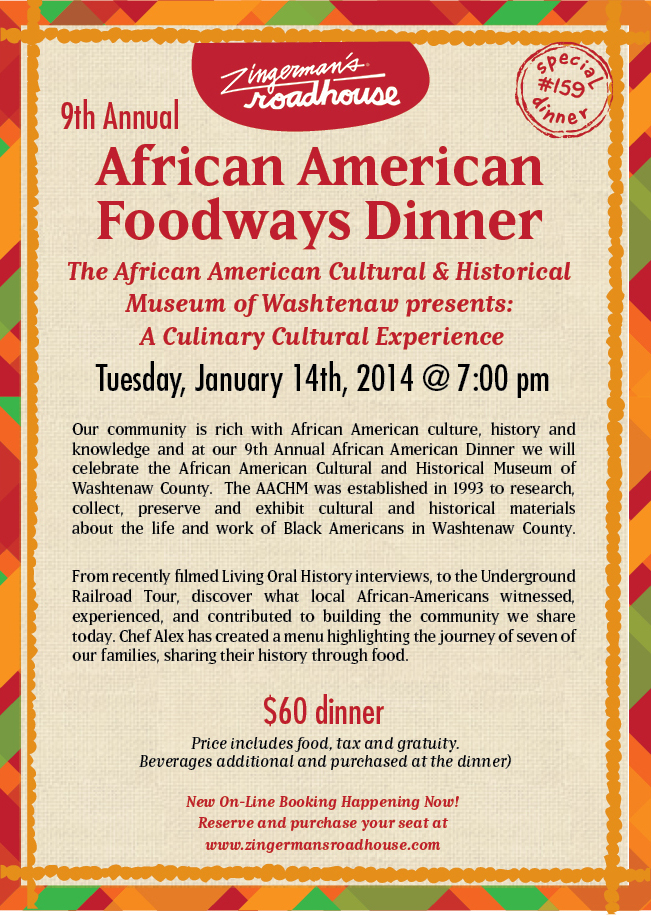 The African American Cultural & Historical Museum of Washtenaw presents: A Culinary Cultural Experience
Our community is rich with African American culture, history and knowledge and at our 9th Annual African American Dinner we will celebrate the African American Cultural and Historical Museum of Washtenaw County. The AACHM was established in 1993 to research, collect, preserve and exhibit cultural and historical materials about the life and work of Black Americans in Washtenaw County. Tuesday, January 14, 7pm.
From recently filmed Living Oral History interviews, to the Underground Railroad Tour, discover what local African-Americans witnessed, experienced, and contributed to building the community we share today. Chef Alex has created a menu highlighting the journey of seven of our families, sharing their history through food. Please join us!
New On-Line Booking Happening Now!
Beginning in January, all Zingerman’s Roadhouse special dinners can be reserved and purchased on-line. No more having to call to reserve or fill out a form and wait one or two days to get confirmation. Now when you reserve online you will immediately get a confirmation email confirming your seats, the day and time of the event and any other details you may need to know (Dinner featuring a book signing with a great author! Wine pairings available! Live music at the event! Any information we think you might want to know). We will also send you a reminder email the week before the event to make sure we are still on your calendar.
I first met Toni Tipton-Martin nearly ten years ago at the Southern Foodways Alliance’s annual symposium in Oxford, Mississippi. At the time Toni was the President of the board and I was just getting to know what has probably become my favorite food-oriented, non-profit organization (our annual Camp Bacon is a fundraiser for SFA). I go down there almost every year to learn about Southern food and culture, study complex issues and meet up with great people from all walks of food world life.
This year’s visit was no exception. When Toni and I started talking at this past autumn’s symposium, she shared a bit about the work she’s been doing on this great project called The Jemima Code. The more of the story she told, the clearer it was to me that we needed to get her up to Ann Arbor to share her work. This year’s 8th annual African-American Foodways dinner at the Roadhouse seemed like an ideal venue, and I’m thrilled that the dates worked.
Toni will be sharing the story of The Jemima Code at the African-American Dinner this coming Tuesday evening, January 22. This event will revolve around food, as we taste dishes prepared from some of the African-American cookbooks that form the core of the project. While we’re eating, Toni will give an overview of the Jemima Code. Tickets are $45 and you can reserve your spot by calling 734.663.3663.
Toni will also give a special presentation at ZingTrain on the evening of Wednesday, January 23rd. This event will feature a presentation by Toni on the topic of diversity in the work- place. We’ll also have some snacks to tide you over, because it can’t be a Zingerman’s event without any food! Tickets are $25, $10 for students.
Both events will provide an opportunity to see the amazing, nearly eight-foot high photos of “the ladies” (as Toni calls the African-American cooks, and cookbook authors) featured in the project.
I’m thrilled to have Toni up in Ann Arbor to share her story. Here’s a little preview interview I did with her just before the holidays. -ARI
 ARI: Hi Toni! I’m really excited and honored that we get to host you for these events. Can you tell everyone a bit about the project?
TONI: The Jemima Code is my way to tie together real African-American cooks to American culinary history so that we can view them as role models instead of the kind of the kitchen laborer, “idiot-savant” figures they’ve been portrayed to be in plantation history. Even though we have a lot of African-American culinary history recorded, it’s mostly known only in academic settings, and that has a very limited reach. The contributions of these great African-American culinary professionals of the last 150 years are obscured in an era of Food Network stars.
Historically, African-American cooks were defined by plantation cooking. But they were never acknowledged for the great food that they cooked at work, in their professional contexts. It really doesn’t make sense that way. We recognize Charlie Trotter or Rachel Ray or any of the modern celebrities for the cooking that they share with us on a professional level. We don’t evaluate them for what they do at home for their kids. So, I wanted to see what these African-American cooks had done in their day-to- day work, and do it without looking through the lens of sexism or racism. If we were only going to evaluate these women and men on their culinary ability on a professional level, what would we see?
That’s how I feel we’ll be able to use them as role models. When you look at them as a group, you can see that they brought a wide range of skills and that we can learn from their work at many levels. We can learn from them about healthy cooking. We can learn about vegetarianism because there were some that did that for a living. We can learn about beautiful food from the ones that were amazing professional caterers. We can learn about order in the kitchen, we can learn about entrepreneurial skill from women like Abby Fisher and Malinda Russell who had small businesses back in the 19th century. They’re all things that we just don’t stop long enough to think about. But, they had to be good business people or they wouldn’t have been able to sell their products in the market.
I wanted to get real people to talk about their history and real cooking. People like Freda de Knight. She wrote the Ebony Cookbook: A Date with a Dish in 1948. It was an anthology cookbook, and it takes the home cook all the way from appetizers to desserts. One of the things she made clear with that book is that it’s not true that African-American cooks can only cook Southern dishes.
So that’s my goal with the project. To get people thinking about the great professional culinary contribution of African-American cooks, and making the work they did relevant to people of every age and every background.
ARI: What got you thinking about it?
TONI: A long time ago when I was a reporter at the L.A. Times I discovered there were lots of references in Southern books to African-American cooks but they were generally just acknowledged for providing the labor in the kitchen. The black cook was dismissed as an afterthought. And that just did not mesh with my own experience. So being a good reporter I started looking for a primary source, someone to interview. I was just trying to gather as much information as I could. And cookbooks were the logical place to get that first person report. So I started collecting cook- books written by African-Americans.
John Egerton, who writes beautifully about Southern history, food and culture, and was one of the founders of the Southern Foodways Alliance, got me started on the cookbooks. I was a young naïve journalist and I hadn’t gotten much affirmation for my work. But, I went to hear him speak; he had a Xerox copy of a book he had just encountered at the Library of Congress. I started talking to him, and he said, “I didn’t know what I was gonna do with this when I made the copy, but you should have it.” And what he told me was validated by a talk I had with Jan Longone (founder of the Longone Center for Culinary Research,and Culinary Curator at University of Michigan’s William L. Clements Library)
Doris Witt wrote a great book called, Black Hunger: Soul Food And America in 2004. There’s a bibliography in the back and I decided I was going to get a copy of each book. So, every time I was able to find and buy one of the books I would cross it off the list. When eBay got going I started finding them all over. I paid a lot of money for some them. It became almost an obsession for me. And now I have almost all of those on the list!
ARI: What’s your background? How long have you been working with culinary history?
TONI: I’ve spent about twenty-five years as a food and nutrition reporter. I grew up in LA. My parents came from the South but they left skid marks when they moved west. They didn’t talk about the South much at all. The only connection I had was through relatives. My mother was vegetarian, a tofu- and yogurt- eating Californian. I was a beach girl. And I started at the LA Times as a food and nutrition writer right out of college. But as an African-American I was invisible on a staff of 16. I was working for Ruth Reichl when the job of Food Editor at the Plain Dealer in Cleveland became available. She said “Of course you have to take this job if you want to pursue this writing and your books.” As part of a staff of 16 at the Times I would never have been invited anywhere. So, when the Cleveland Plain Dealer offered me a position as a food writer I decided to take it. While I was there, John Egerton invited me to the first meeting of the Southern Foodways Alliance back in 1997. So, I’ve been around food history for a long time.
One important thing that happened to advance the project in Cleveland was a woman named Vera Beck who ran the test kitchen at the Plain Dealer. She was from Alabama. She was the most gracious, generous, amazing cook, but she was completely dismissed and disregarded at the paper. I never got over that, or forgot it. She helped me get in touch with my Southern self. Growing up as I did, I didn’t have much connection to my Southern roots. She really helped me connect with the food she would cook for my breakfast while I was pregnant with my middle son—grits, fried green tomatoes, biscuits—things that I love. I got to see in her the expression of love and wisdom that was communicated in her food. And I saw it in a professional way that I hadn’t seen in my aunts when they were cooking at home when I was growing up.
ARI: What has the reaction been to The Jemima Code so far?
TONI: So far, it’s been really amazing and surprising. When I first started, I was giving the talks with just the photographic images of the women from The Bluegrass Cookbook [by Minnie Fox, which Toni has published in facsimile] in beautiful ornate picture frames. And then the next iteration was to put the photo images into a slide show. But then, I was invited to install an exhibit of the cookbook authors in Houston. I thought “Wouldn’t it be cool if we could make it so other people had the same re- action to these women that I did?” There’s a mix of reactions. There’s an expression of pride, like, “These are my people and they contributed in ways I didn’t know about.” There’s a little bit of angst, too, that comes out when other people view the images, especially in the South. The audiences in the South are pretty quiet when I present. But after I speak there’s always a long line to come up and ask me questions or make private comments as people wrap their heads around it in a personal way.
That’s what’s been so cool about blowing the images up to such a big size. Why 7-1⁄2 foot tall images? That was just the height of the ceiling at Project Row Houses where we showed them in Houston. I didn’t want them to seem too big because black women were so often portrayed that way. But, it turned out that the size is ideal for engaging people on a deeply personal level. For instance, connecting with “the ladies” allowed people from the South to explore a part of their upbringing that you hadn’t been allowed to talk about. A friend from Charleston once talk- ed to me about how he worshipped this black woman who was in the kitchen when he was growing up, but then hearing his family disparaging black people in the living room was very unsettling. He’s not the only one that talked about having to close their whole memory about that era, but this exhibit allows them to reopen that set of memories. In that sense, it’s an extension of the work of Southern Foodways Alliance. The South still has plenty of wounds to heal.
Please join us for these very special events:
8th Annual African American Dinner
With special guest Toni Tipton-Martin
Tuesday, January 22, 7-10 p.m.
More information & reservations here.
Deliciousness & Diversity: A Discussion with Toni Tipton-Martin
Wednesday, January 23, 7-830 p.m.
More information & reservations here.
In anticipation of the upcoming 8th Annual African American Dinner, we’re featuring some of Ari’s past writing on African-American foods served at the Zingerman’s Roadhouse (past & present, call for current menu).
Anson Mills Heirloom Cornmeal
This stuff is to standard issue cornmeal what the Zingerman’s Bakehouse’s Farm Bread is to Wonder®. I feel fairly confident that it’s head and shoulders more flavorful than any other cornmeal you’re going to find around here. It’s one of the most popular items on the Zingerman’s Roadhouse menu and we sell it for folks to take home and make mush (which I love!), use for “breading,” for frying fish, making hush puppies (don’t forget the bacon fat!), fried green tomatoes or really marvelous cornbread.
Fried Catfish
It’s probably old news to many but I first heard this in my conversations with Adrian Miller, who mentioned that old saying that “Fish should swim twice: once in water, and the second time in cooking oil.” Any reading of West African cookery will show how big a part fish plays there—catfish were common to both continents, and Africans likely brought the deep fat frying used in their homelands to North America. Although Mississippi is the catfish capital of the world, the frying went north during the Great Migration. Back in the ‘30s there were sidewalk signs all over Harlem promoting “Hot Fried Cat.” We’ve long had it on the Roadhouse menu both in whole fish form for dinner or fried fillets on a sandwich for lunch. Comes with hush puppies, slaw and homemade tartar sauce. And be sure to ask for a little hot bacon fat on the side to dip the hush puppies in.
Eastern North Carolina Barbecue
Now this is a subject of great length in its own right, and the issues of race and politics that go with it are numerous; so much so that I’m going to leave them alone here for the moment. For a lot more background see the really fantastic oral histories that Amy Evans did on the Southern Foodways Alliance website. For the moment, we’ll defer to the words, wisdom and views of Mr. Ed Mitchell, the North Carolina native and long time pit master, who trained us how to prepare Eastern North Carolina pork many years ago. Mind you, this is merely Ed’s truth so there’s no need for folks who have a different view (of whom I know many) to refute it.
“Culturally,” Mr. Mitchell told me, “BBQ was started by black folks. During the era of slavery, they made barbecue for white people and then they were given the innards and undesirable cuts. That’s why they got used to cooking all those cuts.” He paused while I processed what he was saying, and also to let me savor the taste of his barbecue which I was eating while he talked. “My point,” he added, “is that it was a necessity for them to survive.”
The Eastern North Carolina barbecue is easily one of the most popular dishes at the Roadhouse. We’re using free-running, antibiotic-free, heirloom breed hogs (which have far more fat and much more flavor than commercial hogs), smoked on the pit (that Mr. Mitchell helped us build) over oak logs for a good 14 hours or so, then dressed with a traditional Eastern Carolina vinegar sauce. A lot of folks now know that they’re supposed to put the slaw that comes on the side on the pork sandwich, not eat it as an extra and we get far fewer people asking “where’s the barbeque sauce?” I’ll say thanks to Mr. Mitchell and to Frank Pratt, Roadhouse pit master and Mississippi native who’s carrying on Mr. Mitchell’s teachings. Lolis Eric Elie, New Orleans-based essayist and author of the great book on the subject, Smokestack Lightning, gave our pulled pork very high marks to when he came up here to visit a couple years back.
Perhaps the most interesting point in this context today was Mr. Mitchell’s aside to me: “Barbeque now crosses all social and ethnic lines. Prepared for any special occasion. It’s a mediator. When conflicting sides put down what they’re doing and eat together.” Come on down and ask for a taste!
Please join us in January for two very special events with Jemima Code author Toni Tipton-Martin:
8th Annual African American Dinner
With special guest Toni Tipton-Martin
Tuesday, January 22, 7-10 p.m.
More information & reservations here.
Deliciousness & Diversity: A Discussion with Toni Tipton-Martin
Wednesday, January 23, 7-830 p.m.
More information & reservations here.
In anticipation of the upcoming 8th Annual African American Dinner, we’re featuring some of Ari’s past writing on African-American foods served at the Zingerman’s Roadhouse (past & present, call for current menu).
Greens
While we may alter the type of green we use on any given day, it’s almost always either collards, kale, mustards, turnips or, on occasion, radish greens. We cook ‘em for hours with lots of applewood smoked bacon, and serve ‘em with a bottle of pepper vinegar on the side. As per Jessica Harris’ comments, the use of peppers and pepper sauces is woven through all African American cooking—sprinkle a few drops of the spicy vinegar on the greens and you’ll add a bit of zip and some cultural context to an already good offering. Secret tip—ask for a bit of extra pot likker on the side. It’s the “broth” in the pot from the cooking of the greens. Three hundred years ago it was often given to slave children to give them much needed nutrients in less than ideal living conditions. Today it’s worth having some just because it tastes so good. But I think it’s something worth raising a shot glass of as a respectful toast to the slave cooks who did the unglamorous work to develop the roots of African American eating that we get to enjoy today.
Roadhouse Fried Chicken
Sunday food from centuries past, now available every day here at the Roadhouse. Amish raised free range chickens, buttermilk batter, only subtly spicy in the style of Gus’ Fried Chicken down in Mason, Tennessee. On the Roadhouse menu it lists this as my favorite, which is true if for no other reasons than, a) it’s really darned good, and b) who makes it at home? I know I don’t. So I appreciate it every time I get to taste it at the Roadhouse. As do a whole lot of other folks—it’s the best selling item on the menu!
Carolina Gold Rice
South Carolina and the Sea Islands off its coast are probably the rice-eatingest places in the US. The story of how African slaves contributed the know-how and labor to make this very special rice such a huge economic and culinary success is too long to tell here. Take a taste of this very special rice by tasting the Deli’s rice pudding or ordering a side of “Charleston Ice Cream” at the Roadhouse. All I’m going to say is that everything about this rice is exceptional—its history, its modern day revival after 75 years of being out of production, the way its being grown and processed by Glenn Roberts and the crew at Anson Mills, and, most importantly, the way it tastes. Don’t miss this very special, if little known outside the Lowcountry, African American exercise in good eating.
Sweet Potato Fries
Probably one of the most popular dishes we’ve got at the Roadhouse. We must put hundreds of orders of them every week though few people realize that these much-loved sweet potato fries have got Gullah roots and that the recipe originates on the Sea Islands off the coast of South Carolina and Georgia. I learned it from Sallie Ann Robinson’s book Gullah Home Cooking the Daufuskie Way. I love where they “come from” as much I love their flavor (both are great!) so I do my best to tell everyone I serve them to about having learned it from a Gullah cook.
CrabCakes
I hadn’t thought to include these here but Adrian Miller’s mention of the import of Chesapeake Bay cookery as being one of the four most important areas of African American cooking made me reconsider. I had a belated recognition that a lot of our best crab cake customers (including Rose Martin, a woman whose community work with the Peace Neighborhood Center I much admire and appreciate) are African Americans. Check out the book, Crab Cakes by Pulitzer Prize-winning writer James McPherson. Mr. McPherson is a native Baltimorean and a lover of crab cakes, as witnessed in this excerpt from his memoir: “These are a very special delicacy, made Maryland style. . . . All crabcakes are good, but Maryland crabcakes have special ingredients, or spices, not found in those crabcakes made according to the recipes of other regions.” Agreed fully.
Now, all that said, just offering crab cakes on the menu at the Roadhouse isn’t any big thing really. What’s special here though is that they’re made from only the top grade, fresh Maryland lump crab. None of the lower grade backfin, “special,” or frozen crab that comes here from Asia. A lot of people judge a crab cake by its size but what’s critical is the flavor and the quality of the crab (only lump!), along with the use of just enough bread crumbs to bind and coat the crabcake. Opinions on the subject run strong from pretty much everyone from the area. To quote baker and cook Mark Furstenburg, “As for crab cakes this is a very important subject not to be trifled with by anyone other than a Baltimorean.” As one, he gets to weigh in. “Everyone in Baltimore has a point of view about crab cakes. Mine, however, is the correct one.” Which seems to be true for everyone in the area! Fortunately I’m not from there so I don’t feel compelled to be correct. I just like eating the crabcakes at the Roadhouse.
Please join us in January for two very special events with Jemima Code author Toni Tipton-Martin:
8th Annual African American Dinner
With special guest Toni Tipton-Martin
Tuesday, January 22, 7-10 p.m.
More information & reservations here.
Deliciousness & Diversity: A Discussion with Toni Tipton-Martin
Wednesday, January 23, 7-830 p.m.
More information & reservations here.