Tag: CHEESE
Really good raw milk cheese from Quebec
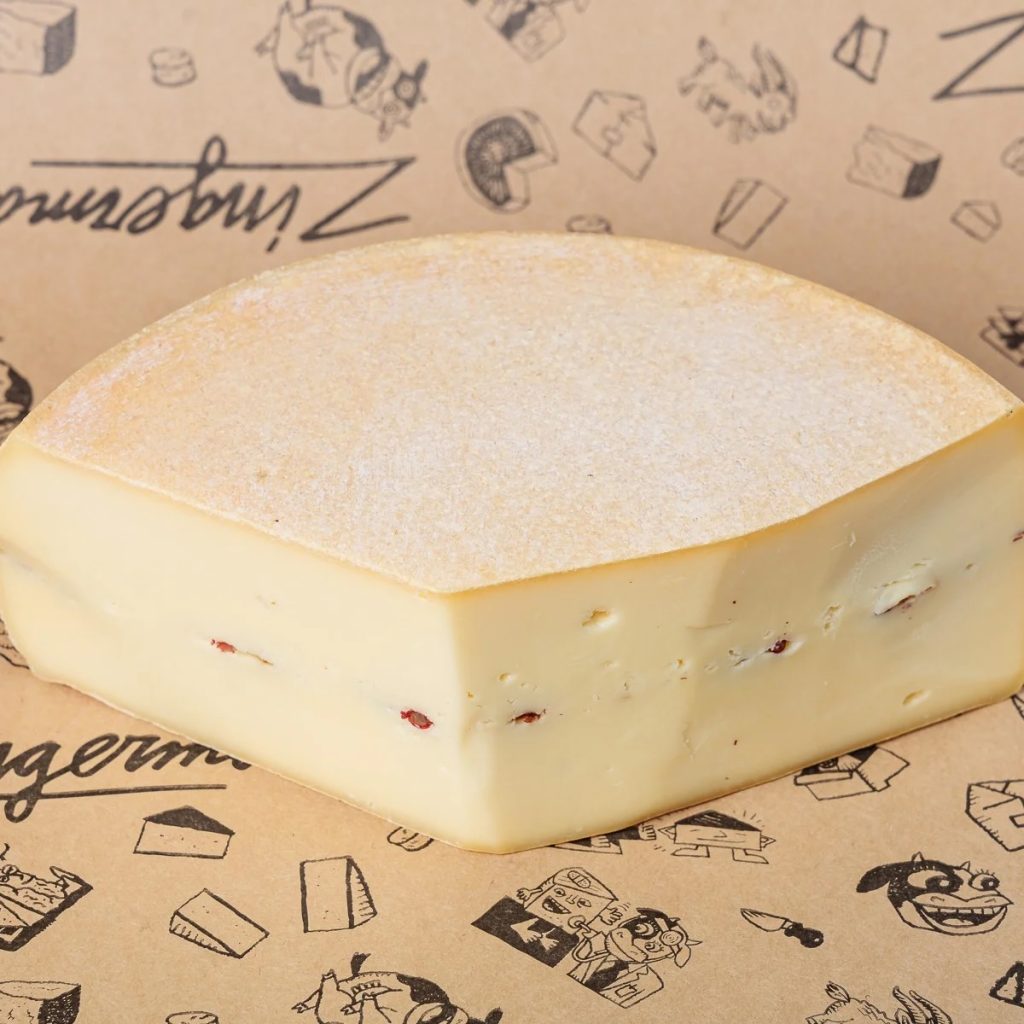
I’m not totally sure what the current status of American trade tariffs on Canada is, but I’m very confident in expressing my enthusiasm for this newly arrived artisan raw milk raclette from Quebec we’ve got on hand at the Deli. Full-flavored but still surprisingly gentle at the same time, it has a lovely light layer of pink peppercorns running horizontally down its center. (For those in the know on traditional French cheese, that makes it look, from afar, a little like a Morbier.) Whether it’s for formal raclette-making, sandwiches, or snacks, Raclette de Compton au Poivre Rose is a really good choice!
The Raclette au Poivre is crafted by the folks at Quebec’s Fromagerie la Station, located, per the cheese’s name, near the village of Compton, to the east and slightly to the south of Montreal. The cheese won Best of Show at the American Cheese Society competition in 2024—its buttery, nutty flavor marries well with the fruity, floral, gentle spice of the pink peppercorns. The flavor combination comes together even better when the cheese is heated, either to make raclette, a grilled cheese, or an omelet.
The Raclette au Poivre is made by fourth-generation farmers—the farmstead was founded nearly a hundred years ago when Alfred and Aglaé arrived to work the land. The farms’ 150 Holsteins graze in the open on their organic meadows. The complexity of the flavor and the clean, long finish speak volumes about the care and skill of the farmers—they’re crafting some darned good cheese!
Carole Routhier, part of the third generation at the creamery, says,
The land does not work, does not operate. She devotes herself. Agriculture is the fruit of collaboration with stakeholders such as sun-wind-rain-forests-sky-lakes-rivers-moon-birds-insects-ground-animals-humans etc. In order to nurture, to protect, and care for each of the stakeholders.
Pierre Bolduc, president and also part of the family, says,
Soil in my hands makes me smile! I just can remember how old I was when I removed my first stone from the field to make it better. Since I was a child, nature was and still is my world; I have air from Compton in my lungs and blood from Beauce in my veins. I walk my land to give a message: take care, take good care of the land. Working on the land is my great passion.
I say, grab a good-sized chunk, take it home, and enjoy. Be sure to let the cheese get to room temperature before you eat. Great with the Bakehouse’s True North bread and Vermont Creamery Cultured Butter!
Ring up your raclette
The “Thirteenth Apostle” from a family-run dairy in Quebec
About halfway between Montreal and Quebec City is an artisan dairy that’s worth driving well out of your way to visit.
The Fromagerie du Presbytère began about 100 years ago, when the Morin family began construction on the first buildings of the Louis d’Or Farm. The dairy is now run by the fifth generation of Morins; four of Monsieur Morin’s kids work there. The farm provides all the milk needed to produce their cheeses. The cheeses are aged in an old church, and there’s a shop where locals and travelers alike can grab a bite to eat and buy cheese. Two decades after the modern-day cheesemaking began, the dairy is producing some of the most highly respected cheeses in Quebec.
While the Treizième Apôtre cheese is new to us, cheese is anything but new to Quebec. There are over four centuries of dairy tradition in the province. French colonists, settling on what had been indigenous land, brought cows, sheep, and goats by ship and soon began to make cheeses akin to what they had known at home. In that era, cheesemaking was mostly a home-based activity, so most of the settlers would have been familiar with how to make it. After the British took Canada, many farmers shifted to making cheddar for export to Britain. Over the years, the region became known for its aged cheddars and also for the Trappist-type, washed-rind Oka cheese, which was originally made by monks settling in the area after being expelled from France. When we opened the Deli in 1982, that’s pretty much all there was to be found in the province. Cheesemaking gradually grew, though, and by the late ’90s, there were about 30 dairies in Quebec. Today, the number is nearly double that!
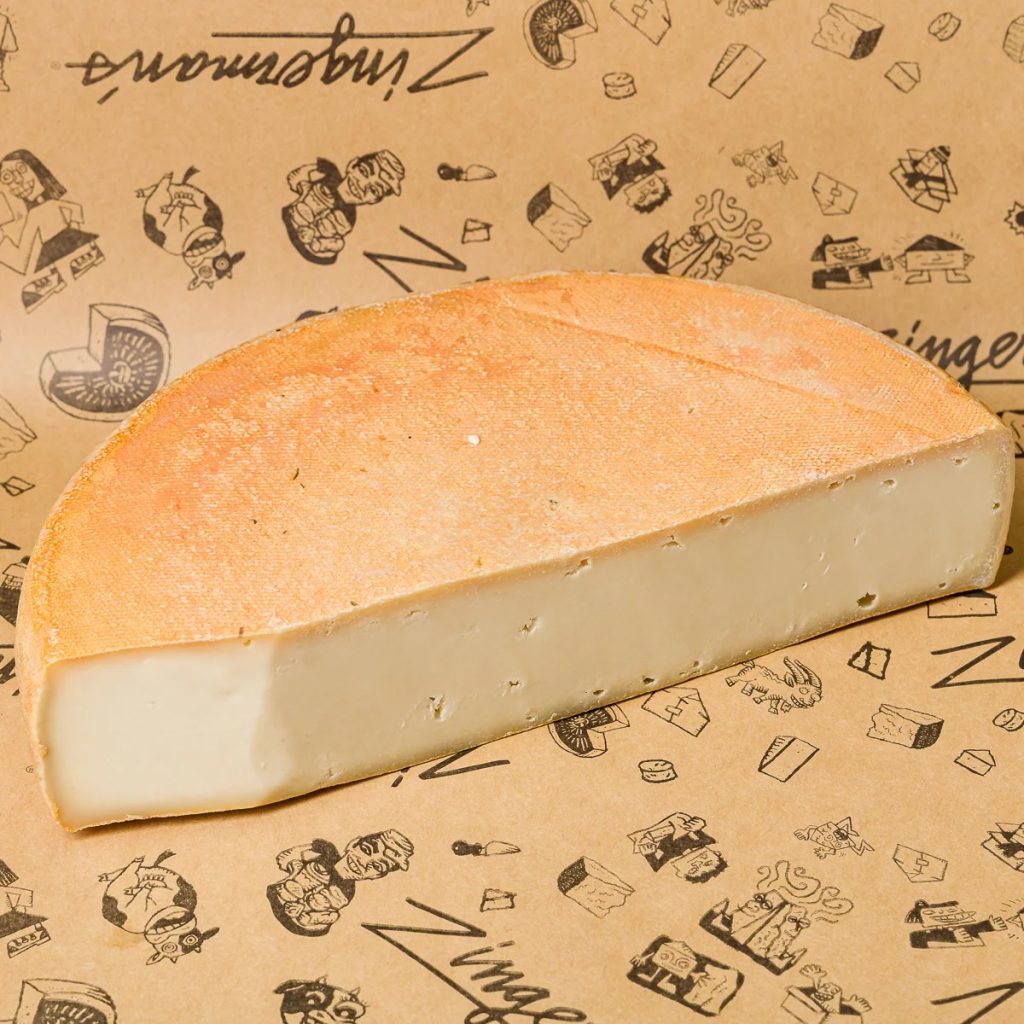
In total, Fromagerie du Presbytère makes a dozen artisan cheeses. This one, Treizième Apôtre, or “Thirteenth Apostle,” is especially awesome! It’s made from raw, local goat milk, in form that resembles a Swiss Raclette: semi-firm, creamy, modest but full of flavor. The Fromagerie actually has winter raclette events, which apparently sell out incredibly quickly.
The quality of the milk is, of course, critical to the cheese. The fact that this is a farmstead cheese means that Monsieur Morin and family manage the process all the way through. They have a herd of Holsteins and Brown Swiss (the same special cows that are used for the remarkable Valserena Parmigiano Reggiano). Morin understands the import: “It all starts with the milk, and the care we show the cheese as we make it.”
Treizième Apôtre is especially versatile: a terrific table cheese and great in cooking as well. It’s got hints of hazelnut and a lovely clean finish that make it intriguing to fans of artisan cheese and a nice offering to novices as well. It melts beautifully in a grilled cheese or a raclette. Melt it over potatoes or grate some on gnocchi. I often just eat it as is, or with some True North Bread from the Bakehouse, a bit of Vermont Creamery Cultured Butter, and some fresh fruit on the side!
Given the situation with American-Canadian trade at this time, supplies are somewhat limited. Swing by soon and grab a wedge to bring home for you and yours! Bon appetit!
Try the Treizième

What is a cheesemonger? Just for fun, guess the right answer:
- A farmer who makes cheese.
- An artist who makes sculptures out of cheese.
- An athlete who chases wheels of cheese down mountains.
- A merchant who shares their cheese expertise with shoppers.
Did you guess d? Nice work! That’s what Zingerman’s Delicatessen cheesemonger (aka professional curd nerd) Scott Evans does for a living. He decides which cheeses to buy for the Deli’s specialty food shop and helps customers choose which ones to take home. Pairing a shopper with the perfect cheese is an art. Figuring out how their sense of taste works is the name of the game.
“You can give someone a cheese they walked in wanting but had never heard of, and that they didn’t know how to ask for, if you know how to ask the right questions,” Scott explains.
The key is knowing how to ask “why?” Sometimes, Scott asks why a customer likes a particular flavor. Other times, he explores why they’re drawn to a certain texture. Often, he inquires about how they want to use the cheese.
“Nailing that down is what gives them an extraordinary experience,” Scott says.
Extraordinary cheese experiences weren’t a big part of Scott’s upbringing. Like many Midwesterners, he encountered so much block cheddar that he almost stopped noticing it. As he grew up, he started appreciating more complex flavors, and as he entered the culinary world, he learned how to tease out what shapes people’s gustatory preferences.
An appreciation for “why” questions drew Scott to Zingerman’s in 2019. He’d worked behind the scenes in restaurants, and the Deli’s specialty food shop offered an opportunity to interact with customers face to face. He started specializing in cheese – especially cheese from American producers – in 2021.
“I help people learn that a cheese from Indiana or Wisconsin can be as good as anything you’d find abroad, and that it doesn’t have to be shipped halfway across the world,” Scott explains.
Learning from cheesemakers is one of Scott’s favorite parts of the job. Visiting farms and other producers is a special perk. He’ll never forget his first trip to Wisconsin to watch suppliers work their magic.
“That trip crystallized the value of cheese for me, and how different it is from other products,” he explains. “Cheese is an agricultural product at its core: It’s weather, it’s grass, it’s cows. That makes it regional, seasonal, and something that changes. So much work goes into it, and so many hands touch it. They all influence what you’re ultimately selling.”
Ready to tap into Scott’s expertise? Check out Real Simple’s guide to cheese shopping.

When dairy deliciousness and doing the right thing come together
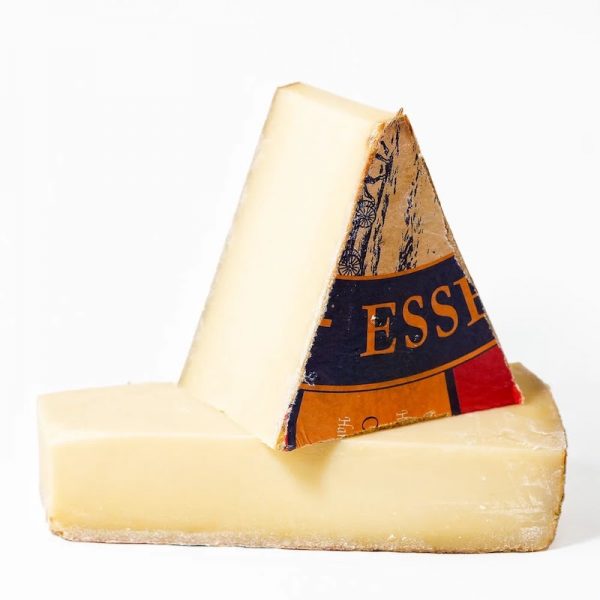
While the country seems suffused in controversy on any number of social issues, here’s a cause that could bring anyone who loves great food into the fold: the campaign to Save The Emmentaler® is calling for our help!
Gourmino’s Save The Emmentaler initiative is committed to supporting “small-scale cheesemakers and their centuries-old craft, promoting the genuine, natural qualities of Emmentaler AOP as an authentic product that goes beyond tradition to ensure its continued excellence.” I’m on board!! If you’d like to enlist as well, the action step is easy—swing by the Deli and buy a bit of this terrific cheese! (If you’re out of town, just email [email protected] and we can ship you some!) Don’t delay! Supplies of this handmade artisan offering are, not surprisingly, sort of limited!
Emmentaler AOP has long been revered as the “king of Swiss cheeses”; it comes in a massive, 30-inch diameter, 200-pound wheel, and features distinctive holes. Its iconic shape is so well-known that children often draw it when depicting cheese. Tracing its origins to the 13th century, Emmentaler AOP is still crafted by this small number of tradition-minded cheesemakers using the same centuries-old methods. Old-school Emmentaler like this is made only in the Emme Valley, in the central part of Switzerland, about two-thirds of the way from Zurich to Bern. It dates back to the same era as the founding of the Swiss democratic system, in the late 13th century and has been exported since the 16th century. Minimum standards have been legally in place since the formation of the Swiss Cheese Union in 1901, the year before the Deli’s building was built. The far stricter Appellation d’Origin standards were put in place a century later, and these are the standards that the Emmentaler AOP we’re working so hard to save has exceeded. You really can taste the difference. It is, in truth, a truly remarkable cheese. The mission of the Save the Emmentaler movement is both simple and powerful: “Preserve Emmentaler AOP’s integrity through sustainable, small-scale cheesemaking and traditional ripening methods.” Here are six reasons that it really resonates deeply for me.
- It tastes terrific—there are hundreds of “Swiss cheeses” in the world, but they are not the same as this one, the original. It is to the flavor of supermarket “Swiss” what a stuffed whale would be to the sort that swims in the ocean and that most everyone reading this will also want to help save. It is an ideal fit for our longstanding definition of quality at Zingerman’s: full-flavored and traditionally made.
- When a community loses its cheese, it loses part of its spirit and connection to place. As Sinead O’Connor sang in “I Want to Talk About Ireland,” “We’ve lost contact with our history … And this is what’s wrong with us.” The work behind Save the Emmentaler was established to keep that from happening. Rooted, connected community is the core of caring; healthy countries are made up of caring communities.
- Switzerland is one of the oldest democracies in the world, and craft-based, cheesemaking spread throughout the country is one of its anchors, economically, environmentally, agriculturally, and culturally.
- The more we can demonstrate that there IS a viable market for traditional foods like this traditional Emmentaler AOP, the more people are likely to take on the work of making them.
- Full-flavored foods like this create joy and beauty in the world. And we could certainly use more of both!
- As I discussed in the pamphlet “A Revolution of Dignity in the Twenty-First Century Workplace,” this system is built on the foundation of dignity at every level. The farmers, the cows, the land, the community, the cheese, and the customers—all are treated with respect and care in this wonderfully regenerative process.
What makes this cheese so special? It starts with the cows. They graze on a diverse diet of grasses and herbs in open meadows, which gives the milk—and the cheese—a unique and rich flavor. The herds are small, usually just 12 to 20 cows, allowing farmers to maintain a close connection with each animal. Healthier, well-cared-for cows naturally produce higher-quality milk. The milk itself is raw and delivered to the dairy twice a day. It still arrives in old-school milk cans—unlike industrial pumping (which is faster but can damage the delicate fat globules in the milk), cans can help preserve quality. The milk is made into cheese within 12 hours of milking, ensuring it’s as fresh as possible when the process begins.
Gourmino itself was founded nearly a quarter century ago by a quintet of quality-conscious farmers in the interest of helping sustain traditional Swiss cheeses into the 21st century. Today the group is up to 12 producers, and, I will say with confidence that every single cheese we’ve ever gotten from Gourmino has been great!
The Emmentaler AOP Reserve we have on hand right now was made by the Schöpfer family at the Mountain Dairy of Kleinstein. It’s been aged for an impressive two years. The affinage process begins in Gourmino’s Langnau Emmental cellars, where the wheels are hand-washed weekly. Later, the best wheels are moved to the facility in Reichenbach Mountain Galleries for what they refer to as “Affinage in the Mountain,” since the cellar is literally carved into the mountain.
With 24 months of maturing, it should be no surprise that the flavor of the Emmentaler AOP Reserve is meaty, concentrated, complex, and compelling. There’s a small touch of sweetness, a good bit of lovely bitterness. Eat it at room temperature to access its full flavor. Great with some of the heirloom apples we can still get around here this time of year! Totally terrific on slices of Bakehouse’s Dinkelbrot, which have been spread generously with Vermont Creamery Cultured Butter.
For anyone who loves full-flavored traditional cheese, the Emmentaler AOP Reserve is a really great choice! And, the more we eat it, the more demand goes up, and the more effective the campaign to Save the Emmentaler is going to be!
|

|
|
|