Tag: gelato
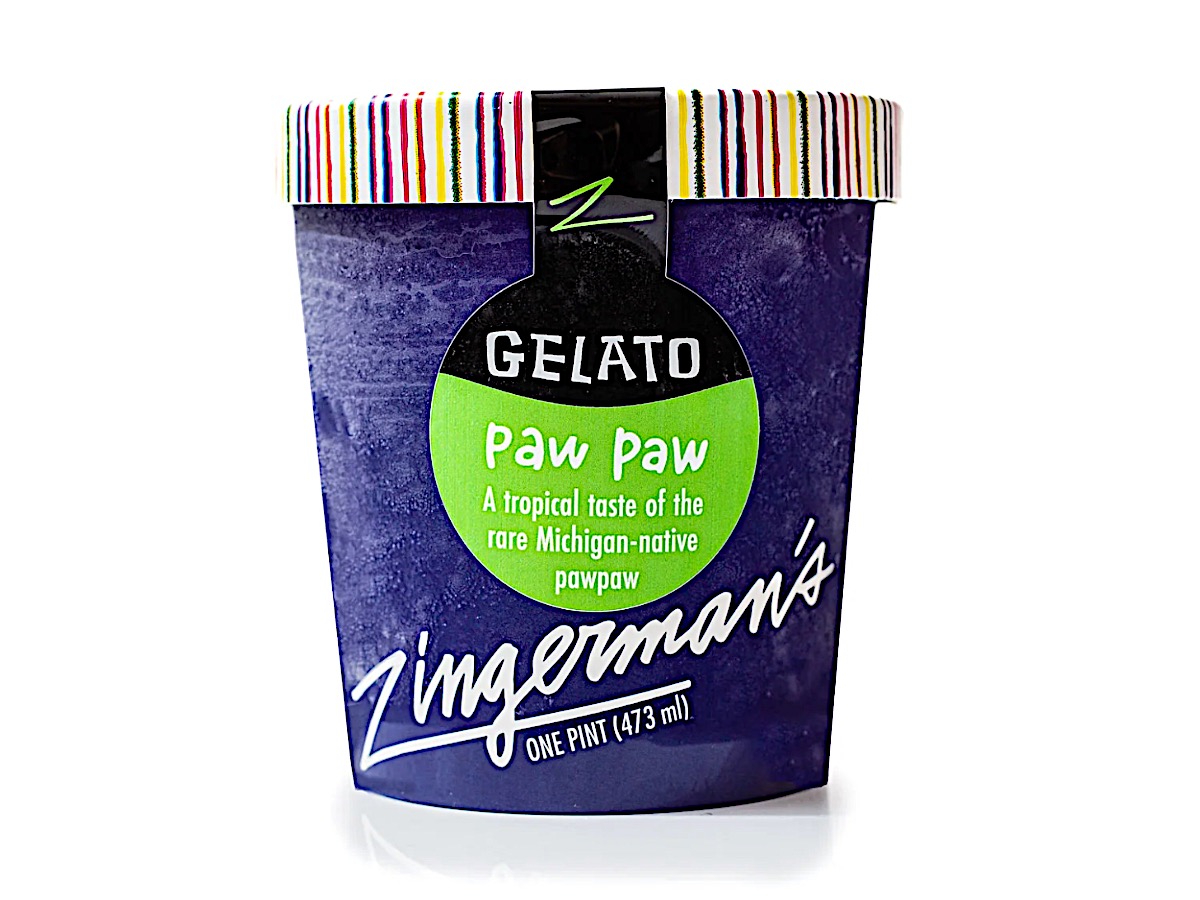
America’s secret fruit shows up on the Southside
|
| Check out all of the Creamery’s gelato flavors |
Want more from Ari?
Sign up for Ari’s Top 5 e-newsletter and look forward to his weekly curated email—a roundup of 5 Zing things Ari is excited about this week—stuff you might not have heard of!
Follow us on social media: Instagram, Facebook and Twitter, @zingermanscommunity.
|
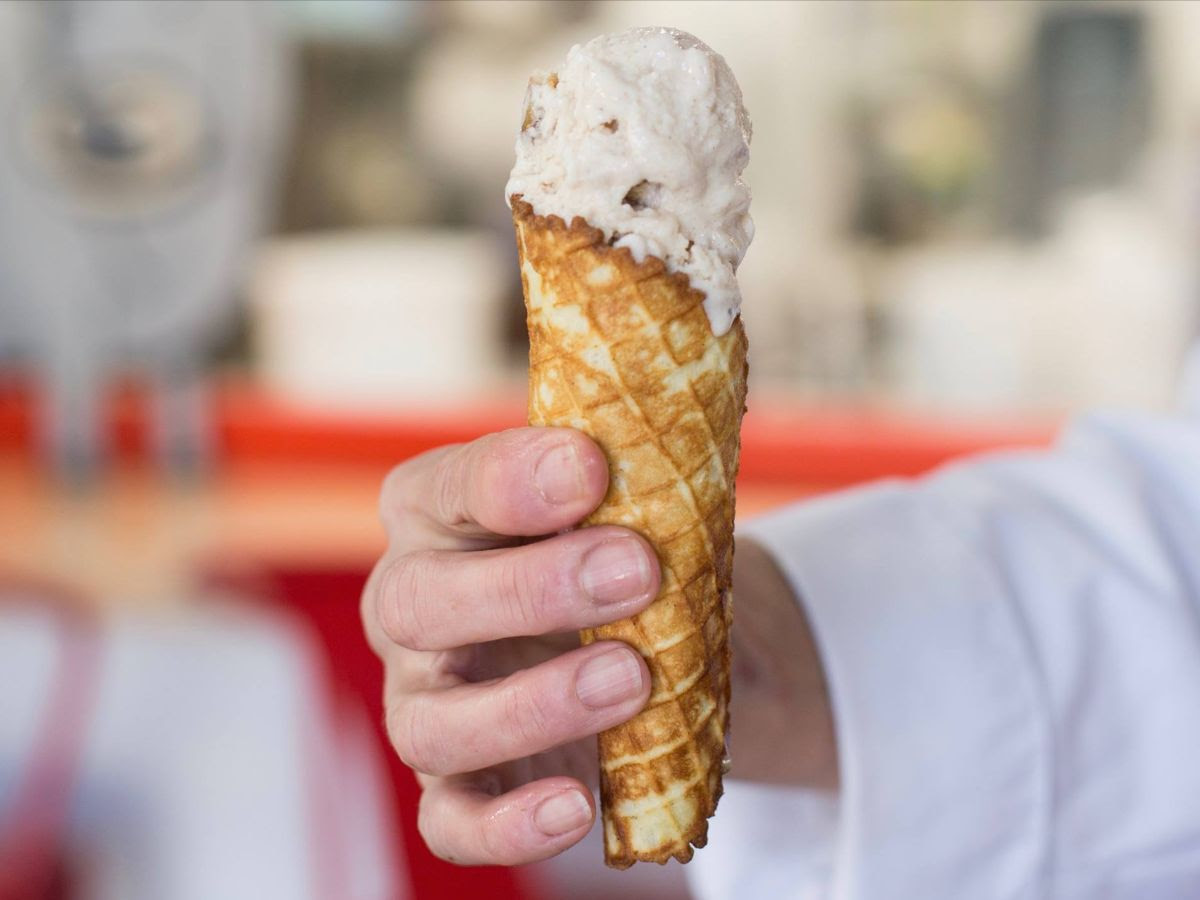 Super-tasty Zingerman’s synergy by the spoonful!
|
Want more from Ari?Sign up for Ari’s Top 5 e-newsletter and look forward to his weekly curated email—a roundup of 5 Zing things Ari is excited about this week—stuff you might not have heard of!
|
5 Ways to Enjoy: Wild Fennel Pollen
Pollen So Good You’d Befriend a Bee to Get More
Fennel pollen is that special, though luckily there’s no need to pal around with pollinators to try it, you can buy it by the jar! It’s one of my favorites to reach for in my spice drawer, so I’m spreading the word about what makes it so exceptional.
Dubbed “culinary fairy dust” by our friends at Zingerman’s Mail Order, fennel pollen is exactly what it sounds like, pollen from the flowers of a fennel plant. Often grown for its bulb, fennel is somewhat unique in that you can consume the entire plant—the bulb, the stalk, the fronds, the seeds, and the pollen.
If you were growing fennel in your garden in hopes of procuring homegrown pollen, instead of harvesting the bulb, you’d let the plant keep growing until it flowers, pick the umbels (the flower clusters), dry them, and collect the pollen. Speaking from personal experience, that is indeed as labor-intensive as it sounds, which explains the relatively high price of this special spice. (Fennel pollen’s BFF in the Most Arduous Spices to Obtain Club might be saffron. The vivid reddish-orange stigma from the saffron crocus has to be harvested by hand—and there are only three stigmata in each flower!)
Given that fennel seeds (which are derived from cultivated fennel) cost [a quarter the price of fennel pollen], we wondered if the wild pollen could be worth the splurge. When we compared the two… we understood the hype: The delicate crunch of these golden granules and their remarkably complex flavor featuring hints of licorice and citrus and a honeyed, marshmallow-like sweetness overshadowed the fibrous texture and one-note licorice taste of the seeds. —Cook’s Illustrated
It is also perhaps part of the reason why, up until a couple of decades ago, wild fennel pollen was relatively unknown here in the States, unlike in Italy, where wild fennel is rampant. We have Dario Cecchini, an eight-generation Italian butcher in Tuscany, to thank for helping to popularize fennel pollen (head to Mail Order’s blog, The Feed, for the full story.), making it easier for more of us to enjoy it.
Fennel pollen can add that mysterious and sweet herbaceous flavor that transports you to a small town in Tuscany, just with a flick of your fingers. —Ji Hye Kim, Chef and Managing Partner of Miss Kim
Fennel is often confused with anise, and while they are entirely different plants, it is the closest flavor comparison for what fennel and fennel pollen taste like. Fennel pollen does have a slightly sweet, anise-like flavor (don’t be deterred, licorice haters, it’s milder than you might expect) and it’s very fragrant. Val Neff-Rasmussen, Product Buyer for Mail Order says, “It tastes like fennel seed, but lighter, more ethereal.”
5 of Our Favorite Ways to Use Fennel Pollen
- Make a Stand-out Main Dish
Fennel pollen plays well with different meats and fishes, but it’s an especially flavorful partner for pork. In fact, one of Zingerman’s Catering & Events many specialties is a Fennel Pollen Pork Shoulder rubbed with sea salt, fresh herbs, fennel pollen, and olive oil. Order theirs, or play around with your own blend.
Used a little of the [Wild Fennel Pollen] to season my whole roast chicken and it took the flavor and aromatics to a whole new level! This truly is a magic spice that makes anything you put it on so much more wonderful! Where has this been all my life?!? -Alicia C, Zingerman’s guest and pollen promoter
- Create a Flavored Salt
Make your own fennel pollen salt and then use it with abandon. If you’ve yet to delve into DIY flavored salts, start with 1 teaspoon per 1/4 cup of coarse, flaky salt, and then adjust to taste as you see fit. Sprinkle your new favorite salt over roasted veggies. Dip tempura vegetables in it. Use it to rim a glass (Bloody Marys?!). Dust it over sauteéd mushrooms or fried eggs.
- Try It with Tomatoes
Whether sprinkled over tomato soup or sliced tomatoes fresh off the vine, tomatoes and fennel pollen are a culinary match made in heaven. Food writer Max Falkowitz says fennel pollen “tastes like pure summer joy,” so you know it’ll play well with other seasonal produce, too.
- Pair Pollen with Fresh Cheeses
Like cream cheese or fresh goat cheese from Zingerman’s Creamery. For an easy appetizer, spread some fresh soft cheese on your vehicle of choice—a crostini, a cracker, a cucumber slice—sprinkle with fennel pollen, and enjoy
- Sprinkle It on Sweets
This is, admittedly, perhaps a bit more unexpected, but stay with me! Try sprinkling fennel pollen on vanilla ice cream or gelato. (Or on fennel ice cream! If you need a recipe, you can find one in my cookbook, Cooking with Scraps.) Or even yogurt along with a drizzle of honey. Try making fennel pollen sugar (start with the same suggested ratio for flavored salt, above, just swap in sugar). Fennel pollen pairs well with chocolate, too; sprinkle some on a batch of truffles or chocolate mousse. After all, Zingerman’s Deli and Zingerman’s Candy Manufactory often carry chocolate bars with fennel seed (See Exhibits A, B, and C), so fennel pollen is just another step in that flavorful direction.
Ready to see what the buzz is all about? Get a jar of Wild Tuscan Fennel Pollen at Zingerman’s Deli or have one shipped to your doorstep from Zingerman’s Mail Order.

A terrific new tasty treat
Looking for a super tasty dessert this week? Are you a big fan of bourbon? We have just the ticket at the Creamery—handmade gelato crafted with a healthy dose of barrel-aged Kentucky Bourbon.
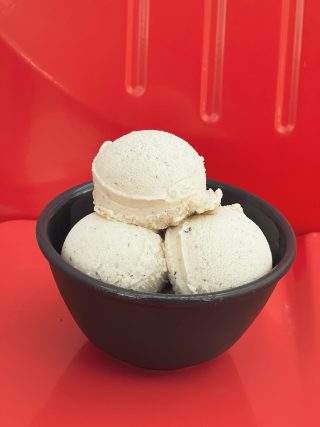 Gelato, if you’re not familiar with it, is the frozen dessert of Italy. It originated, it seems, in the 17th century, most likely in Florence. Cosimo Ruggeri, astrologer and advisor to Catherine de Medici, is generally credited with inventing it. Ruggeri was renowned at the time as a master of the occult and magic, and I suppose we could say that gelato was the creative culinary application of his skills in those areas. Gelato actually came to North America around the time of the American Revolution but was overshadowed at the time by the development of ice cream. It was only in the latter decades of the 20th century that it became popular in the U.S. We started making it here at the Creamery in 1999. Gelato has less fat and less air in it, making it creamier in texture than ice cream. It’s a wonderful way to sweeten anyone’s day.
The Bourbon gelato at the Creamery is made with Basil Hayden bourbon, Madagascar vanilla extract, and a good bit of the dark demerara sugar we get from the island of Mauritius. Swing by the Creamery or the Roadhouse, order a scoop or two, and enjoy. I think it’s terrific topped with pecans and real maple syrup—so good, in fact, that we might add that sundae to the Roadhouse dessert menu. It’s really wonderful with bananas sautéed in butter and brown sugar. It pairs pretty darned deliciously with Eve’s Apple Babka from the Bakehouse, and it’s great with the Bakehouse’s Graham Crackers too, and/or with the Noccioliva Cocoa and Hazelnut Spread from Italy at the Deli.
If you want to make a special brunch dish, put a scoop of Bourbon gelato atop slices of French Toast. That makes me think of putting some on the spelt pancakes (yum!) at the Roadhouse. Jenny Tubbs of Zingerman’s Press has long advocated for gelato on oatmeal or as a creamer in your coffee—this seems a good way to get a bit of Bourbon into your breakfast!
You can get the Bourbon gelato at Cream Top Shop in a cup or cone, or order it up for dessert at the Roadhouse!
Want more from Ari?
Sign up for Ari’s Top 5 e-newsletter and look forward to his weekly curated email—a roundup of 5 Zing things Ari is excited about this week—stuff you might not have heard of!
I scream, you scream, we all scream for gelato!
Gelato is Italy’s version of ice cream. It is to American ice cream what Gucci is to Levi’s. Most Italian towns have at least a few gelaterie, tiny shops that sell nothing but gelato. Big cities will have dozens of them. They’ll usually have at least a dozen flavors prominently displayed, everything from sexed up standards like super dark chocolate to more exotic flavors like Marron Glacé (candied chestnut) or Torrone (nougat). When you pick a flavor, they’ll pile it into a cup or cone using a paddle that looks more like a spatula than a scoop. You eat it with a brightly colored, shovel-shaped spoon that’s as long as a toothpick and as wide as a cheap emery board. But before you pick a flavor and dig in, you have to pick which gelateria to visit.
There are a few factors to pay attention to when choosing a gelateria. Avoid gelato with DayGlo colors. Stay away from gelato mounded six inches above the tub, it probably has tons of stabilizers to help it keep that shape. Don’t go for the spot that has little jars of Nutella or tiny plastic fruits stuck in the gelato to show you which flavor is which. If the menu tells you where ingredients come from, like having IGP hazelnuts from Piedmont or DOP pistachios from Bronte, you might have found a good one. But the best indication of all is a long line—or, since this is Italy, a big, disorganized crowd.
The crowd knows. Those people waiting understand that a particular gelateria makes ice cream with luscious texture and big, bold flavors. And that’s the thing about gelato: when it’s really good the flavors are more direct and pure than American ice cream. The hazelnut tastes like freshly toasted hazelnuts. The strawberry sorbet tastes like fresh, ripe strawberries. I’m sure if Zingerman’s Creamery were tucked away on some narrow, cobbled, Italian alley, it would have a crowd stretching around the corner.
Gelato is made with only four major ingredients so you can’t skimp on any of them and get great flavor.
Zingerman’s gelato maker Josh starts with milk from Calder Dairy, located about an hour down the road from Zingerman’s Creamery in Carleton, Michigan. Calder has a herd of 113 cows that are known by names, not numbers. They’re never given any hormones or subtherapeutic antibiotics. The milk is gently pasteurized and not homogenized, a process that agitates the milk to distribute the cream more evenly rather than allowing it to rise and separate. The result is that Calder produces a richer, creamier, sweeter milk.
To the milk, Josh adds cream from Guernsey Dairy in Northville, Michigan—the same source our Bakehouse uses for the sour cream they stir into every Sourcream Coffeecake. Then he mixes in demerara brown cane sugar. He adds pinch of stabilizer to help the gelato maintain its texture when frozen for a few weeks, and then all that’s left is to add the flavor. And oh, those flavors! His peanut butter gelato is made with Koeze’s atonishing Cream Nut Peanut Butter from Grand Rapids, Michigan. His dulce de leche gelato is made with a super thick and creamy dulce de leche caramel we get direct from Argentina, its home base.
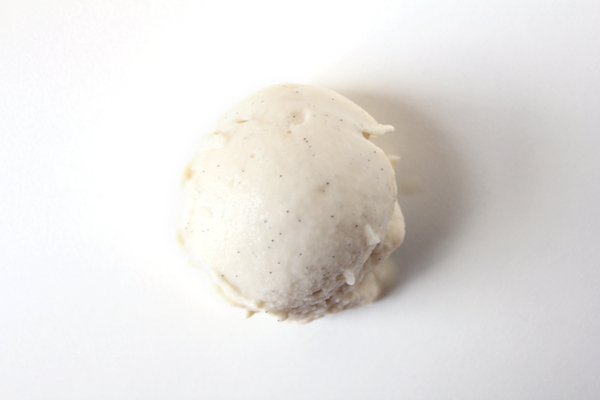
In spite of great variety, Josh’s vanilla gelato is probably my favorite. “Before I started making gelato, I thought vanilla was just white and sweet,” Josh confessed to me the other day. I’d say that’s a pretty apt description of a lot of vanilla ice creams, but not so with Josh’s. He uses Madagascar Bourbon vanilla—and lots of it!—and the result is a rich, earthy, woodsy flavor that lasts and lasts.
What’s the gelato maker’s favorite flavor?
Burnt Sugar. That’s not because it’s the easiest to make—in fact, Josh calls it “a thorough pain in the ass.” He loves it because it takes sugar, one of the three base ingredients of gelato, and transforms it into an entirely different flavor. He starts with white cane sugar and cooks it with water in a big pot. Over the course of an hour, the water boils off, the sugar melts, and then just as it starts to burn he pulls it off the stove and adds additional water to make a syrup and keep it from hardening into a sticky hard caramel mess. “I put on gloves, and I should probably wear goggles too. Then I yell to get people out of the way. It’s so hot that when I add the water it boils upon impact. It’s like this insanely hot exercise of sweating and trying not to get it on your skin while it cools in the sink.” The burnt sugar syrup tastes like the top of a crème brûlée. The gelato flirts with the line between sweet and bitter. It’s sugar utterly transformed, and the end result is super smooth and creamy with an autumn orange-yellow color and a complex, intriguing flavor.
– Val
You can find our amazing gelato at Zingerman’s Creamery, and the Zingerman’s Deli Next Door coffeehouse. We can also ship gelato through Zingerman’s Mail Order.
Add some sweetness to the winter chill!
Gelato with Peppalo Chocolates!

We’ve teamed up with the folks at Peppalo Stone Ground Chocolate in Tecumseh, MI to bring you two new gelato flavors. Peppalo makes exceptionally tasty chocolate bars in very small batches, and their bars are unconched, which gives them a unique texture. Conching is a process that heats and rolls nearly finished chocolate in order to refine it, give it a homogenous texture, and allow for the making of creamy forms of chocolate. We find that unconched chocolate is just perfect for gelato, as it maintains a lovely texture when added.
We’ve debuted two brand-new flavors using Peppalo chocolate:
- Stone-Ground & Smoked
Our rich, Dark Chocolate Gelato base with smoked almonds & chunks of stone-ground, smoked Peppalo chocolate. We really like the way Peppalo’s smoked chocolate complements our in-house smoked almonds. The bitterness that the smoke adds to the chocolate bar is mellowed the sweet gelato we use to create an interesting balance between smoky and sweet. - Stone-Ground & Salted
To make this gelato we start with our Roadhouse Vanilla, then add some caramel and chunks of stone-ground, salted chocolate from Peppalo. Something that makes our take on salted caramel unique is that the salt is supplied by the hand-made chocolate, which allows the sweet, rich caramel to play its counterpoint beautifully.
It’s Time for Summer Gelato Flavors!
Beat the heat with our refreshing summer gelato flavors, available June thru August!
- Luciano’s Lemon Gelato
A silky, sweet Summer tradition made from Zingerman’s Bakehouse lemon curd. - Macaroon Gelato*
We make this rich, coconut delight with macaroons from Zingerman’s Bakehouse.
* We’re pleased to announce that, since we love it so much, we’ll be making our Macaroon Gelato all year ‘round! - Ginger Gelato
Sporting plenty of fresh AND candied Ginger, this gelato is a uniquely sweet and spicy treat. - Cherry Chocolate Chip Sorbet
We use tart Michigan cherries and house-made chocolate chips to make this decadent sorbet.
Stop by the Zingerman’s Creamery for a taste!