
Tag: ZINGERMAN’S BAKEHOUSE
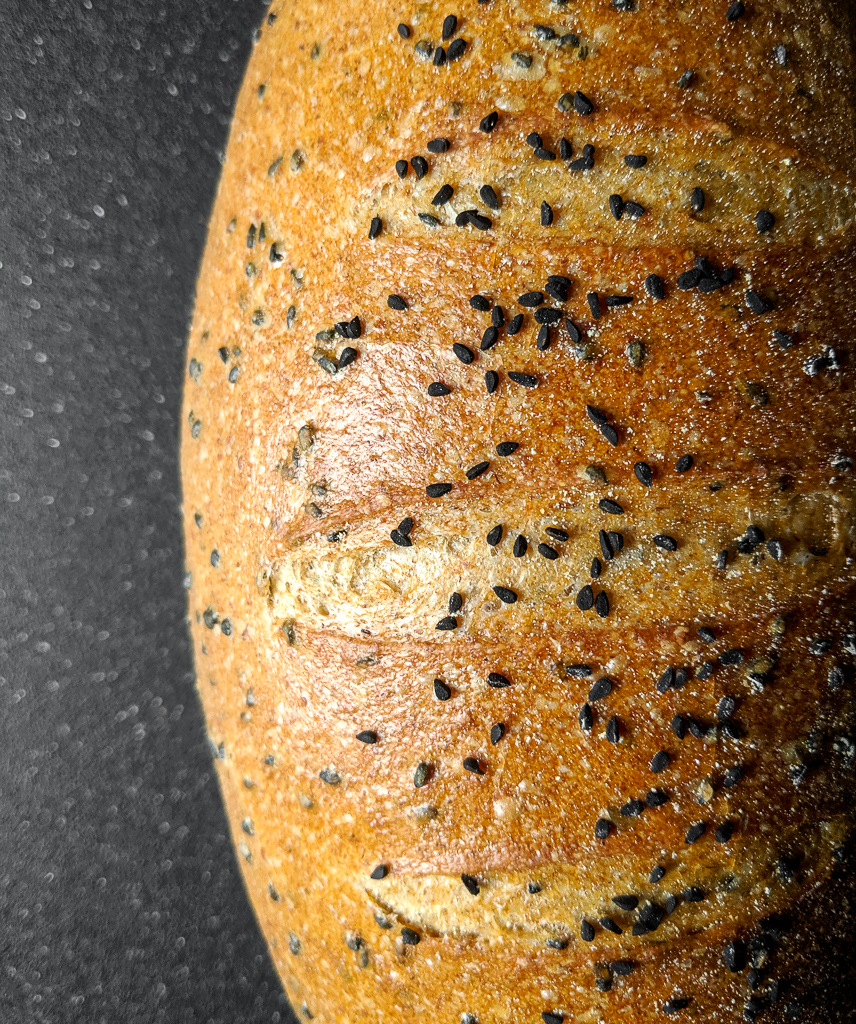
Special Bake this Friday and Saturday, June 5-6
Loaves of crusty Jewish rye, liberally laced with black, softly spicy, and aromatic nigella seeds—Chernushka Rye happens to be one of my favorite breads, so every time I see it on the Special Bake list at the Bakehouse, I want to spread the word! If you’ve ever tasted Chernushka Rye, you’re likely part of the small but mighty cadre of folks who love it dearly. If you’ve never had it, I’m gonna bet that you’ll love it, too. And when you try it, I predict you’ll understand even better why we decided to turn frustration into the hard work of launching Zingerman’s Bakehouse all those years ago.
Chernushki (the Russian plural of chernushka) are the tiny black seeds you might also know as nigella. (The word chernuyi means “black,” and they’re a very deep, dense shade at that.) Native to the Middle East and India, these seeds are also called kalonji. And while they have a bit of a peppery flavor, they aren’t related to peppercorns. They’re used a lot in bread, but also in other recipes. Their flavor is intriguing, said to hint of thyme, licorice, or onion; for me, it’s almost intoxicating. If you want to cook with chernushka seeds, sprinkle them on salads, pasta dishes, or roasted potatoes. They partner well with other spices, too, for curries or the classic Bengalese masala panch phoron (which also includes cumin, fenugreek, mustard seed, and fennel).
Amy Emberling—co-managing partner at the Bakehouse and co-author of the Zingerman’s Bakehouse cookbook (where you can find the rye bread recipe!) and, most recently, Zingerman’s Celebrate Every Day—says,
The floral and spicy aroma of this bread … transports me back 40 years or so to my 10-year-old self, doing errands with my beloved mother during our Saturday afternoon routine. One regular stop on our weekly route was the childhood deli of my youth, Ike’s. While our Montreal smoked meat was being sliced and the adults had adult conversations, I happily explored the shelves full of foreign, unfamiliar foods and took in the unusual smells of the store. Unbeknownst to me, until I started baking this bread here at the Bakehouse in the ’90s, one of these aromas was chernushka. It brings me joy just to breathe this bread.
The antioxidant and anti-inflammatory health benefits of chernushka seeds are legendary. (You’d have to eat a good bit of the seeds to experience them, but why not?) They have a long history in Asia and the Middle East, and you’ll find them in dishes from the Indian subcontinent west to North Africa. Muhammad once stated, “The black seed can heal every disease, except death.” They’re also said to act as a natural insect repellent—take a loaf with you in the backyard and try it out.
The most important part of this equation, though, is the eating. I think the Chernushka Rye is really good with corned beef or pastrami, and right now, it would be great with grilled asparagus on a sandwich. Use it as the base for a very memorable BLT, toast it and enjoy with Zingerman’s Cream Cheese or Goat Cream Cheese, or cut a thick slice from a fresh loaf and spread on that lovely Vermont Creamery Cultured Butter. Oh, and it goes well with smoked salmon, too!
One last tip: the Chernushka Rye makes for wonderful croutons. Cut it into cubes; toss with extra virgin olive oil, sea salt, and pepper; and bake until golden brown. You can snack on them, put them on a salad, or add them to a soup!
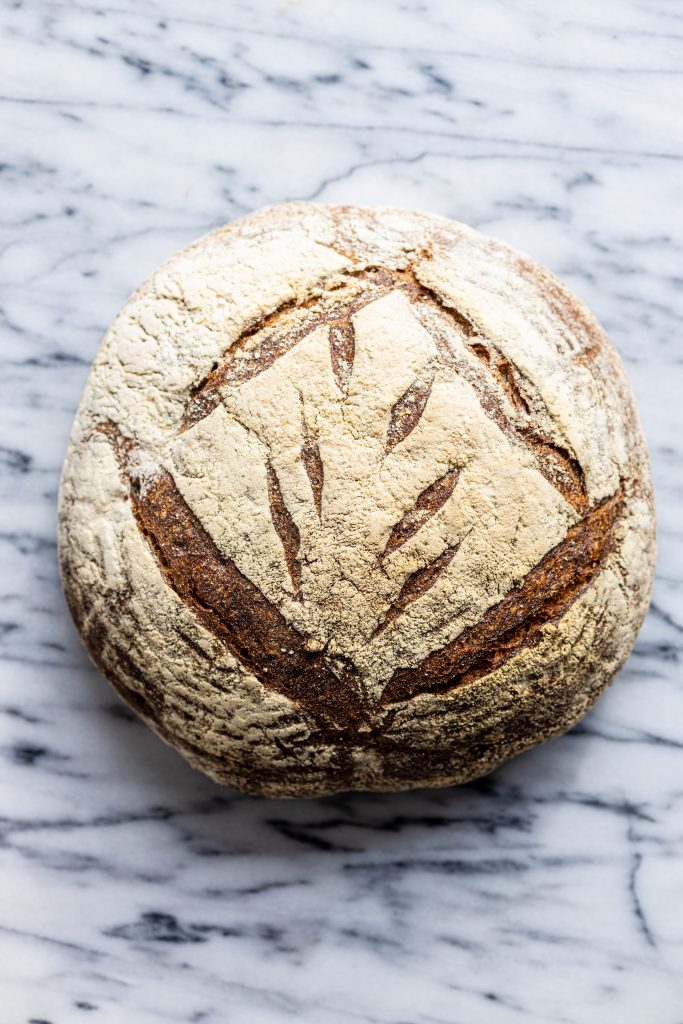
A beautiful, terrifically tasty bread
Somehow, within supermarket-driven American life in the 20th (and now 21st) century, bread became just another cheap commodity—something to drop in your shopping cart and later use to make toast, or sandwiches for school lunches, etc.
In the European tradition, bread always had the exact opposite status. Rather than a commodity, it was a token of communion—either literally, in the church, or figuratively, at secular family gatherings. Prayers were said over it. Everyone knew the taste of local wheat; they could tell what had been freshly milled and what had been in storage for too long. In times of need, people often lived on it—the average Russian in the 1890s, when my family was still living there, ate about six pounds of bread per day. Bread had substance, it was healthy, and it couldn’t have been more highly valued.
Maintaining this cultural memory is vitally important. Menorcan musician Anna Ferrer has a whole new album out that’s dedicated to honoring the four generations of traditional baking in her family. And this past week saw the passing of the remarkable Carlo Petrini, the Italian who founded Slow Food out of anger at McDonald’s expansion in Europe and then spent the rest of his life fighting to preserve, protect, and spread the word about traditional foods, their stories, what make them special, and why they matter.
The Bakehouse’s large Country Miche—and its slightly smaller cousin, the Country Multigrain batard—is the kind of bread that both Carlo Petrino and Anna Ferrer would feel really good about. It’s made from regional grains, stone-milled here at the Bakehouse, and naturally leavened, meaning that no modern commercial yeast is used and the time from start to finish is over 20 hours—offering a flavor that is complex, full, and balanced; tastes of the soil; and is, quite simply, downright delicious. The Miche is a near-perfect manifestation of French food writer Maguelonne Toussaint-Samat’s statement in A History of Food that “really good bread makes you feel happy just to smell it, look at it, bite, chew, and swallow it.”
On the Balearic Islands, where Anna Ferrer’s family has been baking for so many years, the local wheat is known as xeixa. Here we’re currently working with Midwest-grown organic hard red spring wheat, rye, and buckwheat. The quartet come together to form a rich, compelling set of flavors. As nutritionist Karen Ansel explains, “Fresh-milled whole grain flour provides the goodness of all the parts of the grain, so it contains superior levels of fiber, magnesium, selenium, vitamin E, and phytonutrients.” Commercially milled flour can lose nearly 90% of its nutrients within three or four days of milling. Stone-milling allows us to capture the natural nutrients of the grains in the flour, and, in turn, by milling heirloom grains on-site, we have the chance to put all those natural nutrients into the bread—and both the bread and those of us who eat it benefit big-time. Hazim Tugun from the Bakehouse shares:
It’s a bread that is really alive with the grains, or maybe speaks for the grains. It’s beautiful, a sight to take in, and I love the aromas of the different grains, the sweet wheaty tones laced with the floral, grassy qualities of the buckwheat. It’s got just enough of a tang to really pop the multitude of flavors coming through—nutty, wheaty, maybe a touch earthy and spicy.
The Country Miche is so exceptional, it would be wholly at home in a top-notch French country bakery circa 1880. It’s old school all the way: nice big two-kilo loaves with a dark crust (which is so much more flavorful than a light crust—ask any traditional baker, and every one of them will tell you they always choose dark-crusted breads). The beautiful chestnut-colored crumb has big holes (which artisan bakers are always working to produce) and lovely flecks of bran. The aroma is lively, slightly sour, substantial but not strong, sturdy, and comforting. The bread’s flavor is big, almost meaty, very wheaty, complex, and fascinatingly full. I love it simply as is, toasted with great olive oil, and it’s perfect for sandwiches, too. It’s ideal for Mail Order shipping, or for taking to cottages or bringing on cross-country drives.
It’s also part of what Anna Ferrer, her family, and her fellow Menorcan people think of as the “the Sacred Triangle”: bread, olive oil, and sea salt. As the website Foodies on Menorca explains,
Bread, oil, and salt form a symbolic triangle that nourishes beyond the body. In many cultures, this ritual has represented hospitality and communal bonds. Sharing bread and salt is forging an alliance, recognizing one another, and celebrating life. In Menorca, the gesture is even stronger: xeixa bread roots us in the land, organic oil connects us to the landscape and biodiversity, and fleur de sel reminds us of the sea’s constant presence. Together, they create a perfect synthesis of the island spirit. …
Its strength lies not in sophistication, but in its ability to connect us with what is essential. Each bite is a full experience: the crunch of salt, the sweetness of bread, the freshness of oil. A harmony that reminds us that true cuisine begins with the quality of ingredients and respect for their origins.
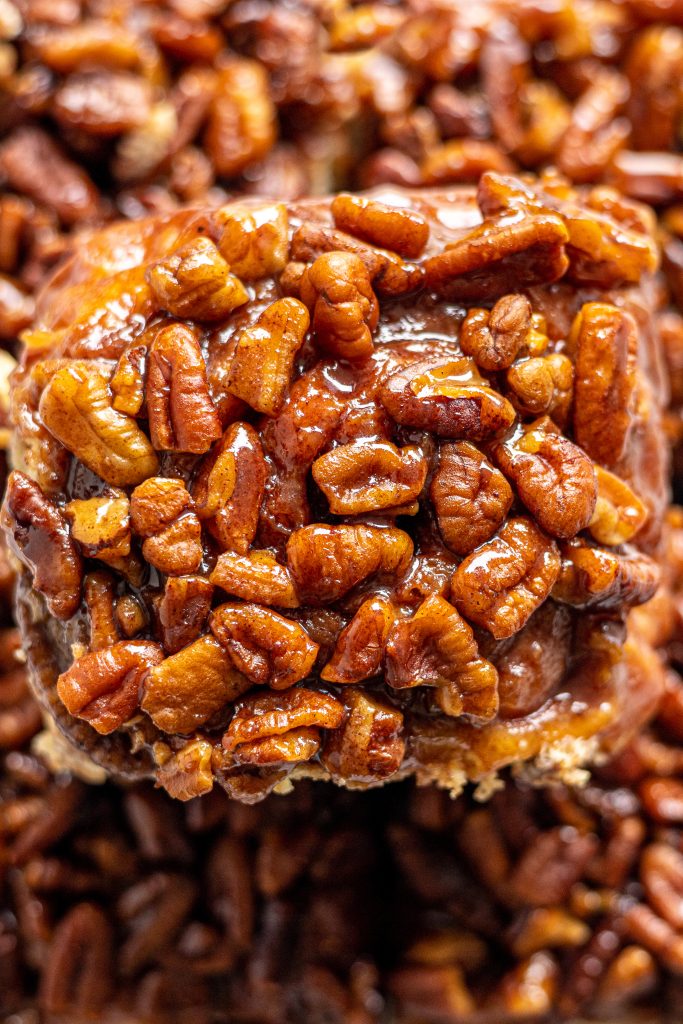
My friend Melvin Parson’s favorite pastry
Two months ago last week, my good friend Melvin Parson, founder of the remarkable We the People Opportunity Farm in Ypsilanti, passed away. (For the latest on We the People’s good work after unexpectedly losing its leader, read up here. The Roadhouse, for one, just committed to buy twice as many of their collards this summer as last!)
Melvin was 61 when he died. Like many people in our community, where his positive presence made such a significant impact, I miss Melvin. For the last 10 or 12 years, we spoke probably two or three times a week. If we connected during the weekend, it often took place in person: I would be working on my writing at the ZingTrain office, and he would drive over to Zingerman’s Southside—in part, of course, so we could see each other, but also definitely so he could buy an Obama Bun at the Bakehouse. I think it’s safe to say it was one of his favorite foods. To this day, every time I see an Obama Bun, I think of Melvin. Which is almost certainly why, several times in recent weeks, I—savory lover that I am—seem to have found myself making my way to the Bakehouse to get one. If I can’t hang out with Melvin, at least I can enjoy the deliciousness of one of his top treats.
As Susan Krauss Whitbourne, professor of psychology at the University of Massachusetts Amherst, explains:
Food memories involve very basic, nonverbal, areas of the brain that can bypass your conscious awareness. This is why you can have strong emotional reactions when you eat a food that arouses those deep unconscious memories. You can’t put those memories into words, but you know there is “something” that the food triggers deep within your past. The memory goes beyond the food itself to the associations you have to that long-ago memory, whether with a place or a person.
Whether or not you knew Melvin, it’s very likely that you, too, will love Obama Buns.
One morning, many years ago now, I asked Melvin what he liked so much about them. “Well,” he started with a smile, “I like the name. I like that they’re made by you guys—by Zingerman’s, at the Bakehouse. I like the taste of the pecans. They always taste fresh. Just the right amount of dough versus sugar … the topping that’s put on ’em is great. They’re the perfect size. I’ve eaten so many Obama Buns, they’re a comfort food for me. It’s my treat to myself.” Anything else I should tell folks? “Keep making ’em, and don’t ever stop!”
So what is an Obama Bun? Basically, it’s a sweet roll topped with a bunch of pecans and a compellingly good caramel. It’s great as is—or even better when halved, brushed with a bit of Vermont Creamery Cultured Butter, and grilled! If you love a good sweet roll, don’t miss this marvel. Enjoy it with a cup of that really good Colombia CoSurCa coffee that’s this month’s Roaster’s Pick (read on). It’s excellent with L’amuse Signature Aged Gouda Cheese, too!
In the Zingerman’s Bakehouse book, Amy and Frank write that Obama Buns “are delicious, rich sticky buns. The dough is full of tasty butter, and the topping is made special with a mixture of honey, Muscovado sugar, and an abundance of pecans.” They also share the story of the name. We originally called them ’Bama Buns because of the pecans and their connection to the South. But when Barack Obama became president—well, we couldn’t pass up the opportunity to pair the two, so we added an “O” to the name.
Remember, we make Obama Buns only on the weekends, and it’s worth coming by the Bakehouse, Deli, or Roadhouse on a weekend morning just to have one. You wouldn’t be the only one making a special trip—the Obama Buns have a LOT of very, very loyal fans. After all, in both my opinion and Melvin’s, they’re one of our best Bakehouse pastries ever. Maybe I’ll run into you in line!
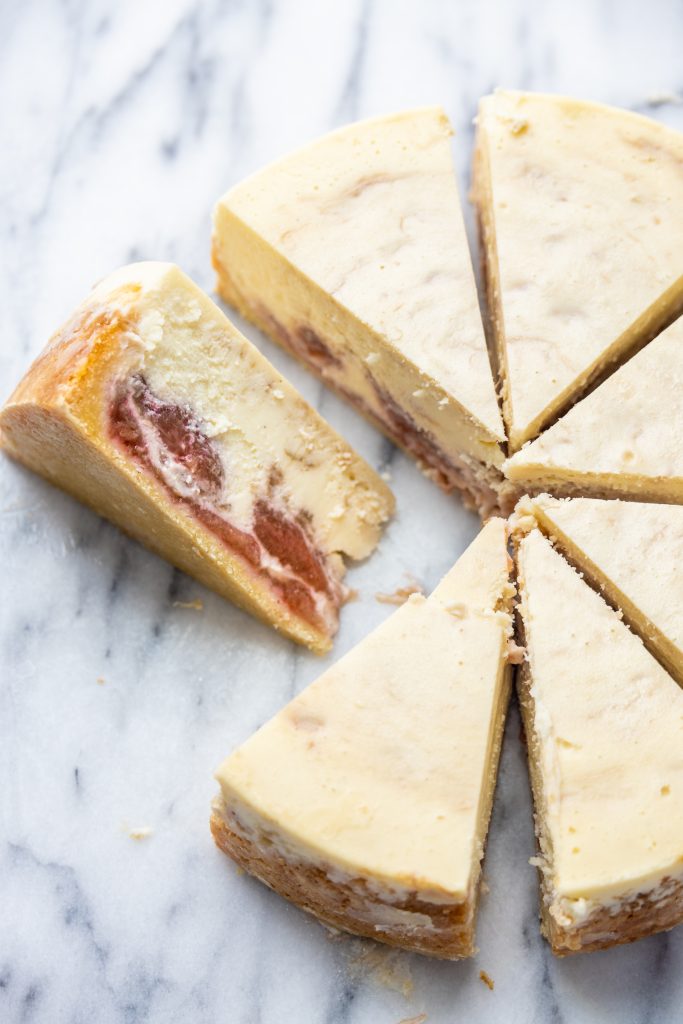
An annual spring tradition returns
American movie star (and inventor!) Hedy Lamarr, whose father was a Ukrainian Jew from near what is now Lviv, once famously said, “Because you don’t live near a bakery doesn’t mean you have to go without cheesecake.” And sure enough, she was correct. Whether you live in Wisconsin; in Washington, D.C.; on the West Coast; or right here in Washtenaw County, we’ve got just the ticket.
I’ve long believed the Bakehouse’s cheesecake is one of the true standouts in our entire lineup. Having tasted cheesecakes all over the world, I can say with confidence that our version is undoubtedly something special.
Some years back, the pastry crew came up with a superb seasonal twist on the excellent cheesecake we make year-round, adding Michigan spring rhubarb to the mix to create a terrifically tasty variation. The tentative tartness of the rhubarb, the richness of the cream cheese, the buttery crust—it can’t be beat. Brad Hedeman at Mail Order, who’s been with us for nearly 30 years now, writes:
To this Michigan boy, nothing says “spring is here” like the broad leaves of rhubarb sprouting up in gardens and forest edges all over the place. Rhubarb is one of those love-it-or-leave-it foods that typically shows up in crumbles and crisps with a sweet counterpart like strawberries. But in this case, the rhubarb is the perfect foil to the smooth, rich, sweet flavors you normally experience with cheesecake. The brightness and slightly tart notes cause your tastebuds to punch through the buttery richness of the cheesecake so that you don’t just taste the creaminess, you taste and experience all the flavors for all the feels. The master bakers at Zingerman’s Bakehouse start with our Zingerman’s hand-ladled cream cheese, the same base we use for our classic cheesecake. We make a compote with the rhubarb before putting some on the bottom crust and then we swirl some compote into the batter. That way, each bite comes from a fresh, bright burst of rhubarb to balance the decadence of the cheesecake.
While it’s great every day, the Rhubarb Cheesecake is especially appropriate for celebrating the Jewish holiday of Shavuot. Joan Nathan—a culinary and spiritual “Mother Tree” of the Zingerman’s ecosystem—says, “Cheesecake became a tradition for Jews because of the cycle of the year, when Shavuot welcomes the plentiful milk of springtime with dairy dishes.”
I like to serve the Rhubarb Cheesecake at room temperature to better experience its full flavor and creamy texture. It’s delicious with a generous spoonful of strawberry jam spread across the top, or with the organic apricot jam from the good folks at Il Molino!
Swing by the Bakeshop, Roadhouse, or Deli to pick up a slice or a whole Rhubarb Cheesecake or two. Or let us ship one to your sister in South Dakota! Shavuot is May 21-23 this year, so now’s the time to order!
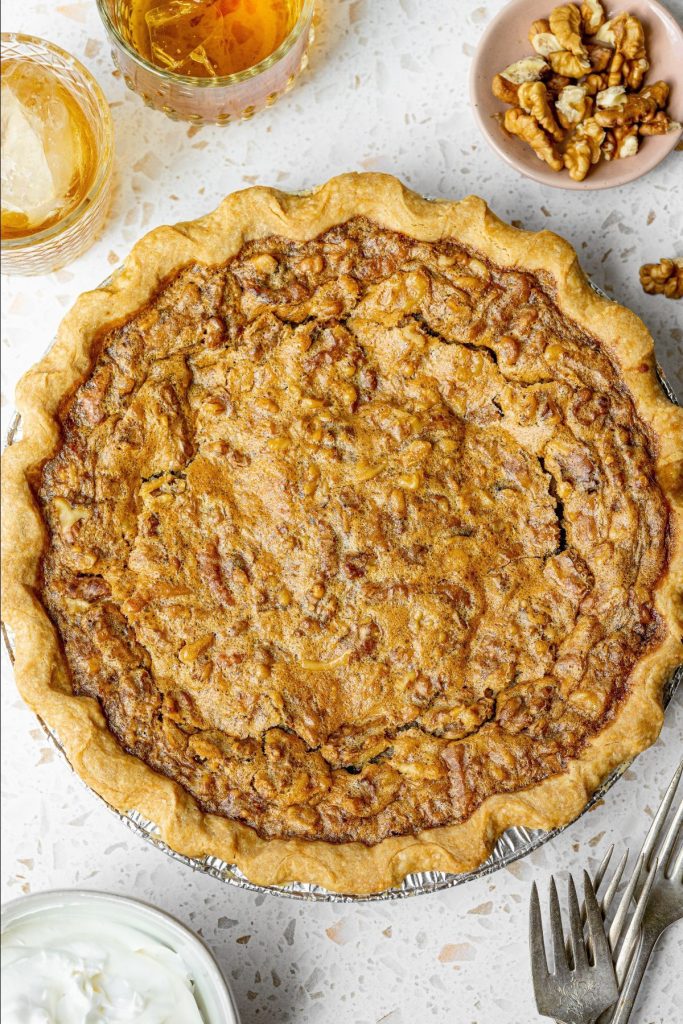
Can’t get down to Churchill Downs? No worries—pie awaits!
Around Ann Arbor this coming Saturday, it’s going to be pretty darned obvious to anyone who lives in the area that the dominant activity of the day is the University of Michigan commencement ceremony. More than 50,000 people will gather at Michigan Stadium for the event. And so far, thankfully, the weather forecast is good: sunny and in the 50s.
Eleven years ago, in 2015, Paul and I were the commencement speakers. Given that I had never attended any of my own graduation ceremonies, I knew we were going to have the odd experience of finally seeing what it’s like to graduate from the stage at the center of the “Big House” in front of thousands of people. (Our commencement speech is at the back of Zingerman’s Guide to Good Leading, Part 4: A Lapsed Anarchist’s Approach to the Power of Beliefs in Business [page 533].)
This Saturday, 350 miles to the south, 18 of the best horses in the world will step up to the starting line of the Kentucky Derby at Churchill Downs, near Louisville. While the Derby may be way more “important” on a national level, in our little corner of the world, commencement is the order of the day. It pretty much takes over the whole town—like the academic version of a football weekend.
Whichever event you’re celebrating (or even if you’re celebrating neither), you can do so while enjoying a slice of the super delicious Run for the Roses Pie from the Bakehouse. Vermont Creamery Cultured Butter pie crust, dark chocolate, bourbon, dark brown sugar—so good. Let’s go, team!
The U of M commencement starts at 10 a.m. and usually runs about two hours. So, in theory, you could go to the Big House, listen to Jalen Rose’s speech, grab a Zingerman’s lunch to go, and get down to Louisville for the start of the Derby. You can also pick up a couple of these remarkably delicious Run for the Roses Pies to take with you—one for the car and one for later in the day, too! Maybe even a third for the drive back, depending on how driven you are to eat delicious handmade pie on the regular.
Now for some intriguing background: Iconic as the Kentucky Derby is, its history—like most history—is hardly straightforward. To the contrary, the story of the Derby, as with nearly every other business I know, is a lengthy tale of ups and downs, of short-term highs and a whole host of long-forgotten lows. To the outside observer, it’s hard to imagine a more solid American sports institution. But when you go behind the scenes, you find an event that both succeeded and came close to collapsing almost half a dozen times over the last 150 years.
Col. Meriwether Lewis Clark Jr. had the initial idea to launch the horse race on a piece of land south of Louisville in 1875. As is the case with every startup—including ours in 1982—it was an iffy proposition. (Later, of course, everyone “knew” from the get-go that it was going to be a success.) Clark called his new race the “Kentucky Derby.”
For context, this was not even 10 years past the Civil War. The entire United States had less than 40 million people, and Louisville had only about 100,000. The first transcontinental railroad route had arrived in 1869—costing the lives of thousands of Irish and Chinese immigrants who spent long shifts toiling under the Western sun—and steam engines and fresh track meant people could travel coast to coast in about four days, fundamentally changing the way Americans thought about the size of their country. In Louisville, the last track in town had failed in 1872.
In that era, jockeying in horse races was considered undignified for white Americans—thus nearly all the original jockeys in those early years were Black. It was gambling that attracted Americans of European origin—jockeys, owners, and viewers—to the Derby. As white jockeys started to join the ranks, they would sabotage the Black jockeys and their horses, fomenting violence on and around the track. By 1911, what had begun as an all-Black profession had inverted to be all white. Still, 15 of the first 28 Derbies were won by Black jockeys. (A similar pattern occurred with cheesemaking—done at home by women for no pay until the 1850s—and with banjo playing—the banjo being an indigenous African instrument played as a form of creative expression by enslaved Africans. When it became clear that money could be made from these pursuits, white European men gradually took over, and took credit to boot.)
Clark created the Derby when he was just 26, and his approach was similar to the way people pitch sports stadiums today—essentially, “You all pay for this, and then over time it’s going to pay dividends by bringing so much tourism and business to the region.” In an early version of crowdfunding, 320 individuals put up $100 each to finance the competition, and the first race, held in 1875, drew a crowd of 7,500. It’s been a singular event ever since. As John Steinbeck once wrote, “This Kentucky Derby, whatever it is—a race, an emotion, a turbulence, an explosion—is one of the most beautiful and violent and satisfying things I have ever experienced.”
(A fascinating side note: Sixty-five years ago, in 1971, when the U.S. and Venezuela’s relations were rather less contentious, a Venezuelan colt called Cañonero II shocked the racing world by winning the Derby after an amazingly strong finish. The race was in disarray that year: the owner of the previous year’s winner had donated his prize money to Coretta Scott King to advance civil rights work [three years after Dr. King was shot], and people tried to sabotage both him and his horses. Cañonero II and his team were also the target of racism. And yet, at the end of the race, the colt came from behind to win by four lengths. No one had calculated the positive impact of training in high mountain air in Venezuela and how much better Cañonero II would do when the other horses tired. He became a cult hero!)
Had the Bakehouse existed at the inception of the Kentucky Derby, I’m confident that our handcrafted Run for the Roses Pie would have been a hit right from the firing of the opening gun.
As for the pie’s origin story, it’s really not too complex—just delicious! As Amy Emberling, longtime co-managing partner at the Bakehouse and co-author of Zingerman’s Celebrate Every Day, says, “It’s just fun to bake something created for an iconic American spring sports tradition.” And so it goes: dark chocolate, Kentucky bourbon, muscovado dark brown sugar from Mauritius, and walnuts in a compellingly flavorful crust consisting of Vermont Creamery Cultured Butter and 80% high-extraction (in other words, closer to whole wheat than not) flour made from local wheat. The bourbon is a special one! Felipe Diez, bar manager and sommelier at the Roadhouse, shares the backstory:
Christi Lower, the owner and master blender for Highline Spirits, invited me to blend a custom bourbon for the Roadhouse. I was thrilled! She brings an artistic approach to blending, and is making some of the best blended spirits in the world (Highline’s Triple Rye won the best in category at the 2025 World Whiskey Awards!). After walking me through the basics of the blending process, we started tasting, choosing base products, and mixing. Our final result combines three different bourbons, including a 37% high rye bourbon. Notes of citrus, baking spices, leather, and butterscotch shine through.
It’s a truly terrific pie—so good that I kind of wish we “might could” make it a few more times a year (though I know I can always freeze some for future use).
Wherever you have the Run for the Roses Pie—in Ann Arbor, Kentucky, or anywhere else—enjoy it. It’s a treat equally worthy of graduating from baking school with honors and finishing in the money in any culinary competition.
Pick up a pie
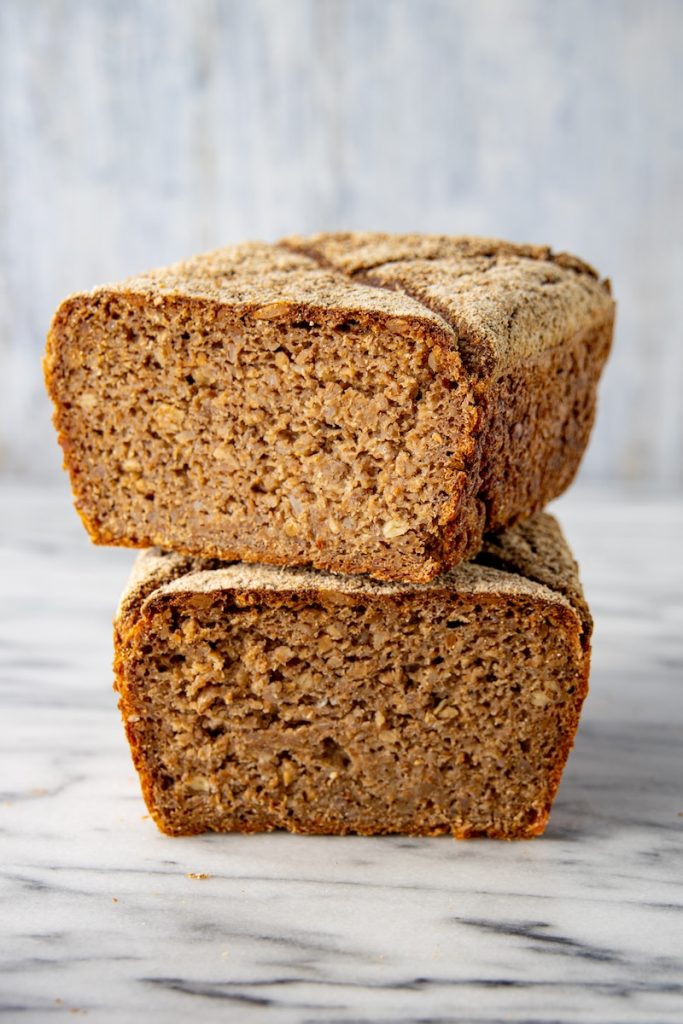
A traditional, dense, and delicious loaf that’s a staple of German eating
The now eight-year-old Bakehouse Grain Commission project—the undertaking of on-site milling of grains at the Bakehouse—has been one of the most inspiring improvements we’ve made in our 44 years at Zingerman’s! The difference in flavor of the breads and pastries that use the fresh-milled grain has been remarkable—products that were already great have become amazing.
The German Vollkornbrot is at the top of that list. As baker Hazim Tugun writes, “Part of the Zingerman’s ethos is ‘constant improvement,’ and we believed this bread could be revised to have improved flavor and texture.” The Vollkornbrot (which, in German, simply means “whole grain bread”) is made using organic rye that we’re sourcing from Janie’s Mill in Ashkum, Illinois. Hazim adds, “Another change we made in terms of even further improvement: Now, we have a two-stage rye sour that we use to leaven this bread. This means better texture and more balanced flavors. The total amount of time it takes to make this bread from the build of the first rye sour to baking is about 21 hours.”
The Bakehouse mixers take that fresh rye and start a sour from rye chops, sunflower seeds, and more whole grain rye flour for natural fermentation. As per German baking tradition, the crew waits 24 hours to allow the loaves to “cure” and set up after the newly baked bread comes out of the ovens. And unlike a good baguette, the Vollkornbrot will last at least a week on your counter.
Vollkornbrot like this is one of the staples of everyday German baking and eating. Dense, intense, and delicious, it’s sliced thinly to make for some marvelous eating. There’s a fantastic complexity and depth of flavor to it that reminds me of roasted coffee, or even hints at the sorts of spiced Christmas breads that are so popular in Central Europe.
Vollkornbrot is equally good whether sliced fresh from the loaf or toasted. My favorite practice is to spread thin slices of it with the handmade Zingerman’s Cream Cheese. The dark, deep flavors and dense texture of the bread are a perfect counterpoint to the light, creamy, soft, spreadable artisan cream cheese. It’s also excellent with a thick layer of that Vermont Creamery Cultured Butter we use so much of at the Bakehouse and Roadhouse. Or enjoy it with thin slices of speck ham or smoked salmon.
You can get Vollkornbrot at the Bakeshop every day or pick it up at the Deli. We’re happy to ship some, too.