
Month: December 2012
(Note: This article was originally featured in Ari’s Best Foods of 2011, but the honeymoon is not over. Rozendal is an exceptional product.)
These are truly one of the best new things I’ve tasted in a long time. I think that I first tried the Rozendal vinegars three years ago at a food show. Their exceptional flavor caught my attention right off, but I think the fact they’re flavored made me doubt myself. I tried them again the next year and was still impressed but… again, I held back and failed to act on my instinct. We have a lot of good vinegars and I let my purist streak get in the way of getting them. Finally, this summer I tasted them for yet a third time with everyone at the Deli and Mail Order, and I was still impressed. I finally gave in. The third time was definitely the charm. I’m glad I finally got going—these are some pretty exceptional bottles of vinegar.
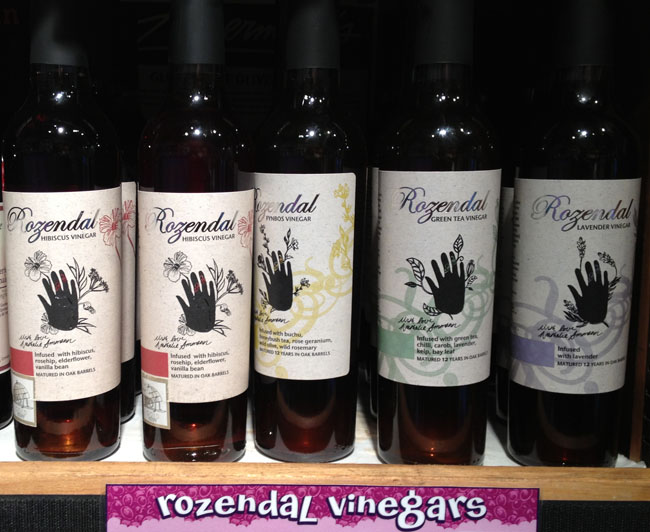
They’re made by the Amman family in Stellenbosch, on the southwest coast of South Africa. Long a grape grower and wine producer, Kurt Amman took the family farm organic in 1994. He went even further by going biodynamic back in 2001. Nothing about these vinegars—the method of conversion from wine, the decision not to pasteurize (to protect the positive acetobacters), many years of patient maturation, the careful selection of herbs and flowers for the infusion into the vinegar—is taken lightly. All of which has been translated into a truly spectacular and unique set of vinegars, so good I really could drink these by the shot glass.
The vinegars start with natural conversion of the Amman’s already well-made and nicely matured biodynamic wines. The move to vinegar is a process that alone takes many months. The natural conversion protects the flavors of the wine and also the natural health benefits of the vinegar. The herbs are then added to the vinegar and the infusions are allowed to mature another four or five years. The total maturation is about 12 years, all done in oak barrels. The results, as I said, are superb! Imagine maybe a depth and character of a great balsamic; the complexity, the soft, round, sweetness, the long lingering finish are all there in force. They’ve got big, slightly tingly, subtly sweet, fantastic flavors with great complexity and very, very long, very lovely finishes.
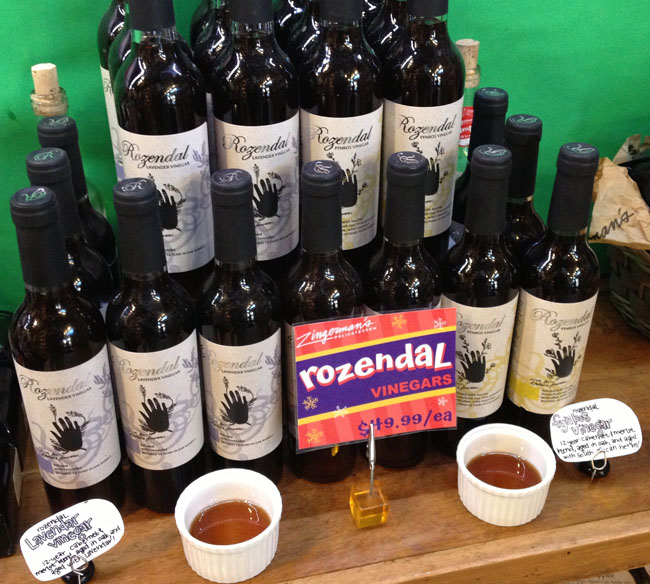
The Fynbos Vinegar is infused with an array of the region’s herbs and flower—South African honeybush, buchu, wild olive, wild rosemary, and rose geranium. The flavor is truly phenomenal. I’m worried now that I’ve started sipping I might drink the whole bottle. Like sipping a super long aged bourbon, there’s a loveliness, a long lingering sweetness, vanilla undertones from the oak, a succulence and smoothness that’s hard to explain. The hibiscus vinegar is equally excellent. It’s got elderflower, rosehip and again, vanilla.
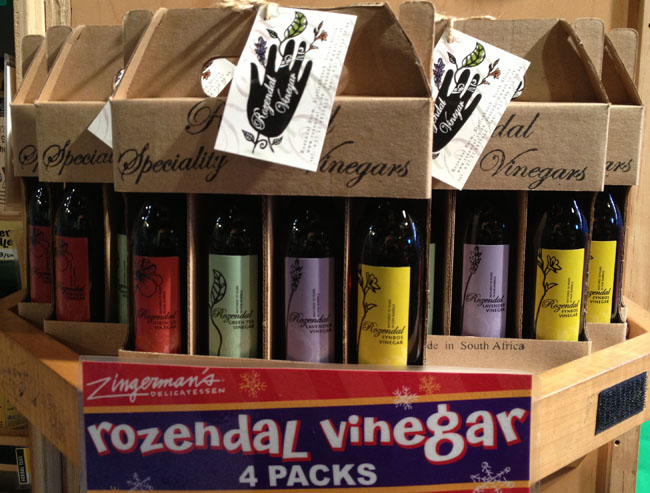
Rozendal Vinegars are available at the Zingerman’s Deli.
Month: December 2012
A year ago this fall we embarked on a long-term project to put together one of the best selections of Hungarian baked goods in the country. Three trips to Hungary, a whole lot of testing, baking, tasting, talking, and teaching later, and we’re well on our way. While we still have decades of studying to do, the Zingerman’s Bakehouse has already put together a wide range of amazingly delicious—and beautiful—sweet and savory pastries, all true to Hungarian tradition. While all are impressively excellent, I’ve got a terrific trio of tortes in mind for the holidays. They’re so beautiful, so special, and so exceptional that they’re pretty sure to take any holiday gathering up a couple notches.
If you want to take your friends and family for a cruise up the Danube, by all means do it! But if the group tour won’t fit into this year’s budget and/or schedule, just stop by the Zingerman’s Bakehouse (or Zingerman’s Deli) and pick up one of these three amazing offerings. All are delicious, and all have won kudos from the Hungarian community here in Washtenaw County.
RIGO JANSCI
 If you haven’t yet tried the Rigó Jansci (“ree-go yon-chee”), check it out. This recent addition to the Zingerman’s Bakehouse repertoire is really, really good. It’s a beautiful rectangular torte, covered in a thick coating of dark chocolate ganache, with its name—Rigó Jansci—written in script across the top. The basic story of the cake is well known in Hungarian pastry circles. It’s named for a Hungarian-born, Roma violinist who fell in love with an heiress named Clara Ward, who happened to be married to someone else at the time. But, wired for passion and adventure, she chose Rigó and romance over her husband and a more proper life as a well-mannered princess. The “invention” of the cake came shortly thereafter, when a baker designed it in her honor.
Steve and Jane Voss, who are of Hungarian descent and have visited the home country many times, were raving about how good it is. Steve told me that it was, “Good enough to be served at Gerbeaud,” referring to the world-famous, 150-year old café in Budapest’s central square. It really is delicious. Two layers of tender, delicate chocolate sponge cake, sandwiched around a generous layer of chocolate rum whipped cream, topped off with a very thin layer of apricot jam, and finished with a thick dark chocolate ganache. Elegance and romance are the key words, I think. The layers swirl; you swoon. Imagine a set of gypsy violinists taking their music towards an exhilarating crescendo. Serve it at room temperature with a cup of the Ethiopian coffee from Zingerman’s Coffee Company and you’re guaranteed to have a good day.
 DOBOS TORTA
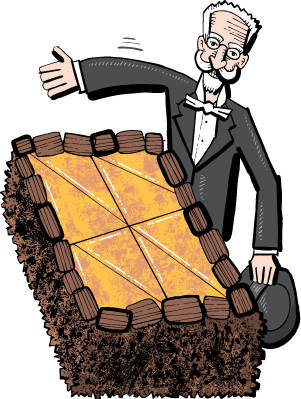
Created in 1884, it was named after its inventor, Jozef Dobos, one of the best known pastry chefs in Europe. He had a famous shop in Budapest and the torta was a classic there. But Dobos took things further. Long before UPS, FedEx or DHL, he built wooden boxes in which he shipped his delicious seven layered torte to fans all over the Continent. Sometimes known in the US as “7-Layer Cake” the Dobos Torta is made from thin layers of very light vanilla cake, sandwiched around a chocolate buttercream. More chocolate buttercream coats the sides of the torte, which is then topped with a thin layer of slightly chewy, delicious caramel. It’s amazingly delicious. At the Zingerman’s Bakehouse we make the buttercream with Valrhona chocolate and a touch of espresso, and at least half a dozen Hungarians have stopped me to say that the Bakehouse Dobos is so good it could easily be served in a café in Central Budapest!
 ESTERHAZY TORTA
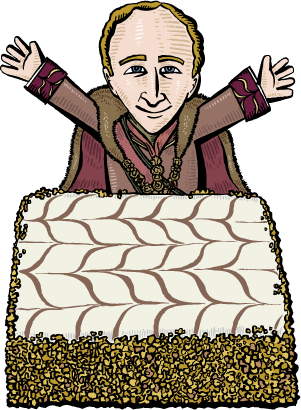
Named for Paul III Anton, Prince Esterházy who lived in the late 18th – early 19th centuries. He was reputed to be the richest man in Europe who was not a king! His cake follows in those financial footsteps, exceptionally rich, very elegant and far more luxurious than any cake the average 18th century Hungarian would have eaten. Fortunately, times have changed. And while it’s not inexpensive, given all the work and great ingredients that go into it, the Esterházy torta at the Zingerman’s Bakehouse is pretty reasonably priced. Layers of toasted walnut cake filled with a magnificent mixture of vanilla bean pastry cream, fresh whipped cream and more toasted walnut, decorated with vanilla and dark chocolate poured fondant in a distinctive design used specifically for Esterházy cakes. Beautiful, delicate, delicious.