
Month: March 2013
Part Two

I can’t understand why people are so down on liver, especially on chopped liver. I take their rejection of it personally. I want to shout at them: “I’ll bet you’ve never even really tasted it!”
Make of it what you will. As proud of their heritage as they claim to be, Jewish cookbooks include chopped liver recipes that have an inferiority complex. Inevitably, they explain, with a little embarrassment, that “chopped liver isn’t pâté de foie gras,” or some other highbrow dish. But why would you want it to be? Chopped liver is chopped liver. Save the pâté for the Parisians. Heck, no one in my family ever even saw Paris until my grandparents went there for a couple of days after they’d retired from their real estate business in their—and the—early ‘60s.
My defense of chopped liver is inspired by writer Sara Kasdan, a woman of whom I know nothing other than that she authored a cookbook called Love and Knishes back in the ‘50s. Probably of my grandmother’s generation, she stares out at me from the inside cover of her book; she has short, black, straight hair that looks awfully American to me. Still, her words are strictly Jewish. Liver polemics. She launches an attack on liver traitors that I could only hope to match. Sara Kasdan, you can be sure, was definitely not chopped liver.
“Nowadays the price of calves’ liver alone should make gehakte leber (chopped liver) a delicacy, but some people are ashamed of its lowly origin . . . so go do them something. They won’t stop eating it, but they must call it liver pâté, liver paste (pheh!), or liver and egg salad. They’ve got to fancy it up so you shouldn’t know what it really is. So you can call it what you want; you can make it look like pineapple; you can make it look like strawberries, red yet, but you can’t fool me. I still say it’s gehakte leber.
“One morning just before the Passover Seder (meal) Mama said to me, ‘Make radish roses, they should go around the gehakte leber.’ For so much progress, I’m not. Would you put picture postcards around a Rembrandt? ‘Mama, for the gehakte leber I’m not making radish roses.’
“’Oi, such a stubborn child,’ said Mama. ‘Just like the Papa,’ and for three years she’s not talking to me.”
Make of it what you will.
And when my cousins took my grandmother’s china, I went back for the cookbooks.
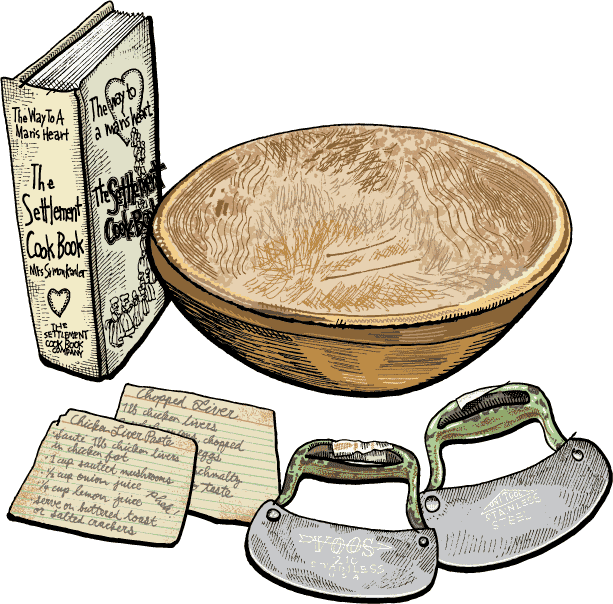
I cherish my grandmother’s copy of The Settlement Cookbook. It was one of century’s early “assimilated” American “Jewish” cookbooks, written for Jews, but not for keeping kosher. Like the bowl, it looks its age. It was used. A lot. The cover, faded and brown, torn completely off, is held in place by a stiff, faded blue rubber band. The pages are yellowed, thumbed through, rubbed and stained with years of cooking. Clipped recipes, folded and faded notes, are stuffed into the front and back covers. My grandmother’s handwritten recipes are scrawled inside the book. Some seem to have been almost washed away by an errant wet dishtowel, or a damp hand set down in the wrong place at the wrong time.
Just out of curiosity, I checked my grandmother’s copy of the book for chopped liver recipes. The closest it gets is a recipe for “Chicken Liver Paste” on page 316, (“pheh!” says Sara Kasdan’s ghost). It calls for sautéing chicken livers in chicken fat (OK, so far), and then mixing them with sautéed mushrooms, onion juice, lemon juice, chopping the whole thing fine and serving it on “buttered toast or salted crackers.” This is not chopped liver. This is some Americanized version. Fortunately, my grandmother didn’t need The Settlement Cookbook to learn how to make chopped liver. It was in her blood, in her heritage, in her head. She learned, I’m sure, from her mother, who undoubtedly learned in the town of Kupesic in Lithuania, who in turn learned it from her mother whose last name was Shapiro and whose first name I don’t know and probably never will. I do know that chopped liver was not invented in 20th-century American kitchens, Jewish or otherwise.
Jews haven’t always eaten chopped liver. It’s part of the “chicken culture” of the Eastern European Jewish community, developed during hundreds of years of the Eastern European Diaspora. No part of the chicken went to waste. Chickens did for Eastern European Jews practically everything that olive trees did for the Mediterranean. They provided not only meat, but feathers and cooking fat. (Of course this was in the days before cholesterol consciousness.)
But somewhere between Biblical times and our postmodern culinary kingdoms, Eastern European Jews started making and eating chopped liver. Checking the books, it seems clear that it has long been a part of Jewish eating routines. I discovered that the Friday night meal my grandmother routinely prepared week after week was the same one described by 19th century Polish and Russian Jews: chopped liver, chicken soup, roast chicken, potato kugel. Green Jell-O with pears must have been the modern-day addition for dessert instead of the more traditional fruit compote.
Check back tomorrow for the conclusion of Ari’s essay.
Month: March 2013
Part One
It’s nearly twenty years now since I wrote this essay. I think it was a year or so after my grandmother, Belle Perlis, passed away. Writing is one of the best ways I’ve found to get my own feelings out in the open and a way to help me manage grief and pain in difficult situations. The piece was that follows wasn’t particularly planned; I just sat down one day to put some thoughts down after my grandmother had died, and this is what came out. Over the years, many people have encouraged me to reprint it and doing it in this issue of Zingerman’s Newsletter seemed particularly fitting. First because Passover is coming and chopped liver is both the centerpiece of the story and also of my family’s holiday meals. And secondly, since we’re celebrating the 31st anniversary of opening the doors of the Deli, it seems fitting to recognize my grandmother for a couple of her contributions to making Zingerman’s what it is; our chopped liver recipe is still, essentially, what she taught me when we were getting going. She also made a monetary contribution. Along with the $30,000 we borrowed from the bank as a second mortgage on Paul’s house, my grandmother loaded us $2000.
I still have the bowl in the story. I take it out now and again. More than that though, taste our chopped liver with great regularity, in part because it’s delicious, and probably just as much because every time I take a bite it reminds me of some of the more savory, tasty, and terrific culinary memories of my childhood. One bite, I should say, goes a long way and lasts a long time.

When my grandmother died, I had my first experience with a strange and bittersweet ritual.
It wasn’t what I would have expected my emotions to catch on. The grief, the death, the funeral . . . that’s what I thought would have affected me most. But I’d prepared myself for most of that. The most difficult part of saying good-bye to my grandmother was the seemingly mundane task of dividing up her belongings after the funeral. There was a ghostliness to it, a sense of disenfranchisement. What once was a living and lively home had lost its central focus. And without that focus it became a cross between a folk art museum and an oddly eerie unintentionally created shrine. I felt like I was trespassing in a space I knew, but somehow now barely recognized. I mean, in all my years and years of visiting I’d never really looked at all her things, never violated the privacy of her dresser drawers, her jewelry boxes, her books. Who was I to enter, to alter, to take what was never mine?
So many things, gathered over decades of a life I didn’t live. Gently set into bowls, cached in corners of polished wooden dresser drawers. Saved and scrimped. There were books of S&H green stamps, never to be redeemed (as far as I know, you can’t cash them in heaven), 40-year-old rubber bands, photos of people who were my grandparents yet looked nothing like the people I knew, hated, and loved. All saved and set aside for decades. For what? To be divided up among the people who were still around when they reached their final days. The big things—the stocks, the money, the property, the “economics of death” are made clear in the will. But what do you do with all that “stuff?”
My cousins went for her jewelry; I went for the chopped liver bowl.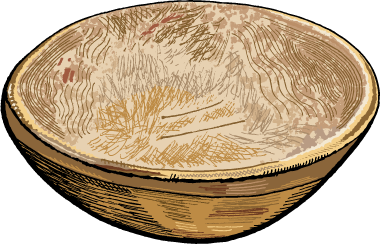
It’s a relic, a thing of the past. Today we use food processors and polypropylene cutting boards. Wooden chopping bowls are history. I took my grandmother’s because it’s a relic, as valued as the chips of the jawbone of St. Stephen or St. Francis that I’ve seen cased in glass in the cold and damp stone churches of Europe. A piece of my personal history. When I touch that bowl, I touch Lithuania from whence my grandmother’s parents left for America over a hundred years ago now. I smell it and I smell the south side of Chicago where my grandparents lived when I was growing up. I feel it and I feel the hands of my great-grandfather Beryl Levin, the peddler, who surely ate chopped liver made by his daughter in this same wooden bowl. I look at it and I see my great grandmother, Ida Levin, her hair pulled back from her round face, with lollipop-shaped wire rimmed glasses. She probably had her own chopping bowl, which must have disappeared somewhere into history, probably sold off at somebody’s garage sale for a quarter or two. I never knew Ida Levin. She died before I was born.
But I do know that she brought lunch to her daughter Belle—my grandmother—at school everyday. Did she ever bring chopped liver? My grandmother knew she was a little spoiled—eating the lunch her mother had carried to the schoolyard each day, when all the other kids ate theirs out of brown bags they’d brought from home that morning. I could see it in her 80-year- old eyes when she told me the story. We don’t change much on the inside, only our bodies change around us. Inside my grandmother’s aged, wrinkled, worn face, I could still see the still-a-little-embarrassed eyes of the 12-year-old remembering all those hand-delivered lunches.
My grandmother took more pride in her chopped liver than any other dish she prepared.
You could have monitored my grandmother’s aging in her chopped liver. It was a big concession when she stopped hand- chopping it. Technology won out only because age and weaker hands demanded it. Even though she began using what she called “the processor,” I’m convinced that she always believed in her heart that the hand-chopped liver was better. If nothing else, it proved how much she loved us. Each line, each scar, each scratch in that chopping bowl was put there for love. Maybe I get my stubbornness from my grandmother.
Later, in what must have been her 70s, she let go even more. Reluctantly, she started buying chopped liver at a store—the Romanian Kosher Delicatessen at the corner of Touhy and Clark, a mile or so west of her Lake Shore Drive apartment. I remember that the stuff from Romanian came in plastic containers. It was pastier, smoother, not too bad, but nowhere near as good as my grandmother’s.
In Soviet times, Kremlinologists studied pictures of fat men in overstuffed, medal-adorned wool greatcoats to figure out the inner, unspoken workings of the Kremlin. If they studied my family they’d pore over plates of carefully measured portions of chopped liver to determine who was in and out of favor, who held the highest rank in the family hierarchy. Chopped liver was a tool of administrative architecture, controlled by the power that held sway in the kitchen. The sooner your serving of chopped liver came to the table, the bigger your portion, the higher your family standing.
My sister never liked chopped liver.
How this could have happened is beyond my ability to explain. Supernatural intervention I guess. My sister is the family pleaser, the one who cheated at cards so that I, the oldest, would win. The one who wanted only that everyone else should be happy, and went to great lengths to make that happen. And yet, when the plates of chopped liver came out of the kitchen, my sister’s place setting stayed empty. What could my grandmother have thought about this seeming act of disloyalty? What does it say about our family? How did my sister reconcile her distaste for liver with her love for—and desire to please—our grandmother? She’s always been more traditional than I, my sister. Maybe liver rejection was her rebellion. Like I said, in my family, there was a lot riding on the livers.
My grandmother always served us chopped liver simply, laid out on small plates, pressed down with fork tines to make rows . . . never too neat, but clearly in rows. City boy that I was (and am), I used to daydream the rows into “chopped liver farm fields” at the table while my stepfather monotoned his way through the Kiddush (the blessing on the wine). Platefuls of carefully ploughed chopped liver furrows, ready for the season’s planting.
Today the bowl is scarred. Scraped. Weathered like an old fishing boat, it’s been beaten down by dozens of years and hundreds of pounds of chopped liver. How many times did that metal chopping blade hit the bowl?
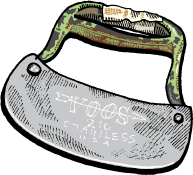
I wo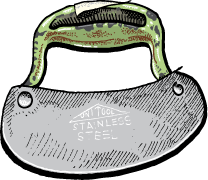 nder what happened to that chopper. A crosscut (“waffle cut” I think they call it in catalogues) blade attached to a thin metal handle. Where did it go? I didn’t seeit when we divided up her belongings, but I keep it in my mind, along with memories of my grandmother’s wrinkled fingers, a little wet from washing, grasping the thinhandle, turning the bowl as she chops. Years later it turns up, from whence I know not. Thin, with a well-worn green metal handle. In fact, it turns out there are two—one for meat dishes like liver, the other for dairy. Which tells me there might have been a second wooden bowl for making milk dishes;if there was, it’s long since disappeared.
Make of it what you will. I keep that wooden bowl. I treasure it. It’s my past. My pride. My legacy. My cousins can keep the jewelry. The bowl is mine.
Check back tomorrow for the second part of Ari’s essay.
Month: March 2013
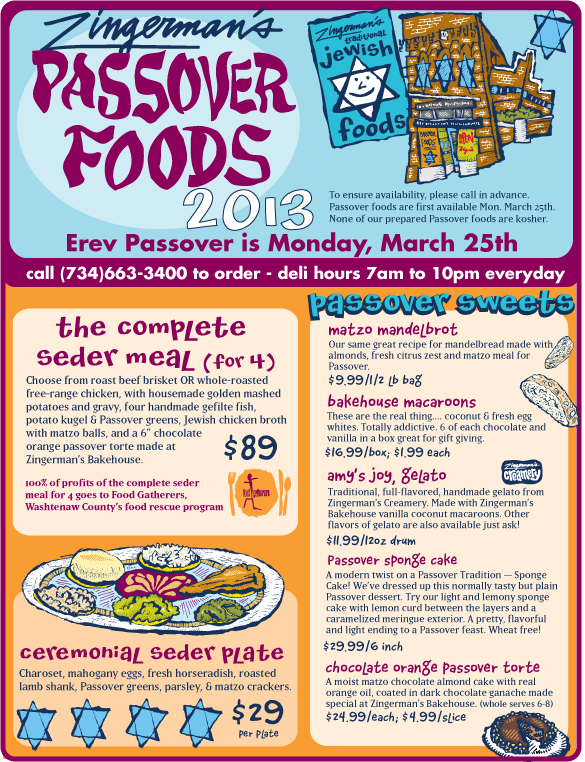
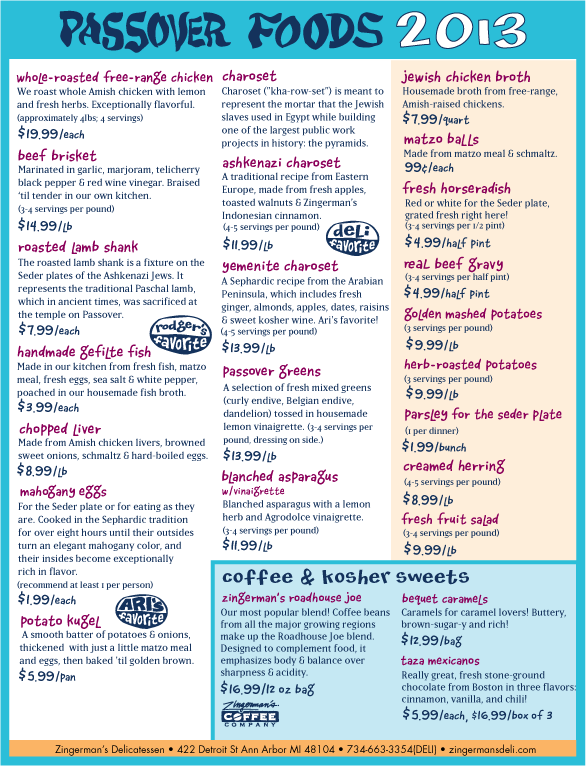
This year Passover begins Monday, April 10th 2017.
View this year’s Passover menu on the Deli’s website.
Month: March 2013
Our most popular balsamics come from Vecchia Dispensa’s Roberta Pelloni and her husband Marino Tintori. Working just off the historic square in the center of the old town of Castelvetro, southwest of Modena, Italy, they make a range of great vinegars.
Although Americans tend to gravitate toward sweet, caramel-flavored balsamics, Marino is quick to emphasize, “the key to great Balsamico is balance.” Exaggerating sweetness is an easy way to enhance appeal and reduce the need for proper blending and aging. You might not notice it at first, but after many uses overly sweet balsamics get kind of dull. Not so with those from the Tintoris. We’ve been selling them for over a decade, and they have a legion of followers who return to them again and again.
We’re holding our annual sale on these great vinegars. These prices will not last, but the vinegar will remain as great as ever. Stock up, give a friend a gift, but whatever you do don’t miss out on these amazing deals!
– 6 year: $14.99 (reg. $18.99)
– 8 year: $19.99 (reg $24.99)
– 10 year: $24.99 (reg $34.99)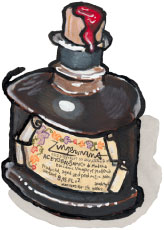
– 16 year: $29.99 (reg $44.99)
– 30th anniversary: $29.99 (reg $39.99)
– Balsamic sampler: $19.99 (reg $29.99)
Deli ONLY Specials
– 20 year: $49.99 (reg 59.99)
– Organic balsamic: $19.99 (reg $24.99)
– Aged Organic Balsamic: $34.99 (reg $39.99)
This sale is also happening at Zingerman’s Mail Order through March 31.
Don’t miss your chance to meet the Vecchia vinegar makers on Zingerman’s upcoming Food Tour of Tuscany in October 2013. For more details on Zingerman’s Food Tours, please visit www.zingermansfoodtours.com.
Month: March 2013
*From time to time, we share the writing of our friends and co-workers on this site. Today’s guest post comes from Zingerman’s alumnus John Sweet.
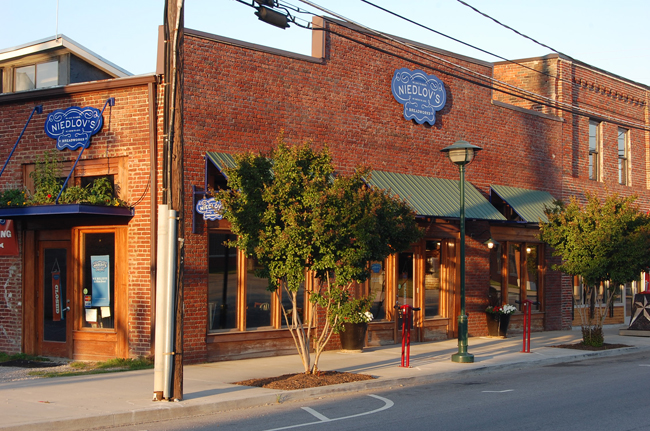
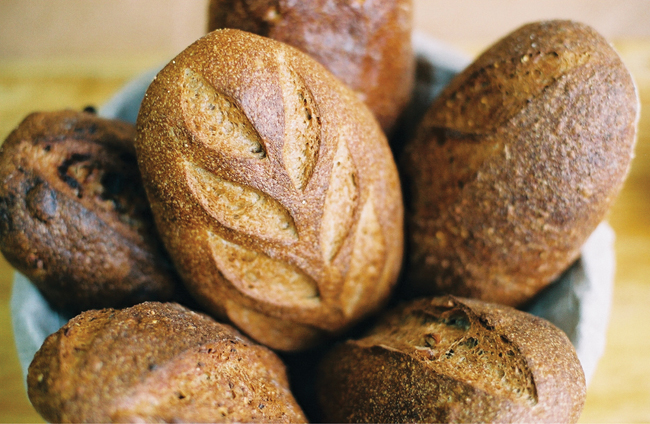
John was Assistant Bread Manager at Zingerman’s Bakehouse from 1998-2002. He and his wife Angela (also a Bakehouse alum) started Niedlov’s Breadworks in 2002. Niedlov’s was honored by the U.S. Small Business Administration as Tennessee’s Small Business of the Year in 2010.
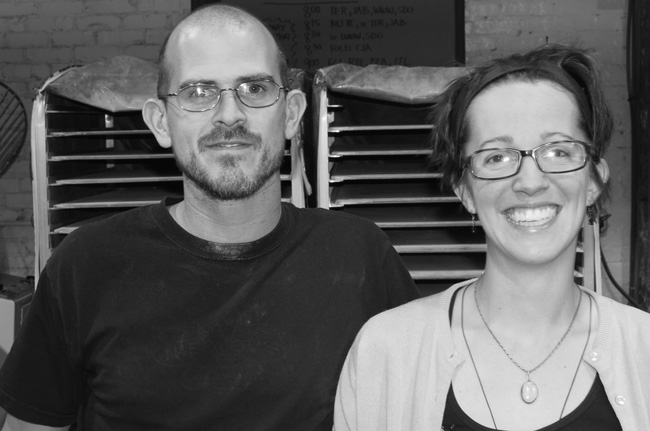
In a recent article on Yahoo Finance, John shared 10 thoughts on the 10 years that he has owned and operated Niedlov’s Breadworks. He was asked what, if any, influence his time in the Zingerman’s Community of Businesses had on his development as an entrepreneur and business owner. This is his response:
Experiencing Success
Taking Responsibility for the Effectiveness of Your Own Small Business’s Development.
We used to talk a lot in the Bread Department at Zingerman’s Bakehouse about being set up for success. In a system as detailed as theirs for producing handcrafted breads in a traditional fashion, there were many opportunities every day to set others up, and to be set up by others, for success. As we set up Niedlov’s Breadworks in Chattanooga, TN, 10 years ago, this became our operating motto: “The best way to ensure that we are successful is to set ourselves up for success.”In reflecting recently on the last decade, I realized that Niedlov’s owes a lot to Zingerman’s for helping prepare us for our own entrepreneurial endeavor. Here are 5 specific ways that Zingerman’s helped set Angela and me up for success as we established and grew what has become a prominent example of a local, independent, community-oriented, brick-and-mortar, Main Street, family business helping to revitalize a Downtown neighborhood as a part of Chattanooga’s Renaissance.
1. Systems Everywhere
The thing about Zingerman’s Bakehouse that has had the greatest impact on Niedlov’s success was experiencing and understanding their use of systems. Systems for mixing, systems for shaping, systems for baking. For taking orders, managing inventory, delivering bread, packaging pastries, icing cakes, juicing oranges, sheeting croissants, scaling ingredients, scooping cookies, and rolling bagels. There is a specific time and a place, particular tools and materials, and a trainable method or technique for doing everything. As Niedlov’s has grown over the years, we have tried to develop (and document) systems throughout the bakery. Our systems have had to handle growth (more bread, more products, more employees, and more departments) and after 10 years, we have a fairly detailed set of functional systems unique to our circumstances. Every person is more efficient, and every process works better, when there’s a good system.
2. Passionate People and The Importance of Culture
Zingerman’s Bakehouse employs many qualified craftspeople to create their delicious breads, pastries, and cakes, as well as a team of committed service professionals selling the food and delivering the goods. These are passionate and hard-working people who enjoy their work and care about what they do. It is a culture that I admire and set out to recreate in my own organization. Establishing a culture like this is hard work, but once done, it tends to sustain itself. I left Zingerman’s taking our future culture very seriously. Niedlov’s had a Mission Statement, Employee Handbook, and a Training Manual before we had any employees. One of the best tools we now have for hiring is getting recommendations from current or past employees who understand our culture.
3. Vision
Within the organization, Zingerman’s is evangelical about their Vision. I don’t know what its name is currently, but in 2002 they were on the “Road to 2009.” Yes, their vision had a name. And I’m sure their current one does, too. (Yep, it’s now called the “2020 Vision.”) It’s that important. It gets recreated every 10 or 15 years with serious engagement from throughout the organization, from partners and managers, to supervisors and front-line staff. At Niedlov’s, we initially set out to establish an artisan bakery in a city that didn’t have one. Once we’d accomplished that, we set our sights on becoming a sustainable business. Along the way we established our corporate identity, which was a process of discovery as well as definition. A critical part of identifying ourselves was defining success: determining what, exactly, would make Niedlov’s successful. This led us to the adoption of some Guiding Principles (a la Zingerman’s) and then from there we laid out our specific goals and the Path to Achievement. Niedlov’s accomplished most of what we had envisioned by our 10th anniversary, and are currently in the process of creating our next Vision.
4. Rules of Thumb
The Road to Success is paved with problems. The mark of success is NOT that you would have less problems, but that you would have better problems. I think I heard Ari say this (or something close to this) a hundred times throughout my years at Zingerman’s. And it’s really true. You never don’t have any problems. But hopefully, over time, you trade in some of the bad ones (we don’t have enough customers), for better ones (we can’t keep up with demand.)
Prepare-Tell-Show-Do-Review: The 5 steps to teaching anyone to do anything, the Zingtrain way. The cornerstone of any training program, these steps are simple, yet profound, and eminently practical. I have used this method countless times in our bakery and in other areas of life.
Take the “Entrepreneurial Approach”: Everyone from partners and managers to frontline staff had an opportunity to make what they wanted out of their work experience at Zingerman’s. If you wanted to change something, you were welcomed and encouraged to suggest it. If it were a good idea, that was articulated (read: “sold”) well, and had potential to make a bottom line difference, it might be embraced. And the extent to which it would be embraced is mostly determined by how useful it became to others.
“I’m just glad that everyone decided to show up for work today.” Another Ari-ism, that represents not taking anything for granted. He understood that everyone had a choice to go to work or not, and that it’s the folks on the sandwich line, behind the coffee bar, in front of the oven, and at the cash register that make everything go every day.
5. Documentation and Over-Communication
It’s not really communicated until it’s written down, typed up, and/or signed off on. It all starts with the Zingerman’s Training Compact, which is the agreement made at the beginning of employment at Zingerman’s that both the manager and the employee sign on a new hire’s first day. Employees receive a Training Passport, detailing everything that they need to learn for their new job, and the time frame in which they’ll be expected to acquire the skills or knowledge.
And on and on it goes: Employee Handbook, performance reviews, Code Reds, Code Greens, The Vision, The Mission Statement; and signs galore explaining what makes great baked goods, what it takes to make a loaf of sourdough, and how to use the meat slicer, handle a customer complaint, and the proper method for hand washing. At Zingerman’s over-communication is encouraged. This is one area where Niedlov’s has a great opportunity for growth. As much as we DO communicate and document, we aren’t as religious about it as I wish we were – especially in the area of “appreciations.” I hope in the coming years, we can develop some better strategies for communicating information in a more impactful way.
Seeing failure is informative. Experiencing failure is educational. Seeing success is encouraging. But experiencing success is empowering. The success that I experienced as a leader at Zingerman’s equipped me for my own entrepreneurial adventure in a way that no school, or curriculum, or case studies, or even failures of my own, could have. Niedlov’s remains indebted to Zingerman’s for the model they have been, and continue to be. 10 years later, these experiences still resonate, as we lead an organization that aspires to be like Zingerman’s, in our own unique way.
Watch Niedlov’s latest video here.
Month: March 2013
*From time to time, we share the writing of our friends and co-workers on this site. Today’s guest post comes from the blog of Zingerman’s Deli staffer Maddie LaKind. Maddie’s blog is called WCcolumns.
This month marks my 2 ½ year anniversary as an employee at Zingerman’s Delicatessen. Two years filled with so many noteworthy sandwiches and far too many samples to count. As a saleswoman and general chatterbox regarding good food, people always ask me for my sandwich of choice (out of the 71 options on the menu), preferred pastry, or must-try side from the salad case. Over the course of my employment, my favorites have pretty much remained consistent. However, something happened this past summer that shook up my deli world—for good.
It was weekday-closing shift like any other. Sporadic waves of guests every twenty minutes or so, but on the whole, very relaxed. Upon perusing the menu for my employee meal for the day, I stumbled upon the traditional Jewish section of the menu, one I don’t visit all too frequently. Don’t get me wrong: matzo ball soup, kugel, and chopped liver all hold a special place in my heart, but they aren’t the most energizing fuel for the rest of a shift. But then, I saw it. An item so infrequently ordered and tragically forgotten about that I almost glazed right over it. That item was a cheese blintz.

For those of you whom have yet to experience the transcendental powers of a good blintz, let me provide a brief snapshot: a thin egg crepe is delicately wrapped around a fluffy, honey-scented cream cheese filling, pan fried in butter until golden brown, and served with a side of both homemade strawberry preserves and sour cream. Just to reiterate, that was crepe, cream cheese, butter, preserves, and sour cream. Together—in one dish. Now, if that doesn’t sound like the mother lode combination, I don’t know what does.
Despite my tendency for wolfing down food without any type of legitimate savoring, I used my re-acquaintance with the blintz to test out a new, more leisurely eating pace centered on tasting every component of the dish. After prepping my fork with a nice heap of jam, a light dollop of sour cream, and a knob of blintz, I took my first bite and was immediately elevated into a whole new realm of what any great, cheesy, buttery dish should be. Velvety, slightly sweetened cheese filling effortlessly melding with tart jam and slightly tangy sour cream, all united by a blanket of egg crepe. Rich. Creamy. Fatty (in the best way). And almost too delicious.
I have not eaten a whole lot of blintzes in my life, but even as a new fan, I think I can rank Zingerman’s version as an exemplary product on a number of accounts. First of all, the ingredients used are all selected on the basis of excellent quality and intense flavor. This means creating a filling with all natural cream cheese—no Philadelphia here folks—rich and floral chestnut honey, and house made crepes. Using cheese produced at the Zingerman’s Creamery on the south side of Ann Arbor, locally made preserves, and Guernsey Dairy (also local) sour cream, this dish is a proud celebration of local products and natural food practices, both of which, lets be real, everybody could use an extra dose.
Aside from all of the technical reasons why a Zingerman’s cheese blintz is such a showstopper, the bottom line is that it is just damn good comfort food. Like any great bowl of mac and cheese, order of fried chicken, or piece of birthday cake, the blintz is a dish to indulge in every now and then and, most importantly, without guilt; we are all deserving of those precious moments of food nirvana! So the next time you’re feeling the Zingerman’s itch, give the blintz a try. It never ceases to disappoint.