
Month: April 2013
This essay is an excerpt from Zingerman’s Guide to Good Leading, Volume 3: A Lapsed Anarchist’s Approach to Managing Yourself by Ari Weinzweig (coming in the Fall of 2013). Stay tuned for the next few days to read the whole essay.
 The Role of Belief in Building a Sustainable Business
Don’t misconstrue my choice of titles—for better or for worse, this is NOT on essay on religion in the workplace. Neither is it about beliefs, as in “values” or “guiding principles,” though those certainly underlie all of what I’m addressing here. Nor is it about politics. It’s about what we—each of us as individuals—believe about the work, people, products and problems we’re engaged with every day. It’s about what we believe to be true—as in “I believe that training is critical to the success of our organization” or, alternatively, “I believe that training is a total waste of time that we tolerate only because corporate says so.” It’s also about approach and framing: “I believe that having employees is the hardest thing about being in business;” Or the inverse, “I believe our people really are a huge asset—the more we involve every- one here in running the better we’re going to do!”
This piece is about how belief plays a really big role in our success—or failure—as individuals. On a bigger scale, how it impacts the health of any organization, how it plays into the quality of the lives of the people who work there, and, (believe it or not) into the quality of the product and service we deliver every day.
My belief in the importance of belief is a fairly recent event in my intellectual development. The concept came into—and stayed in—my mind during a series of long talks, emails and essays with my friend, Anese Cavanaugh. Belief, she insists, is big, and its import is mostly ignored.
As a caveat, let me be clear that none of this stuff about belief is a substitute for sound business practices, great food, good finance, or skilled service work. This is NOT about some supernatural act where you just “believe “and all of a sudden your baguettes get a lot better and everyone who works for you is immediately inspired to perform at championship levels. Instead, I see belief as a modifier, a multiplier. It’s not a substitute for the actual work, but it will amplify whatever else is going on; what you already do well will get better if you believe in it, yourself and your organization.
What you Believe is (Very Often) What you Get
This one’s a bit tricky. I’m not saying it to be all Pollyannaish or anything. Good business planning is obviously based, to a great degree on a real sense of what’s going on. But . . . without losing touch with reality, I have found—through frequent errors on my part—that when I, or others, believe that something is going to be bad . . . it usually will end up being so. I’m not saying that just switching beliefs is enough to turn a terrible economy into a boom, or a bad dishwasher into your next dining room manager. But I really do believe—based on a fair bit of reading, and a lot of years of experience—that it really does make a big difference.
“When people are believing or not believing in something,” Anese went on “they’ll find evidence to support ‘the fact.’ The impact can be huge. Each time what we believed would be bad, turns out to be bad, the culture of negativity grows ever stronger. To quote Rosabeth Moss Kanter, in her excellent book, Confidence: “Instead of believing in positive futures, everyone expects the worst of everyone else—and then acts to make those expectations come true. Self-confidence confidence in one another, and confidence in the system disappear.”
“The way to get past this,” Anese explained, “is to help people be aware of, and responsible for, their beliefs. The belief doesn’t have to be ‘wrong,’ It’s just the art of teaching people to take responsibility for it, challenge it, and get a sense of where their belief is coming from.” That level of awareness—realizing how much one’s often unconscious beliefs are driving decision making and direction—can often be enough to turn things 180 degrees
Energy and Belief
Without question the strength of people’s belief is very closely correlated with the energy we experience when we engage (as customer, coworker, owner or manager) with the organization. First off, the level of energy always follows the level of belief, both up and down. As Anese said, “Belief leads directly to energy—when people believe in what they’re doing, energy amps up, people feel good, value is added to the lives and work of the organization. In negative scenarios, when people just go through the motions and belief is low, the individual and organizational energy both sink quickly.” Secondly, just saying the “right things”
about believing in people or “high quality,” etc. never work well if the energy beneath them, the internal feelings of the person doing the talking and acting, are not authentic. Saying what you’re “supposed to say” without really believing what you’re saying comes across, inevitably, as hollow—energy falls fairly quickly, and belief falters soon thereafter.
Experience Builds Belief
The (unfair perhaps) reality of the world is that the organizations with the long-term track records of success are more likely to attract successful people, folks who believe in themselves, in the organization, and in the value of the work. Which, of course, increases the odds of those organization being even more successful in the future, which in turn attracts better people who believe ever more strongly in the work.
By contrast, getting people to believe in themselves and in the organization when things aren’t going all that well is a hard task. When the people who work in an organization believe that their individual efforts aren’t important and that their input doesn’t make a difference . . . they stop giving it. Productivity slides, good ideas go by the wayside, creativity and quality suffer.
There’s no question that belief builds success which builds belief which builds a culture of success and a positive sense of security, trust and stability. “Continuity,” Rosabeth Moss Kanter write, “breeds faith.” We can increase the odds of this happening by helping people focus on, remember, and learn from their past successes.
Check back tomorrow for Part Two of this essay!
Month: April 2013
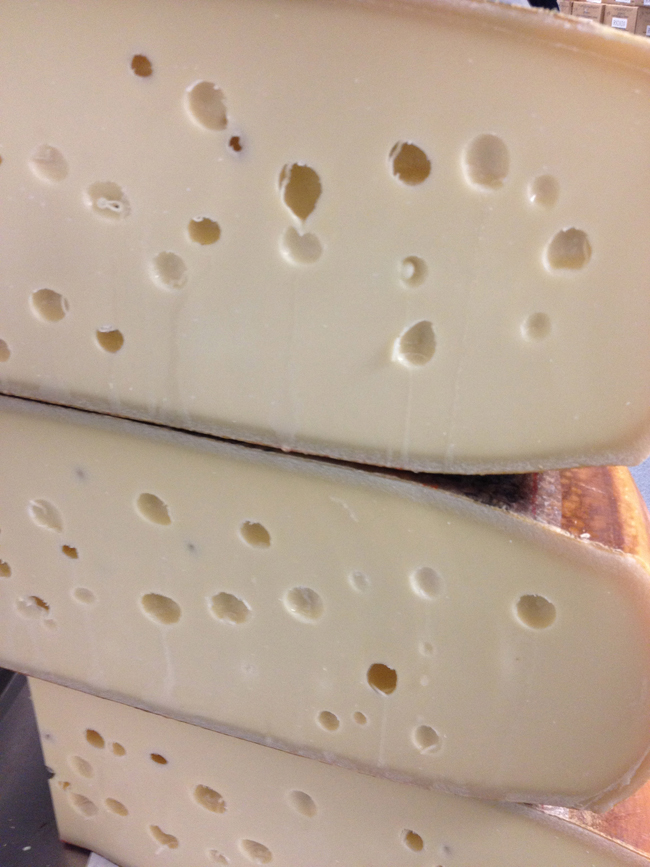
Every so often at the Zingerman’s Deli, the call comes from the cheese counter that it’s time for more Emmentaler. Some fortunate person has purchased the last tasty portion and the time has come to break open a new wheel.
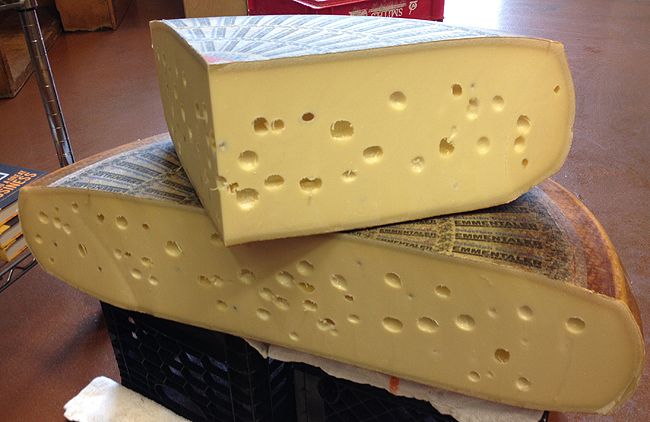
The cheesemongers are dispatched. Down they go, and into the cheese cooler underneath the Deli. Here, in chilled comfort, wrapped chunks, half-moons, and huge wheels of delicious cheese await their turn up on the sales floor. The air inside the cooler has a dairy tang, a promise of fine curds aged to perfection by traditional methods. The cheesemongers find the box they’re looking for and wrestle it upstairs. This is a public unveiling.
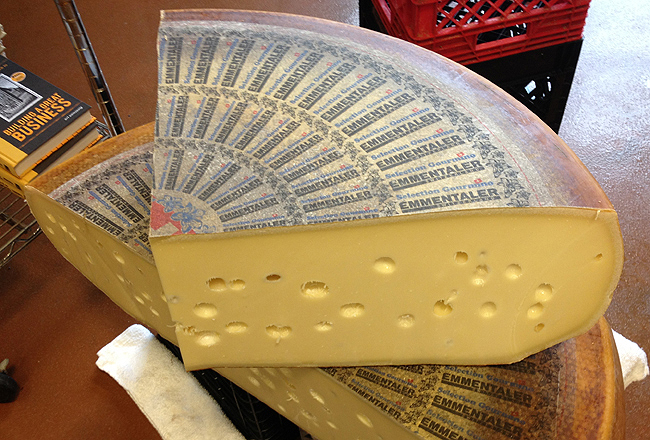
I’m fortunate to have cheesemonger Chad Hayes as my guide through this process, and he drops facts about the cheese as he works. This wheel of Emmentaler weighs in at 210 pounds, just about average for this cheese. It’s produced in “larger format” because it’s an Alpine cheese and was traditionally made by folks living high in the mountains of Switzerland who were often cut off by winter storms. The big wheels of cheese provided a source of protein for the long winter months of isolation. It’s made from cows milk and the curd is cooked to help stabilize the cheese for longer storage. This Emmentaler has been carefully aged for over a year.
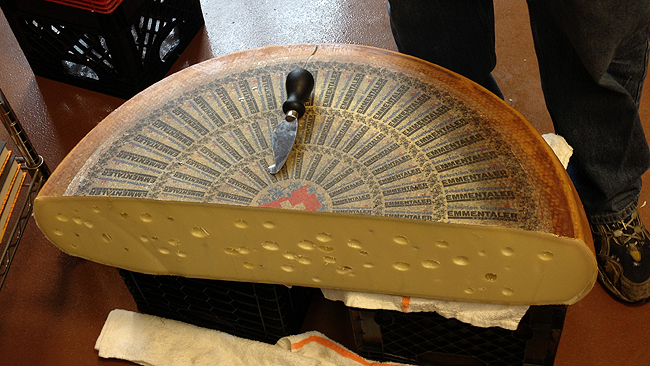
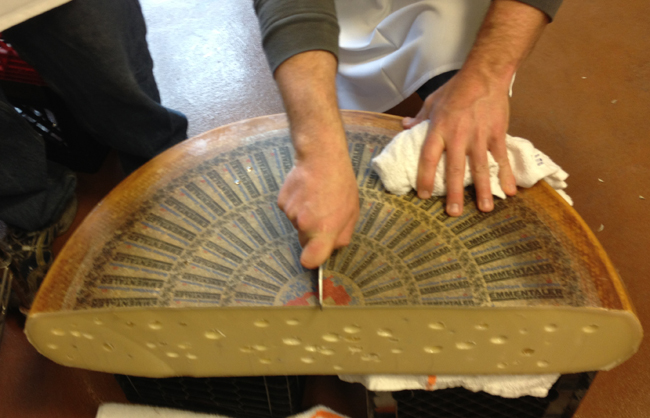
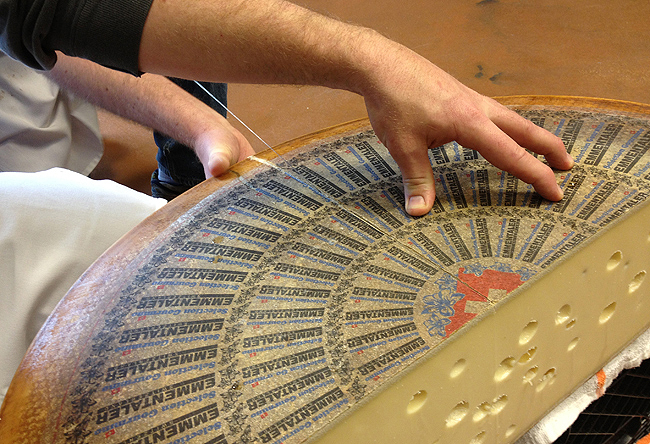
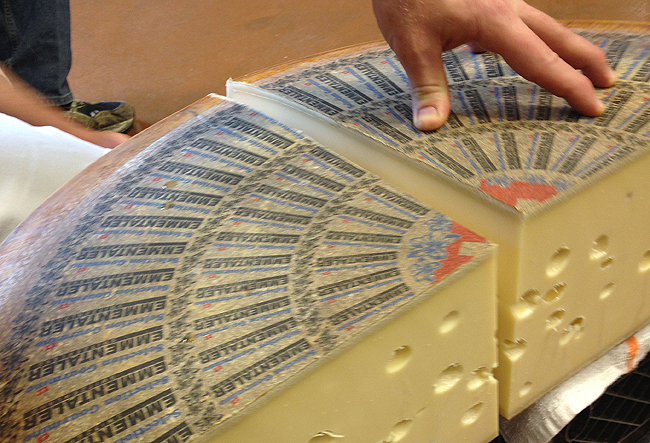
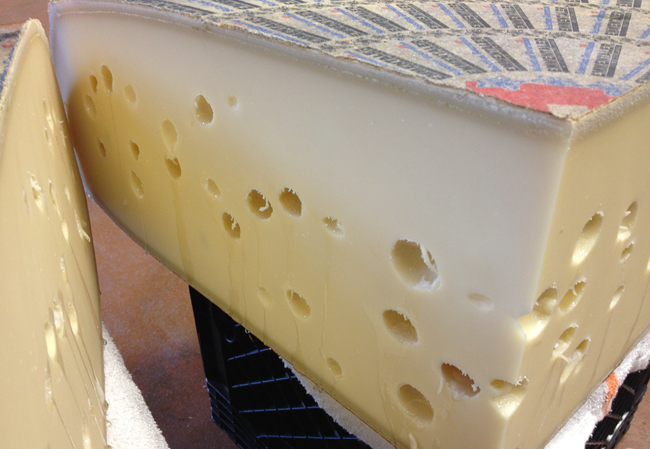
Emmentaler originated in the area around Emmental, Switzerland, and is probably the best-known of all swiss, or Alpine, cheeses. The signature holes in the cheese are the result of trapped carbon dioxide gas during the fermentation process. The cheese has a mellow and savory (but not sharp) flavor and melts easily. It’s an excellent choice for fondue, gratins, or simply enjoying along with some fresh fruit and a nice glass of semi-dry white wine.
Month: April 2013
An Interview with Natalie Chanin

I first met Natalie Chanin at Southern Foodways Alliance. I don’t know Natalie that well but I do know her enough to say with confidence that pretty much everything she touches is very special, and that she moves through the world with a light and elegant energy the likes of which I’ve rarely experienced in the world. In the small northern Alabama town of Florence she and her staff do an amazing job of cutting, sewing and reconstructing clothing to make some beautiful, limited edition items. They do for clothing what our the artisan food producers we work with do for bread, cheese, olive oil and bacon—take great raw materials, traditional techniques, and a lot of careful hand work to make really excellent, limited edition items. If you don’t know her work, check it out at her website. While she’s not directly in the food business, Natalie is a BIG supporter of Southern Foodways. And on top of all that, Natalie will be coming up our way for the weekend of Camp Bacon!
On Saturday, June 1st, Natalie will be speaking—and sewing—as part of Camp Bacon’s main event. She’ll be doing a segment on Sewing with Bacon (you read that right!) that I’m personally really looking forward to! To cap off her Zingerman’s Experience Seminar she’ll be staying after Camp to come to the ZingTrain two-day, Creating a Vision of Greatness seminar. -Ari
Ari: I’m really excited that you’re coming to Ann Arbor to be part of Camp Bacon and to share your artisan approaches to clothing. Since most folks up here won’t know you yet, can you tell us a bit about your business?
Natalie: Alabama Chanin is an artisan-based company based in Florence, Alabama. We make clothing, accessories, and home goods primarily by-hand, using the most ethical and sustainable methods possible. We have also published three craft books, have an ongoing dinnerware collaboration with Heath Ceramics, and, of course, have a deep appreciation for the food that goes onto those plates.
Ari: I’m sure you’ve told the story six thousand times by now but it’s a good one—how did you get the company started?
Natalie: I worked as a designer and stylist in Vienna, Austria, where I really got my education in style and design. My first Alabama Chanin-style garments I made for myself. The positive response I received from wearing those pieces gave me the idea to begin a clothing line. The company has continued to grow and expand and we hope to keep growing.
Ari: What’s drawing you to Camp Bacon?
Natalie: Other than the smell of sizzling bacon? I am looking forward to seeing all of my Southern Foodways Alliance friends and making new ones, and I believe that there is talk of some sort of bacon/sewing moment… Just saying.
Ari: What’s your experience with Southern Foodways Alliance?
Natalie: I’ve been involved with the Southern Foodways Alliance for almost a decade now. I admire their mission and goal because I feel that we believe in many of the same things—education, community, sustainability, individuality. I try to support the organization however I can, attend as many events as I can fit into my schedule, and I get a lot of love back (and a lot of food).
Ari: Was bacon a big part of what you ate as a kid?
Natalie: Growing up, we ate bacon and eggs for breakfast every day. Most days we ate toast, but on really good days there were biscuits. Bacon, eggs, and biscuits—the perfect breakfast. My daughter Maggie and I still use this format on many days (although she adores sausage as well).
Ari: Tell us about the sewing class/workshop that you’re going to be teaching while you’re here?
Natalie: The workshop we’re hosting allows each participant to select an Alabama Chanin DIY project to create. Then we bring all of the prepared materials and tools to complete the project. We’ll talk a little about Alabama Chanin, demonstrate different techniques and stitches, help one another with our projects, laugh, and tell stories… and, of course, eat good food.
Ari: You’re also staying over for the ZingTrain Creating a Vision of Greatness session on the Monday and Tuesday after Camp Bacon. what’s drawing you to it?
Natalie: I am just looking forward to having two days to sit and think about the company. As an entrepreneur, it happens so often that you get so busy running the day-to-day that you don’t really have a change to sit down and be creative with the company itself. Can’t wait to do a bit of brainstorming on that…
SEE YOU AT CAMP!
Month: April 2013
Zingerman’s 4th Annual Camp Bacon is coming soon and to help get everyone prepared, we’re sharing tasty excerpts and recipes from Ari’s book, Zingerman’s Guide to Better Bacon.
 American Fried Bread
I learned this really simple dish from the book Things Mother Used to Make, published in 1914 by Lydia Maria Gurney. It’s probably as down-to-earth, backwoods American cooking as you’re going to get. You can serve it as is for breakfast or add a bit sorghum syrup, maple syrup, or molasses drizzled on top. It’s also good sitting next to a salad for lunch or a light supper.
If you have reserved bacon fat on hand already you can just use that. If not, start by frying some bacon (let’s say one slice per slice of bread) in a skillet. Remove the bacon, leaving the fat in the pan. (In tight time, the meat would have been used for other purposes later, but I’d say chop it and serve it on a salad alongside the bread.)
Keeping the fat hot, put slices of stale bread into the pan. You can, of course, use most any bread, but my current favorite is a Zingerman’s Bakehouse mainstay and longtime American classic. Around here we call it Roadhouse Bread, but it was known in the eighteenth and nineteenth centuries as Rye ‘n’ Injun, or, at times, Thirded Bread. It’s made with a mix of rye, wheat, and corn (hence the reference to thirds) and has a bit of molasses in it, as well. It’s great on its own, and better still with bacon.
While the bread is frying add a couple of teaspoonfuls of either warm water or milk to the pan, and, if you like, flip it and cook until it’s nicely browned on the other side. As Mrs. Gurney said at the start of the last century, “This is a very appetizing dish.”
SEE YOU AT CAMP!
Month: April 2013
Zingerman’s 4th Annual Camp Bacon is coming soon and to help get everyone prepared, we’re sharing tasty excerpts and recipes from Ari’s book, Zingerman’s Guide to Better Bacon.
 Bacon hash
This hash has turned out to be a big hit with most everyone who’s had it. It’s an excellent way to take advantage of the big flavor of top-of-the-line bacons. The bacon is the headliner rather than just a couple of strips alongside another main dish. I like making it with the dry-cured intensity of the Broadbent’s, Benton’s, Father’s, or Edwards’, but it would really work with any good bacon.
You can make the recipe a day or tow in advance if you like, then reheat it in a skillet when you’re ready to serve. Regardless, you’ll want to cook both the bacon and potatoes and let them cool before you move on to the rest of the recipe. Serve with rye toast and a couple of poached eggs if you like, as well.
Ingredients:
- 4 tablespoons rendered bacon fat
- 1 medium onion, coarsely chopped
- 1 medium red bell pepper, coarsely chopped
- 1 stalk celery, coarsely chopped
- 2 tablespoons flour
- 1 1/2 cups chicken broth
- 2 tablespoons Worcestershire sauce
- 10 ounces sliced bacon (about 5 to 7 slices), lightly cooked and shopped
- 2 pounds potatoes (I like Yukon Golds, German Butterballs, or others of that ilk), steamed over salted water until tender, then diced with the skins on
- 1/4 cup heavy cream
- Coarse sea salt to taste
- Freshly ground Tellicherry black pepper to taste
Procedure:
Melt the bacon fat in a large skillet over moderate heat. Add the onion, bell pepper, and celery, and cook, covered, for 5 to 6 minutes, until soft.
Sprinkle the flour over the wilted vegetables and stir well to avoid lumps. Cook for another 4 to 5 minutes, stirring constantly to keep from sticking, until the flour blends with the bacon fat into a thickened roux.
Add the broth, a bit at a time, stirring well after each addition so the mixture stays smooth and creamy. The sauce should coat the back of your spoon before you add more liquid. Stir in the Worcestershire sauce.
Continue simmering the sauce over moderate heat until it thickens, about 5 minutes. Add the bacon and potatoes and mix well. Add the cream and cook, stirring, a few more minutes. Stir in salt and freshly ground pepper tot taste.
Serve immediately, or cool and reheat in a skillet until you get a nice golden brown crust.
Serves 4 to 6 as a main dish.
SEE YOU AT CAMP!
Month: April 2013
 Zingerman’s 4th Annual Camp Bacon is coming soon and to help get everyone prepared, we’re sharing tasty excerpts and recipes from Ari’s book, Zingerman’s Guide to Better Bacon.
Death of a Slaughterman
In Adventures of a Bacon Curer, one-named British author Maynard (“may-NARD”) mentions a no-longer-existent pig-related profession: the journeyman-curer. In early 20-century England this was the man who “would come down and kill the pig. He would stop overnight and cure the pig the next day, and that was the ritual. It was important that he did it correctly as that was the main meat source for the winter.”
In her Irish Traditional Cooking, Darina Allen describes a similar scene: “…on my relative’s farm in Tipperary,” she writes, “a local man skilled in the killing of pigs would arrive on an ass’s cart, bringing all the tools of the trade — a mallet, a knife, a saw, an apron, and a galvanized bath. He was highly thought of and had to be booked ahead.” I can’t say that these journeymen have disappeared entirely, but I’ve not (yet!) heard tell of one still in business.
No one I’ve asked in the U.S. remembers such curers here. The closest I came was in a story from baconmaker extraordinaire, Allen Benton: “In the hills of Virginia, it was common to have someone in the community who would go around at hog butchering time and help the neighbors slaughter the hogs and help work up the meat. They were usually paid either money or in fresh pork.”
Back in Britain, Maynard writes that there are quite a few stories about the old journeyman-curers and how they were compensated. “Sometimes they were paid in surprising ways,” he writes, “And sometimes,” he goes on, “they left a few children behind.”