
Month: June 2013
Val Neff-Rasmussen recently travelled to Italy on a buying trip for Zingerman’s Mail Order. This essay recounts her visit to the island of Pantelleria, source of some of the best capers in the world.
Capers: From Field to Fork (pt. 2)
From bud to caper
Everyone on Pantelleria says that raw caper buds are inedible. They’re not poisonous (as I am happy to report from personal experience, since I tried them for myself while I was there), but they’re not all that tasty, either. The flavor is something like a green pea, but more bitter and with a harsh peppery bite not unlike arugula. The capers you buy aren’t raw; they’re cured. Curing serves two purposes: it highlights the delicate, floral aromas for which capers are prized, and it preserves them for year-round use.
In other parts of the Mediterranean capers are cured in vinegar or a salt brine. On Pantelleria they use only sea salt. Partly this is done for flavor—curing in vinegar can mask the flavor of the caper itself—but partly it is just a matter of practicality: with no fresh water and little rainfall, there’s no water to spare for caper curing. The capers salt for about three weeks, during which time they undergo a lactic fermentation, the same process used to cure sauerkraut or kimchi.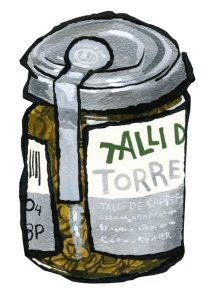
After three weeks of curing, the farmers bring their capers to the capperificio, or caper maker. The term sounds fancier than the reality; the capperificio I visited on Pantelleria was a small warehouse crammed full of bins and buckets of all sizes filled with countless capers waiting for processing. In the corners, huge bags of sea salt sat in heavy stacks. More salt was lodged in the narrow crevices of the red brick floor. The air was thick with the intensely briny, slightly floral aroma of the capers.
After the farmers deliver the capers, the capperificio’s first job is to remove the curing salt (some of which, I was told, is sold off for use in beauty creams). Then the capers are sorted by size: small, medium, large, and berry (more on this in a moment). The sorted capers are then packed in fresh salt in tall barrels, where they’re kept until they’re packed to order.
The result of all this work—growing the capers without irrigation, hand-picking, traditional salt-curing, and all the rest—is a caper that’s renowned as one of the best in the world. The capers of Pantelleria are firm, green, floral, savory, almost toasty, as if I could taste the time they spent growing under that hot Mediterranean sun. They pack big flavor in a tiny parcel.
Buying and cooking with capers
When choosing capers, look for ones that are packed in salt rather than vinegar or olive oil which can mask the briny, floral flavor of the capers. When using salt-packed capers, most Pantescans prefer to rinse the salt off before using them. There’s no consensus on the right way to rinse a caper. One cook told me he never rinses his at all, but just doesn’t add any salt when he cooks with them. Another Pantescan suggested that he likes to rinse his capers under running water for a couple of minutes, but also advised that others prefer to let their capers soak for three to four hours. “Then you taste, and you see if you like,” he told me. (He didn’t tell me what to do if you did not like.) In general, the longer you rinse or soak your capers, the less salty they’ll be, to a point.
After rinsing your capers, you should add them only at the end of your cooking, as you would fresh herbs. Cooking capers for too long will make them mushy and leach out some of their flavor.
Pantescans use different sized capers for different purposes. Small capers have the most subtle aroma and the firmest texture; they’re great for a nice pop when bit, so they do well in a salad or over grilled fish. (The small ones are also usually the most expensive—capers are sold by weight, and it takes more labor to hand-pick a kilo of small capers than a kilo of large ones.) Large capers are mushier but have a stronger flavor making them ideal for uses where texture doesn’t matter, such as for grinding into pestos. Middle-sized capers are, as you might expect, the happy medium of fairly firm texture and somewhat bigger flavor. On Pantelleria, capers show up in just about every dish. An antipasto plate of fresh, milky tuma cheese, sun dried tomatoes, and fat purple olives includes a pile of small capers. Pasta is served sauced with a caper and almond pesto and topped with crunchy toasted breadcrumbs. A staple summer salad called insalata Pantesca contains cooked potatoes, diced raw tomatoes and onion, and capers. Filets of fish are garnished with chopped tomato and a few capers. Dessert is caperfree—at least the ones I had.
– Val

Month: June 2013
Val Neff-Rasmussen recently travelled to Italy on a buying trip for Zingerman’s Mail Order. This essay recounts her visit to the island of Pantelleria, source of some of the best capers in the world.
Capers: From Field to Fork (pt. 1)
I grew up in the American midwest, where a farm means lush fields of corn and soy stretching as far as the eye can see. With such expectations, a caper farm is not very impressive. Low-lying caper plants resemble scrawny green octopi sprawled across the dusty soil. Passing by, you might not realize this was a farm at all if not for the linear arrangement of the plants and the stocky stone walls outlining the field.
The capers themselves are hardly more impressive. The capers we eat are the unopened flower buds of the caper plant. On the plant, they’re little green balls at the tips of short stems sprouting upwards between coin-shaped leaves on spindly branches. They don’t look like a very promising source of food.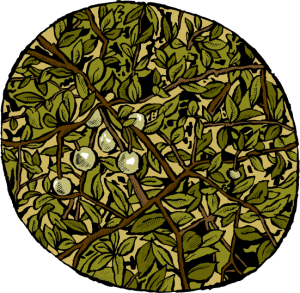
But they’re eaten throughout the Mediterranean, where caper plants sprout from rocky crevices that have no business growing anything, let alone anything edible. In fact, that’s how you’ll find capers most frequently: wild bushes growing in unlikely spots. They’re not farmed very often, but one of the few places you do find caper farms is the Italian island of Pantelleria.
Pante-what?
I have a colleague who discovers a lot of the foods we sell at Zingerman’s Mail Order. He’s visited Italy several times, but has never seen any of the major cities. “I’ve never been to Rome or Florence, but I have spent a lot of time in the Kentucky and Arkansas of Italy,” he jokes. If the back roads of Puglia are the Kentucky of Italy, then Pantelleria is the Guam of Italy. A tiny, remote, forgotten island, largely unknown even to most of the Italian populace. Though it’s a part of Sicily today, the nearest land to Pantelleria is actually Tunisia, some 37 miles to its west.
Pantelleria isn’t exactly a tourist destination hot spot. There are no beaches. There are no picturesque historic landmarks. There’s not even a source of fresh water. What they do have are blustery winds that gust across the island year round, uprooting tender plants and blowing your hair in your face when you pose for seaside pictures. There’s a brackish lake where you can slather yourself with silty, stinky, wonderful mud. There are secluded resorts that have hosted the likes of Madonna and Sting. They cultivate a grape called Zibibbo, which they press into sweet moscato and sweeter passito wines. And they grow lots and lots of capers.
Pantelleria is best known for its capers. (In fact, when I first learned I was going there, I was told I’d visit Caper Island. Only later did I think to ask about the real name of the place.) Capers are ubiquitous on the island: they sprout wild from boulders along the narrow paths up to the natural volcanic saunas; they pop unbidden out of chinks in the stone walls that outline the endless terraces carved into the steep mountainsides; they are carefully grown in neat rows in sun-baked fields.
Cultivating capers
It’s the cultivated capers that Pantelleria is known for. They’re the only capers with an I.G.P., or protected geographical denomination, a government-sanctioned guarantee that a product is produced in a particular area and according to particular conditions. To qualify for the I.G.P., Pantescans grow and produce their capers the same way they have for generations. They grow a special varietal of capers called Nocellara Inermis that’s unique to the island. The capers must be grown low to the ground and without any irrigation. Every caper is hand-picked, one by one.
From mid-May through August farmers pick capers daily, visiting each plant roughly every 10 days. Work starts at 4 AM and continues until around 10 AM, when the harsh Mediterranean sun becomes too hot for outdoor work. As they pick, the farmers kneel at each plant, reaching out to the hold the branches as if in a pose of supplication. They leave the tiniest buds to grow larger, collect the rest of the buds and berries, and pluck and discards any flowers in blossom. Over the course of the harvest, each mature caper plant will produce about two kilos of capers.
If the caper buds aren’t picked, they’ll blossom into dainty white flowers with delicate purple stamens. Left on the plant, the flower may go on to produce a caperberry: a small, hard, olive-shaped fruit packed chock full of seeds. The berries aren’t very popular with the Pantescans. In fact, they consider them shameful: any flower or berry is the sign of a lost opportunity for a caper, and therefore the sign of a lazy farmer. However, lately caperberries are becoming trendy in the US, making their way into swanky charcuterie spreads and hipster cocktails.
Part Two of this essay will appear tomorrow.
Month: June 2013
Week of 6/18/13
- Check it out! The Zingerman’s Deli has updated their sandwich menu!
Old faves return! New creations added! Stop by for a taste!

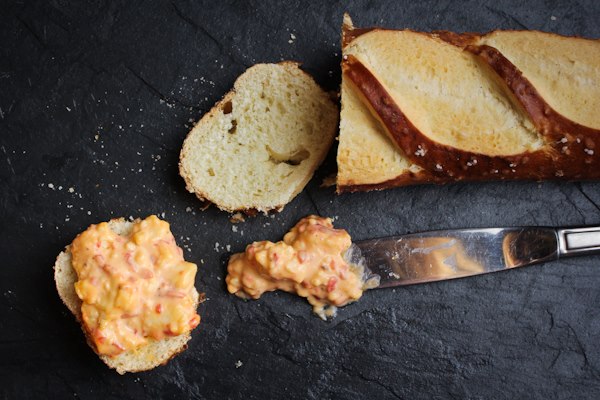
- It’s Pimento Cheese Tuesday at the Zingerman’s Creamery! Get $2 off the per pound price all day!
- The Zingerman’s Creamery now has delicious Israeli Sesame Halvah made by our very own Zingerman’s Candy Manufactory! This sweet treat is made with hand-ground toasted sesame seeds, muscovado brown sugar, and local honey. It’s great paired with some of the Creamery’s fresh City Goat cheese! Stop by for a taste today!
- Get over the hump! Wednesdays are special at the Zingerman’s Creamery. If you buy any two Zingerman’s Gelato, you’ll get a third FREE! Who can argue with free?
- The Westside Farmers’ Market is now happening every Thursday, 3p-7p at the Zingerman’s Roadhouse! 30-40 vendors every week featuring fresh produce, meat, baked goods, and much, much more!
- Fridays and Saturdays at the Zingerman’s Bakehouse also mean Special Bakes, limited-edition loaves available for just a weekend. This weekend it’s Blak Olive Farm bread! A crusty round of our signature farm bread studded with marinated black Kalamata olives from Greece. Makes great croutons too!
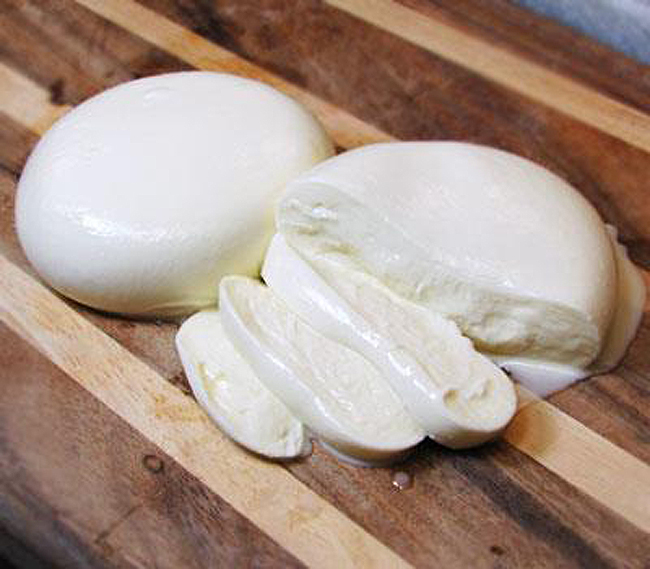
- Next Monday is Mozzarella Monday at the Zingerman’s Creamery! $2 off the per pound price for Fresh, Smoked, or Burrata! Two bucks off!
See you soon!
Month: June 2013
Gelato with Peppalo Chocolates!

We’ve teamed up with the folks at Peppalo Stone Ground Chocolate in Tecumseh, MI to bring you two new gelato flavors. Peppalo makes exceptionally tasty chocolate bars in very small batches, and their bars are unconched, which gives them a unique texture. Conching is a process that heats and rolls nearly finished chocolate in order to refine it, give it a homogenous texture, and allow for the making of creamy forms of chocolate. We find that unconched chocolate is just perfect for gelato, as it maintains a lovely texture when added.
We’ve debuted two brand-new flavors using Peppalo chocolate:
- Stone-Ground & Smoked
Our rich, Dark Chocolate Gelato base with smoked almonds & chunks of stone-ground, smoked Peppalo chocolate. We really like the way Peppalo’s smoked chocolate complements our in-house smoked almonds. The bitterness that the smoke adds to the chocolate bar is mellowed the sweet gelato we use to create an interesting balance between smoky and sweet. - Stone-Ground & Salted
To make this gelato we start with our Roadhouse Vanilla, then add some caramel and chunks of stone-ground, salted chocolate from Peppalo. Something that makes our take on salted caramel unique is that the salt is supplied by the hand-made chocolate, which allows the sweet, rich caramel to play its counterpoint beautifully.
It’s Time for Summer Gelato Flavors!
Beat the heat with our refreshing summer gelato flavors, available June thru August!
- Luciano’s Lemon Gelato
A silky, sweet Summer tradition made from Zingerman’s Bakehouse lemon curd. - Macaroon Gelato*
We make this rich, coconut delight with macaroons from Zingerman’s Bakehouse.
* We’re pleased to announce that, since we love it so much, we’ll be making our Macaroon Gelato all year ‘round! - Ginger Gelato
Sporting plenty of fresh AND candied Ginger, this gelato is a uniquely sweet and spicy treat. - Cherry Chocolate Chip Sorbet
We use tart Michigan cherries and house-made chocolate chips to make this decadent sorbet.
Stop by the Zingerman’s Creamery for a taste!

Month: June 2013
Later this month, olive oil maker Marina Colonna, who makes our private label Peranzana Olive Oil, will travel from Molise, Italy to Ann Arbor for the very first time. On June 24, we’re throwing a welcome party! During the event, Marina will tell us all about her olive farm in Italy, and the cultivation of her varieties of olive trees. She’ll describe the olive oil process from harvest to the oil mill, and the best uses for these oils. The Zingerman’s Deli kitchen will prepare an exciting menu of dishes using Marina’s oils too. We’re very excited to spend an evening talking and tasting olive oil with one of the industry’s leading experts. Please join us for an evening you won’t forget!
To attend, please call 734-663-3400, or reserve online. Space is going fast!
This is Part Two of an essay Ari wrote back in 2004 describing his first visit to Marina’s estate. Read Part One.
Oil, Oil, Toil And Trouble
The Colonna’s farm is called Bosco Pontoni (“the Woods of Pontoni”). “It used to be all forest,” Marina explained. Brown, green and gold checkerboards of wheat,
 olives, and corn run across the fields. The Colonna’s country house sits squarely in the middle of the farm, cream-colored stucco, with dark, chocolate-bar doors. “Not too old,” Marina told me. “From the 1800s.” Bright red poppies float by the front door of the house. Red, pink, and purple roses shine in the garden. Inside, there’s a great fireplace, and a blue-and-white tiled ceramic wood oven for heat in winter. Below the house are these great “vaults” in which the oil is stored. When we needed a little oil for dinner one night, we simply took an empty bottle and headed on down to the ten or so silver steel tanks. Each tank is feet high and five feet across and holds oil from one of the farm’s four olive varieties. We’d fill our bottle and head back up for dinner. Now, that’s how I’d like to live. Tanks of olive oil in the basement, ready and waiting for me to tap in case I run low.
Marina puts enormous effort into the little things, the details that most people don’t deem worthy of attention. The lightly green-tinted bottles in which the oil arrives in Ann Arbor are a beautiful, slope-shouldered amphora, patterned after the similarly shaped, fired clay vessels in which Marina’s ancient ancestors bought their oil. The bottles come from an Etruscan Glassworks in Tuscany. She spent “ages” selecting them, she told me. And, rolling her eyes skyward, she added, “they cost a fortune.” They are beautiful and well worth the trouble, I think. Each bottle is topped with a rounded blond wooden stopper. After filling, each bottle is sealed with wax, and hand-pressed with a red lacquer Colonna family crest. Granverde, Marina’s oil of lemons and olives, is sealed in green; her new Arancio, an excellent oil of Sicilian oranges and olives, in orange.
To ensure the caliber of oil she’s looking for, each of the farm’s four olive varieties is picked and pressed separately depending on the time it ripens. The various oils are stored separately, and then carefully blended according to flavor, variety, and age before being bottled. Colonna oil is decanted—the sediment is allowed to settle out at the bottom of the storage tanks. Still, you may come across a bit of sediment at the bottom of each bottle because, unlike many oils, Marina’s is, “never, never filtered.” “You lose something of the flavor,” she says.
Making her dream of getting great oil from the farm in an area where mediocre oil has become “normal” has not been easy for Marina. And her struggle is made all the more difficult because she is not a man. “Because you are a woman they always think they know better,” she says with weary frustration. An Italian woman fighting to create change in the countryside is akin to one of us going up against the IRS. Sometimes justice wins out, but only after incredible persistence and patience. No matter what you want to do, the reply comes, “that’s not the way we do it.” No matter how fast you try to go, everything moves slowly. That’s the countryside. Fortunately for the olive oil world, Marina’s managed to make it work. If all the offspring of ancient Rome had as much vision, stubbornness, drive, and determination as Marina, the Empire would probably still be standing.
The struggle for quality is big, but it shows up most often in the little things: Marina—as she should—wants the olives pressed within a day of picking. They need to be pressed quickly in order to prevent the buildup of oxidation and acidity that begins the moment the fruit is removed from the tree. The farm manager insists he’s kept olives “much longer than that, for a month even, without any problems,” and “you can’t tell the difference.” Marina shakes her head. You can tell the difference. She persists. The olives are pressed within 24 to 30 hours.
Marina wants to sell the oil while it’s fresh, certainly within the year of its pressing. This is a standard requirement in the world of good oil. If it’s kept much beyond that it loses its luster, leaving a slightly flat, less-flavorful oil. Marina won’t sell old oil, but the farm manager thinks she’s crazy. He insists on selling what’s left to the locals even at two years; “they like it that way,” he says. It’s more likely they’re used to it, and have stopped paying attention.
What it comes down to is that instead of staying true to tradition, the locals have evolved (devolved?) to a culture of shortcuts that, in the case of the oil, means mediocrity instead of excellence. And so, Marina pushes against their resistance to change, striving to get a great olive oil out to the rest of the world. It’s an odd twist on the battle for tradition, because in this case, it’s the modern effort to improve quality and revive some of the traditional ways, while the locals look to keep cutting corners.
Eating Marina’s oil is a pleasure; all the more appreciated from knowing how hard she’s worked to get it out. Colonna oil has a robust, lively flavor that hints of green tomatoes, almonds, and an enjoyable, earthy pepperiness. It’s especially well suited to easy-to-enjoy, simple dishes that don’t take much time. Try toasting thick slices (as thick as your toaster can tolerate, or do it under the broiler) of Farm Bread ‘til they’re brown, rub with a clove of cut garlic, then douse in a stream of Marina’s green-gold oil. Top it with chunks of roasted peppers cut into strips, or peppery green arugula leaves with a pinch of sea salt. Spill it over just-out-of-the-oven chicken roasted with rosemary and fresh garlic, or toss it with just-cooked spaghetti and a grated Pecorino cheese. In the Molise, they like their food on the spicy side, so pass a bowl of ground red pepper. And drink a toast to Marina’s persistent pursuit of great olive oil.
Read Part One of Ari’s essay.
Month: June 2013
Later this month, olive oil maker Marina Colonna, who makes our private label Peranzana Olive Oil, will travel from Molise, Italy to Ann Arbor for the very first time. On June 24, we’re throwing a welcome party! During the event, Marina will tell us all about her olive farm in Italy, and the cultivation of her varieties of olive trees. She’ll describe the olive oil process from harvest to the oil mill, and the best uses for these oils. The Zingerman’s Deli kitchen will prepare an exciting menu of dishes using Marina’s oils too. We’re very excited to spend an evening talking and tasting olive oil with one of the industry’s leading experts. Please join us for an evening you won’t forget!
To attend, please call 734-663-3400, or reserve online. Space is going fast!
This is Part One of an essay Ari wrote back in 2004 describing his first visit to Marina’s estate. Part Two will appear tomorrow.
Oil, Oil, Toil And Trouble
The region of Molise is sort of the gateway to southern Italy. Draw a line due east from Rome; stop about two-thirds of the way across the Italian peninsula, turn right (south) and you’ll be there. Pass through the “gate” and you enter a world far removed from the fast-paced fashionable affairs of Milan, Turin, Florence and the north. Instead, you find farms and farmers, a significantly slower pace of life, an allegiance to the past, and a subtle but steady resistance to the future.
An old agricultural area, the Molise has been making olive oil in large quantities for millennia. It’s filled with big hills and smallish mountains; when I visited in May, there was still plenty of snow up on the brown mountaintops, which looked like a sugar-dusted chocolate Bundt cake. Primarily a rural area, the major crops of the Molise include wheat and olives. Olive trees grow up and down the hillsides, ash-colored trunks twisting gray off the ground; pale green leaves shining softly silver in the afternoon sun.
I had the chance to visit the Molise and to see the farm where Marina Colonna presses her exceptional, gutsy-green olive oil. I tell this story in part because I love her oil, especially her Granverde, an old Molisana specialty where olives and lemons are pressed together to make a unique “lemon oil.” But I also tell it because I was struck again and again by the nature of Marina’s struggle to get her oil out to the world. So often I’ve traveled and told of the struggles of small traditional producers to fight the near-overwhelming pressure to modernize, to abandon the old techniques and the integrity of their food in favor of newer, faster, more economical methods. But Marina’s story is different.
It’s the reversal of the usual roles that caught my attention last spring. In the case of Marina in the Molise, it is Marina the modern woman who is working tirelessly to return to the quality and integrity of olive oil’s past. The locals, instead of preserving tradition, are quick to sell it out, with little regard for the flavor and quality of the oil. It’s like history has come full circle.
Marina is probably in her forties, full of energy, her eyes alive. She’s quick to anger, and just as quick to smile. She’s slim, with the sense of style in clothes, and in life, that is notably Italian. Short black hair; long, thin, rough-textured, working hands. Raised in Rome, part of a prominent and well-connected family, she set out to make her own mark by leaving the safety of family routine for a successful career in the Italian equivalent of public television. Her skin is a dark brown, a shade the Italians call olivastro —soft, chestnut brown in the winter, turning almost to deep brownish-black in the summer sun. I remember the term because somehow from my Russian Jewish roots I too turned out with olivastro skin. Maybe that explains my strong attraction to olive oil and olives.
Marina is a new “branch” on of one of Italy’s oldest family trees. The Colonna heritage is very old and very Roman; they can trace it back to the Popes of early Rome. The name means “column,” and the family crest, which you see on each bottle of oil, is a Roman column.
At the farm, Marina has framed parchment public notices from the 17th century laying out the work rules and prices for Rome’s butchers (macellerie) and grocers (alimentarie). Much to my surprise, they included a regulation declaring that Roman citizens were prohibited from buying heads or hoofs of animals from Jews or Jewish butchers, accompanied by a list of assorted punishments for those caught buying from them: caning, whipping, etc. The notices were signed by a host of officials, including Marina’s ancestor, Giralmo Colonna.
What really drove the historical point home to me was an incredible archive that’s stored in Marina’s office at the farm. Over a hundred bone-colored binders of family history stuffed with dry and slightly dusty parchment paper documents, stacked onto white wooden shelves. They document the details of family feuds, lives and deaths dating back to the 10th century. “What’s in these things?” I asked Marina. “Everything,” she answered nonchalantly. “Who married who, who fights with the church over who owned land, who owed money to someone else…” It strikes me that she knows more about her ancestors of a thousand years ago than I know about my great-grandparents.
On the other hand, the Colonna’s history with olives and oil production is relatively recent. The farm came to the family around the time of the war, when Marina was still a small child. She hardly ever visited as a kid. Back then, most of the roads were unpaved and it took twelve hours to get from Rome to the Molise. Times change. Marina and I made the drive on the up-to-date autostrada just three hours. Her father planted the olive trees on the farm about thirty years ago. Up until Marina got involved in the mid-1980’s, the oil was always just sold off to some larger bottlers, who used it to add flavor to some otherwise bland, commercial blend. At one point, her father was ready to just forget the whole thing and sell the farm; he’d decided it wasn’t worth the aggravation. That was when Marina got going. She decided that she was going to turn the farm’s oil into something special, and she’s spent the last decade working long and hard to make it happen. You can taste the fruits of her labor when you taste her oil.
I want to stress that despite her prestigious family history, Marina does work, and work hard. In Italy title and history have long since been disconnected from wealth. Olive oil is not a hobby here. Nor is it a way to get rich quick. Selling a few thousand bottles of olive oil a year is not an easy way to make a living. It requires a commitment to craft, an eye toward the future, the energy to turn out great oil year after year. Marina has that commitment.
Part Two of Ari’s essay will appear tomorrow!