
Month: June 2013
The 2013 season marks the 7th year of the Westside Farmers Market (WSFM) in the Zingerman’s Roadhouse parking lot every Thursday, 3 p.m. – 7 p.m., during the summer beginning in June. The market brings fresh fruits, vegetables, hand made crafts, fresh-cut flowers, local musi- cians and the community together.
Join us and enjoy fresh-from-the-farm fruits, veggies and meats, locally made cheeses, jams, breads, pickles, and much more!
See you there!
Month: June 2013
Week of 6/10/13
- Check it out! The Zingerman’s Deli has updated their sandwich menu!
Old faves return! New creations added! Stop by for a taste!
- It’s Pimento Cheese Tuesday at the Zingerman’s Creamery! Get $2 off the per pound price all day!
- Far away from dad this Father’s Day? Not a problem – there’s still time! Check out the online Gift Catalog at Zingerman’s Mail Order. Many items ship free or for a flat rate of $9.99! Keep that tie and send dad a Zingerman’s Sandwich Kit!
- The Zingerman’s Creamery now has delicious Israeli Sesame Halvah made by our very own Zingerman’s Candy Manufactory! This sweet treat is made with hand-ground toasted sesame seeds, muscovado brown sugar, and local honey. It’s great paired with some of the Creamery’s fresh City Goat cheese! Stop by for a taste today!
- Get over the hump! Wednesdays are special at the Zingerman’s Creamery. If you buy any two Zingerman’s Gelato, you’ll get a third FREE! Who can argue with free?
- The Westside Farmers’ Market is now happening every Thursday, 3p-7p at the Zingerman’s Roadhouse! 30-40 vendors every week featuring fresh produce, meat, baked goods, and much, much more!
- Fridays and Saturdays at the Zingerman’s Bakehouse also mean Special Bakes, limited-edition loaves available for just a weekend. This weekend it’s Peppered Bacon Farm bread! Just in time for Fathers Day! Everything is better with bacon, right? Check out apple wood smoked bacon and black pepper in a crusty loaf of our signature farm bread. This is our most popular special bake.
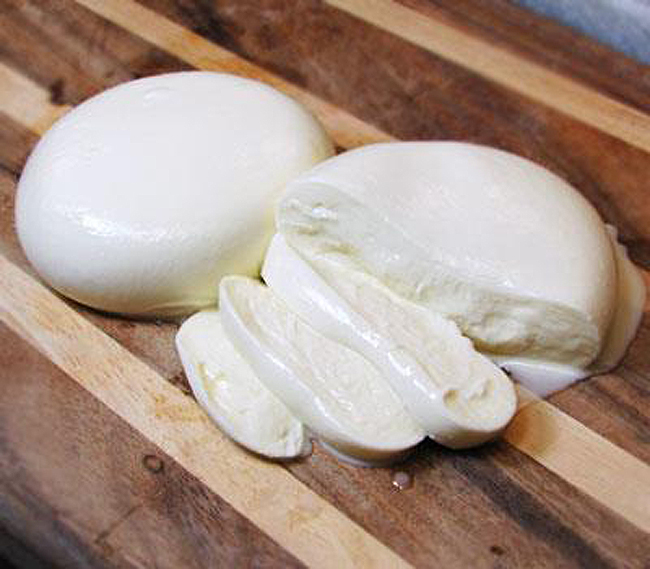
- Next Monday is Mozzarella Monday at the Zingerman’s Creamery! $2 off the per pound price for Fresh, Smoked, or Burrata! Two bucks off!
See you soon!
Month: June 2013
We’ve updated the Deli menu!
Returning old favorites, and some brand-new items. Check ’em out!
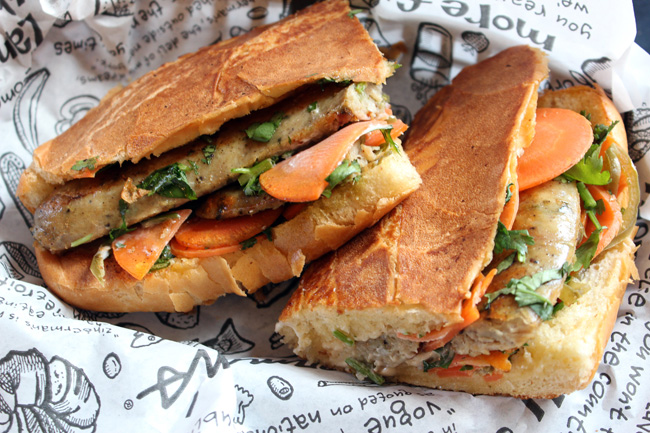
- #202 The Banh Mo: We liked this sandwich of the month so much, we’ve added it to the menu. Vietnamese chicken sausage from Detroit’s Corridor Sausage Co., The Brinery’s pickled carrots, fresh cilantro and mayo. Grilled on a soft bun.
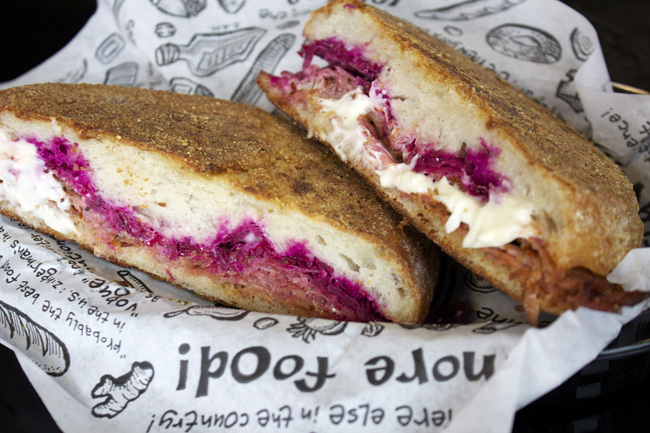
- #212 Davey’s Deep Purple: Cajun Tasso ham with The Brinery’s Storm Cloud Zapper (Michigan green cabbage, Michigan red beets, fresh ginger root, sea salt), Switzerland Swiss cheese & mayo grilled on a paesano roll.
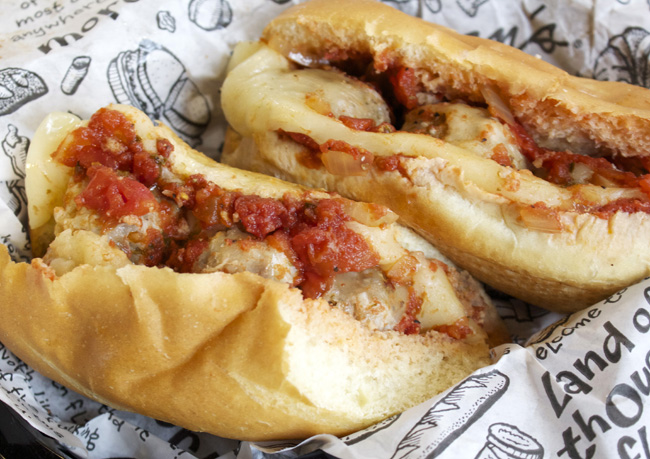
- #96 Reina’s on a Roll: Back on the menu! Housemade meatballs made with beef and pork, pomodoro sauce, melted provolone on a Bakehouse hoagie.
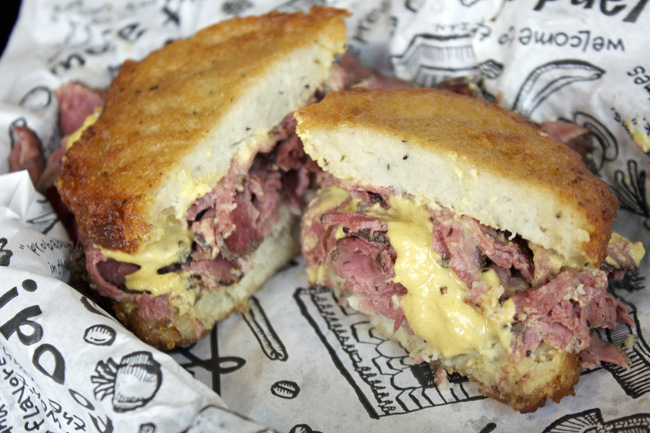
- #230 Sy’s Legend 3.0: Zingerman’s famous pastrami on a housemade fried knish with hot mustard.
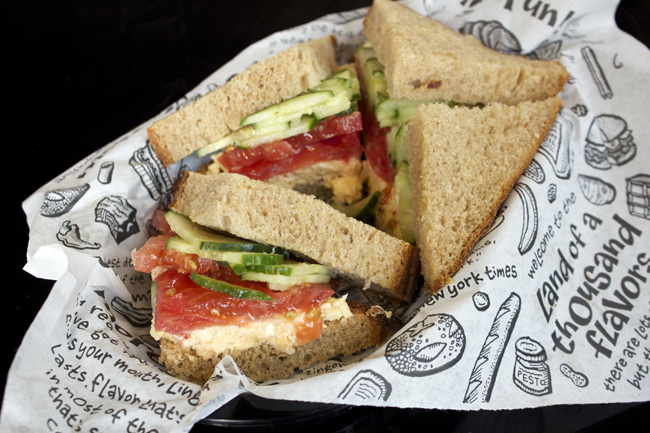
- #219 Erica’s Tea-wich: Slightly spicy pimento cheese, slices of cucumber and tomato quartered on country wheat bread.
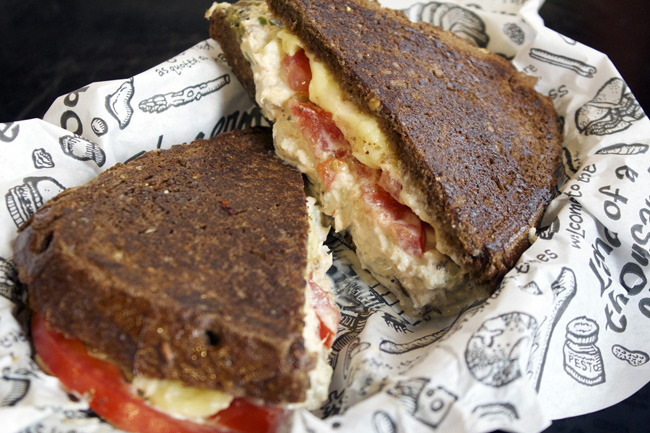
- #222 Marshall’s Ten Out of Tin: Housemade tuna salad, now made with Ortiz line-caught tuna, Switzerland Swiss cheese, New Mexico green chiles & tomato on grilled pumpernickel.
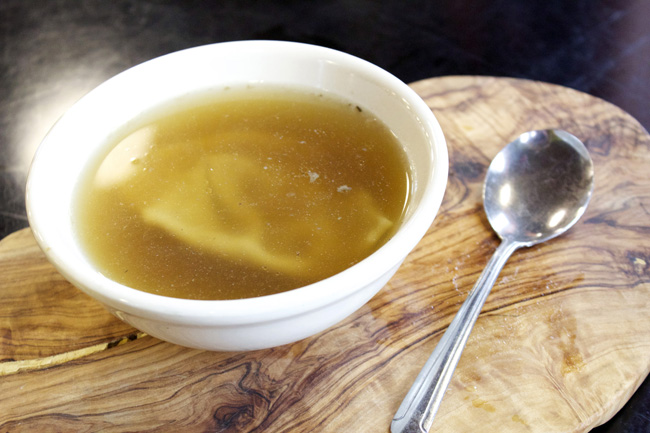
- Kreplach Soup: Our housemade chicken broth with housemade brisket filled dumplings.
- The Sandwich Salad: Enjoy any sandwich without the bread! Served instead on a bed of leaf lettuce!
All this and more at the Zingerman’s Deli!
Month: June 2013

Creating A Vision of Greatness:
Imaging and documenting the future that you prefer
The story of Ari and Paul sitting on the bench in front of the Zingerman’s Deli and hatching a vision of growth through the creation of a Community of Businesses, rather than through franchising the Deli, is an important piece of Zingerman’s lore. Less well known, however, is the fact that we actively teach the process of visioning throughout the organization and use it regularly for projects both large and small. In addition, ZingTrain teaches Zingerman’s visioning approach to clients from around the world – in both public and private seminars and workshops. We define vision as “what success looks like, at a particular point in time in the future, documented with enough richness of detail that it’s clear when we’ve arrived.” Unlike the short “vision statements” found in traditional business books, our vision for Zingerman’s 2020 is about 7 pages long.
We believe that using visioning changes lives. We know it has changed us as an organization, and many of us have used visioning to change our personal lives as well. A vision is not a strategic plan but rather our destination. Strategic plans are important, but we believe they make no sense until there’s agreement on where we’re going.
One of the organizations we’ve worked with on visioning is Southern Foodways Alliance. We asked SFA Director, John T. Edge, to share his experience.
ZingTrain: Before we get into the interview, what would you like people to know about your organization?
John T: The Southern Foodways Alliance at the University of Mississippi documents, studies, and celebrates the diverse food cultures of the changing American South. We set a common table where black and white, rich and poor—all who gather—may consider our history and our future in a spirit of reconciliation.
When and how did you first hear about Zingerman’s and ZingTrain?
We learned about ZingTrain by falling in love with the Zingerman’s Community of Businesses. If you visit the Zingerman’s Roadhouse or Delicatessen, buy from zingermans.com, buy breads, buy cheese, or buy chocolates, you know that the folks on the other end of those transactions are customer service paragons. Somewhere along the way, we realized that SFA employees could learn a thing or six from Zingerman’s about customer service. That led us to ZingTrain.
What was the nature of that work?

Zingerman’s helped us craft our 2021 Vision of Greatness. It’s our lodestar.
How has your organization changed since working with ZingTrain?
We’re far more process oriented. And we’re far more focused on who we are and what we want to be when we grow up. Come to think of it, we’re closer to being all grownup.
Do you have any advice for an organization that is considering working with ZingTrain?
Trust the process. Read Ari’s books. Speak your mind. That vision of greatness thing will serve you very well.
Interested in learning more?
Check out these resources:
- Ari’s book, Zingerman’s Guide to Good Leading, Part 1: A Lapsed Anarchists Guide to Building a Great Business.
- Visioning Power Pack.
- For a copy of Zingerman’s 2020 vision, email ZingTrain.
- Read the Southern Foodways Alliance vision.
Month: June 2013
*From time to time, we share the writing of our friends and co-workers on this site. Today’s guest post comes from Zingerman’s Bakehouse staffer Chrissy Abe.
Upon arrival on her first visit to Hungary, Zingerman’s Bakehouse Partner Amy Emberling wanted what any weary, jet-lagged person would want – a meal. Any meal. It needn’t even be a good meal, just something to begin the assimilation process after touching down in another country. So, when Amy, Bakehouse Partner Frank Carollo and Zingerman’s founder, Ari Weinzweig, ended up at Duna Corso, a restaurant in a touristy part of Budapest, they were pleasantly surprised to find good food in a family-style restaurant.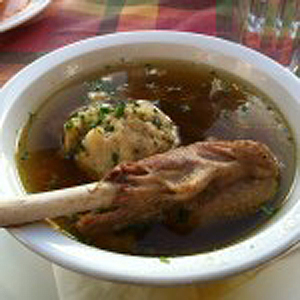
Seeing matzo ball soup on the menu, with no mention of it being a Jewish dish, was intriguing to them. Even more interesting was that the matzo balls were swimming in goose broth instead of the chicken broth usually found in the U.S. version. The goose broth was rich and complex, and was served along with an entire goose leg as a garnish. Then there was the matzo ball itself: It was much coarser in texture than any the Bakehouse crew had previously experienced, and it was flavored with fresh ginger root! (Don’t let your bubbe read this…)
“The food that warms your soul is what makes an impression…”
Interestingly, Hungarian cuisine and Jewish cuisine are quite intertwined today. Matzo ball soup is often on menus, latkes are readily available and cholent, often served with pork, is surprisingly common. Jewish communities have existed in Hungary since at least the 1100s and their impact on the nation’s cultural landscape is significant. World War II brought the same fate to Hungarian Jews as it did other European Jews. But this occurred much later in the war since Hungary was an ally of Germany, and maintained its independence until the spring of 1944. Some Hungarian Jews fortunate enough to survive the Holocaust returned after the war, only to find themselves living under repressive Communist rule.
After the fall of the Berlin Wall in 1989, the community became more visible and vibrant. Budapest now has the largest and most active Jewish community in Eastern Europe, and 90% of Hungary’s Jewish population lives in the capital. The result of 900 years of Jewish/Magyar co-existence is an interesting assimilation of Jewish foods into the Hungarian standard cuisine. What we might think of as Jewish food here in the U.S. is simply considered Hungarian food in that country.
One of the goals of the spring 2012 trip was to explore Jewish cuisine in Hungary, which makes sense as Zingerman’s has its roots in Jewish food. Toward that end, the group decided to pay a visit to Tibor Rosenstein. Tibor is the chef and owner of Rosenstein, one of a handful of restaurants in Budapest known for their Jewish offerings. He survived the Holocaust as a baby, and was raised, along with his sister, by resourceful elderly grandparents. After finishing middle school, he chose cooking as a trade because “eating is good, and everyone must eat.”
Tibor built on what his aging grandmothers had taught him: cook what is locally available with love and great care. He opened his restaurant in the early 1990s, and he cooks what his grandmothers cooked. The food that warms your soul is what makes an impression, and his restaurant is a wonderful representation of Jewish and Hungarian traditional dishes served in an elegant setting. One of the best parts of the restaurant is Tibor himself. He is an energetic, smiling, and passionate chef. Truly inspiring!
Returning to the matzo ball soup… At his restaurant, Tibor makes a flavorful goose stock using a mix of vegetables such as mushrooms, parsnips, celery root and Savoy cabbage. But the crowning jewels are the matzo balls. Tibor welcomed the Bakehouse group into his small, but efficient kitchen to show us how he makes his matzo balls, using coarsely crumbled whole matzos, whole eggs, goose fat, fresh parsley, and fresh grated ginger root. We left his kitchen prepared to bring Hungarian matzo ball soup to Ann Arbor.
Intrigued? We promise a tasty experience whether you’re a matzo ball soup novice or connoisseur. Come and see us at the Bakehouse on Fridays and try our tribute to Tibor’s soup.
Month: June 2013
This weekend, baristas Chris and Anya from the Zingerman’s Coffee Company will travel to Chicago to compete in Coffee Fest’s Latte Art World Championship Open.
This is a bracket-style, sudden-death format competition in which competitors go head-to-head. The competitor receiving the highest score from the three judges advances to the next round and the loser is eliminated. There are sixty-four competitors participating in eight rounds. Each barista has three minutes to create a drink.

Competitors are judged in five categories:
- Aesthetic Beauty
- Definition
- Color Infusion
- Degree of Difficulty and Creativity
- Speed

The ultimate champion will earn a grand sum of $2,000. Second place pockets $1,000 and third place earns $500.
Judges for this year’s contest will be Matt Milletto of American Barista & Coffee School andBarista Exchange; Sarah Allen of Barista Magazine; and Anna Gutierrez of Gourmet Source.



Good luck to Chris and Anya!
Stop by the Coffee Company and cheer them on!