Year: 2024

A super-simple spring pleasure to put on your table at home today
One of my favorite parts of spring eating is this amazingly simple and super delicious little “appetizer.” It’s a coming together of fresh vegetables and fresh bread, great butter, and a small sprinkle of sea salt, that wakes up taste buds and, as per what I wrote about in “A Taste of Zingerman’s Food Philosophy,” conveys the beauty of what’s possible when we put together really great ingredients.
Radishes, right now, are really good around Ann Arbor! Pink and white, small and large, long and round, with their greens still attached or without, they’re hot, spicy, refreshing, lively, and lovely. When you eat a freshly dug, heirloom radish it can easily become the highlight of your meal. While supermarket ones tend towards tastelessness, really great local radishes are alive, crunchy, and spicy—sometimes so much so that they start to seriously clear your sinuses the way good Dijon mustard can do. Which makes complete botanical sense because, although few Americans are aware of radishes’ roots, they’re in the same spicy plant family as mustard and turnips.
An Easy Appetizer with Radishes
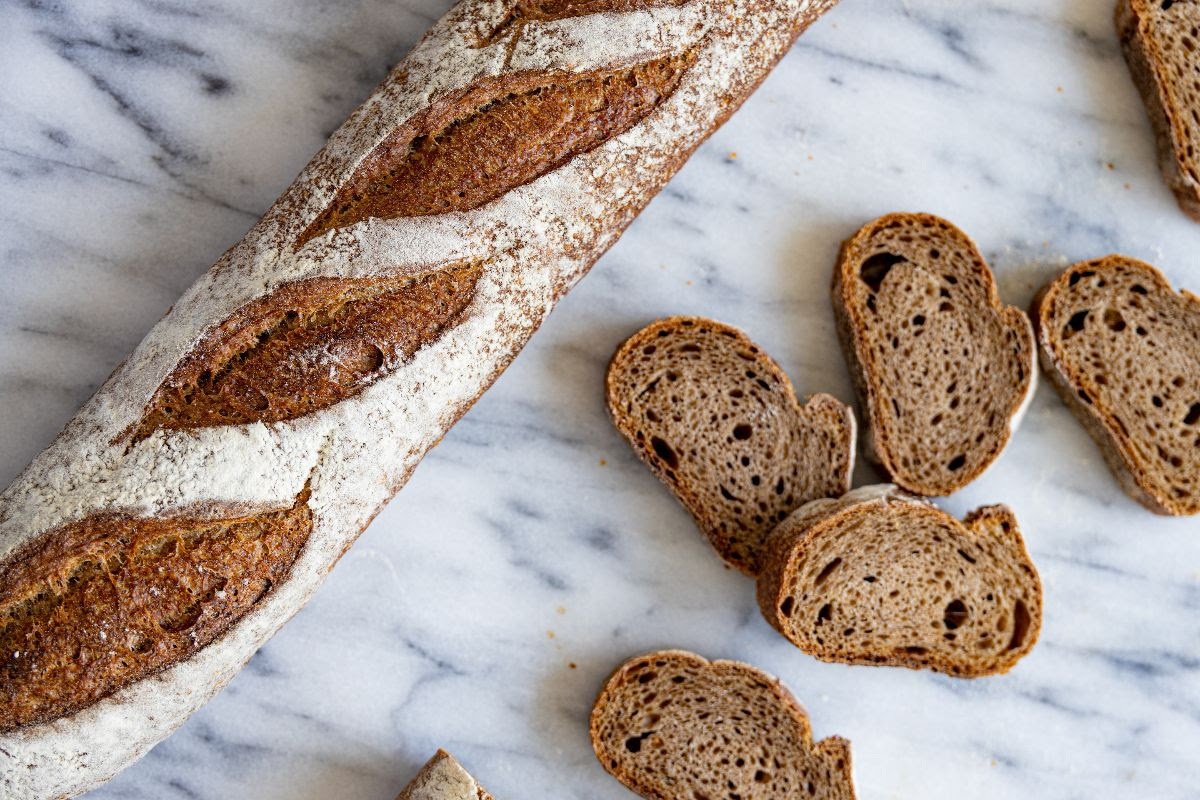
Radishes that are that good are excellent on their own. But they’re also amazing in this classic-in-France-but-barely-known-over-here combination of radishes, bread, butter, and sea salt. Because it’s so simple, you only want to do this with really great ingredients. (A supermarket version of it, to be honest, wouldn’t be worth the time it took to slice the radishes.) To put the dish together, start by cutting some thickish slices of the Bakehouse’s dark-crusted Country Miche (preferably from the large, 2-kilo loaf), True North, or Farm bread. Spread the bread with some good butter, like the Vermont Creamery cultured butter that wins raves pretty much every few minutes when folks eat it on the Bakehouse Artisan Bread appetizer. Slice your radishes. Lay them onto the buttered bread. Sprinkle on a good bit of the super delicate crystals of fleur de sel, then eat. That’s all you have to do.
You get the crunch and the spice of the radishes, offset by the light, lactic, lively creaminess of the cultured butter, set off against the dark, wheatiness of the Country Miche, all enhanced by the sporadic delicately crunchy high notes of the salt crystals. If you put them out on a nice plate or tray, everyone at the table can assemble the ingredients in their own way, which I’d argue, is part of the artistry of it all.
Want to make this a bit fancier? Slice the radishes partway through, stuff them with softened butter, and then dip the open end into the salt. That way folks can pick them up, pop them into their mouths, and enjoy the contrast of textures and flavors.
Keep up with the buzz on all of the latest happenings in the Zingerman’s Community! Follow us on social media: @zingermanscommunity on Instagram and Facebook, and @zingermans on X (formerly Twitter).
Year: 2024
|

|
To keep up with the buzz on all of the latest happenings in the Zingerman’s Community, follow us on social media: @zingermanscommunity on Instagram and Facebook, and @zingermans on X (formerly Twitter). |
Year: 2024
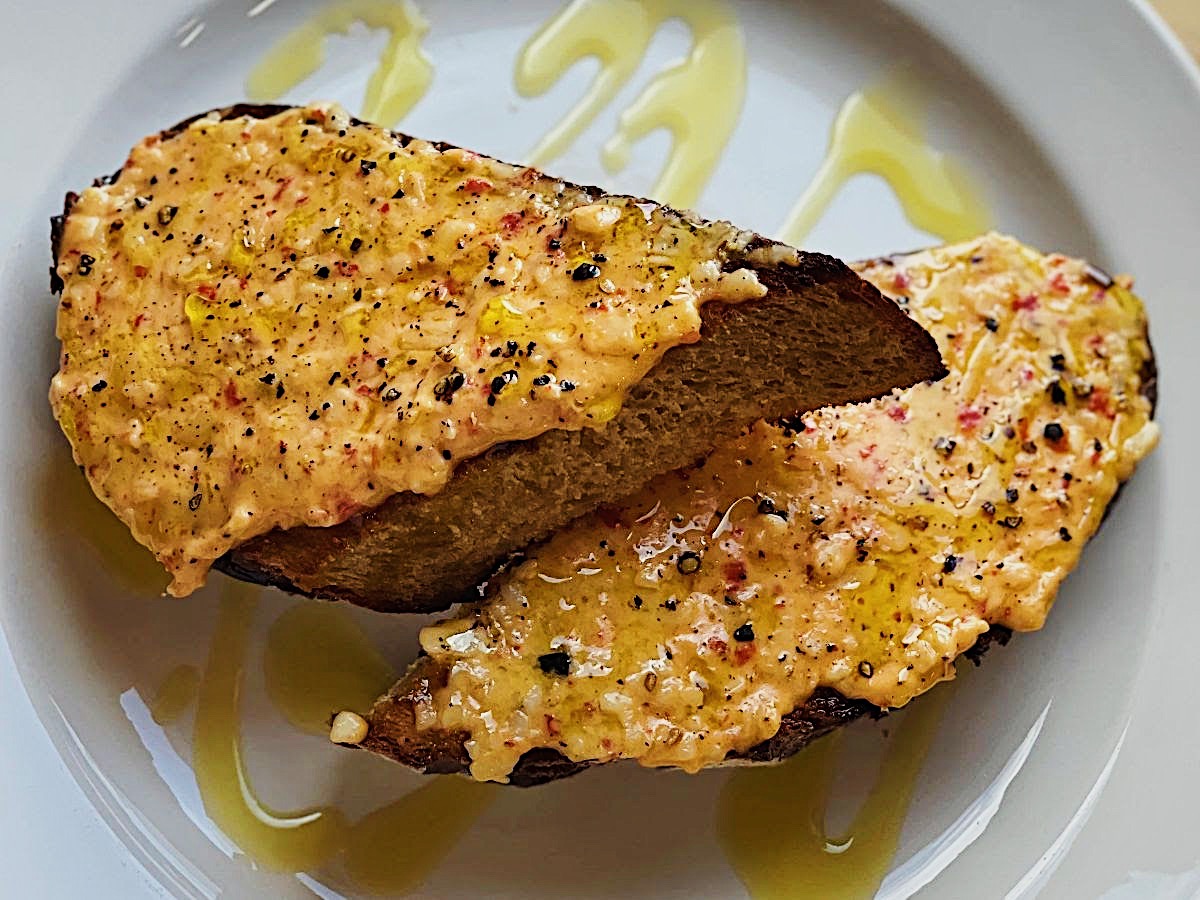
Totally tasty toast with pimento cheese,
black pepper, and olive oil!
|
|
Year: 2024

An Interview with Joan Nathan
Meet Joan Nathan, world-renowned authority on Jewish cooking, James Beard and IACP award-winning author of 11 cookbooks, New York Times and Tablet Magazine contributor, star of the PBS television series Jewish Cooking in America with Joan Nathan, University of Michigan alum, and friend of Zingerman’s.
We’ve followed Joan’s career and admired her work since she met our founder Ari’s mother in the kosher section of a Chicago grocer in the ’90s. Joan shines a spotlight on the spectrum of flavors and traditions of Jewish food that exist all around the world, something near and dear to our hearts here at Zingerman’s.
I sat down with Joan in advance of her upcoming tour for the release of her twelfth book, My Life in Recipes (Knopf, 2024). Her trip includes stops at The Temple Emanu-El Streicker Cultural Center in New York City, Akasha restaurant in California, The Smithsonian in Washington D.C., and Ann Arbor to visit us (and you?) at Zingerman’s Roadhouse on May 7! After our interview, I found myself missing my grandmother, daydreaming about traveling more, and wishing I could tear into a warm loaf of challah with Joan.

Sara Hudson
Zingerman’s Creative Services Director
Sara: Your newest book, My Life In Recipes: Food, Family, and Memories is part memoir, part cookbook, and organized almost like a travel diary. How did the idea to present your story that way come about?
Joan: I thought, “What should I do next?” I told myself this is the time to stop and do a last book. I’ve had a really interesting life. My editor suggested I do a totally new kind of book that nobody’s ever done. Very often chef memoirs put one recipe at the end. She said, “Why don’t you do a memoir and recipes?”
Sara: Tell me about the process of creating the book.
Joan: The process took a few years. I started writing, but my husband got very sick and he died. And then, of course, there was Covid after that. At first, I couldn’t do anything for several months, but then I went to visit my daughter in New Orleans and I started writing. I got up very early in the morning and wrote in bed, which I love to do. I would take long walks and think about what I had written. Then I’d put it all away and take a break. In the end, my editor cut 30,000 words. I had so many stories to tell! Putting it all together amazed me.
Sara: Some of my favorite parts of the book are the old photos, diary entries, and letters to your family. Who do we have to thank for saving all of those?
Joan: My mother saved everything for me. When I went to France as a student, when I went to Israel to work—she saved all my letters. I saved my diaries. I wrote my diary in French when I was studying in France—I can’t believe I did that!
Sara: As you collected your life stories was there anything you thought, “I can’t believe that happened!”?
Joan: We tried to keep the stories to be only about food but there are certain things I wanted to include, like the time I met Marilyn Monroe. I found it in my diary from when I was 12 years old. I saved her autograph. It’s framed in my house.
Sara: What led you to this full life of travel and learning?
Joan: Maybe this is because of my parents, but I’ve always felt I could do whatever I wanted to do. I thought, “Just do what you want in life. I mean, just go for it.”
Sara: Tell us about one of your favorite more recent trips.
Joan: I was taken with cinnamon because in the Geniza, a hidden trove of ephemera in synagogues and mosques in the Middle Ages, I found mention of the spice. For my 70th birthday, I told my husband I wanted to go to Sri Lanka with the whole family because that was the home of cinnamon. Before I go anywhere, I find families to go to see and see the place through their eyes. I went on my own to a family in a neighboring town that worked in the cinnamon industry. They were making something just like a cinnamon babka on the side of the street. I use that recipe in the book.
Sara: For the most part, you have been baking a loaf of challah every week since the 1970s. Does anyone ever bake it with you?
Joan: That’s a good question. My assistant Hannah is a very good baker. She’ll help me and I’ll learn from her. I rarely buy a challah. Most of the time I do make it. It’s not very hard to do once you know how and it can be done very quickly. My hands in the photo on the cover show I’ve been making it for a long time! I try to have a Friday night dinner either at my house or somebody else’s every week, and I make the challah.
Sara: I love the recipe in the book you call Seasonal Challah. What inspired that?
Joan: That just happened. I live in Martha’s Vineyard in the summer and I have a big garden with lots of herbs. So I took whatever seasonal herbs there were and put them in my challah dough. I thought it was really good, and if you make it at home, you can do that. There’s tarragon in my garden and it’s one of my favorite herbs, but I like to save it for other things besides challah. You have to have a strong flavor to get through the baking. I like using basil in the summer and rosemary in the fall. I also like putting anise in my challah which makes for such a wonderful flavor. But I don’t like raisins in challah. Raisins are for stuffed cabbage, with onions, pine nuts, Italian spinach, and sardines.
Sara: What do you have planned for your upcoming book tour besides your visit to Ann Arbor and the Zingerman’s Roadhouse dinner?
Joan: I’m giving speeches in San Francisco and New York. Ruth Reichl is interviewing me at an event at Temple Emanu-El for 1,000 people!
Sara: What are you looking forward to about coming back to Ann Arbor for the first time in more than a decade?
Joan: Ann Arbor was a big part of my life when I was in school there. It was natural that I would come back to it for this book. I’m looking forward to going back to my own history, but some of the places I frequented in Ann Arbor decades ago aren’t there anymore. It’s just sort of a memory, but Ari’s made Ann Arbor so much more tantalizing with what has grown from the Deli through the years. I need to see Zingerman’s. I’m looking forward to seeing how it has yet again morphed into something more, because it has every time I visit. I’m looking forward to seeing Ari. This is fun for me to see because I’ve been following Ari for years after meeting him in the early ’90s on a book tour. I just looked at a photo of him. He never had gray hair when I was there and he’s got a little gray hair now. I do too, but I cover it.
Joan proudly read me an excerpt from Jewish Cooking in America that references Zingerman’s:
When I first heard about Ari Weinzweig’s Delicatessen in Ann Arbor, Michigan, I couldn’t believe it was a deli in the home of my alma mater. It’s not really a deli, but more of an International Food Emporium like New York’s Zabar’s with the definite Jewish touch. Mr. Weinzweig, a dropout PhD candidate, has taken an academic and appetizing interest in updating Jewish recipes like mushroom and barley soup going back in history to the 19th century Eastern European version similar to that served at New York’s Second Avenue Deli.
Sara: What will be on the menu when you host a special dinner and book signing at Zingerman’s Roadhouse?
Joan: Smoked Whitefish Spread, Galilean Hummus, and Syrian Mahammar all served with bagel chips, Armenian Stuffed Grape Leaves, Mediterranean Salmon with preserved lemon and za’atar, and much more. For dessert, Ann Arbor Schnecken, those wonderful sticky buns they used to serve at Drake’s that Frank Carollo also made at Zingerman’s Bakehouse. [Editor’s note: You might know them today as Obama Buns!]
Sara: One chapter title stood out to me: “Jerusalem: Learning About Living and the Meaning of the Meal.” What do you think the meaning of a meal is?
Joan: When you sit down with a person of a different background, maybe with different beliefs, I try to take the time to watch the meaning of food within that meal. In that chapter, I talk about going to an Arab home. The first thing served is coffee before the meal. It leads into the meal. People just relax and as you talk to each other things sort of slow down. It’s not just in Arab homes, but Jewish homes in the Middle East and everywhere. You start slowly, whet your appetite, get to know people as human beings, and enjoy a meal together. I’ve really seen this around the world, the importance of food and sharing it with a stranger.
Sara: How do you approach your recipes?
Joan: The traditional food and recipes I study have been made the same for thousands of years, carried down from generation to generation. Sometimes we need to freshen them up a little bit. That’s what I try to do in my books, so there’s a little bit of added color and a little less fat, but the essential taste is there and that’s the important thing.
I think all of us live too disconnected from what other people’s reality is and so that’s what really interests me, trying to get the humanity of everyone. That’s what I’ve tried to do for my whole life. I get a high from finding a recipe, but I don’t get excited by fancy schmancy restaurants. Maybe that’s why I like Ari so much, I have a feeling he’s the same way. He’s discovering artisan food producers and highlighting those people. That’s what I like to do.
Sara: You’ve traveled a lot and experienced different cultures, languages, and flavors. What was the common thread in those experiences and recipes?
Joan: Humanity. Pride in what you’re making. I notice that universally.
Sara: If you were to go back and add another chapter of what you’ve been eating or making at home since completing the book, what would you include?
Joan: Wow. That’s a tough one. I think I put it all in the book. I might have added the story of another adventure I’ve been on. Or I might have added something like brownies or chocolate chip cookies because my kids really like them, but you can get recipes for those anywhere. Actually, I have an update of a children’s book coming out in November I did with my grandchildren called A Sweet Year. Every grandmother is going to want to buy this book because the photos of my grandchildren are so good and I include fun things: a pomegranate punch, how to make cheese and butter, recipes for what I named East Coast and West Coast Brownies.
Sara: What do your grandchildren ask you to show them how to make?
Joan: They like to perfect making eggs in the microwave, it’s sort of like sous vide. They experiment with different toppings and make faces with the eggs and Challah. We make pesto and pasta from scratch together all the time. I’ve even shown them how they can make their own fresh cheese.
Sara: I want to show you this well-worn Cooking with Joan pot holder that’s hanging in our kitchen here at Zingerman’s Service Network. You’re here with us.
Joan: Oh my gosh! Look at that. I don’t even have one of those. I hope I get to meet you. You’ve really done your homework. Thank you so much.
Sara: Thank you so much for your time. Congratulations on the book. We’ll see you at your dinner!
Year: 2024
|
|
|
|

Year: 2024