
Tag: ZINGERMAN’S BAKEHOUSE

A terrific traditional taste of Eastern Europe and the Lower East
Even 43 remarkable years after opening the Deli, bialys are still mostly a mystery to folks here in Ann Arbor. While bagels long ago went mainstream and have been showing up in supermarkets, freezers, and fast-food places for decades, bialys are, to this day, still pretty much a secret. Me, I’m a big bialy fan!
If you aren’t familiar with them, bialys are the traditional “roll” of the Polish town of Bialystok—about a nine-hour drive in the 21st century, south and west from Ostrovno. They were brought to this country primarily by Polish-Jewish bakers around the end of the 19th century and beginning of the 20th century as well. Back then, they were very much an everyday bread, eaten at almost every meal. In New York today, they’re still readily available, but out here in the rest of the country, a bialy (let alone a good bialy) isn’t something you’ll find every day. Most Americans will go their whole lives without ever having eaten one!
John Thorne, in his wonderful book, Simple Cooking, wrote that a bialy is
a bagel that’s lost inside a Polish joke: its outside is crusty instead of glossy and the hole in the center doesn’t make it all the way through. But, fresh from the oven, it is a delicacy unique to itself, crisp and chew at once, the center dimple stuffed with translucent onion bits …
More directly, with a bialy, the “hole” in the center isn’t really a hole; it’s more of an indentation, a thumbprint of an impression, which is filled with lots of fresh, diced onions and plenty of poppy seeds. Since a bialy isn’t boiled before being baked, it doesn’t have as thick a crust.
You can do a lot of the same things with a bialy as you would with a bagel. Eat ’em out of hand or, alternatively, try them toasted with a little Vermont Creamery Cultured Butter or Zingerman’s Cream Cheese and some smoked salmon. Having read Mimi Sheraton’s very lovely little book, The Bialy Eaters, I learned that back in Bialystok, people generally ate bialys by simply spreading butter across the top, not slicing them in half as we do with bagels. They’re even better if you warm them in the oven for a few minutes before you eat ‘em.
You can only buy bialys at the Bakehouse once a month. In March, that’s this coming Tuesday, the 3rd. They do freeze just fine, so you can store them up at home to have on hand for …well, for any time you feel like a bialy.
Save you six?
A beautiful Hungarian “biscuit” for breakfast, lunch, or dinner
In a sense, I can see now that our nearly 15-year commitment at the Bakehouse to make Hungarian baked goods one of our signatures is a strong example of a Promise Beyond Ableness—“When we aim for what we do not yet know how to do—but, if achieved, it would increase the ableness and performance of our beloved people, places, or causes.”
We made that promise back in 2010. Sixteen years later, it has played out very much as we envisioned. In 2026, we’re regularly baking about two dozen traditional Hungarian specialties, and nearly all of them have developed large, loyal followings—not only among the area’s significant Hungarian community, but also among folks like me who likely would never have known these pastries at all if we weren’t making them here.
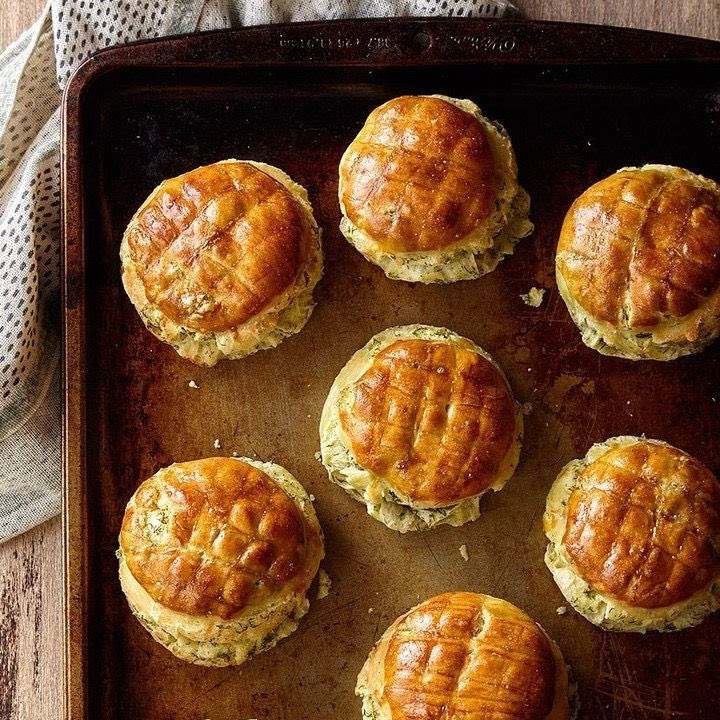
Although aficionados have been enjoying them for years now, the Pogácsa (pronounced “poh-gotcha”) at the Bakehouse seem to have become all the rage. The word seems to have hit the street: these butter-laden, sour-cream enriched, dill-scented Hungarian “biscuits” are really, almost ridiculously, good! While they’ve been little known here—outside of our Hungarian-American communities, which know them well—Pogácsa are probably one of the most commonly served foods in Magyar culture. Mimi Sheraton lists them in her book, 1000 Foods to Eat Before You Die: A Food Lover’s Life! Thanks to the Bakehouse, you can knock the list down to 999!
Pogácsa are basically perfect little bites of buttery goodness. Made with sour cream, eggs, butter, and the layering of dough, Pogácsa are light and tender. In the marvelous, deservedly award-winning cookbook, Zingerman’s Bakehouse, co-author and Bakehouse co-managing partner Amy Emberling explains, they’re “rich and delicious rolls made in Hungary…eaten at breakfast, for a snack, for appetizers, or to accompany dinner. If you want to make a true Hungarian meal, Pogácsa are an essential component.”
The lovely green herbiness of the dill brightens up the buttery base of the Pogácsa beautifully. You can do anything with Pogácsa you would with biscuits. They’re great as they are! I also like to split them and toast them in a pan with a bit of Vermont Creamery Cultured Butter (yes, they’re already buttery to begin with, but more butter is better!) until the cut surface turns a beautiful golden brown. You can serve them on the side with almost any meal, morning, noon, or night. Use them to make Pogácsa sandwiches—a little bacon or sliced ham would be great. I like them with bits of cured ham like Prosciutto di Parma or cured, smoked, Speck—it takes about 20 seconds to put together, and it’s a truly terrific culinary combination.
They’re excellent as well to put a fried egg on, sprinkled with a pinch of hot Hungarian paprika. If you like, smash a just-cooked small potato onto one side of a split Pogácsa—sprinkle it with salt, pepper, olive oil, and a bit of Hungarian paprika and you’ll have a lovely hot potato and Pogácsa sandwich. Pogácsa are particularly good with the Liptauer cheese, and they’re also great with butter and anchovies or cream cheese and sardines. They’re also good with sweets—I’m really happy eating them with a combo of butter, honey, and black pepper. Or try one spread with our great artisan cream cheese and honey.
Stop by the Bakeshop and put a Pogácsa in your pocket! If you’re thinking of serving them for a big gathering, I’d suggest ordering ahead so we can make sure to have enough ready for you! One guest bought four dozen of them the other day—I believe Pogácsa have the potential to become, as they already are in Hungary, as popular as buttermilk biscuits that we make at the Roadhouse. They’ll be on special for the rest of February!
Pre-order Pogácsa
One of the cutest parts of our SafeHouse Center fundraiser
Speaking of supporting important community causes, here’s an opportunity to do just that. As you may know, my much-loved Corgi pup, Jelly Bean, passed away at the age of 17 in the spring of 2015. Many caring folks tried to console me, reminding me that she lived a long and wonderful life, but the grief and loss that followed after her passing were still pretty big. To this day, she’s on my phone’s screen saver.
Along with friends like Marsha Ricevuto, who often cared for Jelly Bean when I would go out of town, Tammie and I started a fundraiser in Jelly Bean’s memory. We decided to do it for SafeHouse Center, Ann Arbor’s shelter for victims of abuse, because it’s an incredibly important cause, because Tammie and I live nearby, and because the SafeHouse staff used to see Jelly Bean and me running together regularly! The spirit of positivity, hope, and generosity that Jelly Bean demonstrated every day is also what SafeHouse is all about.
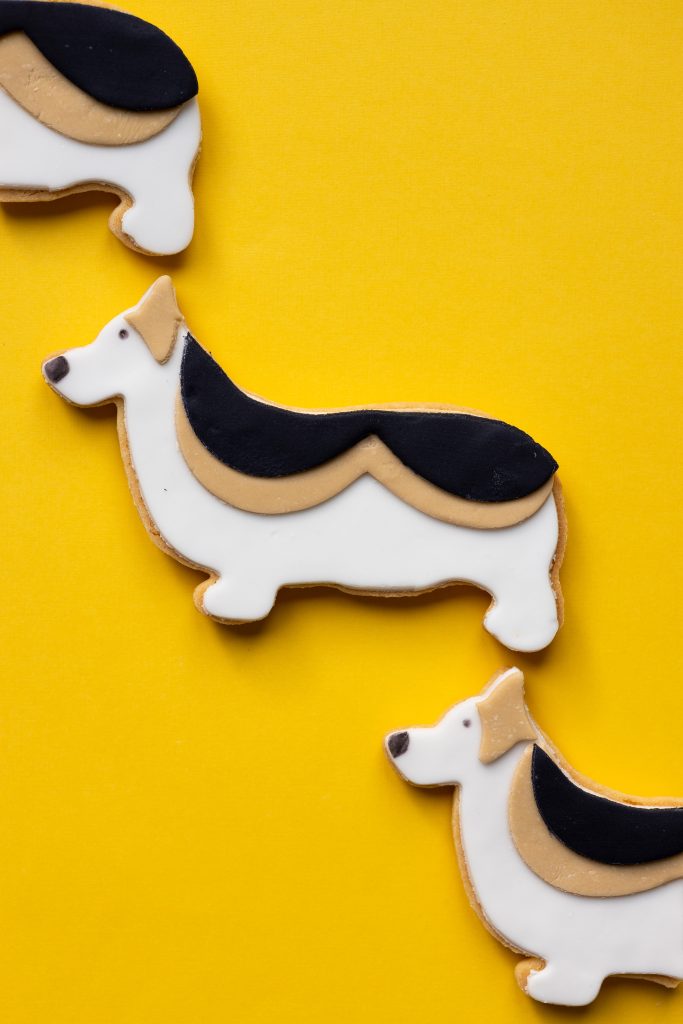
Every winter, the ZCoB puts together a series of activities for Jelly Bean Jump Up. Made by the caring crew at the Bakehouse, the Corgi Cookies are one of my favorite parts. I smile every time I see one. These exceptionally tasty sugar cookies are decorated to look like Jelly Bean! Handmade fondant on top of all-butter, vanilla-scented sugar cookies, they were pretty much immediately and universally hailed as the cutest cookies in the county. To make the offer even more compelling, the Bakehouse is generously donating $1 from each cookie to the fundraiser.
This year’s Jelly Bean Jump Up is supported by all of the ZCoB businesses, Plum Market, Paragon Sights and Sounds, Tito’s Vodka, Vermont Creamery, Shoreline Salmon, Sidebiscuit, Mothfire Brewing, Old National Bank, Probility, and Highline Spirits. Last on this list, but definitely not least, are the wonderful folks at Nueske’s. In fact, the fundraiser will culminate this year with a full-flavored, smoky nod back to Camp Bacon when the folks from Nueske’s—makers of that marvelous applewood smoked bacon from Wisconsin—come to the Roadhouse for a special bacon-centric dinner on Tuesday, March 31. Dogs, after all, love bacon, and so do many of our most loyal guests. We’ve been serving Nueske’s since the day we opened in March 1982, and this dinner honors the quality of all the products, the generosity Nueske’s has demonstrated for 44 years now, and SafeHouse Center and Jelly Bean, of course.
Writer Diane Bruk says that for a Corgi, “every day is the best day ever, except for yesterday and tomorrow.” It’s a good lesson for me: Stay in the moment when the various pressures of the world start to feel heavy. The Corgi Cookies are every bit as magical as the actual dogs, so they make great gifts. A delicious way to make a small donation to a good cause and then make someone else’s day!
Get a collection of Corgis
Incredible caramelized Hungarian honey cream cake
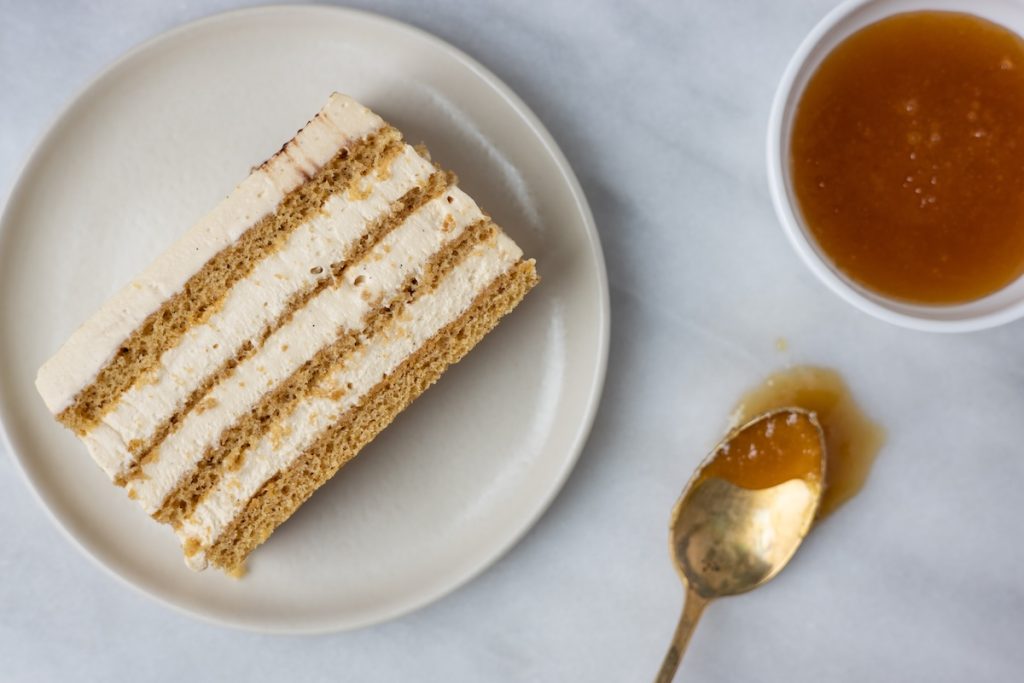
One of Budapest’s best-loved treats is rarely seen outside its cream- and pastry-loving homeland! Happily, thanks to the passion, skill, and dedication of the Bakehouse pastry crew, you and I can partake in this delicious dessert without going all the way to Budapest. Mézes Krémes (may-zesh krem-esh) has joined our ever-growing and ever-more-popular selection of traditional Hungarian pastries. It is a delicious and inspiringly iconic taste of this beautiful city.
First off, the cake itself is awesome. I’m not a big cake eater, but this one is seriously terrific, as in “I could eat a whole slice in about two minutes.” Light and elegant with an exceptional caramelly honey frosting and filling. Tammie Gilfoyle, my longtime significant other, says it reminds her of dulce de leche—not as rich as straight caramel and with a near-perfect cake-to-frosting ratio. Our Mézes Krémes has four layers of tender, sweet honey sponge cake, lightly spiced with cinnamon and sandwiched between luscious layers of cream infused with “burnt” (i.e., caramelized) honey, dulce de leche, sour cream, and a hint of orange zest. The sweetness blended with the delicate bitterness of the burnt sugar seems to be a pastry parallel to the Extra Aged Dutch Gouda from the De Graafstroom Co-op that we have at the Deli.
All traditions move and weave and evolve over time, and this cake is no exception. Mézes Krémes came to Hungary during the painful 20th-century period of colonial Soviet rule, which stretched from the end of World War II through October 23, 1989. The cake was invented in Russia over two centuries ago by a chef for the Empress Elizabeth Alexeievna, wife of Tsar Alexander I. Alexander I ruled Russia from the time of the American Revolution until his death in 1825. In Russian, the cake’s name is Medovik. (“Honey” in Russian is med, and “bear” is medved.) Alexander’s death was followed by the Decembrist Revolt, one of many failed attempts to bring democratic governance to Russia over the centuries (On a small note, the Revolt did inspire the name of the American rock band The Decemberists.) The Decembrists (the democratically inclined army officers, not the modern-day band) were fighting against the same brutality, inhumanity, and determination to keep taking, the dignity of others be damned, that led the Ukrainian poet Lyuba Yakimchuk to write the beautiful line “Where no more apricots grow, Russia starts.” Yakimchuk’s poetry inspired me to start a line of Apricots for Dignity and Democracy t-shirts, hoodies, hats, Carhartt jackets, and more. All of our proceeds get donated to Democracy Now!
It’s easy to imagine this elegant pastry being served in St. Petersburg back in the early 19th century, probably with tea rather than coffee. You can absolutely eat it anytime, and with the beverage of your choice. It’s great paired with the Honduras coffee that’s the current Roaster’s Pick at the Coffee Company. I think this Mézes Krémes would be beautiful at breakfast, too!
Take in some torta history

Featuring incredible red-black pepper from Sanliurfa
While the Bakehouse is known, of course, for amazing artisan bread and pastry, there is a whole other area of culinary activity in which the Bakehouse team quietly excels: soup! While many people around the country can enjoy the Bakehouse bread and pastry through the good work of Mail Order, the soup specialties are solely available to locals! All of the Bakehouse soups are pretty sensational, but my personal favorite over all these years is the Turkey Urfa Chili. For starters, it tastes terrific. Every time I think about making a turkey chili (the soup) with a Turkey chile (the pepper), the double meanings of the words get me going! I love this almost as much as the soup itself!
Urfa pepper, if you don’t know it, is one of the least known, yet most intriguingly delicious, spices on our shelves. If you like big flavor and a compelling but still very manageable bit of heat, come by and taste this terrific product. It’s interesting. It’s intriguing. It’s exceptional. It’s great eating! And it makes magic in this wonderful chili.
In over 40 years of cooking, I’ve seriously never tasted anything like these red-black pepper flakes from the town of Sanliurfa. The town itself is a mix of diverse peoples and cultures: Kurds, Turks, Muslims, and Christians. It has an ancient history and is mentioned in the Bible many times. I first heard about Urfa pepper nearly 30 years ago now, from the amazing cookbook writer Paula Wolfert. (Paula’s books were some of the first that I used decades ago when I started cooking professionally. They remain wholly remarkable today.) Back then, Urfa and many other foods that are now commonly available in North America couldn’t be found outside their home countries.
This Urfa starts with the special large, deep purple peppers (sort of like rounder poblanos) that are typical to the region. They’re picked each autumn when ripe, then cut and slowly dried in the sun. In the evening, they’re wrapped up in blankets or tarps so that they sweat through the night. The process is repeated daily for over a week until the peppers turn almost black. In the process, the peppers pick up a rich, earthy flavor and smoky aroma. The color is deep and dark—like the darkest red wine you can imagine. The fully dried peppers are crushed, rubbed lightly with oil, and then seasoned with just a pinch of salt.
Aside from the chili, Urfa has been on my mind a lot as of late because it comes from the Kurdish community in Turkey. As some of you know, I have been appreciating the remarkable work of the Kurds who live in Rojava. They have created an amazing non-state entity in northern Syria, a place where women are treated with dignity, where consensus is used in local councils, where they have effectively brought democratic constructs into play in inspiring ways. Unfortunately, that community is at risk right now. Former British Foreign Service member Carne Ross wrote about the situation on his Substack recently.
The Bakehouse’s Turkey Urfa Chili takes all this and puts it together into a delicious, hearty, heart-warming, and wonderfully delicious dish! Organic turkey, tomatoes, and kidney beans seasoned with New Mexico green chili powder and a whole bunch of the Urfa pepper flakes makes for one truly fine chili. It’s also great as a pasta sauce and for making chili-cheese fries. Turkey Urfa Chili dogs, even better still! A wonderful way to warm yourself, your friends, and your family during these cold winter months. Given the extreme cold weather, what more can I say? Swing by soon, buy a pint or a quart, take it home, heat it up, eat, and enjoy!
See the soup schedule
A Special Bake of THE bread of Turkey on January 23 & 24
Thirty-one years ago this month, in the January 1995 issue of The Atlantic, friend and food writer Corby Kummer published a long piece about his visit to Istanbul the previous year. He opened by sharing all the downsides of the city, but then, in a lovely authorial about-face, announced to everyone, “I’d go back in a minute. In the course of a 10-day visit I recently made, Istanbul lodged in my soul.”
After detailing a number of the cultural and culinary highlights of the visit, Corby got to the heart of the culinary matter:
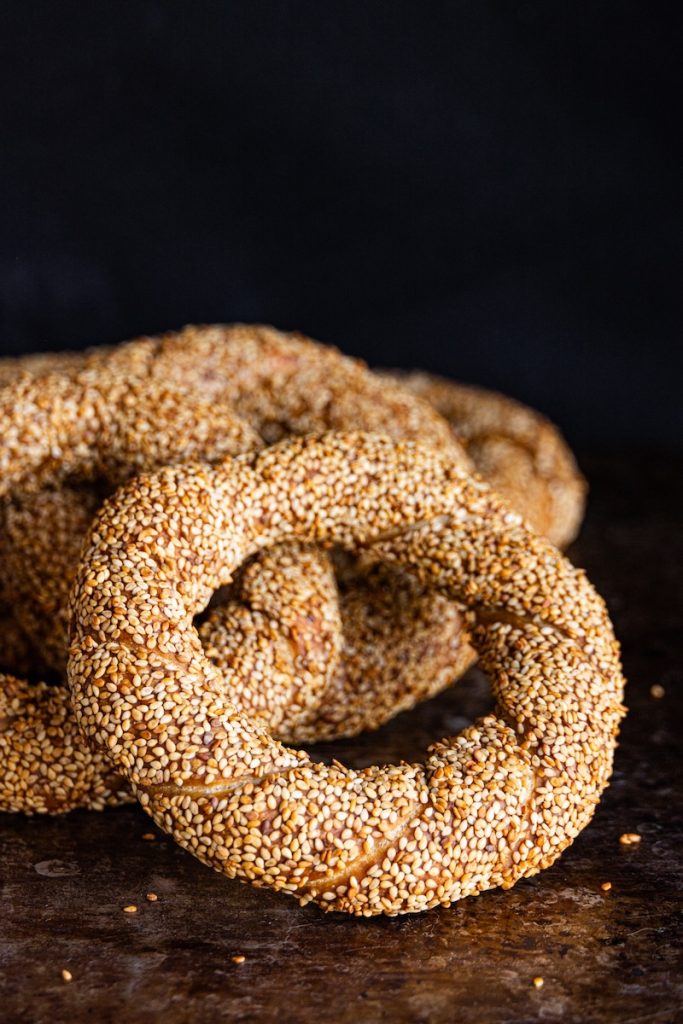
My survival food was simit, big dark rings of sesame-covered bread stacked on pushcarts all over the city: vendors carrying wooden trays laden with them, often still warm, are a frequent and welcome sight. A simit is more than a sesame bagel ever dreamed it could be.
You can’t yet survive on simit here in Ann Arbor, but maybe you’ll be able to soon enough. I’m ready! In under a year, the Bakehouse’s Simit has become the no-longer-secret, great new product in the ZCoB. We’ve got them on Special Bake at the Bakehouse this weekend, Friday the 23rd and Saturday the 24th. I’d say either get there early or order ahead. I have a feeling that even in the dead cold of the Michigan winter, and even with us making more of them than ever, they’re going to sell out quickly. They are, quite simply, super good!
If you lived in Turkey, of course, simit would be everyday and everywhere fare for walking to work, riding the subway, or sitting down to a lovely meal. Here they’re still new to most folks who are neither Turkish nor have traveled to Turkey, but as I said, they’re already catching on quickly!
In Turkey, as Corby said, they’re a critical component of everyday eating. Simit is a single word that conveys the baker’s art and instantly evokes a sense of community, country, and culture for anyone who is either from Turkey or has spent meaningful time there. The last time I was in Istanbul was many decades ago, well before we opened the Deli in 1982. And yet, like Corby, I still remember the simit. Hazim Tugun, longtime Bakehouse bread specialist, grew up in Turkish Cyprus, where simit is standard fare. This is how he recently described his experience with it:
This beloved snack bread takes me back to my childhood. I still eat simit whenever I go back to Cyprus or Istanbul, especially for breakfast, although the actual simit itself may, on occasion, pale (based on my newly formed baker’s palate) compared to the overall anticipation/experience/idea of having it.
Here, in our attempt to recreate this humble, traditional food, we combine locally grown and stone-milled wheat flour with a touch of in-house milled durum flour in a stiff dough that we ferment, braid into a ring, dip in grape molasses, and cover with pre-toasted sesame seeds. After an extended overnight fermentation to further develop flavors, we bake these rings to a deep golden color.
The aroma of freshly baked simit is enough to start bringing the memories back—but it’s that first bite that opens the magical portal for me. A bit of crunch gives way to a chewy interior, with the irresistible combination of savoriness from the toasted sesame seeds and a subtle, hard-to-put-your-finger-on sweetness from the grape molasses.
Enjoy it fresh on its own, bite by bite, or with a bit of cheese (like a great feta), tomatoes, cucumbers, and olives with some black tea (like the Turks do), or dip it in honey and cream cheese. If there is still some left over, slice the whole thing open, and make it into a great open-face grilled cheese in your oven the next day. Hopefully, you will step into that magic portal with that first bite, too.
Here at the Bakehouse, we’re beyond excited to bring simit into our repertoire. A wonderful taste of Turkey that anyone who’s intrigued—or, like me, already in love—can try out this coming weekend!