
Tag: ZINGERMAN’S BAKEHOUSE
Vermont Creamery helps us take Bakehouse classics to the next level
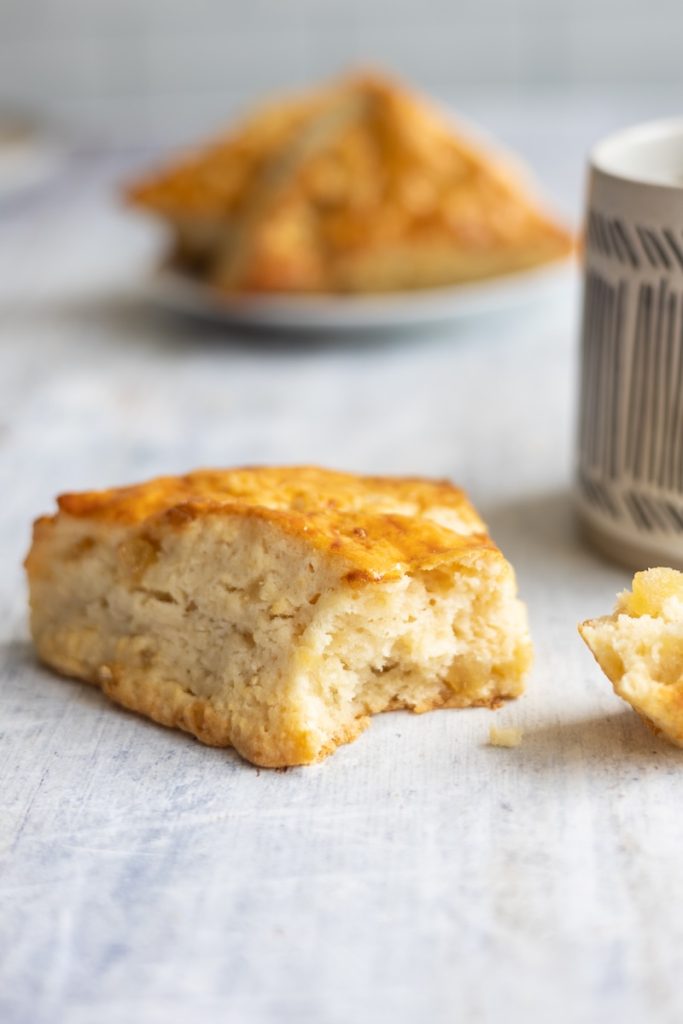
While they may not get the attention that goes to our corned beef, coffee cakes, artisan cheese, or fried chicken, or Miss Kim’s traditional Korean cooking, I have long believed that the Bakehouse’s Ginger Scones are, by far, one of the best things we make!
In the fall of 2007, journalist and friend Corby Kummer warned in The Atlantic:
Scones are among the pastry family’s most frequently abused members. Even in England, which you might think would be the home of the tenderest and best, the average scone is a dense and powdery affair, with only a few sad raisins to relieve the monotony.
If what Corby was warning about was at one end of the scone continuum, what the Bakehouse bakers craft is at the other—exceptional, creamy, buttery, gingery, light, cakey culinary marvels!
The Ginger Scones have been great ever since we started making them many years ago. And this month, like the Cultured Butter Croissants I wrote about last week, they just got even better when we began making them with the exceptional Cultured Butter from the good folks at Vermont Creamery. By coincidence—or actually not—Corby Kummer also mentioned that self-same cultured butter:
Allison Hooper, [Vermont Creamery] co-founder, also makes an excellent cultured butter—meaning butter with actual flavor—that would be great over hot scones.
Or, as we have discovered over the last couple of weeks, in the scones as well as on them!
Six months after his scone piece came out, Corby did a full feature in The Atlantic on butter, in which he sang the praises of cultured butter.
Only culture can bring lasting greatness. I mean bacterial culture. Bacteria give butter a rounded, full flavor—they “mature” cream, so that the butter-maker churns the equivalent of the French crème fraîche, or very lightly soured cream. The subtle, milky, barely tangy flavor heightens butter’s natural sweetness and gives cultured butter far more interest than sweet-cream butter ever has.
Before industrialization, farmhouse butter was almost always made with matured cream. While the cream was stored until there was enough to churn and the time to churn it, it naturally developed flavor from bacteria in the air. Sweet-cream butter is largely a postwar phenomenon, a result of the rise of industrial dairies, which can churn cream as soon as it is separated from milk.
If you like the Ginger Scones (or the Bakehouse’s Currant or Lemon Scones), the background and the recipe are in the marvelous Zingerman’s Bakehouse cookbook that managing partners Amy Emberling and Frank Carollo co-authored. Since the book came out, Frank has retired, and longtime manager Jaison Restrick has become a partner, but the recipes haven’t changed other than the butter upgrade. As Amy explains in the sidebar to the recipe in the book, scones come from an ancient Scottish culinary tradition. They were originally baked on griddles—or as they say in old Scots, “girdles”—and have nearly five centuries of history behind them. Back in the day, oats and barley were likely used more often than wheat, but really, any grain one had could and would be made into a scone. Gradually, scones traveled south and gained a good deal of popularity in England in the early 20th century.
The Bakehouse Ginger Scones are made, as Frank always would say, with “just enough flour to hold the butter and heavy cream together.” We spike the dough with spicy cubes of crystallized ginger from the South Pacific. Dipped first into sugar syrup, then dusted with coarse sugar crystals, the ginger pieces add a delicate bit of crunch when you bite into one. Seriously—if you’re coming by for one at the Bakeshop, Next Door, the Roadhouse, or the Coffee Company, you might want to grab a second. One to nibble in the moment, the other for later, when you start thinking about how darned delicious the first one was!
A wonderful new “Wow!”-evoking culinary improvement
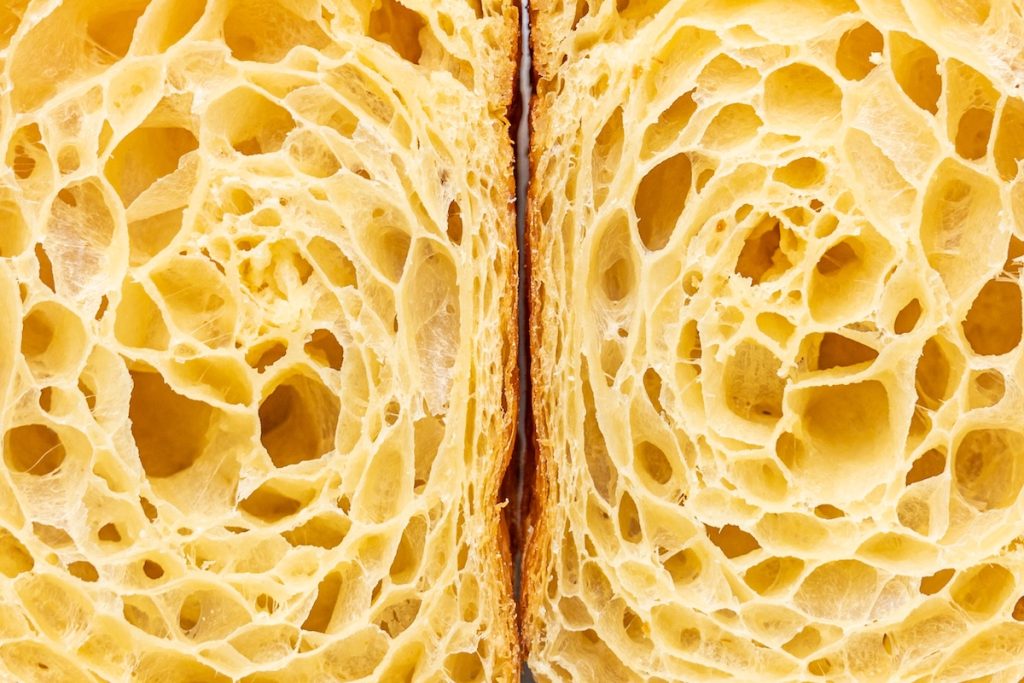
Shortly after starting her studies at the Sorbonne in Paris in 1929, Simone de Beauvoir wrote in her journal that “Breakfasts at [Cafe] Les Deux Magots shall be my little Sunday ritual. I still have to try such things as their famous hot chocolate, croissants, and Croque Madame.” Artisan croissants, of the kind of quality de Beauvoir could have bought at cafe Les Deux Magot a century ago, have been on my mind a lot this past week as I’ve enjoyed ours from the Bakehouse. They recently became even better than ever since they’re now made with Vermont Creamery Cultured Butter.
People regularly wonder aloud to me what it is that has helped the ZCoB to become the globally recognized but still Ann Arbor-located, $80 million organization that it is. I do my best to explain to them that there is, in fact, no single thing that makes us who we are—a highly imperfect but deeply caring, dignity-centered, collection of something about 700 people and a dozen or so different businesses. There are, though, behaviors and best practices we can identify as integral to our organizational essence. One of them is that we have, both intuitively at first and later intentionally, been working in sync with the Natural Laws of Business. As I explain in Secret #1 in Building a Great Business, all healthy organizations—families, first-grade classes, food businesses, bars that serve up apricot cocktails, and the philosophy departments that derive so much enjoyment from drinking them—live in harmony with those Natural Laws.
With that in mind, last week, we put two of the Natural Laws into play in tandem at the Bakehouse. Natural Law #7 says that “Successful businesses do all the little things everyone else knows that they should (or could) do but don’t.” And its neighbor in the code of Natural Laws of Business, #8, “To get to greatness you need to keep getting better all the time.” Both Natural Laws are embedded in our decision to, starting a week ago today, begin using Vermont Creamery’s compellingly delicious Cultured Butter in our croissants. (It’s also now in our scones, Patti Pockets, pie crusts, and palmiers, all with equally exciting and more flavorful results). I am exceedingly happy to report that, as we have been saying for over four decades, “You really can taste the difference!”
You might well have experienced the great flavors of the Vermont Creamery Cultured Butter over the course of the last couple of years at the Roadhouse. It showed up first on the Bakehouse bread service you can see on the menu. And man, between the amazing excellence of the Bakehouse’s Better Than San Francisco Sourdough and Roadhouse bread (historically known in New England as thirded bread, made with rye, wheat, corn, and a bit of molasses) and this remarkable butter, it was a HUGE hit! In fact, the response to the butter from our flavor-loving guests was so enthusiastic that the Vermont Creamery Cultured Butter started to show up in other key menu items, too. The buttermilk biscuits, the Anson Mills organic grits, and mashed potatoes, on steaks, seafood, and pancakes, and most recently, in the really remarkable butterscotch pudding. All were already excellent items, and all have been made markedly better by our butter improvement. After all, better butter simply tastes better. Last night, a long-time regular, a woman in her 70s who grew up in Arkansas, tasted the Cultured Butter Buttermilk Biscuits for the first time—she just kept shaking her head and saying, “Wow! These taste like what my momma used to make when we were kids!”
As of last week, that same crazy good butter is in our croissants that we’ve been using ever more of, too. How good are they? Like the biscuits at the Roadhouse, they are already evoking some enthusiastic, head-shaking exclamations. Well, speaking personally, the first day they came out, I ate a whole croissant for the first time in perhaps 15 years. Roadhouse dining room manager and Staff Partner Zach Milner says, “This is the best croissant I’ve ever eaten!”
What makes the butter so good? Well, as with most everything we work with, world-class raw materials and proper process. The former means exceptionally good cream from farms that surround Vermont Creamery’s artisan plant in Websterville, Vermont. The process? It’s going back to the way great butter was made 150 years ago. Cream was allowed to rise naturally to the top of milk, and then allowed to “ripen,” aka, develop natural cultures much as yogurt or cheese would. The cultured cream is then churned into butter that is far more flavorful! The impact on the croissants? Like with the biscuits and the butterscotch pudding at the Roadhouse, what was already widely loved rose to new heights of flavor. And aroma as well—when you break one open and stick your nose up close, you will almost immediately smell the difference. And then the flavor is more buttery, more complex, and more compelling—long after I finished eating mine, I could still taste how terrific it was!
All of the Bakehouse’s croissants are now made with Vermont Creamery Cultured Butter—that means Juliet Almond Croissants, Pain au Chocolat (with bean-to-bar chocolate from French Broad Chocolate in Asheville, and Chile Cheddar (with New Mexico fire-roasted green chiles and Vermont cheddar)! Swing by the Bakeshop, Deli, Coffee Company, or the Roadhouse to score some of these new, better-tasting than ever Cultured Butter Croissants! And, take care to have some napkins on hand. As food writer (and many-times-over presenter at BAKE!) Dorie Greenspan warns, “Like a baguette, a croissant is a messy affair.”
P.S. I did not make this up. The final item on author Daniela Giorgi’s 2017 list of 10 ways “to beat the forces of evil currently ruling the world” is: “Order another croissant!”
Buckwheat honey makes for a very special holiday cake
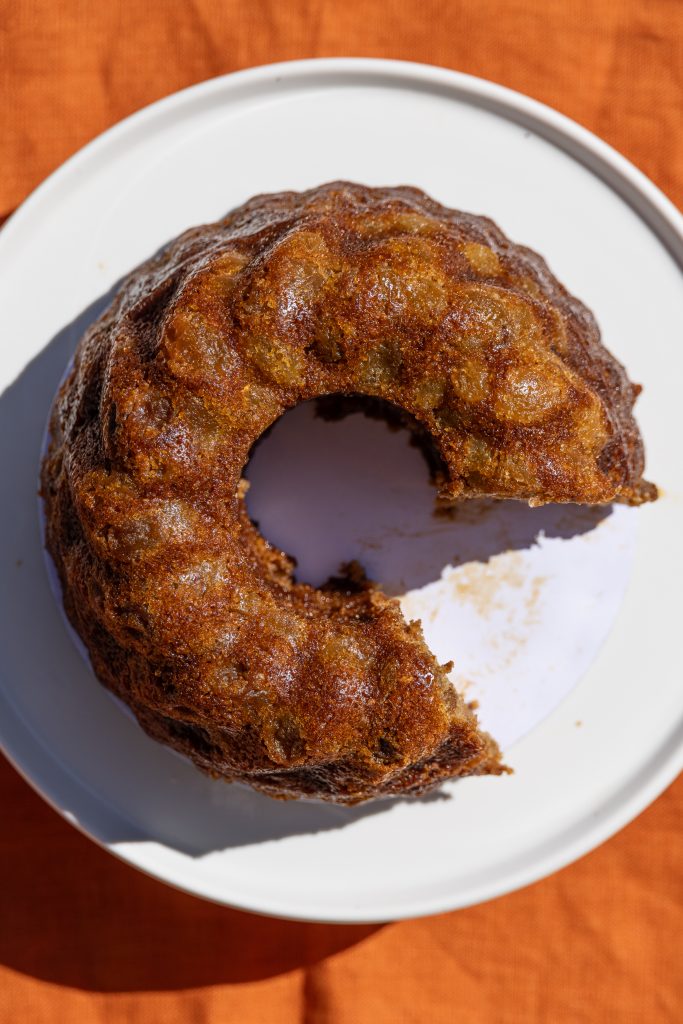
One of the highlights of the Rosh Hashanah season has just hit the Bakeshop’s shelves. Bumble Honey Cake is back! And I’m happy to say, it tastes terrific! Complex, sweet, with a bit of bitterness in the background, substantive but not too heavy, delicious any way you eat it. It is, quite simply, to my taste, one of the most terrific sweets we make!
In our never-ending work to make more flavorful and more traditional food, a few years ago, we began using freshly milled rye flour from our friends at Janie’s Mill in Ashkum, Illinois. What was already really good before we found their flour, almost overnight, became so terrific that I had a hard time not eating it all day! It’s so much more flavorful than the honey cake I grew up with. Kudos to the Bakehouse crew for making it happen.
Honey cake at the Bakehouse is made from a long list of luscious ingredients, including a healthy helping of buckwheat honey from a beekeeper in northern Michigan. The honey’s got a big, bold, dark, mysteriously fruity flavor. Add in the freshly milled rye flour, sugar, eggs, golden raisins, fresh orange and lemon zest, ground cinnamon, cloves, ginger, nutmeg, and some freshly brewed black tea, and you’ll send the New Year off to a good start.
Honey cake is not, of course, limited to Jewish bakers. It’s typical of the entire region of Eastern Europe—a couple hundred years ago, honey cakes were what one could make using locally available ingredients, enhanced with small bits of whatever spices (once incredibly costly) the baker could afford. What we make at the Bakehouse is, at its most basic level, also very similar to what other bakers of the region prepare as well. Ukrainian poet Ksenia Rychtycka wrote a poem about making honey cake with her mother, called “Why Honey Matters.”
The poem, in Rychtycka’s most recent book, A Sky Full of Wings, was written when, while making honey cake in her kitchen about 18 months after her mother had passed away, she suddenly sensed her mother’s presence. It’s a beautiful and touching example of the importance that traditional foods can play in our lives. While we each have a particular food, or foods, that call up our loved ones, the feeling, I believe, is nearly universal. Rychtycka writes,
It was an emotional moment as my mother loved my honey cake and was always so happy when I would bake traditional Ukrainian dishes. At the same time, it was comforting to sense her presence and made me very happy.
…
The sense of history and tradition that is passed down through generations. Bonds that endure even in extreme circumstances. The cycle of life and death and how we remain connected to our family members through memories, and the legacies that are, in turn, passed on to future generations. Also, how using a specific image or item in a poem can take you down so many different paths. The poem started as a memory of an emotional moment in the present and the deeper I got into writing it, the more it delved into the past.
The Bumble Honey Cake from the Bakehouse is delicious after dinner. It’s also a terrific way to start the day. Its big, well-rounded, softly spicy flavor would be fantastic with a cup of that great Tree Town Blend coffee we’re brewing this month. The honey cake is terrific with Creamery gelato as well. You can toast it and serve it with a little Creamery Cream Cheese in the morning. Or with some room temperature Vermont Creamery Cultured Butter.
If you have friends or relatives to whom you want to send sweet New Year’s wishes, the crew at Mail Order is standing by to ship some for you soon! Send some honey cake to Aunt Harriet up in Harbor Springs. The Bumble Honey Cake is already available from Mail Order, and you can also buy it starting this coming Friday, 9/19, at the Bakeshop and the Deli. Bring it as a gift, or buy some for yourself, in which case you can have your honey cake and eat it too!

Wednesday and Saturdays only, and only at the Bakehouse!
The Big O Oatmeal Raisin Cookies have long been one of my favorite Bakehouse products. We take organic oats, sweeten them with Michigan maple syrup, and stud the cookies with large, juicy Red Flavor raisins. I think the results are remarkably good! Because these cookies have no chocolate, they are akin to what an early-19th-century colonial grandmother might have made for her family in the 1830s, around the time Cornman Farms’ barn and house were being built. I think she would have used oats, wheat, and raisins from Europe, along with native maple syrup to sweeten them.
Come by the Bakehouse to get an especially excellent version of these already amazing cookies. Two small Little O Oatmeal Raisin Cookies, sandwiched around a generous spread of Ermine Frosting. Though little known now, this old-fashioned frosting was once very popular amongst American bakers. Sometimes called “roux frosting” or “boiled milk frosting,” it’s made by whipping together a cooked-flour roux, butter, and sugar. Ermine is less sweet than a typical buttercream and boasts a delightfully silky texture. Best I can tell, the frosting called for on a traditional Red Velvet cake. Closer to whipped cream than would be typical for most frostings, it’s creamy, tender, and terrific.
Here it makes for a really marvelous, frosting-filled sandwich cookie, one that will thrill anyone who has a love for that kind of thing.
And remember, Wednesday and Saturday only, and only at the Bakehouse on Plaza Drive.
Special Bake from the Bakehouse on Friday, June 20!
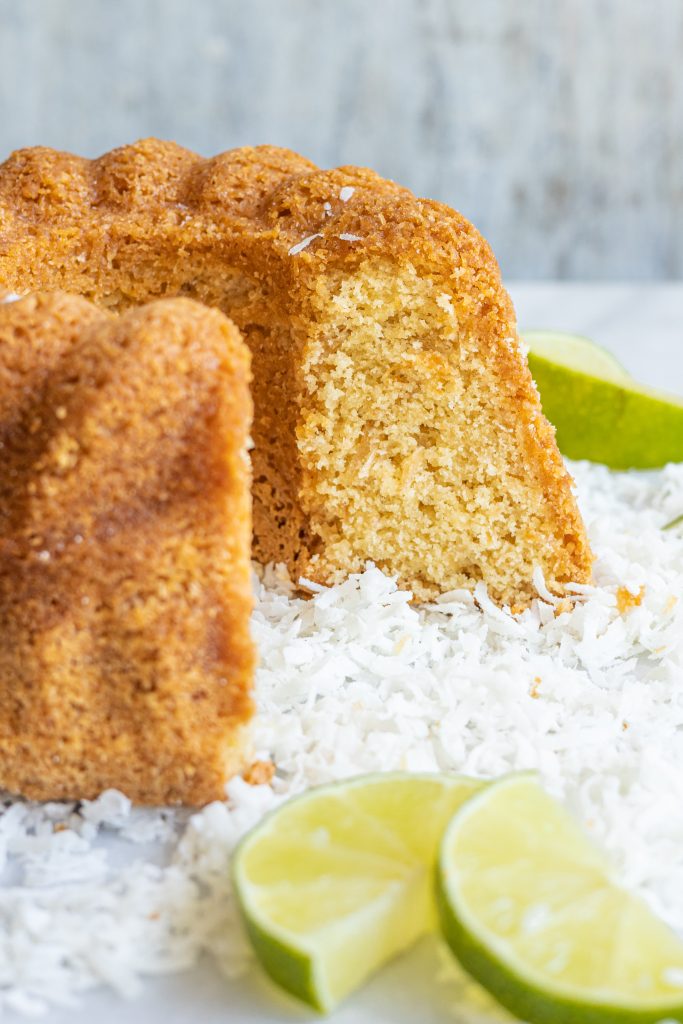
One of my favorite cakes from the Bakehouse pastry kitchen, Summer Fling, will be out this weekend for what appears to be its only appearance of the year. That’s right—if you want some of this super scrumptious coffee cake, come by this weekend! Because they freeze so well, it’d be both wise and a wonderful move to buy a bunch and then bring them out when you need a bit of culinary sunshine as the days get shorter with the season!
What makes this special coffee cake so marvelous? Lime and coconut are, I think, a compelling combination. The quality of the ingredients—sour cream, coconut paste, flaked dried coconut, eggs, vanilla, and a good dose of lime oil makes a big difference as well. Long, slow toasting of the coconut helps to seal the culinary deal. Amy Emberling, co-managing partner of the Bakehouse and co-author of Zingerman’s Bakehouse, says,
The Summer Fling is one of our most versatile products—great with coffee or tea in the morning, lovely for a sweet afternoon snack, excellent after dinner. I love the texture of this cake. It’s moist and dense. I particularly love the name, reminding me of the distinctively different feel of summer socializing—more carefree and adventurous, disconnected from the real part of life, with a pre-determined end date, making unorthodox choices less risky.
The flavor lingers long and lovingly on your palate, so a little bit will go a long way! Very good with gelato from the Creamery. It’s also great fried up very lightly in a well-buttered skillet. Brad Hedeman from our Mail Order would spread it lavishly with some room-temperature Vermont Creamery Cultured Butter. Probably would make a marvelous milkshake, too, now that I think about it. Either way, you can’t go wrong. Bring a Summer Fling to your next meeting and make work that day into a bit of a party, or give one as an end-of-school-year gift to bus drivers, teachers, principals, or anyone else of whom you’re appreciative.
Helping to turn cloud-y days into a happy culinary surprise
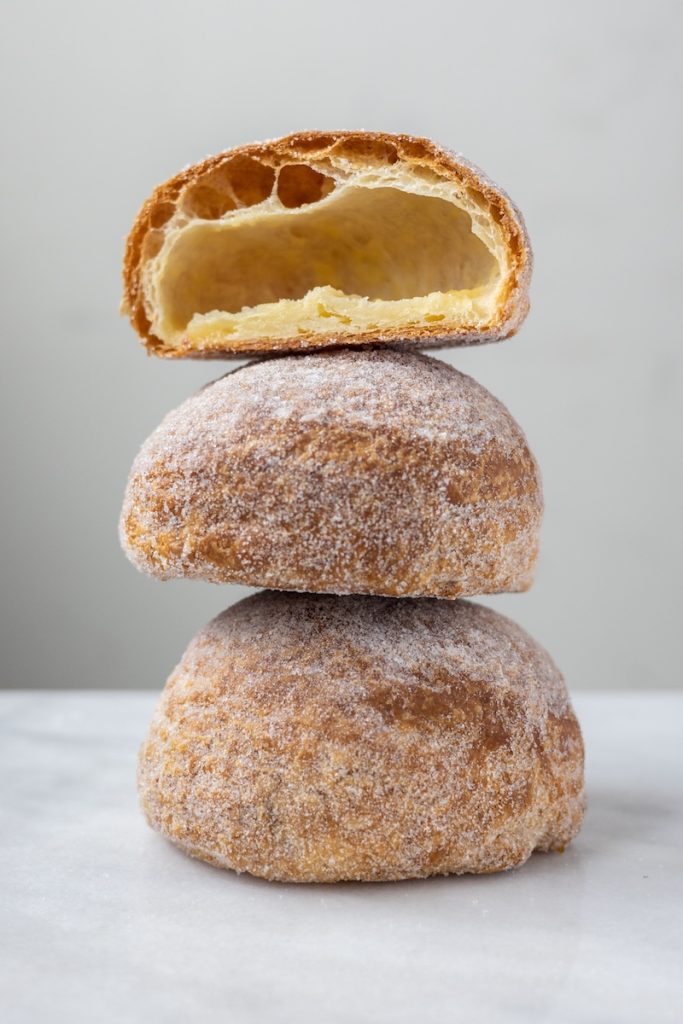
In his compelling collection, The World Doesn’t End, poet Charles Simic once wrote, “If the sky falls, they shall have clouds for supper.” It has, of late, felt on some days like the metaphorical sky is falling, so it seems especially appropriate and smile-evoking to imagine then the beauty of eating one of these Lemon Clouds as part of your supper, or really any time of the day. They’re lovely, light, delicious, something really special from the Bakehouse team!
The Lemon Clouds are probably one of the most wonderful, but still little-known gems to be found at the Bakehouse. A delicate, all-butter pastry with a small, delicious bit of lemon curd made fresh by the talented folks in the pastry kitchen. The Lemon Clouds are sort of puffy and light, like one of those lovely white clouds floating across the Michigan sky on a nice summer day. Unlike the more commonly found overstuffed jelly donuts, Lemon Clouds are spread with just a light layer of the lemon curd. Enough to sweeten your day, but not enough to make you feel too full.
The best way to eat one, I think, is to simply pick it up and take a nice bite—excellent in the morning with an espresso. I like them stuffed liberally with some of the fresh Bellwether Farms ricotta as an afternoon snack. If you like to mix fruit with your citrus, spread some of the apricot preserves inside. They’re also terrific with a drizzle of good olive oil—try a gentle, buttery one like the ROI from the Italian region of Liguria.
At the Roadhouse, it’s not on the menu, but if we have Lemon Clouds on hand, you can order one split open and filled with a scoop of the Creamery’s wonderful vanilla gelato, topped with a bit of fresh whipped cream on the side. It’s a delicious way to sweeten up your day! And you can certainly do the same yourself at home. It would make a marvelous dessert to serve after the Apricot-Harissa Couscous dish!