
Tag: ZINGERMAN’S BAKEHOUSE

A nod to traditional German-Jewish cuisine
Most American Jews—and for that matter, most Americans—are familiar with egg-enriched challah, the traditional bread baked for Sabbath and holidays. Since my family’s roots are in Eastern Europe, this was the only one I knew until I started studying food more seriously after we opened the Deli. There is, though, another kind, German challah. It is little-known in the U.S. but has long been the norm in the German-Jewish community, where most will know the bread as berches.
Food writer Joan Nathan is part of a German-Jewish family in which berches is the norm! The same goes for Gabrielle Rossmer Gropman and Sonya Gropman, the mother-daughter team who co-authored The German-Jewish Cookbook. And now, after all these years, we’ve begun to bake it here. This likely was what Erich Fromm’s family would have had on the Sabbath table every Friday evening.
The Bakehouse crew has spent months working to craft our own recipe of this centuries-old German-Jewish classic. Amy Emberling, longtime co-managing partner at the Bakehouse, and a member of our five-person Stewardship Council, shares,
Jews for centuries have made our food in the context of other cultures. The spices, fruits, and vegetables used in the recipes often reflected what was available in the region and were then transformed to fit our recipes and food laws. For much of the history of the Bakehouse, we’ve been dedicated to making the recipes that were mainly traditional for Jews in Eastern Europe, including using the flavor choices from that region. Recently, we’ve begun to focus on using ingredients and flavors more common to Michigan as well as transforming recipes with our knowledge of artisan baking—this new challah includes freshly milled local organic spelt and high-extraction organic regional wheat flour. We’ve also enhanced the flavor and texture with a pre-ferment and some of our sourdough starter. For moisture, we include mashed potatoes.
Our German Challah is very slightly sweet, less rich without the eggs, but really delicious. It has a slightly darker crumb and a nuttier flavor from the freshly milled grains used. The fresh milling and local grains make the bread much more like what German-Jewish bakers would have been making and serving two centuries ago than one would get from the more highly refined, bleached, and bromated commercial flours that are now so commonly available.
Toasting the German Challah brings out the sweetness and gives a lovely, lightly nutty flavor. Great with the Vermont Creamery Cultured Butter and a bit of good jam. Or try it with the Creamery’s wonderful handmade Cream Cheese. On a more savory side, it’s lovely with chopped liver, and makes a beautiful base for a corned beef sandwich. Whether you want a new way to celebrate the Sabbath, you want to experience a bit of Jewish cultural diversity, or whether you just like to eat a lot of good bread, swing by and grab a loaf or two soon!
The German Challah is available on Mondays and Fridays. It will be on the shelves at the Bakeshop after 9 am and Deli around 11 am. Eventually, you’ll be able to find it on the Zingermans.com Mail Order site, too. In the meantime, we’d be glad to ship you some—just email us at [email protected] and we’ll send some your way!

Angel food cake to celebrate summer berry season
A Bakehouse favorite from many years ago, it’s named after managing partner Amy Emberling’s son Jake, who’s all grown up now, and still loves this cake. It’s soft, fluffy, sweet, and light—“pillowy,” the people at the Bakehouse like to say—heavenly angel food cake made with lots of fresh egg whites, cane sugar, a small bit of flour, a touch of cream of tartar, and lots of vanilla extract and vanilla bean. This time of year, it’s particularly relevant because this lovely light cake marries so marvelously with berries.
Angel food cake is named for its lightness. A cake angels might eat. Although some will say it must have come down from heaven, culinary historians don’t seem to agree on its actual origins. Many give credit to Pennsylvania Dutch bakers. Others argue it was invented in the American South. Mrs. Porter’s New Southern Cookery Book has a recipe for “Snow-drift Cake” which was pretty much the same thing. Many historians agree that the invention of the eggbeater—which made making it much easier—in the 1860s increased its popularity. If it did come from the South, it was likely developed and perfected by enslaved women. In The American Pastry Cook, Jessup Whitehead says it came from St. Louis in 1894. And, he says, it was shipped from St. Louis all over the country in an early form of mail order. Some were even sent all the way to London.
In her 1881 cookbook, What Mrs. Fisher Knows About Old Southern Cooking, Soups, Pickles, Preserves, Etc., Abby Fisher, a former enslaved woman who’d moved to San Francisco after Emancipation, calls it “Silver Cake.” To get the full context, the recipe on the top of the same page is “Gold Cake.” Gold cake is made with egg yolks. Silver cake starts with the egg whites you’d have set aside when you’re “going for the gold.” Mrs. Fisher had quite a business selling pickles and sauces in San Francisco and was a well-known local culinary authority. The book was published by the very progressive Women’s Co-operative Printing Office.
What I love best about angel food—or maybe I’ll say silver—cake is that it goes great with berries and as other fruits come into season, it’s well suited to them too. Just crush your berries and add a small bit of sugar. Let the juices come out for an hour or so, then ladle the berry mix over slices of the cake. Eat up and enjoy! Its lightness makes a lovely pairing too with the equally light elegance of the Mexico Chiapas coffee brewed as an espresso!
Order your Jake’s Cake

Fried pies are the perfect pastry to take on the road!
Once upon a time, about 15 years ago, we started selling pimento cheese. Back then, only a handful of folks in Ann Arbor seemed to have heard of it. Anyone who grew up in the South was excited to see it on the Roadhouse menu. But most everyone else—Midwesterners like me—really had no idea what it was! Most gave the menu listing a quizzical look and very few orders ensued. That was then. Today, in 2024, pimento cheese is one of our biggest-selling items! We still serve it at the Roadhouse (where it started). But the Deli has it as well, and the Creamery ships a whole lot of it to food stores and restaurants all over the country!
Fried hand pies, I forecast, are today where pimento cheese was 15 years ago. Although hardly anyone up here has heard of them, by the time we arrive at our 2032 Vision, the fried-hand-pie business will be hoppin’! They are, without question, a special comfort food pastry with deep roots in the Mid-South. Many Southern cities have bakeries that make next to nothing other than hand pies!
Fried Pies’ Origins
Made by the Bakehouse, and sold at the Roadhouse, the fried hand pies have deep Southern roots. They could be carried more easily out to the fields, into the mines, or, in more modern times, to the factory. Fried pies worked well too in the winter months when the fresh fruit season had ended, and dried fruit was all that was available. They were already well known around the time of the American Revolution and were particularly popular in the middle of the 19th century, especially so in Appalachia. Rossi Anastopoulo writes in Saveur:
In a region where life could be hardscrabble and unforgiving, fried pies proved to be a culinary balm for busy women with a high burden of responsibility. Unlike cakes, which typically took all day to prepare and required expensive ingredients that might be hard to access, fried pies were a quick, affordable way to enjoy something sweet.
To this day, they evoke emotional reactions in folks who grew up on them. Arkansas restaurateur Jennifer Jones shares, “These old recipes connect us to our past, help define our reality, almost tell us who we are. It’s a way to talk to each other about something tangible.” The Mountain Association says, “Every time we reference our aunt’s fried apple pie recipe that’s written on the back of an old-school credit card receipt from the service station where she used to work, we connect to our heritage—our collective past as mountain people, hewn from hard-scrabble times.”
Fried pies are caringly hand-crafted with a traditional lard crust at the Bakehouse, filled right now with tart Michigan cherries. At the Roadhouse you can get a taste of this centuries-old tradition right by ordering one hot from the fryer for dessert after dinner (add some Creamery gelato too). And, we also have them cooked ahead and ready to grab from the Roadshow for breakfast. It’s like eating a jelly donut, but far better suited to “dining” while driving. They keep well for a day or so after they’re fried. (Remember it was typical to take one with into the fields in the morning to eat for later in the day).
Make a reservation at the Roadhouse
Keep up with the buzz on all of the latest happenings in the Zingerman’s Community! Follow us on social media: @zingermanscommunity on Instagram and Facebook, and @zingermans on X (formerly Twitter).

A super-simple spring pleasure to put on your table at home today
One of my favorite parts of spring eating is this amazingly simple and super delicious little “appetizer.” It’s a coming together of fresh vegetables and fresh bread, great butter, and a small sprinkle of sea salt, that wakes up taste buds and, as per what I wrote about in “A Taste of Zingerman’s Food Philosophy,” conveys the beauty of what’s possible when we put together really great ingredients.
Radishes, right now, are really good around Ann Arbor! Pink and white, small and large, long and round, with their greens still attached or without, they’re hot, spicy, refreshing, lively, and lovely. When you eat a freshly dug, heirloom radish it can easily become the highlight of your meal. While supermarket ones tend towards tastelessness, really great local radishes are alive, crunchy, and spicy—sometimes so much so that they start to seriously clear your sinuses the way good Dijon mustard can do. Which makes complete botanical sense because, although few Americans are aware of radishes’ roots, they’re in the same spicy plant family as mustard and turnips.
An Easy Appetizer with Radishes
Radishes that are that good are excellent on their own. But they’re also amazing in this classic-in-France-but-barely-known-over-here combination of radishes, bread, butter, and sea salt. Because it’s so simple, you only want to do this with really great ingredients. (A supermarket version of it, to be honest, wouldn’t be worth the time it took to slice the radishes.) To put the dish together, start by cutting some thickish slices of the Bakehouse’s dark-crusted Country Miche (preferably from the large, 2-kilo loaf), True North, or Farm bread. Spread the bread with some good butter, like the Vermont Creamery cultured butter that wins raves pretty much every few minutes when folks eat it on the Bakehouse Artisan Bread appetizer. Slice your radishes. Lay them onto the buttered bread. Sprinkle on a good bit of the super delicate crystals of fleur de sel, then eat. That’s all you have to do.
You get the crunch and the spice of the radishes, offset by the light, lactic, lively creaminess of the cultured butter, set off against the dark, wheatiness of the Country Miche, all enhanced by the sporadic delicately crunchy high notes of the salt crystals. If you put them out on a nice plate or tray, everyone at the table can assemble the ingredients in their own way, which I’d argue, is part of the artistry of it all.
Want to make this a bit fancier? Slice the radishes partway through, stuff them with softened butter, and then dip the open end into the salt. That way folks can pick them up, pop them into their mouths, and enjoy the contrast of textures and flavors.
Keep up with the buzz on all of the latest happenings in the Zingerman’s Community! Follow us on social media: @zingermanscommunity on Instagram and Facebook, and @zingermans on X (formerly Twitter).
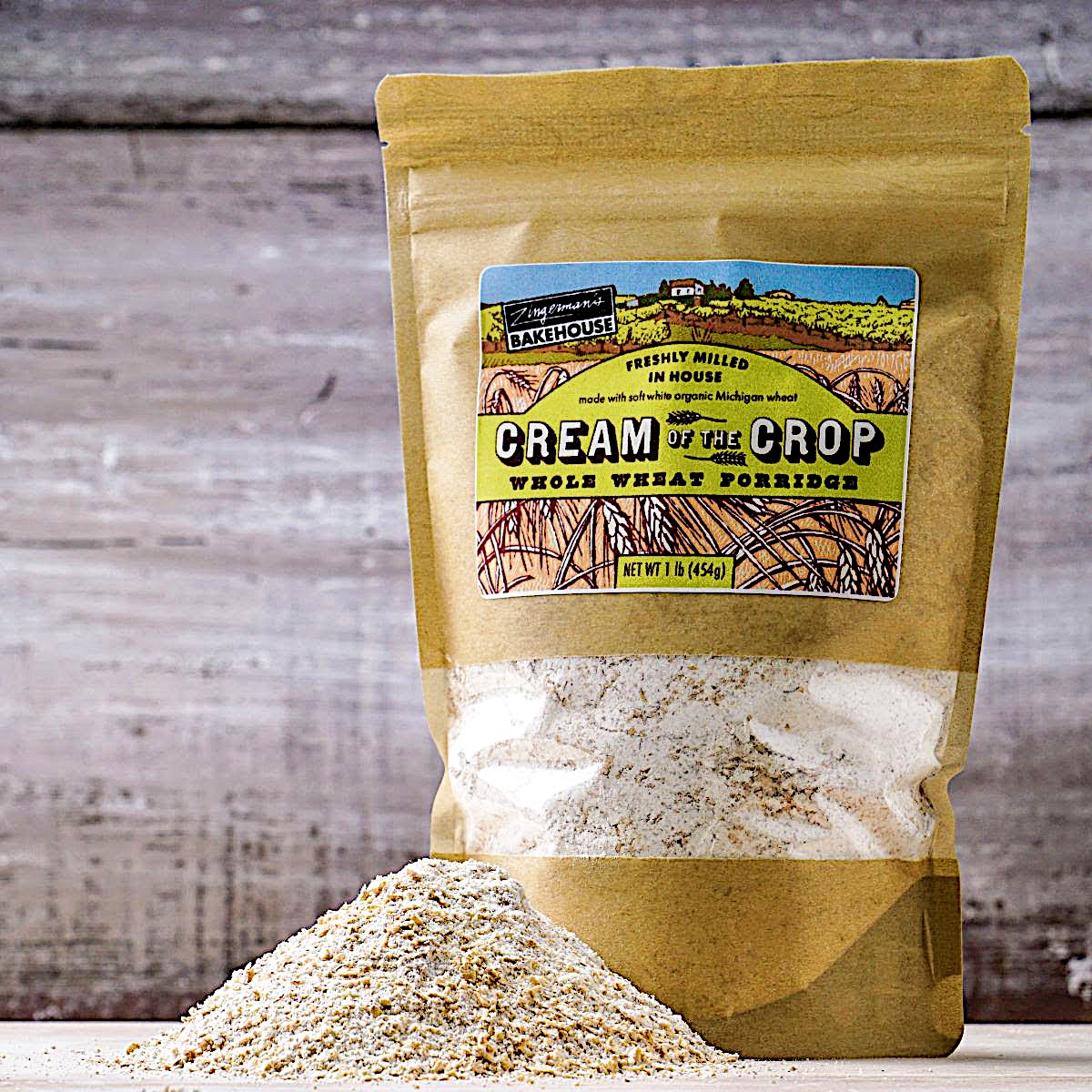
Freshly milled wheat from the Bakehouse
makes a wonderful meal
|
|
|
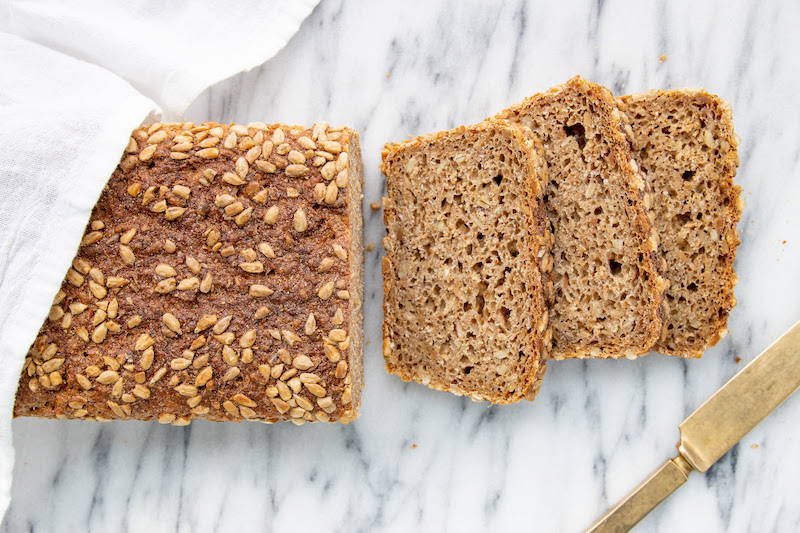
German-style spelt bread
makes for some marvelous eating
|
|
|