
Tag: ZINGERMAN’S COFFEE COMPANY

Nearly 500 years of tradition makes for a great tasting coffee
If you come to the Coffee Company regularly, you might well have seen a strange sort of contraption sitting off to the right of the pastry case. If you don’t know it, it seems a bit like something one might expect to find ensconced in some sort of super secret sci-fi lab. It’s a kind of crazy-looking contraption, an array of glass beakers and pipes all set into a wooden frame that’s about four and a half feet high. In fact, it’s what we use to make our Kyoto Cold Brew.
Kyoto Cold Brew is a method that dates to the early years of coffee making outside of its Ethiopian homeland. While the name would understandably lead to the conclusion that it was created in Japan, it was likely developed by 17th-century Dutch sailors! They needed a way to prepare coffee on months-long voyages. As the most common creation story goes, someone figured out that pouring cold water slowly over ground coffee beans would do the trick.
The Kyoto brewer comes with three sections: a bigger water chamber up at the top, a tube that holds coffee grounds and a filter in the middle, and last but not least, the carafe at the base where the finished coffee is collected. The brew is indeed made using cold water that’s allowed to fall, one drip at a time, over ground coffee. The low temperature and super slow extraction mean that there’s almost no oxidation of the coffee during the brewing, making for a super smooth cup that enhances a coffee’s natural fruit, takes out a lot of the bean’s bitterness, and leaves in lots of lovely caramelly notes. I drink it straight as it is, but you can add milks, syrups, and sweeteners as you do to any coffee!
Place an order for pick-up at the Coffee Company.
P.S. The Coffee Company’s decaf done in the Kyoto Cold Brew is remarkably tasty, too!
To keep up with the buzz on all of the latest happenings in the Zingerman’s Community, follow us on social media: @zingermanscommunity on Instagram and Facebook, and @zingermans on X (formerly Twitter).
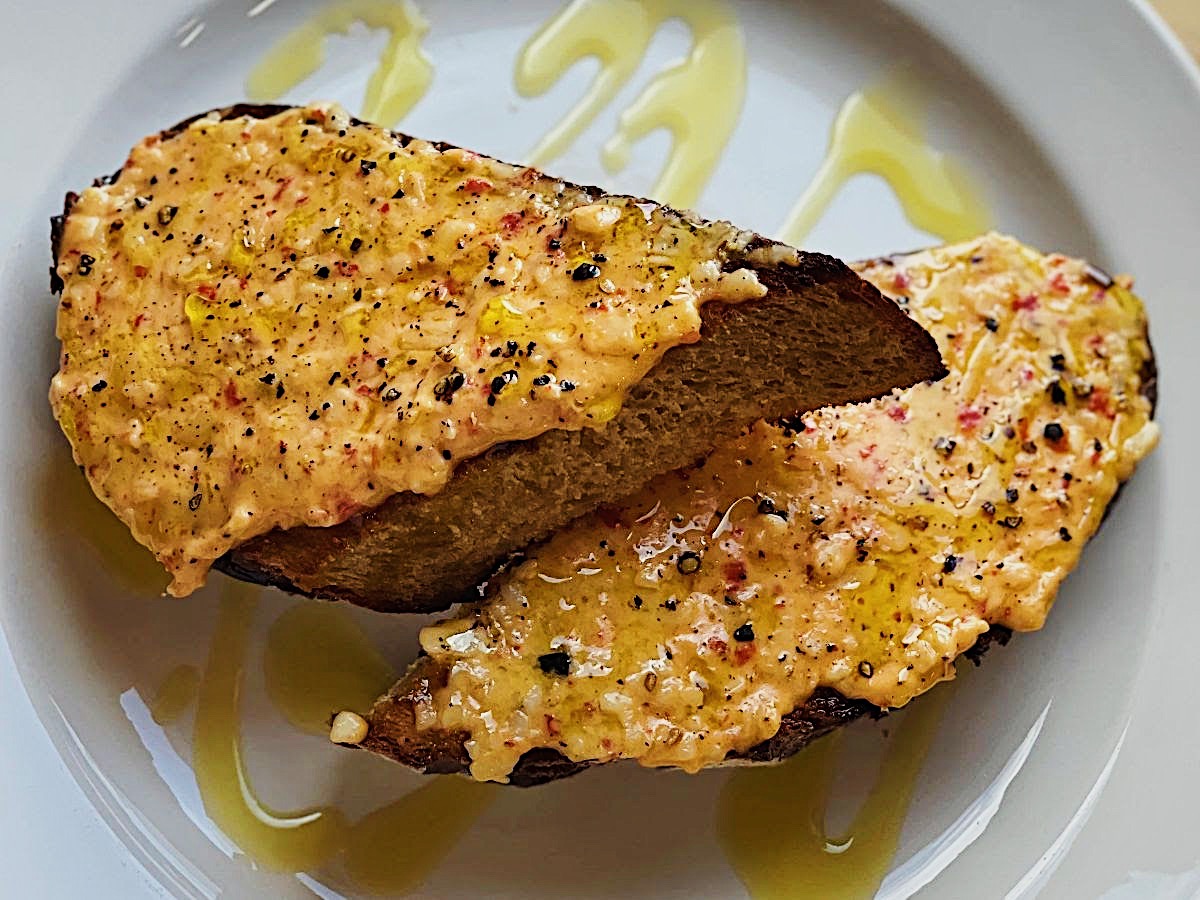
Totally tasty toast with pimento cheese,
black pepper, and olive oil!
|
|
A unique process makes for a marvelously magical flavor!
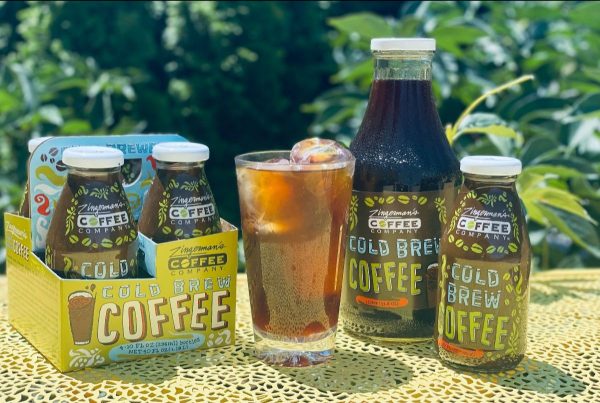
If you’re looking for a good way to wake up and fight the summer heat, pick up a bottle or six of this super tasty, very special Cold Brew from the Coffee Company. More and more people have told me they keep it regularly stocked in their fridge to pop open for their morning drive or to wake up and cool down on a hot afternoon. Steve Mangigian, Managing Partner at the Coffee Company, spent years working to perfect this recipe. It’s allowed us to do a cold brew of our coffee, one that doesn’t need refrigeration while it’s sealed in the bottle.
Matthew Bodary, who’s worked in the ZCoB for 11 years now (and served as one of our first Staff Partners) shares:
I have seen over the last few years that some switch to cold brew and never look back! We have folks who in the dead of winter and an inch of ice coating everything still come in and get a large cold brew or nitro cold brew. For some, it’s about the big caffeine hit (I count myself among the guilty on this point) but for others, it is about the different taste you get through the cold brewing process—overall smoother, fewer natural acids (which some perceive as “sourness”) and less bitterness. For those sensitive to the sharper, more intense flavors in coffee, cold brew, especially with a bit of milk, can be a more rounded, smoother experience.
All of Steve’s hard work has paid off in the form of a great product. He says:
Many companies make cold brew to get rid of beans that they can’t use to brew hot. We have been making it for the entire history of the company and so have always used only our high-quality single origins as the basis for our brew. I think when we say, “You really can taste the difference,” it’s very true here. Many simply sell cold coffee that’s been brewed and call it “cold brew” but naturally it has not gone through that long steeping process which is what hooks people.
What makes the Coffee Company’s taste so good? For starters, using better beans. A lot of packaged cold brew work is done to use up subpar offerings that might not make it on their own. Steve selects with the idea of making the cold brew one of the tastiest things we offer. And using a higher proportion of coffee to water. Many cold brews can be a bit pallid—the Coffee Company’s is much bolder, ready to be poured (if you want) over ice or have cream and sugar added, without ever losing its identity. More than a few have started concocting cocktails using the cold brew as the base! Since it’s shelf-stable, there’s no reason not to stock up a lot of it! Why run the risk of running out right? It could just be one of those small things that takes your quality of life to the next level!
You can get the Cold Brew at the Coffee Company, Deli, Bakeshop, and Roadhouse! We’re happy to ship you some too!
Want more from Ari?
Sign up for Ari’s Top 5 e-newsletter and look forward to his weekly curated email—a roundup of 5 Zing things Ari is excited about this week—stuff you might not have heard of!
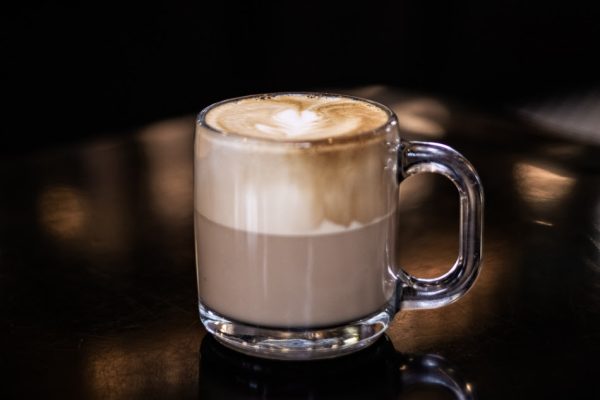
The true story of your morning “cap” revealed!
It’s getting close to a decade ago now since I started to study beliefs. What began as a small bit of intrigue and intellectual interest evolved, over the course of five or six years, into a 600-plus-page book, The Power of Beliefs in Business. Later, that work expanded in the form of our Statement of Beliefs, and also another Natural Law (#16). One of the many things I’ve learned is how many commonly-held beliefs are quite simply wrong. G. K. Chesterton writes, “Fallacies do not cease to be fallacies because they become fashions.”
So, here’s a good one for you! Much of what most of us believe about the history of cappuccino is incorrect. While this disinformation won’t lead to war, overturn an election, end a relationship, or cause a coup, I figured it’s still a good idea to share the full story. Although many of us might assume that cappuccino originated in Italy ages ago, a bit of historical exploration will show that to be wholly inaccurate. Modern cappuccino, the kind we serve and that many of you consume, is actually less than a hundred years old. Milk was not part of the original recipe. And its roots aren’t in Italy, but, instead, to the north, in Austria.
What we now know as cappuccino was first called “Kapuziner,” showing up in Viennese coffee houses in the 1700s. It was made at that time with whipped cream and sugar. Some recipes also reference spices. If you go to Vienna today, you’ll still find the classic Kapuziner on the menu! What we know now as cappuccino was first made in Europe in the early years of the 20th century, as the relatively new-fangled espresso machines became popular, at roughly the same time the Deli’s building was being built in 1902, and about the same time Chris Roelli’s great-grandfather was arriving in Wisconsin from Switzerland. The drink became more popular in Italy, and the name evolved from German to Italian. It gained widespread acclaim in the U.S. only in the last 50 years.
Like all food and drink, the quality of the ingredients that go into a cappuccino will have a huge impact on the flavor of the finished item. It’s almost impossible, I’ve learned over the years, to make something super delicious out of so-so raw materials. Here in the ZCoB (Coffee Co., Next Door, and Roadshow), we use a pair of excellent ingredients:
-
Espresso Blend #1 from Daterra Estate in Brazil — Sustainably grown, Rainforest Alliance certified, we’ve been working with the Pascoal family and the Daterra team for 20 years now!
-
Milk from Calder Dairy — One of the state’s only farmstead dairies, the Calder family still has its own herd of about 150 cattle. (And yes, we also have skim milk, oat milk, and almond milk.)
While most cappuccini look somewhat similar in the cup, there’s a huge difference in the flavor. I brought one as a gift to a friend I was meeting the other day. She took a sip, shook her head, and quietly, almost under her breath, said “Wow! You really can taste the difference.”
Swing by the Coffee Company, Next Door, or Roadshow to taste the difference! Or if you want to replicate a bit of Zingerman’s at your house, order a bag of Espresso Blend #1.
Order a Cappuccino from the Coffee Co.
Treat yourself at the Deli Next Door
Want more of Ari’s picks?
Sign up for Ari’s Top 5 e-newsletter and look forward to his weekly curated email—a quick roundup of 5 Zing things Ari is excited about this week—stuff you might not have heard of!
A beautiful brew that can turn any day into a holiday
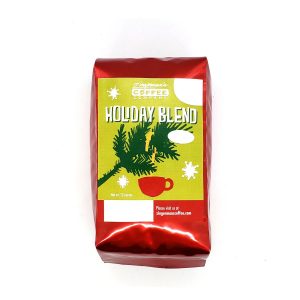
If you’re thinking about what to drink when you dive into a nice bite of pie from the Bakehouse, this seasonal brew from the Coffee Company is the perfect pairing. We’ve been doing an annual Holiday Blend for over a decade now—the 2021 vintage maintains the tradition of marvelous flavors while still bringing its own personality to the flavorful fore! This year, Steve, Matthew, Chris, and everyone at the Coffee Company have put together a trio of terrific beans: half Espresso #1, and a quarter each of our Peru Corral de Piedra and our Costa Rica Willows Special Reserve. Matthew says:
When we developed this year’s Holiday Blend, we paired two of our favorite estate coffees from Hacienda Miramonte in Costa Rica and Daterra Estate in Brazil with beans from the ASPROAGRO co-op in Peru. We have been sourcing each of these coffees for many years and are proud to have shaken hands with the producers. These relationships will last many more years to come—the attention and care of the producers are reflected in the flavor of each cup! This blend is rich, layered, and silky smooth with hints of cocoa.
The 2021 Holiday Blend has been tasting terrific in every form I’ve tried, but I was particularly happy with the Chemex brewing method. The “dark chocolate” in it came out nicely and it made for incredibly smooth sipping. However you prepare it, I feel confident that you’ll be happy to have some of this year’s Holiday Blend! Here’s to good things to come!
At the Coffee Company, Deli, Roadhouse, and Mail Order!
Enjoy our fresh café with us during our Grand Re-Opening weekend, taking place February 24th and 25th! This event will mark the official unveiling of renovations that we underwent between July and November, 2017. It’s free to RSVP!
A few years back, we saw that our business was expanding and that a need for additional seating was needed. In addition, we knew there were many things we wanted to change in the cafe operation, and it has been a longstanding desire to add a toast bar. This renovation satisfies everything we wanted PLUS some!
Improvements:
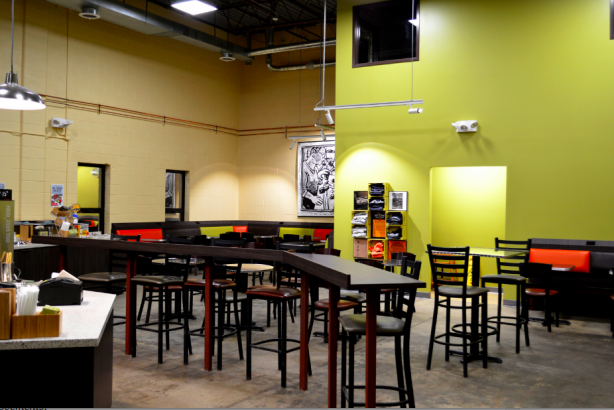
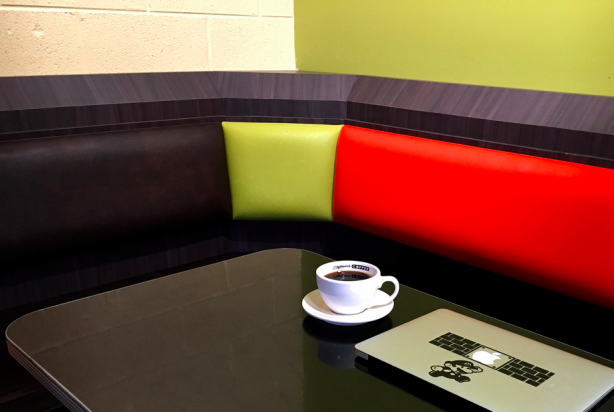
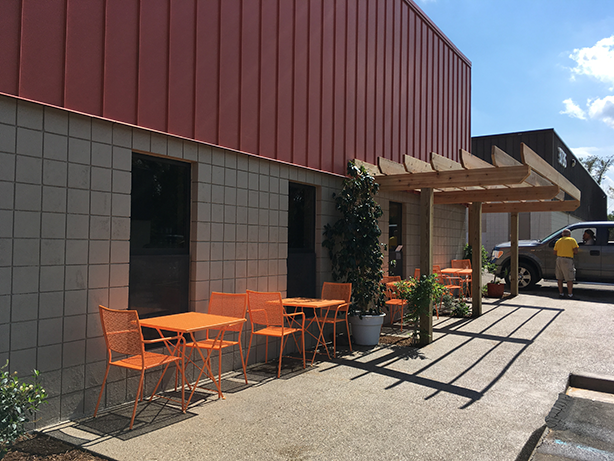
Expanded seating was a major part of the reconfiguration. Along with ample table seating to accommodate a growing clientele, our café now features a large section of banquette seating, equipped with multiple power ports for guests. Bar seating has also been added, providing a front-row view of the action behind the espresso bar.
A larger behind-the-bar kitchen area has made room for a larger menu of food options. In addition to a daily selection of pastries from Zingerman’s Bakehouse, we have added a new Toast Bar. The sweet and savory toast varieties currently being offered are made with ingredients from the Bakehouse and Zingerman’s Creamery as well as products sourced throughout the Zingerman’s Community.
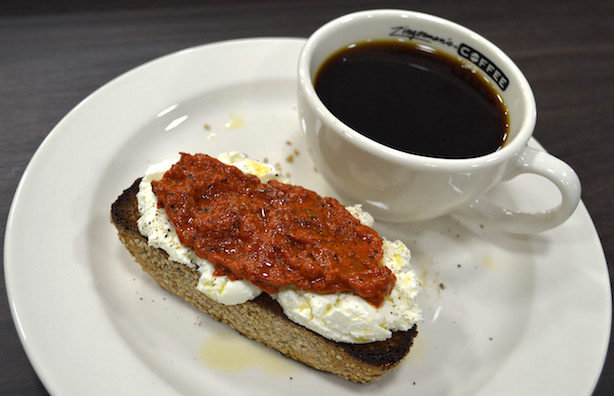
An early bestseller is the Bulgarian Toast, made with Zingerman’s Bakehouse Sesame Semolina bread, Zingerman’s Creamery handmade Cream Cheese, and a drizzle of extra virgin olive oil. It’s topped off with a generous spreading of Lutenitsa, a Bulgarian spread that combines roasted peppers, roasted eggplant and tomatoes.
The Grand Re-Opening festivities are open to all. Here’s a bit of what we have in store for you:
- Panama Geisha coffee – a rare, limited-release roast!
- Samples of our new toast recipes, all with ingredients sourced from within our Zingerman’s family
- The chance to win a fully-loaded coffee gift set, including a complete brewing system (Chemex brewer, filters, kettle, & scale), a bag of Panama Geisha coffee, logo tee, a travel mug
- A never-before-served barista creation and a brand new toast recipe—to be revealed and served during our Grand Re-Opening weekend only!
We hope to see you there, and thank you endlessly for your support! RSVP for free right here.