
Tag: ZINGERMAN’S CREAMERY
A terrific new tasty treat
Looking for a super tasty dessert this week? Are you a big fan of bourbon? We have just the ticket at the Creamery—handmade gelato crafted with a healthy dose of barrel-aged Kentucky Bourbon.
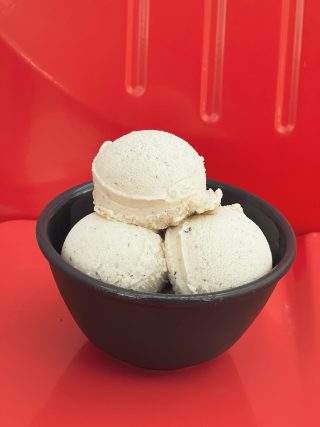 Gelato, if you’re not familiar with it, is the frozen dessert of Italy. It originated, it seems, in the 17th century, most likely in Florence. Cosimo Ruggeri, astrologer and advisor to Catherine de Medici, is generally credited with inventing it. Ruggeri was renowned at the time as a master of the occult and magic, and I suppose we could say that gelato was the creative culinary application of his skills in those areas. Gelato actually came to North America around the time of the American Revolution but was overshadowed at the time by the development of ice cream. It was only in the latter decades of the 20th century that it became popular in the U.S. We started making it here at the Creamery in 1999. Gelato has less fat and less air in it, making it creamier in texture than ice cream. It’s a wonderful way to sweeten anyone’s day.
The Bourbon gelato at the Creamery is made with Basil Hayden bourbon, Madagascar vanilla extract, and a good bit of the dark demerara sugar we get from the island of Mauritius. Swing by the Creamery or the Roadhouse, order a scoop or two, and enjoy. I think it’s terrific topped with pecans and real maple syrup—so good, in fact, that we might add that sundae to the Roadhouse dessert menu. It’s really wonderful with bananas sautéed in butter and brown sugar. It pairs pretty darned deliciously with Eve’s Apple Babka from the Bakehouse, and it’s great with the Bakehouse’s Graham Crackers too, and/or with the Noccioliva Cocoa and Hazelnut Spread from Italy at the Deli.
If you want to make a special brunch dish, put a scoop of Bourbon gelato atop slices of French Toast. That makes me think of putting some on the spelt pancakes (yum!) at the Roadhouse. Jenny Tubbs of Zingerman’s Press has long advocated for gelato on oatmeal or as a creamer in your coffee—this seems a good way to get a bit of Bourbon into your breakfast!
You can get the Bourbon gelato at Cream Top Shop in a cup or cone, or order it up for dessert at the Roadhouse!
Want more from Ari?
Sign up for Ari’s Top 5 e-newsletter and look forward to his weekly curated email—a roundup of 5 Zing things Ari is excited about this week—stuff you might not have heard of!
A wonderful, semi-soft goat cheese with a gentle full flavor
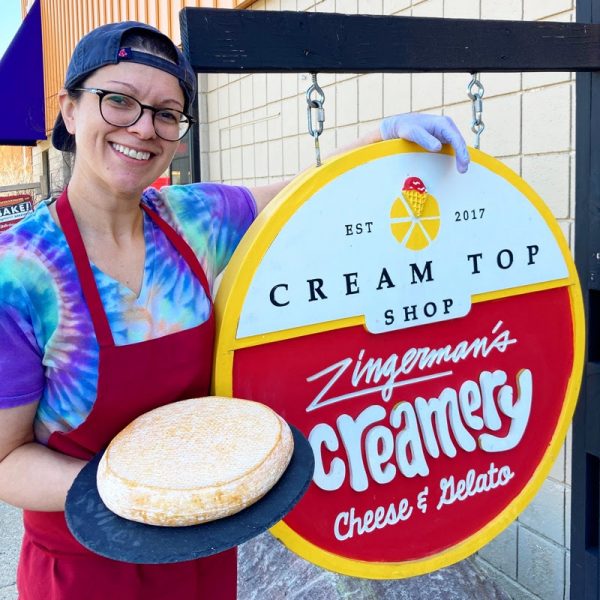
In the small lakeside town of Port Washington in Wisconsin, about half an hour north of Milwaukee, the folks at Blakesville Creamery are making some marvelous cheese. They started only 18 months ago, so the fact that their cheese is already this good is a tribute to their care and their craft. I’m particularly smitten with their Sunny Ridge!
The founder of Blakesville Creamery, Lynde Uihlein, has had a long career in land preservation and community activism. In 1990 she founded the Brico Fund, a non-profit focusing on helping advance women’s issues and environmental causes. While I don’t know that Lynde formally wrote a vision the way we’ve learned to do it here, it’s pretty clear that she had one in her head. Culture magazine writes that, “The folks at Wisconsin-based Blakesville Dairy Farm have had a cheesemaking dream for years but were waiting for the right time and resources to make it work.” Pandemic or no pandemic, they’re making those dreams into a reality. As the writer Varyer says, Blakesville Creamery is “part idyllic goat farmstead and part production and aging facility, built with the cheesemaker’s eye on precision, experimentation, and scale.”
Sunny Ridge is made in the tradition of the great European washed rind cheeses like St. Nectaire. In this case though, Sunny Ridge is made with the farm’s own fresh goat’s milk. The young wheels of Sunny Ridge are washed with beer from Is/Was Brewing in Chicago. The end result is full flavored and eminently accessible. It has a clean, complex, flavor that’s just right to appeal to cheese novices and to folks like me and Tammie who have worked with artisan cheese professionally for decades. Meaty, milky, and mellow at the same time with a nice touch of salt, it’s terrific (at room temperature) to snack on accompanied by fresh vegetables, or eaten with a chunk of French baguette from the Bakehouse. It’d be really tasty, too, with boiled Yukon gold potatoes. I’m not the only one who’s enamored of this new arrival—Sunny Ridge just won a Good Food Award a few months ago. The folks there said it’s “exceptionally delicious [and] also supports sustainability and social good.”
Order Sunny Ridge for pick up from the Creamery.
Want more of Ari’s picks?
Sign up for Ari’s Top 5 e-newsletter and look forward to his weekly curated email—a quick roundup of 5 Zing things Ari is excited about this week—stuff you might not have heard of!
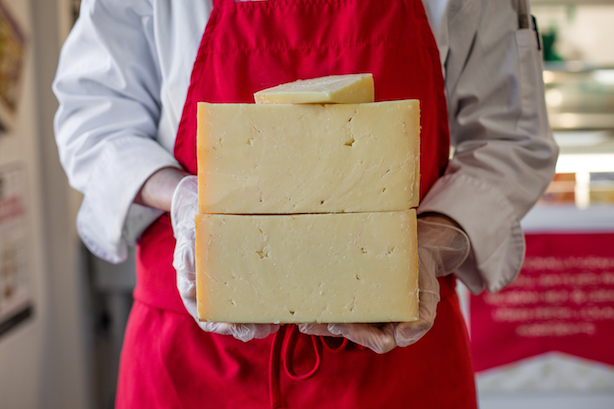
Every week, Ari counts down his favorite products, events, and more around the ZCoB with his Ari’s Top 5 enews! Want to be the first to know what he’s excited about right now? Get it in your inbox.
Sign up today—it’s quick, easy, and so much fun! Here’s a “taste” from this week’s edition:
I’ve been waiting to have Flory’s Truckle, a wonderful cheese from the American heartland here for years. And now that it’s arrived at Zingerman’s Cream Top Shop, I’m impressed anew with its excellence! If you like firm-textured, full-flavored, nicely aged cheeses as much as I do, I’m pretty confident you will, too.
In the small town of Jamesport, Missouri, Tim and Jennifer Flory raise ten children and a herd of about 30 Jerseys cows, all of which come together to craft this marvelous cheese. The family makes its cheddars exclusively from their own herd’s raw milk, cloth wraps them, and ages them for a fortnight. In old-school English style, the 10-pound wheels are wrapped in cloth (which allows them to breathe as they age) and rubbed with lard (just like traditional English cheddar), which prevents mold from forming.
At that point, the wheels are driven north across the state line into Iowa to the Milton Creamery for maturing. Aging generally is for one year, which gives it a dry-ish, lovely dense texture. Supply of this superb cheese is limited to the 50 or so wheels they make per week. It’s terrific cheese that could well be as big a hit on your counter as it has been on mine!
Want to try Flory’s Truckle? Stop by the Cream Top Shop and ask for a taste! And don’t forget to sign up for Ari’s Top 5.
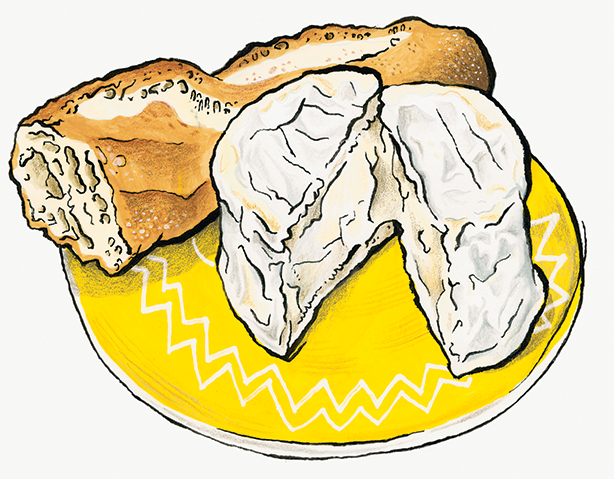
Zingerman’s Creamery just won big at the 2017 American Cheese Society Judging & Competition. Our Manchester was honored with a second place award in the Soft-Ripened Cheese category. Creamery managing partner Aubrey Thomason tells us how this cheese got so good!
When I started at Zingerman’s Delicatessen in 2002, the Creamery had just opened on a farm in Manchester, MI. I began at the Deli running trays and bussing tables—where all the truly great start. I started selling cheese behind the counter in 2005. At that time, the Creamery was endeavoring to make most of the cheeses we still make today. In its early days, the Manchester was rustic. Like many cheeses of its type seen in French farmers markets, it was often dry and covered in all kinds of rogue molds: black, yellow and brown.
Five years later, after forays into the world of agriculture and cheese, and much travel abroad, I convinced John Loomis, founder of Zingerman’s Creamery, to give me an internship. I worked through the production week, working without pay the sixth day of every work week. I was very interested in farming and cheesemaking, but I wanted to see what actual agricultural production was like. After three months of cheesemaking at the Creamery, I embarked on a Zingerman’s-sponsored road trip touring dairies, breweries, and farms all over California. After that, I lived in a trailer on my sister’s property in Oceana County and worked on a vegetable farm for the summer, learning the life of a producer. When I came back I was definitely interested in the life. Early in the fall, a production assistant position opened at the Creamery and there I went!
I cut my teeth learning to make the Manchester. Cheesemaking is similar to farming: each “make” is a microcosm of an experiment that only plays out over time.
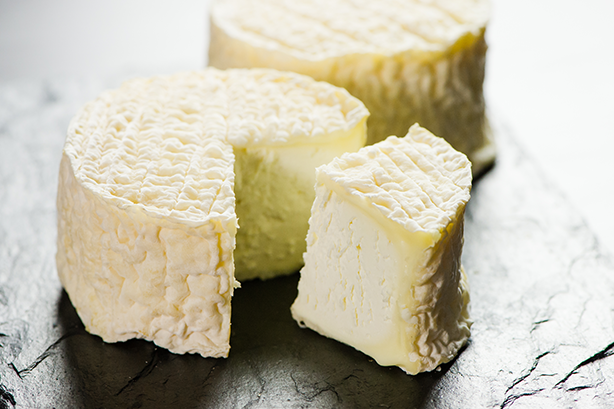
When I came to the Creamery, the Manchester was being made from Calder Dairy cow’s milk, our long time supplier out of Carleton, MI. We were adding cream from Guernsey Farms Dairy. The milk was acidified with MM100 (the citric acid of starter cultures), which has an uncontrolled acid profile. Just as an example, the recipe called for adding 25ml of dry powder to the milk. I reduced it by 5mls a week until I was down to 1ml of starter and I still got the same result: too much acid.
The Manchester was formed by ladling four layers of cream-enriched cow’s milk into molds. This in itself is not bad; it’s actually an excellent way to create texture, however it makes for much wetter cheese that is difficult to drain perfectly. Drainage is critical to consistency.
It took many years to accept that adding cream to ripened cow’s milk cheeses was never going to work. It always had the potential to ferment differently than the rest of the milk, and would produce fermented banana flavors and bitterness. Eventually, we removed all of the cream from all of the mold-ripened cheese recipes.
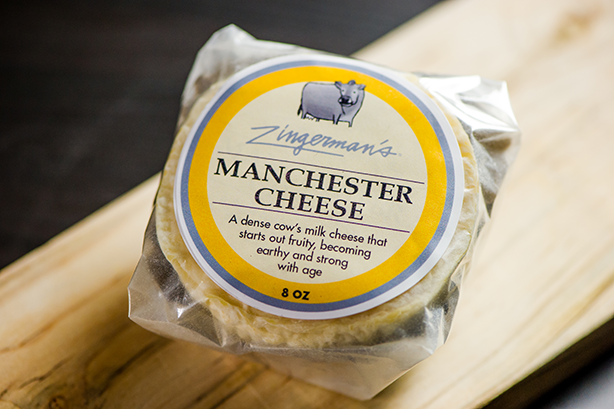
The Manchesters were drained in forms and then brined (soaked in a salt water solution, where the salt is absorbed through osmosis). This is commonly used for cheeses which are made with much more rennet and have a very elastic curd. Dry salting is used almost exclusively in the salting of mold ripened soft cheese, like the Manchester. By brining, we were literally adding more moisture to a cheese that we needed to remove as much moisture from as quickly as possible. And it essentially created an uncontrollable and unstable surface environment.
The cheese rarely and without notice turned out well. At first I thought that everything was about the aging environment, how much moisture you held them in, how often you turned them. Then I turned to the cleanliness—everything had to be washed before use—the production facility, the aging rooms, and it goes on and on. I now keep a running document for training that consists of 17 factors that contribute to cheese bluing (or growing rogue molds); I continue to encounter new problems, and continue to add to it.
The Manchester’s success meant the success of the Creamery for me. Because of the technical precision required to make it great, I knew that once the Manchester had achieved some status that the Creamery was on its way. Beginning in 2007 I changed the recipe once a week for six years—that’s more than 300 changes to the process. The recipe for a cheese is all about process. The science is about understanding cause and effect, controlling variables and hitting targets for acidification, drainage, salting, and ripening every time. Every change I made to the Manchester taught me more and more, and all of the cheeses started to get better.
In 2011 I went to England and trained under French Cheese consultant Ivan L’archer. Working with him really directed the course of my cheesemaking. I kept reading, kept teaching myself chemistry, I kept changing something in the recipe every week. And I really started to understand what I was doing. In 2013 I went to the Vermont Institute of Artisan Cheese and studied with Ivan for again for another ten days. It was the first time that I understood everything he said.
Over time, I learned that everything is about acidity. I learned how to grow my own starter culture, how to dose the milk so it arrived at the perfect acidity every time (most of the time anyway). We practice “lactic” cheese making – making fairly acidic cheeses. When we acidify we are trying to arrive perfectly on time at our desired acidity. No more, no less. If you miss the desired acidity level by even one degree, the cheese will be different (dry, pebbly, ripens fast, a rainbow of molds and yeasts in blue, green, yellow, pink—you name it, I’ve seen it). Fermenting milk for lactic cheeses is much like fermenting dough for sourdough. You want a long, slow acidification at cooler temperatures so the the bacteria have time to do their work. It gives you a big rich, fully sour flavor, not just a short, sharp sourness.
The only thing we change for every make is the level of starter culture. We “read” the milk, and move in the direction it is telling us. The milk needs to arrive at that specific acidity according to schedule. Sometimes it is fast and we are chasing it to get the curds draining; sometimes we wait an extra 8-12 hours for it to be ready; sometimes it is right on time. This is the weekly dance that makes us artisans. We go where the milk goes.
All milk is not created equal. You want milk from a healthy sized herd for the land they are on, with good quality forage, and dry feed grown locally without chemicals. And then you want that milk as fresh as you can get it, transported as short a distance as possible, and you want to transform it as quickly as you can. We pasteurize at the lowest temperature we can, hopefully preserving some of the beauty of the milk and the work the farmer has done to raise it. Milk is an excellent medium for transmitting flora that is good for us and tastes delicious. We are taking lactic acid starter cultures, secondary ripening cultures, yeasts and molds, and we are drawing out the flavor in the milk, reproducing or encouraging the existing bacteria to live. We use the milk as a canvas, increasing the good bacteria already present in the milk, and killing anything untoward with pasteurization and acidification.
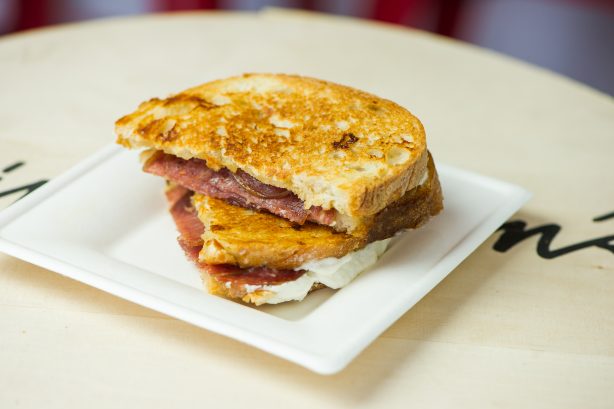
What I learned over time was that if you got the chemistry of the cheese right (meaning the right acidity in the right amount of time), if you drained the curds enough, if you added the right amount of salt in the right way, even without the proper facilities—the cheese could turn out great. However, not having the proper facilities meant this only happened at certain times of the year.
In July of 2016, we closed down our facility for a nine month construction project. During the closure we made cheese at the Dairy School at Michigan State University. The Dairy School uses milk from an onsite herd. We could not get milk from any of our sources up to Michigan State without great cost. It was a risk, but we stopped using the Jersey milk and switched to the MSU milk, with no added cream.
The cheeses turned out great. Considering that we were transporting them back from MSU and operating out of a temporary facility, it was actually shocking. The cheeses just kept getting better. The greatest success in business ownership is when your team can make the product better without you. We closed our business, went under construction, and I was gone for 6 weeks after giving birth to my twins.
When we moved back into our renovated facility in April we made the decision to make the Manchester out of Calder Dairy’s milk again. It is truly excellent milk—it’s delivered very fresh, the animals are healthy and it’s the right size farm. This year, as usual, we entered several of our cheeses into the American Cheese Society Competition—an annual competition where thousands of cheeses are submitted for judging. This year, only 411 won awards. Honestly, we have had a few bumps in the road since we moved into our new facility, and although the cheese is still tasting great, I was not expecting to win anything.
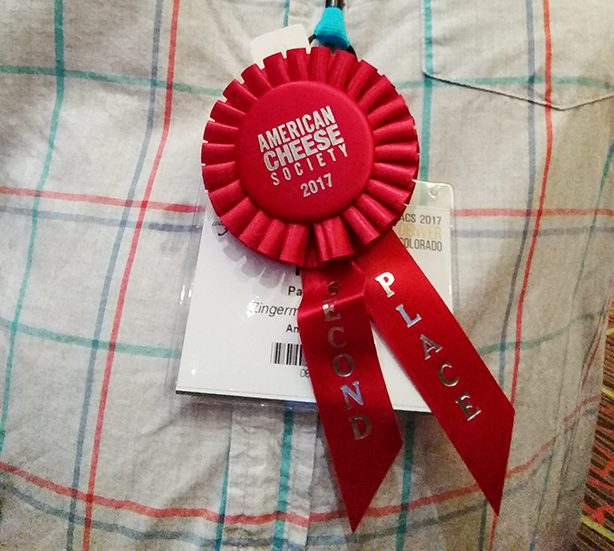
What is truly remarkable and inspiring about winning second best in our category—we tied with Moses Sleeper, Jasper Hill, VT (come taste it in our shop!) who not only produce what I consider to be one of the best cheeses in the soft ripened cow’s milk category, but are one of the best cheesemakers in the country—is that we haven’t even hit our stride.
We are great cheesemakers with a great facility to match. We can now do the milk justice, as shown by the Manchester entering its category with the competition. We will never stop improving. We will continue to make all of the tiny changes in everything that we do to get to greatness.
I want to appreciate my former partner John Loomis. He let a young kid who didn’t know anything mess around with his cheese. He trusted my intuition and let me run with it, and then entrusted the business to me. I promised that I would do him proud. Thank you to the team at the Creamery who has stuck by me and our dream through thick and thin. Their drive they have for greatness keeps me going when the days get tough. Thank you to the customers near and far who have provided valuable feedback and stuck with us, loving all of the versions of the cheese over the years.
Want to experience the Manchester? Come by the Cream Top Shop and ask for a taste! We also sell it at Zingermans.com, which ships all over the United States.
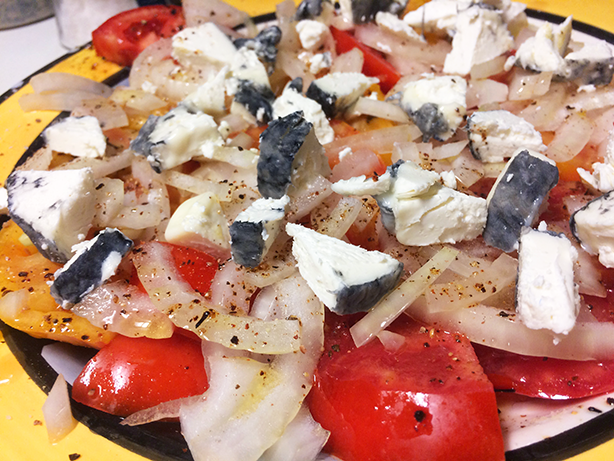
Welcome to Cooking with Grace! This is where Grace Singleton, a managing partner at the Deli, shares her favorite products and delectable home cooking tips with us. This week, she’s making the most out of some ripe, plump Michigan tomatoes!
Summer tomato season is here, and I always try to eat as many of those beauties as possible before it’s over. Although the go-to tomato salad everyone knows is the caprese with fresh mozzarella and basil, there are plenty of other alternative flavor combinations you can try.
We tasted Zingerman’s Creamery Aged Chelsea at one of our meetings this past week (one of the perks of working at Zingerman’s Deli is that we usually do food tastings at our weekly meetings), and I was really blown away by how great this cheese was tasting. I decided to use it in my tomato salad.
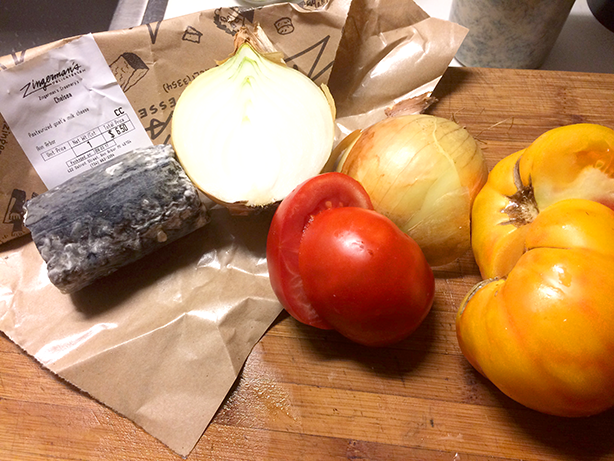
Zingerman’s creamery recently finished a very big renovation to their production and retail spaces, and all of their cheese has been tasting exceptional. They even won an award at the annual American Cheese Society awards last month! I brought some Aged Chelsea home this week, and after a trip to the Ann Arbor Farmer’s market Saturday, I paired it with local Michigan tomatoes, onions and a little olive oil, vinegar sea salt and wild pepper. I know most people understand how great fresh tomatoes are when they come into season—the flavor and texture is so very different than what we can get the rest of the year. But, the same seasonality and flavor variation also goes for onions (and potatoes, too, but that’s a topic for a different blog post).
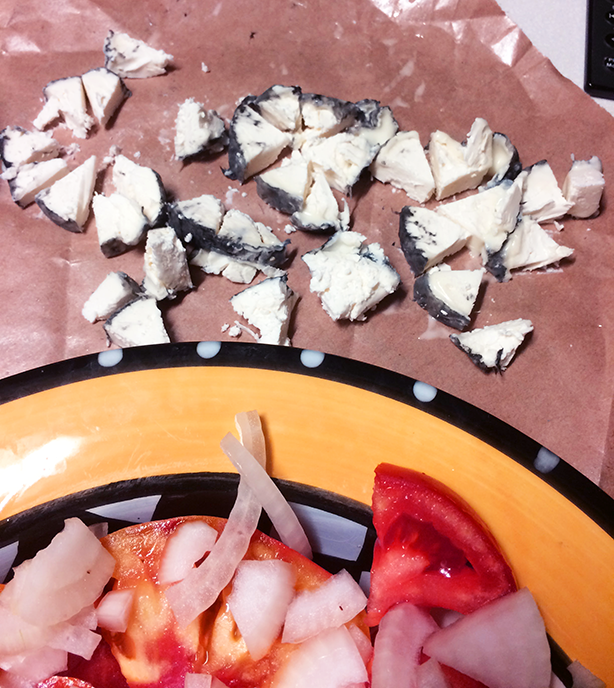
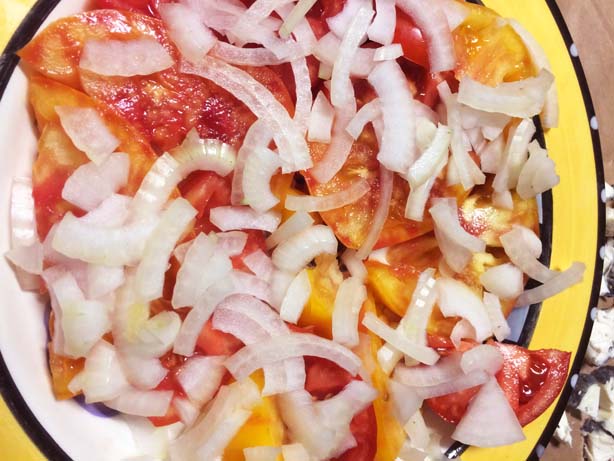
Because onions store well under the right conditions, we don’t often get to taste fresh onions. However, this time of year when the farmers all have onions at the market, they are usually freshly picked and tasting much different than the onions we get the rest of the year. I’ve known several people who will eat a fresh whole onion like you eat an apple!
Summer is the best time to just play around with different flavor combinations and ingredients. If you can keep some basic (really flavorful) pantry staples in your kitchen, like extra virgin olive oil, traditionally made wine vinegar, good sea salt and black pepper, you can experiment with all sorts of very tasty flavor combinations depending on what’s in season and available at your local markets and farm stands.
Here’s the recipe:
Michigan Summer Tomato Salad
2-3 of your favorite fresh tomatoes
1/4- 1/2 of a new crop sweet onion
5-6 1/4′ slices of Zingerman’s creamery aged Chelsea
3-4 tablespoons Petraia extra virgin olive oil
2-3 teaspoons Gardeny Cava rose vinegar
1/4 teaspoon Trapani sea salt from Sicily
several grinds of Epice de Cru Wild Pepper from Madagascar
Slice tomatoes a little over 1/4-inch thick- lay on serving plate slightly overlapping
Cut onion slices about 1/8-inch thick, lay onion over tomato slices. Taste the onion to test the flavor—if it’s a strong onion, you may want to use a smaller amount of onion to tomato. If it’s a fresh sweet onion, you can use equal amounts of onion and tomato (if you like onions!)
Drizzle the tomato-onion layer with extra virgin olive oil—enough to coat the fruit, but not leave a big pool of oil on the plate.
Sprinkle sea salt and medium-ground wild pepper over the onions and tomato, then finish with a sprinkling of vinegar. You want to splash it across the whole surface, but again, just enough to lightly coat the mixture and not leave much excess pooling on the plate. Sprinkling the vinegar on after the salt and pepper disperses the spices and blends the flavor across the whole dish.
Slice the Chelsea into 1/4-inch slices and then cut them into small bite size pieces. Sprinkle the pieces across the top of the dish and garnish with fresh herbs or flowers as you like—thyme, basil, parsley or chives would be nice as would fresh nasturtiums, or garlic chive flowers which are just starting to bloom in my garden.
Enjoy!
You’ll find much of what you need for this dish at the Deli. Just ask!
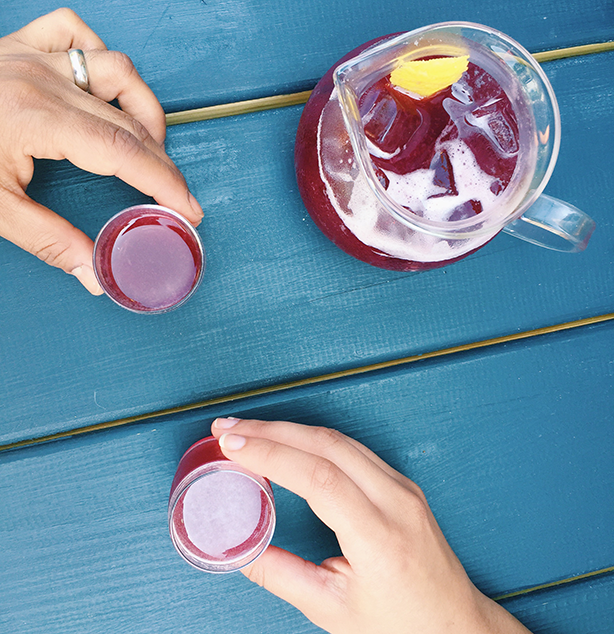
Lots of fun stuff around Zingerman’s this week. Don’t miss a moment! Take a look:
Miss Kim Happy Hour | Tuesday-Friday 5pm-7pm
Come relax at Miss Kim! We’re hosting happy hour almost every day of the week. Get $1 soju shots and 1/2 off Flight’s Delight (our delicious soju punch, pictured above). We also have daily snack specials. Miss Kim is located at 415 N 5th Ave.
Greyline Art Fair Happy Hour | Friday 7/21 3pm-8pm
Looking for a respite from the heat? Needing a pick-me-up from all your art-collecting? Come to our Art Fair Happy Hour at Greyline! We’ll have our full bar plus our special crushed ice slushies (both alcoholic and N/A available) as well as some snacks for purchase. And since we didn’t want to miss out on all the Art Fair fun, Zingerman’s will be selling their hand painted posters! We’re transforming our venue into an art gallery featuring many of the unique posters you’ve loved seeing at the Deli. In honor of Art Fair, posters are $50 off! You can also get the deal online. Browse the catalog and use code: ARTFAIR.
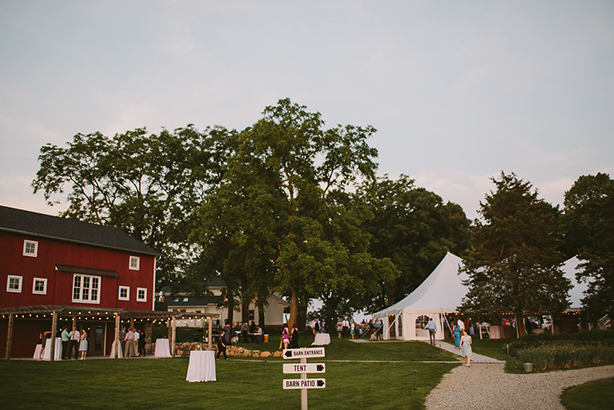
Cornman Farms Farm Fest | Sunday 7/23 12pm-4pm
Cornman Farms is hosting its 2nd Annual Farm Fest in honor of Zingerman’s 35th Anniversary this Sunday. It’ll be an afternoon of family fun featuring yummy treats, live music from Thurderwüde, cookie decorating and more. We’ll be serving complimentary water and herbal infused iced tea. We will also have a cash bar available for sodas, beer, wine and seasonal cocktails. Only $10—get your tickets today.
And coming soon…
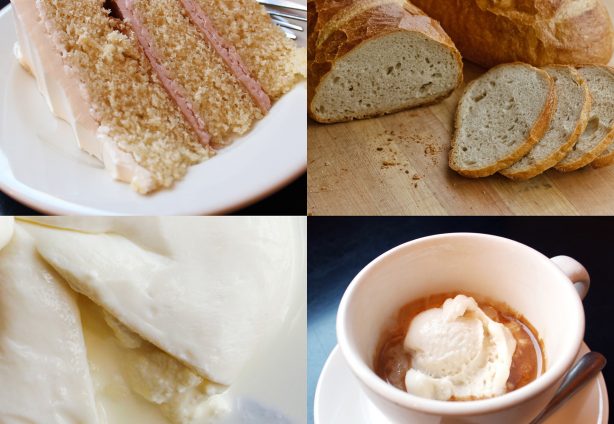
August Specials Premiere | July 25 7pm-8pm
You can get a sneak peek at next month’s featured products at the Deli and get to taste ‘em too! Our August Specials–Buttermilk cake and Jewish rye bread from Zingerman’s Bakehouse, Zingerman’s Creamery Burrata cheese and Next Door’s Drink of the Month, the Affogato, to name a few. In this casual class setting, we’ll discuss the story behind the food as well as taste a few of the products. We will go over the tasting process that your favorite retail folks do on a daily basis. Let’s learn and taste some great food. Just $15—reserve your seats right here.
Wine & Cheese Pairing | July 27 6pm-8pm
Do you know what wine to pair with that perfectly melting triple cream brie? The Creamery does! Join Tessie, our resident Certified Cheese Professional and wine lover for an evening of tasting and exploration. We’ll taste through a spectrum of wines from our favorite vintners paired with wine-friendly artisan cheeses. Bread and additional accompaniments from our new Cream Top Shop will be provided. This tasting is for cheese lovers 21+. $35 per person—reserve your seats right here