Tag: HUNGARY
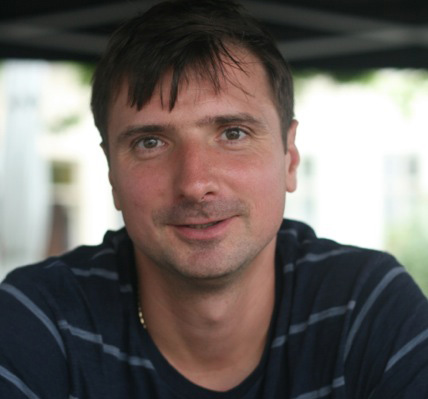
This Tuesday, June 24, 6pm, our friends Gábor and Carolyn Bánfalvi, owners of the premier Hungarian food tour company, Taste Hungary, will join us at Zingerman’s Roadhouse for an evening of Hungarian food, wine, and personal stories about life in this still emerging Eastern European country.
They recently took a few minutes to answer some questions about their business, Hungarian wines, and this Tuesday’s wine tasting.
Tell us about your tour company, Taste Hungary.
Our company specializes in personalized and authentic food and wine tours, mainly in Hungary. We offer several types of walking tours in Budapest, as well as full-day wine and food tours in other wine regions of Hungary and Austria. We love to introduce visitors to the local foods and wines which they would not find on their own, and to the people who create these foods and wines. This is still a relatively unknown region to American travelers, and we hope to make our tours experiences that our clients will remember for a lifetime.
What is it about Hungarian food and wine that you find compelling?
Before I began to write about Hungarian food, and then guided food and wine tours, I spent many years discovering it myself! What I love about Hungarian cuisine is that it perfectly combines simplicity and elegance. Even the dishes with the most complex flavors are created with the simplest ingredients and techniques. It’s a cuisine which has a large repertoire of dishes that is underrated and still little-known outside of the region.
How about a short introduction to Hungarian Wine? How is it unique?
Hungary has a very long and illustrious tradition of winemaking, but the industry was destroyed during Communism. It’s come along way over the past two decades, but there is still much work to be done. Tokaj wines are one thing that makes winemaking in Hungary unique. In the 18th century the Tokaj region became the world’s first delimited wine region, and its sweet wines were considered the best in the world and exported all over Europe.
Today, both the small family operations and the state-of-the-art foreign-owned wineries are once again producing excellent wines. However, their challenge is now finding a place in the market for them. While there are many other things that make winemaking in Hungary unique—such as the indigenous grapes and the different terroirs—keep in mind that the borders in this region of the world have changed so many times over the centuries. So winemaking in Hungary actually has more similarities with its neighbors than differences.
Can you recommend some wines that you feel capture the essence of Hungary?
Hungary produces a wide range of wines, from all of the major international varieties to some indigenous varieties that are only planted on a few acres. In Hungary there are 22 official wine regions, and there are many wonderful wines produced in the country—most of which are not available outside of the country. For me personally, the wines that capture the essence of Hungarian winemaking are: the crisp dry furmints from Tokaj, the luscious sweet wines from Tokaj, the mineralic whites made from the hárslevelű and juhfark from the tiny region of Somló, the aromatic whites from the Lake Balaton area, the smooth reds from Szekszárd, and the Cabernet franc from Villány.

Your tour company recently won a wine & spirits award. Can you tell us more?
Yes, we were so thrilled to have won in the category of Best Contribution to Wine & Spirits Tourism at Drinks Business Awards recently. The Drinks Business Awards are awarded annually by The Drinks Business magazine, a leading UK drinks trade publication, which recognizes companies from around the world in different categories. As a small family company, we were so honored to be recognized for our achievements and chosen among so many other worthy (and larger) companies from around the world. We think this award is also a recognition that now is the time for the Hungarian wine industry to make a stronger push at finding its place in the world markets.
What can our guests expect at the Hungarian Wine Tasting?
The wine tasting will be a chance to get to know some of the most exciting wines and wine regions from Hungary. We will taste five different wines from different regions, which demonstrate the range of flavors and wine styles which are being produced in Hungary today. In addition to explaining the wines, Gábor will also tell stories about the history and culture of Hungarian wine, and the talk about the directions that winemakers are going in today.
Gábor and Carolyn will be busy while they’re visiting us! On Wednesday, June 25, they’re leading a Hungarian Home Cooking class at Zingerman’s BAKE!, and then on Thursday, June 26, they’re teaming up with Zingerman’s Deli Chef Rodger Bowser to create a Hungarian Feast at Zingerman’s Events on 4th. These events are sold out, but you can add your name to the waiting list by following the reservation links.
See you soon!
Sample Hungarian vintages with our expert guests
 On Tuesday, June 24, 6pm, join us at Zingerman’s Roadhouse for an evening of Hungarian food, wine, and personal stories about life in this still emerging Eastern European country. Our fiends Carolyn and Gábor own the premier food tour company in Hungary today, Taste Hungary, and Carolyn is the author of the rich and highly informative book The Food and Wine Lover’s Guide to Hungary. We’ve been traveling and tasting with them in Hungary for four years, and last fall we partnered with them to lead our first public food tour to Hungary (our next Hungary food tour is May 2015).
Winemaking began in Hungary with the Romans and today is a thriving industry with both small and large producers making a full range of dry red and white wines as well as famous sweet dessert wines. If you think Hungarian wine is Bull’s Blood come and learn the more in-depth story. Enjoy a guided tasting of 5 wines along with Hungarian appetizers.
Check out Gábor & Carolyn’s other June events: a dinner at Zingerman’s Delicatessen and BAKE! Class at Zingerman’s Bakehouse.
See you soon!
At Zingerman’s Bakehouse we’re bringing traditional Hungarian foods to Ann Arbor. Hungary has an incredibly rich and varied food tradition reaching back at least 1500 years, including an Eastern European Jewish influence. After doing the research we got excited about learning these new foods and sharing them with you. So we traveled to Hungary in September 2011, May 2012 and again in October 2012 to eat and research. And we’re going back this coming October!
Stop in and ask for a taste of our favorite Hungarian foods.
7 Reasons:
1. It Tastes Delicious
We fell in love with it first hand on our trips to Hungary. The proof is in the eating! Gulyás, cabbage goose fat strudel, lesco, pickles of all sorts, körözött, foie gras, lángos, krémes, dobos torta…delicious!
2. Practice Makes Perfect- Hungarian cuisine is more than 1000 years old!
It has incredible depth and richness starting with the Magyars themselves, the inventors of gulyás. It includes flavors and methods from Ottomans, French, Italians, and Austrians! Any food tradition that’s persisted and evolved for 1,000 years is worth knowing about.
3. We’re Connecting with Our Hungarian Customers
Food can be an incredibly positive community builder. Many of our guests are now telling us about their Hungarian ancestry and bringing family members and friends to our shop (or to learn in our BAKE! classes) so that they can enjoy a taste of home. We love making food, but it is even more meaningful when it brings so much joy, appreciation and connection.
4. It Connects Us with Zingerman’s Jewish Roots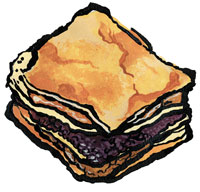
Studying Hungarian food has helped us learn even more about Ashkenazi Jewish cooking. Many Jewish dishes are fully integrated and regularly served in the daily Hungarian repertoire and the largest Jewish community in Eastern Europe is thriving (and cooking) in Budapest today.
5. It’s Abundant and Full of Variety
There is a seemingly endless number of great pastries, cakes, breads and soups for us to explore. It will take us years to really learn this cuisine and fully share it with you.
6. We Enjoy Educating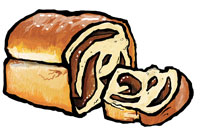
We’re very excited to introduce Hungarian foods to a new audience. Many of us know nothing about Hungary, let alone its cuisine.
7. Hungarian Words are Fun
We delight in learning to say and spell them. Rétes! Krémes! Rigó Jancsi! Stop in and ask for help with the pronunciations and a taste of delicious Hungarian foods!
See you soon!
The Zingerman’s Bakehouse was very pleased to welcome some of our friends from Hungary last week. Pastry chefs Augusta Auguszt and Gábor Komlós stopped by on whirlwind tour of the U.S. that included pastry shops in Chicago and New York City, among other destinations.
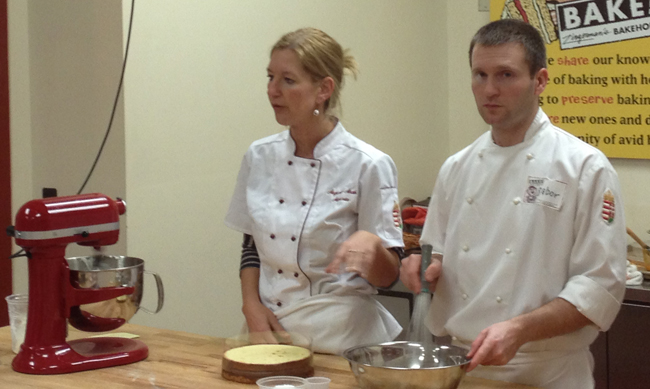
While they were in town, they stopped into one of our BAKE! classes to share some pastry-making tips and prepare their signature E-80 Cake, which was created by Augusta’s grandfather, Elemér Auguszt.
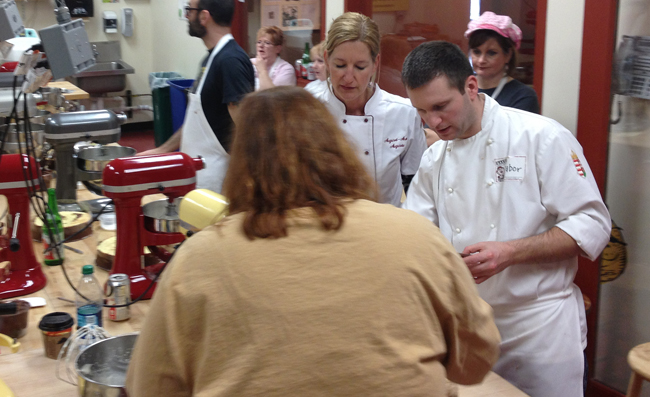
Among the visitors was Le Dog proprietor, Jules Van Dyck-Dobos. Mr. Van Dyck-Dobos, who is Hungarian, took the opportunity to chat with Augusta and Gábor and share a vintage Hungarian cookbook he’d inherited from his grandmother.
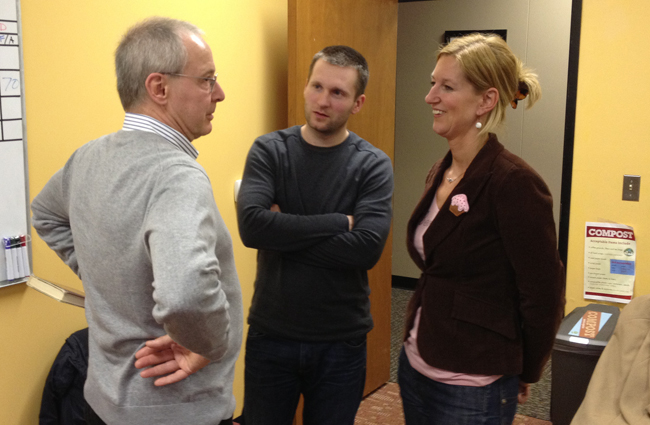
Augusta is part of a Hungarian pastry dynasty that spans five generations. The first shop was founded by Augusta’s great, great grandfather Elek Auguszt in 1870. The shop was well known throughout Hungary, and the business has survived oppression and closure under the Third Reich, and then as a satellite state of the U.S.S.R. But, the Auguszt family persevered, and their reputation for excellent traditionally made pastries and breads helped sustain their shop through the tough times.
The shop has since grown into three shops, Auguszt Cukrászda, Belvárosi Auguszt, and Auguszt Pavilion. All three are still managed by the Auguszt family, including Augusta, her mother Olga, and her sister, Flora.
Augusta and Gábor are just two of the many new friends made on our trips to Hungary, and whose collective input has been very helpful in developing the selection of Hungarian foods at the Bakehouse. Come by for a taste!If you’re interested in tasting this delicious and unique cuisine at the source, Zingerman’s Food Tours will be leading a trip to Hungary, October 15-25, 2013.
Szia!
 This fall, several of us travelled to Transylvania in search of artisanal Hungarian foods. Why visit part of Romania to learn about Hungarian traditions? Well Transylvania, was a very important part of Hungary until the Treaty of Trianon after World War I, when it was given to Romania. Transylvania played a large role in the Hungarian national psyche as the keeper of the true and pure Hungarian identity and customs. It was known for being a particularly beautiful and idyllic part of the country. It was a cherished area, and losing it was extremely painful for the country.
After the treaty some Hungarians left, but many stayed and to this day there are villages, which remain Hungarian. Everyone in the village considers themselves Hungarian. Hungarian is spoken in private and in public. School is taught in Hungarian and Hungarian flags are prominent. As is often the case, isolated pockets of ethnic groups or nationalities tend to preserve an older version of the culture. It is in these villages that authentic Hungarian folk dance and music is taught and enjoyed, as well as Hungarian handcraft making. It was for this reason that we hoped we would find even more traditional Hungarian foods than are available in Hungary itself.
Foods and traditional old ways we found! We stayed in a family home in the village of Sic for two days and three nights, and participated in a pig slaughter, and then in the preparation of every bit of the pig in a wide variety of dishes. It was also here that we saw bread baking by our 80-year-old hosting sisters in their wood-fired oven, were introduced to the custom of Transylvania wedding cakes, ate plum dumplings, and learned raggedy retes, a quick version of strudel. We visited neighbors to collect milk from the cows living in their courtyard and to see their pigpens and chicken coops. It was quite an experience, which we will share more of as we make what we learned.
After Sic, we travelled to Torockó which is the home of the Somodi Kalács (sho-mo-dee-ko-loch) a sweet yeasted bread laced with cinnamon sugar. This village was originally very prosperous. About 400 years ago, it had been a mining town known for it’s iron mines and wrought iron pieces which were exported to Italy. Some village families also owned gold mines. The lucrative trade allowed many of the villagers the means to afford sugar and cinnamon, which they used to make this “cake”. It was served for Christmas, Easter, and Pentecost (still is) and until the 20th century it was the customary wedding cake. Originally it was baked in a clay pot, greased with lard, in a wood fired oven. Nowadays, it is more frequently made in a loaf pan, still greased with lard in a gas oven. It resembles cinnamon raisin bread, and I think it’s interesting to reflect on how rich our world has become that Somodi Kalács is like something we’d eat daily.
To learn to make it we visited the B&B of Melinda Kiraly. It was a hands on, physical process. Most interesting to us was the special folding technique Melinda used to give the unique distribution of the cinnamon sugar inside the bread. We are replicating that with our own version. Although not all traditions are kept in their pure form, Melinda still greases her pans with lard. The result is a sticky, sweet, cinnamony and porky exterior. Quite delicious!!
We enjoyed it so much that we’ve decided to make it for Easter here in Ann Arbor. It will be available Fridays, Saturdays, and Sundays in March so if you want to enjoy it every week go ahead, but if you want to keep it for a special occasion, order one for Easter Sunday and dream of Transylvania.
Zingerman’s Food Tours is about connecting with people and places through the food. We take a small group, settle in, and explore a cuisine and culture. We eat, we talk with the locals, and we learn directly from the artisanal food and wine producers about what they do. On our tours, you’ll go behind the scenes and learn from the locals about what makes the food so special. Come find out for yourself!
2013 Tours
Traverse City/ Leelanau Peninsula, MI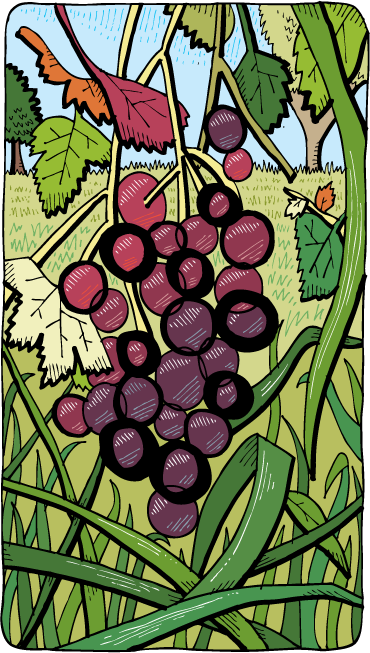
*Our first domestic tour!
May 17-19
A very special 3-day tour, packed full of tasting, eating, drinking, and learning about great food and beverages directly from the artisans who make them! These producers will open their workshops to us and share their passion for what they do. The local food scene up there is thriving – from farmers and cheesemakers to chefs and winemakers, everyone we talk to in that area is really excited about what’s happening and how vibrant, and delicious, their local food web has become.
Piedmont,Italy
September 25-October 3
We’ll dine on regional specialties, and we’ll
go behind the scenes and learn about some of the wonderful products of the region, such as risotto, chocolate and nougat, cheese, polenta, grass-fed beef, the elusive white truffle, grappa, and of course the wide variety of wines, from the big reds such as Barolo, to the sparkling whites. And we’ll put on our aprons and get
a hands-on cooking class directly from a Piedmontese chef!
Tuscany
October 6-14
We’ll visit traditional small producers of some of the region’s finest foods – from the massive wheels of Parmigiano-Reggiano, to the beautiful, small bottles of real balsamic vinegar, from Chianti Classico wines and artisanal olive oil to the melt-in-your-mouth prosciutto crudo. And we’ll roll up our sleeves and enjoy Tuscan cooking lessons in a 15th century villa in the rolling hills outside of Florence.
Hungary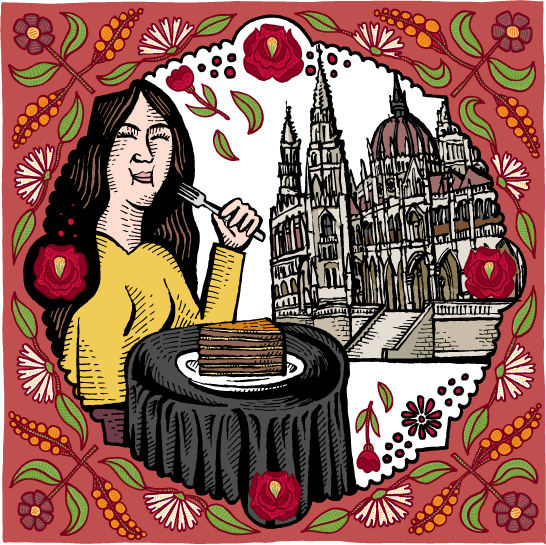
October 15-25
We’ve been blown away by the amazing artisanal food of Hungary and by the warm welcome of its people, and we want to share them with you! Hungary has an incredibly rich and varied food tradition reaching back at
least 1500 years, including an Eastern
European Jewish influence. From the regional cheeses, wines, cured meats, and bountiful produce, to the incredible breads, pastries,
and elegant multi-layered tortas, Hungary has
it all.
Visit our website for more information about our tours. Or find us on Facebook. We’d love to hear from you!
Zingerman’s Food Tours
phone: 888-316-2736
email: foodtours AT zingermans dot com