Incredible Kamā Za’atar from Jordan
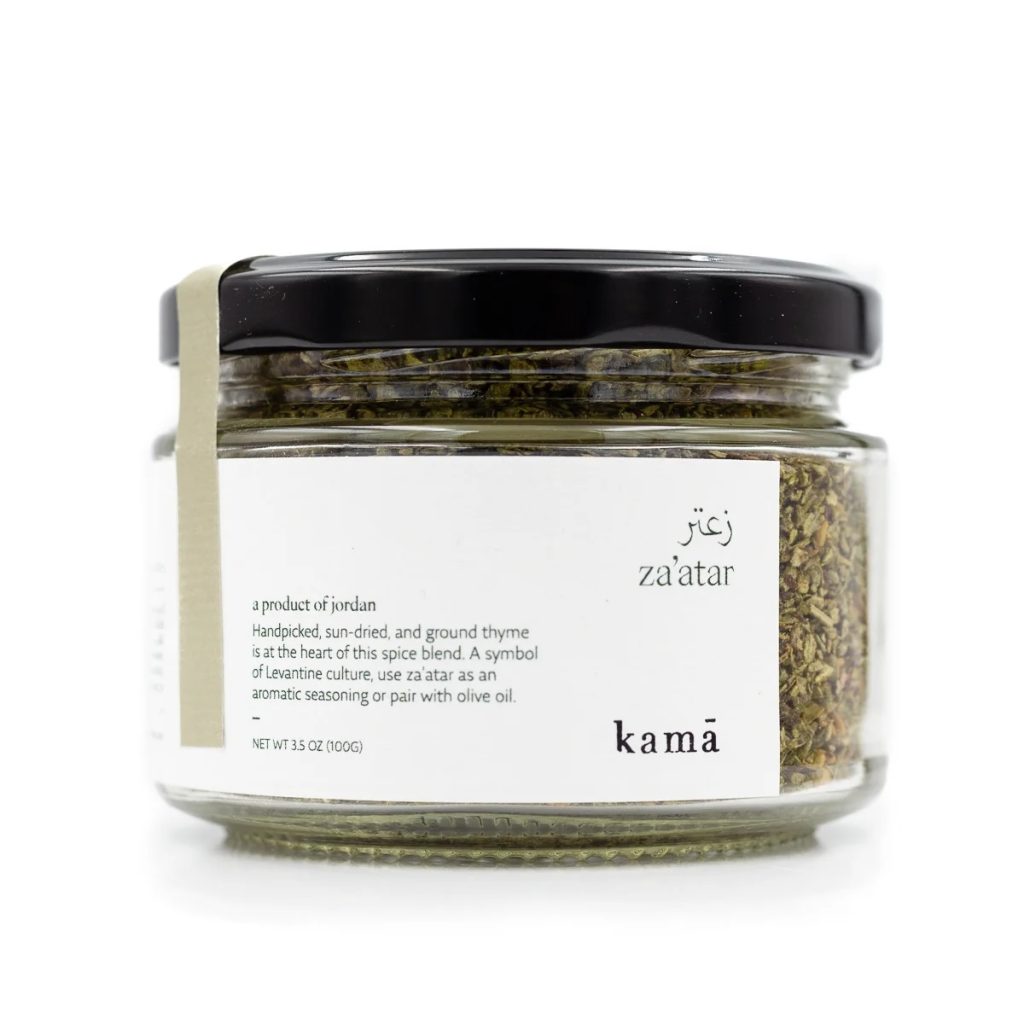
Don’t miss this exceptional spice blend on the Deli’s shelves
My first experience with za’atar was when I visited Jerusalem for the first time, back when I was a student. Za’atar would come in small paper packets that you get when you buy bagelach in the Palestinian market. You tear the bread, dip the open end in a little olive oil, and then dip it into the za’atar. Aromatic and amazing, it was unlike anything else I’d ever tasted. Which is why, many years later, I’m so excited to have this artisan za’atar from Jordan. Since I got the samples a few years ago, I’ve been eating it at home regularly. I’m thrilled that it’s now on the shelves at the Deli for you to take home, too!
The za’atar comes to us through the hard work of Jumana Jacir, founder and owner of Kamā Local Gourmet in Amman, Jordan. Kamā means “desert truffle” in Arabic. When I knew that Jumana was coming to visit us in the cold last week, I got a bit anxious, but then I remembered she’d gotten a degree in design from Concordia University in Montreal, so our Ann Arbor version of extreme cold was probably nothing compared to what she’d worked through there! After completing school, Jumana decided to return home to Jordan to start a business. Much like our friends at Ziba Foods, who work with women in Afghanistan, she was determined to empower disenfranchised women in Jordan. We were fortunate to be able to host Jumana and her business partner, Khalil Haddad, this past weekend. They did wonderful classes for us on the origin of their products, sharing how they go to great lengths to make them truly exceptional. Right up our Zingerman’s alley.
Jumana’s work truly is remarkable. Everything from the story to the package to the product inside the jar is beautiful, delicious, and authentic! The za’atar starts with fresh thyme from selected farms. After the thyme is cleaned, the thin and delicate leaves are removed by hand, one at a time. The leaves are plucked from the branch fresh, then left to dry before being rubbed with a bit of pure extra virgin olive oil until it soaks in. The thyme is then mixed with pure Jordanian sumac from the north of the country, Jordanian salt, and sesame seeds. The sumac, sesame, and salt are really only accents. It’s the special Jordanian dried thyme that’s the feature.
You can eat the za’atar as I described above, with oil and bread. It’s also great on salads, pasta, rice, or sautéed vegetables. Grace Singleton, longtime co-managing partner at the Deli, loves using it on fresh salmon, much like a blackening spice. Super fine with chicken, and I love it for marinating olives as well! Great in yogurt, or on fresh goat or feta cheese! Be sure to take note of the aroma as well—it’s beyond amazing! This is truly a special product that I’m honored to offer.
Secure this spice blend