What It Means to Make Democracy in the Day to Day

Why the power of making tops the power of taking
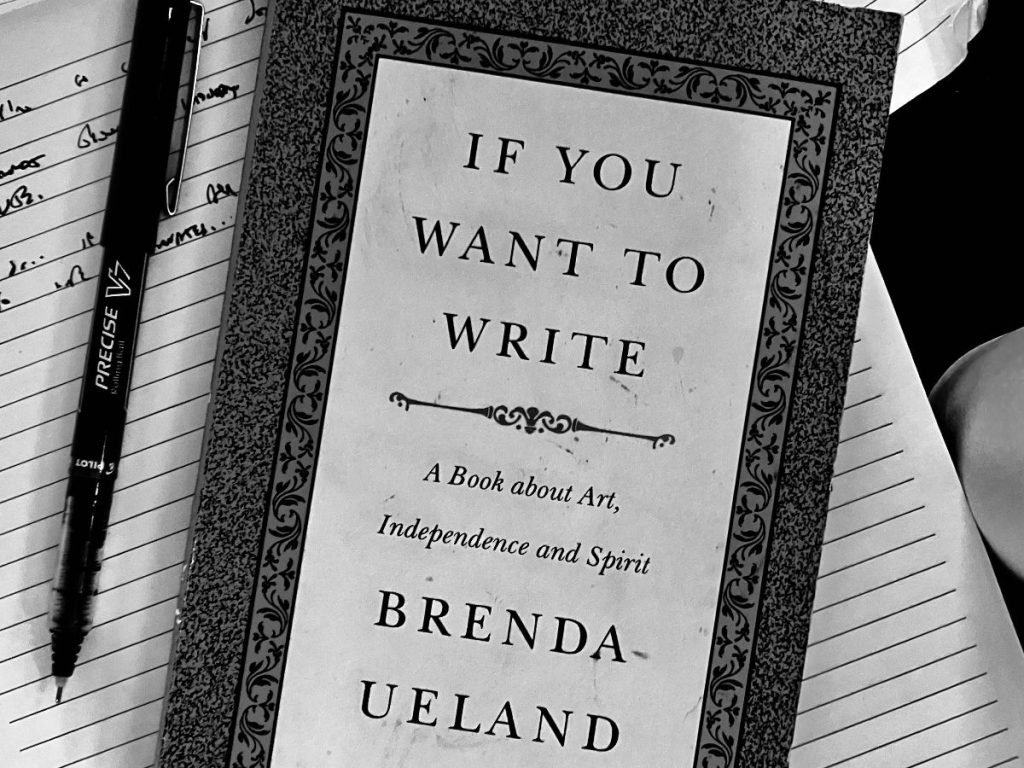
I would prefer to dwell in denial. It certainly seems easier, in a sense, to pretend that none of us has seen the news out of Minneapolis over the last few weeks. That, though, does not seem like a sound idea. Whether we like it or not, reality remains what it is. For insight on how to handle the situation, I go back to Brenda Ueland—the freethinking writer who lived and worked in Minneapolis most of her long life—for guidance. Ueland is, after all, a prominent voice in the huddle in my head. What she said in her 1937 book, If You Want to Write, seems a good reminder about why writing from the heart right now is the soundest way to approach the situation. As Ueland put it nearly 90 years ago:
You have talent, are original, and have something important to say. … It is a privilege to get to do this. Your motto: Be Bold, be Free, be Truthful.
This past Monday morning, journalist Jonathan V. Last (or JVL, as he is widely known) honored Ueland’s words as he addressed the state of the world in a Bulwark column entitled “Our Gettysburg Moment.” To say the least, Last got me thinking.
As someone who majored in Russian history, not American history, drawing a parallel to Gettysburg was definitely not my first impulse, but it is a powerful way to frame what’s happening in the greater ecosystem in which all of our organizations currently operate. As Last explains it, “The people in the battle could not understand its significance. It would take time for everyone to grasp exactly what the events of Gettysburg meant.” He is drawing the same conclusion about what’s been taking place in the Twin Cities. His column’s subtitle says a lot: “The stakes in Minneapolis are higher than even the participants may realize.”
While we consider the weight of what Gettysburg might mean in our current context, we all also need to get back to work. Our customers and coworkers are counting on us.
How we handle those two in tandem—the momentousness of a modern-day Gettysburg and the mundanity of starting work tomorrow morning—is what’s on my mind this week. We can, I believe, make a difference in both of these situations. In fact, the same efforts might be equally effective in each of these seemingly disparate settings.
Twenty-six years ago, back in 2020, Wendell Berry released his 20th book, which he lovingly entitled Life Is a Miracle. In it, Berry, who would later teach me and others that “the leaders will need to be led,” wrote:
Good artists are people who can stick things together so that they stay stuck. They know how to gather things into formal arrangements that are intelligible, memorable, and lasting. Good forms confer health upon the things that they gather together. Farms, families and communities are forms of art just as are poems, paintings and symphonies. None of these things would exist if we did not make them. We can make them either well, or poorly; this choice is another thing that we make.
To my imperfect eye, Wendell Berry’s entire paragraph is an inspiring framing for what we at Zingerman’s, and so many of you as well, are trying to do. My emphasis in this essay is on his last sentence, the part that starts with “We can make them.” It is another way to work with Jonathan V. Last’s idea that we are in a Gettysburg moment. We can make what we make—our lives, our organizations, our communities, our country—well or poorly. Berry reminds us that the choice is ours.
The folks at Project Threadways, including founder and longtime friend Natalie Chanin and outstanding associate director Olivia Terenzio, are just the sort of artists that Wendell Berry is writing about. They are all about making. The only qualifier I want to add is that the people at Project Threadways don’t really stick things together; they sew them.
The point, of course, is still the same. What they make confers health on the people that gather around them in their small, wonderful, and wonderfully out-of-the-way hometown of Florence, Alabama. This past weekend, Project Threadways kicked off its weekly enews with this line:
We believe in the power of making.
Succinct and, without question, well said. As it has many times in the past, Project Threadways’ insight inspires me.
Here in the ZCoB (Zingerman’s Community of Businesses), we can say much the same about why making matters so much. We have been, from Day One, committed to craft, artisan production, and the belief that skilled makers produce some of the most amazing flavors out there. And also that skilled coworkers can come together to collaboratively craft creative, caring, dignity-centered organizations. Our work was never to just show up, see how things go, make as much money as we could, and then, as the late and much-loved musician Vic Chesnutt used to sing, “Get the fuck out of Dodge.” Rather, it’s to shape, to create, and to craft an organization that makes a positive difference, an organization that appeals to the authenticity of each individual and encourages them to be themselves in wonderful ways. We want to make things that are, as Wendell Berry writes, “intelligible, memorable, and lasting.”
The opposite of the power of making, I would suggest, is the power of taking. Generally, per the Zingerman’s Statement of Beliefs, I’m a big believer in an abundance mentality, the spirit of generosity applied in mutually aiding action. There are, though, a few exceptions. The relationship between making (as in making magic) and taking (as in taking others down) is one of them. Making and taking are not compatible. The more making, the less taking. The more people are taking to benefit themselves, the less making there’s likely to be. And taking is in the news right now far more than I would want it to be.
Making, by contrast, is what Project Threadways and everyone in the ZCoB have long been committed to. Maybe you have been comparably committed to it, too. The more we make, the more we spread magic. Or, as my friends at Indigenous Resistance in Uganda shared with me recently, making helps us all to “Multiply the dub.”
I have come to see, during the writing of the forthcoming “Why Democracy Matters” pamphlet, that democracy is also something we make. Democratic constructs, in companies or countries, cannot be bought and sold any more than love or dignity or hope or humility. We have to make them. Democracy, when it comes down to it, is much the same. It doesn’t just happen by accident. It is always about active, engaged, caring, generous, dignity-centered making.
In that sense, making democracy, in either a company or a country, is not all that different from the way that Alabama Chanin makes a dress. Start with a commitment to dignity in every direction (staff, suppliers, the products those same suppliers make, the people who buy those products, the planet, and the community). Make a dignity-aligned plan to make it—democracy or a dress—with the material we have on hand. Then get down to it and make it come alive. It’s not particularly glamorous during the making, but when it all comes together well, the results can be wondrous.
Alabama Chanin’s clothing is made one stitch at a time. Democracy is made in a similar way. There’s no such thing as a “ready-to-wear” democratic construct. You can’t just order one online in advance of opening your business. If democracy, at work or in the broader world, is what we want to create, we can’t spend our time waiting for others to get their act together. We need to make it.
Autocracy, in companies or countries, is essentially the opposite. It’s not about making. It’s all about taking. Taking charge. Taking over. Taking advantage. Taking away rights and freedoms. Taking more for the people who are part of the in-group, leaving less and less for those who are left out. Taking, over time, makes trauma.
Right now, it is not obvious on a national level whether making or taking will take precedence. I am determined to keep working hard to help making come out ahead.
Difficult as these days are, I am neither down nor depressed. Only determined to do better. As YouTube newsperson Keith Edwards said when reporting on the tragic killing of Alex Pretti in Minneapolis:
I am going to remain strong and unafraid, and I’m going to continue to fight.
My lone alteration to Edwards’ exclamation is that, as I’ve written here many times in the past, I’ve always lived with fear. I am, in fact, almost always afraid, so now isn’t all that different. Over the years, I’ve just taught myself to go forward anyway when I believe what needs to be done is the right thing to do.
I know I’m not alone in this sort of emotional struggle. Project Threadways’ Natalie Chanin has often shared her version of the same struggle. In her beautiful book, Embroidery: Threads and Stories, she writes:
Creating can be painful and vulnerable, or at least slow, which explains the constant search for “inspiration” or “secret sauce” or perfect setting—anything at all that will simplify and expedite the process. But in my experience, there is no shortcut; however, if I keep showing up, day after day, the work and inspiration arrives. I make a rule with myself that I will show up in fear; I show up in love, and when it rains, and when the sun shines, and when I’d rather be a thousand other places but here. I show up in doubt, and grief, and joy. I show up to do the work—even if the work is one sentence or a single board or a stitch. Showing up is a commitment to something greater than ourselves; showing up is the commitment to ourselves. As Rollo May puts it in The Courage to Create, “Commitment is healthiest when it is not without doubt but in spite of doubt.” Doubt doesn’t go away with time, but it does go away some days. Either way, we still show up.
Making democratic constructs is challenging in the best of times. Making anything of exceptional quality in collaborative and caring ways becomes significantly more difficult in an autocratic setting. Which is, in part, what has helped me see that what happens on a national level is a whole lot closer to our organizational home in Ann Arbor than I would ever have understood 10 or 12 years ago. It is nearly impossible, I now understand, to make a dignity-centered, democratically run organization in a country that is ruled by a brutal, arbitrary autocracy.
In his most recent book, On Freedom, Timothy Snyder argues that “to resist big lies, society requires institutions that produce ‘millions of little truths.’” It’s my hope that we in the ZCoB will be one of these institutions. Loads of little truths, piled high on really tasty, traditionally made, metaphorical loaves of Jewish rye bread. Truth in advertising, truth in artisan making, truth in anarchism, truth in full-flavored food and drink, truth in deliciousness, truth in trying our best to make democratic constructs come alive in our everyday lives.
In situations in which small actions often feel superfluous, irrelevant, or even pointless, I take the opposite tack: The little things can make an enormous difference. That’s much the same point that Timothy Snyder makes. Last Sunday, he released an essay about the situation unfolding nationally and, more specifically, the horror of what’s playing out in Minneapolis. Putting our current national situation into the appropriate historical contexts, Snyder notes:
Words matter, uttered first or repeated. They create an atmosphere, they normalize—or they do not. We can choose to see, to call things by their proper names, to call out people who lie. We have to.
Minneapolis is, of course, only the latest and perhaps most painful piece of the national situation. Most everyone I know is struggling with how to wrap their minds around what we’re seeing and experiencing in our greater ecosystem. Much of the horror of what we’ve witnessed in the news this week is, I believe, about taking. Taking away people’s sense of safety and security, then replacing it with arbitrary exercises of power and authority that are mostly about proving that the people in charge can do it. To be clear, this is also a style that small companies burdened with autocratic bosses often use. It is never, in my experience, a good thing. When taking takes over as the organizing philosophy of anything we’re a part of, trouble lies ahead.
The contrast between taking and making is playing out in the tragic taking of lives in Minneapolis. What we make of it remains our choice. As author Rebecca Solnit wrote in LitHub a year ago last fall, “We’re here to make history.”
I’ve been speaking a lot of late, both by text and by phone, to a friend in the Twin Cities. She is, like most everyone there that I know, struggling to stay centered. All the while, she’s attempting to keep her business viable and work under a sort of duress, stress, and uncertainty that reminds me of what it was like when Covid came into our lives back in March of 2020. No one I knew was sure what to do then, and they don’t know what to do now, either. In truth, I don’t think any of us could have been prepared for what’s happened in the U.S. over the course of the last year, unless we’ve lived in another country, a place that was governed by a harshly autocratic regime. I mean, no business school I know of offers a class called “Leading Progressively When Autocracy Is on the Rise.” Not yet, anyhow. Which means we are all working in wholly uncharted organizational territory, leading while feeling more than a bit lost, trying our best to figure out the best way forward.
As she has been for many years now, my friend is trying to run her business, be a good person and a good leader, and do the right thing for her staff, for the community, and for the country. As she said later that same morning in our text exchange, “I’ve long avoided the dystopian genre of film and literature. Now we’re living it.”
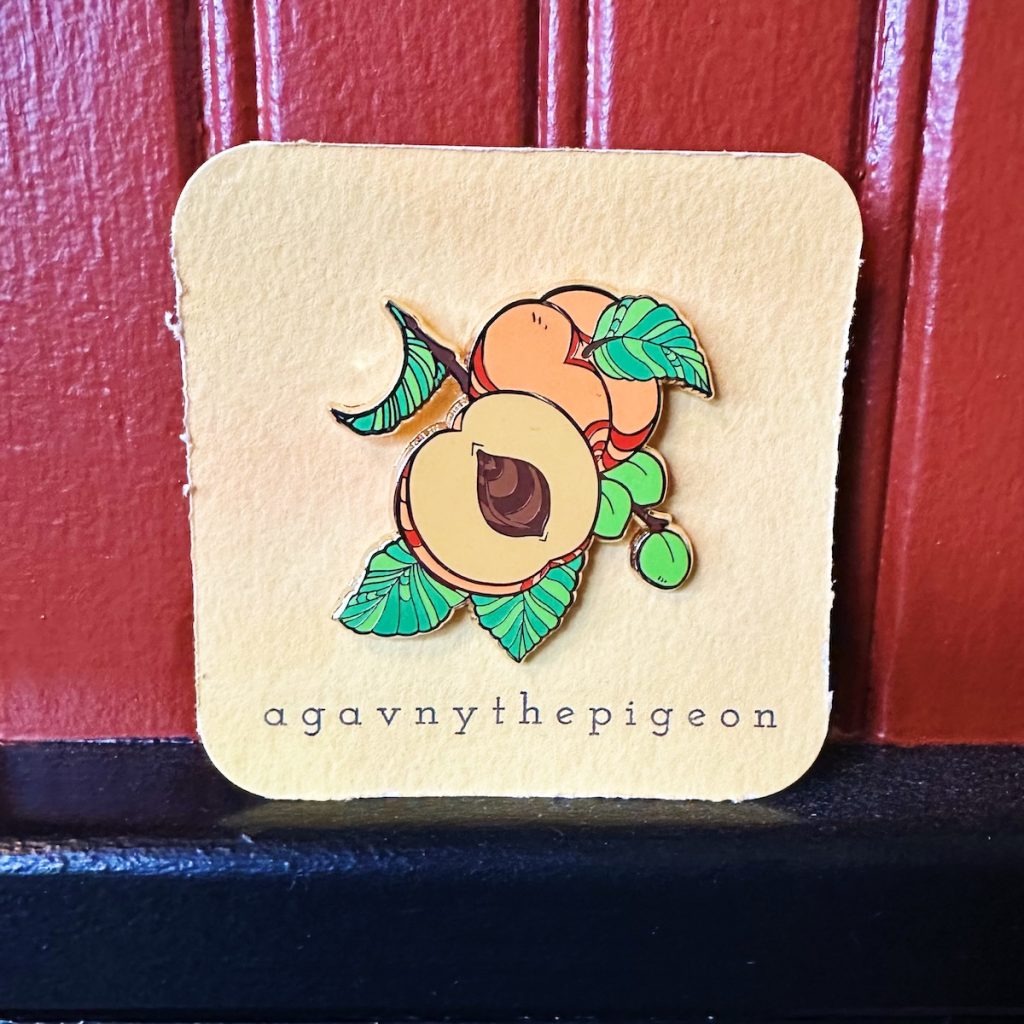
I checked back in on my friend Friday morning, the day of the general strike, to see how she was doing. Her business, like thousands of others, was closed. It was seemingly a “normal” day for her, as normal as it can be living in what is increasingly akin to a war zone. “So far so good. I had a good cry this morning—surprisingly, the first time since this all started. Then I led a very grounding yoga session. And I gave a ride into work to one of our dishwashers,” she told me. As is true of watching the pain and struggle of people in any war zone, being empathic, actively supportive, and really, really far away is a frustrating combination. To show a little support, I told her Zingerman’s was going to send some rugelach—apricot, of course, since it’s the symbol of dignity and democracy—to her team next week to let them know that they’re not alone and that someone somewhere else is thinking of them.
I decided to check in on her once again the following day. I was thinking, optimistically, that things might be a bit more stable. I was totally wrong. In truth, it turned out, they were way worse. “How’s the morning?” I asked. “Not good,” she answered almost immediately, adding, “I just learned that a man was wrestled to the ground by five agents, kicked in the head, and shot and killed by agents. It’s one block from my business partner’s house. She’s out there now getting tear gassed.”
My friend is, of course, a really fine person and a longtime independent business owner who works long hours and whose business employs hundreds of people. She loves to learn, has been to ZingTrain a couple dozen times, and cares deeply about the world. When I read her note on Friday morning about crying, doing yoga, and picking up the dishwasher, I smiled at her resilience and her self-management skills. A certain sense of self-awareness lets a leader do yoga before taking the risk of driving a long way to pick up a dishwasher who’s afraid to come to work on public transport. It’s inspiring.
When I read her note on Saturday, I cried. I did not do yoga. Nor did I think about Gettysburg. Instead, I went to work. After getting myself recentered, I sat down to do what I so often do when I’m at an emotional and intellectual loss. I started writing, working hard, fingers moving fast and mental wheels turning almost as quickly, to figure out what the heck we can all do when this is the state of the country in which we are all caringly but confusedly living. What she was describing is the horrible, arbitrary sort of taking that I studied when I was in school. I’ve been reading about Russian history regularly since I was something like 17 years old. The autocratic story there has stayed very much the same over many centuries: Police pummeling protestors, authorities arresting people who were in the wrong place at the wrong time, increasingly extreme violence committed against innocent individuals. It has happened in Moscow and St. Petersburg tens of thousands of times in the course of many centuries of autocratic rule. Now it’s happening in Minneapolis and St. Paul.
In Bread of Angels, poet, performance artist, author, and punk rock pioneer Patti Smith writes, “At times I mourn the worlds I knew.” Exactly halfway into the book, she adds, “Eventually we must act.” Her words resonate. Gettysburg moments in Minneapolis. Bread of Angels. Apricot Rugelach. Writing. Trying hard to figure out the right thing to do in very difficult times. Wendell Berry wrote that “Farms, families and communities are forms of art just as are poems, paintings and symphonies.” So, too, are businesses and, I now see, democracies. Imperfect forms of organizational art.
The kind of “acting” Patti Smith is talking about is really about making. Making music, making love, making poetry, making records. It’s about making paintings, making organizations, and making democracies. Maybe she’s right, and it’s time for me, and for you, to mourn the world we once knew and then to get down to work making what we want in its place. I love Vic Chesnutt’s song, but Dodge is where we live. “Getting the fuck out” may sound fine, but me, I’m not going anywhere. Rather than departing, it’s time to double down on democracy. At our organizations, we may need to start small and in the metaphorical cellar. We can begin, in our everyday interactions, to make democracy the way Project Threadways teaches people to make a dress. One small stitch at a time, one small action at a time.
This past Thursday, the amazing Minneapolis artist Ifrah Mansour published a great essay in Hyperallergic entitled “On Being a Somali Artist in Minnesota.” I love Mansour’s artwork. And I’m fully aligned with what she wrote:
Violence has a way of turning familiar places into guarded ground. And yet, I ask not what has been taken, but what we will continue to build from what remains. … My work draws on the tools of the past to heal the present and to design the future. It is rooted in radical imagination; in abundance, in kindness, and in collective care.
What Ifrah Mansour is making clear is the positive power of making. I’m with her. More making, less taking. More radically cool imagination, more abundance, more kindness, more collective care. More work that helps create democratic constructs. In her Instagram post about the article, Mansour said something I also believe to be true about the magic of the moment and the positive future I choose to believe in and work for every day:
When tomorrow comes, kindness will too.
Having spent most of my adult life studying autocracy and advocating its more democratic and anarchistic opposites, it is clear to me what is happening. It’s not good, I am all too aware. The more that autocratic actions appear in the headlines, the higher my anxiety goes. Others this weekend affirmed my anxious assessment. The writer M. Gessen, who was raised in Russia, said it’s time to call it what it is: “There is a logic, and this logic has a name. It’s called state terror.” Conservative attorney George Conway said it’s “about destroying any sense of that safety.” Jonathan Rauch, longtime writer for the Atlantic and senior fellow for governance at the Brookings Institution, said this last Sunday: “Yes, it’s Fascism. Until recently, I thought it a term best avoided. But now, the resemblances are too many and too strong to deny.”
All of that authoritarian activity is, at its core, about taking.
Here in the ZCoB, by contrast, we want to be making. We can, though, stop for a few seconds to take stock. For me, our national situation stopped being about politics a while ago. As I write in the “Why Democracy Matters” pamphlet, democracy is about people, it’s about dignity, it’s about positive beliefs. It’s about kindness, collaboration, and creativity. If fascism is what we’re dealing with, then, to Timothy Snyder’s point, it’s better to own the reality and do what we can. Denial won’t be any more helpful than pretending that the giant storm that blew through Ann Arbor (and a bunch of other communities) this past weekend didn’t happen.
Nobody I know welcomes storms, but we do know how to deal with them. Unlike winter snowstorms, which nearly everyone in our part of the world has worked through many times, this is a first encounter with fascism for many of us. For most people in the U.S., it’s wholly unfamiliar. And yet, here we are. When we go to work next Monday morning, fascism will still pretty surely be the word of the day out of Washington. Which means that you and I, if we choose, can build democracy back better in the basement or maybe the back room. Not next fall, not in four years. I’m talking about today, tomorrow, and the next day. No need to wait for big names or big plans. As Augustus Pablo, the revolutionary Jamaican reggae artist, said in an interview with Ian McCann in the January 1988 issue of Echoes, “We do it a small way first and try it out. That’s the way I want to go still, go a small way and then come big, that’s the way we a fe do it.”
What’s a good way to get going in an organization? Start doing Appreciations. Open your meetings to more people. Change to Open Book Management. Come together to think through your organizational governance. Consider more inclusive methods of decision-making. Teach the six elements of dignity to everyone in your organization. Better still, make them a job expectation. There are dozens of other down-to-earth ways to start doing this work. None are perfect, but all make a difference. I’m happy to make time to trade thoughts—drop me an email any time. We can work together to make the most of a very difficult time.
In the postscript of the new “Why Democracy Matters” pamphlet, I shared my belated glimpse of the obvious, the realization that the commitment to making that Project Threadways states so passionately in its recent Manifesto is completely akin to what it would mean for each of us to make democracy. What it means to believe in the power of making, not just with cloth but with companies and countries. As you’ll see in the pamphlet, every belief that’s stated with such beauty and passion in their document can easily be adapted to the making of democracy. Which is why I wanted to add it to the pamphlet—to show that the same craft, care, and diligence it takes to handsew a beautiful garment is the same craft, care, and diligence it takes to make democracy.
It’s hard to say how I might have responded to something like our current national situation many years ago. The notion that autocracy could be a real life possibility in the U.S. seemed like the sort of science fiction my friend in Minneapolis is not inclined to read. The studying, reflection, and writing that I’ve been doing on democracy over the last few years has shifted my frame. It’s a shift from the feeling of “Man, we got sold a lemon by that guy we bought this from. It totally sucks, and someone needs to fix it for me” to the feeling that I have here in the ZCoB when we fall short. First, I get down about it. I feel terrible. Sometimes I’m frustrated that it went the way it went. Then, fairly quickly, I take a deep breath and get to work on fixing whatever we messed up. I acknowledge the error. Apologize. And start working, to the best of my imperfect ability, to make things right.
Journalist Jackie Hernandez nicely summed up this difference between buying a readymade product and instead making one’s own in a Remodelaholic article entitled “What to Do When You Make Something and Don’t Like It”:
When you buy decor and don’t like it when you get it home, you always have the option to return it. … With do-it-yourself projects, it doesn’t work that way.
…
DIY projects are usually more involved than we think they will be. If you enjoy problem-solving, creative-thinking, don’t mind doing some re-work, and can handle occasional project failures, then DIY projects are a good fit for you.
…
Through a failure you’ll probably come up with a whole list of ways you could make the project or end result better. Even if you never want to do this particular type of project again, this is still a good question to answer.
I actually do want to do this particular type of democratic project again, which means that it’s time to get down to it. Someone needs to. No blaming, no finger-pointing, no “I was off that day” or “I told them to be careful, but they weren’t.” It’s more like, “Damn, I’m sorry. Let’s make this all right.” We have work to do. As Augustus Pablo once said, “You have to have someone holding the vibes.”
Anyone in business, whether it’s my friend in Minneapolis or your mother in Phoenix, will almost certainly have experienced failure a few times, or possibly a few thousand. We’ve been failing with great frequency here since we opened the Deli’s doors for the first time on March 15, 1982. Most of us know all too well how to get up, dust off our metaphorical behinds, and get right back at it. You start working harder to make it better. You don’t blame. You take a deep breath, get grounded, and get down to business. Every small act of dignity and democratically inclined improvement we make in our workplaces will make a difference. A thousand small truths accumulate one tiny truth at a time.
Which is how I feel right now about the current state of the country. It is not going the way I would have suggested had anyone sat me down to ask. But, like it or not, someone has to get going. Like Augustus Pablo said about the music of Jamaica almost 40 years ago:
There’s been a lot of breakdown in the music over the past few years, the music has been broken down a lot because you don’t have no-one guiding no-one, it’s just like left alone and dismantled. Someone [has] to bring it back, someone has to try. Everybody waiting on the next man to make his move, and nobody’s making any move.
We can begin the work. As Augustus Pablo posited, “We have to set a foundation first, if we don’t set a foundation … how can we help anyone?”
A little over a year ago, on November 9, 2024, Timothy Snyder wrote this about the end of the separation that the Berlin Wall symbolized:
Thirty-five years ago today, the Berlin Wall did not fall.
Thirty-five years ago today, some people made history, amidst other people making history, thanks to some prior cooperation, and some good thinking about what freedom means.
We cannot change the world all at once. But we can change the way we think. We can clear away the clichés and make ourselves more lively. We can work together and then, when other things are in motion, be ready to turn the change in the right direction.
Tomorrow morning, autocracy or not, we all need to get up, Gettysburg in the back of our minds, and get to work. What we decide to make of the situation at hand, as Wendell Berry writes, is up to us. I’m with Natalie Chanin, who says:
I’ve come to believe that craft, making, and creative endeavors toward producing sustainable products will create an enduring future for our community.
Here in the ZCoB, we remind each other—good days, bad days, days filled with winter storms or wonderfully sunny summer Sundays—“You really can make a difference!” We have always put the emphasis on “can.” We have more influence to make an impact than most of us have historically been led to imagine. You really can make a difference. I, too, believe in the power of making. Let’s get to work.
Create hope during hard times
P.S. Two months from now, on March 25 and 26, I will be co-teaching with my good friend Gareth Higgins! Gareth is an Irish author who wrote the amazing How Not to Be Afraid and co-wrote The Seventh Story with Brian McLaren. This will be the third straight year we’re doing this special two-day ZingTrain seminar, “Reframing Your Leadership Stories and Beliefs.” It is an uncommon opportunity to learn from Gareth’s great work on the power of storytelling in our lives and blend it with deep work on beliefs, the kind I detailed extensively in The Power of Beliefs in Business. Both Gareth and I speak and teach regularly around the world, but this is the only time we do it together. Telling better stories is a powerful way to support the start of what you want to make in your organization.