Why the Organization-Wide Practice of Dignity IS Democracy
Inuit insight, magic words, and bringing democracy to life every day
Greenland has certainly been in the news a lot recently. While power politics can make for catchy headlines, the component of Greenland’s culture and history that draws my attention on a deeper level is its Native population, which makes up about 90 percent of the people who live there. Rather than talking about invading, we might instead find ourselves inspired by the cultural teachings of the Indigenous people who call Greenland home. I find myself thinking back to that Josef Albers poem “More or Less”:
To distribute material possessions
is to divide them
to distribute spiritual possessions
is to multiply them
The Inuit are an ancient culture, whose ancestors likely came from eastern Siberia, moved across what’s now Canada, and, over generations, made their way east to Greenland—where today roughly 95 percent of the population of 60,000 or so is Inuit.
One of the figures from Greenland Inuit history who fascinates me most is the explorer and cultural anthropologist Knud Rasmussen. Born in Jakobshavn (now Ilulissat) to a Danish missionary father and an Inuit–Danish mother, Rasmussen grew up speaking Greenlandic and immersed in Inuit culture—an upbringing that would profoundly shape his life’s work.
In 1902, at the age of 23, Rasmussen set out on his first expedition to study Inuit culture in Greenland (the same year, it happens, that Rocco and Katherine Disderide built what, eight decades later, would become the Deli’s building). Rasmussen has been hailed by 20th-century anthropologists as “The Father of Eskimology.” Over the course of his life, he donated over 15,000 artifacts to the Danish National Museum in Copenhagen to support a better understanding of Inuit culture.
In 1908, Rasmussen wrote what’s considered the classic anthropological work on the Inuit, entitled The People of the Polar North. It’s a combination of learnings from his extensive time spent living with various Inuit communities, detailed accounts of his travels, and serious scholarly study. When Rasmussen died of pneumonia at the age of 54 in December 1933, The New York Times published an obituary the following day, calling his book “a treasury of folklore.” Author and photographer Dave Hamilton writes of Rasmussen,
He remains a much-loved character within the Inuit communities of Greenland and Canada. In Denmark he is also a national hero—but outside of these far northern countries he is virtually unknown.
…
Rasmussen was acutely aware of how easily Inuit culture could be polluted and diluted by Western influence. He had the foresight to understand that if it wasn’t documented, it could be lost forever. … He collected folk tales in a way that other explorers might butterflies or beetles.
Much to my happy surprise, Rasmussen mentions dignity often in his writing—not as a subject in itself, but woven throughout his vivid descriptions of Inuit life. From him, I learned that the daily practice of dignity in Inuit culture reaches farther than what I’ve seen or read about in most other cultures—and certainly much deeper than what we experience here in our own country.
Lisa Koperqualuk is a Canadian Inuit anthropologist who hails from the far northern province of Nunavut. She specializes in the study of Inuit spirituality and traditional life, since, as she says, “For Inuit, our past is our pathway to the future.” In 2018, Koperqualuk delivered a talk titled “Some Reflections on What Human Dignity Means to Us Inuit,” in which she shared how deeply Inuit culture values dignity. Dignity wasn’t a subject she studied in her formal schooling. Rather, it was part of her childhood. She reflected,
I think when I think of dignity it relates first to the way I was brought up. My grandfather … always showed respect for me. So the word I would use is “sususiak”—to have respect for one another. … So I was raised by my grandparents. I learned of the respect they showed to others. I learned not only through their words but by their actions. And so most Inuit are raised to have respect for others and in doing so they have respect for themselves—and therefore all that is around them. This was taught as being part of Inuit law. The way one should conduct themselves as Inuit.
By the time Koperqualuk was an adult, her grandfather’s influence and the impact of growing up in and studying Inuit culture had made dignity second nature for her. She explains in the talk that dignity is the underlying principle behind the Inuit people’s respect for themselves, for all human beings, and for “the need to protect our environment and how it relates to dignity.” It also underlies, she says, the founding of what Koperqualuk calls “a cooperative jewel,” La Fédération des Coopératives du Nouveau-Québec, back in 1959.
Coming back to Knud Rasmussen and his extensive studies of Inuit people in Greenland, he later traveled westward with a team of fellow explorers to Canada. Rasmussen’s purpose was to learn about the history and culture of every Inuit group he encountered there. He spent significant time with each community, most especially the Netsilik Inuit in what is now the Canadian province of Nunavut. Rasmussen lived with the Netsilik for over half a year, during which time he gained the community’s trust. Gradually, many began to share their personal stories, dreams, and sacred traditions.
In his 1931 book, The Netsilik Eskimos: Social Life and Spiritual Culture, Rasmussen recounts the many tales he was told during his travels among Inuit communities:
All that is described in them did really happen once, when everything in the world was different to what it is now. Thus these tales are both their real history and the source of all their religious ideas.
As Rasmussen later shares in Report of the Fifth Thule Expedition 1921-24, The Danish Expedition to Arctic North America in Charge, Volume 2: The Intellectual Culture of the Iglulik Eskimos, one of the stories he heard in his time in Canada came from an elderly Netslik Inuit woman named Nalungiaq. She taught him that,
Of all sources of power, magic words are the most difficult to get hold of. But they are also the strongest of all, for it was a word—a magic word—which in the olden days, when mankind lived in the dark, gave them light; and it was by means of a magic word that death was brought into life at the time when human beings were beginning to overcrowd the earth.
While magic—in a word or otherwise—is well accepted in traditional Inuit and other Native cultures, it has over time been made anathema in most of the Western world. In a story that very few Americans (me included) are aware of, Indigenous American historian and author John Mohawk explains how that came to happen over the centuries:
As the church grew in political importance, it began a “campaign against magic” during the three hundred years starting about 1450. Individuals who had a spiritual relationship with plants or animals were considered to be practicing magic. In the 1600s it was believed that these people had renounced Christ and were in league with the devil, who promised them the powers over nature in return, and they then used these powers against their enemies. The war on witches and magic was a psychological war on nature.
By contrast, Inuit culture treats nature with the same dignity as people are taught to treat each other, and magic is simply part of the traditional beliefs and practices. I’m beginning to believe ever more strongly that we might be wise to adopt a similar approach here, and to reverse the centuries-old work to eliminate the idea of magic from our lives. In the context of what I wrote on the subject a few weeks ago about making magic happen, I’ve begun to realize that magic matters far more than I ever imagined—not just to professional magicians like my friend Acar Altinsel of Penguin Magic, for whom magic is a way to make a living, but to all of us who want to tune in more closely to the world around us. In fact, as I wrote last month, I believe that magical things tend to happen in the lives of those who are deeply mindful of them.
With all that in mind, thinking about what Inuit Elder Nalungiaq told Rasmussen a hundred years ago, what I want to share here is my growing belief:
Dignity is a magic word.
It’s so magical, in fact, that I’ve come to believe that it’s the practice of dignity in cultures, companies, and countries that makes a democratic construct come alive. Its impact is, in essence, magical. When dignity is the expected cultural norm—as it seems to be among the Inuit—all kinds of wonderful outcomes, things that would almost never happen in settings where dignity is not the norm, begin to unfold.
Around the Zingerman’s Community of Businesses (ZCoB), both dignity and democratic constructs are expected and acted on every day. Dignity and democracy are only rarely discussed in tandem by leaders in Washington, D.C. Same goes for even the most progressive news outlets. Nevertheless, the connection between the two is becoming increasingly clear to me. Living and working in companies and communities where dignity is deeply embedded in the culture provides the framework we need to make democracy a daily reality.
In an essay published about a decade ago in Boston Review, Nick Bromell—Professor of English at Amherst College and author of The Time Is Always Now: Black Thought and the Transformation of U.S. Democracy—writes about the troubled state of democracy in the United States. In the essay, titled “Beyond Freedom and Equality: The Democratic Value of Dignity,” Bromell reflects on the increasingly fragile condition of democracy here and in a number of other countries around the world in recent years, writing,
Dozens of books and hundreds of articles have proposed solutions. … The one I propose here is that we accord more importance to human dignity.
I only came across Bromell’s insightful piece a few months ago as we were working to finish the new pamphlet “Why Democracy Matters: A Deep Understanding of Democracy in Our Everyday Lives.” I wish I’d seen it sooner, and that more people had paid attention to it when it came out. Bromell’s insight is similar to what I arrived at in my work on the new pamphlet.
The connection between dignity and democracy has not, as best I can tell, been widely expressed in recent years. As Bromell writes,
Political theorists have written at length about the meanings of equality and freedom, but work on the relation between dignity and democracy is scant.
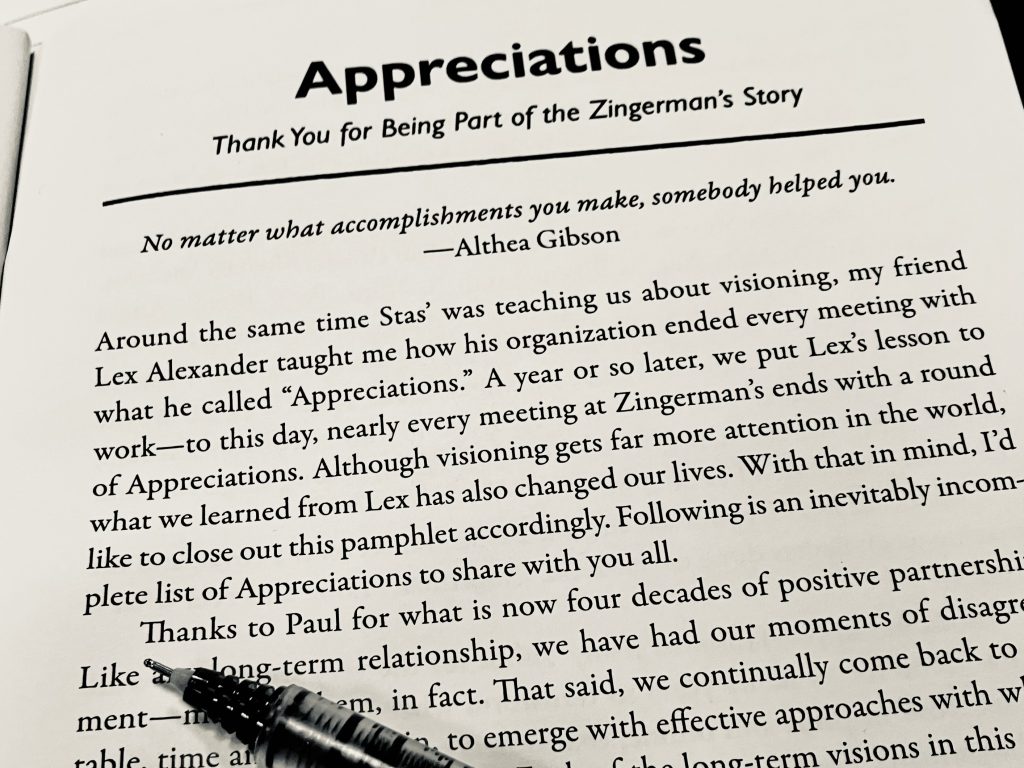
Putting together what I learned in my previous pamphlet, “A Revolution of Dignity in the Twenty-First Century Workplace,” with my writing, learning, and deep reflection on democracy over the past 18 months, I came to a conclusion that, in a sense, builds on Bromell’s great work. The epilogue of my soon-to-be-released pamphlet is titled “What Is to Be Done? A Framework for Dignity and Democracy in Action.” In it, I share what I have come to believe more strongly every day. As I wrote above, dignity is not only, as Bromell argues, profoundly important. Dignity, effectively practiced, IS democracy.
To be clear, I’m not talking about dignity as some sort of inspiring but loose philosophical concept. My conclusion here is based on the application of the six elements of dignity that I arrived at a few years ago. What I came to believe, in writing the new pamphlet, is that the daily practice of dignity is basically what one needs to do to create a democratic organization. Yes, of course, voting can matter, but it does not a democracy make. As I remind people regularly, they vote in Russia too. It’s dignity that makes democracy work.
With all that in mind, it’s also now my strongly held belief that where people lead lives with effective democratic engagement, the odds are very high that their countries and companies will work in democratic ways as well. It’s about you and me—and everyone we know—actively implementing the six elements of dignity. The way we implement it, I know, will never be perfect. But when done well, all day, every day, by essentially everyone in the organization, democracy is effectively created at the same time.
The early 20th-century business thinker Mary Parker Follet—believed by many to be way ahead of her time—understood this a hundred years ago. She concluded in her 1918 book The New State: Group Organization, the Solution of Popular Government,
Democracy transcends time and space, it can never be understood except as a spiritual force. Majority rule rests on numbers; democracy rests on the well-grounded assumption that society is neither a collection of units nor an organism but a network of human relations.
The core of those relations will be at its democratic best then when those relations are based, all day, on dignity.
For clarity, then, here are the six elements of dignity I developed a couple years back:
- Honor the essential humanity of everyone we work with.
- Be authentic in all our interactions (without acting out).
- Make sure everyone has a meaningful say.
- Begin every interaction with positive beliefs.
- Commit to helping everyone get to greatness.
- Create an effective application of equity.
In that sense, dignity is what I’ve described both in a piece I penned about dignity at the tail end of this past summer, and also now in the new pamphlet, a framework.
As Ann Arbor poet, author, and arts leader Aaron Dworkin says, “A well-constructed framework encourages freedom; it doesn’t constrain it.” To make a democracy a reality, I am now adamant, dignity is what we need to do, not just peripherally, but in daily practice. We need to use the six elements of dignity extensively and effectively as a framework so that
- Every system in the organization is designed to actualize dignity.
- AND
- Every person in the organization acts with dignity in every direction.
Given the importance of dignity in traditional Inuit culture, it’s no surprise now that historical Inuit governance was designed in ways that effectively call up the practice of dignity I’ve detailed here and in the new pamphlet. As the website Digital Indigenous Literacies explains in the article “Inuit Governance Practices”:
It values evidence, experimentation, curiosity, objectivity, repeatability, knowledge mobilization, and peer-review. It is built on respect and care for others and the environment, fostering good spirit by being inclusive and welcoming, being innovative and resourceful, and working together. It is respected by Inuit as Western science is by scientists.
You already know from what I’ve written here that I’ve been working with the six elements I developed to help make dignity a daily reality. The Inuit have a framework of their own. According to Digital Indigenous Literacies, its culture is based on eight Guiding Principles:
- Pijitsirniq: the concept of serving
- Aajiiqatigiingniq/Aajiiqatigiinniq: the concept of consensus decision-making
- Pilimmaksarniq/Pijariuqsarniq: the concept of skills and knowledge acquisition
- Ikajuqtigiinniq/Piliriqatigiinniq: the concept of collaborative relationships or working together for a common purpose
- Avatittinnik Kamatsiarniq: the concept of environmental stewardship
- Qanuqtuurnniq: the concept of being resourceful to solve problems
- Inuuqatigitsiarniq: the concept of respecting others, relationships, and caring for people
- Tunnganarniq: the concept of fostering good spirit by being open, welcoming and inclusive
Whether it’s in Inuit communities or elsewhere, dignity makes all the difference. And unfortunately, as Bradley Campbell and Jason Manning write in their 2015 article, “Honor, Dignity, and Victimhood: A Tour Through Three Centuries of American Political Culture,” cultures in which dignity is not a key ingredient slowly decompensate. By contrast, cultures like the Inuit’s, ours, and perhaps yours as well—where dignity is expected of one another and widely practiced—are far, far healthier. As they write,
Dignity exists independently of what others think. … We believe that truly sustainable and respectful change begins with an internal commitment. Dignity cannot only be something we promise to participants; it must shape the very culture of our organizations.
In other words, dignity isn’t just another nice image to post on social media; it’s something we have to live into every day. It’s certainly what we’re trying to do here in the ZCoB. It’s also, as I wrote, what the Inuit have done for centuries. I believe that all truly sustainable organizations have woven dignity into their culture and values. In an article published last November, entitled “Building Cultures of Dignity,” S. Dilshad and Tom Wein reinforce its importance, writing,
Dignity must be woven into the fabric of your organization’s processes and pathways. This means embedding it in project or program design, ethical review, HR policies, and team communication. It requires moving from a mindset of a separate lens for projects to one of foundational integration. … we analysed the flows of how our work and culture is approved and shaped, and sought out the “choke points” when important and lasting decisions are made, such as at our approval process for new projects, ethics review, and project kickoff materials, to ensure dignity is upheld.
Hannah Paniyavluk Loon, an Instructor of Inupiaq language at the University of Alaska, offers a lovely example of how dignity culture plays out in Inuit communities, and what the impact of this “magic word” would be in everyday life. Loon doesn’t directly say the word “dignity,” but dignity is implicit in the lovely things she says about her native culture:
Our knowledge tells us to always be mindful of our environment and the resources around us. It is up to each family member to always take care of the harvest cleanly and to give away the first season’s catch, such as beluga or bearded seal. It is always common to give Elders and those with lots of children fish, meat and plants. It is our belief that giving is a practice we share throughout. Not only do we give resources, but also western food when people run out of food or funeral expenses. It doesn’t matter who we are, we should always partake to donate finances and food to the bereaved family.
I imagine a company—and a country—where the view Dr. Loon describes isn’t just that of a few caring individuals, but the everyday, lived practice of most of the people within it.
How can we get there today? In an essay published in the summer of 1968, entitled “The Black Flag of Anarchy,” anarchist, educator, author, poet, and professor Paul Goodman writes,
We learn by doing, and the only way to educate cooperative citizens is to give power to people as they are. Except in unusual circumstances, there is not much need for dictators, deans, police, prearranged curricula, imposed schedules, conscription, coercive laws. Free people easily agree among themselves on plausible working rules.
When dignity is already deeply embedded in culture, Goodman writes, we actively “educate cooperative citizens.” The dearth of this approach in the U.S. here in the 21st century is making it difficult, I believe, for people to understand the concept and how to abstract their way forward. All of which reinforces for me why democracy only happens when people practice dignity. Dignity done well across all elements of a culture, actually IS democracy in action. The work, as I write repeatedly in the new pamphlet, is about how you and I live our lives. In one of my favorite philosophical framings of recent years, Wendell Berry said of our country’s situation, “The leaders will have to be led.”
It’s time, then, here at the start of 2026, to dig into dignity, to make its existential magic come alive in the way we treat everyone else we interact with, in the way we run our organizations, and last on the list, the way we run our countries.
To close here, I’m going to go back to one of the people who has inspired my own work, someone who fought for human dignity over a hundred years ago: Emma Goldman, who, at around the same time Knud Rasmussen was studying Inuit tribes in the early 20th century, wisely observed that,
The ultimate end of all revolutionary social change is to establish the sanctity of human life, the dignity of man, the right of every human being to liberty and well-being.
Magic words, it turns out, make for magical worlds. I’m ready to get going. Want to join me?
Dignity IS Democracy
P.S. Live in the area? I’ll be doing a book talk on the new pamphlet at Darius Smith’s newly opened Ohana Lounge in Ypsilanti. The conversation will start a bit after 6pm on Thursday, March 5! We’ll have copies of the new pamphlet and other Zingerman’s Press books for sale and signing.