Holistic Humanism—and a Happy Anniversary to all!
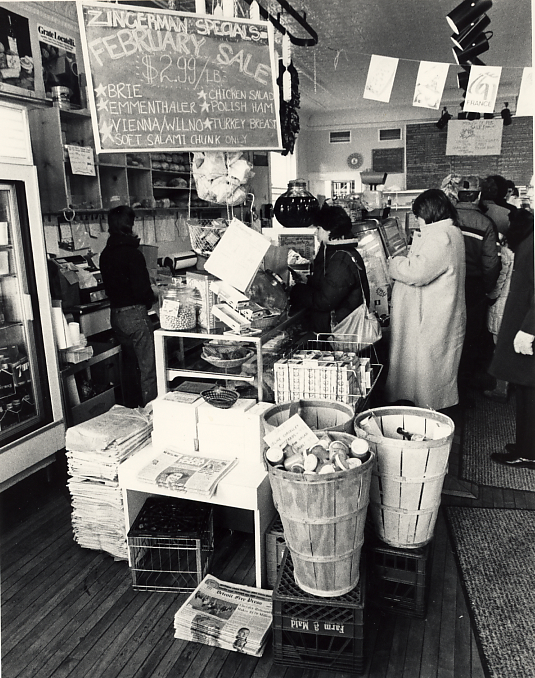
Honoring 44 years of Zingerman’s (and a bit of anarchism in action)
In her introduction to this week’s thought-provoking and highly recommended episode of On Being, Krista Tippett comments on the current state of our world:
Terrible ruptures and escalating violence are part of the truth of what we see ourselves capable. But they are not the whole truth, not the inevitable future. Courageous experiments in healing and transformation are also a reality of our time.
I hope that we in the Zingerman’s Community of Businesses (ZCoB) are effectively, if ever imperfectly, one of those courageous experiments.
Back when we opened the Deli in 1982, I could never have imagined that we would one day be working within the kind of national ecosystem we’re experiencing now. As I’ve shared at length in the new pamphlet, that reality has shifted my understanding of what democracy means—both to us as an organization and to those around us.
Today, my beliefs are very different from what they were even five or six years ago—about why democracy matters, what it looks like to practice it every day (not just every few years in a voting booth), and even about what we have already been doing for decades here in the ZCoB.
The focus of democracy, as I settled into my newly formed Deep Understanding, is not on politics, but rather on people: imperfect human beings like you and me working, however haltingly, to figure out how to live and work together with dignity and at least some modicum of effectiveness and meaningful collaboration. The work of bringing democracy to life doesn’t really begin in Washington. It begins much closer to home—in our workplaces and in our daily interactions with one another. Which means it’s up to ordinary folks like you and me to carry out the kind of caring experiments Krista Tippett is talking about.
A few weeks back, historian Ruth Ben-Ghiat, a specialist in both Italian history and autocracy, wrote,
Resistance rises when the toll of organized lying and negligent and malevolent governance becomes difficult to ignore. All of this is now unfolding … It is our turn to mobilize peacefully in the face of abuses of power.
In a way, her words are hard for me to hear, but I believe Ben-Ghiat’s got it right. Like it or not, it’s time to lean in and get going.
The encouraging part of that challenging framing is that “resistance,” in many ways, simply means doing our existing collective work especially well—staying true to our values and vision, and honoring our humanity in ways that are holistic and, ultimately, uplifting. As theologian Richard Rohr writes, “The best criticism of the bad is the practice of the better.”
In the fall of 1968, Erich Fromm—the German-Jewish psychologist who escaped his homeland for the U.S. shortly before the Nazis consolidated power in the 1930s—published his 22nd book, The Revolution of Hope. In it, he explores how the 20th century’s drift toward dehumanization—and the loss of hope that accompanies it—might be reversed, envisioning instead a future in which people are valued for who they are and can work together in collaborative, creative ways that benefit everyone involved. Fromm’s is a very hope-evoking image. In his conclusion, he writes about the sort of inspiring futures that free-thinking organizations can make real:
The need of the individual to work actively together with others, to talk, plan, and act together, to do something which is meaningful beyond money-making activities of everyday life. To relate in a less alienated fashion than is customary in most relations to others, to make sacrifices, to put into practice norms and values in everyday life, to be open and “vulnerable,” to be imaginative, to rely on one’s own judgment and decision, the formation of a new type of social group is necessary.
People in these imagined organizations of the future, Fromm adds,
… would attempt to achieve personal change. Becoming vulnerable, active, they would practice contemplation, meditation, the art of being quiet, undriven and ungreedy.
What Fromm is describing is essentially what we attempt to do here in the ZCoB every day. Given that you’re reading this, it’s likely that you’re working toward this as well. That correlation is not a coincidence. In the topsy-turvy world in which we’re all working right now, it is my belief that small businesses and similarly sized not-for-profits are the sorts of places best suited to making Fromm’s forecast a positive reality.
In difficult times like these, values-driven, democratically inclined organizations of any size can serve as modern versions of what early 20th-century German pacifist anarchist Gustav Landauer—one of Erich Fromm’s philosophical predecessors—urged people to create. Rather than getting swept up in the mainstream, Landauer called on communities to build “the institutions necessary for a true community and a true society of human beings.” As Landauer explained, calling up images of commerce as a catalyst for what was possible,
The following has always been true, is true now and will always be true: people live together in communities; people exchange goods and services over long distances; people are differentiated by language, custom, desire, and need; people believe that everyone looks out for his individual interest; however, some people stand up, make a change, and point the direction for the spirit and the courage of others. This is the reality that will always remain.
We have been working, always awkwardly and imperfectly, over the course of many years toward this spirit and courage. The shortfalls and struggles, I need to remind myself regularly, are part of the work. As the poet Robert Bly writes in one of my favorite books, A Little Book on the Human Shadow, “The imperfect is our paradise. … in this bitterness, delight.”
This past Sunday was our 44th anniversary here at Zingerman’s! Enormous thanks to everyone reading this and to the many thousands of others who have supported us, encouraged us, and stayed patient with us over the years. Reaching this milestone is statistically unlikely—and deeply meaningful. Like most things that matter, it’s the result of a collective effort. A thousand thanks, in every language we can imagine.
In the language of poet, writer, and musician Joy Harjo’s people, the Muscogee Nation, the word for “thank you” is mvto. That idea of gratitude as something both spoken and carried forward connects to something else Harjo has reflected on often: the power of story. In an interview from last fall titled “The Power of Poetry,” conducted by THE THREAD Documentary Series, she shared a range of insights about how humans make meaning. Reflecting on people across the world, Harjo said simply, “We are storytellers.” Storytelling, she suggests, is how we remember who we are and how we stay connected to one another. She recalled visiting cousins and listening to stories that stretched back into history—stories that helped people remember where they came from, invited them to think, and nurtured curiosity and a deep sense of belonging. When asked what kind of story she would most want to leave her students with, Harjo said,
I would want to give them a story in which they would see themselves as included. That would plant something in them that says, you are a human being… You are made of contradictions, you are made of beauty, you were made by a Creator who loved you. And I would want to plant opportunity in them. I would want them to see that no matter what is going on in the world or if things are being bombed … if they were refugees or having a hard time or even coming from the best families, I would want them to see that they were given gifts that are valuable and that when you have these gifts it’s important to take care of them even as it’s important to share them—that that’s essentially what we all came in to do. And there’s a lot of stories to get there.
This is also a good part of what I would want people to take away from the now 44-year-long Zingerman’s story. What Harjo has described fits well with our approach over all these years. We understand far better how to do it in 2026 than we did in 1982, but the spirit and intent remain the same: sharing stories—of food, people, and place—woven meaningfully with history so customers, coworkers, and communities feel far more connected to what they’re eating. That history, as Harjo says, provides context that can carry the experience to another level. In one form or another, we’ve been telling those stories since the middle of March 1982.
On March 25 and 26, I will be co-teaching with Gareth Higgins: “Reframing Our Leadership Stories and Beliefs.” The stories we tell shape our lives. Over our two days together, we will explore the beliefs and stories—first informally, and then, over the years, more formally—that underlie what we have made happen. These beliefs and stories are integral to what we have done and to what we continue to do today. Two of the many things that I have learned from Gareth over the years:
- The story we tell about our lives—individually or collectively—is the single most important factor in determining our happiness.
- A wonderfully effective framework for filtering any story we’re going to tell is to ask ourselves: a) Is it true—or at least the truest version we can tell in the given situation? And b) Is it helpful?
All of what follows—and really, all that I write—I try to run through those frames.
As I reflect on our story on the occasion of our 44th anniversary, it is increasingly clear to me that its importance goes far beyond food. In the context of all we’ve contributed and accomplished over the years, I see now that, in a way, it’s less about cakes (though we do make some amazing ones!) and more about collaboration and kindness. And it’s as much about dignity and democracy in imperfect action as it is about amazing deli sandwiches.
Over the years, I’ve noticed that just the act of sharing our “life story”—as truthfully and helpfully as we can—has a significant impact on people. In the context of Joy Harjo’s thoughts on storytelling, I’m struck by how even the story on its own can carry a message many people appear hungry to hear: that you really can do business differently. Because the story of Zingerman’s differs from nearly all of the high-drama, headline-grabbing tales most often told in the business world of the 21st century, it seems to open space for people to imagine other, more holistic, more personal, more hopeful possibilities.
I have both reflected and written in recent years about my realization that, back in the early ’80s, we were unknowingly and unwittingly a small part of a much larger revolution in the American food world. When I look at what people were eating then and what they’re eating now, it’s hard to deny the significance of that shift. Looking around today, at the start of the second quarter of the 21st century, I’m arriving at a comparable conclusion about the way we work: knowingly or not, we are part of a similarly positive revolution in the workplace. You may not notice it, I know, in the news, but it is happening. And it is significant.
In a sense, what’s happening is a manifestation of the revolution of hope that Erich Fromm was elucidating nearly 80 years ago. It’s also, I see, part of the revolution of dignity I wrote about in the pamphlet of that name. It calls up, too, humility, kindness, empathy, compassion, generosity, love, and much more. The reality is that in the workplace “of the future” Fromm envisioned, all of these elements of the organizational ecosystem can—and in truth, must—stand alongside profit as equally important parts of the organizational conversation. This, I hope, is the story of Zingerman’s that will still be told 44 years from now.
Part of what I think has helped us become who we are over the years—the kind of organization that tries to help people be themselves—is the diverse range of voices and sources that we study, and then work hard to adapt to what we do. This curiosity and search for new insights have been part of our approach since before we even opened. The list of people we’ve learned from is far too long to include here, though many of the names will be familiar. In the last few weeks, I’ve added the Ukrainian human rights activist and pacifist Maksym Butkevych to that list. Butkevych, reflecting on the two difficult years he spent in Russian prison camps, wrote that torture, as he came to understand it through painful experience, “was about the abolition of the capacity for choice. Torture was about the undoing of personhood itself, about turning a person into an object.” While the circumstances he endured are in no way comparable to ordinary working life, his insight about the importance of agency and personhood feels relevant in a different, far less extreme context.
In many large organizations, people can sometimes feel reduced to roles, metrics, or functions rather than recognized as whole human beings (check out Humanocracy by Gary Hamel and Michele Zanini). Writing 120 years ago, anarchist, activist, and author Emma Goldman was very blunt about it: “The worker who once took pride in the thoroughness and quality of his work, has been replaced by brainless, incompetent automatons, who turn out enormous quantities of things, valueless to themselves.” Together, these perspectives illustrate how essential it is for organizations to support dignity, choice, and meaningful participation in work.
The antidote, I want to suggest, is us—workplaces, large and small, that are intentionally organized around human dignity, with democratic practices within, and meaningfully positive engagement with the world around us. Workplaces where work is purposeful, where people care, where quality is a point of pride, not a shallow slogan. In our original unwritten vision in 1982, we knew from the get-go that we wanted to create a great place for people to work. I could say far, far more today about what that means, but from the first days of the Deli we were determined to treat people far better than most workplaces did—and, in many cases, still do.
Our work, clear enough in 1982 and clearer still with each passing year, is to do the opposite of what many people I know have experienced in well-known companies. Rather than shutting people out, we want to hold them up. Or better still, support them as they learn to hold themselves up. The more we honor the humanity of everyone we interact with, the better our work becomes. Yes, the finances need to be sound, but the two are not mutually exclusive: our Mission talks about bringing “great Zingerman’s experiences,” and “showing love and care in every interaction.”
I was reminded of the importance and active role of honoring humanity last Thursday morning at the ZCoB huddle. It really is inspiring to see so much meaningful human connection in action. People spent about a third of the three hours at the huddle talking about Cornman Farms—why the decision to wind down business in the fall was made, what went into it, how we can work collaboratively and supportively together in the coming months, its history, and a long list of special achievements. We heard deeply personal reflections from the two managing partners, Kieron Hales and Tabitha Mason. And a LOT of appreciations shared.
I tell the story of the huddle here because it was an inspiring real-life example of how a large group (about 50 in the room and 30 more online that day) can work together—with dignity in every direction, human to human, caring peer to caring peer—to deal with a difficult issue. No blaming, no shaming, no name-calling or finger-pointing. It was, to my sense, wholly human in the best possible way. That we have an organization that can have this kind of conversation in the open—caringly, honestly, and meaningfully—is, in and of itself, an uncommon and wonderful accomplishment. Psychologist Karla McLaren, who has written a lot about emotion, comments that “when your sadness is flowing and welcome in your life, then everything seems to go more easily.”
As is the case fairly frequently, an outside guest happened to attend that particular ZCoB huddle—a wonderful, hardworking, caring human being who’s been running his family’s manufacturing business here in town for longer than we’ve been in business. Much to his credit, he was curious enough to come across town to learn from what we do. After the huddle, he bought a couple of books from the ZingTrain shop and came over to me to thank me. “You guys really have the secret sauce,” he said with a big smile. “I mean, I know you work really hard for it! But you really do have the secret sauce!”
I thanked him profusely, appreciating that he recognized the work was not accidental and was actually the result of a whole lot of effort by a whole bunch of people. I assured him, though, that the sauce wasn’t secret—we teach it, write about it, and share it pretty darn widely.
Reflecting on it all later, I realized his kind comments brought me back to the subject I wrote about a few weeks ago: the David-Whyte-inspired belief about the “unordinary.” There’s a big difference between extraordinary—where someone does something exceptional that only they or a few others are capable of—and unordinary—where someone does something that essentially anyone could do, but hardly anyone actually does. Zingerman’s, I want to suggest, is wonderfully and inspiringly unordinary. Anyone who puts their mind to it could make something like what we do here happen in their own ecosystem: to be true to their essence, to honor humanity, to make money—but not at the expense of ethics; to include, to share, to support, to welcome; to dig into diversity, dignity, and democracy and make something special out of it in the process.
What makes the special sauce happen? As you likely know by now, I will always say there is no single perfectly reproducible recipe. Rather, woven into the Natural Laws of Business, our Vision, our Mission, our Values, our Statement of Beliefs, human connection is at the heart of what we do. Real people on site answer the phone. Live humans are working the chat. We encourage the people who work here to be true to themselves within the framework of our values and vision; to practice the second element of dignity daily by being authentic (without acting out) and by making space for customers and coworkers to do the same. When it works, you get the “special sauce.” Or maybe, I’ll say with a smile, a simple application of anarchism in action—beautifully blooming flowers. Emma Goldman—who writer Lydia Gans called the “Ultimate Humanist, a woman with a profound love for people and a commitment to make life better on this earth”—described a similarly hard-to-pin-down energy in her 1910 book Anarchism and Other Essays:
It is the harmony of organic growth which produces variety of color and form, the complete whole we admire in the flower. Analogously will the organized activity of free human beings, imbued with the spirit of solidarity, result in the perfection of social harmony, which we call Anarchism.
Or maybe it’s like a visit to a spiritual center in Ethiopia. In the book Ethiopia: The Journey, anarchist author Amastra (part of the inspiring work of Indigenous Resistance) says,
It’s hard for me to put into words the feeling that the land in Ethiopia evokes in me. It has such a distinct, unique feel. Something shimmering, a light feel and at the same time a feeling that one is in a place very profound and multi-layered that you could only just begin to scratch the layers to understand it.
Which sure seems to me like a lovely, poetic, and anarchistic description of “secret sauce.”
In a sense, all of these describe “whole human beings” working together—trying to be themselves, to learn, and to make a positive difference at the same time. It’s about working slowly, over time, to bring together the many diverse components of our personalities. This may sound simple to those who haven’t tried it, but in my experience, it is anything but easy. I’ve worked at it for years and still have much more to do. That same work, it strikes me, holds true for organizations as well. Robert Bly’s wonderfully insightful A Little Book About the Human Shadow helped me understand what was happening to us years ago:
Our culture teaches us from early infancy to split and polarize dark and light, which I call here “mother” and “father.” So some people admire the right-thinking, well-lit side of the personality, and that group one can associate with the father, if one wants to; and some admire the left-thinking, poorly-lit side, and that group one can associate with the mother, if one wants to, and mythologically with the Great Mother. Most artists, poets, and musicians belong to the second group and love intuition, music, the feminine, owls, and the ocean. The right-thinking group loves action, commerce, and Empire.
A healthy business, I’m positing here, brings both together effectively. How does one make it happen? Here are a few of the ways we can move in the right direction:
- Living the Natural Laws of Business significantly increases the odds we can make it happen. It sets the stage.
- The six elements of the revolution of dignity work too—each of the six is inclined towards honoring the humanity of everyone involved in the organization.
- Having a clear long-term vision that gets at all this, as well as mission, values, and beliefs.
- Honoring one’s essence in all aspects of work.
Doing this sort of work well is a slow, winding, and sometimes frustrating process—to come into ourselves, to effectively express our collective essence. These are not things that emerge from the drive for overnight fame and wealth. It’s what we here at Zingerman’s would call Natural Law #11: “It takes a lot longer to make something great happen than most people think.” Or what Palestinian peace activist, Arab Aramin, calls “T.T.T.” (Things Take Time).
We have done a lot in our first 44 years. I look forward to carrying forward Joy Harjo’s call in the years ahead. We can do this. Cruelty may be making the news, but meaningful efforts grounded in human dignity, kindness, and democracy continue to unfold right here in our imperfect organization that began with a small Deli 44 years ago this month. Together, we can slowly help to make collective organizational healing and transformation the reality of our time. And continue to create new stories—stories about the positive revolution in the workplace we are currently part of. Stories, with help, will still be told—human to human—another 44 years down the road. I feel confident we can make it happen. I’ll leave with you these lovely lines from Joy Harjo, whose Muscogee Nation has survived many a cataclysmic attack from the outside,
The theme of the age is how do we work together and move together with compassion and love or … with our differences. With our … different systems, how do we move collectively in a way that is nourishing?
Create lasting change