Introducing Rosé Wine Vinegar from Modena
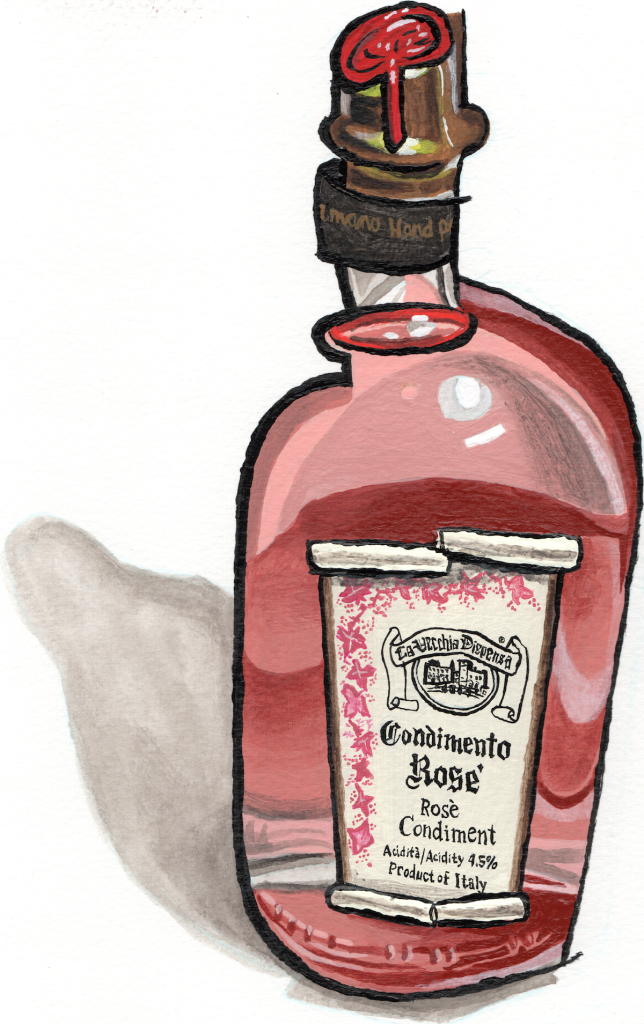
The Tintori family expands its legacy beyond balsamic
If you buy balsamic at the Deli or on Mail Order, the odds are high you’ve already sampled some of the great, carefully crafted artisan vinegars from the Tintori family. They’ve been making exceptional vinegar for four generations now, since 1905. We’ve been selling it, and loving it, here for nearly 30 years now, ever since I made my first tentative, pre-email visit to the Tintoris back in the mid-’90s. We have long been honored to offer a wide range of balsamics from them—everything from the super long-aged and concentrated tradizionale, made pretty much as it was 500 years ago, all the way to the more affordable “balsamic condiment” that is now a staple in so many kitchens in Ann Arbor and, through Mail Order, around the country.
What I’m writing about here is a whole new, completely different vinegar from the Tintoris—a delicate, light, very slightly sweet rosé vinegar that is the first non-balsamic the family has ever produced! I asked owner Simone Tintori for the backstory, and he graciously shared this:
Rosé condiment has an interesting story behind it. I’ve always been against white balsamic vinegar because the concept is flawed: balsamic vinegar is naturally black. Therefore, I thought it was wrong to produce a non-balsamic vinegar. “White” and “rosé” are condiments, not balsamic vinegars. They’re made from uncooked grape must that’s been concentrated. I’ve never been a fan of these products because they’re often cheap, overly sweet dressings with a very low acidity level.
However, a few years ago, I accepted the challenge of creating a rosé condiment with higher-than-average acidity that was delicate yet had a distinctive character. I decided to use our Grasparossa grapes, a local Lambrusco variety from our village, Castelvetro. A tribute to the local vine! I don’t age it in wooden casks because I want to maintain the intense pink color of the must and a fresher taste. The result is a pleasantly sweet and sour, fruity condiment.
Here at our house, we love using it as a dressing for fresh vegetables or drizzling it over shellfish, such as oysters. We also make a homemade marinade for chicken, which we cook and serve with nuts on top. In the summer, we spice up tonic water with rosé to make a refreshing drink.
All of those uses sound good to me. I’m also intrigued to try it with asparagus in a few weeks, with sauteed scallops, on a salad of good tuna and white beans, or on a sweeter salad of soon-to-arrive fresh apricots, roasted peppers, and barrel-aged feta cheese.
Buy your bottle