Uncle Joe Burroughs’ Fried Whole Catfish at the Roadhouse
The story of a kind man I never met and the catfish for which he became famous
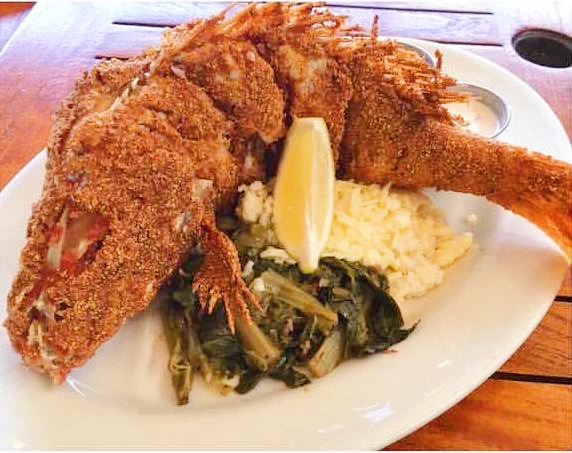
It’s true: the cat is back! If you come to the Roadhouse this month, you might be happy to see that the fried whole catfish has returned to what so many of you believe is its rightful place on the menu. I’m glad it has—I tried some the other day for the first time in a long while and was reminded of just how tasty it truly is: moist, meaty, delicate, with the crunch of the super flavorful Anson Mills artisan cornmeal on the outside, and a sprinkling of garlic salt that adds a bit of culinary embroidery to an already excellent dish. It’s served up alongside Anson Mills grits (made with a different corn and a different milling texture than the cornmeal); long-cooked, bacon-braised collard greens; and a ramekin of mustard coleslaw. Having this classic fried catfish for dinner would be the start of a great night!
In “A Taste of Zingerman’s Food Philosophy,” I encourage all of us (myself included) to “get curious about the story behind your food.” Without knowing the story, I always say, the food may be fine—but we’re missing so much of the background that makes it what it is. Just as knowing a person only by their job title or as an offshoot of their family tree does them a disservice, the same goes for food. We need to learn the backstory to truly understand and appreciate what we’re eating. American ethnomusicologist Alan Lomax, who spent much of the 20th century recording little-known traditional music to preserve it for posterity, believed that “traditional songs are the poetry of everyday people.” In a culinary context, dishes like this fried catfish offer a similar cultural richness; they are culinary poetry from the back kitchens of our country. And every time we serve the catfish at the Roadhouse, I come back to the story of a man named Joe Burroughs.
In his Southern community of Albertville, Alabama, Burroughs was known to most folks as “Uncle Joe.” I never met him, but he was the father of my longtime friend Peggy Burroughs Markel, who for many years has co-led the Zingerman’s Food Tours to Tuscany and also Morocco. After he passed away in 2008, Peggy shared his beautiful story with me.
Uncle Joe went to college at Auburn, then joined the Army during World War II, where he spent most of his time in Italy and North Africa. His worldview was influenced greatly by what he experienced there. Joe often expressed how the Italians reminded him of his own people, who grew gardens and loved to cook even when times were tough. His heart was cracked open by the beauty of Italy, which inspired him to write poetry and sculpt in alabaster. And while he was glad to return home after the war, the memories of Italy were forever on his mind and present in countless tales he told again and again throughout his life.
Joe went to work for South Central Bell as a telephone man and supervisor who taught others how to be fearless high up on a telephone pole on cold, stormy nights. His “men” loved him, just as they had when he was a first sergeant in communications for the Army. In his private life, he was a gentleman farmer and a caring family man with a creative, artistic side that he expressed through gardening and cooking. He took over kitchen duties from his wife on the weekends, serving fried catfish on Friday night, steaks on Saturday, and omelets on Sunday. He was also a master at growing and pickling peppers.
Peggy remembers this about her father:
He had a passion for frying catfish. The Tennessee River was a stone’s throw away, and he went there often to visit a good friend whom we called Uncle Charlie. Charlie had a boathouse on Pole Cat Hollow, an offshoot of Guntersville Lake, where theTennessee Valley Authority created 800 miles of shoreline around the foothills of the Appalachians. We grew up swimming in the river, boating, waterskiing, and chowing down on catfish, hush puppies, and home brew. After all, we lived in a dry county. My dad liked his beer, and we had to drive to the next town to get it. We had two refrigerators out back by the barbecue pit. One was for beer, and the other was a smoker. If you got them mixed up, you’d open the fridge door and find catfish hanging upside down by their tails.
The Tennessee River was a goldmine for catfish—catfish farms were not even invented yet. I can still remember how proud I was as a kid to learn how to take my fork and go up the spine of a freshly fried, still-steaming fish; filet it; and dab it into some homemade “goush,” an equal mix of ketchup and mayonnaise. It was so good. My sisters and I would turn on Elvis Presley and “do the mashed potato.” There wasn’t a Friday night that I didn’t go out on a date smelling like fried fish.
At that point, Mama made my dad start cooking it outside the house. There he built his domain. His cast-iron deep fryer, full of Mazola, kept the fires burning until everyone had their share. The bone plates were stacked high. All our friends came willingly. It was the place to be for the best food in town—“Uncle Joe’s famous catfish” right in our own backyard. He was inspired and designed a room off the house and thought to start a small café complete with a conveyor belt, designed to take the fried fish to people sitting around the bar. He was ahead of his time.
Joe Burroughs, I realize now in the context of my lead essay, found a way to weave a bit of his passion, purpose, and life dream into his weekly routine—and he loved it! Uncle Joe died peacefully in his sleep in the second week of July 2008, prompting Peggy to share this reflection: “The lesson for me? Kindness and gentleness are the key to happiness and a peaceful passing.” Joe never did build the café he envisioned, but, in the spirit of Alan Lomax’s work to record people who might never otherwise have been heard, I really wanted to have his catfish on our menu. And all these years later, it still plays a vital role in the Roadhouse rotations.
This coming October 24 would have been Joe Burroughs’ 110th birthday, and the catfish dish is a tribute to the kindness, gentleness, and generosity with which he moved through the world. Sharing his story here is another of my “secular prayers”—offered in the hope that we can all come together caringly around good food the way Uncle Joe did for so many years. When you raise your forkful of delicately fried catfish at dinner, consider making a quiet toast to Joe and the joy he brought to so many. And if you want to truly channel Peggy’s childhood, we’ll happily bring you ketchup and mayonnaise so you can enjoy some Burroughs family “goush” to go with it.
Order your catfish