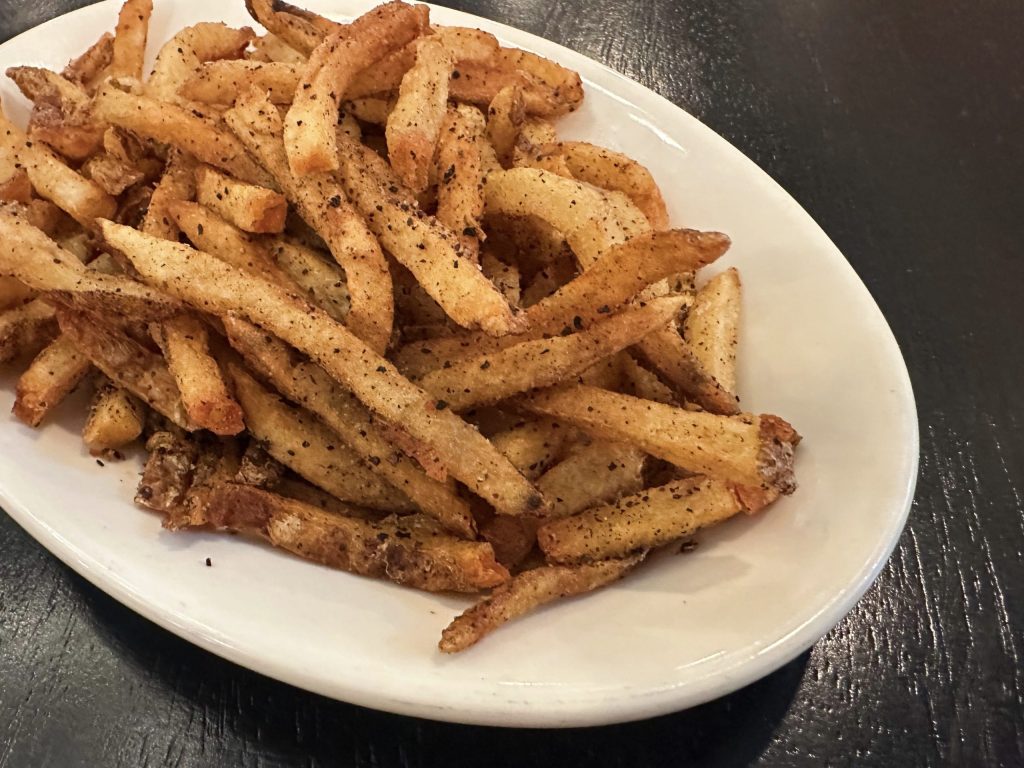
Moules and Frites and Mayo, Oh My!
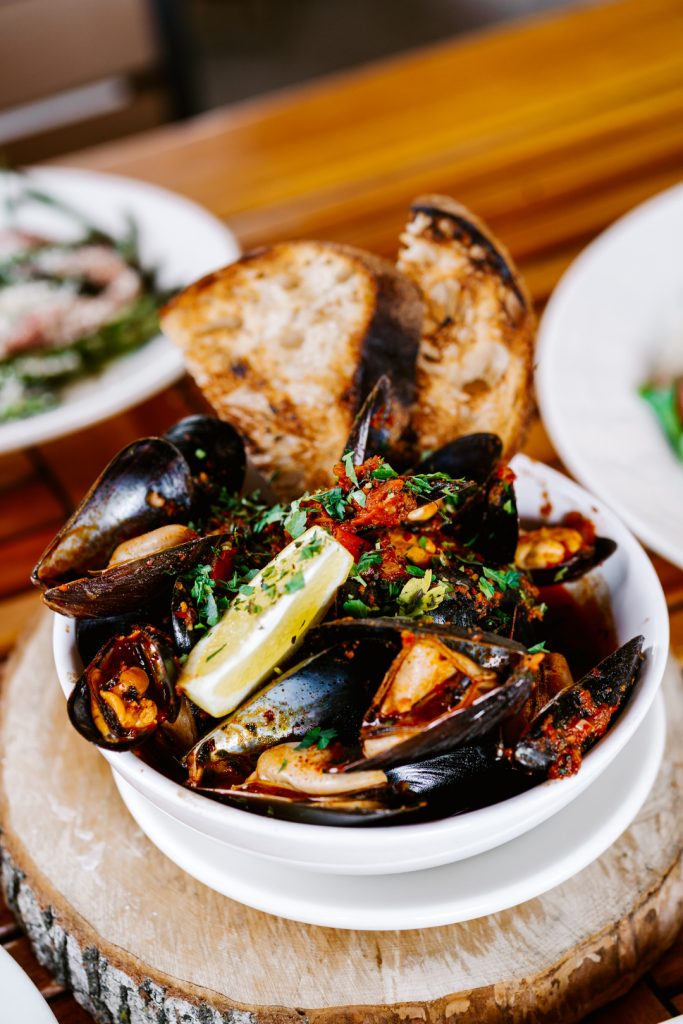
The classic dish of Belgium on special at the Roadhouse
One of the great dishes of Europe still remains, despite the internet, increased travel, and massive amounts of social media, relatively little known in the U.S.: the Belgian mussels and French fries, or moules frites. In honor of its culinary excellence and of the 350,000 or so Belgian Americans in the country (many of whom live in the Michigan area), the Roadhouse is featuring this special meal this month!
If you’ve never been to Belgium, it’s hard to convey just how big a deal this dish is. (Think burgers and fries, or even pizza, here in the States.) Mussels are everywhere! My friend Nick Malgieri, the brilliant chef and food writer, wrote a beautiful description in Saveur:
When I landed in Brussels … during a late-summer downpour, I had one goal in mind: to get myself some steaming hot mussels and crisp fries, or moules frites. In Belgium, steamed mussels and fried potatoes go together as naturally as fish and chips in England, and burgers and fries in the States. And if you ask me, the combination is one of the world’s best comfort food pairings: the juicy, sweet, slightly briny mussels playing off the earthiness of the fries, with the occasional dip of the fries into mayonnaise providing an added note of richness. …
Though the French have long laid claim to the fry, it was a Flemish manuscript, from 1781, that first cited something resembling frites—in this case, the potatoes that local cooks had long sliced into the shape of small fish and fried when no river fish was available during winter. Belgian farmers were some of the first in Europe to embrace the potato soon after it arrived in Europe from the New World, in the 16th century; by the 1600s, many had switched from growing wheat to raising potatoes.
Mussels are another Belgian staple. Cheap and plentiful, they were originally considered food for the poor, and they’ve long been paired with fried potatoes at the country’s famous fry shops, known as friteries in French and freetkoten in Dutch, the language of Flemish Belgium. The number of friteries—and the popularity of moules frites—boomed after World War I, but nowadays these humble eateries are dedicated almost entirely to fried foods, as I discovered when I popped into Fritland, a popular hangout near Brussels’ Bourse, or stock exchange.
Our mussels come from the majestically pristine waters of Blue Hill Bay, off Hardwood Island, Maine—a couple of miles west of Acadia National Park. The Blue Hill Bay mussels are essentially farmed in “seclusion,” so they aren’t fighting for nutrients and oxygen, like those packed together in the same bay in shellfish farms. All that good work yields plumper, plusher, meatier mussels.
One of the most beloved dishes on the Roadhouse menu has long been the terrific combo of ’nduja—the amazing spicy, spreadable pork salami of Calabria—cooked into the broth of fresh Maine mussels. I loved ’nduja when I first tried it, and I love it just as much all these years later. To get clear on the name, it’s pronounced “en-doo-yah,” and in Calabria, it’s everyday fare. Tony Fiasche makes ours in Chicago at Tempesta Artisan Salumi, using his Calabrian grandfather’s recipe. ’Nduja is made by finely grinding pork fat and meat, seasoning it with lots of spicy Calabrian chiles, and then aging the seasoned pork paste in a casing. When the mussels and the ’nduja come together, you end up with a bowl of steaming hot, softly spicy seafood. Ask for extra bread to soak up the broth!
Oh, yeah—be sure to eat the fries Belgian-style with mayo, not ketchup. (Okay, you can actually enjoy them any way you want. They’re great with mayonnaise, though!)