You Really Can Do Business Differently
Stories of opting for the dub sublime
The Persian poet and philosopher Rūmī once said, “What you seek is seeking you.” If he’s correct, then quite a few intriguing people must have had their eye on me recently.
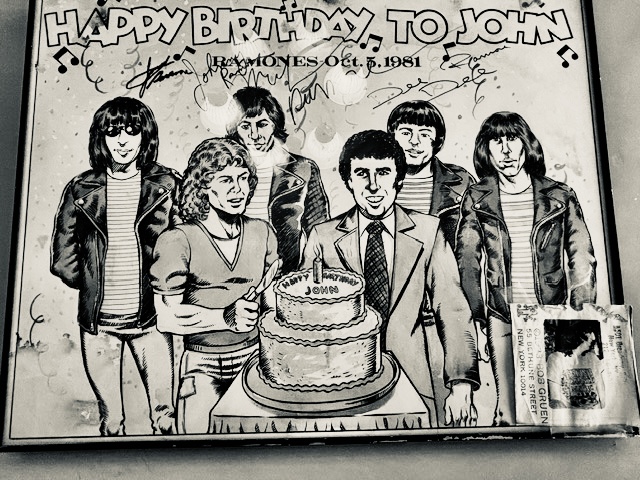
Which is perhaps one reason why my life remains so interesting week in and week out. The diversity of thinkers, painters, poets, and personalities who come into my orbit contributes significantly to the sort of regenerative study I’m so energized by. Every few days, it’s like I’m back at it with a new crew of compelling figures: Joey Ramone, Joe Strummer, Ruth Adler Schnee, Lu Xun, Abe Partridge—the list goes on.
As we enter the second week of June, I find myself fascinated by an equally unlikely and incongruous cast of creative characters: a rebellious Austrian farmer who practices permaculture; an eclectic 90-plus-year-old English painter; a former British Foreign Service officer turned anarchist; an African anarchist artist collective that makes stunning music, films, and books; a boundary-breaking American leadership thinker who passed away 18 months ago; a couple of remarkable ZingTrain clients; and a half dozen present and former ZCoBbers (Zingerman’s Community of Businesses team members).
All have made clear to me, yet again, what I believe ever more strongly in both my heart and my head: you really can do business differently—and as imperfect as we are and always will be, a business can make a positive difference in nearly every direction. Its stock price may or may not be setting record highs, but when it does its work well, spirits sure do soar.
I also, I realize, ought to add to this list a rather curious 19th-century English author—one who famously composed one of the longest poems in history (and no, he did not use AI). Early in September 1902—about eight months after Rocco and Katherine Disderide had opened their new corner grocery right along the new streetcar line at the corner of Detroit and Kingsley (now the site of the Deli), and just as the Michigan football team was about to start its season—the British poet Philip James Bailey passed away.
In 1872, Bailey wrote these lines in his 40,000-line epic poem “Festus”:
Who never doubted, never half believed.
Where doubt, there truth is—’tis her shadow.
I haven’t, to be honest, read the other 39,999 lines, but I will give Bailey credit: this short snippet of his piece (from the fifth section of the poem) is hugely reassuring. It reminds me that my self-doubt is not some sort of disease to be cured with a series of critical-care visits to the hospital, but rather an important—if poetically indirect—affirmation that many things I believe in so strongly are, more than likely, the real deal!
It’s true: as much as we’ve done here at Zingerman’s in 44 years, I still have those days and moments when I think to myself, “Man, has any of this even mattered?” After all, as creative leadership thinker and writer Carol Sanford says in The Responsible Business, “We all want to have an effect on our worlds and to change what we see needs changing.” That totally resonates for me! For you, too?
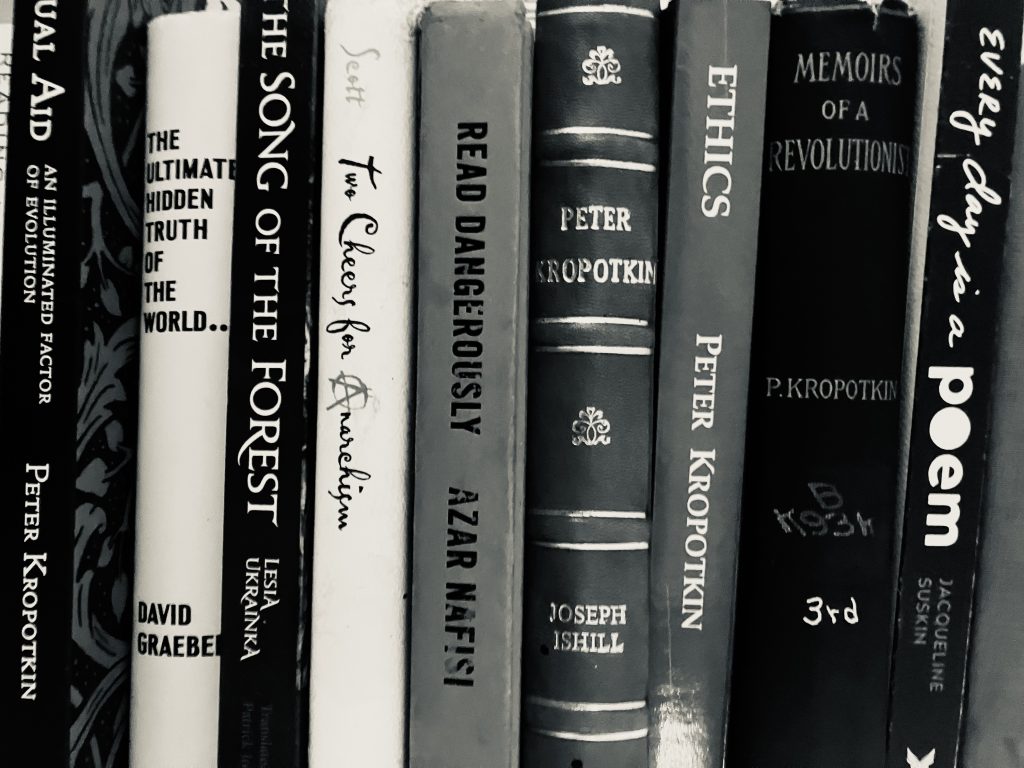
The good news is that the other day—as I slowly started to slip into that undesirable but inevitable doubt about the impact of our four-plus decades of work—a wealth of evidence arrived in a surprisingly short period of time to confirm that what we have striven so hard for all these years really does make a difference. And I was able to see that when one is part of a regenerative organization (always imperfect but, still, generally regenerative), it’s not just staff who gain energy from the work; leaders do as well. After all, the point of a regenerative approach is that, essentially, everyone involved is improved by the experience, right? We all help each other. Mutual aid in action is a magical thing.
So what is a regenerative organization? In a 2024 essay subtitled “From Fear to Hope?”, Dr. Joel Carboni offered this valuable framing:
Regenerative business practices offer a fresh perspective. Rooted in an ecological worldview, they recognize that businesses are integral to the natural world rather than separate from it. By adopting this broader view, businesses can transition from merely balancing competing interests to creating enterprises that contribute positively to both social and ecological well-being, ultimately achieving net positive outcomes. … Embracing a hopeful, regenerative approach can also foster a culture of creativity and collaboration within organizations. …
The world we’re operating in now demands regeneration: leave things better than you found them. That means restoring trust, repairing ecosystems, rebuilding capability, and creating net‑positive value for people, planet, and prosperity. …
We create the conditions for people, ecosystems, and enterprises to thrive.
I wouldn’t have known enough to frame it so eloquently, but Dr. Carboni is describing exactly the kind of democratic organizational model I spoke about at that LeadersConnect gathering here in Ann Arbor last Friday. The afternoon began with a former Deli staffer, DeVeaux Gauger, performing one of his own beautiful songs. What he said next, though, truly touched my heart:
I worked at Zingerman’s before there was a ZCoB. Before the Training Compact. Before there was really any training. It gave me a really great foundation for everything else I’ve done in my life: being a father, a lighting engineer, a musician. It’s had a really big impact on everything I’ve done since.
After the talk had ended, while signing copies of the new “Why Democracy Matters” pamphlet, I ran into Jesse Hadley at the book table! She had also worked at the Deli many years ago, and we see each other around town now and again. She’d come to the event with her teenage son, and she shared with him and me both how much of a positive impact her Zingerman’s experience had had on her. Again, it was a good feeling to know that work we’d done so many years ago had now shaped the life and values of a very cool family. She bought the “A Revolution of Dignity in the Twenty-First Century Workplace” pamphlet for herself, and a signed copy of “Democracy” for her son.
The following day, trying to catch up on email, I opened a message from a dishwasher who currently works in the ZCoB. He wanted me to know that he has worked in food for years, and this is the first time in his life when he’s actually felt welcomed and at home. I totally teared up reading it—wholly unexpected and almost overwhelming, in the best possible way.
That alone was already a lovely run of unexpected affirmations. But then, on Saturday morning, I got a call from longtime ZingTrain client and friend Vince Gabriele. He wanted me to know that a decade ago, back in 2016, he had come to ZingTrain to write his first long-term vision. “Most of it wasn’t happening yet, and I wasn’t in a good place,” he said. “But ten years later, pretty much everything I wrote happened. It completely changed my life.” (In the context of Rūmī’s “What you seek is seeking you,” you can read the story of my and Vince’s original connection on page 366 of The Power of Beliefs in Business.)
To top it all off, not long after I’d heard from Vince, I had a text exchange and a phone call with Gary Perkins at BAS (Business Acceleration System) in Alexandria, Louisiana, part of the Central Louisiana Economic Development Alliance. I first met Gary when he came to ZingTrain’s two-day “Creating a Vision with Greatness” seminar back in April 2012. The short email he sent me when he got home was more prophetic than I could have imagined: “Great seminar, look forward to doing business together.” Here’s a bit of what he wrote in his first-draft vision back then:
As our clients grow revenues and export products or services and create well-paying jobs, the communities start to see success is possible and dare to dream of a future where opportunities exist for their children not just in Houston, New Orleans, or Atlanta, but in Central Louisiana. We have seen an increase in both the number of and the success rate of startups in our 10-parish area through a culture that accepts the reality that failures are a part of the entrepreneurial process and not a stigma or defeat. …
Central Louisiana is known as a startup hotbed, and young entrepreneurs move to Central Louisiana to be a part of the energy, resources, and excitement. BAS is a sought-after model for entrepreneurial programs everywhere.
Having been down to teach Gary’s group and the business community of Alexandria about half a dozen times since—and others on the ZingTrain team have taught there another half dozen, too—I can vouch from firsthand experience that Gary and his crew have made that vision, and so much more, come true. The energy in the town is terrific—folks are eager to learn, to grow, to try to do business differently, and they’re doing it! In a region that was really suffering economically, saddled with old-school approaches and fading industry, they have transformed their community into a thriving hub of creativity. As we were wrapping up our call, Gary said to me over and over again, “You realize how much you have changed people’s lives down here? They love you all!”
These nice stories are not meant to indicate that there aren’t plenty of problems to be dealt with here in the ZCoB; as always, we have shortcomings on every front—frustrations abound in pretty much every direction one looks. This, though, is the nature of human nature, of the world—not to create nirvana, but to design approaches to constructively improve the non-nirvanic elements of our ecosystem. But still, even drilling down into my doubt, all these lovely stories remind me that much of our work does make a difference. These are stories not about making millions in a couple of months, or stock-sale windfalls, but about long-term, meaningful enhancement. Yes, they all involve money in one way or another (salaries, sales, etc.), so this is not an esoteric appeal to eliminate buying and selling. It’s just to say that, again, one really can do business differently.
The fact that so many people don’t feel this way is not, I believe, due to some fundamental human failing. (Nine times out of 10, I’ll suggest that when anyone finds themselves in a healthy, supportive, learning-driven, regenerative organization—whether a company, community, or country—the odds of them doing much better and feeling much better about themselves go up drastically.) Rather, many are mired in what I suppose we could call “degenerative” business. As Carol Sanford conveys so powerfully, “The way most companies manage their workforces is bad for business. Not coincidentally, it’s also bad for people and for democracy.”
When we do business differently, regeneratively, it’s the opposite: it’s good for democracy and for people. What we seek, it seems, as Rūmī wrote, seeks us.
Speaking of writing, I was reflecting the other day on how best to describe to folks the great training work that ZingTrain does so much of. Not the particulars of each course—that’s pretty straightforward, since there are thorough descriptions on the ZingTrain website. But there’s something more—much more—to the power and meaning of what ZingTrain offers. My mind goes to small, nationally known but very specifically focused learning institutions: My friend Natalie Chanin has The School of Making in Alabama. There’s the Rhode Island School of Design, and the Savannah School of Art and Design. Maybe we could be something akin to “The School of Doing Business Differently.” (To be clear, this is just me thinking aloud, not some official rebrand from ZingTrain. They do, though, have their summer seminar sale going on now—use code LAUNCH to receive $400 off any seminar until June 17. Come find out what it’s all about ASAP!)
On the theme of doing things differently—in ways that interested people will take note of—in an April 2026 video interview for the great Louisiana Channel, the now nearly 92-year-old English artist Rose Wylie said clearly and directly, “Contrast gives life.” I believe she’s correct—the fact that we do business differently at Zingerman’s is definitely one of the reasons people are drawn to us.
Contrast also provides context. To wit, if someone from Neptune were to read the national news right now, they might well conclude that business was mostly about extraction, taking advantage, tricking one’s opponents, finding ways around seemingly agreed-upon ethical stances. It would be an easy conclusion to arrive at. It would not, however, be the whole truth. There’s more to the business world than Wall Street, IPOs, arbitrage, and secret Swiss bank accounts!
When I reflect on our own organization, I don’t have to go far to find the kind ofcontrast Wylie refers to. When we were doing introductions at our “Welcome to ZCoB” orientation class this past weekend, one of the attendees, closer to my age than to that of many new staff members, said, “This is my first food job. I’m a refugee from corporate America.” “What brought you here?” I asked. “It was so soulless,” she said. “I couldn’t take it anymore. So I came here.” Does she like it? “Yes, because it’s a whole different world—a complete contrast!”
As for Rose Wylie, she and her artwork both are really quite incredible. She paints in her own particular way, following no one else’s patterns, and, it seems, she’s been doing so for decades. In a piece in HURS entitled “The Unapologetic Art of Rose Wylie,” Bonnie Langedijk writes, “Her work carries a playful defiance, and with it, she challenges the very idea of what painting should be.” Wylie herself frames things well: “I think people think art is difficult or they think there’s something they should know about, or it’s about a film they should have seen. That’s not the case. I think they should just look at it, feel it, enter into it, or enjoy it.”
She’s quick to remind anyone who will listen that working as she does takes time. It takes trusting intuition, tuning out the status quo, and a lot of persistence and patience:
You just keep going until it looks right. It’s all about the judgment. In my opinion, it should have something to do with the subject I’m painting. If it gets too distorted, I’ll perhaps bring it back to look a bit more like the subject. Also, it isn’t necessarily distortion. It’s also playful. I think, if you make the head a bit bigger, it can look all right. If you make it much smaller, it can look all right. Sometimes if it’s in between, if it’s too close to normality, it doesn’t transform into something new that you discovered. It’s about discovering and intervention and pushing. There’s no certain recipe or solution. You don’t want it to always look the same.
Ten years ago, Karen Wright wrote in The Independent, “Wylie’s paintings are particular, the surfaces alive with her own distinctive vocabulary. They are instantly recognizable in the way that works by only great painters are.” This distinctive, singular identity is what any healthy regenerative business in tune with its own essence ought to have, too. This quality of being deeply oneself is what I believe great art, great business, and a great life are all about. No wonder—to summon the Clash, whom I wrote about recently—Wylie herself adds that she “possibly was an early punk.”
Another great source of inspiration, when I’m in doubt about what it means to do good work in the world, is the Austrian farmer Sepp Holzer. Born in the small town of Ramingstein, in the southern end of the district of Salzburg, in 1942, Holzer has been called “the Werner Herzog of regenerative agriculture” and “a permaculture visionary.” It’s not hard to see that he is a remarkable human being doing remarkable work. The 1940s were not, of course, an easy period in Europe, but when Holzer turned 20, he took over the family farm from his parents. At the time, it was just another small, struggling mid-20th-century farm, located in the Austrian Alps at an altitude between 3,000 and 5,000 feet. As he explains, Holzer tried using all the packaged pesticides and fertilizers everyone told him to use. Nothing worked. Things got worse. Over the years, he turned the whole farm inside out, essentially creating his own version of regenerative work, very closely connected to what others of us know as permaculture. Holzer came to be called “the Rebel Farmer,” which in turn became the title of his second book. I’ve never been there myself, but everyone I’ve heard from has raved about his farm’s biodiversity and the flavor of his food.
Here’s a wonderful Holzer story that made me smile—one in which apricots saved the day. Once there was an unexpectedly late frost, and nearly all the neighbors’ fruit trees died. But because Holzer had determinedly determined not to prune his fruit trees—violating EU agriculture code in the process—his ripe apricots were heavy enough to touch the ground and were, surprisingly, supported by the snow and ice. Ironically, his refusal to follow the rules saved his farm! “The industrial theories are leading to death, new illness, and food shortage,” he wrote. “You need to have the courage and dedication to the work. But … you can succeed.” I am inspired by Holzer’s reminder that one must have “civil courage”—the courage to stand up for what you believe in, and do the work the way you believe is right, not how everyone else does it. To this day, he and his family continue to demonstrate how healthy a farm one can create—and that you really can do farming differently.
There are other exemplars that come to mind, too—like Carne Ross, a former British diplomat who grew radically disillusioned over dishonesty in the government and stumbled into much of the same anarchist reading that drew me in many years ago as well. Like me, he’s a big advocate for anarchism, always in a peaceful, positive, generous, human-centered way. Over the years, we have appreciated each other’s work, and we exchange emails to compare thoughts and learnings. He shares:
People sometimes giggle when I say I’m an anarchist. Sometimes I giggle too to make them feel more comfortable. But this is my belief to my core, now even my life’s purpose. It’s time to declare our utopias.
Carne has a new book coming this summer, There We Are Human Again: A Diplomat’s Journey to Anarchism, in which he argues that both communities and countries can be run differently. He has carved out a creative living for himself by doing constructive policy consulting with smaller nations, all the while writing and speaking. In the new book, he says,
A better system will not automatically ensure a better life. In fact, the opposite is true: only by creating a better life can a better system be developed. … Could it be a system which through its collective, but mindful (very mindful) construction promotes the maximization of human freedom, fosters relations with others that bring to abundant life what matters most, love, and fuels and celebrates the exploration and, one hopes, the fulfillment of our very selves, at last. Imagine that!
This is, I believe, what it means to do business differently: to create people-centered systems through which individuals’ lives are made better by working in them, which in turn improves the system. It is, Carne argues (and I agree), possible to make this scenario a reality:
I do often feel hope, especially when talking to young people, who are not gripped by the delusions that have anaesthetized and enfeebled my own generation (for the young, the evidence against the delusion is surely all too present). There are ways to make this happen, ways that have been tested and work (like in Rojava Kurdistan), ways that are available now, right now, if only we would see them. This doesn’t even require a lot of imagination, though that helps, not least by firing us up with a vision of what’s possible. We need a bit of inspiration to unlock ourselves from the paralysis and inertia.
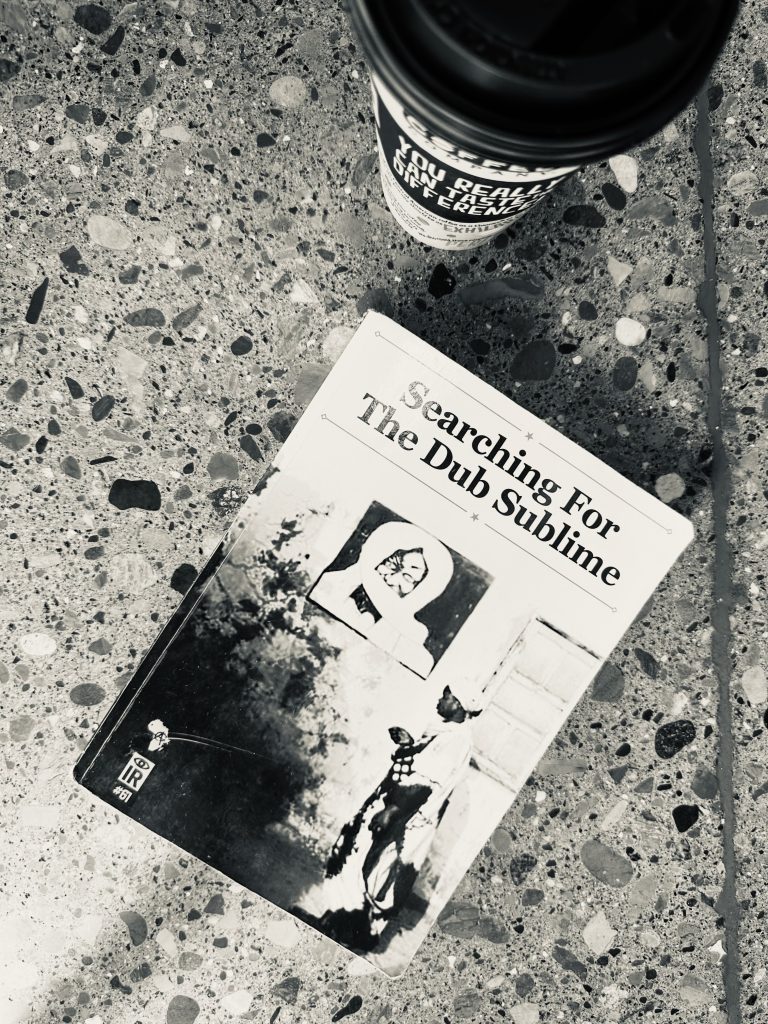
All of these examples of “doing business differently” are inspiring. Each works in its own unique way in its own particular place. Which is true, too, for the source of this essay’s subtitle: “Stories of opting for the dub sublime.” I kind of have to laugh because I’d been mulling over what to call the essay when, as I have so often of late, I found myself looking at the cover of the book IR 61 Searching for the Dub Sublime, from my friends at the global anarchist collective IR::Indigenous Resistance. And sure enough, it hit me: “searching for the dub sublime,” metaphorically, is what all these people I’ve written about here are—in their own idiosyncratic ways, of course—doing.
In the context of questioning the status quo—of following one’s radical heart rather than getting stuck in the straight and narrow—IR says in the song “African Anarchist,”
We ask you to be pensive as opposed to being defensive.
Sometimes it’s necessary to question the paradigms
that have been imprinted in our minds.
And that is, indeed, what needs to happen for us to do business, to farm, to paint, to run a gym, to recreate a community, or to do anything of consequence differently. The IR crew certainly does an amazing job of it! And for them, dub is much more than a musical genre with roots in 1960s Jamaica—it’s about a feeling, an energy, an independent essence that leaves behind the constraints of mainstream society:
Dub is too often defined as a musical style, a subgenre of reggae music … For IR, dub is not a thing—it’s the quality of a thing, the dub quality of anything. … Dub [is] utterly beautiful, an affirmation of the beauty and unbridled complexity of life.
Speaking of unbridled complexity, among the many amazing lessons I’ve learned through the years is to not look for one single magic answer as to how to do work differently. It’s never just one particular technique that makes the artist, writer, or business leader who they are, but rather a whole combination of contributing factors. Many of these factors are hiding in plain sight—we just haven’t trained our eyes to see them. As Amastara from IR writes in Ethiopia: The Journey,
The best things for me have always been hidden or just under the surface. They have never been obvious or garishly hyped or advertised. Never! It’s always been very subtle. What might seem to have very little on the surface is often the exact opposite.
Carol Sanford, who’s written a great deal on regenerative business—always in her own unique way—has this to say on the subject:
Businesses that foster initiative and self-management change forever the way employees look at the world. When people spend their lives in hierarchical systems with supervisors making decisions for them, their decision-making capacity and their confidence in their own judgement weaken. They become habituated to ceding control and responsibility to authority figures. In the long run, that undermines not only our businesses, but our democracy and the citizenry needed to make it work. By evolving the natural source of human creativity and responsibility, a regenerative business builds more than itself. It grows better citizens and, as a result, it builds a better nation and a better world.
I’ll note here that the idea of regenerative work—originally in the form of farming—came from the Rodale Institute in Pennsylvania. More and more, I can see that the approaches I’ve alluded to above align well with what J. I. and Robert Rodale had already begun imagining around the same time we were getting the Deli going in the ’80s. Robert Rodale said,
By marching forward under the banner of sustainability we are, in effect, continuing to hamper ourselves by not accepting a challenging enough goal. I am not against the word sustainable, rather I favor regenerative agriculture.
You can find much more about the Rodales online, but in the meantime, here are just some of the key elements of their approach to regeneration that caught my eye:
Increase in diversity of personal experiences, capacities, opportunities, and openness to new experiences.
Improvement of personal hardiness and an ability to withstand crisis, accompanied by a boost in the body’s immune system.
Without pollution of the environment, more people can exist in better health.
By ending detrimental habits such as smoking or thinking negatively, the potential for growth, happiness, and success increases.
More perennials and other plants with vigorous root systems begin to grow.
New, more positive personal spiritual behaviors take root and provide a deeper meaning to life.
Past patterns of weed and pest interference with growing systems are disrupted.
Former patterns of violence and crime are reduced, improving overall security and well-being.
Negative emotions such as anger, fear, and hate lessen in intensity and are replaced by tolerance, compassion, and understanding.
Nutrients tend to either move upward in the soil profile or to accumulate near the surface, thereby becoming more available for use by plants.
“Trickle up” economics—more resources and money accumulate and are more available to more people
The positive qualities and resources in yourself and your environment become easier to access and affect more people around you.
Overall soil structure [culture] improves, increasing water retention capacity.
Overall community life improves, increasing the health and wealth of its inhabitants.
Capacity for well-being and enjoyment increases.
So what can you do to make these kinds of awesome, dub-sublime things happen? The mainstream might tell you to find the models you like and copy them. I will suggest the exact opposite: Do not do business like Zingerman’s. Don’t make art like IR. Don’t paint like Rose Wylie. Don’t quit your job like Carne Ross. Don’t farm like Sepp Holzer. Learn from all of them and then some, but in the end, do it YOUR way!
And if you want some meaningful guidance from outside the mainstream, all the folks above offer a plethora. ZingTrain has 20 different seminars that are listed online, and I’ve written about as many books and pamphlets. IR has records and films and posters. Sepp Holzer has both books and training programs. Order Carne Ross’s new book real soon! Focus not on following in others’ footsteps, but on making your own. Carol Sanford writes,
In a regenerative organization, systems themselves are instruments for the development of people—designed to be managed and continuously upgraded by those who are using them rather than by outside experts. … Developmental thinking structures … enable us to become conscious of the way our thinking is structured and to reshape it. … In a regenerative organization, workers are expected to be self-motivating, self-managing, and conscious of the whole of the business.
I watched this transformation happen firsthand at that “Welcome to the ZCoB” orientation class I taught Sunday morning. We always close by having people share their answers to the question, “What’s the most surprising, interesting, or helpful thing you learned today?”
One young man offered this: “It’s a lot. I just keep thinking that it takes a lot of guts to go out and say, ‘We’re gonna do it our way,’ and not just do what everyone else does.”
Another new staffer loved the Perpetual Purpose Trust.
Yet another was fascinated by the idea of including love in a mission and a vision.
Two were amazed at the idea of Staff Partners.
Another still loved how intentional everything was and how much people here work at being kind.
All these responses were insightful, and all these elements are key aspects of doing business differently. None alone are enough; all contribute. And while finance is clearly still as relevant here as it is in any business, I judge a lot of what we do in the ZCoB by Carol Sanford’s metric: are people learning to think for themselves? The staff in this past weekend’s orientation class sure seem to be!
While millions can be made in a matter of minutes on Wall Street, the kind of uplifting regenerative magic I want to see us make happens much more often, very quietly, right on the corner of Main Street and …
Which finally brings me to today’s bottom lines: Be yourself. Be kind. Be caring. Approach with love. Do it your way. As Rose Wylie says, “When you paint, you are perhaps looking for something which hasn’t been.”
This is how I feel about business.
Or, in the words of Indigenous Resistance:
As I walked, I could feel energy surging up my body …
Obviously [this place] had some special significance—
a message that calmed my soul and confirmed my pathway.