Why Writing Regularly Might Help You Get on the Right Track
Building leadership presence with the written word
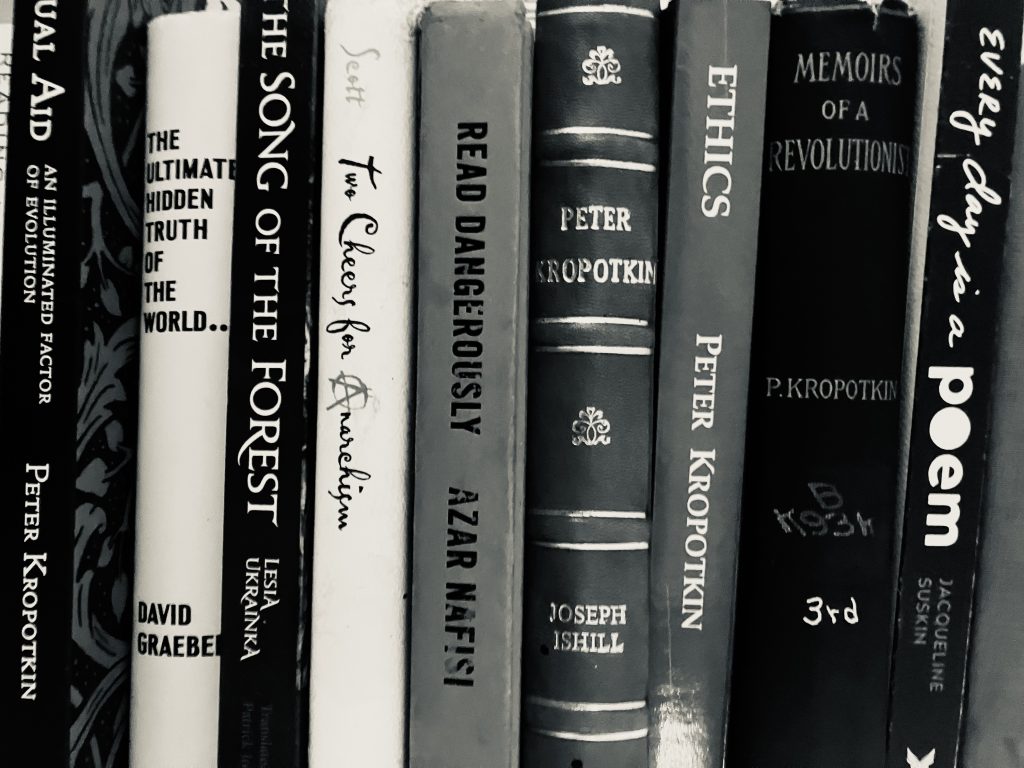
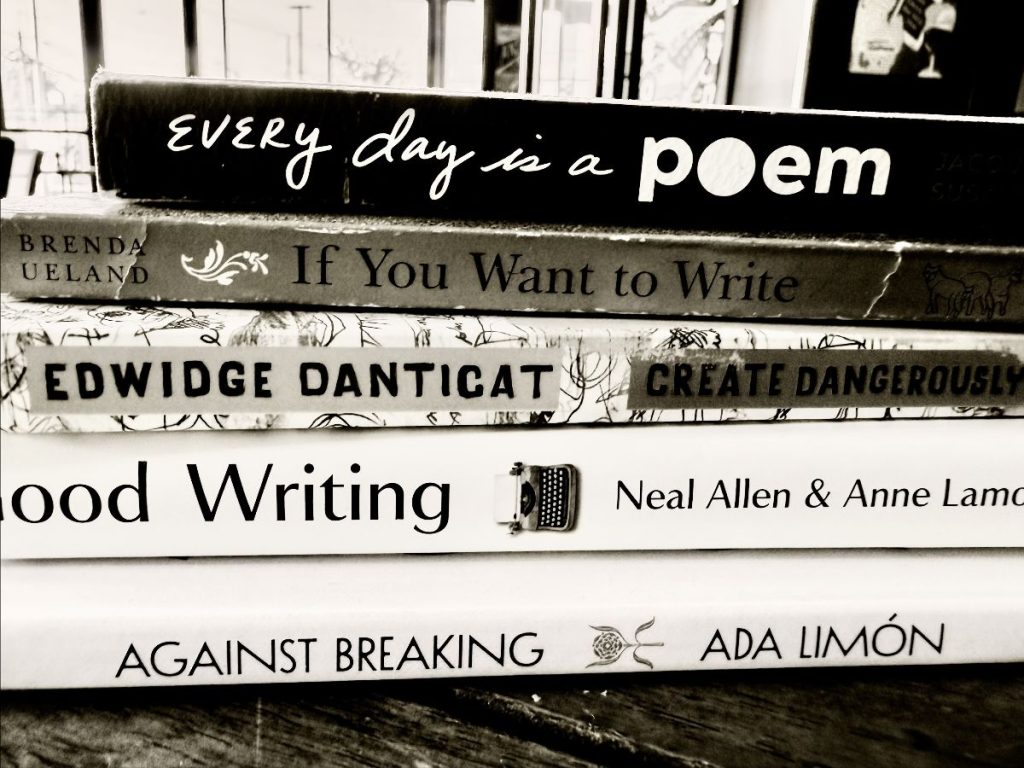
In her insightful and inspiring book Every Day Is a Poem, Detroit-based poet Jacqueline Suskin says,
What would it be like to find inspiration everywhere you look? It’s a sacred challenge to mine the wonder out of every day, out of trauma and pain, out of the mundane. This is what poetry does for us.
I’m still in the early stages of learning the ins and outs of writing poems, but what Jacqueline describes poetry doing for us is pretty much what I’ve been finding in prose for many years now. To say that writing has changed my life would be a significant understatement. Over the years, it has helped me convert frustration into philosophy, problems into best practices, boredom into beauty, and complaining into creativity. Beliefs, dignity, democracy, hope, humility, and a host of other topics have entered my intellectual inventory only because I spent so much time writing about them. All these years later, they’ve had a huge impact on my work and my life. What would have been little more than nice words I aspired to live up to, I now teach regularly in tangible, practical ways.
I’ve written about the practice of writing here twice in recent years (Consider Writing Regularly and More Reflections on Why I Write). It’s on my mind again because this past Monday evening, I presented to about 200 people at a non-profit fundraiser for the Shelter Association here in town. My topic was dignity, and the reality is that I would never have shared these lessons without the process of writing. It was only by beginning to write about dignity four years ago that I gained enough understanding to discuss it—and work to practice it—intelligently. What I learned is all documented in the pages of the pamphlet, “A Revolution of Dignity in the Twenty-First Century Workplace.”
Could I have learned so much about dignity without writing about it? Probably. I’ve long believed most any of us can learn most any subject we put our minds to. But maybe a more meaningful question is: “Would I have learned as much about dignity if I hadn’t taken on the challenge of writing about it?” The answer, I’m confident, is no. I might have been capable, but I’ve learned over time that capability doesn’t always correlate with completion. For me, writing is the bridge. It connects what I’m unconsciously capable of with actually taking action.
Looking back on my life, it’s clear that I owe a whole lot to writing. Once I write about something and share it with the world, my commitment to following through goes up significantly. I don’t always get it right, but I work at it determinedly every day!
For those who have high anxiety about putting pen to paper (or fingertips to keyboard), I will say that each and every time I sit down and start writing, self-doubt shows up—looking over my shoulder, challenging my confidence, and whispering to me that I really know nothing. It was true when I first started trying to write 40 years ago, and the song remains the same today. Still, as I sit here and reflect on all that I have learned through writing, I am moved to continue in spite of the stress. While it is certainly not my place to tell anyone what to do, my intention is to at least plant the seed of a suggestion in your mind: anyone who is in a leadership role, and/or aspires to be in a leadership role, would be wise to start writing. Even for folks who don’t have a lot of employees, there’s still a great deal of benefit to the clarity that can come from writing regularly.
Why bother taking the time to write? Consultant and leadership coach Tad Hargrave of Marketing for Hippies in British Columbia shares that one of the biggest challenges his clients have is that “they can’t articulate what they do.” I’m confident that regular writing would help improve that situation.
Best I can tell, 98% of how we as leaders communicate comes in one of three ways:
- By modeling the behaviors that we want others to practice. (Leading by example is absolutely essential, but I’ve come to see over the years that it only goes so far. Unfortunately, many people have been trained in families—and in modern society—to notice the bad more than the good, so they see where we fall short, but fail to notice what is going well.)
- By speaking in public. (A topic for another essay.)
- Through writing. (Read on!)
Anxious to give it a try? As I’ve shared, I’m anxious every time I sit down to write anything other than an email. I’ll offer an insight from Ivan Turgenev, one of the great 19th-century Russian authors I loved to read when I was in school studying Russian history:
If we wait for the moment when everything, absolutely everything is ready, we shall never begin … there’s no point in waiting for so-called blissful moments, for inspiration; if it comes, so much the better—but you keep working anyway.
Turgenev’s approach works for me! I learned a long time ago to simply write. When I feel stuck, I try to write faster. When I trust my gut, something interesting will eventually emerge. The key is to continue to work to get at my true feelings. The dignity work I shared this past week in my talk emerged out of the deep despair I felt after Russia invaded Ukraine in late February 2022. At the time, I felt horribly helpless. The writing is how I worked through it. In that context, I like what historian Lynn Hunt (who’s authored nearly 20 books) says:
The best advice about writing that I ever got was many years ago from the poet and prose writer Donald Hall. … From him I learned that writing requires an unending effort at something resembling authenticity. Most mistakes come from not being yourself, not saying what you think, or being afraid to figure out what you really think.
What you decide, of course, is completely up to you. What I have experienced in my own life, and what I have heard from so many others I know, is that writing regularly has had an enormously positive impact on them. Very few of them intended to “be writers”—most have other jobs, other activities to which they devote a great deal of energy. Still, writing regularly provides some key benefits:
- Clarifies their thinking on complex topics.
- Elevates their leadership role within their organization and industry.
- Boosts their self-confidence.
- Broadens their overall knowledge.
- Helps them to make the world around them a better place to be.
In fact, I don’t recall anyone expressing regret about starting to write. What I do hear is more along the lines of, “I was doing it really diligently for a while, but I lost my self-discipline. I really need to get back to it.” I’m with writer Anne Lamott: “Publication is not all that it is cracked up to be. But writing is. Writing has so much to give, so much to teach, so many surprises.” I’ve long since lost track of all the amazing people I’ve gotten to “know” by doing research in my writing work. Without question, through regular writing, I feel more connected to other cultures, other people, other worldviews.
At the event the other evening, spoken word artist Martez Claybren read a beautiful piece that opens about a young boy named Zion who’s struggling to understand the world. It opens with the lines,
It started with the question:
why do I feel so alone?
For me at least, writing has helped me address what Martez writes about—part of what Vivek Murthy, former Surgeon General of the U.S., called an “epidemic of loneliness and isolation.” Writing is one way to help address the situation. Certainly, what Anne Lamott describes has proven true for me: “Writing and reading decrease our sense of isolation. They deepen and widen and expand our sense of life: they feed the soul.”
Through writing, I have changed a wide range of beliefs, and in the process, altered the way I act and the way I experience the world. And while that work may not alone raise sales the following Saturday, it has made an enormous difference in our organizational ecosystem and in the quality of my life. The great musician and poet Gil Scott-Heron wisely said, “The first revolution is when you change your mind.” Deciding to write regularly—and then, of course, following through—can, I believe, create a significant, even revolutionary change in the life of anyone who undertakes it.
To be clear, I don’t want to imply that learning to write regularly will be easy. Anne Lamott says, “Almost all good writing begins with terrible first efforts. You need to start somewhere.” I have absolutely found that to be true over the years with the initial draft(s) of pretty much everything I write. Her statement is also true for the act of simply starting to write. I can laugh at myself now when I look back on my early work with writing. Incredibly high levels of frustration. A lot of stress. Very little output per hour of work. Having stuck with it for many decades now, my practice of writing regularly has certainly shifted. If the image is helpful, I’ll share this from award-winning Haitian-American author Edwige Danticat (featured with Anne Lamott and eighteen others in the compilation, Why We Write): “When you write, it’s like braiding your hair. Taking a handful of coarse unruly strands and attempting to bring them unity.”
Rajiv Mehta has a new book out called Camaraderie: A Modern Leader’s Guide to Building Joyful, High-Performing Cultures. Up until a few years ago, Raj had done many amazing things in his life. Writing regularly, though, was not among them. Still, he took on the challenge, pushed himself, practiced, built a writing routine, and now he has the great book. In the process, Raj has grown as a leader, his voice is stronger, and he is now one of the country’s leading experts on camaraderie! Here’s what he shared about the experience: “The biggest impact of all this writing is similar to what I wrote about drawing [many years ago] … much of what you learn happens as you think about, draw, and redraw your sketch.” All his hard work is paying off: “It was definitely a good effort for me, as my own lessons-learned became much clearer to me.”
Following the thread of effort and impact brings me to Chris Wojcik. Writing four years ago for the Writing Cooperative, he says, “Writing gives you the power to leave a mark on the world.”
Here’s a point of view expressed with clarity, power, and down-to-earth excellence. It’s from the monthly newsletter sent out by Gayle Shanks, co-founder of Changing Hands Bookstore in Arizona:
Curating books is undeniably subjective, but we operate by some basic principles: find books that are well written, entertaining, thought-provoking, that exclude hate speech, amplify underrepresented voices, lean towards perspectives that champion social justice, and offer untold hours of pure reading pleasure.
If I had a bookstore, I imagine that would be my point of view. I read for many of the same reasons. And writing, in my experience, does the same as what Gayle describes about books:
Books can change lives. I have seen it many times, have testimonials from hundreds of customers, thousands, in fact—and know it at the cellular level, having witnessed it with my own children, grandchildren, nieces and nephews. Books are magic. They open doors to other worlds.
Once we start writing regularly, opportunities open that would almost certainly never have come up without it. Joyce Vance spent 25 years as a prosecutor for the U.S. Department of Justice in Birmingham, Alabama, resigning in 2016. Six years ago, she began writing regularly to put her point of view out in the world:
Ultimately, it’s an educated public capable of informed civil discourse that sustains effective, fair government. Accountability happens when citizens demand it. Sometimes, they must demand it loudly and persistently.
Vance’s daily Substack, Civil Discourse, is her way of doing just that. Today, she is a nationally recognized leader in explaining the legal world to lay people like me! Her perspective has a far, far bigger influence than it might otherwise have had. Here’s what she shared the morning of the same day on which I spoke about dignity last week:
So many people have been discussing the doom and gloom … But I am seeing a lot to celebrate in the people who are pushing back, the people who advocate for democracy every day.
Following Vance’s lead, I will say that writing has helped me enormously in my efforts to get centered, stay positive, and gain clarity. In stressful and uncertain times like the ones we’re living in, writing opens new doors for self-expression, leadership, and good learning. Author and filmmaker Toni Cade Bambara once shared, “Writing is the way I participate in the struggle.” For me, writing has often played that role. The writing that went into the essays in the new pamphlet, “Why Democracy Matters,” changed a lot of my beliefs about democracy, and it gave me a clear sense of what I could do about it. Without the writing? I would never have arrived at the same place!
Writing is also one way I can live out some of Timothy Snyder’s 20 lessons in his wonderfully insightful small book, On Tyranny, on how to push back against autocracy. Without question, it exemplifies #1: “Do not obey in advance.” And it’s also a good way for me to practice lessons #6 through #9. Every essay I write is encouragement to work particularly hard at each of these four:
- Be kind to our language.
- Stand out.
- Believe in truth.
- Investigate.
When you’re ready to write, what would you write about? Anything, really! Author Edwige Danticat’s suggestion is to “Write what haunts you. What keeps you up at night. What you are unable to get out of your mind. Sometimes they are the hardest things to write, but those are often the things that are worth investigating by you specifically.” Write about your point of view. Write about what’s bothering you. Or what’s been motivating you. Share your ideas. Share your insanities. Definitely take a deep dive into your passions.
If my thoughts are even half as much help to others as writing has been to me, it will have been well worth the work. I’ve learned what Turgenev already knew 150 years ago: “Everyone needs help from everyone else.” As I’ve learned over the years, you don’t need to know the “answer”—or have come to your conclusions—before you start writing. Often, the learning comes from taking on the challenge of writing when I don’t yet know what I’m going to say. It’s awkward to take chances, I know. As I’ve shared, I fear failure, vulnerability makes me anxious, and I’m wont to worry—but in the end, I find myself aligned with what Edwige Danticat advises us to do:
Create dangerously, for people who read dangerously. … Writing, knowing in part that no matter how trivial your words may seem, someday, somewhere, someone may risk his or her life to read them.
If you write from the heart, get help from others, and take the time to really sit with what you’re writing, I don’t think you can go wrong. Anne Lamott has been at it for ages, and her recommendation has always proven sound for me:
If something inside of you is real, we will probably find it interesting, and it will probably be universal. So you must risk placing real emotion at the center of your work. Write straight into the emotional center of things. Write toward vulnerability. Risk being unliked. Tell the truth as you understand it. If you’re a writer you have a moral obligation to do this. And it is a revolutionary act—truth is always subversive.
Feeling like it’s too late in life to start now? That’s almost certainly true for Olympic skiing, but the reality is that we can begin to reap the benefits of writing at any age. The remarkable writer Elif Shafak, who spent a year or so studying and teaching here in Ann Arbor, says it well:
Do not let anyone convince you that it is too late for you to start writing the story you always wanted to write. Do not believe those who attach easy labels and lazy adjectives, claiming that you are “too slow” or “too old” or ‘‘too young and immature.” Literature is not a bus that you may miss if you are not punctual. Literature is inside you. In your dreams, in your heart, in your very being. Whatever your age today, and whatever the experiences you might have accumulated along the way, there is only one right answer to this question, only one perfect moment to begin. It is now.
Shafak speaks eloquently about the current disturbed state of the world. She has a calm, wise energy about her that’s manifested in her books, her essays, and her weekly enews, which she titled Unmapped Storylands. Shafak suggests—and I agree—that thoughtful, reflective writing can contribute meaningfully to making the world a calmer, more empathic place. As she explains, “For true knowledge what we need to do is to slow down. … what we also need is slow journalism. Definitely we need books, cultural spaces, literary festivals.”
It is clear to me that I will keep writing as long as I’m on the planet. The more I write, the more I will learn, and the more deeply I will understand both myself and the world around me. I gain clarity so that I can put forward my point of view coherently. I create resources that others can benefit from. And, more and more, I’m able to integrate what once seemed like outlying oddities in my life into my daily routines and presence. In the spirit of which, I’ll close with an insightful line from another Detroit-based writer and poet—someone who was a generation ahead of Jacqueline Suskin—John Sinclair:
We will press it, and press it, until our lives themselves become the poem.
P.S. If you decide to write, or if you’re already writing, I’d love to learn from your experiences.
P.P.S. Another form of writing that has helped me enormously is the writing that no one else sees—it’s what I put down on paper every morning in my daily journaling. If you’d like to learn more about it, email me any time!
P.P.P.S. On the topic of writing, nationally recognized poet Michael Dickman will be coming back to town to do some poetry workshops! Join us at the Roadhouse on Tuesday, July 28. There are only 15 seats, so grab one soon! Everyone who came to Michael’s previous workshop loved it!