A Recipe for Responding to Unexpected Challenges and Opportunities
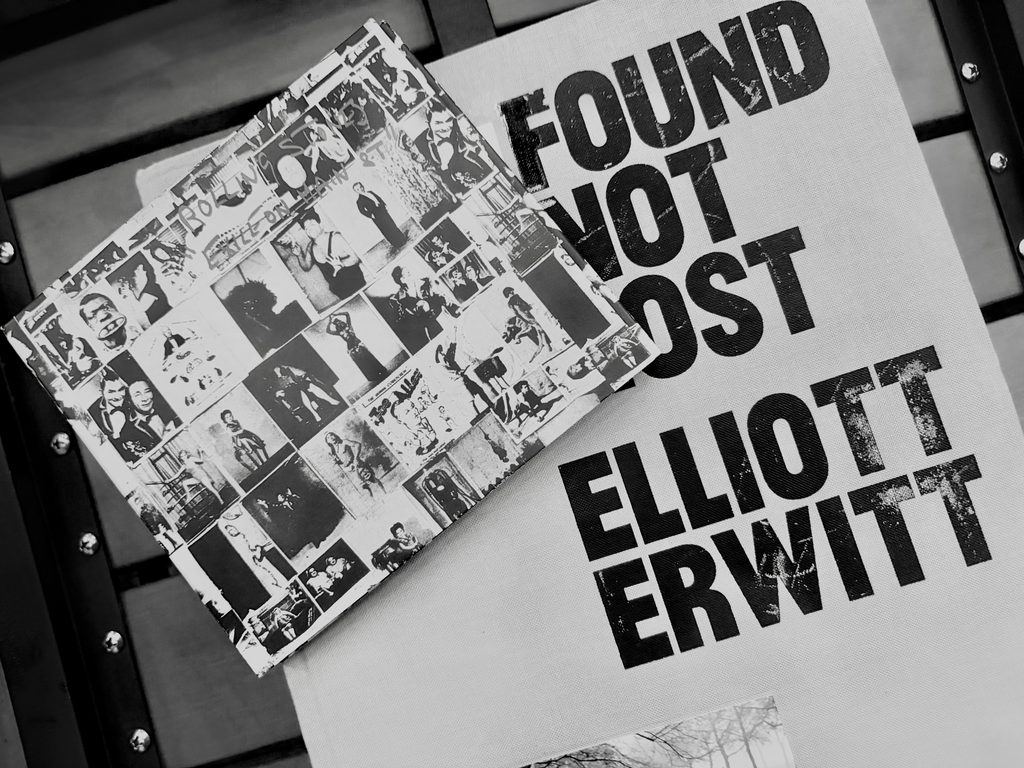
A Rolling Stones record, an amazing photographer, and trying to tackle tumbling dice
On the 12th of May, 1972, the Rolling Stones released their 10th album. Sales of Exile on Main St.took off immediately, and although some critics were … critical of the album (that’s what critics do, after all), it eventually gained widespread praise. Today, many still consider it the Stones’ best and most important record! In 2010, Sean O’Hagan wrote in The Guardian, “Exile on Main St. … has often been voted the greatest rock’n’roll record ever by music critics.” Tom Waits put it on his list of all-time favorite albums, calling it “a tree of life” and “a [spiritual] watering hole.” “Tumbling Dice,” about dealing with the randomness of rolling dice, was the first single, released in April of ’72, a couple of weeks before the full album arrived in record stores.
While the finished product clearly came out great, the process of making Exile—and the years leading up to it—was, well, pretty much a mess. Looking at the details of the story, one would have expected the finished album to be awful. It’s this sort of ability to convert completely unplanned and unexpected obstacles into positive outcomes that is the subject of this piece. Learning to handle those sorts of challenges well may not put us at the top of the Billboard charts, but it can most definitely mean the difference between a life well lived and spending years down on our luck.
Leading up to the recording sessions, one thing after another had gone awry. Brian Jones, an original Stone, had been found dead in his swimming pool in 1969, and the band’s historically disastrous concert at Altamont took place in December of that same year. In 1971, facing enormous tax debt due to both bad management and the then British tax rate of 93% on high-earning incomes, the Stones reluctantly decided to relocate to France. In the first week of April 1971, they left their English homeland and headed to the south of France, where Keith Richards had rented an old château.
The band members were immediately out of sorts. The kind of everyday amenities that most of us rely on for stability and comfort—easily taken for granted when we have them—were suddenly unavailable. Bass player Bill Wyman lamented that he couldn’t find his PG Tips tea or Branston Pickle. Unable to see friends and family, and having had to abandon their regular, very comfortable studio digs, everyone involved was unsettled. To make matters even more challenging, they had each decided to rent homes in different towns in Provence, so hours of driving were required for some of them just to come and rehearse. Shortly after their arrival in France, Mick Jagger announced his impending marriage to Nicaraguan model Bianca Pérez-Mora Macías, so he was also distracted by planning for the ceremony.
The group soon decided to base their musical activity at Villa Nellcôte, Keith’s rented château in the town of Villefranche-sur-Mer. Unfortunately, circumstances at the enormous estate were also far from ideal. Their crew couldn’t find proper recording equipment to rent. Hangers-on began to gather at the château regularly. And because the building had been used by the Gestapo during the German occupation of France in World War II—at the time, just 25 years in the past—there was a generally agreed-upon feeling that bad spirits were still in the air.
Struggling with what to do and unable to secure the cushy conditions to which they’d become accustomed, they decided to record in the basement of the house. The basement, though, had its own issues. Rather than being one big space in which everyone could gather, it was broken up into small rooms, and each instrument had to be played in a separate space. It also turned out the château was short on power, so the crew had to scam electricity off the local railroad lines to run their equipment. Heat and humidity were super high that summer, so the recording space was worse than suboptimal, and guitars would quickly go out of tune. On top of all that, the Stones had been together for 10 years already and enjoyed great success (Let It Bleed and Sticky Fingers were their two previous albums, and both had been huge hits), so, as often happens at such moments, personality clashes among the band members—and also their supporting cast—had become ever more common.
The situation, to sum up, was sort of a mess. Given all of that, the band could have easily gotten bogged down in their own bullshit, never made the album, and sunk into a yearslong creative block. They could have even broken up completely. Somehow, though, they managed to turn that mess into a magical album.
While the chaos and extreme discomfort that accompanied the making of Exile on Main St. were exceptional—and subject to a level of public scrutiny that few of us are ever likely to encounter—the reality is that none of us go through our lives, or really even a day, without some kind of unplanned event unfolding. Like them or not, unexpected challenges and opportunities abound. And though our personal issues probably won’t become the focus of documentary films like Stones in Exile, they still matter a great deal.
Describing the Stones’ dynamic, Sean O’Hagan writes,
There is a great moment in Stones in Exile, a [then] new documentary about the making of Exile on Main St. in 1971, when Keith Richards defines the essential difference in temperament between Mick Jagger and himself.
“Mick needs to know what he’s going to do tomorrow,” says Richards, his voice slurring into a laugh. “Me, I’m just happy to wake up and see who’s hanging around. Mick’s rock, I’m roll.”
Somewhere in the middle, I’ll suggest, is the reality of most of our lives. O’Hagan adds, “The music the Stones made in Nellcôte reflected those tensions, as well as the sense of exile and uncertainty that hung heavily over the group.” Nevertheless, they made it work. And in our own worlds and our own ways, so, I believe, can we.
What I want to suggest here is that our days are actually filled with small challenges—some problematic, yes, but others offering easily missed positive opportunities. How we handle them ultimately has an enormous influence on how our lives are lived. And one thing’s for certain— the twists and turns are sure to keep coming. As Maria Popova put it in The Marginalian this past weekend, “The very fact that life surprises us is evidence that it can surprise us, that it will surprise us over and over.”
Because, by definition, the events in question come up unexpectedly, the solution is not a standard operating procedure. Instead, as I’ve come to understand over the years, the most effective approach is what we in the ZCoB have long imagined as an “organizational recipe”—or what I learned, from the late business writer Carol Sanford, to call a “framework.”
As of a couple weeks ago, by the way, I hadn’t been thinking about any of this. And yet, in the spirit of this essay, I stumbled—unexpectedly—on an answer I wasn’t even looking for. It came courtesy of a photographer who was very well known in his field, but who I, for one, had never even heard of: Elliot Erwitt. A fascinating figure and a fabulous photographer, he had, by coincidence (or maybe not), worked the cameras during the making of the Rolling Stones documentary Gimme Shelter in 1970, the year before the band left Britain for France to record Exile.
Elliot Erwitt was born Elio Romano Erwitz on the 26th of July, 1928, to Russian Jewish émigré parents in Paris. While Wendell Berry, who passed away at the end of August and about whom I wrote a bunch last week, determinedly lived nearly 90 percent of his 92 years in the same place—the tiny Kentucky town of Port Royal—Elliot Erwitt was almost the opposite. As a child, he changed countries multiple times, and as an adult, he loved to travel and spent significant periods of his life in different places around the globe.
By the time he was 10, Erwitt’s family had moved south from France to Milan. In the following year, 1939, they escaped Europe just in time to avoid getting caught up in World War II, relocating to LA, where Erwitt—one of hundreds of millions of immigrants who have contributed so much to this country—would grow up. In 1948, Erwitt moved east to New York City for a bit, before departing for travel in Europe, and two years in the military working as a photographer’s assistant. Later, he would come back to Manhattan, where he lived much of his life, using it as a base for his global adventures. Stuart Alexander writes in Aperture,
As a child [Erwitt] had lived in three countries; he was a native speaker of Italian and by the age of eleven had learned English, Russian, and some French. Shuttled back and forth between his separated parents he became remarkably independent. The circumstances of Erwitt’s upbringing encouraged adaptability above all, both personally and professionally.
That adaptability, it seems clear, contributed greatly to the quality of his work, and Erwitt would go on to become one of the greatest American street photographers in history. He was highly regarded by people in the profession, and he shot photos for big magazines, as part of the famed Magnum Photos cooperative, and for himself. He photographed Nikita Khrushchev and Richard Nixon meeting in Moscow in 1959 for what came to be called “the Kitchen Debate.” Erwitt also excelled at taking photos of kids, of dogs (he published five books of dog photos), and, maybe more than anything else, of random scenes on the street. He snapped shots of a wide range of famous people, too: John F. Kennedy, Fidel Castro, Robert Kennedy, Marilyn Monroe, and a whole lot more.
Erwitt infused humor into much of his work, saying regularly that he was “serious about not being serious.” He was a master of finding joy in unexpected places, and of catching meaningful juxtapositions. His photo of segregated water fountains during Jim Crow said more about the state of the country than a couple dozen op-eds in the New York Times. He was especially skilled at identifying and featuring irony, but, as one of his colleagues said, “never at the expense of compassion.”
Again, it seems that Erwitt’s skill with the camera really did grow out of the adaptability he learned early on in his life. Photographer, filmmaker, and educator Tatiana Hopper is a student of Erwitt’s work, and in a short video piece entitled “The Photography Skill You Can’t Buy,” she talks about the import in photography of what she calls “decisive moments.” In a sense, it’s akin to what we’ve long thought of in our service training as “moments of truth”—moments that are easily missed but, when caught, can turn into something really special.
Hopper wonders aloud, “Why are some photographers able to find these [decisive] moments over and over again? How was [Erwitt] always there at exactly the right time to get the great photos he took?” Her answer is a four-step framework that she calls the Erwitt Method:
1. Notice what’s going on around you, most especially what others most likely miss.
2. Anticipate what might develop from those unplanned occurrences.
3. Wait to see how things actually unfold.
4. React to the reality that you see the world has presented you with.
While Erwitt and Hopper exist in the world of photography, the Erwitt Method, I’ll submit, is actually an important life skill for anyone, regardless of profession, background, or anything else. I would suggest, too, that in an unconscious way, the Rolling Stones essentially followed the Erwitt Method in the making of Exile. The same is true, I realize now, of most leaders who are doing well in the world. To paraphrase the Stones’ 1969 hit single, “We won’t always get what we want. But if we try sometimes and we use this framework well, we just might find we get what we need!”
In “Elliott Erwitt: Master of Wit and Wonder in Photography,”Hopper explains that Erwitt
captured people and their dogs, the humor of life, the tragic comedy of the human condition, the political smoke of the Cold War, and many views from the many different corners of the world. Elliot Erwitt is one of those that saw us human beings for who we are, and captured our essence.
I haven’t worked in other industries, but the food business is, for sure, filled with the sort of unexpected events Erwitt excelled at making the most of. Sure, of course, here in the ZCoB, we plan, we train, we write long-term visions—and all of them are, I believe, exceptionally important to what we’ve been able to accomplish at Zingerman’s over the last 44.5 years. A written vision, though, does not prevent strange, unplanned things from happening en route. And happen, they most definitely do.
If I apply Keith Richards’s contextual image about him and Mick Jagger to my business partner Paul and me, then I’m probably the “rock,” while Paul would pretty surely be the roll. I prefer to be prepared, and I generally don’t love surprises or last-minute changes. Paul, like Keith Richards, thrives on them! The ups and downs aren’t for everyone, but we—and now 19 managing partners in all—have learned to lean into them. As the Stones would go on to sing on their 12th album, recorded a couple years later, in 1974, “It’s only rock and roll, but I like it!”
The Erwitt Method may, for all I know, be far less relevant in more stable settings—like banking, perhaps—but we work in food, where the unexpected is what we expect. For better or worse, well over half of one’s day in a restaurant likely consists of things coming at us that we were not expecting to happen: a problem there’s no way we could have anticipated, a sick call, a staff member who no-shows, a customer with an out-on-the-edge request, an equipment issue that’s never before occurred, a chance to meet someone new we didn’t even know existed or to encounter a new source for something we weren’t seeking. As I often tell co-workers and customers who comment on how surprisingly busy or slow it might be on a given day, “The only thing we really know for sure is that we really don’t know what’s going to happen.” How well we handle those situations is, as I’ve said, absolutely essential.
Stumbling two weeks ago onto Tatiana Hopper’s film about Elliot Erwitt is a near-perfect example of the kind of positives that can come from putting his method to work. I wasn’t looking for it; I’d never heard of either Erwitt or Hopper, and I wasn’t especially bothered by the prospect of the unexpected, as I’ve spent decades dealing with it. I simply, as I’ve tried to teach myself to do over the years, stayed mindful in the moment. The whole thing then unfolded in the course of casually watching a 15-minute video clip on YouTube. Because I was paying attention, the possibilities that Hopper pointed out about Erwitt’s approach intrigued me. I didn’t rush to any conclusions, but I did know, intuitively, that there was something interesting there. I waited, reflected, and went back to the video again—and then again. The opportunities it presented began to unfold, and a few days later, it all became clear: I had stumbled—or, as the Stones might have sung, tumbled—completely by chance onto a practicable framework I can both use myself and also teach to others in our organization.
Because I learned from Stas’ Kazmierski—the man who kindly and generously taught us back in the ’90s what we now know as visioning and Bottom-Line Change—to “adapt, not adopt,” after reflecting on the Erwitt Method, I’ve added a fifth step to Tatiana Hopper’s list. So now it looks like this:
1. Notice what’s going on around you, most especially what others most likely miss. Erwitt said,“It’s simply a matter of noticing things and organizing them. You just have to care about what’s around you and have a concern with humanity and the human comedy.” This awareness is absolutely part of what we convey in all our customer service training, and our leadership teaching, too: we need to tune in. When we don’t, we trip up over and over again. Stuart Alexander writes in Aperture, “Erwitt was curious about the world and he sought to record it as simply and directly as he could.” What others ignored, Erwitt amplified. Alexander goes on to describe the time Erwitt spent on a project in Pittsburgh at the end of 1950: “He created rich and varied documentation in the Point area [of the city] that was being razed, capturing everything from broad vistas of the river to shopfronts, kids in the street, signs and billboards, buses, parking lots, and the shadows of pedestrians.” As Erwitt once explained, “When I’m working, I’m always looking!”
2. Anticipate what might develop from those unplanned occurrences. As Tatiana Hopper tells it, Erwitt “captured anything the world threw at him.” You can translate that example into your own work. Around here, it could be the slightly unhappy look forming on the face of a guest who hasn’t yet (and likely won’t) say anything is wrong. Or it’s the sound of salmon cooking in a sauté pan. The smell of spices toasting. A small wet spot on the floor that a customer or co-worker could easily slip on. A slight drop-off in the energy of a colleague. A regular you haven’t seen in a few weeks. A new connection you hadn’t planned to make but that presents itself anyway.
3. Wait to see how things actually unfold. Howlong one waits is, of course, relative: If it’s a potentially unhappy guest in a restaurant, we can’t wait a couple of weeks. On the other hand, different issues or opportunities offer us far more time to reflect. The key is to not rush too fast into premature, unconsidered judgement. There’s a famous photo of Erwitt’s that shows a man sitting on a New York City stoop with his dog on his lap. Erwitt watched from across the street for quite a while until the “perfect moment” when the dog’s head completely blocked his owner’s. Then he pressed the shutter. Waiting offers an invitation, too, to go back and look again. In the foreword for Erwitt’s 2021 book Found, Not Lost—published when he was turning 93—Vaughn Wallace, senior photo editor at National Geographic, writes that Erwitt
knows that even in a career that has gone from accolade to accolade, there is always something to reassess—always something to see again, for the first time.
The entire book, in fact, is made up of amazing photos that Erwitt had written off as “useless,” only to return to them decades later and discover that there was much more there than he’d originally understood. As Wallace instructs the book’s readers, “Look at these pictures. Then come back and look again.”
4. Consider your vision, values, and beliefs as you make your decisions. I added this fourth step because—while it may have been implicit for Erwitt as an ethically oriented individual—one could very easily run right through this recipe and perform the final step (“React”) in ways that are not actually aligned with one’s values or vision. Having these in writing—and regularly teaching them—makes things much easier, but the point is that every decision we make and every action we take should be in sync with our values, vision, and beliefs. A vision makes very clear our dedication to a long-term destination; en route, though, really anything can happen. As Maria Popova wrote this past Sunday, “The future is a garden of infinitely forking paths in which any outcome is possible.”
5. React to the reality that you see the world has presented you with. Much of the world simply jumps right to this fifth step, which can often result in reactive and ultimately unhealthy decisions. Going through the initial four steps first significantly increases the odds that we’ll make the most of the “decisive moments” we’re handed—and then things can work out amazingly well. As W. Scott Olsen says about Erwitt, “Elliott’s genius is the way he sees the world, and the fleeting moments of a profound world are what we discover … through his lens.”
With all this in mind, I’m considering my interaction with some folks I met at the Roadhouse last weekend. I wasn’t expecting them, I had no idea who they were, and it was very busy, so it’s not like I had time to kill with nothing else to do. Their server, practicing Step 1 above, took note of the fact that they might be interested in saying hello to me. Because this sort of situation comes up regularly, I could say, per Step 2, that I’ve come to anticipate it happening. Rather than rushing right over to their table, though, I practiced Step 3, and actually waited a bit to watch how their dining experience was unfolding (the better to be able to address any issues that might have arisen while they were eating).
By this point, our “vision, values, and beliefs” at Zingerman’s were also running through my head (Step 4): In our Mission Statement, we express our commitment to bringing a great experience to everyone we interact with. And within the first step of our “3 Steps to Great Service,” we talk about “engaging” with the guest—which we define further to mean, “Spend as much time with the guest as possible, not as little as you have to.” Furthermore, the first of the six elements of dignity we strive to embody is to “honor the humanity of every person we interact with.”
All of this, then, led me to the almost obvious decision to head to the group’s table while they were partway through their meal. And we ended up having an awesome conversation. One of the guests I met is named Kalyn Free, and it turns out she’s a fascinating person. An active member of the Choctaw Nation of Oklahoma, she personally knows some Indigenous writers whose work I have long admired. It quickly became clear that we share an abundance of values and beliefs. Connections, she said, will soon be made! From nothing came something very special. In Elliott Erwitt’s context, I tripped onto a “fleeting moment” in a wonderfully “profound world.”
Erwitt’s life was filled with similar incidents—street photography is, of course, by definition, all about them. In March 1949, Erwitt was in New York City waiting to board the SS Rouen for the transatlantic trip to France. In line, he met the photographer Robert Frank, and the two got to know each other on the voyage. At some point, Frank—who was four years older and already pretty famous—handed Erwitt his Leica and asked him to take a photo of him. A lifelong friendship and a longtime influence on Erwitt’s art ensued. Frank introduced Erwitt to an array of other artists, and later, Erwitt shot a beautiful photo of Frank with his infant son and one of Frank with his wife, Mary, in their New York apartment. Coincidentally (or, again, maybe not), the cover art of Exile on Main St. was inspired by the work of Robert Frank, and even includes some of his photos!
Practicing the Erwitt Method (or whatever we end up calling it) probably won’t yield us a Platinum-selling album like Exile on Main St. Nor will it have us playing guitar like Keith Richards, singing as well as Mick Jagger, or shooting exceptional photos like Elliott Erwitt. As simple as it seems, though, I’m convinced this new framework will have a significant impact on the quality of our lives.
In the spirit of what I wrote last week about the subjectivity of success, Elliott Erwitt said in a filmed interview,
Success is the freedom to do what you feel like doing at the moment. And this has been one of my guiding principles throughout my career, and I think it’ll continue to be.
The Erwitt Method offers everyone who uses it that sort of freedom to act, and act effectively. When we enact it well, it builds hope, increases our sense of agency, appeals to our sense of dignity, and helps us all learn to pay more attention—and to use that attention to create meaningfully positive, even if not headline-grabbing, outcomes. It’s an easy, down-to-earth, highly teachable, and eminently learnable way to enrich our lives and enhance the impact we have on everyone around us. In the process, we can bring about our own personal version of the qualities W. Scott Olsen finds in Elliot Erwitt’s work:
His images are often playful and embody the spirit of spontaneity. Every one of them has a type of energy that seems to want to leap out of the frame. Not frenetic, though. Just heart-rush alive.
Hundreds of seemingly small situations acted on positively rather than missed out on during the course of a year—that makes a big difference. And over time, we work toward what Erwitt describes as that special moment that “transcends the subject and the place.” It’s called magic.
P.S. As you consider the impact and implications of the Erwitt Method, I’d love to know what you learn. Are there situations where you’ve already unknowingly applied it? Others where you wish you would have? Insights about how to put it to work going forward? Email me anytime!