Authentic Artisan Tête de Moine Is Tasting Terrific
An ancient cheese reaches new heights of flavor!
For anyone like me who loves a well-made Swiss mountain cheese, the Tête de Moine is tasting really great right now. I had some a few days ago at dinner and was inspired to write about it here to spread the good word. Seriously, this cheese is exceptional!
The history of Tête de Moine goes back to the 12th century. It was originally made at Bellelay Abbey in the Swiss Jura, and for years it was known only by the abbey’s name. Back then, the monks would typically pay rent to their landlord in the form of cheese. During the anticlerical age that followed the French Revolution at the end of the 18th century, the monks renamed the cheese Tête de Moine, and in the ensuing years, it was made at a series of farms and then small village dairies in the area. The cheese gained a good deal of international recognition when it was awarded a prize at the Paris Exposition in 1856.
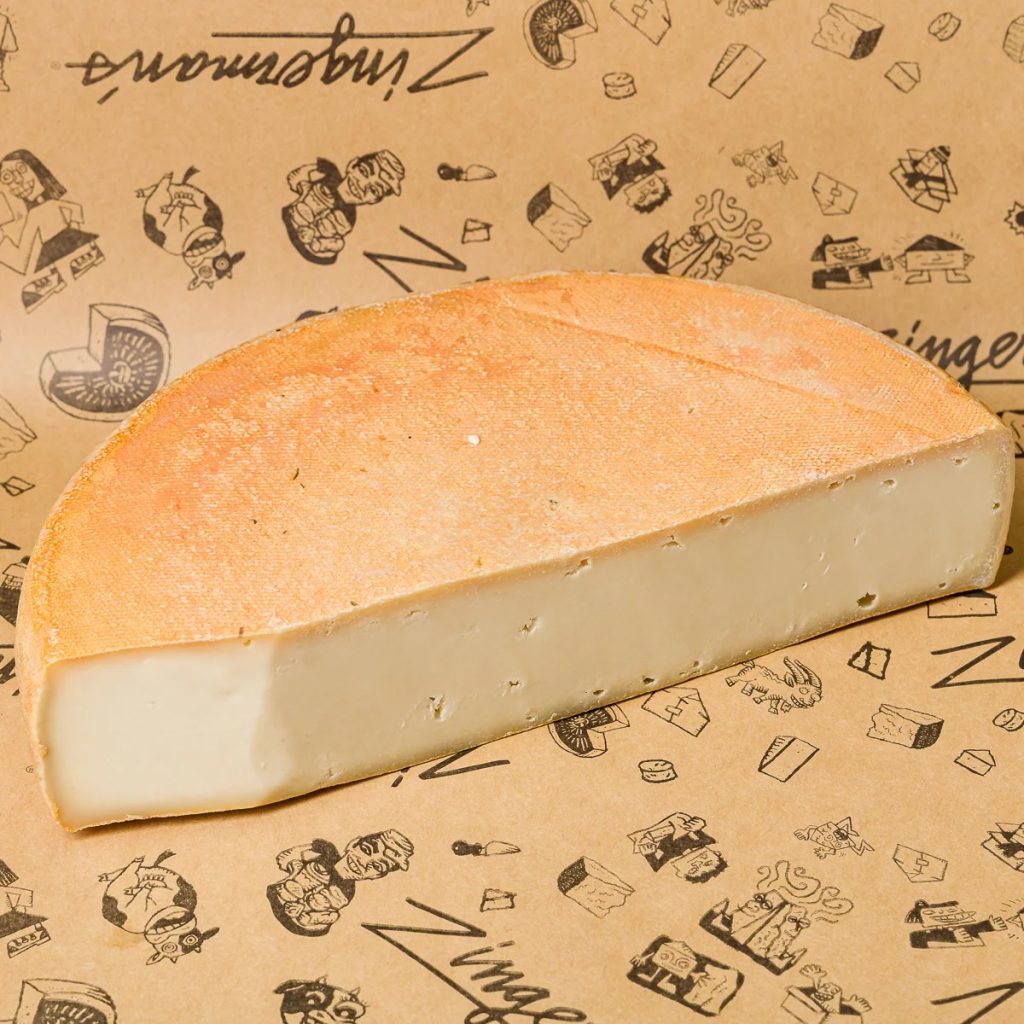
Tête de Moine is the smallest of the dozen traditional Swiss cheeses that are protected by an AOP (Appellation d’Origine Protégée, or “Protected Designation of Origin”), whose standards restrict the region where the cheese is made (so that the terroir of the soil is appropriate for its unique flavor), the feed used, the traditional techniques employed, et cetera. Compared to the 180-pound Emmental I wrote about recently, these little one-kilo wheels are tiny. Only nine producers still make this old-time cheese, and only two affineurs mature it. The wheels we have on hand were crafted by the Spielhofer dairy in the Jura mountains, near Bern.
The dairy, in its current form, dates back to the same year we opened the Deli: 1982. Josef and Nadine Spielhofer, only in their mid-20s at the time, took over a then-50-year-old fromagerie. Today, Spielhofer has grown a great deal and makes nearly 20 traditional cheeses. They remain committed to craft and tradition. Joe Salonia, who does such wonderful work with the importing firm of Gourmino, helping us gain access to so many amazing artisan Swiss cheeses, says, “They are very innovative and make many other cheese specialties which have won awards. … They work with mostly mountain dairy milk delivery.” Gourmino selects our Tête de Moine based on the criteria we look for—something that hopefully stands out for its full, complex favor and lovely, long finish.
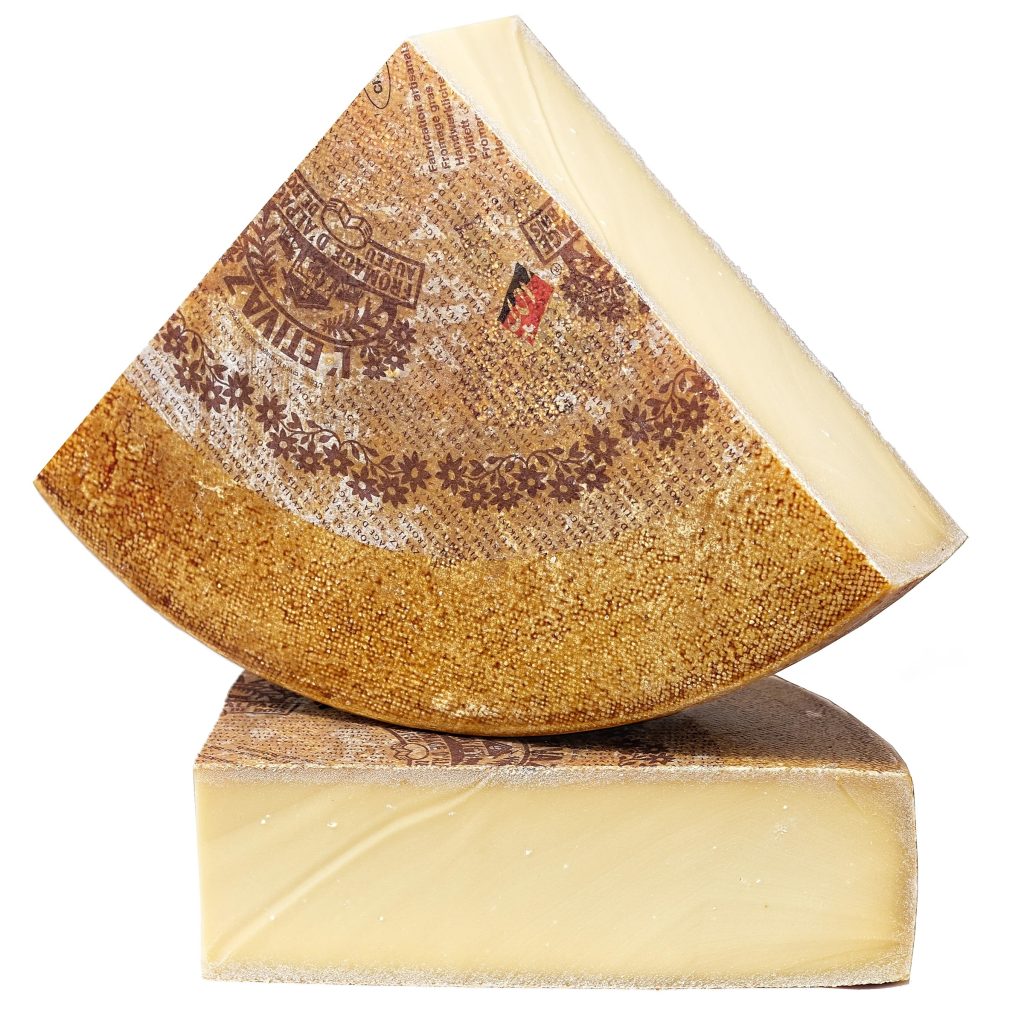
Tête de Moine, Joe told me, is the single costliest cheese to make in the region—you need about three dozen wheels of it to equal a giant 80-pound-or-so wheel of Gruyère, and yet the labor required for each is probably not much different. Every wheel needs to be washed, turned, and matured carefully, which means, as Joe says, “three dozen apple-pie-ravioli-sized ones by hand instead of one big apple pie.” And speaking of apple pie, the heady nose and full flavor of the Tête de Moine make a great sweet-and-savory pairing with a slice!
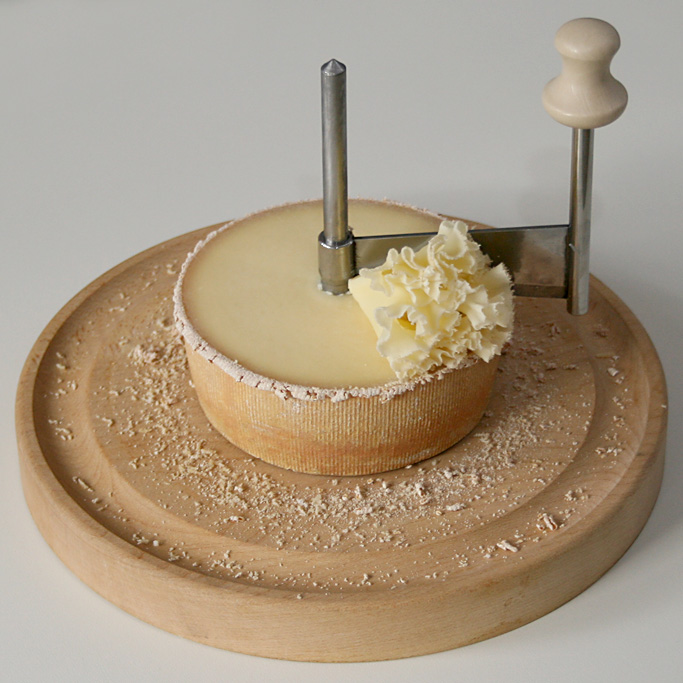
Tête de Moine is most widely known for the girolle that is now commonly used to shave super thin slices off the top of the cheese (you can see one in the photo above). Also invented, remarkably, in 1982—the same year we opened the Deli and around the same time Apple came out with its first computer—it’s a small, round “cheese plane” with a rotating arm that can be used to shave cheese very, very thinly from the top of the wheel (with rind removed) to form what are commonly called “florets,” as the resulting fluffy curls of cheese look a lot like flowers. The texture is something special—and, of course, it alters the flavor and makes this already special cheese into something more special still. Joe Salonia says, “Tête de Moine AOP hitting your palate is something that bewilders my mind.”
Tête de Moine of this quality is a rare treat to have here in the American Midwest! I hope you relish it as much as I have. I’ve been enjoying the Tête de Moine as I would any other mountain cheese—cut into pieces and eaten at room temperature. (The temperature makes a big difference as to how much flavor you experience.) The cheese is remarkably full-flavored, with a modest bit of the tang that comes with washed-rind cheese like this one, and a wonderfully big, buttery finish. It’s great on its own or paired with ripe peaches or the new season’s apples and pears. Try it on a chunk of Bakehouse baguette with some Vermont Creamery Cultured Butter. Or cook some of the new potatoes I’ve been going on about lately, melt a bit of good butter on top, add salt and pepper, and then grate on some Tête de Moine. Oh, and it also pairs beautifully with that terrific Pear Mostarda I wrote about in July!
P.S. If you want to buy a girolle for your house—and most Swiss families in the region would have one—our wonderful importer Joe Salonia highly recommends the electric one made by Rosamat.
P.P.S. If you’re thinking of visiting Switzerland in the spring, there’s a festival for Tête de Moine held in the first week of May each year!