A beautiful bit of British comfort food
to cook up at home!
|
|
|
I learned about this wonderful bit of British comfort food from David Lockwood, one-time Deli staff member, now long-time partner at Neal’s Yard Dairy (NYD) in London—through whom we get these wondrous wheels—selected specifically for us. David was so enthused that I couldn’t ignore his advice, and, as usual, he was right on. This combination is terrific!
This simple but delicious dish all begins with the exceptionally excellent Appleby’s Farmhouse Cheshire. The Deli just cut into a particularly tasty new wheel, specially selected for us by David and the NYD crew—which is why it’s been on my mind of late. It’s been nearly three decades now that we’ve been selling the Appleby family’s very fine farmhouse Cheshire cheese at the Deli. I first visited Abbey Farm at Hawkstone—about halfway between Birmingham and Liverpool—where Lucy Appleby was making her now-famous raw milk, traditional Cheshire, sometime in the late ’80s.
Best I can remember, I kind of just showed up at their centuries-old farmhouse. Remember back then there was no email, no cell phones, no websites. Just books, paper maps, and word of mouth! I had read about them in the writings of artisan cheese supporter Major Patrick Rance and was eager to experience the Cheshire in its home. Mrs. Appleby, already in her late ’60s at the time, invited me in to watch the cheesemaking, and then later that day to sit in the kitchen for tea, a bit of talking, and of course, some cheese tasting. The Cheshire she was making—true to what had been crafted in the county for so many centuries—was exceptional. It was then, and remains now, one of a kind, little known or understood outside of a handful of folks in the know.
For context, at the time I knocked on the Appleby’s door, there was almost no British farmhouse cheese available in the U.S. And, in fact, truly traditional cheese was on the verge of going extinct in the U.K. Cheshire had once been the most popular cheese in England—150 years ago there were thousands of makers in the area. Sadly, though, as our friends at Neal’s Yard Dairy share: “By the end of the war, only 44 farmhouse Cheshire cheesemakers remained. In view of such challenging market conditions, the story of the Appleby family is quite remarkable.”
In the context of what I wrote above, it’s clear that the Appleby family have repeatedly chosen hope, countless times, over all the many years they’ve been doing this. I can only imagine how difficult it was to continue to do the hard work to craft a difficult-to-make artisan cheese when literally everyone else was going in the opposite direction—it was nearly impossible to find retailers who would stock it or places and people who were willing to pay much more to get this handcrafted traditional version of one of Britain’s oldest cheeses. Every time I eat a bit I’m deeply grateful that they did.
The quote above from Historian Yuval Noah Harari’s statement, “Choices change history” is just as true in the cheese world as anywhere else. In this case, one person’s decision to choose hope, at a time when the artisan food world was at a historical low point, played an important part in helping the Appleby’s to do what they have done. Major Patrick Rance ran a small cheese shop in Streatley-on-Thames and became a passionate campaigner for the cause of traditional British cheese. Rance’s Great British Cheese Book came out the year we opened, 1982, and it served as a sign of hope for frustrated cheesemakers like the Applebys. Years later, Christine Appleby, Lancy and Lucy’s daughter, declared, “If it hadn’t been for him, we’d have given up years ago. He was the flagship of British cheese.”
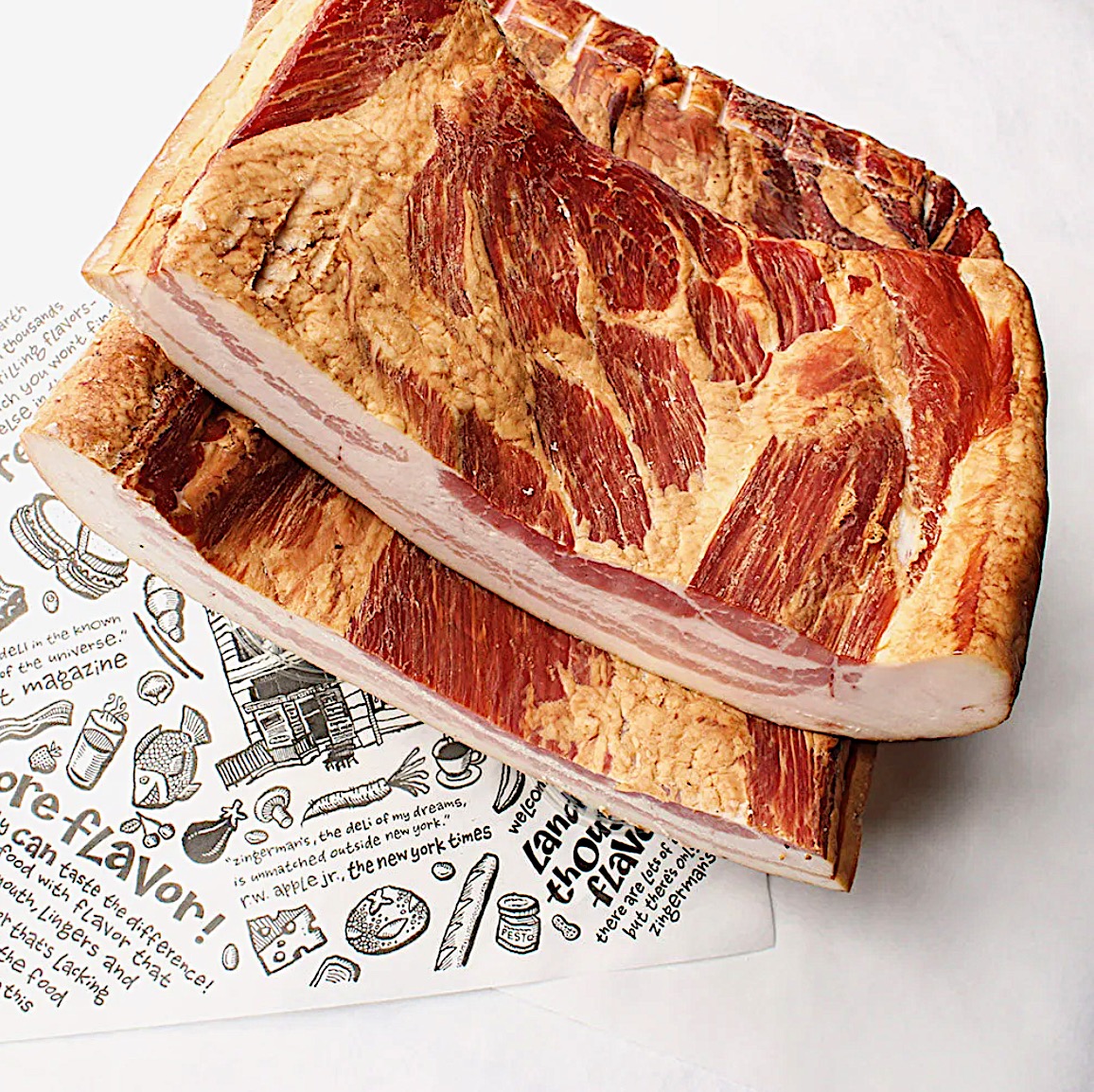
Thanks to all of the decisions to opt for hope, we all have the chance to enjoy this tasty treat! To make this little combo, it only takes a couple of minutes. Cook a couple slices of bacon per person—Nueske’s Applewood Smoked Bacon is always awesome. When the bacon is cooked but not crispy, crumble on a bit of the Appleby’s Farmhouse Cheshire. Cover it for a minute or so, until the cheese softens but doesn’t totally melt. Take out with a spatula and eat!
I like to also put it on a toasted Bakehouse brioche roll to make my own version of a British BLT. You can also add a fried egg, and a bit of lettuce, tomato, and mayo! As per what I wrote about extensively in “A Taste of Zingerman’s Food Philosophy,” it’s the coming together of simple, super quality, traditionally made ingredients to make for one impressively tasty treat.
|
|
Want more from Ari?
Sign up for Ari’s Top 5 e-newsletter and look forward to his weekly curated email—a roundup of 5 Zing things Ari is excited about this week—stuff you might not have heard of!
Follow us on social media: Instagram, Facebook and Twitter, @zingermanscommunity. |
America’s secret fruit shows up on the Southside
|
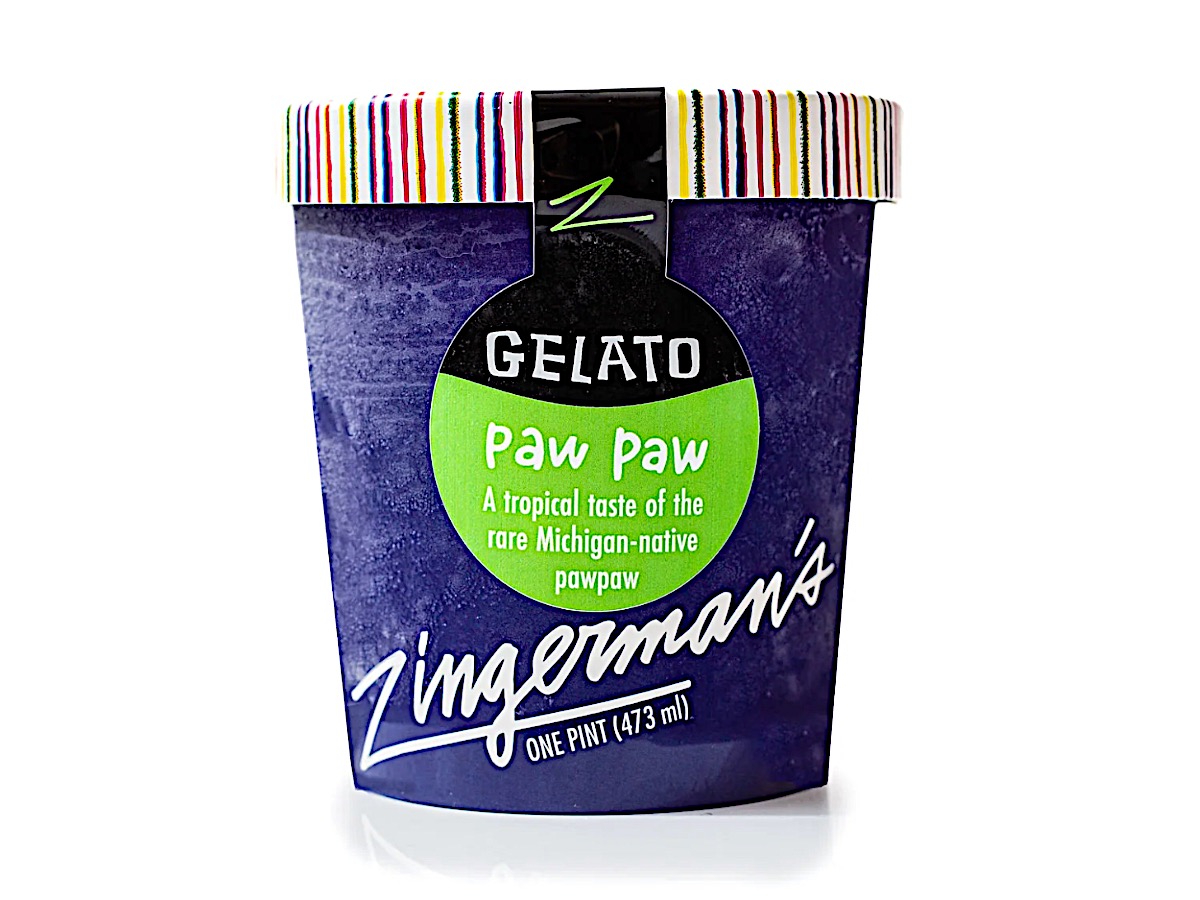
It was nearly 20 years ago that we started the project to make Paw Paw Gelato at the Creamery. At the time, hardly anyone in Ann Arbor knew this old American fruit. Today, I’m happy to say, paw paws are getting more and more popular! I’ve seen them in half a dozen shops around town. And we now have a good number of fans waiting for our annual autumn release of this super tasty gelato. I’m happy for paw paw’s increasing popularity. It’s the kind of traditional, delicious food with a great story that we love to work with. In the context of what I wrote last week about awe and wonder, the paw paw is pretty much a perfect example of the wealth of wonder-ful foods and drinks we get to work with every day.
Once upon a time, paw paws were very popular and far easier to find around these parts. Native to North America, they have been known historically by a range of wonderful monikers: Prairie Banana, Hoosier Banana, Indiana Banana, Poor Man’s Banana, Quaker Delight, and Hillbilly Mango. Paw paw trees are about 10 to 20 feet in height with long dark green, sort of droopy-eared leaves and the largest edible fruit that grows in North America. They look a bit like a mango, but with pear green-colored flesh. The fruits are ripe when their skin gets a bit darker and the perfume is more pronounced. One reason that paw paws pretty much disappeared is that, like many great heirloom varieties, it’s hard to grow, has a very low yield, and the fruit one does get requires a lot of handwork to process. Thanks to a couple of local farmers and the Creamery crew, the rest of us can just stick our spoon in and enjoy the fruits of their labor!
Even after a decade of doing this special gelato annually, most folks we encounter are still unfamiliar with this fruit. That said, it has slowly but surely built ever more fans! One of them is Roadhouse bartender Cori Scharmin: “It’s so freaking good! It tastes like a tropical fruit but it’s from here in Michigan. A little mango and it’s really banana-y. It’s really good and really different! I love it!” To my taste, the Paw Paw Gelato is slightly citrusy, kind of custardy, a bit like passion fruit and Cherimoya with a little hint of lime, a touch of vanilla, papaya, and ripe pear. Serious Eats said it’s “a riot of mango-banana-citrus that’s incongruous with its temperate, deciduous forest origins.”
You can get the Paw Paw Gelato at the Cream Top Shop (by the Bakehouse on Plaza Drive), the Roadhouse, and the Deli. Better still, ship some gelato to your cousin in California where paw paws will be an unknown culinary delight. Ask for a taste for sure next time you see us! Pairs beautifully with the Gingerbread Coffee Cake as well!
|
|
| P.S. The city of Paw Paw, Michigan is named for the fruit. It’s also the place where Malinda Russell was living when she authored A Domestic Cook Book back in 1866. It was the first such book published by a Black woman. Russell is featured in Patrick-Earl Barnes’ “Blacks in Culinary” art piece at the Roadhouse and is also featured in the center of the terrific t-shirt we made from Patrick-Earl’s piece—I get many compliments on it every time I wear it! Proceeds from the shirt go to the African American Cultural and Historical Museum of Washtenaw County. |
|
|
Want more from Ari?
Sign up for Ari’s Top 5 e-newsletter and look forward to his weekly curated email—a roundup of 5 Zing things Ari is excited about this week—stuff you might not have heard of!
Follow us on social media: Instagram, Facebook and Twitter, @zingermanscommunity.
Great summer vegetarian supper at the Roadhouse
|
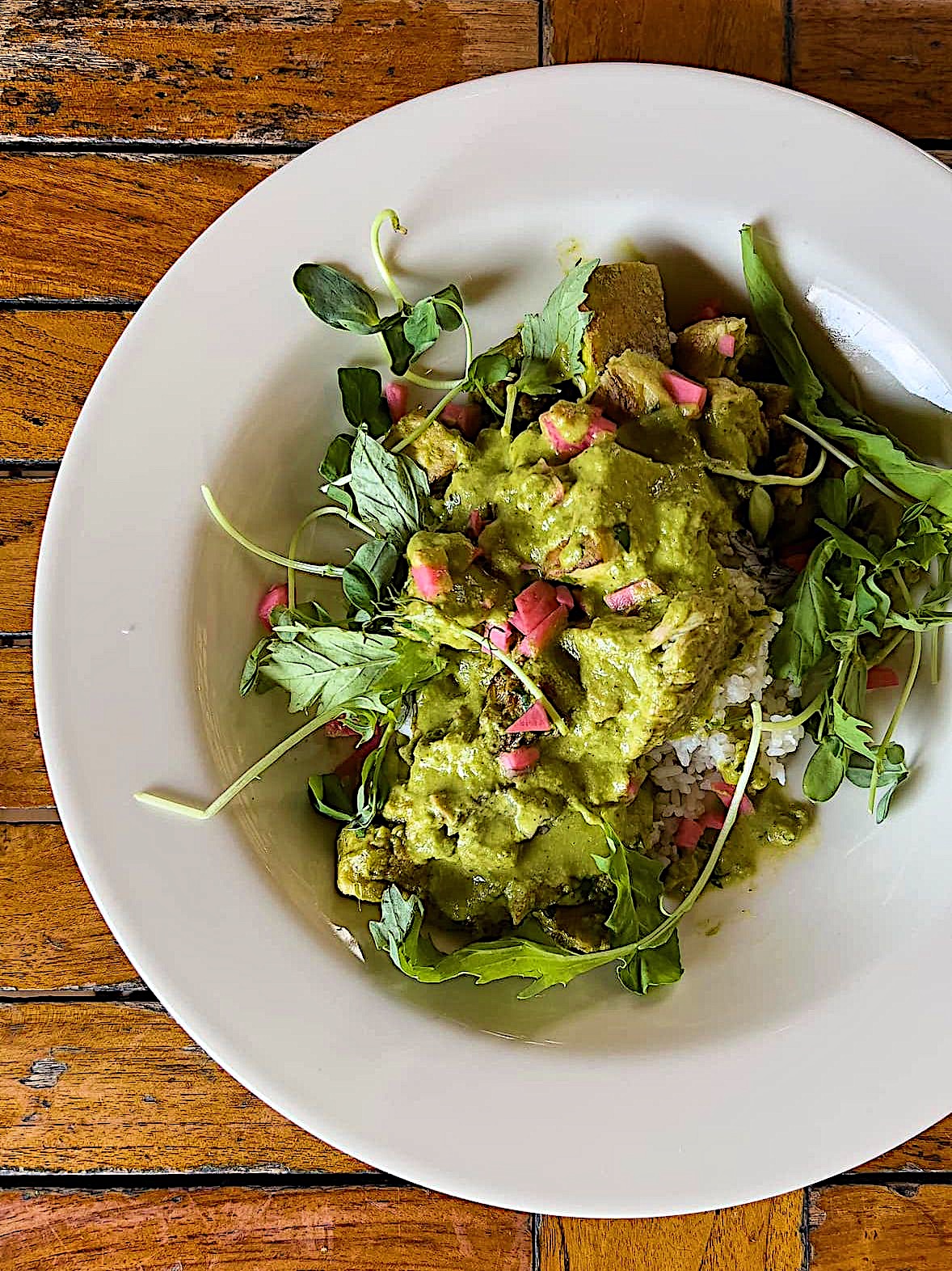
This summer special features some lovely local produce and the world-class, historically-significant, organic Carolina Gold Rice we get from Anson Mills down in South Carolina.
The main feature of the dish is the organic local Lion’s Mane mushrooms we’ve been getting from the fine folks at Stoney Creek Mushrooms. When the local Lion’s Mane come in, they’re huge—about the size of a head of cauliflower! The flavor is earthy, delicate, and delicious. The rice is less visually striking but no less delicious! It dates to the 17th century when it came to the Carolina coast from West Africa where it had been widely and skillfully grown for centuries. Carolina Gold (the name comes from its color when it’s still in the husk, in the field, shimmering in the sun) is the rice that made so many South Carolina planters wealthy, wealth that of course came via the unpaid labor of enslaved Africans.
West Africans were the tech minds that made the rice growing work. After Emancipation in 1863, the low yield/high labor of Carolina Gold, like most heirlooms, made it less appealing to farmers looking to make money and by 1920 it had completely disappeared from commercial sale. Seeds were found in a seed bank in Arkansas in 2000 and thanks to the folks at Anson Mills and a handful of others, it’s made a comeback. What we get from Anson Mills is field ripened (to bring out the rice’s natural full flavor), milled only when we order it to retain full flavor, and the germ (brush up on your grain anatomy here) is left in which a) makes it a perishable product and b) significantly enhances the flavor.
The crowning touch on the dish is the pesto. It starts with some beautiful, exceptionally aromatic, organic basil that’s coming in from a series of local farms, most particularly Tantré Farm in Chelsea and Tamchop Farm in Dexter. We take the fresh basil leaves and turn them into a pesto in the Roadhouse kitchen with olive oil, fresh garlic, Parmesan from Wisconsin, pine nuts, and a bit of Tellicherry pepper. The dish comes together beautifully—the gentle nuttiness of the rice, the herbal brightness of the pesto, and the delicate earthiness of the Lion’s Mane mushrooms. Swing by for lunch or dinner! |
|
|
P.S. If you’re dining on a Tuesday, the Roadhouse offers any bottle of the 36 artisan American wines on its list at 30% off (this offer is extended every day for take-out orders!). The majority of the wines on the list are made by winemakers or wineries led by women or folks from underrepresented minorities—a great way to make diversity come alive in a practical and very tasty way!
P.P.S. We’ll be paying particular tribute to traditional African American foodways at the special dinner at the Roadhouse on Tuesday, September 12th. My friend, author and historian Adrian Miller will be the guest speaker and the event will be used to raise funds for NEW Center!
Want more from Ari?
Sign up for Ari’s Top 5 e-newsletter and look forward to his weekly curated email—a roundup of 5 Zing things Ari is excited about this week—stuff you might not have heard of!
|
|
|
Great, weekday meal for barbecue lovers
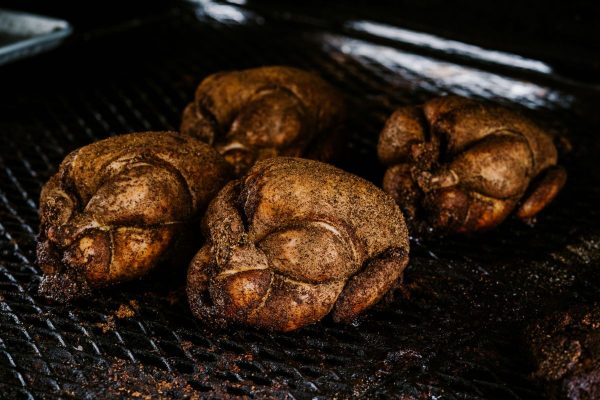
If Fried Chicken is the superstar singer on the poultry part of the Roadhouse menu, the Pit-Smoked Chickens would probably be the bass player. They’re happily in the background, grounded, steady, and really really good at what they do. And while that Fried Chicken is really really fantastic, I’ll offer that I eat far more of the Pit-Smoked Chicken. Honestly, it’s one of my favorite products in the ZCoB!
If it’s Monday, Tuesday, Wednesday, or Thursday, give some thought to swinging by and picking up one of these exceptional oak-smoked chickens from the Roadhouse. I can say from a LOT of personal experience that they make an exceptional evening meal! A whole Amish chicken, rubbed with our freshly ground, farm-to-table Tellicherry black pepper and salt, put on the pit to smoke slowly over smoldering whole oak logs for about three or four hours. We’ve had them on the carryout menu for the last few years, during which time they’ve been a very regular item at our house.
All you need to do is call ahead to order one, then swing by the Roadhouse and pick it up. (You can also just come by, but we’re only doing a limited number of these every day so … if it were me, I’d order ahead to make sure I got one.) The Roadhouse crew puts a bit of butter atop the bird, then wraps it really well in foil so you can get it home in good shape. Best bet, I think, is just to unwrap and eat. If you want to heat it up, either stick it in a hot (350° F) oven in the foil for a bit, or you can microwave it (after you take it out of the foil!) for a few minutes if you want to go more quickly. Since Tammie and I eat dinner late at night, we did the latter, and it worked out just fine.
The big news here though is that you can now get the Pit-Smoked Chickens inside the restaurant for dinner. We’re still on that same limited-times and limited-days schedule—Monday through Thursday, dinner only, and, when we’re out we’re out. The beautiful oak-smoked, Tellicherry black pepper-dusted bird comes plated with side dishes that make it a great dinner and a great deal! Start out by snacking on a glass of those incredible single-origin peanuts we’ve been getting from Elisha Barnes in Virginia and a small salad. Finish the evening off with a scoop of that Roadhouse Joe-lato!
If you have leftovers, I’ll share that they’re awesome for adding to soup or salad, making into smoked chicken salad, or just nibbling on out of the fridge when you need a snack. Tammie and I take the bones that are left behind and boil them with an array of vegetables to make a magically terrific broth. (When we serve it, we drop on a spoonful of that IASA peperoncino!)
Once again, the Roadhouse only smokes a limited number of these pit-smoked whole chickens Monday through Thursday. They come out in time for dinner and it can’t hurt to order ahead and have us hold one for you. It’s hard to believe a chicken could be life-changing but this might be it.
|
|

Beautiful summer brunch special running at the Roadhouse right now
|
|
|
If you’re thinking of going out for brunch, give some thought to swinging by the Roadhouse Saturday or Sunday for delicious cornbread waffles. This dish will only be on the menu for the next two weekends while the local berries are at their best!
Sous chef Jess Forbes came up with the idea for a cornbread waffles special offering while poking around old recipes from Kentucky. Roasting strawberries is a technique that dates back centuries. It’s a wonderful way to intensify the flavors of already really fine fresh fruit. New York chef and author Tom Colicchio wrote in the New York Times, “[I] love what roasting does to ripe summer fruit. It may seem greedy to improve on nature now, but that is exactly what roasting does.” After being washed and hulled, the berries are slow-roasted with a splash of balsamic vinegar and a good bit of the sorghum syrup we get from Muddy Pond mill in Tennessee.
If you don’t know sorghum syrup, in the moment I’ll just say, it’s the “syrup of the Middle South”—up here we have maple syrup, further south, folks have used cane syrup for centuries, but in Tennessee, Kentucky, North Carolina, etc., it’s all about the sorghum. Dark like molasses but with a complex, bittersweet flavor all its own, sorghum is great on pancakes, biscuits, or in this case, in the Roasted Strawberry Compote.
The seasonal strawberries are certainly the featured item on this dish, but don’t overlook the cornmeal. It’s just as the best locally milled “meal” would have tasted about 200 years ago. We get it from Anson Mills—the same folks from whom we source those amazing grits, Carolina Gold rice, and a host of other terrific traditionally grown heirloom grains! Aside from being harder to grow, heirlooms like this generally yield only about 20 percent at best of what you get out of commercial corn.
Right now Anson’s meal is made from four old varietals: Leaming, John Haulk, Jarvis, and Hickory King Yellow. All four are “dent corns” (which are softer in texture than the alternative, known as “flint corn”). Like everything we get from Anson Mills, the corn is grown organically, field-dried, and stone ground. Because, like all Anson products, it has the germ left in (which makes it way more flavorful) it has to be refrigerated.
The old corn varietals used here are wonderfully aromatic and complex in their flavors. Glenn Roberts, the man who got Anson Mills going a little over 20 years ago, says, “Great corn is like great wine,” and this stuff proves the point. “Cornmeal” may sound mundane on the surface but seriously, it’s super delicious. It’s so flavorful. Floral is the key word for me. We use the corneal for the Spider Bread at the Roadhouse on Tuesday evenings and also on the whole catfish.
By making this recipe with the cornmeal and organic Carolina Gold rice flour (also from Anson Mills, it’s what we use for the Gluten-Free Fried Chicken), Jess kept the Cornbread Waffles wheat-free! The delicate delicious floral flavors of the cornmeal get a bit of caramelization as they are cooked up in the waffle iron. And then, while they’re still hot, they get topped with that wonderful, complexly flavored compote! Swing by soon, while the strawberries are still in season and score these super tasty waffles!
|
|
P.S. The Roadhouse has been getting great response to its Texas Breakfast Tacos catered for morning meetings and get-togethers of all sorts. Email [email protected] if you’re interested!
Want more from Ari?
Sign up for Ari’s Top 5 e-newsletter and look forward to his weekly curated email—a roundup of 5 Zing things Ari is excited about this week—stuff you might not have heard of! |
|
|
5 Fun Facts about Zingerman’s Delicatessen
Zingerman’s Delicatessen has been a local community staple for many decades. When Ann Arbor comes to mind, Zingerman’s is not a far thought behind it. Zingerman’s Delicatessen offers many choices of tasty sandwiches, breads, vinegars, cheeses, and so many more specialty items. You might know that Zingerman’s Delicatessen has been around for over 40 years, but we bet there’s a fact or two that you might not know about this famous deli! We have compiled a list of our favorite 5 fun facts about Zingerman’s Delicatessen.
- Shhhh: the Deli has Zecrets!
Have you heard of Zecrets? They’re special perks or fun options that you might not know about. We would tell you not to tell anyone, but this is the kind of Zecret we would not mind getting out. (See what we did there?) Here are some Zecrets that you can use for your next visit to Zingerman’s Delicatessen.
Zingerman’s Delicatessen offers tours of the deli where guests can further explore things such as the basement and see behind the scenes. A fun Zecret is that if you attend any event at the Deli, virtual or in person, you can receive a 20% off coupon that you can use anywhere in the deli. Have you been eyeing some items at the specialty grocery store? Attend an event and enjoy 20% off the next time you come in!
You can also enjoy 15% off on your birthday! We love saving money, how about you?
- Zingerman’s Delicatessen is in a historically significant neighborhood
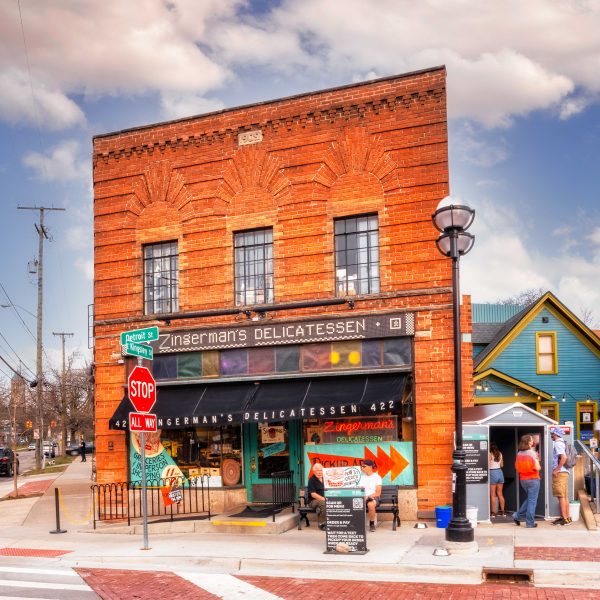
Ann Arbor has over a dozen historic districts! The Deli Campus of buildings sits within the Old Fourth Ward historic district. Not only is the original Deli building, built in 1902, a historic structure, but there’s a historic home hiding within the complex, too. The deli address is 422 Detroit, St, Ann Arbor, MI. The historical house address is 420 Detroit Street. How incredible!
In addition to 5 fun facts about Zingerman’s Delicatessen, due to the house’s recognition as a historic structure, Zingerman’s was limited in changing the house when they expanded in 2012. They were unable to physically move the house, so the house was lifted, and a basement was built underneath it. The house was adjoined to the expanded space, repainted, and it is now known as the pick up area for all orders (internally referred to as “420” or “ the 420 pick-up area”.)
Another fun fact about the historic house is that the space was not only once used as office space for the Deli, but it was the location where Food Gatherers started. Food Gatherers was founded in 1988 by Zingerman’s Delicatessen, Michigan’s first food rescue program and the sixth in the United States. Food Gatherer’s is now an independent non-profit.
If you are unfamiliar with Food Gatherers, check out more information here! Learn how you can become a volunteer to help partner with the local community to fight against hunger in our community.
- The Deli makes over 200 sandwiches every hour!
Long-time Deli fans will remember the days of long lines wrapping around the building. These days, thanks to having multiple ways to order your sandwich, you’ll rarely see a lengthy physical line, but that doesn’t mean the Deli crew isn’t still skillfully and speedily turning out dozens of hand-crafted sandwiches.
If you arrive at the Deli and you are told there is a one-hour wait for your order, it is because there are about 215 sandwiches in line in front of you. You could be physically present at the Deli and not see that 215 sandwiches have been ordered but it is indeed happening. The Deli sandwich line can make on average 18 sandwiches every 5 minutes; during super busy times, that can go up to 25 sandwiches every 5 minutes! On a busy football Saturday, the Deli can make between a whopping 2,000 to 2,500 sandwiches!
- Zingerman’s Delicatessen has achieved celebrity status!
Who knew Zingerman’s Delicatessen starred in a movie, the Five-Year Engagement? The Five-Year Engagement is a story of a couple played by Jason Segel and Emily Blunt trying to balance professional ambition with the demands of a relationship. Fun fact, although the main character Tom appears to work at Zingerman’s Delicatessen, most scenes were filmed at Zingerman’s Bakehouse.
Jason’s character was a baker at the real Zingerman’s in Ann Arbor. Zingerman’s full essence including the illustrations, design, and logo of the restaurant is captured authentically in the film. How cool is it that not only was Zingerman’s featured in a film, but the Deli was able to play itself? It shows how the Zingerman’s brand is far-reaching and felt through screens worldwide. With over 6,700 independent retail bakeries in the United States, production of the Five-Year Engagement decided to take residence at Zingerman’s.
But Zingerman’s shine does not stop there. Zingerman’s has served its fair share of heavy-hitter guests such as President Obama, University athletic teams, a plethora of entertainers, and news anchors. Zingerman’s Delicatessen even hosted an ESPN Game Day and has regular visits from former football coach, Lloyd Carr at the Next Door Cafe.
Even with its popularity and frequent visits from amazing people all over the world, Zingerman’s is a community-focused business that takes immense pride in its dedication and love for Ann Arbor. You really can taste the difference!
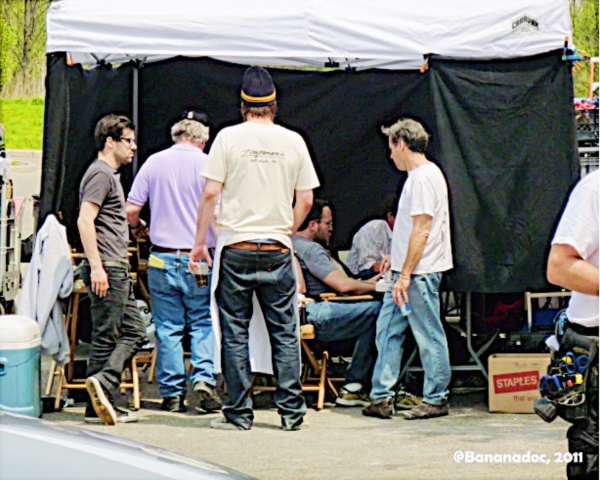
Photo used from thebananadoc.
Check out detailed footage and more facts about the filming of the Five-Year Engagement here!
- Zingerman’s Delicatessen still uses its original recipes!
Over the years, the Deli has revamped and elevated its recipes with higher-quality and more sustainable ingredients, while staying true to tradition. For over 40 years, the recipes, like for Russian dressing, knish, chopped liver, and matzo balls, have stood the test of time.
Since opening its doors on March 15, 1982, corned beef sandwiches have been a hallmark of the Delicatessen. And the corned beef recipe has not been changed since the first Reuben was made! Zingerman’s corned beef is sourced from Sy Ginsberg at United Meat & Deli, a manufacturer of premium deli meats based in the Eastern Market.
You may be surprised to know that Ari Weinzwieg and Paul Saginaw, founders of Zingerman’s Delicatessen, were not raised in family businesses the way so many deli owners were. Ari has admitted that while his grandmother was a great cook and he ate at Jewish delis, he lacked in the family food heritage department. Ginsberg was skeptical of his partnership with the ambitious Paul and Ari, but he quickly learned that they were a passionate force to be reckoned with. With Ginsberg’s guided expertise, he helped them create a perfect recipe that would later become a leading sandwich in the industry. Zingerman’s decision to import Swiss cheese gave it a leg up in the race of classic famous corned beef sandwiches. If you want to dive deeper into what makes Zingerman’s corned beef sandwiches so darn good, check out Zingerman’s Delicatessen feature in The Takeout.
The next time you indulge in a bite of Zingerman’s food at the Delicatessen, know you are biting into tradition. With so many delis that have come and gone, Zingerman’s Deli is still standing with no signs of stopping. We hope you have enjoyed learning about 5 fun facts about Zingerman’s Deli!
If you have any other interesting facts about the Delicatessen that you would love to share, we want to hear from you over on our social media platforms. Share your experience or your favorite food at Zingerman’s Deli or any of our businesses’ delicious food items. We will happily share it on our Instagram and Facebook @Zingermanscommunity.