Skip to content

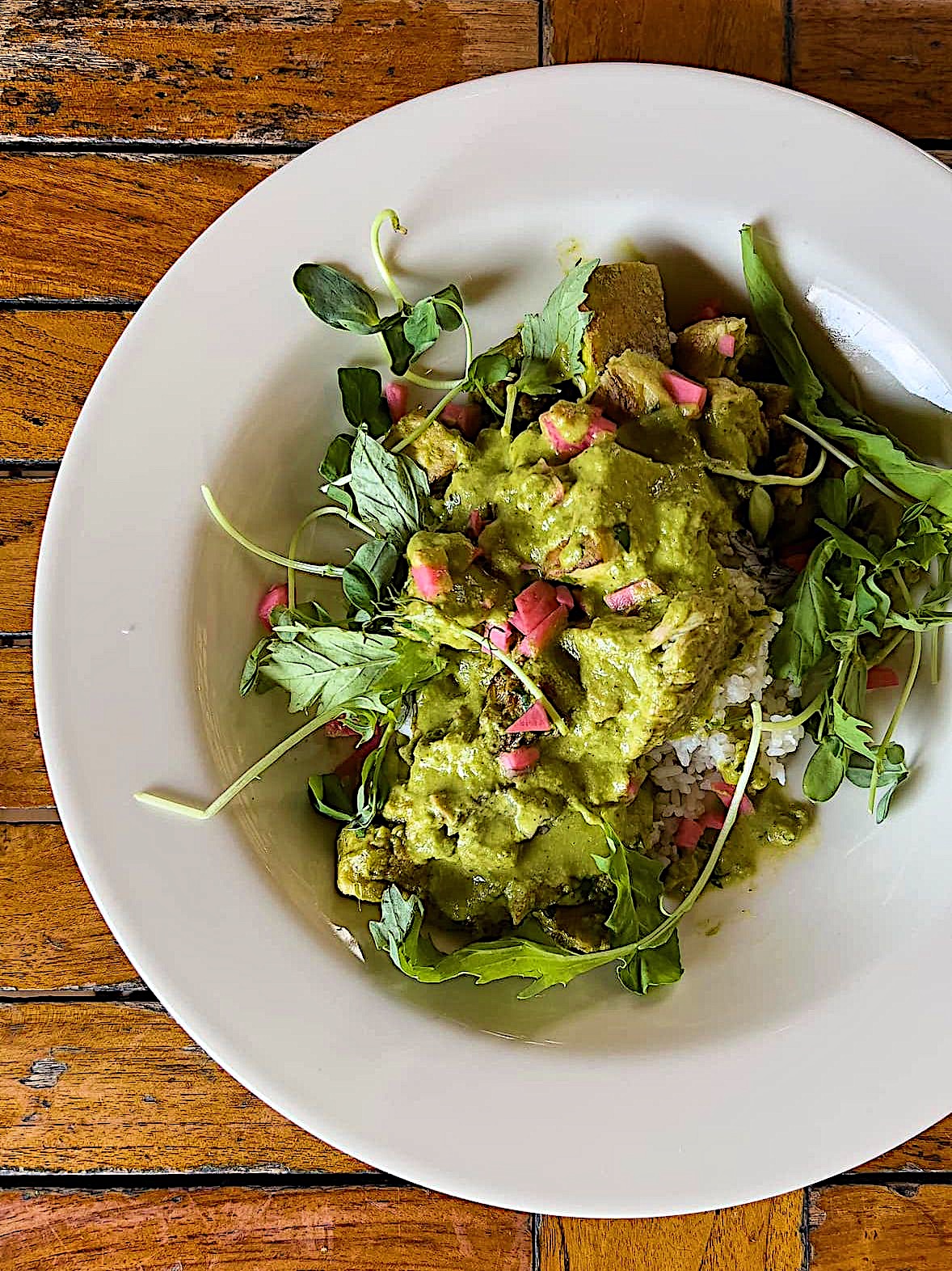
Local Lion's Mane Mushrooms, Basil and Pine Nut Pesto, and Carolina Gold Rice.

Great summer vegetarian supper at the Roadhouse

This summer special features some lovely local produce and the world-class, historically-significant, organic Carolina Gold Rice we get from Anson Mills down in South Carolina.

The main feature of the dish is the organic local Lion’s Mane mushrooms we’ve been getting from the fine folks at Stoney Creek Mushrooms. When the local Lion’s Mane come in, they’re huge—about the size of a head of cauliflower! The flavor is earthy, delicate, and delicious. The rice is less visually striking but no less delicious! It dates to the 17th century when it came to the Carolina coast from West Africa where it had been widely and skillfully grown for centuries. Carolina Gold (the name comes from its color when it’s still in the husk, in the field, shimmering in the sun) is the rice that made so many South Carolina planters wealthy, wealth that of course came via the unpaid labor of enslaved Africans.

West Africans were the tech minds that made the rice growing work. After Emancipation in 1863, the low yield/high labor of Carolina Gold, like most heirlooms, made it less appealing to farmers looking to make money and by 1920 it had completely disappeared from commercial sale. Seeds were found in a seed bank in Arkansas in 2000 and thanks to the folks at Anson Mills and a handful of others, it’s made a comeback. What we get from Anson Mills is field ripened (to bring out the rice’s natural full flavor), milled only when we order it to retain full flavor, and the germ (brush up on your grain anatomy here) is left in which a) makes it a perishable product and b) significantly enhances the flavor.

The crowning touch on the dish is the pesto. It starts with some beautiful, exceptionally aromatic, organic basil that’s coming in from a series of local farms, most particularly Tantré Farm in Chelsea and Tamchop Farm in Dexter. We take the fresh basil leaves and turn them into a pesto in the Roadhouse kitchen with olive oil, fresh garlic, Parmesan from Wisconsin, pine nuts, and a bit of Tellicherry pepper. The dish comes together beautifully—the gentle nuttiness of the rice, the herbal brightness of the pesto, and the delicate earthiness of the Lion’s Mane mushrooms. Swing by for lunch or dinner!

Make a reservation at the Roadhouse

P.S. If you’re dining on a Tuesday, the Roadhouse offers any bottle of the 36 artisan American wines on its list at 30% off (this offer is extended every day for take-out orders!). The majority of the wines on the list are made by winemakers or wineries led by women or folks from underrepresented minorities—a great way to make diversity come alive in a practical and very tasty way!

P.P.S. We’ll be paying particular tribute to traditional African American foodways at the special dinner at the Roadhouse on Tuesday, September 12th. My friend, author and historian Adrian Miller will be the guest speaker and the event will be used to raise funds for NEW Center!

 Want more from Ari?

Sign up for Ari’s Top 5 e-newsletter and look forward to his weekly curated email—a roundup of 5 Zing things Ari is excited about this week—stuff you might not have heard of!

A beautiful and delicious bread to brighten your day.

A beautiful and delicious bread to brighten your day on August 18 & 19

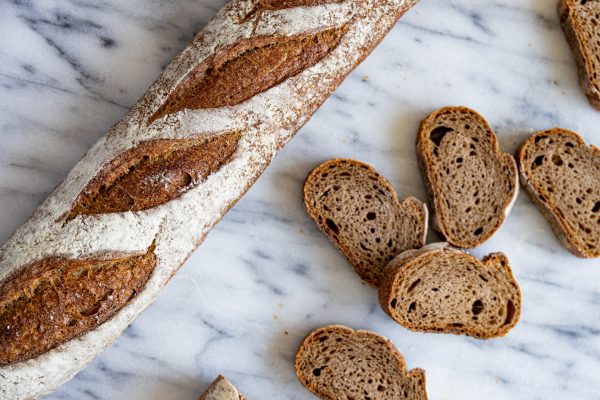
One of my all-time favorite Bakehouse breads will be available this coming weekend! You can buy a Chestnut Baguette (or two) on August 18 and 19 at the Bakeshop and Deli. Feel free to order ahead to be sure there’s a loaf waiting for you. I’ll be picking up a couple for our house! James Beard once said: “Good bread is the most fundamentally satisfying of all foods; and good bread with fresh butter, the greatest of feasts.” The Chestnut Baguettes from the Bakehouse backs up James Beard’s statement in a big way!

Baking with chestnut flour is wholly uncommon in the U.S. in the 21st century, but it’s got a long history in Italy, France, and central Europe where chestnuts were used for almost all sorts of cooking. Chestnut flour was often what people who couldn’t afford the more costly wheat would work with. In Ukraine, chestnuts are considered a symbol of prosperity, fertility, and also longevity.

(The story there, which dates to the 19th century, is yet another example of Russian imposition and acting with anything but grace, followed by creative Ukrainian resistance.) In the Lunigiana region of Tuscany, wheat was grown on the valley floor, so the only flour readily found in the mountain areas was ground from locally grown chestnuts. The region has long been known as “The Land of the Moon and the Bread Tree”—the latter is a reference to the chestnut.

The typical Casola Marocca bread of the area is now enshrined in the Slow Food Presidium. Chestnut flour-based breads were also popular in Liguria (the Italian Riviera), where Rocco and Katherine Disderide, the Italian immigrant couple who built the Deli’s building in 1902 had come from. In that sense, I feel like the Bakehouse’s Chestnut Baguettes have come full circle. Unfortunately, chestnuts in the U.S. fell prey to a massive blight in the early years of the 20th century and were almost totally eradicated. Michigan, I’m happy to say, has been the center of the American chestnut revival over the last decade or so.

To make the baguettes, we work with local chestnut flour from the folks at Treeborn, about half an hour or so west of here in Jackson. We blend that with freshly milled Michigan hard red spring wheat. No commercial yeast is used—just the flour, filtered water, and sea salt—which means that the baguettes are naturally leavened. The finished loaves are lovely, the color, in fact, of chestnuts. The flavor is nutty, full, subtly sweet, with a long, lovely finish that pairs well with an endless list. The baguettes are great with the Creamery’s fresh goat cheese or Manchester cheese. Toast a slice and top with olive oil and fresh Bellwether ricotta and some chestnut honey. If you toast slices on the grill to pick up a bit of woodsmoke, that’s wonderful too. Or just tear off a chunk and eat it as is!

Treeborn is located in the Rogers Reserve, land that was donated to Michigan State University by Ernie and Mabel Rogers in 1990. Determined to right what had gone so wrong in the American ecosystem, the Rogers gifted the land for the express purpose of supporting the revival of the American chestnut. Treeborn today has the only commercial chestnut peeling line in the Western Hemisphere, technology that makes this work possible.

As of the 2012 U.S. Census of Agriculture, Michigan is the country’s leading producer of chestnuts. Maybe when the ZCoB hits its 100th anniversary in 2082, local license plates will say “The Chestnut State.” And this beautiful baguette will be one of the state’s signature dishes, something travelers regularly take back with them to demonstrate what is possible when good people do good work in the world!

Pre-order for pick up at the Deli


P.S. If you want to make the baguettes at home, the recipe is in the Zingerman’s Bakehouse book on page 228.

                                                                       Want more from Ari?

Sign up for Ari’s Top 5 e-newsletter and look forward to his weekly curated email—a roundup of 5 Zing things Ari is excited about this week—stuff you might not have heard of!

Midsummer super special bake coming up on August 4 & 5.


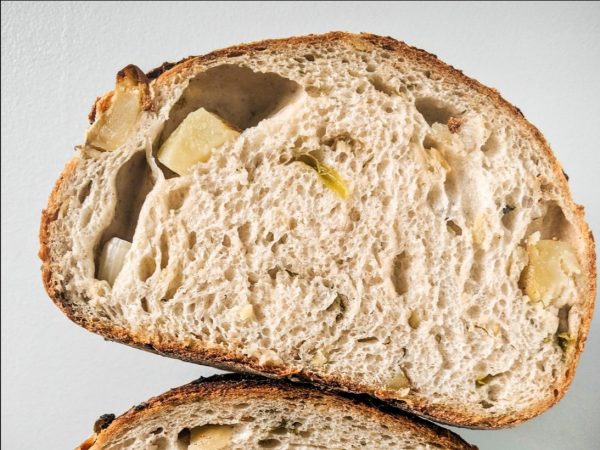
Potato dill bread from the bakehouse stacked on top of another potato dill bread.


One of my long-time favorites from the Bakehouse, Potato Dill Bread, is making a special summer appearance this coming weekend! I figured I’d give you the heads up so you can pick up a couple loaves for your house, same as I’ll be doing for ours. I just wrote about the Better Than San Francisco Sourdough last month, and that terrific bread serves as the base for this one. It’s naturally leavened—old-school, without the addition of commercial yeast, the dough takes about 18 hours to rise.

The Potato Dill Bread is enhanced with mashed roasted potatoes, then seasoned with a generous bit of fresh dill and scallions. It’s got a great lively full flavor that I like to eat ripped right off the loaf on the way home from the Bakehouse! Of course, you can also slice it and use it for toast or sandwiches. It would be great with the “Jewish Chop Suey” (read on!), with the Creamery’s Cream Cheese or Goat Cream Cheese, or just a bit of good butter. I love using it for grilled cheese too!

Here in the 21st century, potato breads of this sort can evoke images of comfort and familiarity, but a few hundred years ago the idea of putting potatoes into bread was actually rather provocative and for many uncomfortably unfamiliar. Potato breads back then were a cutting-edge culinary “innovation” being advocated by a French pharmacist and agriculturalist named Antoine-Augustin Parmentier. The anniversary of Parmentier’s birth (August 17th, 1737) makes this a particularly good month for us to celebrate this special bake and his boldness in introducing this new approach to baking. In Europe in the 18th century, potatoes were not well accepted.

Having come back from the Americas as part of the Columbian Exchange in the early 16th century, they were dismissed by scientists (who believed potatoes led to leprosy), the church (which argued potatoes provoked lust), and chefs (who thought they were bland). Parmentier became the potato’s biggest advocate in Europe. Potatoes, Parmentier preached, could help to cut costs (wheat was more costly) and add flavor. Clearly, his cutting-edge work worked out—today potato breads are staples in the cooking of Ireland, France, Germany, Scandinavia. And the Bakehouse! Swing by the Bakehouse this weekend and score a few loaves. They freeze well, so if you’re a fan, you can put a few away to break out this fall for a football game.

Pre-order for pick up at the Deli

Want more from Ari?

Sign up for Ari’s Top 5 e-newsletter and look forward to his weekly curated email—a roundup of 5 Zing things Ari is excited about this week—stuff you might not have heard of!

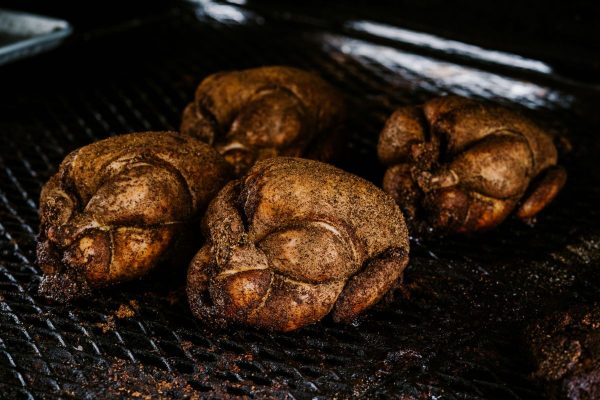
Pit-Smoked Whole Chickens from the Roadhouse. Great, weekday meal for barbecue lovers.

Great, weekday meal for barbecue lovers

If Fried Chicken is the superstar singer on the poultry part of the Roadhouse menu, the Pit-Smoked Chickens would probably be the bass player. They’re happily in the background, grounded, steady, and really really good at what they do. And while that Fried Chicken is really really fantastic, I’ll offer that I eat far more of the Pit-Smoked Chicken. Honestly, it’s one of my favorite products in the ZCoB!

If it’s Monday, Tuesday, Wednesday, or Thursday, give some thought to swinging by and picking up one of these exceptional oak-smoked chickens from the Roadhouse. I can say from a LOT of personal experience that they make an exceptional evening meal! A whole Amish chicken, rubbed with our freshly ground, farm-to-table Tellicherry black pepper and salt, put on the pit to smoke slowly over smoldering whole oak logs for about three or four hours. We’ve had them on the carryout menu for the last few years, during which time they’ve been a very regular item at our house.

All you need to do is call ahead to order one, then swing by the Roadhouse and pick it up. (You can also just come by, but we’re only doing a limited number of these every day so … if it were me, I’d order ahead to make sure I got one.) The Roadhouse crew puts a bit of butter atop the bird, then wraps it really well in foil so you can get it home in good shape. Best bet, I think, is just to unwrap and eat. If you want to heat it up, either stick it in a hot (350° F) oven in the foil for a bit, or you can microwave it (after you take it out of the foil!) for a few minutes if you want to go more quickly. Since Tammie and I eat dinner late at night, we did the latter, and it worked out just fine.

The big news here though is that you can now get the Pit-Smoked Chickens inside the restaurant for dinner. We’re still on that same limited-times and limited-days schedule—Monday through Thursday, dinner only, and, when we’re out we’re out. The beautiful oak-smoked, Tellicherry black pepper-dusted bird comes plated with side dishes that make it a great dinner and a great deal! Start out by snacking on a glass of those incredible single-origin peanuts we’ve been getting from Elisha Barnes in Virginia and a small salad. Finish the evening off with a scoop of that Roadhouse Joe-lato!

If you have leftovers, I’ll share that they’re awesome for adding to soup or salad, making into smoked chicken salad, or just nibbling on out of the fridge when you need a snack. Tammie and I take the bones that are left behind and boil them with an array of vegetables to make a magically terrific broth. (When we serve it, we drop on a spoonful of that IASA peperoncino!)

Once again, the Roadhouse only smokes a limited number of these pit-smoked whole chickens Monday through Thursday. They come out in time for dinner and it can’t hurt to order ahead and have us hold one for you. It’s hard to believe a chicken could be life-changing but this might be it.

Make a reservation at the Roadhouse

Want more from Ari?

Sign up for Ari’s Top 5 e-newsletter and look forward to his weekly curated email—a roundup of 5 Zing things Ari is excited about this week—stuff you might not have heard of!

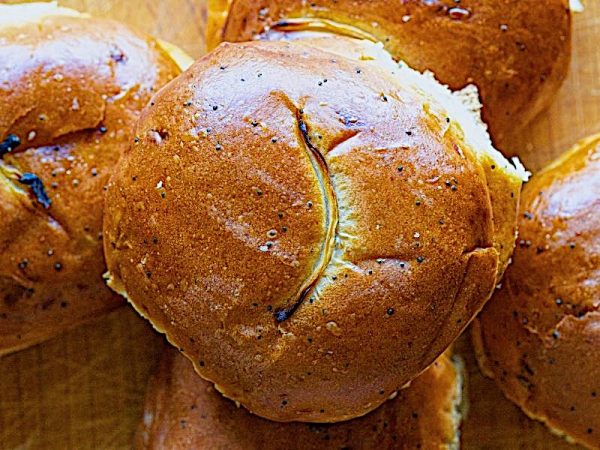
New Yorker Onion rolls from Zingerman's Bakehouse.

A Special Onion Rolls Bake for July 1st through 4th

Back in the early months of 1982, Paul and I drove all over the Detroit area together, going from one bakery to another, to try rye bread. The one we settled on, for whatever reasons of fate and good fortune, was the only one that would not deliver to Ann Arbor! We bought from them for 10 years until, in September of 1992, we opened the Bakehouse.

One of the positive side notes we’d never previously heard of was what they called New Yorkers. A regular item at the bakery we were buying from, I’ve still not found anyone outside the area who knows them, nor have I really found any history about them. Soft, square in shape, onion rolls, filled in the center with a generous dose of dark roasted onions and plenty of poppy seeds.

It’s not hard to imagine rolls like this as a part of the baking of poverty in Eastern European Jewish towns. Onions were readily available in northern climates and could be grown by almost anyone interested. Unlike more expensive spices like cinnamon, poppies grew locally and seeds were plentiful. It seems reasonable that Eastern European Jews who came to the U.S. would likely have brought them along. And they do seem to resemble the now famous onion rolls from the classic New York restaurant, Ratner’s.

This weekend we’ll be doing a Special Bake of these great old-school New Yorker Onion Rolls. Terrific just eaten out of hand. Great with lots of butter or the Creamery’s handmade Cream Cheese. I think they’re wonderful for egg sandwiches—either a fried egg, or scrambled eggs (even better still if you do it with the salami and eggs I wrote up a few months ago, or smoked salmon and eggs). Since I love poppy seeds, I might just spread on some cream cheese and then throw an extra handful of seeds in the middle before I eat.

I’m also thinking about toasting one, rubbing it with a bit of bacon fat, and then sprinkling on a bunch of Hungarian paprika! The New Yorkers are great for burgers or the BLTs that will soon be in season as well. In fact, thinking back to a story that I rarely remember to tell, making a BLT on a New Yorker was a regular morning treat for me back when we opened the Deli. Buy a bag of New Yorker Onion Rolls and start some family stories of your own!

New Yorker Onion Rolls will be at the Bakeshop July 1st through the 4th and at the Deli July 1st and 2nd.

Want more from Ari?

Sign up for Ari’s Top 5 e-newsletter and look forward to his weekly curated email—a roundup of 5 Zing things Ari is excited about this week—stuff you might not have heard of!

Heirloom Cornbread Waffles with Roasted Strawberry Compote.

Beautiful summer brunch special running at the Roadhouse right now

If you’re thinking of going out for brunch, give some thought to swinging by the Roadhouse Saturday or Sunday for delicious cornbread waffles. This dish will only be on the menu for the next two weekends while the local berries are at their best!

Sous chef Jess Forbes came up with the idea for a cornbread waffles special offering while poking around old recipes from Kentucky. Roasting strawberries is a technique that dates back centuries. It’s a wonderful way to intensify the flavors of already really fine fresh fruit. New York chef and author Tom Colicchio wrote in the New York Times, “[I] love what roasting does to ripe summer fruit. It may seem greedy to improve on nature now, but that is exactly what roasting does.” After being washed and hulled, the berries are slow-roasted with a splash of balsamic vinegar and a good bit of the sorghum syrup we get from Muddy Pond mill in Tennessee.

If you don’t know sorghum syrup, in the moment I’ll just say, it’s the “syrup of the Middle South”—up here we have maple syrup, further south, folks have used cane syrup for centuries, but in Tennessee, Kentucky, North Carolina, etc., it’s all about the sorghum. Dark like molasses but with a complex, bittersweet flavor all its own, sorghum is great on pancakes, biscuits, or in this case, in the Roasted Strawberry Compote.

The seasonal strawberries are certainly the featured item on this dish, but don’t overlook the cornmeal. It’s just as the best locally milled “meal” would have tasted about 200 years ago. We get it from Anson Mills—the same folks from whom we source those amazing grits, Carolina Gold rice, and a host of other terrific traditionally grown heirloom grains! Aside from being harder to grow, heirlooms like this generally yield only about 20 percent at best of what you get out of commercial corn.

Right now Anson’s meal is made from four old varietals: Leaming, John Haulk, Jarvis, and Hickory King Yellow. All four are “dent corns” (which are softer in texture than the alternative, known as “flint corn”). Like everything we get from Anson Mills, the corn is grown organically, field-dried, and stone ground. Because, like all Anson products, it has the germ left in (which makes it way more flavorful) it has to be refrigerated.

The old corn varietals used here are wonderfully aromatic and complex in their flavors. Glenn Roberts, the man who got Anson Mills going a little over 20 years ago, says, “Great corn is like great wine,” and this stuff proves the point. “Cornmeal” may sound mundane on the surface but seriously, it’s super delicious. It’s so flavorful. Floral is the key word for me. We use the corneal for the Spider Bread at the Roadhouse on Tuesday evenings and also on the whole catfish.

By making this recipe with the cornmeal and organic Carolina Gold rice flour (also from Anson Mills, it’s what we use for the Gluten-Free Fried Chicken), Jess kept the Cornbread Waffles wheat-free! The delicate delicious floral flavors of the cornmeal get a bit of caramelization as they are cooked up in the waffle iron. And then, while they’re still hot, they get topped with that wonderful, complexly flavored compote! Swing by soon, while the strawberries are still in season and score these super tasty waffles!

Make a reservation at the Roadhouse
P.S. The Roadhouse has been getting great response to its Texas Breakfast Tacos catered for morning meetings and get-togethers of all sorts. Email [email protected] if you’re interested!

Want more from Ari?

Sign up for Ari’s Top 5 e-newsletter and look forward to his weekly curated email—a roundup of 5 Zing things Ari is excited about this week—stuff you might not have heard of!