
Tag: ARI WEINZWEIG
Charlie explains what makes a great candy bar
Ari: Not all candy is the same. Most Americans have something of an emotional sweet/soft spot for all those commercial candies we grew up with. Is that commercial product really “great candy”?
Charlie: Marguerite Wildenhain once said, “A pot without a soul is just clay around a hole.” Candy—hard confectionary—is entering its renaissance. To be “great,” food needs to be crafted according to tradition and made with great ingredients. Candy made by the billions can’t be great. At the large companies, the focus is on mega profits alone. Their product has no soul. It is empty. Sweet, but otherwise flavorless. I think those Goliath corporations are banking a lot on nostalgia. All they can come up with now is more fancy packaging. Great candy can have fancy packaging, but fancy packaging does not make great candy. Tradition, taste and care all together equal great candy. Great candy should be inspiring. It should speak to you on many, many levels. Not just on a singular memory.
What is the difference between commercial candy and an artisan offering like what you make?
One is produced by a machine. The other is made with human hands guided by a creative and caring mind. It is mechanized profit versus craftsmanship. Artisanal candy has a lot more flavor going on. Our candy isn’t just sweet—it tastes good! The flavors deliver a lasting impression. The freshness delivers a great eating experience. Yes, it means putting in more time and effort and sourcing great ingredients like Charles Poirier’s cane syrup in the Poirier Poppers. He takes so much care crafting traditional cane syrup in Louisiana with a method that has been all but lost to mass production. But his labor pays off in the flavor of his syrup and then in the flavor of the candy we make with it.
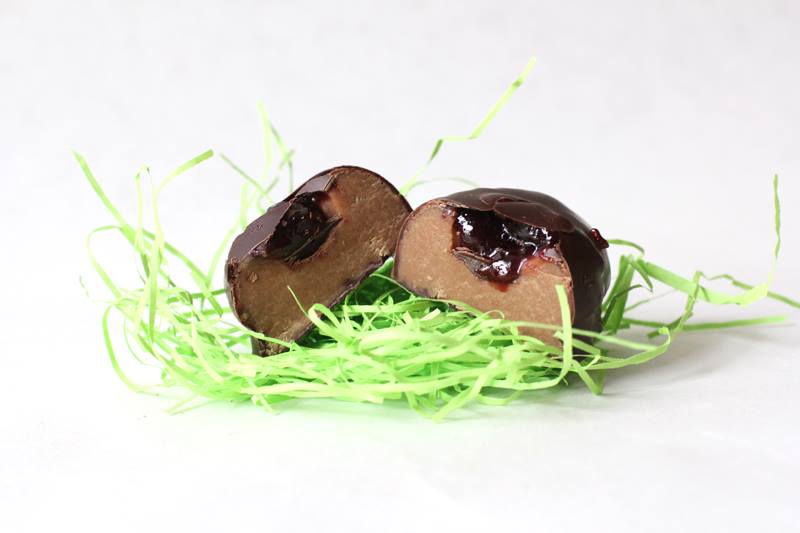
Charles’ cane syrup IS amazing! He grows the cane, cuts the cane, mills it, and boils the juice himself to make the syrup. People can get the syrup at the Deli. But you’ve also been making an incredible filled chocolate with it, the Poirier Poppers, and selling them at the Zingerman’s Coffee Company on Plaza Drive. Food writer John T. Edge tried them and said, “those Poirier bonbons . . . may be the best sweet burst of flavor I’ve ever tasted.”
Charles’ cane syrup is so good I really didn’t want to do anything more than “package” it in chocolate.
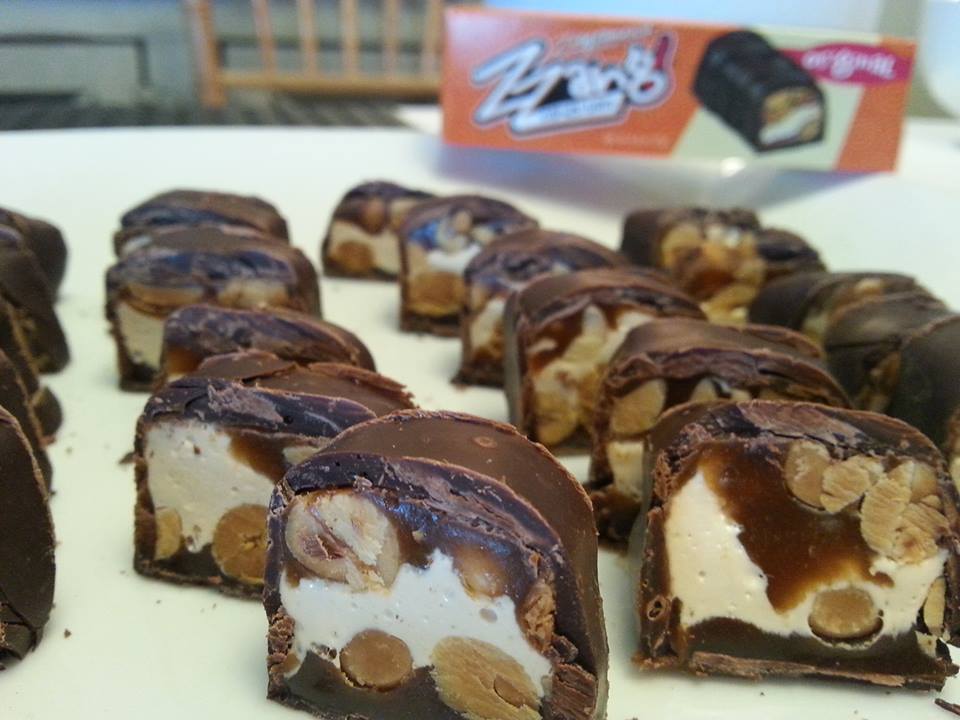
Zingerman’s Candy started out with the Zzang!® Candy Bar and that’s still sort of at the core of what you do. Tell us about those.
They’re all made by hand and, just as importantly, made to order. There aren’t tons of bars lying around waiting to be sold. When a retailer orders from us we start making the bars. I think very few people have ever had a fresh candy bar, but there’s a huge difference in flavor so we make all our candy to be sold fresh, not after months and months of sitting on a shelf.
I’ve rarely heard anyone talk about the importance of freshness in candy. It seems like the quiet secret of the candy world? What’s so different about it?
The flavors haven’t faded. The textures are what they are meant to be. Zzang!® bars were born in the pastry department of the Bakehouse where freshness is everything. Eating candy bars right off the line is a flavor experience not to be missed. We ship directly to our accounts so they can have it as fresh as possible. I haven’t found a single distributor willing to take us on because we don’t want our candy to be warehoused. At the Candy Manufactory we do not use ingredients solely to extend shelf life or make a distributor’s job easy at the expense of flavor.
Can you walk folks through all the steps that go into making a Zzang!® Bar?
We start by toasting Jumbo Runner peanuts in fresh butter and sea salt until they’re golden brown. Then we start boiling cane sugar and Muscovado brown sugar for caramel, adding fresh butter and local heavy cream near the end. Then we beat egg whites and cook honey for the nougat to which we add peanut butter. All of that then gets layered into custom frames on small slabs. After setting for a day the new bars are dipped in 65% dark chocolate from Colombia. This bar we call The Original. It was the first flavor we did because I love each component. I’m constantly snacking on the peanuts, the caramel is truly divine, and chocolate is one of my food groups. The love comes with the sugar. You can do so many different things with it. In the nougat it supports an aeration created with the egg whites. In the caramel it creates new flavors as it cooks. Every time it is a thrill.
How about the peanut brittle?
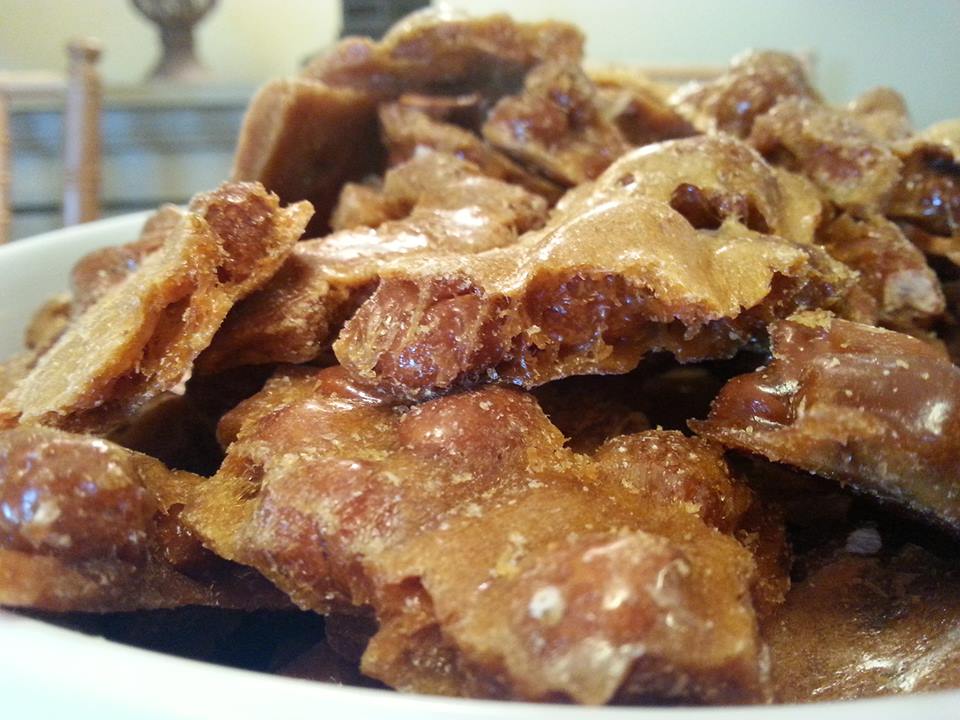
We start with plain white (purified) cane sugar and corn syrup. With higher cooking temperatures we really can’t have impurities that would easily burn. We need the acidic syrup to counter the sugar’s strong desire to crystallize at the intense concentration we go to. Historically—like 150 years ago—we’d have to clarify the sugar and make the syrup ourselves. This boils in water, the water boils off, and the sugars—first broken apart in the water—now reorganize into new and complex compounds.
While the sugar is doing its thing, we add raw peanuts and some salt at a particular moment. The peanuts toast as the sugar caramelizes, and we arrive at a flavor meeting point for the two. They soak in this heated state briefly. Then we add butter, vanilla, baking soda, sea salt. What happens next has to be quick and deliberate. It’s dramatic. The foaming is fast and if you don’t get it out of the pot at the right moment it will overflow and be a dangerous mess. You really have to see it to believe it. Even though we are making brittle in relatively small batches, 23 pounds is a lot of really hot sugar to be stirring fast and safely.
Once it has spread out and cooled a bit we pull slightly hardened brittle off the edges. All the tiny bubbles produced by the reaction of the soda get elongated into tiny tubes. This is the structure we are after. It resembles a honeycomb. It is both fragile and strong in different ways. It is brittle. It shatters when bitten. I can get pretty poetic at this point, so do yourself a favor if you think you don’t like peanut brittle. I’ve gotten a lot of people turned on to it again. It is complex and simply delicious.
Let’s go back to those delicious little filled chocolates you’ve been doing for the Coffee Company like the Poirier Poppers. You also have the Peanut Butter Crush and the Orange Oil chocolates, right?
I didn’t plan on any of those originally. When we started making candy I was asked about whether or not we were going to do them. My answer at the time was that a lot of other candy makers were already doing them well. But years down the road, Coffee Company Managing Partner Steve Mangigian asked if I’d consider making a small chocolate to complement his espresso.
I adore orange butter ganache. You don’t often hear about butter ganaches, but I think their silkiness is elegant beyond belief, and the orange/chocolate combination is one of these match-made-in-heaven experiences. The Peanut Butter Crush has been a gift for my wife for many years. To get her off the “corporate cups” I began making her own version—just sweetened peanut butter in chocolate shells. The Poirier Poppers are an homage to Charles Poirier who makes that incredible cane syrup.
Zingerman’s businesses sell the most so their turnover is the fastest. They buy from us every week—sometimes more than once a week. We want a shopkeeper to have it as freshly made on their shelves as possible. And we date all our candy, so look for when it is best by. If you are in town and want to try one fresh off the line, call me.
What are some of the new improvements/offerings you’ve got in the works?
I am working on the next flavor of Zzang!® bar. The Deli wants us to make artisan chocolate bark. And there is a new Easter Fudge Egg this year. Those have been a huge hit for us since we started making them.
The spring holidays are just a few days away! Try our PB&J Fudge Eggs, Chocolate Almond Fudge Eggs, or Marshmallow Bunny Tails! And don’t forget the Easter SuperZzangs! for all of the Zzang! Original bar lovers in your life!
See you soon!
Tag: ARI WEINZWEIG
Paul and Ari will receive Doctor of Laws degrees
We’re thrilled and honored to announce that Zingerman’s founding partners will deliver the 2015 Spring Commencement address for the Ann Arbor campus on May 2nd at Michigan Stadium. Both Ari and Paul are University of Michigan alum.
Each will also receive an honorary Doctor of Laws, and they’ll share this honor with five others also receiving honorary degrees:
• John Dingell, former U.S. Congressman for Michigan’s 12th Congressional District, Doctor of Laws.
• Sanford R. Robertson, pioneering venture capitalist, founding partner of Francisco Partners and U-M alumnus, Doctor of Laws.
• Robert J. Shiller, Nobel Prize winning economist, best-selling author and U-M alumnus, Doctor of Science.
Dr. Shiller also is Rackham Graduate Exercises speaker.
• Robin Wright, award-winning journalist, author, foreign correspondent and U-M alumna, Doctor of Humane Letters.
• Dr. Tadataka Yamada, global health expert and former faculty member in the Medical School, Doctor of Science.
Here’s a link to the Michigan Daily, who first broke the story.
Here’s a link to the story on the Ann Arbor News site.
Kudos to Paul Saginaw and Ari Weinzweig!
Tag: ARI WEINZWEIG
Zingerman’s was saddened to hear of the loss of our friend, Bob Nueske. To help remember him, we’re reprinting Ari’s interview with Bob from 2013.
In honor of Bob Nueske
This year’s Camp Bacon 2015 is dedicated to the memory of Bob Nueske, much-loved patriarch of the first family of bacon, who died unexpectedly this past January. We’ve had the great pleasure of cooking, serving, and eating Nueske’s bacon every day at Zingerman’s for over thirty years, and we were graced by Bob’s passion, stories and love for pork at Camp Bacon the last two years. Long esteemed by pretty much everyone in the specialty food industry, Bob was intelligent, quiet, and determinedly committed to quality in all he did. He helped take his father’s work to ever greater heights. His love for Johnny Cash was legendary amongst friends and family members. Like his hero he generally wore all black. His soft voice, strong opinions, dedication to perfecting his craft while walking his own way, caring for community and those in need, all combined to lead me to start referring to Bob as a “the Johnny Cash of Bacon.” Two years ago when he spoke at Camp Bacon for the first time, we played Johnny’s version of “I Walk the Line” when Bob came up to the podium. Imagine it playing, if you like, as you start to read the interview with Bob that follows. Done two years ago, it still conveys the powerful character, quality conscious, quiet, but opinionated leader he was in both business and in bacon. – Ari
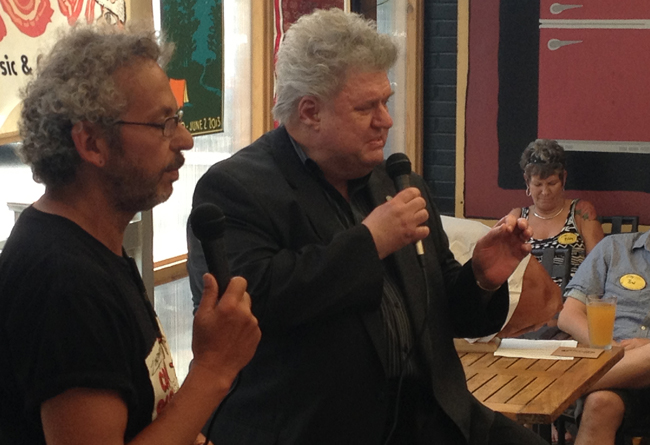
Ari recently had a chance to chat with renowned Wisconsin bacon maker Bob Nueske about the history of his family’s business. Bob will be speaking at Zingerman’s 4th Annual Camp Bacon this summer. Please join us!

Bob Nueske’s great-grandfather came to the small town of Wittenberg, Wisconsin in 1882. Shortly thereafter he started to cure and smoke meats in the style of his German heritage. Located up near the UP, they’ve been making their bacon using basically the same family recipe for nearly a century and a half now. We’ve cooked off Nueske’s Applewood smoked bacon at the Deli every morning for over 31 years now. I have no idea how many tens of thousands of pounds it adds up to but I know it’s a lot. That record, like the bacon on which it’s based, is something special. So too is the man behind the bacon—Bob Nueske is a marvelous story teller, a very grounded and forward thinking business man, a “Small Giant” long before Bo Burlingham wrote the book, a master bacon maker and a bacon lover. We’re excited to have successfully enticed Bob to leave northern Wisconsin for the wilds of Ann Arbor and a few days at Camp Bacon.
Ari: Can you tell me a bit of the Nueske story?
Bob: I hardly know how to begin. When you’re born and raised into something that becomes your life it’s hard to know where to start. The only way I can explain it is that if you’re born in a cooler and raised in a smokehouse it permeates into your being and you don’t even realize it. I’ve been part of Nueske bacon literally my whole life. And when you are born and raised in a family business, working as a father and son it makes a special situation. I had a good father. He smiled a lot. He was a good man and a good businessman. He was really firm and fair. And yet as a kid, you know, when you’re 16, 17, 18, and you have all the answers . . . when I was 16 years old . . . . Well, I’ll you a story. Back when I was 16 I had a car. Back then Wittenberg was a town of 895 people (Today, it’s totally taken off—the 2010 census said it had 1081 people). It’s all a farm community. I figured the best way for me to see the world was to head down to Chicago on my own. So I drove south. I got downtown by myself. I’d never been there. I was looking at all these great big buildings and I noticed there were a whole lot of good restaurants. But I couldn’t afford to eat in em. And I thought to myself, I’d love to understand ’em. Now, who’d have ever thought that bacon would take you to places like that? But today our bacon is in some of the best restaurants and stores in the country. As I remember growing up, my dad had put four hours in at work by the time we kids got up in the morning. We were always eating the odd shaped pieces he didn’t want to sell to other people. My mother would say, “I’m married to the man who has the best bacon, but you always bring home the other stuff!” He’d say, “We don’t sell those odd cuts, we eat em. It tastes the same. It just don’t look the same!” We have some pictures of me sitting on a truck with three birthday candles. When you’re little it seems like your parents are doing things you could never do. Then you get to the age when you think, “They don’t know anything.” But then eventually you realize that things that seemed big aren’t that big, they aren’t that important. And I realized that my dad knew what he was doing. In learning how to do a product like my dad taught us it was time consuming and it wasn’t like I took notes. Day in and day out you learn it and you don’t even know you’re learning it. But my dad had these little books that he used. And they weren’t just sitting on the shelf. They were well read, well worn. And he would take a lot of notes. My dad was a good student of bacon. Making bacon like ours is like making fine wine. You don’t hurry the process. I remember him saying, “You know Bobby, we do it this way because of . . . . ., but, not this way because . . . ” There were good reasons why each piece of the process happened. I remember thinking “There has to be a faster quicker way to make bacon!” But eventually I realized that he really knew what he was doing.
Where did your grandfather come from?
He was from Germany. I’m still trying to figure out exactly where. I got drafted into the military got my medical training at Ft. Sam Houston and thought for sure I was headed for Vietnam. It was not a pretty time. But somehow I was the only one in our class that ended up stationed in Germany. So through a fluke of luck I learned the heritage of the meat. My great grandfather came to Wisconsin in 1882. Wilhelm Nueske. I’m still trying to find out what town he came from. No one really knows. We know it’s German heritage. I’m starting to discover that it was up in the northeast area of Germany and what’s now Poland. There are still some Nueskes up there. It’s not that common a name. I literally know most everyone of them in this country. After I went through the military I went into the printing press business for a while. But then I came back to smoking meats and I began to experiment a little on my own, I realized that speeding things up, going fast just creates another me-too product. Volume and big is not what we’re after at Nueske’s. We don’t want to be the biggest. One of the best words I’ve learned over all these years is, “No.” When we’re approached by certain companies to sell to them we look at how they actually run their business. A lot of times I can see that we’re not large enough to produce enough for them so we say, “No.”
Speaking of which, you and I both read a lot of business books. Were there any that were particularly helpful to you?
I was remembering a book called Beyond World Class. It’s by Ross Alan. It was written about the way I think a business should be run. It said that if your suppliers don’t treat you like you wanted to be treated, and if someone in your company or a customer doesn’t fit the way you want to work, then you just say, “We’re not interested.” You just don’t stay with them. You need to work with people who care like you do and who want to work the way you do. That’s a recipe for how to have fun while you’re running your company. You enjoy your relationship with everyone and you work with a great group of people. It takes work to keep it that way. But growing up in a company like ours . . . well, you know . . . When I left the family business at 18 I had two really good experiences. One was in a small printing company. And then I was wooed away to American Can Company. It was a huge corporation. I actually got that feeling of putting your brains up on the time clock when you punched in. They didn’t want your thoughts. And then you picked them up when you left. They didn’t want you to think. I learned I could get done 8 hours work in 3 hours and kept pushin’. But then I was told “Don’t do that again.” People that work here like what they do and they’re having fun. That’s the key. Many an outsider looking in at our company goes by and says, “How do you do this? How do you get your culture?” At first they think it was a trick, like when you used to go to Russia and they put on a stage Grand Tour to fool you. But after a while, the visitors realize there’s no “Grand Tour.” That’s the key. What your people do. How they smile. How they work. That’s what makes a great company. It just seems to work.
We love your bacon here at Zingerman’s. It’s gotten great press in the New York Times and just about everywhere else. What makes the bacon so great?
Well, what really makes the difference how the hogs are fed. How they’re grown. How they’re treated as far as stress. You don’t want stress in the hogs. You have to find companies who know how to slaughter and cut and sort correctly. And then how you cure and smoke the meat properly. We taste test constantly. Even though there are strict formulas, there’s still always the human side. If something doesn’t seem right when we taste the product we pull it off. We all know that our bacon is a natural product and the whole production system can run a little off one way or another. Pretty much it means the standards of where you want it to be even though the flavor profile never changes. Something comes in wrong and you have to make a point and send it back. Consistency is key. Don’t accept anything that’s less than what you really want. Our hogs are raised in Canada. They’re the Belgian Pietrain breed and some others. We cure the bellies and then give them 24 hours in the smoker. We use real Wisconsin Applewood. We actually have one man who’s responsible to select the Applewood. We buy full trees, not wood already cut in pieces. He actually cuts it as we need it. When you select the wood it has to be the right balance of dryness and greenness. Not too dry, not too green. We use wild Cherrywood and it’s the same thing there. We start with a full tree. We’re fortunate . . . when I think back when my grandparents moved here, we’re fortunate that they picked an area with so many apple and cherry orchards. 
It’s pretty impressive that Nueske’s has stayed small and focused for four generations. Why do you think it’s worked so well?
Let me tell you another story. There’s a man around here who started a very large nationally known meat curing company around the time my father was getting going. He and my dad knew each other pretty well. The companies were just about 45 miles a part. Our location was on a dead end street. We didn’t really have a retail store. We just were wholesaler but my dad would let people in when they knocked on the door. Finally he put in a tiny little counter. Anyways, Fritz would come in to that little counter and buy our bacon and smoked liver sausage. “I said why are you buying our bacon when you have your own?” He said, “I want to buy the good stuff for our big shots coming up to my cottage up north.” “Well, Fritz is probably in his 70s now. He came in one day quite a few years ago now and he asks one of the retail clerks in our shop, if I was there. I asked him the same question I would ask every time he came back when I was 14. “What are you doing buying bacon here?” And he said the same thing he said back then: “I’m going up to my cabin and need the good stuff.” But then he said, “I want to tell you a story about your dad and me. You know, I would tell your dad, ‘Robert, I’m gonna build the biggest meat company I can. And your dad would look at me and say, ‘Well Fritz, I’m gonna become the best meat company I can become.'” Then Fritz said to me, “I succeeded. I sold out to a big company. I made a lot of money. But I don’t like what the big company did with our products. And you know what? Your dad was right and I was wrong. I would never do that again.” When I think of the decisions I’ve made over the years. You gotta know when to say ‘No!’
What’s your favorite way to eat bacon?
I love it best when you lay it on parchment paper and bake it in the oven. It comes out sort of crispy and soft in the middle. I love it that way.
See you at camp!
Tag: ARI WEINZWEIG
Zingerman’s Co-Founders, Paul Saginaw and Ari Weinzweig, were inducted into the Specialty Food Association Hall of Fame at a galat even on Sunday, January 11. Please see the press release below for more details.

Specialty Food Association Establishes Hall of Fame
Inductees to be Celebrated at Winter Fancy Food Show
NEW YORK (Jan. 5, 2015) – The Specialty Food Association has established a Hall of Fame to honor individuals who have played significant roles in creating and shaping the $88.3 billion specialty food industry.
The inaugural inductees include 114 individuals who helped establish the specialty food industry in the 1950s, 1960s, and 1970s, as well as pioneers in specialty food retailing, tastemakers, and culinary innovators who are continuing to change tastes today.
“The specialty food industry is built on the creativity and passion of individuals who have worked hard to bring top-quality food and new flavors to market. We are proud to recognize these pioneers,” says Specialty Food Association President Ann Daw.
Inductees include Chuck Williams, Williams-Sonoma; David Bigelow and Eunice Bigelow, Biglow Tea; Julee Rosso, Silver Palate and Jerry Kehe and Joe Shannon, KeHE Foods. The inaugural class was selected by Association members and members of the Hall of Fame Committee.
See the full list of 114 inductees.
The inductees will be celebrated on Jan. 11, 2015, at the Winter Fancy Food Show in San Francisco as part of a special event that also includes the Association’s Leadership Awards and a keynote address by Seth Goldman, co-founder and CEO of Honest Tea. The event is 5 – 6:30 p.m. at Moscone Center.
About the Specialty Food Association
The Specialty Food Association is a thriving community of food artisans, importers and entrepreneurs who bring craft, care and joy to the distinctive foods they produce. Established in 1952 in New York, the not-for-profit trade association provides its 3,000 members in the U.S. and abroad the tools, knowledge and connections to champion and nurture their companies in an ever-evolving marketplace. The Association owns and produces the Winter and Summer Fancy Food Shows, and presents the sofi™ Awards honoring excellence in specialty food. Learn more at specialtyfood.com.
Congratulations to Paul and Ari!
Tag: ARI WEINZWEIG
“Secret” Pamphlets
Excerpted from the Guide to Good Leading series. Each are printed on sustainable paper, saddle stitched, and include a hand-laid scratch-board illustration. We’ve chosen several key “Secrets” to introduce our collection.
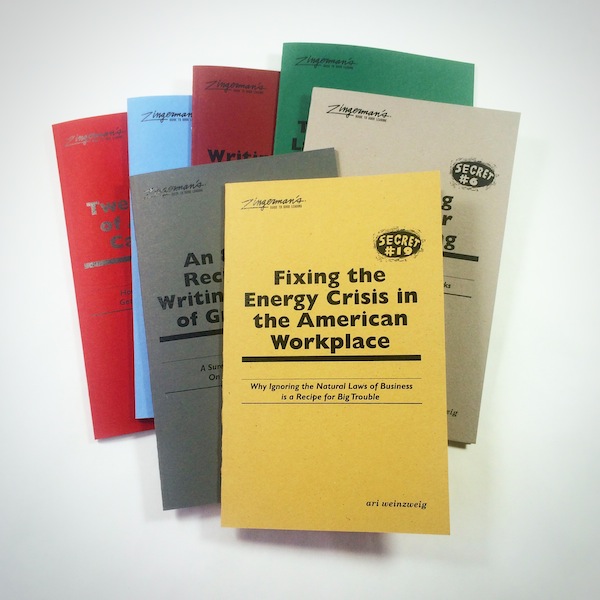
Secret #1: The Twelve Natural Laws of Business: A More Organic Way to Operate?
The keys to running your organization in harmony with human nature. The laws of nature that underlie the success of any organization—large or small, for profit or not-for-profit, and most definitely Zingerman’s!
Secret #6: Revisiting the Power of Visioning: Why Positive Futuring Really Works
An in depth look at just how amazingly powerful the Zingerman’s visioning process can be.
Secret #7: Writing a Vision of Greatness: And Why It’s Not the Same as a Strategic Plan!
The basics of our approach to vision writing, including the four elements of an effective vision at Zingerman’s.
Secret #9: An 8-Step Recipe for Writing a Vision of Greatness; A Surefire Way to Get Clear on the Future You Want
The recipe that we’ve used here at Zingerman’s for over twenty years and taught to thousands around the country and the world and which, through Shawn Askinosie’s work, is now being assimilated into the activities of the Mababu Cocoa Farmer Cooperative in Tanzania.
Secret #19: Fixing the Energy Crisis in the American Workplace: Why Ignoring the Natural Laws of Business Is a Recipe for Big Trouble
How working in violation of the Natural Laws of Business has created an energy crisis in the workplace and what we can do to help restore the natural human energy, creativity and intelligence of everyone in our organizations.
Secret #23: A Recipe for Servant Leadership
It’s a natural law of business that if we want our staff to give great service to our guests, we as leaders need to give great service to the staff. This secret explores the why and how-to behind this transformational approach.
Secret #29: Twelve Tenets of Anarcho-Capitalism: How to Make Money without Getting Hung Up on Hierarchy
A look at Ari’s views on how the tenets of anarchist thought can be put to work in the world of progressive business.
Secret #35: The Power of Personal Visioning: Applying Natural Law #1 to the Business of Living
An in-depth essay on how to take Zingerman’s approach to visioning and put it to work to help you create the life you want to lead.
These bite-sized nuggets of wisdom from the Zingerman’s Guide to Good Leading series are a great way to introduce yourself to the concepts behind our business.
Tag: ARI WEINZWEIG
Featuring special guests Rolando Beramendi, Gianluigi Peduzzi, and Ari Weinzweig!
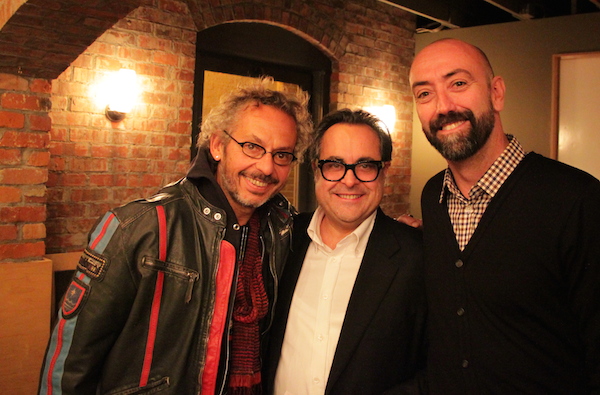
Last night, we were very fortunate to welcome Gianluigi Peduzzi of Rustichella and Rolando Beramundi of Manicaretti Italian Food Importers, arguably two of the most influential voices in the world of traditional pasta.
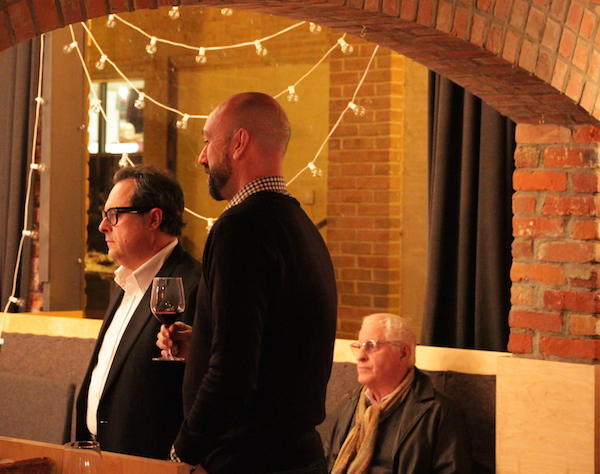
Ari introduced the two luminaries, speaking of our long history of featuring their products at Zingerman’s. He then turned it over to Rolando and Gianluigi, who talked about the history and care that goes into this delicious, high-quality pasta. Gianluigi is a third-generation pasta maker from the Abruzzo, whose Rustichella pasta line has long been one of THE best in Italy and the U.S. Rolando Beramendi is one of the country’s premier importers of fine Italian foods, and whose excellent palate and passion for traditional Italian food have significantly altered the food scene here in the US.
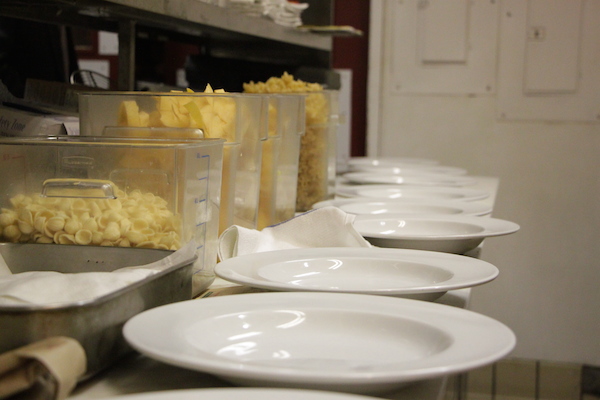
Throughout the evening, guests were served samples of various Rustichella pastas as our two speakers talked about the pasta, how its made, and the best way to serve the various styles.
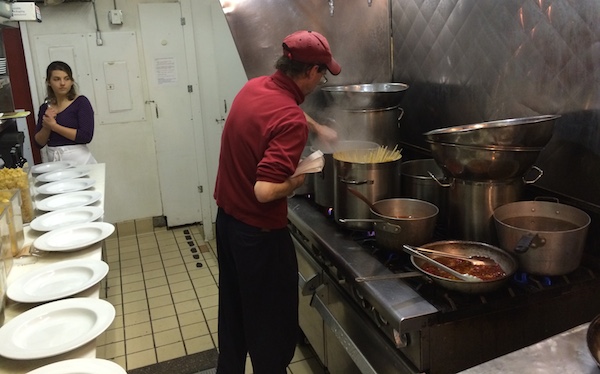
First up was a delicious Whole Wheat Penne, the first pasta Rustichella imported into the US. The pasta was served very simply as aglio, olio, e peperoncino (garlic, oil and spicy peppers). This was the recipe that was written on the original Penne bags.
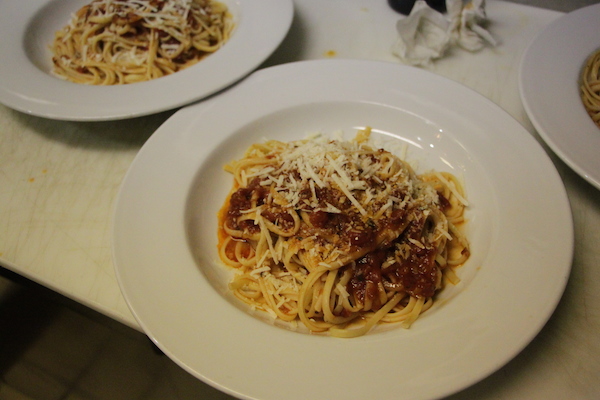
Next, we tried a Linguine tossed with the simple tomato and basil sauce, with a bit of grated Parmigiano Reggiano over the top. The serving style really showcased the flavor of the pasta.
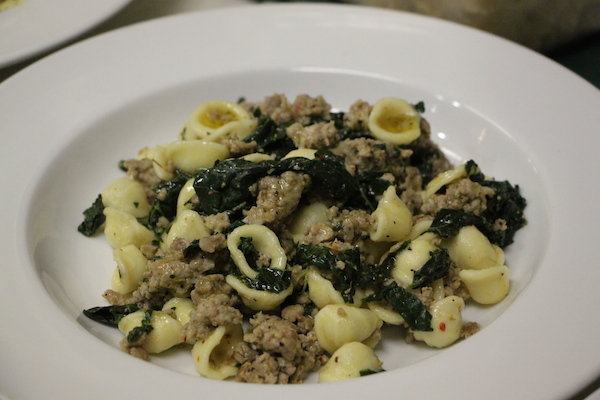
Orecchiette came next, served alla Pugliese, with kale and Zingerman’s housemade sausage. This pasta works well with heartier fare.
We tried an Egg Pappardelle next, served with just melted butter, and sauteéd mushrooms. Another simple, yet excellent dish.
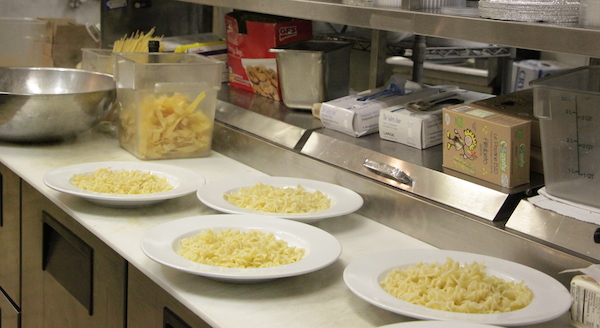
Gianluigi introduced their premier PrimoGrano Sagne a Pezzi next, which is a 100% Abruzzo product, travleing 0 kilometers from sowing to harvest. The grain really makes a difference, and Gianluigi proved this by serving this pasta with just a splash of extra virgin olive oil. Outstanding flavor!
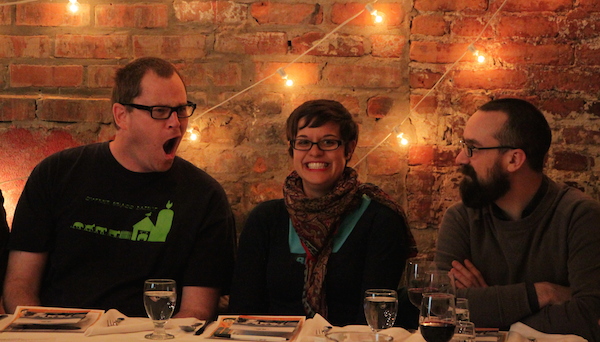
The duo finished up by introducing a new pasta line, ZeroTre, that’s aimed a kids. Guests enjoyed Alfabeto, tiny alphabet letters served in Zingerman’s famed chicken broth. This delicious comfort food was a great way to complete our culinary journey through the Abruzzo countryside.
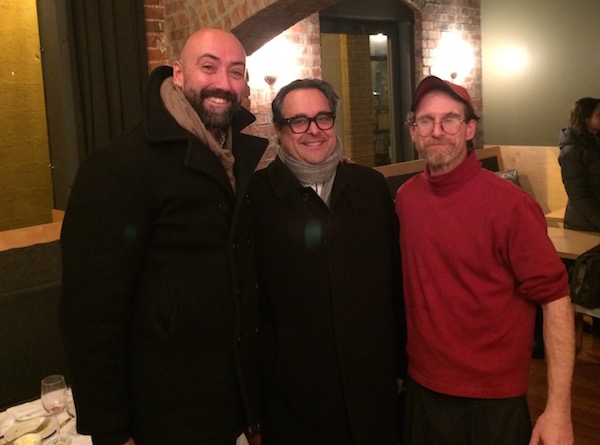
Thanks again to all of our guests, and to Rolando and Gianluigi for traveling so far to share their amazing pasta with us!
See you soon!