Tag: ARI WEINZWEIG
Michael Paterniti’s book The Telling Room documents his pursuit of an obscure Spanish cheese – a cheese he first encountered while working at the Zingerman’s Deli back in 1991.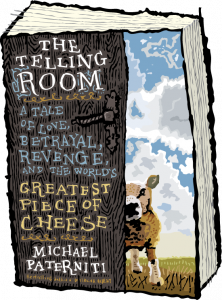
On Thursday, September 26, 6:30pm, Mike will visit the Deli and tell the story himself. He’ll sign copies of the book, as well as copies of the Zingerman’s newsletter that features the book’s release. We’ll also taste a delicious selection of fine Spanish foods, including many of our favorite traditional cheeses. Copies of Michael’s new book are available at fine bookstores everywhere, but seats at the event are limited. Reserve a seat online or call 734-663-3400!
It’s over twenty years ago now that you were here. What brought you to Ann Arbor?
I came to write fiction in the MFA program, under the great Nick Delbanco and Charlie Baxter, both amazing writers and Ann Arbor legends in their own right!
What do you remember about the town?
I remember Ann Arbor as a place in which you could find anything—anything in the world (great books and movies, great food and minds at work)—within a one-mile radius of campus. I also loved that open Midwestern friendliness. Coming from the East, I didn’t know what to do with it at first. Like, did that guy really just say hi to me for no reason?
The book begins really with your work here at Zingerman’s, or at least, behind the scenes on our newsletter. What do you remember about the Deli from those days?
The Deli, for me, was a little slice of heaven, a foodie paradise, a spectacular world unto its own. I was interested in food, but didn’t have the money to be really interested in it. That is, I was broke, and I really wanted to try that Finnish licorice, but I knew the Finnish licorice would be like my gateway drug, and next I’d be imbibing the sherry vinegars and scarfing latkes, throwing down sandwiches (that sandwich board was like standing before the departing flights screen in a foreign airport) and demanding Italian chocolates while being fanned by my pet monkey, Bubbles. It was a little decadent in the deli, and I loved the hum and energy of it, just being swept up in it.
Can you tell people who Ambrosio is and a bit about Páramo de Guzmán cheese?
So Ambrosio Molinos is a farmer
in the little Castilian village of
Guzmán (pop. 80), in north-central Spain. He also happens to be
a force of nature, a larger-than-
life character of Falstaffian
belly, and really perhaps the best
storyteller I’ve met in my travels as
a journalist. The cheese he made came
from a centuries-old, discontinued family recipe. One day in the Eighties, he bought a bunch of Churra sheep, began grazing them on the highlands around Guzmán, took their milk to a little stable across from the house he was born in, and made cheese, aging it in a family cave nearby. When people in the village were given some, they thought it was amazing, like the old house cheeses they remembered their mother serving, robust and Manchego-like. And so the cheese was passed along, from village to village, and then to Madrid, where it was sold. The legend of the cheese is that the Spanish royal family loved it, as did the British royal family. It was served to Ronald Reagan and Frank Sinatra. Fidel Castro tried to buy all of Ambrosio’s stock. The cheese won several awards, and in 1991, I know you brought it back from London, to sell here at Zingerman’s, which is where I first learned about it, when I was proofreading your newsletter!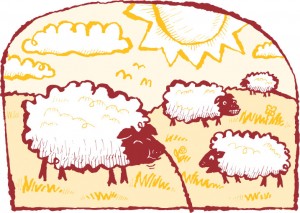
So you carried that little clip from the newsletter in your wallet for nearly ten years?
I mean initially it was in my wallet. Eventually it went in a file. And then when I went to Spain on assignment in 2000, to spend time with the great futurist chef Ferran Adria, it went back in my wallet. Those four paragraphs you wrote in 1991 felt like the beginning of a fairytale: Once upon a time there was a piece of cheese, and a cheesemaker named Ambrosio… I remember, too, that it was the most expensive cheese Zingerman’s had ever sold at the time.
Early in the book you write, “What was so crazy about believing in purity—and then going to find it?” In many ways, that’s the story of our approach to visioning work. What would you say on the subject today, knowing what you know about the cheese and Ambrosio and life?
That this ideal of purity, at some level, is achievable, given that you’re deliberate in how you live your life. I mean there are all sorts of sugary temptations in this world, but what captivated me about Ambrosio was his rejection of the packaged modern world. As he said, “The world is rushing forward, so I need to go back.” But it wasn’t just a sort of unrealistic, antediluvian rejection of that world. I mean, he has a cell phone. He drives a car. He enjoys certain creature comforts. But it’s this idea of having a code or philosophy, and then sticking to it. Long ago, he decided to feed his body with homemade wines and chorizos and cheeses, with lamb raised right there on the land, and he’s tried not to waver from that.
It’s a long way from Ann Arbor to Guzmán—what was it like when you first arrived there?
Oh, the place is beautiful! I thought that straightaway. About a half-mile above sea level, bathed in this thin, ecclesiastical light. There were vineyards and wheat fields, and then Guzmán was there on a hill, above it all, looking down on the Meseta. The village itself was crumbling and dying, too. Some of the houses were split open and you could see a tattered book, someone’s bloomers. Everything—and everyone—seemed so old, as opposed to Ann Arbor, which buzzes on that youthful energy of the university, and those connected to it.
And then on that first visit, Ambrosio told me this incredible story about his cheese, in essence how it had been stolen from him by his best friend, and how he was now plotting the best friend’s murder. He unraveled this story over about eight hours in a place there known as a “telling room.” It was a little room built above the cave, where people went to eat and sit by the fire and tell their stories.
Part Two will appear tomorrow.
Tag: ARI WEINZWEIG
A VERY SPECIAL EVENING WITH MICHAEL PATERNITI
Author of The Telling Room
Thursday, September 26th, 6:30pm to 8:30pm
Zingerman’s Events on Fourth
415 N. Fifth Ave in Kerrytown
While award-winning author Michael Paterniti will probably do a few hundred book release events this fall, this is the one that takes him back to the source of his story. We’re honored to welcome Mike back to reconnect with roots of the book—Zingerman’s Delicatessen, good writing, and a really great story about a strangely compelling Spanish cheese.
It’s not every day that a best-selling book, written by a nationally known author, has a storyline that starts at Zingerman’s. But that’s exactly what’s taken place with the recent release of The Telling Room. Twenty-two years ago this fall, Mike was a graduate student studying English at University of Michigan. He took a part-time job here at Zingerman’s editing our newsletter to help pay a few bills. But funny things can happen when you get around good people and good food. Mike’s part-time job turned into a life-altering obsession.
In issue #87 of the Zingerman’s News, there was an essay, written by Zingerman’s co-founder, Ari Weinzweig, about his seven favorite Spanish cheeses. The seventh on the list was a very expensive and exciting new arrival. Whatever Ari said in those four short paragraphs about the Paramo di Guzman caught Mike Paterniti’s attention. He clipped it out and carried it in his wallet for a good ten years, regularly reflecting on it and wondering what happened to Ambrosio, the man who made this wonderful cheese.
Many of us have these things that lodge in our minds. Maybe we could call it “wonderlust,” the hundreds of “what happened tos,” “what ifs” and “I wonders” of our lives. Most us never act on them; we go to our graves not knowing. Mike Paterniti is different. After ten years of wondering, he uprooted his family and set off for Spain in search of Paramo di Guzman, and the man who made it. What happened on this journey changed his life.
In the years since he worked proofing the newsletter at the Deli, Mike has made quite a name for himself. He authored the bestselling Driving Mr. Albert: A Trip Across America with Einstein’s Brain, and his work has appeared in several nationally known publications, including the New York Times Magazine, National Geographic, Harper’s, Outside, Esquire, and GQ. In the process he’s been nominated eight different times for the National Magazine Award, and received an NEA grant and a pair of MacDowell Fellowships. Now the prodigal Mr. Paterniti is returning to Zingerman’s Delicatessen, where his journey began, to share the story of his search for an elusive and wondrous cheese he first read about in issue #87 of the Zingerman’s News.
Twenty-two years down the road and we’re on issue #240 of Zingerman’s News, which appropriately again features our homage to foods of Spain and the story behind Michael’s new book. On Thursday, September 26, Mike will visit the Deli and tell the story himself. He’ll sign copies of the book, as well as copies of the Zingerman’s News that features the book’s release. We’ll also taste a delicious selection of fine Spanish foods, including many of our favorite traditional cheeses.
Copies of Michael’s new book are available at fine bookstores everywhere, but seats at the event are very limited. Reserve your seat today!
$30/person, reserve a seat online or call 734-663-3400!
Tag: ARI WEINZWEIG
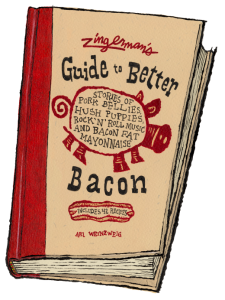
It’s been about eight years now since I first put forward my theory that “bacon was the olive oil of North America.” The theory has spread steadily through the food world. So much so that a few weeks ago I was being interviewed about Camp Bacon by a food person I really respect and love, and she started into her next question: “I’ve heard,” she said, “that someone called bacon ‘the olive oil of North America.’ What do you think about that?” At first I thought she was messing with me a bit, by sending my own kind of crazy theory back at me. But when she didn’t follow her query with a chuckle, I realized the question was serious. “Well, . . .” I said, slightly stumped for a good response,“I…well…I’m the one who made that up in the first place. I wrote about it in Zingerman’s Guide to Better Bacon.” She started to apologize for not knowing from whence the idea had originated, but I assured her it was nothing to worry about—the best compliment one can probably have for an idea is when it’s embedded itself so effectively into the culture that no one can remember where it came from.
Two days later I sat down to write about these four great olive oils that had only recently arrived at the Zingerman’s Deli, and it struck me that if my original theory is accurate, then by some unrecognized, yet to be named, transitive property of good food philosophy, the concept would probably work just as well in reverse. Having played around with the thought for a few days, I’ve decided to run with it; olive oil is the bacon of the Mediterranean!
The parallels are clearly there. Both bacon and olive oil have the honor of being the primary fat in the food of their respective regions. Without pork fat it’d be hard to properly prepare much of the traditional food of North America. Even many Native American tribes—who had no hogs to work with until the arrival of Europeans—have woven bacon fat into their regular eating routines. (See Zingerman’s Guide to Better Bacon for my friend Meg Noori’s recipe for Mac ‘n’ Bacon and her stories of growing up eating oatmeal topped with bacon fat). Same, of course, can clearly be said for olive oil in the Mediterranean—you really can’t properly prepare the traditional foods of Italy, Spain, Sicily, Greece, the Middle East or North Africa without it.
Both bacon and olive oil are critical to the commerce of their home regions, both become prominent subtexts in local and national politics (subsidies, farming, etc.), essential in both legend and lore, a big piece of their area’s economy and, of course, of eating. Both are consumed and cut across class and ethnic lines—pretty much everyone eats and enjoys them.
Bringing my bacon as olive oil theory full circle, I’m going to look into starting up my new campaign slogan—everything is better with olive oil! To keep some alliteration in there maybe it ought better to be “Everything is optimized by olive oil!” Or, “Everything is extraordinary with olive oil!” I’ll work on the wording, but in the mean time I’d recommend that you get going—pretty much everything really is better with olive oil! Personally I’ve been putting this idea into practice for so long now that I’m almost what Maggie at ZingTrain would call “unconsciously competent” about it. I just instinctively put good olive oil on almost everything. Bread, salad, fish, steak, soups, sandwiches, olives, cakes, cookies, and bean dishes, are all delicious when dressed with it. But olive oil is also excellent in places you might not expect: fruit, honey, jam, and your morning toast are all terrific with it. Like bacon, olive oil is also showing up and showing pretty well in places one might not normally expect—I’ve had olive oil mousse, olive oil popcorn, olive oil gelato, olive oil chocolate cake, chocolate bars.
Here are a few thoughts on what you might do with some really good olive oil:
Olive oil & fresh mozzarella:
The milky freshness of the mozzarella provides the perfect palette for the olive oil to work on. If you want to add really good tomato, or equally excellent roasted peppers, that’s terrific too. A few flakes of the amazing Maras red pepper would be terrific. Better still, do this with burrata from Zingerman’s Creamery.
Olive oil and honey:
I totally love this combination—pour some good olive oil on a plate or bowl. In the middle (or actually wherever your creative mind is moved to put it) plop down a few good sized spoonfuls of honey. Eat with bits of warm Paesano or Rustic Italian bread by dragging the bread through both the honey and the oil. You can also top it with toasted pine nuts.
Make a L.O.T.:
Following my metaphor, if olive oil is the bacon of the Mediterranean and a BLT is one of the best sandwiches we make, then of course an Lettuce, Olive Oil, and To- tomato sandwich would be terrific as well. Really great lettuce from the farmer’s market, heirloom tomatoes as soon as they start coming in mid-summer, toasted Bakehouse bread and a generous dose of extra virgin oil. Toast a couple thick slices of Farm bread, dress with the olive oil, sprinkle with sea salt and brush with garlic if you want. Pull off whole leaves of one of those totally beautiful lettuces that have been showing up at the farmers market. Add a few slices of an heirloom tomato. Smush it all together and eat! In its most basic form, a LOT is vegan and very good. I like to tune(isian) it up and add harissa. Delicious.
Olive oil and jam:
An excellent way, it turns out, to top off your morning toast. The sweetness of the preserves is a perfect foil for the slightly spicy green fruit of the oil.
Olive oil and fish:
Certainly one of my favorites—olive oil and fish (like bacon and fish) blend beautIfully. Simply sauté, grill or broil the fresh fish of your choice, then dress with a good bit of really good extra virgin olive oil. For this, I really recommend the more delicate oils.
Olive oil and fruit:
I learned this one from the cooking of the island of Menorca in the Mediterranean. Toast some farm or Paesano bread, dress it with olive oil and then add slices of ripe peach, plum, nectarine, or whatever else looks good at the market. Fresh fruit, either grilled or raw, is great with a few drops of olive oil and a bit of black or red pepper. A salad with watermelon, feta and arugula is one of my favorites. Cantaloupe and olive oil, topped with a good grind of fresh pepper, a pinch or two of sea salt is superb.
Olive oil and steak:
A Tuscan classic—cook a steak to your desired level of doneness (in Florence that means very rare) and then rub it with fresh garlic and dress it with a great peppery olive oil. Poggio Lamentano would be lovely. Great topped with chopped fresh arugula too.
Olive oil and bacon:
I got you there! But it’s true— each is great of course on its own but the two actually make a marvelous team. You can use them in tandem in almost any setting—fried bacon and olive oil on salad, in bean soups, on sandwiches, etc.
Super simple salad: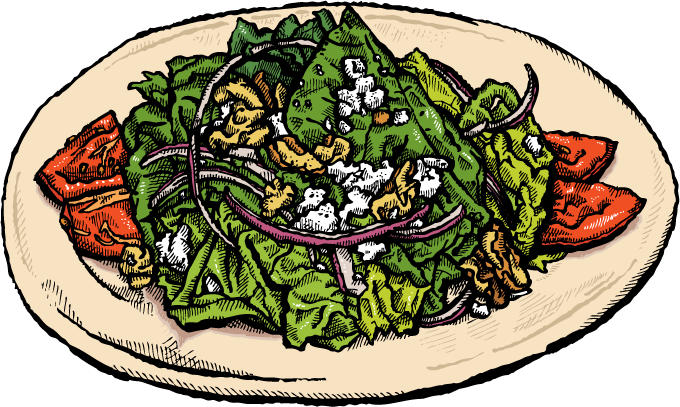
All salads are, we know, excellent with olive oil. But of late I’ve been more and more appreciative of really simple ones—great greens, oil, a touch of vinegar, sea salt and pepper. This really couldn’t be simpler or more elegant or easier, but nevertheless it’s amazing. Just get some of the fantastic lettuce from the farmer’s market. Wash it and then dry the leaves on towels. I like to leave the leaves whole for effect (both visual and textural). Sprinkle with good sea salt and a fresh grind of black pepper. Then dress with some great vinegar and an extra virgin olive oil of your liking. If you want, grate on a bit of Parmigiano Reggiano.
Toasted bagels with olive oil:
I want to tell you that this is a traditional breakfast for Mediterranean Jews but that wouldn’t be true. It is however delicious. Toast, drizzle, eat, enjoy. Add a bit of fresh Zingerman’s Creamery cream cheese or goat cheese to take it up a notch.
![ari's-signature-[Converted]](https://www.zingermanscommunity.com/app/uploads/2013/08/aris-signature-Converted.png)
Tag: ARI WEINZWEIG
Zingerman’s 4th Annual Camp Bacon is just around the corner and to help get everyone prepared, we’re sharing tasty excerpts and recipes from Ari’s book, Zingerman’s Guide to Better Bacon.
The Laurel Blakemore Bacon, Lettuce and Tomato Sandwich
Aside from being the only palindromic recipe name I know, this also makes a really good sandwich, which has long been very popular at the Zingerman’s Deli. It’s named for Dr. Laurel Blakemore, horse fanatic, show jumper, pediatric orthopaedic surgeon and a big lover of bacon. It calls for a good bit of mayonnaise—I think a good BLT needs that, but you can certainly cut back if you like. Either way, it’s easy to make and great to eat!
The recipe is for a single sandwich but it’s not hard to do the math and make as many as you want.
Ingredients:
- 2 to 4 slices Arkansas Peppered Bacon
- 2 slices crusty country bread (we use Zingerman’s Farm Bread)
- 2 tablespoons mayonnaise
- 2 slices aged Vermont cheddar cheese
- 2 thick slices good tomato
- Handful of good lettuce
Procedure:
- Cook the bacon in a frying pan until done. Remove from pan and drain, but leave the pan on the heat.
- Spread mayonnaise on both slices of bread.
- Put a slice of cheese on each slice, then add the bacon and tomato.
- Assemble the sandwich, give it a gentle press together with your palm and slide it into the hot pan.
- Weight it down with a bowl and fry until golden brown.
- Flip, brown the other side, and remove from pan.
- Add the lettuce, cut the sandwich on whatever angle your heart desires (remember, though, that Laurel is a surgeon and places great value on properly positioned knife cuts!), and eat it while it’s hot!
See you at Camp!
Tag: ARI WEINZWEIG
Zingerman’s 4th Annual Camp Bacon is just around the corner and to help get everyone prepared, we’re sharing tasty excerpts and recipes from Ari’s book, Zingerman’s Guide to Better Bacon.
Pork has been the key ration of every American army since the time of the Revolution. In fact, the initial “Uncle Sam” was a 21-year-old from New Hampshire by the name of Samuel Wilson. During the War of 1812 he was a prime pork packer for the Army. The story goes that he became quite popular among the troops for his provisioning work and upbeat personality. Barrels of pork labeled “U.S.” came to stand for “Uncle Sam” Wilson, the man who fed the folks in the Army.
See you at camp!
Tag: ARI WEINZWEIG
Zingerman’s 4th Annual Camp Bacon is just around the corner and to help get everyone prepared, we’re sharing tasty excerpts and recipes from Ari’s book, Zingerman’s Guide to Better Bacon.
Wittenberg Splits
This is the way Tanya Nueske and her family grew up eating hot dogs. They’re not hard to make and they really are darned good. To restate the by-now familiar: the better the buns and hot dogs, the better these are going to taste. I use buns from Zingerman’s Bakehouse, on which I put either Vienna all-beef dogs from Chicago (the ones I grew up with) or the Niman Ranch version. Take note that in Wisconsin “cheddar” always means orange cheese, never white. It won’t taste any different, but if you want to accurately replicate Tanya Nueske’s early life experience, white cheese just really won’t do.
Ingredients:
- 12 thick slices Nueske’s applewood-smoked bacon
- 6 jumbo hot dogs, split lengthwise
- 6 ounces sharp cheddar (the older the better), sliced
- 1 large dill pickle, sliced thinly lengthwise
- 6 hot dog buns, toasted
Procedure:
- Preheat oven to broil at 375°F.
- With a sharp paring knife, cut a line lengthwise along each hot dog, leaving a thin strip at the bottom so that the dog stays in one piece. Lay the sliced cheddar inside the split, then place a long slice of pickle atop the cheese. Wrap each hot dog in 2 slices of bacon and secure the ends of each strip with a toothpick.
- Place on a foil-topped baking sheet and broil for 10 to 12 minutes, or until the bacon is nicely browned.
- You can put your buns under the broiler for the last 2 minutes to toast them, too. Take out the toothpicks, put the dogs in the buns and eat ’em while they’re hot.
Serves 6 as a main course.