 Super-tasty Zingerman’s synergy by the spoonful! Super-tasty Zingerman’s synergy by the spoonful!
|
|
|
In the interest of organizational health and well-being, I’m almost always thinking of win-win ways to bring together different parts of our diverse organization. I’m not sure who actually first thought of this one, but I love it! What if you take the Bakehouse award-winning, nationally renowned, Sour Cream Coffee Cake (featured on the cover of Zingerman’s Bakehouse!) and then blend it into really great gelato from the Creamery. What a wonderfully tasty way to sweeten up your day!
Thirty-something years ago, I remember we mixed the batter for the very first Zingerman’s Sour Cream Coffee Cake in the tiny prep kitchen in the basement of the Deli. Then, and now, it’s made with lots of butter, sour cream, Indonesian Korintje cinnamon, fresh eggs, toasted walnuts, and really good real vanilla. All these years later, the Bakehouse bakes thousands of them a year and Mail Order ships a literal ton. The Deli, Roadhouse, and Coffee Company sell a fair few, and we wholesale them to dozens of other pastry-loving cafés and retailers.
The coffeecake has long been one of those products that lots of people seem to love. Kids love it, pastry chefs love it. All age groups, religions, races, and political persuasions are apparently agreed on its excellence. Not only that, but it can be eaten happily any time of the day—with a cup of coffee or tea for breakfast, as a snack, for dessert after lunch, or dinner. If you’re looking to bring a gift to someone’s house or ship something from Zingerman’s to someone you love or look up to, the Sour Cream Coffee Cake could well be a wonderful option.
Here, Lexi Stand and the lovely crew at the Creamery have created a super-tasty, cinnamon-scented, coffee cake-laden gelato that you can eat by the spoonful after dinner! Ask for a taste next time you’re in! It’s the perfect way to have your cake, eat it, and your gelato too! Sip a cup of Tree Town Blend and savor a spoonful of this delightful dessert! Or do as Jenny Tubbs of Zingerman’s Press does—pop a scoop of the gelato atop a bowl of artisan oatmeal! It’s shockingly good! The Sour Cream Coffee Cake Gelato is at the Creamery’s Cream Top Shop. |
|
Want more from Ari?
Sign up for Ari’s Top 5 e-newsletter and look forward to his weekly curated email—a roundup of 5 Zing things Ari is excited about this week—stuff you might not have heard of!
|
We’re governing with grace… and Grace (Grace Singleton, that is!)
“Is Zingerman’s still run by its founders?” you ask. That’s a great question. We’ll answer with a tale, both old and new (just like our pickles!). What began with the Delicatessen, founded in 1982 by Paul Saginaw and Ari Weinzweig, now includes 11 food and service businesses, 18 managing partners, 800 employees, and a council of leaders among leaders (hang tight, we’ll explain that in a minute).
An Overview of Zingerman’s Governance
Since 1994, the Zingerman’s Community of Businesses (ZCoB) has been steered by our Partners Group (PG), a group that includes Ari and Paul, the ZCoB’s managing partners (the individual business owner-operators), and staff partners (staff members who own a Community Share; they serve two-year terms). As Ari explains:
It’s where we govern the Zingerman’s Community of Businesses—we use consensus decision-making there to lead the organization. The PG makes decisions on organization-wide issues, like deciding to approve our new 2032 Vision or our new Statement of Beliefs. Or if there was, in a strange sci-fi sort of scenario, just for conversation’s sake, let’s say a global pandemic, the PG is where we would decide how to deal with it.
One important piece that the 2032 Vision outlines is the ZCoB’s evolution of governance:
… we’ve seen a successful transition from Ari and Paul as founders heading the Zingerman’s Community of Businesses (ZCoB) to a mode of governance that will last beyond the tenure of any individual. While long-time ZCoB leaders continue in important roles, a couple of new “generations” of insightful, collaborative folks have stepped forward.
That mode of governance is the Zingerman’s Stewardship Council, a five-member group created in 2020 as part of a succession plan to transition the leadership of the organization from its founders to the other managing partners. To be clear, the Partners Group isn’t going anywhere, rather, as Ari says, “The Stewardship Council is filling the role Paul and I have filled for many years as ‘leaders among leaders.’” He adds:
Our main focus in doing this work with the Stewardship Council is, by far and away, looking at how we can do what we do here at Zingerman’s ever more effectively. We want it to be a way to help lead the ZCoB in becoming an ever-bigger contributor to the community of which we’re a part. We want to support succession and inspire future success. We’re committed to creating a governance model that will help both the organization and everyone in it to thrive for many decades to come.
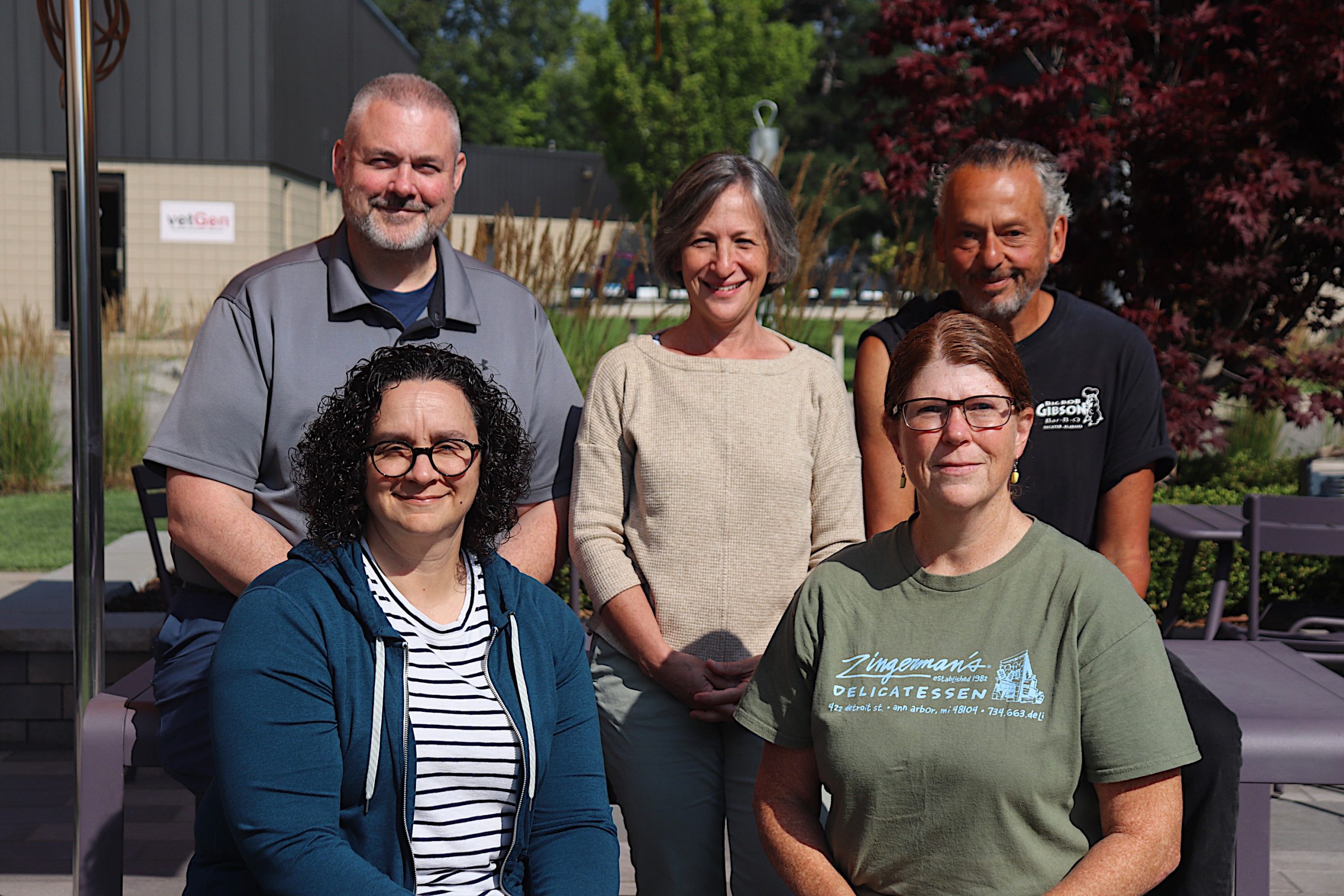
The original council members include Amy Emberling, Zingerman’s Bakehouse co-managing partner; Toni Morell, Zingerman’s Mail Order co-managing partner; Tom Root, Zingerman’s Mail Order co-managing partner; Ron Maurer, Zingerman’s Chief Administrative Officer and Zingerman’s Service Network managing partner; and Ari Weinzweig. Council members serve three-year terms, and just like the Partners Group, decisions are made using consensus. In June of 2023, we reached the end of the first set of three-year terms. The Council has been designed so that one of these original managing partners will come off each year—the first was Ron Maurer who has his eye on retirement in 2023 after more than two decades with the organization—and a new one is selected. Ari explains how that happens:
Our agreed-upon process for selecting members is that Paul and I, as co-founding partners, consult with our staff partners (since they’re not eligible to be on the Council) and others whose views we value, to make the decision. After a LOT of conversation, and honoring what we believe is the best decision for the organization, we chose the next member.
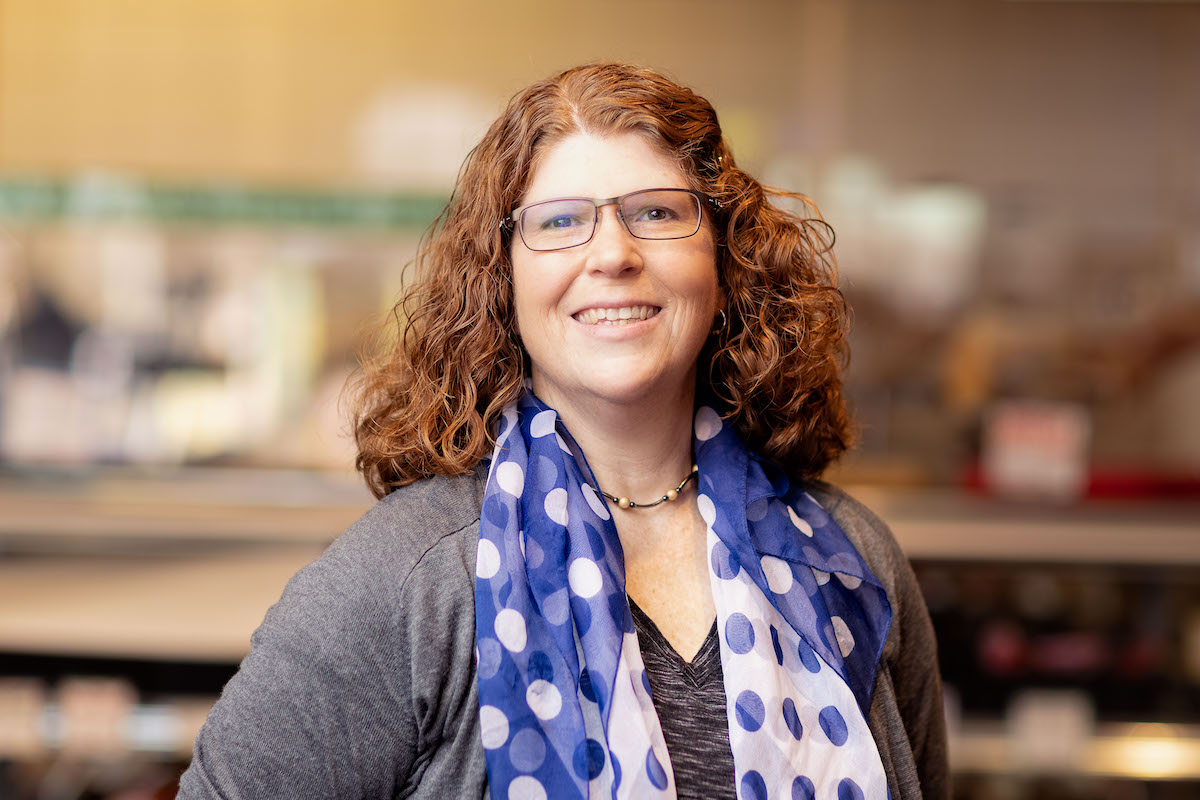
This time, Ari and Paul offered the spot to Grace Singleton, co-managing partner of Zingerman’s Deli since 2004. Grace knew from the beginning that she was destined for a life full of food (and she may or may not have thought the food industry would be glamorous thanks to a New Orleans restaurant where she received special treatment, sitting at the captain’s table and sampling Frangelico (a hazelnut liquor) at the age of 13!). Grace received her culinary degree at Paul Smith’s College in New York and managed restaurants across Ohio (we don’t hold this against her) and Michigan.
She found her way to Ann Arbor for the role of general manager at the Gandy Dancer and became a fan of Zingerman’s Deli. Eventually, she made the jump, calling it “the very best job in the food industry,” and in 2004, she stepped up from retail manager to co-managing partner. Since then, Grace has overseen the gold level LEED-certified Deli expansion project (2010–2014), the opening of Zingerman’s Greyline event space (2016), the addition of virtual tasting events for fans around the country (2021), and more, all while continuing to lead the day-to-day of Deli catering and retail specialty foods. (Impressive, right?!) Of this new role and her latest opportunity to impact the Zingerman’s organization and the Ann Arbor community, she says:
I’ve been here for more than 20 years and I’m really invested in the transition of our CEO’s roles. Ari in particular set the stage with his dedication to doing business differently and how we govern is an important part of that. I look forward to working toward our future with this committed group.
Want to read more? Ari wrote about Grace’s addition to the Council and the work of the Stewardship Council in Ari’s Top 5, his weekly e-newsletter, saying, “Success leads to succession work which, when done well, helps create more success. It’s a very virtuous and very inspiring cycle to be a part of.”
A perfect pairing comes together
|
|
| In Secret #39, in Part 3, Managing Ourselves, I wrote a whole essay about creativity. It was a subject that, oddly, in all our many years in business, I’d given little thought to until, suddenly, during the economic collapse of 2009 and ’10, we started getting a bunch of requests for me to do a keynote talk on the subject. The curious thing is that, in all my years here, I’d never once taught anything about creativity. In truth, I was stumped. I felt like fleeing, but instead, I started studying. My creative inquiry into creativity eventually evolved into the 53-page essay, “Creating Creativity” which was published as Secret #39!
One of my big learnings in my study of the subject was that creativity is mostly about connections. Not necessarily who you know, but about putting things together in ways that they haven’t otherwise been combined. In my love for simple models that help me—and maybe you—get my mind around complex concepts without dishonoring the natural complexity of the world around us, I started to look at three kinds of creativity:
- “Creativity Forward” – The easiest example to share might be high-tech innovation. Back in 1982, Open Book Management would have an example as well.
- “Creativity Back” – We do a lot of this here in the ZCoB. It would include finding old, unused, or under-used ideas and putting them back to work. The Bakehouse’s fresh milling and the Creamery’s handmade Cream Cheese are two easy examples.
- “Creativity Sideways” – Here’s what I wrote about it in the essay:
[Creativity sideways] generally seems to come in two forms. Often, it’s merely finding something that’s commonplace within its own culture but, when introduced into unfamiliar territory, is transformed into an attention-getting, creative act. … We do a lot of this sideways creative work at Zingerman’s. … The Hungarian foods we’re working on at the Bakehouse would certainly fit.
The other sort of sideways shift of creativity comes when two already well-accepted ideas or ways of working are put together in a totally new way, resulting in an innovative approach or product. … The classic historical example is of Gutenberg using wine press technology to print books … using Emma Goldman’s ideas to help run a progressive 21st-century business.
It’s this last kind of creativity that I’m thinking about here. The story goes back about 15 years now. In one of those unintended moments of connection, I was standing by the buffet table at ZingTrain after folks had happily consumed a lunch catered by the Roadhouse. I can’t recall which seminar I was teaching that day, but I do remember that down near the far end of the table were two of those big foil pans used to hold hot food. One had held a whole bunch of the Roadhouse’s really well-known Mac & Cheese (made with the marvelous Mancini maccheroni and that Vermont-cheddar-based bechamel sauce). By the time I got there, the pan was pretty much empty—only a few lonely noodles and a little cheese were left around the edges.
The other pan, to its left, had held fried chicken. That was pretty much gone, too. All that was left were a bunch of those itty-bitty little crumbs of crust that fall off when the actual pieces of chicken have been consumed. Looking down at the almost-empty pans, I suddenly had this thought that the two—Mac & Cheese and fried chicken bits—would be a beautiful thing if you put them together. I tried a few bites right then and there by putting together the small bit of each that was left. It was terrific. It went on as a special the next day and we sold 20 orders in two hours. It hasn’t come off the menu since.
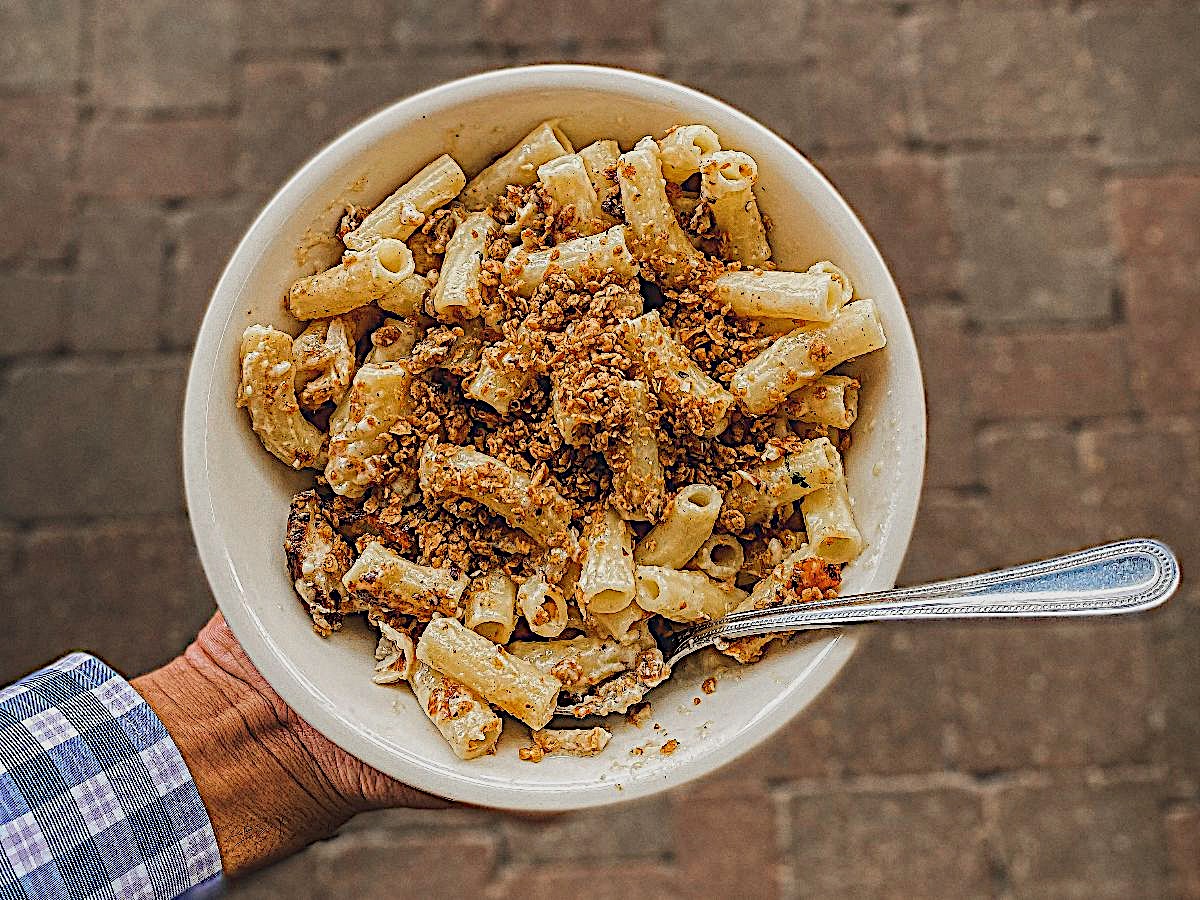
If you’ve never had Fried Chicken Mac & Cheese, let’s just say it’s pretty marvelous. Little bits of fried chicken cooked into, and sprinkled on top of, a plate of creamy Roadhouse Mac & Cheese. The pepperiness of the fried chicken bits—we use that wonderful, small-farmTellicherry black pepper we get through Épices de Cru—serves as the counterpoint to the creamy Mac & Cheese. And it all melds marvelously with the moist bits of fried chicken. (I like the dish for breakfast, topped with an over-easy egg!) Fried Chicken Mac & Cheese may not be as monumental a connection as the printing press, but I have a feeling this one is here to stay!
The Fried Chicken Mac & Cheese was the long-time favorite (always with a side of hot sauce) of Roadhouse server Danny Patterson. Danny moved away at the start of the pandemic and sadly, passed away earlier this year. His loss is felt by many. I’ve chosen to remember him by his big smile, his laughter, and his joy every time a serving of this super tasty dish went out into the dining room! |
|
P.S. Fried Chicken Mac & Cheese makes a marvelous carryout item too! Call to place an order to-go at 734-663-3663. The Roadhouse also caters this creative combo—email [email protected].
Want more from Ari?
Sign up for Ari’s Top 5 e-newsletter and look forward to his weekly curated email—a roundup of 5 Zing things Ari is excited about this week—stuff you might not have heard of! |
|
A beautiful and delicious bread to brighten your day on August 18 & 19
|
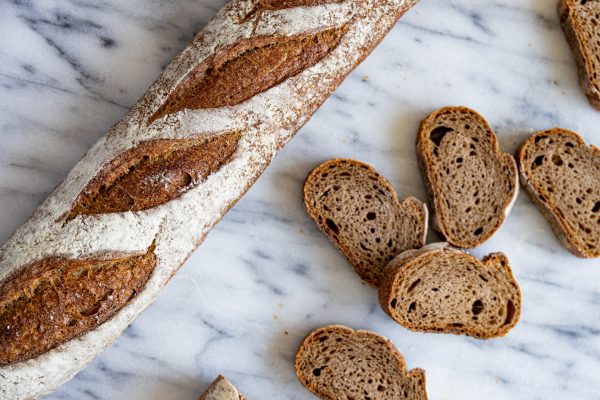
One of my all-time favorite Bakehouse breads will be available this coming weekend! You can buy a Chestnut Baguette (or two) on August 18 and 19 at the Bakeshop and Deli. Feel free to order ahead to be sure there’s a loaf waiting for you. I’ll be picking up a couple for our house! James Beard once said: “Good bread is the most fundamentally satisfying of all foods; and good bread with fresh butter, the greatest of feasts.” The Chestnut Baguettes from the Bakehouse backs up James Beard’s statement in a big way!
Baking with chestnut flour is wholly uncommon in the U.S. in the 21st century, but it’s got a long history in Italy, France, and central Europe where chestnuts were used for almost all sorts of cooking. Chestnut flour was often what people who couldn’t afford the more costly wheat would work with. In Ukraine, chestnuts are considered a symbol of prosperity, fertility, and also longevity.
(The story there, which dates to the 19th century, is yet another example of Russian imposition and acting with anything but grace, followed by creative Ukrainian resistance.) In the Lunigiana region of Tuscany, wheat was grown on the valley floor, so the only flour readily found in the mountain areas was ground from locally grown chestnuts. The region has long been known as “The Land of the Moon and the Bread Tree”—the latter is a reference to the chestnut.
The typical Casola Marocca bread of the area is now enshrined in the Slow Food Presidium. Chestnut flour-based breads were also popular in Liguria (the Italian Riviera), where Rocco and Katherine Disderide, the Italian immigrant couple who built the Deli’s building in 1902 had come from. In that sense, I feel like the Bakehouse’s Chestnut Baguettes have come full circle. Unfortunately, chestnuts in the U.S. fell prey to a massive blight in the early years of the 20th century and were almost totally eradicated. Michigan, I’m happy to say, has been the center of the American chestnut revival over the last decade or so.
To make the baguettes, we work with local chestnut flour from the folks at Treeborn, about half an hour or so west of here in Jackson. We blend that with freshly milled Michigan hard red spring wheat. No commercial yeast is used—just the flour, filtered water, and sea salt—which means that the baguettes are naturally leavened. The finished loaves are lovely, the color, in fact, of chestnuts. The flavor is nutty, full, subtly sweet, with a long, lovely finish that pairs well with an endless list. The baguettes are great with the Creamery’s fresh goat cheese or Manchester cheese. Toast a slice and top with olive oil and fresh Bellwether ricotta and some chestnut honey. If you toast slices on the grill to pick up a bit of woodsmoke, that’s wonderful too. Or just tear off a chunk and eat it as is!
Treeborn is located in the Rogers Reserve, land that was donated to Michigan State University by Ernie and Mabel Rogers in 1990. Determined to right what had gone so wrong in the American ecosystem, the Rogers gifted the land for the express purpose of supporting the revival of the American chestnut. Treeborn today has the only commercial chestnut peeling line in the Western Hemisphere, technology that makes this work possible.
As of the 2012 U.S. Census of Agriculture, Michigan is the country’s leading producer of chestnuts. Maybe when the ZCoB hits its 100th anniversary in 2082, local license plates will say “The Chestnut State.” And this beautiful baguette will be one of the state’s signature dishes, something travelers regularly take back with them to demonstrate what is possible when good people do good work in the world!
|
|
| P.S. If you want to make the baguettes at home, the recipe is in the Zingerman’s Bakehouse book on page 228. |
|
Want more from Ari?
Sign up for Ari’s Top 5 e-newsletter and look forward to his weekly curated email—a roundup of 5 Zing things Ari is excited about this week—stuff you might not have heard of!
|
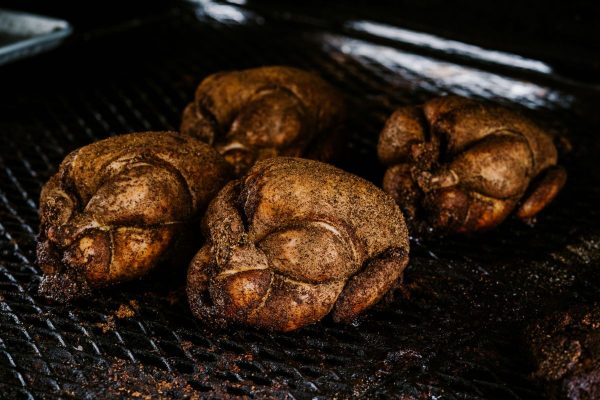
Great, weekday meal for barbecue lovers
If Fried Chicken is the superstar singer on the poultry part of the Roadhouse menu, the Pit-Smoked Chickens would probably be the bass player. They’re happily in the background, grounded, steady, and really really good at what they do. And while that Fried Chicken is really really fantastic, I’ll offer that I eat far more of the Pit-Smoked Chicken. Honestly, it’s one of my favorite products in the ZCoB!
If it’s Monday, Tuesday, Wednesday, or Thursday, give some thought to swinging by and picking up one of these exceptional oak-smoked chickens from the Roadhouse. I can say from a LOT of personal experience that they make an exceptional evening meal! A whole Amish chicken, rubbed with our freshly ground, farm-to-table Tellicherry black pepper and salt, put on the pit to smoke slowly over smoldering whole oak logs for about three or four hours. We’ve had them on the carryout menu for the last few years, during which time they’ve been a very regular item at our house.
All you need to do is call ahead to order one, then swing by the Roadhouse and pick it up. (You can also just come by, but we’re only doing a limited number of these every day so … if it were me, I’d order ahead to make sure I got one.) The Roadhouse crew puts a bit of butter atop the bird, then wraps it really well in foil so you can get it home in good shape. Best bet, I think, is just to unwrap and eat. If you want to heat it up, either stick it in a hot (350° F) oven in the foil for a bit, or you can microwave it (after you take it out of the foil!) for a few minutes if you want to go more quickly. Since Tammie and I eat dinner late at night, we did the latter, and it worked out just fine.
The big news here though is that you can now get the Pit-Smoked Chickens inside the restaurant for dinner. We’re still on that same limited-times and limited-days schedule—Monday through Thursday, dinner only, and, when we’re out we’re out. The beautiful oak-smoked, Tellicherry black pepper-dusted bird comes plated with side dishes that make it a great dinner and a great deal! Start out by snacking on a glass of those incredible single-origin peanuts we’ve been getting from Elisha Barnes in Virginia and a small salad. Finish the evening off with a scoop of that Roadhouse Joe-lato!
If you have leftovers, I’ll share that they’re awesome for adding to soup or salad, making into smoked chicken salad, or just nibbling on out of the fridge when you need a snack. Tammie and I take the bones that are left behind and boil them with an array of vegetables to make a magically terrific broth. (When we serve it, we drop on a spoonful of that IASA peperoncino!)
Once again, the Roadhouse only smokes a limited number of these pit-smoked whole chickens Monday through Thursday. They come out in time for dinner and it can’t hurt to order ahead and have us hold one for you. It’s hard to believe a chicken could be life-changing but this might be it.
|
|
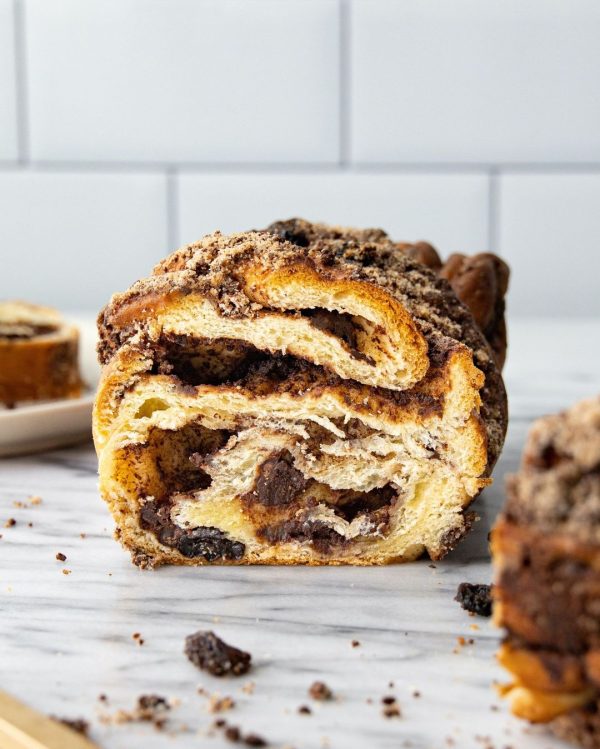
A taste of Zingerman’s Bakehouse Babka could be just right
|
More and more over the years people bring or send a Zingerman’s gift—a taste of Tree Town, it’s a terrific way to convey their own commitment to high quality and an easy way to share some of their connection with the community here in the Ann Arbor area. Sour Cream Coffee Cake, which we’ve been making for over 35 years now, is probably the most popular way to do that. Magic Brownies, which we’ve been making for almost that long, are another favored choice. I’d like to propose a third option, something that might well make for a great taste of Zingerman’s and Ann Arbor: the Bakehouse’s Chocolate Babka. While it’s not well known in the Midwest, in New York, Babka has long been a big deal. I tend to be a bit skeptical about trends in Tinsel Town, but folks on the East Coast could well be onto something with their regular Babka-eating.
While Babka is pretty easy to pronounce, it’s not easy to make. Melissa Clark, writing in the New York Times, says that:
Baking a chocolate Babka is no casual undertaking. The Eastern European yeast-risen coffee cake has 14 steps and takes all day to make. But the results are worth every sugarcoated second – with a moist, deeply flavored brioche-like cake wrapped around a dark fudge filling, then topped with cocoa streusel crumbs.
If you’re from New York, the odds are reasonably high that you’re well familiar with Babka. If not, you’re in for a treat. Babka is traditional Jewish “sweet bread,” akin you could say to a light-textured coffee cake, or maybe a bit denser piece of Italian panettone. It starts with a rich, slow-rise yeasted dough made with lots of butter, real vanilla, and fresh egg yolks. That in turn is sprinkled with chocolate “crumble” and orange-syrup-soaked raisins, all of which get formed into a fine looking swirled loaf, and then baked off to a golden brown with a sensual cinnamon-sugar crust. The Bakehouse crew adds a good dose of dark chocolate on top and rolled into the middle as well. It’s already got a LOT of loyal fans, and it seems to be gaining more momentum all the time.
Babka’s history? Its roots are in Eastern Europe, very likely indigenous to Ukraine, where it would have been a part of an ancient fertility symbol used in the matriarchal system once in place in the region. The old forms of the Babka were likely much larger, somewhere from the size of a modern day panettone on up to some a few feet high. The original name was likely “baba,” meaning “grandmother”; with the “modern era’s” smaller sizes the name shifted to the diminutive, “Babka,” meaning “little grandmother.” Up until the 20th century, it’s unlikely that Babka would have had any chocolate in it, since chocolate came from the Western Hemisphere and became popular in Europe only late in the 19th century.
Earlier versions of Babka would likely have been closer to the Eve’s Apple Babka we make at the Bakehouse (a special bake coming in August). For those who want to return to the older, more true to traditional type offering, this is it. Still, I know, chocolate is likely to take the cake. Susana Trilling, author of the excellent cookbook, Seasons of the Heart, and creator and cooking teacher extraordinaire of the Oaxacan cooking school of the same name once wrote me to say that, “… bar none, Zingerman’s Bakehouse makes the BEST Babka I have ever eaten!! It was incredible.”
The Bakehouse’s Chocolate Babka will be available all summer on Wednesdays, Fridays and Sundays. |
|
P.S. If you want to try making Babka at home, the recipe will be in the Bakehouse’s forthcoming cookbook, Celebrate Every Day, due for release October 3rd. Pre-order here!
Want more from Ari?
Sign up for Ari’s Top 5 e-newsletter and look forward to his weekly curated email—a roundup of 5 Zing things Ari is excited about this week—stuff you might not have heard of!
|
|