
Tag: Ari’s Best Foods of 2011
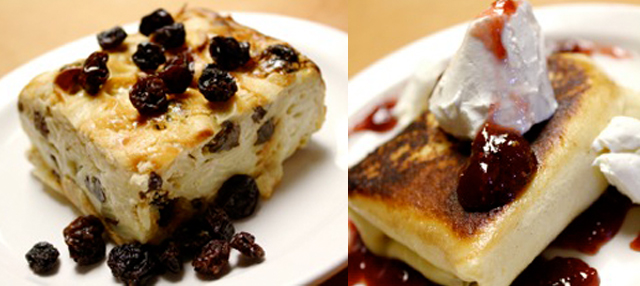
Noodle Kugel
We’ve been making noodle kugel since we opened the Deli back in 1982. It was delicious then, and it’s equally as delicious now. It’s basically my grandmother’s recipe, but we make it with much better ingredients. Although there’s no replacement for family memories and emotional connections, when it comes to flavor, the truth is that ours actually tastes far better than what she made for us when I was a kid. Egg noodles from Al Dente in Whitmore Lake, farm cheese from the Creamery, plenty of plump Red Flame raisins, and a generous does of vanilla, all blended and then baked ‘til it’s a nice golden brown. Great for breakfast, lunch, dessert or really any time you just want something good to eat. And now that I think about it, since it holds up nicely wrapped, it’s a great bag lunch or afternoon snack as well. I’m considering calling 2012 the Year of the Noodle Kugel. I’ll start the trend now so you can get out in front of things.
Recipe
12 ounces fettuccine egg noodles
1/2 vanilla bean, split and seeds scraped
1/2 cup plus 2 tablespoons granulated sugar
9 large eggs
3/4 cup butter, melted
2 cups raisins
1-1/2 cups farmer’s cheese
1-1/2 cups sour cream
1 teaspoon cinnamon
1/2 teaspoon fine sea salt, plus additional for boiling the noodles
Preheat oven to 350° F.
Bring a large pot of salted water to a boil. Add the noodles and cook, according to the package instructions, until al dente.
Meanwhile, combine the vanilla bean seeds and the remaining ingredients in a large bowl and stir until well blended.
When the noodles are ready, drain them well and gently stir them into the sauce.
Pour into a 9x13x2-inch pan and bake for 30 minutes, or until golden on top.
Cheese Blintzes at the Deli
This is another classic that slipped off my list for far too long. They’re so, so, so good, that blintzes really shouldn’t be off anyone’s list for any length of time. Like the noodle kugel, we make these pretty much as my grandmother did, but, again, the ingredients we use are about eighteen times more flavorful. Thin handmade blintzes (Jewish crepes would be the standard description) folded around a filling of farm cheese from the Creamery, plenty of real vanilla (from beans, not extract), and a generous dose of chestnut honey to sweeten them. It’s an impressive line up of ingredients, but the honey, for me, is what takes them over the top. Chestnut honey has a pretty remarkable, sweet, deep, almost slightly bitter flavor that brings a big round bass note to an otherwise mostly sweet dish. Served with sour cream or preserves, blintzes, like the kugel, are great for almost any setting—breakfast, lunch or a light dinner.
We’ve been making this simple and delicious “noodle pudding” since we opened the Deli back in 1982. It’s based on one my grandmother used to make, and probably not unlike what Emma Goldman would have been eating back in her day. Noodle kugel is good hot out of the oven, but also a few hours later when it’s cooled down to room temperature. If you’re not into raisins you can sub in pretty much any dried fruit, cut into small pieces.
Recipe
Crêpe Batter
1 1/2 cups all-purpose flour
1/2 teaspoon fine sea salt
2 cups whole milk
2 eggs, beaten
Sift the flour and salt into a medium bowl. Make a well in the center. Add the eggs and milk to the well and stir, slowly mixing in the flour until it is well blended. There will be a few lumps. Cover with plastic wrap and let rest while you are making the filling.
Filling
8 ounces farmer’s cheese
8 ounces cream cheese (preferably natural—without vegetable gum), softened
2 tablespoons chestnut honey
1/2 tablespoon butter, softened
1 egg yolk
2 vanilla beans
1/2 teaspoon fine sea salt
Additional butter for greasing pan
Split the vanilla beans lengthwise and using the tip of a spoon, gently scrape out the seeds. Reserve the pods for future use. Set the seeds in a medium-sized mixing bowl. Add the farmer’s cheese, cream cheese, honey and butter and mix until well blended. Gently stir in the egg yolk and salt. Mix well again and set aside.
To make the blintzes, heat a 7″ crêpe pan over medium heat. When a little water splashed onto the skillet dances and evaporates, the pan is ready. Grease it lightly with butter, regulating the heat so it does not burn.
Lift the pan from the heat and ladle 1/4 cup of batter into the center of the pan, then tilt the pan in a circular motion to coat the cooking surface with an even thin layer of the batter. Cook ’til bubbles disappear and underside is golden—about 1 to 2 minutes. Remove to a clean dishtowel and keep covered. Repeat until all crêpes are done, lightly buttering the pan before starting each. You will end up with about 12 to 13 crêpes.
To assemble the blintzes, take a crêpe and place 2 slightly rounded tablespoons of filling onto the uncooked side of the crêpe and fold it closed to make a rectangular package, folding in the top and bottom first, then the sides. Each blintz will look like a bit like a nicely folded envelope.
In a large skillet, melt 2 tablespoons butter over medium heat. Add the blintzes—working in batches so as not to overcrowd the pan—seam-side down until underside is golden. Flip and cook a minute more or until both sides are golden brown. Serve immediately.
This post is part of a series of Ari’s Best Foods of 2011.
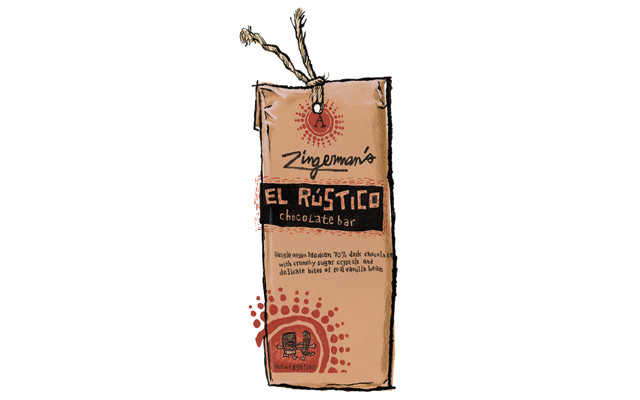
Shawn Askinosie Scores Big with Two Sweet Treats!
1. Dark Chocolate from Tanzania – Community Project Puts Out an Amazing Chocolate
This is one delicious and very special chocolate bar which is made by Shawn Askinosie, unquestionably one of the country’s best chocolate makers, who’s working directly with cacao growers in east Africa to bring these beans to North America. I love it. It’s a bit lighter, slightly softer in flavor than most of Shawn’s other offerings. It’s definitely more cocoa-y than most of our other dark chocolate bars, with a slight hint of cinnamon with a slight bit of some other specific spice that I can’t put my finger on. Shawn himself says it has “hints of tobacco” but I quit smoking so long ago I can’t really remember what that means. It’s definitely kind of creamy on the tongue. Allen Leibowitz, founder of Zingerman’s Coffee Company, is adamant that he tastes banana, and I agree. The main thing is, it’s complex and well balanced with a nice finish and it really doesn’t taste like any other chocolate that I’ve had. All of which, I’d say, makes it well worth checking out. Without getting too simple on you, it’s just sort of downright delicious. Mouth watering. Clean finish. Makes me want to eat more every time I taste it.
2. El Rustico Bars – Chocolate and Chewy Bits of Organic Vanilla Bean
It’s been I think four years since Shawn Askinosie started making this special bar specifically for us. I loved it then and the truth is that I love it still, a few years further down the road. Dark chocolate that starts with the cacao that Shawn has personally sourced (in its current incarnation, the El Rustico features cacao from Davao, Philippines) and hand chopped bits of organic vanilla bean laced into it. Shawn has worked with Deli Chocolate Lady Margot Miller to adjust the recipe of this bar and the biggest change is the quantity of hand-chopped vanilla bean. The new bar now has three times the amount of vanilla bean than the original El Rustico. This bar boasts a texture triple threat—rich chocolate, crunchy sugar crystals, and vanilla bean pieces! Where most bars that use vanilla have it in there like background vocals, when the El Rustico goes on stage the chocolate and vanilla are singing a strong, well-balanced duet with full flavor, good balance, and a nice long finish. Sounds like a good recipe for living life now that I think about it. Buy a bar. Eat a square. Appreciate the work that Shawn and his staff in Missouri have made happen.
This post is part of a series of Ari’s Best Foods of 2011.
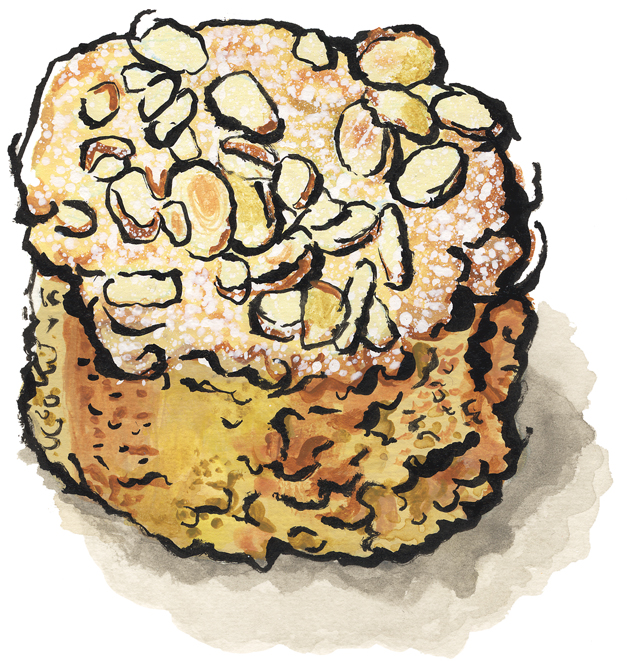
Although we’ve been making it for a good ten years now the Bostock really does seem to be one of the best kept secrets at the Bakehouse. I know it has a loyal following but it’s yet to get the level of attention I think it deserves. It really is amazing stuff, but unlike muffins, croissants, danishes and donuts it’s hardly a well-known way to start one’s day. There are a handful of spots around the world that make it but not many, so maybe the word is starting to get out. Sara Kate Gillingham, on her amazing website The Kitchn described the Bostock as a “syrup-soaked, frangipane-topped, crispy-edged ode to breakfast glory.”
I’d say it’s a little bit like a really good almond croissant that’s come back to life in a dense, round, but still equally delicious and almost otherworldly good new existence. Bostocks start with a piece of Bakehouse all-butter brioche. It’s brushed with orange infused simple syrup, topped with a layer of frangipane (ground almonds and sugar), and then toasted slivered almonds. If you’re ready to liven up your morning routine, ask for a taste of this stuff at the Bakehouse bakeshop or the Deli’s Next Door Café.
This post is part of a series of Ari’s Best Foods of 2011.
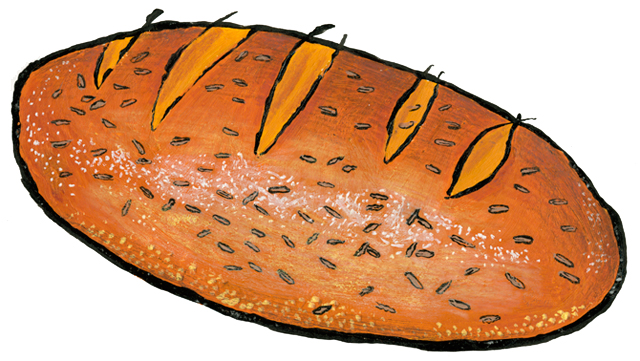
“America’s very best rye? No contest. It comes from Zingerman’s Bakehouse.” —Jane and Michael Stern
Jane and Michael Stern rated the Bakehouse’s rye bread the best in the country this past spring in Saveur magazine. Having long respected their palates, read their articles, listened to their radio shows and known them for many years now, I was really happy to have their support. But in honesty, what they were saying is what I’ve already long since believed to be true—the Jewish rye at the Bakehouse has been pretty amazing since we started making it back in 1992. And for whatever reasons of technique, nuance, and delicate touch, it seems to just keep on getting better and better with each passing year.
If you haven’t been to the Bakehouse or the Deli, we do a whole range of ryes—one we call Jewish rye (without the caraway seeds), a caraway rye, and one with onions. My favorite this year though has very clearly been the caraway rye, in particular the really large 2-kilo loaves that we only make on Fridays. Friday, if you didn’t already know, is Ryeday. And pretty much every Friday I try to get a quarter or half of one of those big, beautiful loaves to get me through the next week. Bigger loaves, quite simply, have a better, moister texture. And they taste better. And, kept in the paper bag we pack them in, the big loaves last easily for a week or longer. Then there’s my affection for caraway. For some reason, I like the little seeds more and more with each passing year. There’s something about the aromatics, the small hint of anise it offers and the almost-but-not-quite-fennelly flavor that makes the rye all the more interesting to me. A chunk ripped from a fresh loaf and eaten, as is, is really a pretty marvelous thing. Better still, thick cut slices spread with a lot of butter. Add some good jam and you’ve seriously got a world-class breakfast in about two minutes. The same slice is equally excellent with a thick layer of the Creamery’s old style, no vegetable gum, no preservatives cream cheese. And of course, it’s all also amazing if you toast the bread—it’s almost worth toasting for the aroma alone. And, last but definitely not least, there’s the obvious opportunity to use it for sandwiches of all sorts. Great for grilled cheese and, of course, on the classic corned beef or pastrami sandwich.
[If you’re going the butter route, try the Irish Kerrygold cultured butter in the silver foil wrapper—made only when the cows are grazing in the pastures which makes for a noticeably more flavorful, more golden in color (more beta carotene), softer-textured butter. Because the cream is allowed to properly ripen—as per rarely used traditional techniques—the butter develops a fuller flavor. Really remarkable stuff.]
As a bread lover, seriously, I can’t think of a better gift than a 2-kilo loaf beautifully wrapped in nice paper and tied with a string. Save the sweaters—I’ll take bread any day!

1. Fantastic French Sardines
A Little Bit of Brittany in Ann Arbor
I’ve long loved good sardines. I’m happy to have them in pretty much any form I can get them. I especially love fresh ones when I can get them (we have them at the Roadhouse at times). Top notch tinned sardines are equally superb. I try to have those on hand all the time. They are one of the ultimate convenience foods. Canning was actually started first with sardines in an effort by Napoleon to feed the troops out on the front lines. I regularly open a can and put them on salads, sandwiches, and pasta dishes. Unlike the fresh fish, the tinned sardines never go bad so there’s no reason not to carry a high level of inventory. In fact, they actually get better with age.
I’m particularly excited right now because we’ve just gotten in a couple of types from France to add to our already really good sardine selection. Fished only in the summer months (which is officially “sardine season”) off the coast of Brittany using small, old-school nets (to protect the delicate flesh), the sardines are brought back to port that night to maintain freshness. They’re then cleaned, very lightly fried in olive oil, tinned up with additional olive oil and then finished by being cooked inside the tin. When you open the can you’ll find four or five beautiful, silver-skinned sardines carefully lined up inside. A bit denser in texture than the also terrific offerings we’re getting right now from Portugal, these French sardines are very meaty, herbaceous and just darned delicious.
Better still I’d say are the aged sardines we’re getting from the same folks in France. Each tin has four beautiful, big (for a tin at least) sardines, caught, cooked and packed as above, but then put aside to mature for three years. As the months pass, the olive oil penetrates to the center of the sardine, making them even more delicious than they were to begin with. Delicacy that they are, I like to eat the aged sardines in simple ways—next to a small green salad or with some toast topped with a bit of butter or extra virgin olive oil. A sprinkling of sea salt seals the deal. Here, Breton fleur de sel would be geographically correct, and its delicate texture would be a good compliment for the sardines.
2. Vintage Spanish Tuna
2009 Bonito from off the Coast of the Basque Country
While I’m on the subject of aged tinned fish I should tell you about the really delicious Spanish tuna we’ve tracked down this fall. It’s line-caught albacore (known to Spaniards as ‘bonito’) from the Cantabrian Sea. We get it from the Ortiz family, who’ve been at this since 1891, and are known across Spain for the consistently high quality of their tinned seafood. Like the Breton sardines above, the bonito is aged right in the tin along with extra virgin olive oil. Same basic process, same really good results. For a particularly good treat, pour a bit of extra virgin olive oil on a plate. Add a few spoonfuls of harissa (if you’ve had the jar in the refrigerator, let it come to room temperature before you do this so it will soften up, and its complex flavors will be even easier to appreciate.
3. Portuguese Mackerel with Piri Piri
Holy Mackerel!
The third in my trio of tinned fish favorites of the moment. This time it’s mackerel packed with Portuguese piri-piri hot sauce. Easy to use and easy to love, like all the great tinned fish we’ve got on hand, this stuff is super healthy (very high in Omega-3 oils) and super convenient. Fast food at its finest!
This post is part of a series of Ari’s Best Foods of 2011.
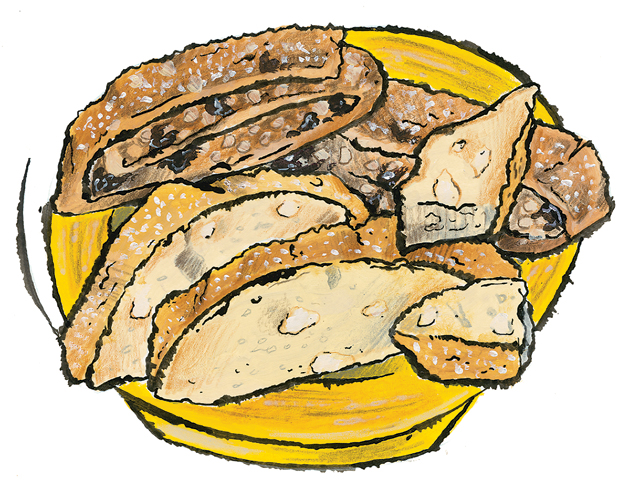
Mandelbread is anything but new. It’s been a staple of Eastern European Jewish eating for centuries and a regular item at the Bakehouse for fifteen years or so. For whatever reason, I have a tendency to take mandelbread for granted. Maybe it’s the long history or the fact that I grew up with it. Or maybe I forget about it because I don’t eat a lot of sweets. Or because so much of the world’s mandelbread is, unfortunately, rather unremarkable. The good news is that literally almost every time I taste a piece of it, I’m reminded how incredibly good the Bakehouse version really is.
Basically you could start calling mandelbread “Jewish biscotti.” Butter, fresh orange and lemon zest, lots of whole toasted almonds, and real vanilla. We make them the old-fashioned way, forming a long “loaf,” baking it once, then slicing it crosswise and baking each slice once more again so it turns a nice golden brown on top. Finally each slice is then turned over again and baked in a final third position. (Most commercial versions are sliced before they even start baking, which changes the texture and flavor of the finished cookie.)
They’re great on their own, with coffee or tea, or perfect for an easy, light, after-dinner treat. You can also dip them into sweet wine (like the Tuscan Vin Santo) as well. On top of all that sweet goodness, they’re now packaged in a really nice new box, which I happen to love almost as much as I love the mandelbread. Makes them not only taste good, but also turns them into a super easy to give gift.
This post is part of a series of Ari’s Best Foods of 2011.