
Tag: Bakehouse
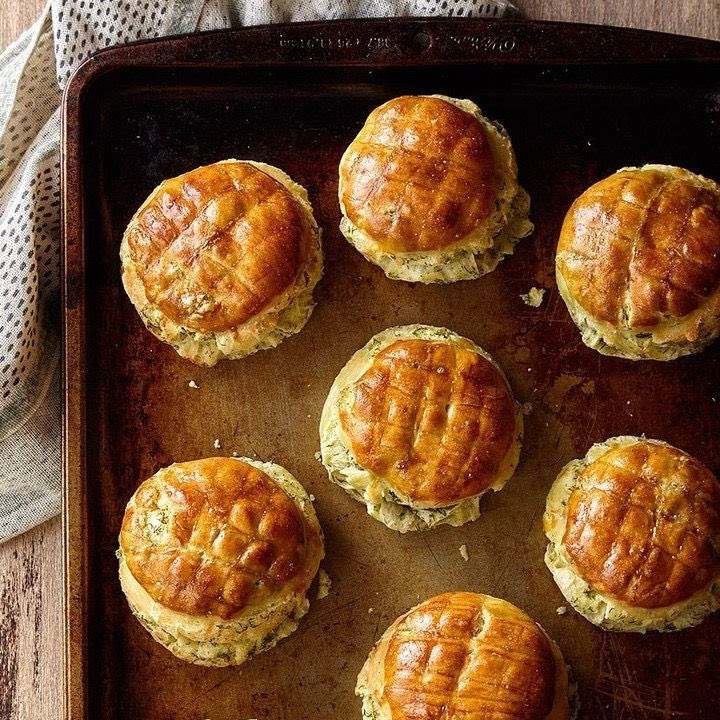
A beautiful Hungarian “biscuit” for breakfast, lunch, or dinner
In a sense, I can see now that our nearly 15-year commitment at the Bakehouse to make Hungarian baked goods one of our signatures is a strong example of a Promise Beyond Ableness—“When we aim for what we do not yet know how to do—but, if achieved, it would increase the ableness and performance of our beloved people, places, or causes.”
We made that promise back in 2010. Sixteen years later, it has played out very much as we envisioned. In 2026, we’re regularly baking about two dozen traditional Hungarian specialties, and nearly all of them have developed large, loyal followings—not only among the area’s significant Hungarian community, but also among folks like me who likely would never have known these pastries at all if we weren’t making them here.
Although aficionados have been enjoying them for years now, the Pogácsa (pronounced “poh-gotcha”) at the Bakehouse seem to have become all the rage. The word seems to have hit the street: these butter-laden, sour-cream enriched, dill-scented Hungarian “biscuits” are really, almost ridiculously, good! While they’ve been little known here—outside of our Hungarian-American communities, which know them well—Pogácsa are probably one of the most commonly served foods in Magyar culture. Mimi Sheraton lists them in her book, 1000 Foods to Eat Before You Die: A Food Lover’s Life! Thanks to the Bakehouse, you can knock the list down to 999!
Pogácsa are basically perfect little bites of buttery goodness. Made with sour cream, eggs, butter, and the layering of dough, Pogácsa are light and tender. In the marvelous, deservedly award-winning cookbook, Zingerman’s Bakehouse, co-author and Bakehouse co-managing partner Amy Emberling explains, they’re “rich and delicious rolls made in Hungary…eaten at breakfast, for a snack, for appetizers, or to accompany dinner. If you want to make a true Hungarian meal, Pogácsa are an essential component.”
The lovely green herbiness of the dill brightens up the buttery base of the Pogácsa beautifully. You can do anything with Pogácsa you would with biscuits. They’re great as they are! I also like to split them and toast them in a pan with a bit of Vermont Creamery Cultured Butter (yes, they’re already buttery to begin with, but more butter is better!) until the cut surface turns a beautiful golden brown. You can serve them on the side with almost any meal, morning, noon, or night. Use them to make Pogácsa sandwiches—a little bacon or sliced ham would be great. I like them with bits of cured ham like Prosciutto di Parma or cured, smoked, Speck—it takes about 20 seconds to put together, and it’s a truly terrific culinary combination.
They’re excellent as well to put a fried egg on, sprinkled with a pinch of hot Hungarian paprika. If you like, smash a just-cooked small potato onto one side of a split Pogácsa—sprinkle it with salt, pepper, olive oil, and a bit of Hungarian paprika and you’ll have a lovely hot potato and Pogácsa sandwich. Pogácsa are particularly good with the Liptauer cheese, and they’re also great with butter and anchovies or cream cheese and sardines. They’re also good with sweets—I’m really happy eating them with a combo of butter, honey, and black pepper. Or try one spread with our great artisan cream cheese and honey.
Stop by the Bakeshop and put a Pogácsa in your pocket! If you’re thinking of serving them for a big gathering, I’d suggest ordering ahead so we can make sure to have enough ready for you! One guest bought four dozen of them the other day—I believe Pogácsa have the potential to become, as they already are in Hungary, as popular as buttermilk biscuits that we make at the Roadhouse. They’ll be on special for the rest of February!
Pre-order Pogácsa
Tag: Bakehouse
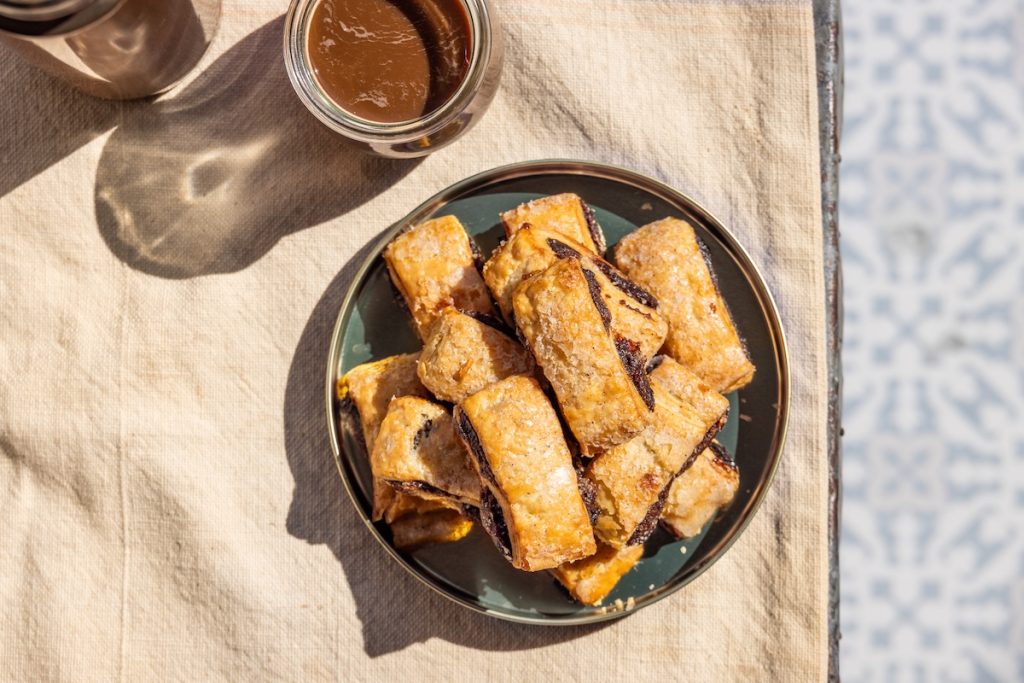
Welcome 5786 with these superb little Jewish pastries
It would be easy to walk past these little hand-rolled, date-filled rugelach at the Bakehouse. Amid all the stunning breads, decorated cakes, tortes, tarts, and morning pastries, they might not immediately catch your eye. But do yourself a favor—try one. They’re small, sweet, perfect, and, to my taste, easily one of the best things in the whole Bakehouse.
If you don’t know rugelach, they’re small buttery cookies with Eastern European Jewish roots, made with sweet cream cheese pastry rolled around a variety of fillings. Our original rugelach features the classic walnut and currant combination. Over the years, we’ve also added apricot, raspberry, apple, chocolate, and, last but definitely not least, these delicious date rugelach. Each is a bite of delight. The date rugelach, in particular, are something special—the natural, elegant sweetness of dried dates, heightened by a touch of ground cardamom and coffee. Dates have long been a big part of Sephardic celebrations, and it’s no coincidence that this season coincides with the date harvest in the Eastern Mediterranean. They’re a perfect treat for the Jewish High Holidays or any special occasion.
Bakehouse co-managing partner Amy Emberling wrote in the highly recommended cookbook, Zingerman’s Bakehouse,
Rugelach are the most popular and well-known Jewish cookie in the United States and are definitely the most popular Jewish cookies we make at the bakery. This version … has a delicate and flaky dough (two-thirds of the dough is fat—butter and cream) encasing special fillings, sprinkled with sugar, and baked until golden brown.
The name “rugelach”? It could be from the Yiddish rog, meaning “corner.” Or the Polish rog, which means “horn.” Or from the Polish and Ukrainian pastry rogalik. Others say it means “royal” in Yiddish. Their origins are from the same tradition of crescent-shaped baked goods that’s given us classics like croissants and kipferl cookies! One thing is for certain, though—wherever they came from, they are truly terrific!
I’ve been experimenting with some creative ways to embellish the excellence of the Bakehouse’s Date Rugelach even further of late. They’re delicious dipped into Noccioliva, the artisan chocolate spread we get from Italy. It also makes a lovely small plated dessert—put a bit of the Creamery’s handmade cream cheese down on a plate, drizzle on some date syrup or maple syrup, then place the rugelach on top. You could also cut them in half and dab each one with a bit of the Georgia Grinders Almond Butter—it’s a terrific combination!
Both comforting and a bit exotic, the Date Rugelach are remarkably tasty! Bring a bag along to your next gathering.
Tag: Bakehouse
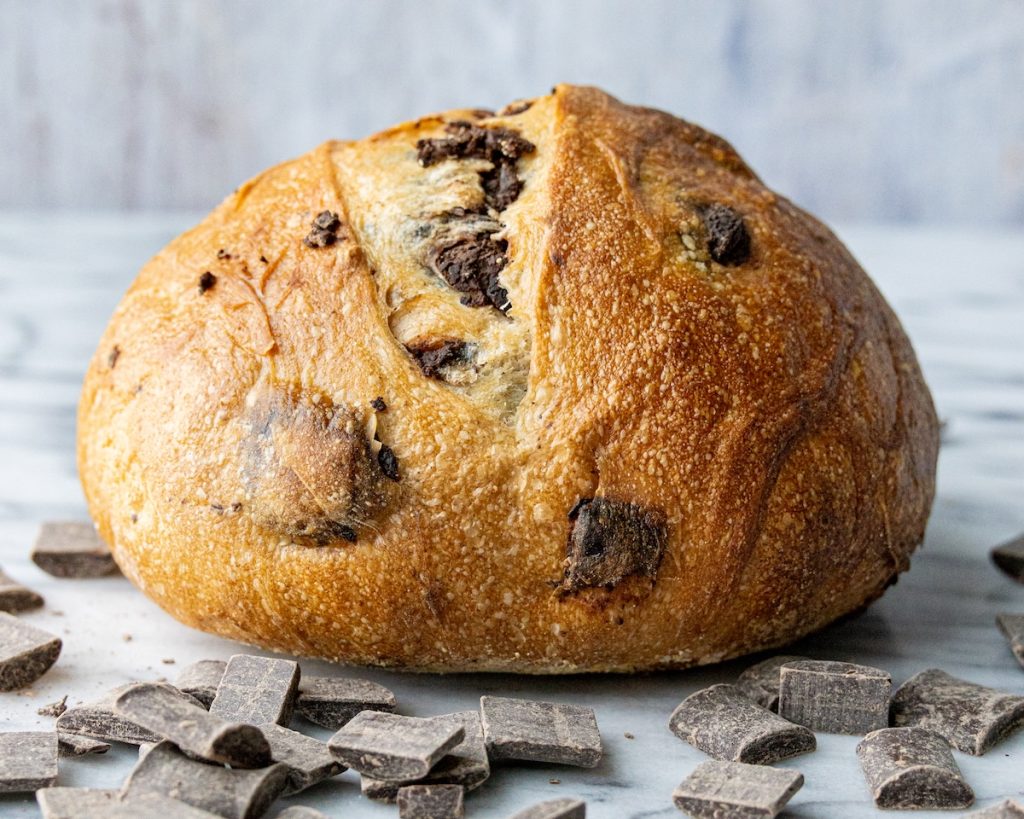
Dark chocolate chunks take Better Than San Francisco Sourdough to a super-tasty new place
One of my favorite Bakehouse breads! These loaves are the kind of food I love most: very simple, reliant only on great ingredients and great technique. It starts with the Bakehouse’s Better Than San Francisco Sourdough, a classic from the 19th-century California Gold Rush era—organic flour, filtered water, sea salt, and our sourdough starter. The sourdough is studded with chunks of excellent bean-to-bar dark chocolate from Belgium, and then baked until the crust is golden brown. Naturally leavened, it takes about 18 hours of skilled work by the Bakehouse bakers to make.
Although few Americans are familiar with it, eating bread and chocolate together is an everyday activity in Europe. This bread makes it easy! My late friend Daphne Zepos grew up in Greece but went to boarding school in France. There, she shared, chunks of bread and chocolate were a regular afternoon snack. She was in heaven! The image makes me smile—every time I eat some of this wonderful Chocolate Sourdough bread, I come back to it.
With the Chocolate Sourdough Bread, mostly, I just tend to tear off a chunk and eat it as is. You can also pop the whole loaf in the oven for about 15 minutes. Your entire kitchen will be filled with the delicious smell of warm chocolate and good bread. Great with good coffee—the Coffee Company’s Burundi, this month’s Roasters’ Pick, would make a beautiful pairing because it’s got such nice, naturally present cocoa flavors. It’d be pretty darn good if you warmed the loaf and then served it with vanilla gelato or ice cream. It’s also great spread with the Georgia Grinders Almond Butter, or some of their terrific Hazelnut Butter. Or try chocolate and cheese—toast lightly, drizzle on a bit of extra virgin olive oil, and then spread with some fresh ricotta.
Let me conclude with an unsolicited testimonial for the beauty of bread and chocolate from one of the food world’s great writers, M.F.K. Fisher, who said in Serve it Forth, “My mouth was full of fresh bread, and melting chocolate, and as we sat gingerly, the three of us on the frozen hill … we peered shyly and silently at each other and smiled and chewed at one of the most satisfying things I have ever eaten.” In stressful times, that sure sounds wonderful!
Ask for a taste next time you’re in the Bakehouse or Deli. The loaves come out of the oven on Mondays and Fridays around 2 pm. Or ship a few loaves to a chocolate-loving friend—it’s a sure hit as a gift. Check it out!
Order yours in advance
Tag: Bakehouse

Custom cakes make the mundane into the magical!
One of the best and easiest ways to joyfully brighten someone’s day I’ve learned in recent years is to give them a custom-designed cake from the Bakehouse’s Cake Studio. Seriously, their custom cakes are something else! We’ve been making these beautiful cakes for a bit over 20 years now, and the Bakehouse Cake Studio crew has won well-deserved praise for their wedding cakes. Having gorgeous custom-designed cakes for your big day that actually taste terrific is a big deal!
While wedding cakes are wonderful, you do not need to get married to enjoy one of these great creations! Most any occasion can be radically enhanced by the unveiling of a cake that has been custom-designed. I ordered one recently to share with staff for the start of our new fiscal year! And the photo above is the one created for Tammie’s birthday last spring that featured one of the dogs she rescued last year, Little Frankie Lee! Tears of joy ensued as soon as she got her first look at it.
The Bakehouse’s custom cakes are guaranteed to bring joy to anyone you give them to! Everything is created to order and made by hand! In fact, if you give one as a gift and joy does not ensue, we will be glad to give your money back! Consider it our investment in inspiring joy around Washtenaw County.
For big events, schedule a cake consult. If you’re thinking ahead, it’s never too early for custom cakes! If it’s last minute, we have our regular layer cakes in the Bakeshop, and we can almost always add a message if you can wait for five to ten minutes. For bigger projects, Cake Studio manager Alyce Machcinski says,
It’s always good to plan ahead; with only a few days’ notice, we can make something that is personalized and still very special for their celebration; and if something comes up last minute or you’re not able to plan in advance, we can add inscriptions to our everyday cakes that we have in the Bakeshop case. If someone is looking for a truly over-the-top cake, it’s never too early to reach out and start planning!
A couple weeks ago I had the honor of teaching a ZingTrain Community Event to a group that had gathered in Julia Child’s teaching kitchen at Boston University in Cambridge! It was both a little intimidating and a lot inspiring to be able to stand in the same spot Julia so famously presented from for so many years! Thinking about her here, I’m reminded of a line of hers I always loved: “A party without cake is just a meeting.” This week I want to imagine an inversion—a meeting with a cake can easily become a productive and joyful work party! They’re great for work anniversaries, amazing office birthday parties, impressing a big client you have in for lunch, or just adding a little vitality to your regular weekly meeting!
Celebrate with Custom Cakes
Tag: Bakehouse

A nod to traditional German-Jewish cuisine
Most American Jews—and for that matter, most Americans—are familiar with egg-enriched challah, the traditional bread baked for Sabbath and holidays. Since my family’s roots are in Eastern Europe, this was the only one I knew until I started studying food more seriously after we opened the Deli. There is, though, another kind, German challah. It is little-known in the U.S. but has long been the norm in the German-Jewish community, where most will know the bread as berches.
Food writer Joan Nathan is part of a German-Jewish family in which berches is the norm! The same goes for Gabrielle Rossmer Gropman and Sonya Gropman, the mother-daughter team who co-authored The German-Jewish Cookbook. And now, after all these years, we’ve begun to bake it here. This likely was what Erich Fromm’s family would have had on the Sabbath table every Friday evening.
The Bakehouse crew has spent months working to craft our own recipe of this centuries-old German-Jewish classic. Amy Emberling, longtime co-managing partner at the Bakehouse, and a member of our five-person Stewardship Council, shares,
Jews for centuries have made our food in the context of other cultures. The spices, fruits, and vegetables used in the recipes often reflected what was available in the region and were then transformed to fit our recipes and food laws. For much of the history of the Bakehouse, we’ve been dedicated to making the recipes that were mainly traditional for Jews in Eastern Europe, including using the flavor choices from that region. Recently, we’ve begun to focus on using ingredients and flavors more common to Michigan as well as transforming recipes with our knowledge of artisan baking—this new challah includes freshly milled local organic spelt and high-extraction organic regional wheat flour. We’ve also enhanced the flavor and texture with a pre-ferment and some of our sourdough starter. For moisture, we include mashed potatoes.
Our German Challah is very slightly sweet, less rich without the eggs, but really delicious. It has a slightly darker crumb and a nuttier flavor from the freshly milled grains used. The fresh milling and local grains make the bread much more like what German-Jewish bakers would have been making and serving two centuries ago than one would get from the more highly refined, bleached, and bromated commercial flours that are now so commonly available.
Toasting the German Challah brings out the sweetness and gives a lovely, lightly nutty flavor. Great with the Vermont Creamery Cultured Butter and a bit of good jam. Or try it with the Creamery’s wonderful handmade Cream Cheese. On a more savory side, it’s lovely with chopped liver, and makes a beautiful base for a corned beef sandwich. Whether you want a new way to celebrate the Sabbath, you want to experience a bit of Jewish cultural diversity, or whether you just like to eat a lot of good bread, swing by and grab a loaf or two soon!
The German Challah is available on Mondays and Fridays. It will be on the shelves at the Bakeshop after 9 am and Deli around 11 am. Eventually, you’ll be able to find it on the Zingermans.com Mail Order site, too. In the meantime, we’d be glad to ship you some—just email us at [email protected] and we’ll send some your way!
Tag: Bakehouse

Angel food cake to celebrate summer berry season
A Bakehouse favorite from many years ago, it’s named after managing partner Amy Emberling’s son Jake, who’s all grown up now, and still loves this cake. It’s soft, fluffy, sweet, and light—“pillowy,” the people at the Bakehouse like to say—heavenly angel food cake made with lots of fresh egg whites, cane sugar, a small bit of flour, a touch of cream of tartar, and lots of vanilla extract and vanilla bean. This time of year, it’s particularly relevant because this lovely light cake marries so marvelously with berries.
Angel food cake is named for its lightness. A cake angels might eat. Although some will say it must have come down from heaven, culinary historians don’t seem to agree on its actual origins. Many give credit to Pennsylvania Dutch bakers. Others argue it was invented in the American South. Mrs. Porter’s New Southern Cookery Book has a recipe for “Snow-drift Cake” which was pretty much the same thing. Many historians agree that the invention of the eggbeater—which made making it much easier—in the 1860s increased its popularity. If it did come from the South, it was likely developed and perfected by enslaved women. In The American Pastry Cook, Jessup Whitehead says it came from St. Louis in 1894. And, he says, it was shipped from St. Louis all over the country in an early form of mail order. Some were even sent all the way to London.
In her 1881 cookbook, What Mrs. Fisher Knows About Old Southern Cooking, Soups, Pickles, Preserves, Etc., Abby Fisher, a former enslaved woman who’d moved to San Francisco after Emancipation, calls it “Silver Cake.” To get the full context, the recipe on the top of the same page is “Gold Cake.” Gold cake is made with egg yolks. Silver cake starts with the egg whites you’d have set aside when you’re “going for the gold.” Mrs. Fisher had quite a business selling pickles and sauces in San Francisco and was a well-known local culinary authority. The book was published by the very progressive Women’s Co-operative Printing Office.
What I love best about angel food—or maybe I’ll say silver—cake is that it goes great with berries and as other fruits come into season, it’s well suited to them too. Just crush your berries and add a small bit of sugar. Let the juices come out for an hour or so, then ladle the berry mix over slices of the cake. Eat up and enjoy! Its lightness makes a lovely pairing too with the equally light elegance of the Mexico Chiapas coffee brewed as an espresso!