Tag: CAMP BACON
A Cinematic Journey Through Traditional Foodways
This coming Wednesday, June 3, 7pm, at Zingerman’s Events on 4th, we’re hosting the second annual Potlikker Film Festival which celebrates the works of documentary filmmaker, Joe York, who works out of the University of Mississippi Media and Documentary Projects, an institute of the Center for the Study of Southern Culture. The Center is the home of one of our favorite organizations, the Southern Foodways Alliance, and Joe has made several wonderful and engaging short films documenting companies like old diners, historic BBQ joints, and other rich parts of Southern food traditions. Here’s a quick preview film about Anson Mills in South Carolina:
The Potlikker Film Festival will be a celebration of Joe’s work for the SFA, and we’ll screen several of his award-winning short films. In addition to the films, guests will snack on dishes created using foods from the producers featured in Joe’s documentaries:
Menu
- Country Ham with a Whiskey Orange Bourbon Glaze
- Sea Island Red Flint Grits
- Biscuits with Sorghum Molasses
- Collard Greens
- Hoppin’ John
- Pimento Cheese and Celery
- Buttermilk Bacon Salad
- Heirloom Yellow Flint Popcorn
Joe came to visit Zingerman’s a couple of years ago. He brought his camera, of course. And a little while later, he sent us another short film. This is one of our favorites:
See you at the movies!
Anson Mills Mush and Bacon
This is one of those dishes that I’d seen mentioned many times in old cookbooks, but never actually took the time to make. It sounds so simple and unexciting that I wasn’t all that excited. I’d always been interested in polenta and grits, whereas mush sounded like some kind of backwoods mountain food. And the sad reality is that if you were to make mush with most any commercial cornmeal on the market, you wouldn’t think it was much (or is that “mush”?) either.
If you aren’t familiar with the name, mush is an old American dish that’s basically just plain-and-simple  cooked cornmeal porridge. It’s pronounced like “rush,” not “push.” Pretty much anything you do with grits or polenta you can do with mush. Which is why the first question that most everyone who doesn’t know the dish asks, “What’s the difference between mush, polenta and grits?”
And a fine question it is. In a broad sense you can certainly stick all three into the same category— porridge made of dried ground corn. Taking the level of detail down a bit, grits tend to be the most coarsely ground, polenta more finely so, and cornmeal for traditional mush finer still. (There are of course exceptions, which is . . . fine.) While the casual cook might think that they sound like pretty much the same thing by different names, in the American South grits and mush are very definitely different. And for reasons I don’t yet fully understand, grits are more or less unknown in the culinary traditions north of the Mason-Dixon line, while mush is all over old New England as well as Southern cooking.
I can’t really recall why one day I set out to make mush. Blessedly, the first time I did it I used some of the most amazing cornmeal available and topped it with some of the best bacon and bacon fat (Benton’s, actually) you can find. Given how I preach about the power of superior ingredients I shouldn’t have been so shocked at how good it was. I made mush five more times in the next two weeks, and I’ve continued to cook it regularly when- ever I’ve got the time. There’s really no work to it—you just have to get up and stir every 15 minutes or so (or, alternatively, use a non-stick pot).
Let me emphasize that this recipe, then, isn’t really just about making mush for its own sake. Since the ingredients are really just cornmeal, water and salt it’s only going to be as good as the corn that goes into it: do it with sit-on-the-shelf, super-processed, “germless” Quaker cornmeal and it’s going to be about as exciting as white toast with bad butter. This here dish—as you might have noticed from its well-branded title—is all about mush made from Anson Mills cornmeal. The bacon is great on top, but without great cornmeal it’s like putting an outstanding olive oil atop so-so pasta. You need the two in concert for the dish to work.
Almost anything goes with mush—certainly most any sautéed or roasted vegetable would be good. But what I’ve been making at home is a dish from the Civil War era—just mush served up with fried bacon pieces and a lot of bacon fat. Which bacon you use is really up to you since it’s so simple and so much the featured flavor along with that of the corn.
Ingredients:
- 4 cups water
- 1 cup Anson Mills stone-ground organic yellow cornmeal
- 1 teaspoon coarse sea salt, plus more to taste
- 1⁄4 pound bacon, chopped
- Freshly ground Tellicherry black pepper to taste
Procedure:
Put the water in a heavy stockpot and warm it over medium heat. When the water approaches the boiling point, start adding the cornmeal a bit at a time, stirring to keep the consistency smooth. Add salt and continue to stir well. Bring the mixture to a light boil and cook, stirring regularly, for a few minutes until the water and meal are well combined. Reduce the heat to very low, cover and cook for as many hours as you can. Simply lift the cover and stir gently 3 or 4 times an hour. If you can keep the heat low enough and you’re around the house anyways, there’s no reason not to cook it for a good 2 to 4 hours. The longer you let the cooking go with a great fresh cornmeal like Anson Mills, the better it’s going to taste.
When you’re ready to serve, put the bacon into a hot skillet and cook it until lightly browned. When the bacon’s almost done, put the mush into warm serving bowls. Pour the bacon and fat over the top, pass the salt and pepper and enjoy!
Serves 2 to 4 as a main course, depending on how hungry you are, or 6 to 8 as an appetizer.
Four Other Ways to Make Mush with Bacon
There are really only two reasons I can think of not to make mush: not being able to get good cornmeal, and not having time to cook it. So once you’ve decided to make it, I say you might as well cook a lot of it. It takes no longer to stir a double batch than a single one. It keeps well, too, so you can reheat at will. And there are actually a whole mess of different ways to serve mush other than just eating it on its own. Here’s a series of options to consider.
Option 1: With oysters
Just before the bacon is done, add a mess of shucked oysters to the skillet—anywhere from 4 to 14 per person, depending on how flush (and hungry) you’re feeling.
Option 2: With fried egg
Just lay it atop everything else. It’s a great alternative to the classic bacon, grits and eggs.
Option 3: Fried mush
So much of this book is about fried bacon, but mush is often served that way, as well—cooked, cooled and then cut into slabs and fried up the next day. Bacon fat, sprinkles of crisp bacon and maybe some grated cheddar would be the obvious Southern choices. But you could certainly top yours with butter or olive oil, instead. I like to serve fried mush atop fresh spinach that has been sautéed, as it should be, in bacon fat. Or try caramelized Vidalia or other sweet onions.
Option 4: Sweet mush
You can serve this for breakfast or dessert, topped with maple or sorghum syrup. It’s delicious any time of day.
Up in New England, sweet mush is commonly known as “hasty pudding.” It seems to be a precursor of Indian pudding, which required more ingredients and started to get closer to the steamed puddings the colonists craved from back home in Britain. In New England, hasty pudding is often (though not always) eaten with a sweet topping, such as maple syrup. This is fine, but I swear by the Southern version, which is topped with sorghum syrup. The official line from Anson Mills’ Glenn Roberts on the subject is: “Yummy.” “My daughter Ansley would fight for this dish,” he says, “and she’s a pacifist.”
The sweetness and corniness of the corn come up against the slightly sour, just a bit bitter, deep dark sweetness of the sorghum. (Glenn suggested the term “whiplash” to describe this sweet/sour phenomenon, just as it was used to describe the best Madeira back in Colonial times.)
Mush would be good with molasses too, I’m sure. And any of the syrup options is good with a bit of fried bacon thrown on top, of course . . .
To read more about Ari’s appreciation for cornmeal mush, check out his essay on page 7 of the May/June 2015 Zingerman’s Newsletter.
A HEARTWARMING AND COMPELLING VIRTUOSITY
I recently emailed the Kitchen Sisters asking for a quick interview prior to their upcoming visit to Ann Arbor. I try to do this with all the featured speakers of the ZingTrain Speaker Series (Wednesday, June 3, 8am) and when it goes well it’s an irresistible sneak preview to the actual session.
(Note: You can also see the Kitchen Sisters at the Camp Bacon Main Event, Saturday, June 6, 8am at Cornman Farms!)
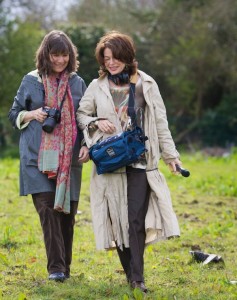
Assuming they were busy traveling to find and produce brilliant stories, I emailed them the questions in advance. I was surprised when Nikki Silva answered promptly and set up a time to speak on the phone. Surprised and a little intimidated. The Kitchen Sisters interview people for a living! I think I’d been secretly hoping that they’d just answer over email.
I am so very glad they didn’t. What ensued was an hour of brilliant conversation. An encounter with heartwarming, compelling virtuosity. Within the first 10 minutes of our conversation, and before any of my questions had been addressed, I found myself telling Nikki Silva bits of my life story. Over the course of the hour, I also told her about my desires for the future, the origin of my name and how I spent my childhood summers. How did this come about? It came about because of Nikki’s warm voice and her lovely, brilliant questions. Her questions were the kind that gently hold doors open so you can happily, almost absent-mindedly wander in. And wander in I did.
I tell you this not just to share the sheer pleasure of being in that conversation but also to tell you that the doors led to a wandering, meandering conversation. We did eventually answer all the questions I had asked but we didn’t quite follow the sequence and enchanted novice that I was, I didn’t quite take the best notes. So I certainly hope that you plan to join us for the Kitchen Sisters Speaker Series session so you can experience the real thing.
Gauri Thergaonkar: Do you believe the art of storytelling is a lost art?
Nikki Silva: No. No I don’t. You just told me your story. I understand exactly why that question gets asked but I believe storytelling permeates everything we do. It is how we do everything. How we learn. How we connect. How we remember. Yes, the internet craves sound bytes but people crave stories. From real people. It’s just part of who we are. It’s in our being.
I believe we are trying to re-learn storytelling. If the art of storytelling is lost it is because the dinner table is lost and the dinner table used to be the training ground for stories. I live in co-housing with 2 other families. When we had meetings about our co-housing, we would fight. So we don’t have them any more. We talk at the table. It works. The stories come to the table. And we find ourselves eventually coming to agreement because we all have to come back to the table!
The table is the magnet. If anything, the table may be what is getting lost. Extended families are getting lost. We now have nuclear families and we don’t have the same rambling conversations at the dinner table.
But I also feel that people are trying to find communities and create communities. You are creating a community with your Speaker Series. We are part of a pop–up magazine and when tickets go live 3000 tickets are sold in the first 10 minutes – without people knowing the theme or the presenters! People want to connect. People want to get together physically.
Good stories remind us of who we are. Where we came from. Storytelling is the first thing we do when we go somewhere and meet someone new. We try to figure out their stories. And we try to tell them ours.
Gauri: How do you think the art of storytelling has transformed because of how we communicate now? In other words, do you think the nature of storytelling has changed?
Nikki: We have to seek out stories now because they are not as easily available.
I do believe that the nature of storytelling has changed. I tend to tell stories the old fashioned way. When I was growing up stories were a little more winding, little side routes and tributaries. They are slicker now. And everyone wants you to get to the point sooner. Perhaps people have become a little more impatient. They want to know the point right away. It’s less organic and more constrained.
It brings to mind the Southern storytellers. Still languorous. You find yourself listening to so many different stories but they somehow weave them all into one. In some ways, storytelling now is more about the hook and less about the lure. What I am always seeking is the back story. The story behind the story.
Gauri: In your mind, what is it that makes something a story? A beginning, a middle, an end, a hook?
Nikki: It’s all got to be there. The beginning, the middle, the end, the hook. Surprise works. Something unexpected keeps us listening. But most of all it has to feel like the real thing. The richness and texture of the real thing. You have to be able to feel the details. Storytelling needs to convey an entire experience so make it an experience. Use tone of voice. Use music to carry the story. Take the time to build it up. Lure me in. Don’t hit me with a punch – that’s what we lose in the soundbites. The richness of the experience.
Gauri: How did you come around to applying storytelling in a business context?
Nikki: I don’t think we consciously said businesses should know this too. It happened organically because so many of the stories we were encountering were these creation myths. We were encountering these people who were so passionate about their businesses and products.
And hearing those stories in their voices and words – it was so great. So intimate. The story of the George Foreman Grill. The story of the woman we met who told us over dinner that her father had invented the Frito. We talked to her until 2 in the morning! The story of the woman who inspired the creation of Rice-a-Roni. We’ll be playing some of those stories at the Speaker Series.
If you look at the way we do business now, the marketing has become so constrained and formalized. A prescriptive lists of do’s and don’ts. Websites are a good example. In the early days of websites, they actually reflected who we were. They were a little mirror but now they are all the same and just follow the rules.
Gauri: So, how do you come up with a great story?
Nikki: A lot of it is listening. Being present. Spend lots and lots of time with people. Let the stories unfold. Stories beget stories (That’s one of our commandments of Storytelling. We’ll present all of them at the Speaker Series).
Then, when you’ve listened and listened and listened, extract the story like a good espresso. For the radio show, sometimes we’ll talk to people for 3 days and then condense it into a 6 minute story and the people we spoke to will tell us that we represented everything they said.
That’s a good story.
See you soon!
Ari Interviews Rolando Beramendi
Rolando will be hosting the 6th Annual Bacon Ball, Thursday, June 4th, 7pm, our yearly Camp Bacon culinary event at Zingerman’s Roadhouse. Rolando and Roadhouse Chef Alex Young have put together a menu based on the evening’s theme: Pancetta, Pasta, and Passion.
Ari: We’ve been working together for over twenty years now! How did you get started importing traditional Italian foods?
Rolando: When I was in college at UC Davis I was always the one cooking for fun, friends and to practice all the recipes I knew from my family. I always saved money to drive to Sacramento to the only store I knew had good extra virgin olive oil (Corti Brothers!) and cherished every drop on the wonderful greens from California. I graduated in 1987 and went to Italy on a ski vacation. At a dinner I met a group of friends who owned a company selling corporate gift baskets which included some very high quality extra virgin oils, pasta, sauces, jams and delicacies. The name was “Villa d’Aglie” and they asked me if I could find them an importer for their products in the U.S.
Having just graduated and having no career in sight, I told them to send me a case of each product they wanted sell. The products arrived, I took pictures of them and I made a brochure with the photos by gluing them on white pages and typing a small blurb under each photo and explaining what to do with them. I sent it to many importers and distributors and only one asked me to come see him. Walter Guerra from ItalFoods was very interested but the lack of inventory and my lack of experience made him proceed to tell me how I could go about it. So after that meeting I created Manicaretti and ordered a pallet of products.
I then sent the same presentation and a product list to my favorite spots where I was finding good imported products at the time: Vivande on Fillmore Street and Gump’s in SF, the Pasta Shop at the Rockridge Market Hall in Oakland, Oakville Grocery in Napa. They all called me mad but within a month all my products were on their shelves! And then it all started to roll and grow, and now Manicaretti is 25 years old, and we are shipping tons of containers every year across the ocean and have a warehouse in New Jersey and one in Oakland…seems like yesterday!
Ari:You’ve been to Zingerman’s a number of times. Are you excited to come back for Camp Bacon?
Rolando: I will never forget the day we met at the first Fancy Food Show! When you placed your first order for olive oils and pasta, it was my first order to cross the Mississippi! It was a huge milestone for Manicaretti. You asked me to come visit and I came a few times with some of my producers to teach cooking classes and do demos. We taught together with Contessa Rosetta Clara from Principato di Lucedio a risotto class in the backyard with an improvised cooking station and enjoyed getting to see the real America where you live! Your support to the producers and products has always been so important. And since my favorite dish is Spaghetti alla Carbonara, I can’t think of a better excuse to come see you again!
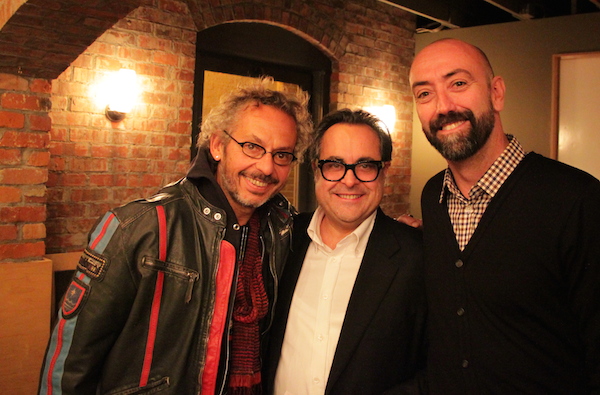
Ari: Speaking of bacon, can you tell us about the role that bacon (or, really, pancetta, guanciale, lardo, etc.) plays in Italian cooking?
Rolando: I see it as a key and basic staple of every fridge in Italy. Everyone has always pancetta in the fridge! You see people using a little piece as flavoring or in many of Italy’s pasta sauces.
Ari: What are some of the dishes you have in mind for this year’s Bacon Ball at Zingerman’s Roadhouse on June 4?
Rolando: Grilled asparagus or radicchio drizzled with Agrumato lemon oil, crispy pancetta, cubed hard boiled eggs, and shavings of Parmigiano. For pastas, Spaghetti alla Carbonara, Rigatoni Amatriciana, Bucatini alla Gricia. For a main course, maybe pork belly porchetta style. But we’ll see what’s good and fresh when we get closer to the date. One thing I can guarantee is that it will be great!
Ari: When it comes to pasta, few Americans understand what makes the difference between an OK commercial pasta and an A+ artisan offering. Can you explain some of the differences?
Rolando: The quality of the grain is essential as is the craftsmanship. Making an artisan product is very hard because the production is so slow and requires such incredible attention. The bronze dies give it the amazing texture. The drying process ensures its bite and flavor!
Ari: You and I are both huge fans of the Rustichella pasta from the Peduzzi family, in particular their PrimoGrano line. Can you tell us more about both of those?
Rolando: The Peduzzi family pasta-making tradition is the heritage of Gianluigi’s mom, Nicolina Sergiacomo, whose father had a mill in the town of Penne where all the farmers would bring their wheat to be milled. He then started to make pasta for some of them. Since pasta is the basic staple made on a daily basis, the pasta from the Mulino Sergiacomo was called “la pasta acquistata” meaning “bought pasta” which was then served as a luxury mostly on Sunday meals. Gianluigi wanted to recreate the same idea with the PrimoGrano line: 100% Abruzzo-grown wheat. They call those products “0 Kilometer” in Italy. It has the flavor of what his grandfather was making back in the 1920s.
Ari: What else should we know about bacon, traditional Italian cooking, great pasta or anything else?
Rolando: I guess here is when the most basic and simplest notion of what I consider “Italian food” might come to some scrutiny. We all overheard everyone saying keep it seasonal and simple. And it’s basically that. I think when you use high quality ingredients you need less fuss about them and around them. What’s wrong with just a bowl of Spaghetti alla Carbonara? It’s just egg, Parmigiano and guanciale! Do you think adding peas or this and that would actually make it taste better? How about having a bowl of peas with Pecorino and lots of olive oil when they are in season, but not on the carbonara! I feel sometimes like just having a perfectly ripe tomato cut in half with a delicious Crudo oil from Sicily or a piece of bread with a thick slice of sweet butter and a great salty anchovy on it. Why do we need to complicate things when we’re using the best ingredients?
I still remember my grandma serving prunes wrapped in bacon as an appetizer with cocktails. I think figs and bacon are the perfect fruit pairing as well as radicchio, asparagus and a sprinkle of chopped hazelnuts. If there is a dish I would eat forever on a desert island would be Spaghetti alla Carbonara!
See you there!
Zingerman’s was saddened to hear of the loss of our friend, Bob Nueske. To help remember him, we’re reprinting Ari’s interview with Bob from 2013.
In honor of Bob Nueske
This year’s Camp Bacon 2015 is dedicated to the memory of Bob Nueske, much-loved patriarch of the first family of bacon, who died unexpectedly this past January. We’ve had the great pleasure of cooking, serving, and eating Nueske’s bacon every day at Zingerman’s for over thirty years, and we were graced by Bob’s passion, stories and love for pork at Camp Bacon the last two years. Long esteemed by pretty much everyone in the specialty food industry, Bob was intelligent, quiet, and determinedly committed to quality in all he did. He helped take his father’s work to ever greater heights. His love for Johnny Cash was legendary amongst friends and family members. Like his hero he generally wore all black. His soft voice, strong opinions, dedication to perfecting his craft while walking his own way, caring for community and those in need, all combined to lead me to start referring to Bob as a “the Johnny Cash of Bacon.” Two years ago when he spoke at Camp Bacon for the first time, we played Johnny’s version of “I Walk the Line” when Bob came up to the podium. Imagine it playing, if you like, as you start to read the interview with Bob that follows. Done two years ago, it still conveys the powerful character, quality conscious, quiet, but opinionated leader he was in both business and in bacon. – Ari
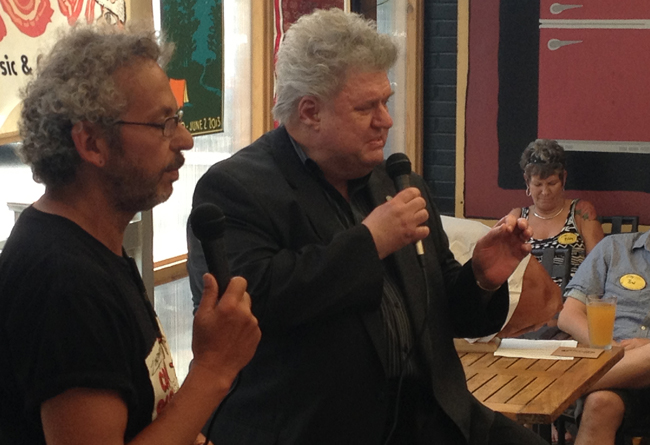
Ari recently had a chance to chat with renowned Wisconsin bacon maker Bob Nueske about the history of his family’s business. Bob will be speaking at Zingerman’s 4th Annual Camp Bacon this summer. Please join us!

Bob Nueske’s great-grandfather came to the small town of Wittenberg, Wisconsin in 1882. Shortly thereafter he started to cure and smoke meats in the style of his German heritage. Located up near the UP, they’ve been making their bacon using basically the same family recipe for nearly a century and a half now. We’ve cooked off Nueske’s Applewood smoked bacon at the Deli every morning for over 31 years now. I have no idea how many tens of thousands of pounds it adds up to but I know it’s a lot. That record, like the bacon on which it’s based, is something special. So too is the man behind the bacon—Bob Nueske is a marvelous story teller, a very grounded and forward thinking business man, a “Small Giant” long before Bo Burlingham wrote the book, a master bacon maker and a bacon lover. We’re excited to have successfully enticed Bob to leave northern Wisconsin for the wilds of Ann Arbor and a few days at Camp Bacon.
Ari: Can you tell me a bit of the Nueske story?
Bob: I hardly know how to begin. When you’re born and raised into something that becomes your life it’s hard to know where to start. The only way I can explain it is that if you’re born in a cooler and raised in a smokehouse it permeates into your being and you don’t even realize it. I’ve been part of Nueske bacon literally my whole life. And when you are born and raised in a family business, working as a father and son it makes a special situation. I had a good father. He smiled a lot. He was a good man and a good businessman. He was really firm and fair. And yet as a kid, you know, when you’re 16, 17, 18, and you have all the answers . . . when I was 16 years old . . . . Well, I’ll you a story. Back when I was 16 I had a car. Back then Wittenberg was a town of 895 people (Today, it’s totally taken off—the 2010 census said it had 1081 people). It’s all a farm community. I figured the best way for me to see the world was to head down to Chicago on my own. So I drove south. I got downtown by myself. I’d never been there. I was looking at all these great big buildings and I noticed there were a whole lot of good restaurants. But I couldn’t afford to eat in em. And I thought to myself, I’d love to understand ’em. Now, who’d have ever thought that bacon would take you to places like that? But today our bacon is in some of the best restaurants and stores in the country. As I remember growing up, my dad had put four hours in at work by the time we kids got up in the morning. We were always eating the odd shaped pieces he didn’t want to sell to other people. My mother would say, “I’m married to the man who has the best bacon, but you always bring home the other stuff!” He’d say, “We don’t sell those odd cuts, we eat em. It tastes the same. It just don’t look the same!” We have some pictures of me sitting on a truck with three birthday candles. When you’re little it seems like your parents are doing things you could never do. Then you get to the age when you think, “They don’t know anything.” But then eventually you realize that things that seemed big aren’t that big, they aren’t that important. And I realized that my dad knew what he was doing. In learning how to do a product like my dad taught us it was time consuming and it wasn’t like I took notes. Day in and day out you learn it and you don’t even know you’re learning it. But my dad had these little books that he used. And they weren’t just sitting on the shelf. They were well read, well worn. And he would take a lot of notes. My dad was a good student of bacon. Making bacon like ours is like making fine wine. You don’t hurry the process. I remember him saying, “You know Bobby, we do it this way because of . . . . ., but, not this way because . . . ” There were good reasons why each piece of the process happened. I remember thinking “There has to be a faster quicker way to make bacon!” But eventually I realized that he really knew what he was doing.
Where did your grandfather come from?
He was from Germany. I’m still trying to figure out exactly where. I got drafted into the military got my medical training at Ft. Sam Houston and thought for sure I was headed for Vietnam. It was not a pretty time. But somehow I was the only one in our class that ended up stationed in Germany. So through a fluke of luck I learned the heritage of the meat. My great grandfather came to Wisconsin in 1882. Wilhelm Nueske. I’m still trying to find out what town he came from. No one really knows. We know it’s German heritage. I’m starting to discover that it was up in the northeast area of Germany and what’s now Poland. There are still some Nueskes up there. It’s not that common a name. I literally know most everyone of them in this country. After I went through the military I went into the printing press business for a while. But then I came back to smoking meats and I began to experiment a little on my own, I realized that speeding things up, going fast just creates another me-too product. Volume and big is not what we’re after at Nueske’s. We don’t want to be the biggest. One of the best words I’ve learned over all these years is, “No.” When we’re approached by certain companies to sell to them we look at how they actually run their business. A lot of times I can see that we’re not large enough to produce enough for them so we say, “No.”
Speaking of which, you and I both read a lot of business books. Were there any that were particularly helpful to you?
I was remembering a book called Beyond World Class. It’s by Ross Alan. It was written about the way I think a business should be run. It said that if your suppliers don’t treat you like you wanted to be treated, and if someone in your company or a customer doesn’t fit the way you want to work, then you just say, “We’re not interested.” You just don’t stay with them. You need to work with people who care like you do and who want to work the way you do. That’s a recipe for how to have fun while you’re running your company. You enjoy your relationship with everyone and you work with a great group of people. It takes work to keep it that way. But growing up in a company like ours . . . well, you know . . . When I left the family business at 18 I had two really good experiences. One was in a small printing company. And then I was wooed away to American Can Company. It was a huge corporation. I actually got that feeling of putting your brains up on the time clock when you punched in. They didn’t want your thoughts. And then you picked them up when you left. They didn’t want you to think. I learned I could get done 8 hours work in 3 hours and kept pushin’. But then I was told “Don’t do that again.” People that work here like what they do and they’re having fun. That’s the key. Many an outsider looking in at our company goes by and says, “How do you do this? How do you get your culture?” At first they think it was a trick, like when you used to go to Russia and they put on a stage Grand Tour to fool you. But after a while, the visitors realize there’s no “Grand Tour.” That’s the key. What your people do. How they smile. How they work. That’s what makes a great company. It just seems to work.
We love your bacon here at Zingerman’s. It’s gotten great press in the New York Times and just about everywhere else. What makes the bacon so great?
Well, what really makes the difference how the hogs are fed. How they’re grown. How they’re treated as far as stress. You don’t want stress in the hogs. You have to find companies who know how to slaughter and cut and sort correctly. And then how you cure and smoke the meat properly. We taste test constantly. Even though there are strict formulas, there’s still always the human side. If something doesn’t seem right when we taste the product we pull it off. We all know that our bacon is a natural product and the whole production system can run a little off one way or another. Pretty much it means the standards of where you want it to be even though the flavor profile never changes. Something comes in wrong and you have to make a point and send it back. Consistency is key. Don’t accept anything that’s less than what you really want. Our hogs are raised in Canada. They’re the Belgian Pietrain breed and some others. We cure the bellies and then give them 24 hours in the smoker. We use real Wisconsin Applewood. We actually have one man who’s responsible to select the Applewood. We buy full trees, not wood already cut in pieces. He actually cuts it as we need it. When you select the wood it has to be the right balance of dryness and greenness. Not too dry, not too green. We use wild Cherrywood and it’s the same thing there. We start with a full tree. We’re fortunate . . . when I think back when my grandparents moved here, we’re fortunate that they picked an area with so many apple and cherry orchards. 
It’s pretty impressive that Nueske’s has stayed small and focused for four generations. Why do you think it’s worked so well?
Let me tell you another story. There’s a man around here who started a very large nationally known meat curing company around the time my father was getting going. He and my dad knew each other pretty well. The companies were just about 45 miles a part. Our location was on a dead end street. We didn’t really have a retail store. We just were wholesaler but my dad would let people in when they knocked on the door. Finally he put in a tiny little counter. Anyways, Fritz would come in to that little counter and buy our bacon and smoked liver sausage. “I said why are you buying our bacon when you have your own?” He said, “I want to buy the good stuff for our big shots coming up to my cottage up north.” “Well, Fritz is probably in his 70s now. He came in one day quite a few years ago now and he asks one of the retail clerks in our shop, if I was there. I asked him the same question I would ask every time he came back when I was 14. “What are you doing buying bacon here?” And he said the same thing he said back then: “I’m going up to my cabin and need the good stuff.” But then he said, “I want to tell you a story about your dad and me. You know, I would tell your dad, ‘Robert, I’m gonna build the biggest meat company I can. And your dad would look at me and say, ‘Well Fritz, I’m gonna become the best meat company I can become.'” Then Fritz said to me, “I succeeded. I sold out to a big company. I made a lot of money. But I don’t like what the big company did with our products. And you know what? Your dad was right and I was wrong. I would never do that again.” When I think of the decisions I’ve made over the years. You gotta know when to say ‘No!’
What’s your favorite way to eat bacon?
I love it best when you lay it on parchment paper and bake it in the oven. It comes out sort of crispy and soft in the middle. I love it that way.
See you at camp!
A brief review of this years Camp Bacon Main Event
This past weekend, the Camp Bacon 2014 Main Event kicked off its first year at Cornman Farms, and we couldn’t have asked for a nicer day!
The festivities were held in the Farm’s historic barn, which dates from 1834. Last summer, the barn was dismantled and transported to Burbank, Ohio where barnwright Rudy Christian restored the original timbers and beams. Afterward, the barn was reassembled on a new foundation, and updated for events and special dinners. Our Campers were among the first to experience the barn in its new role as a dining space.
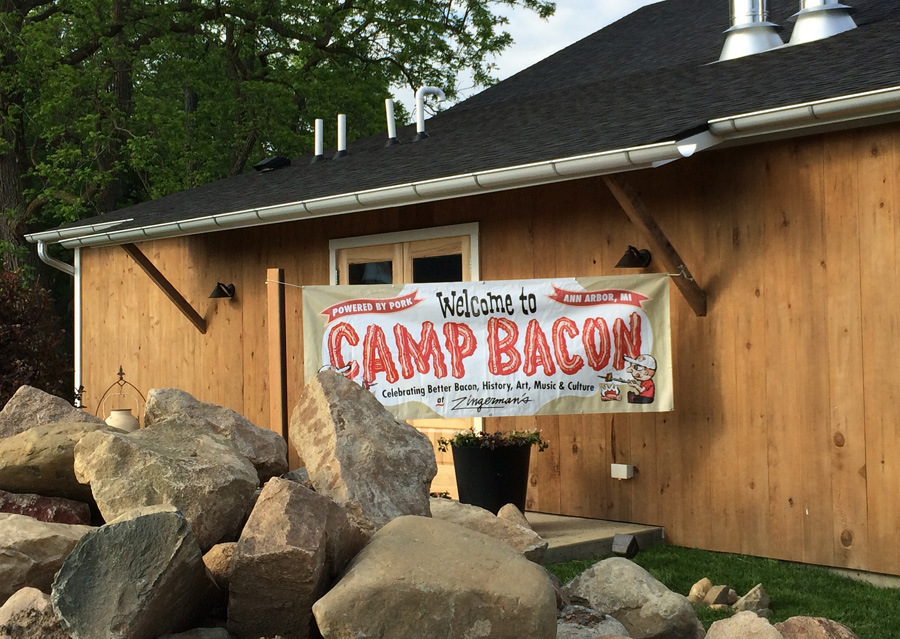
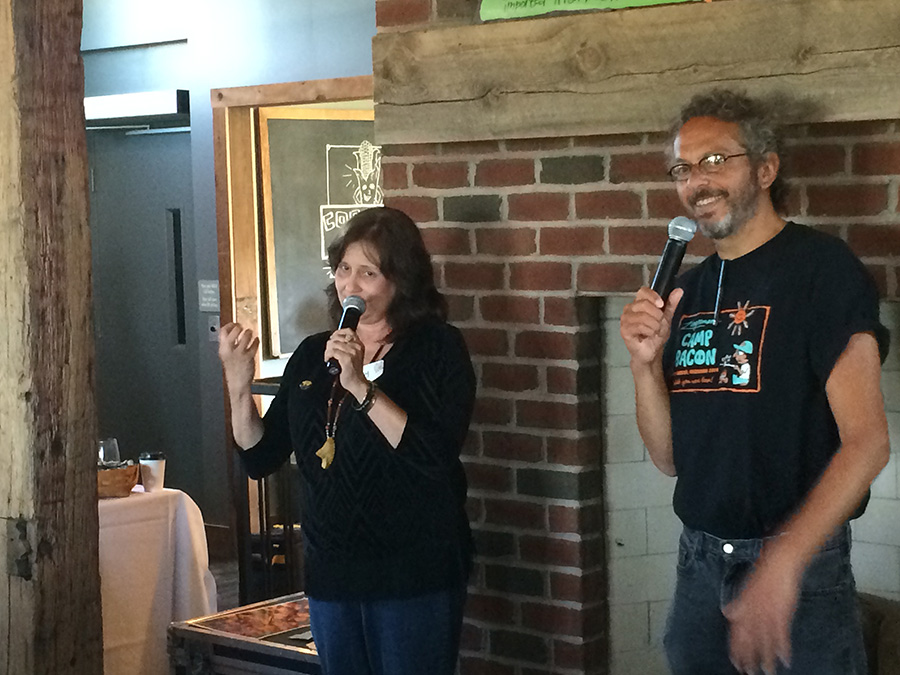
The Main Event started with introductions by Zingerman’s co-founder, Ari Weinzweig, and Camp Director, Joanie Hales. They were followed by Mary Beth Lasseter, of the Southern Foodways Alliance, who talked about the SFA’s mission to document, study, and celebrate the diverse food cultures of the changing American South. Camp Bacon is a benefit for the SFA.
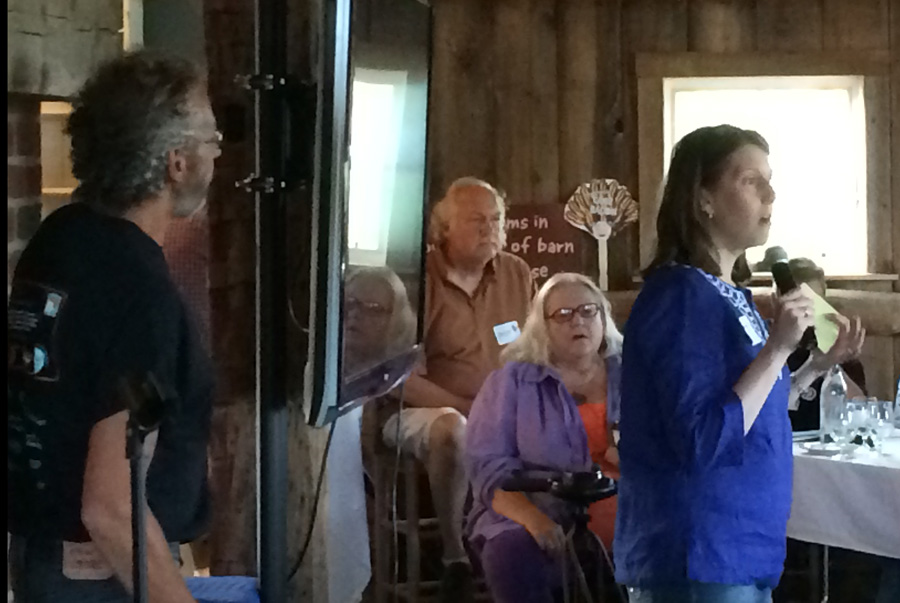
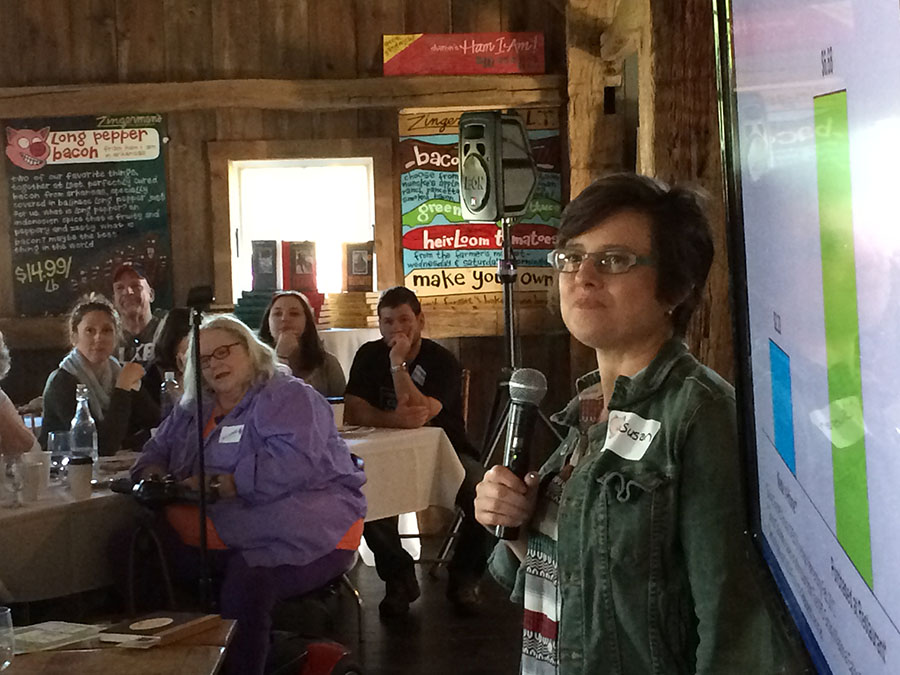
The program began with Susan Schwallie of the consumer market research firm, NDP Group, who provided some very illuminating statistics about our general food and bacon consumption in the U.S.
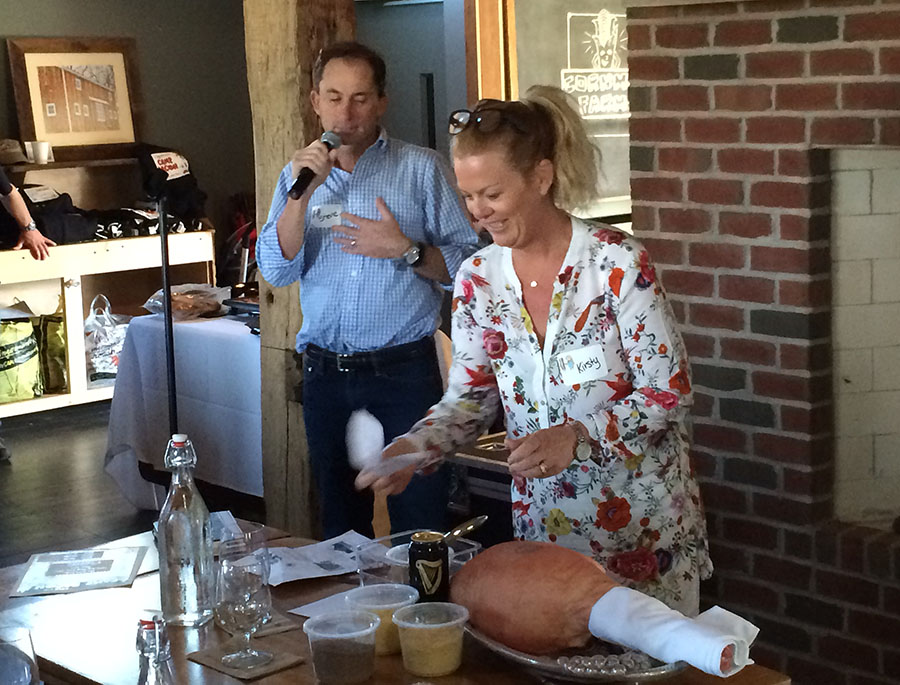
Next up were Steve and Kirsty Carre of Swanbourne Market in Western Australia. They talked about pork and ham trends Down Under, and showed us slides of beautiful beaches of Western Australia (watch out for sharks!). The Carres also shared their Christmas ham recipe, which involves plenty of Guinness beer!
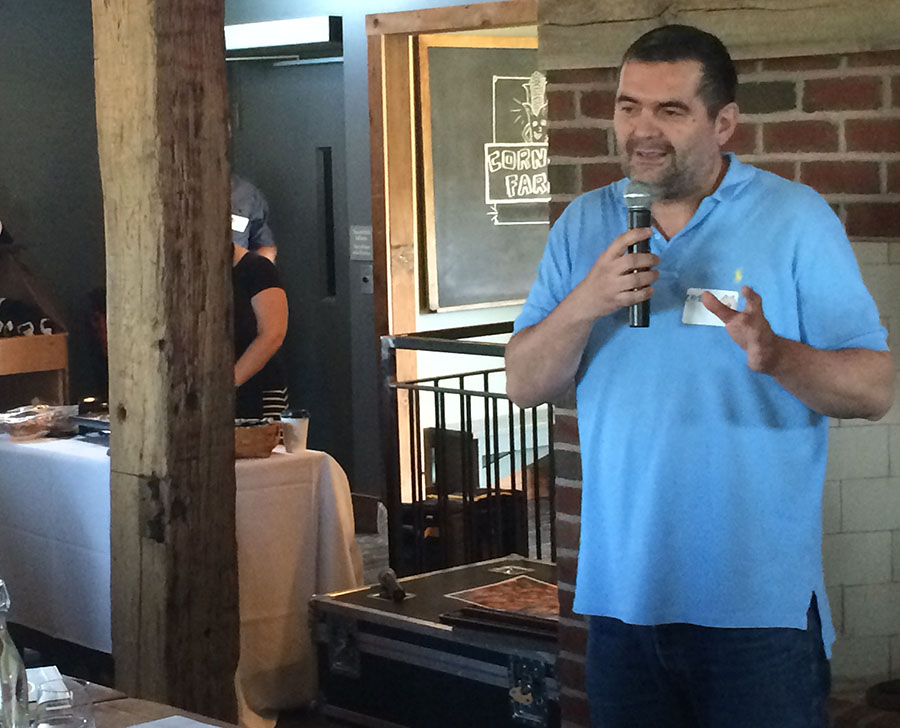
Cristiano Creminelli then took the microphone and talked about his journey from learning the centuries-old family art of meat curing in Northern Italy, to bringing and making handmade Salumi in Utah.
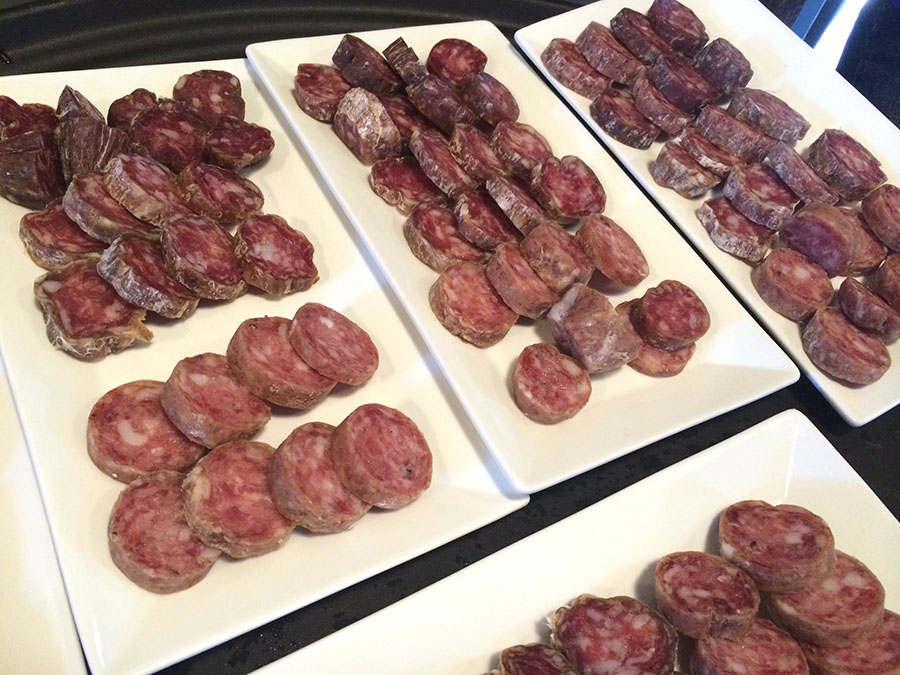
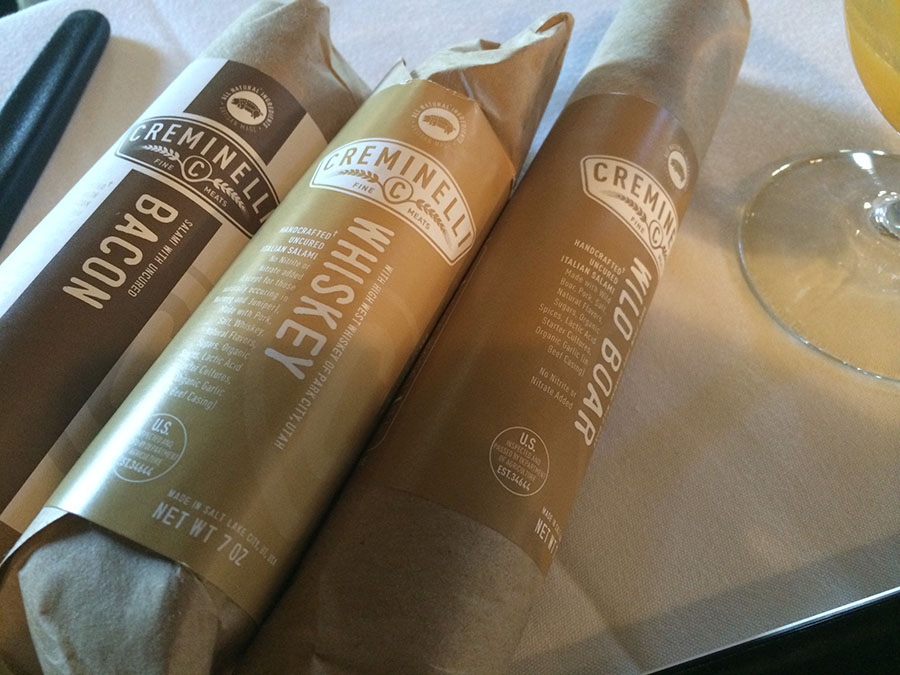
After Cristiano spoke, guests were treated to a short film by in-house SFA filmmaker Joe York titled “Cured” about traditional ham and bacon maker, Allan Benton.
Following the film, Ari interviewed the Lucinda Williams of country ham, Nancy Newsom, whose family has been curing ham for over 400 years! Nancy talked about the history of her family’s business, and her own process for curing country ham.
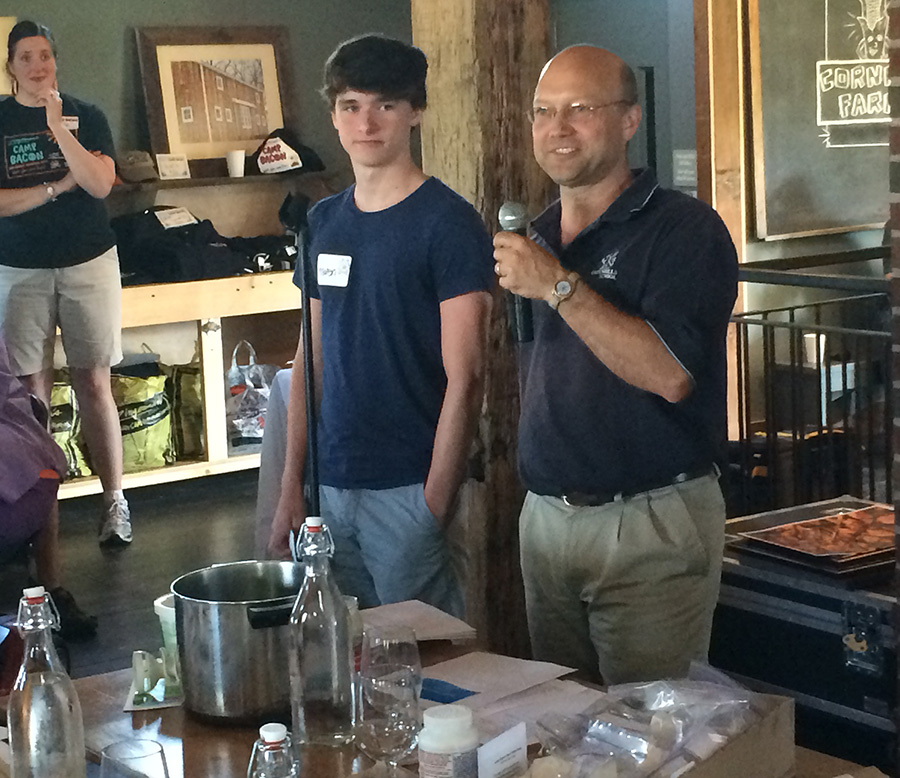
Greenhills School Chemistry instructor, Bob Ause and student assistant, Hayden, gave us a science lesson demonstrating how to make soap using bacon fat. Get clean and smell tasty! One of the many great uses for bacon…
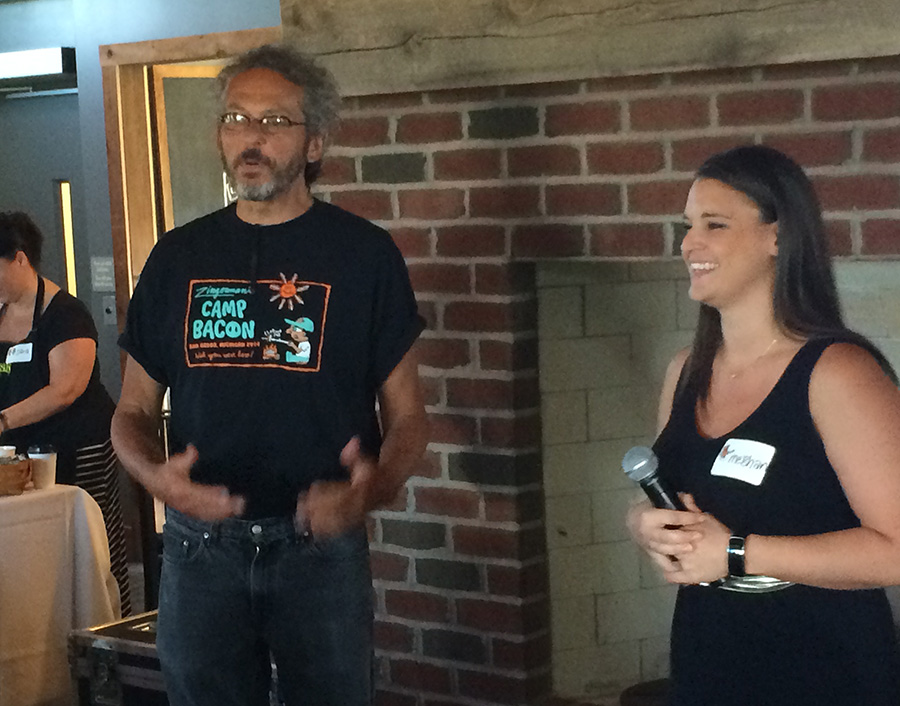
Ham I Am’s Director of Operations, Meghan Meehan, shared the humble beginnings of the company began by her mother, Sharon Meehan. Back in the early days, Sharon delivered hams from her family’s white Volkswagon Rabbit. Now, Ham I Am regularly ships out 20 tons of ham and 40 tons of turkey each holiday season!
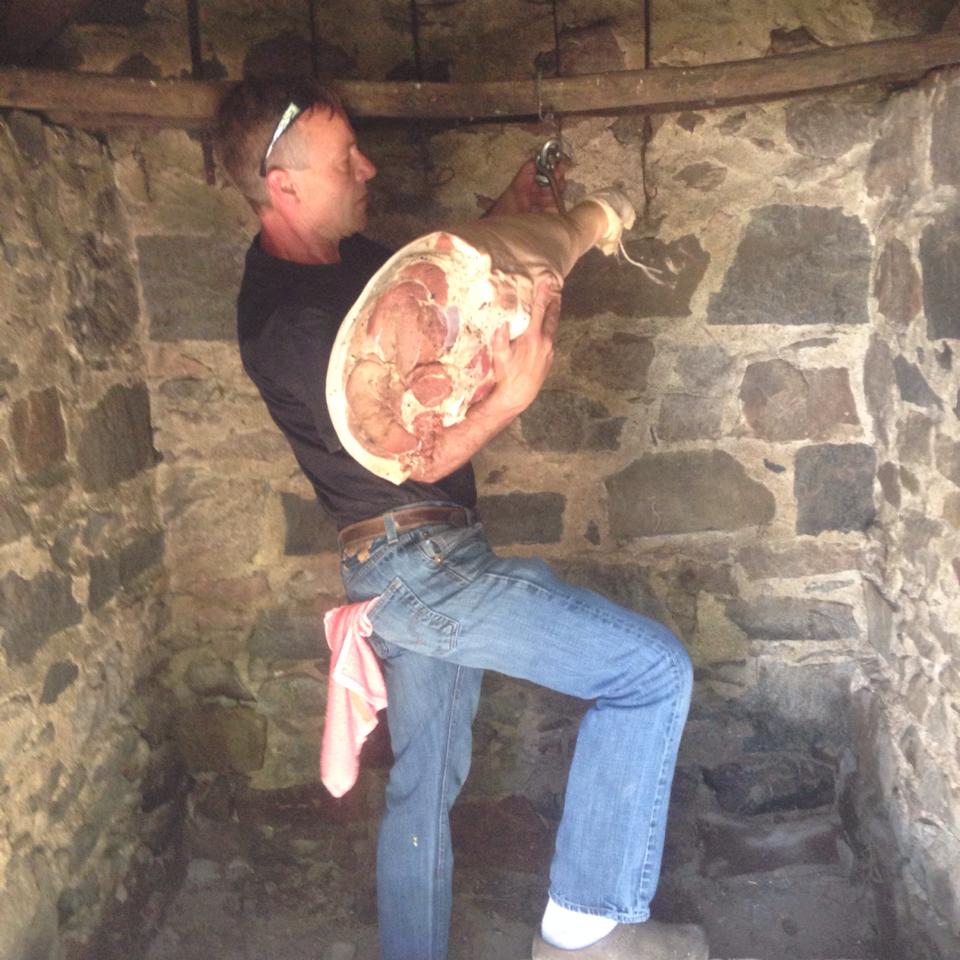
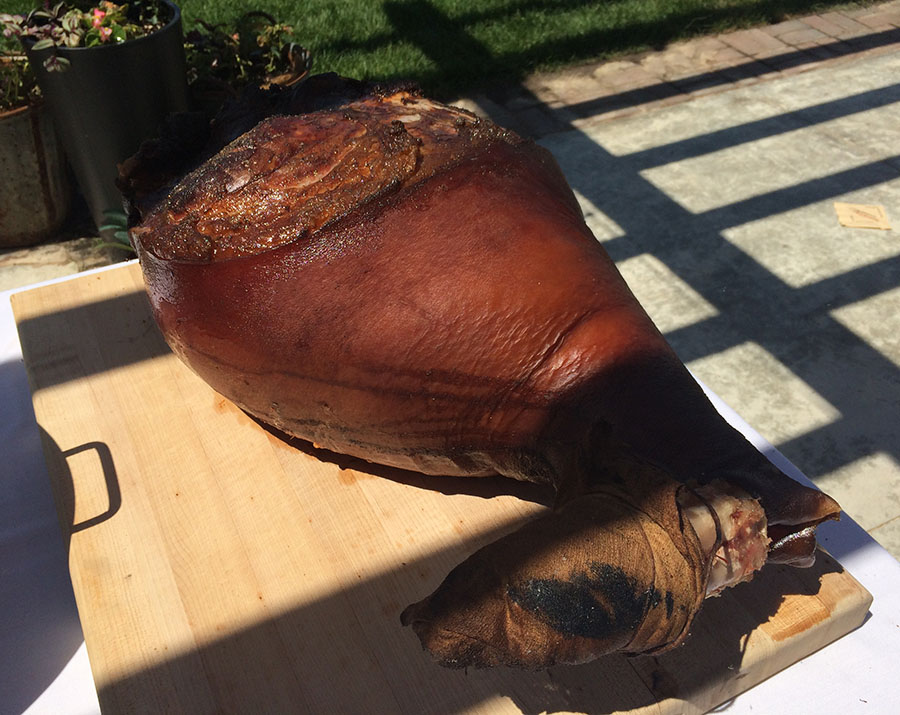
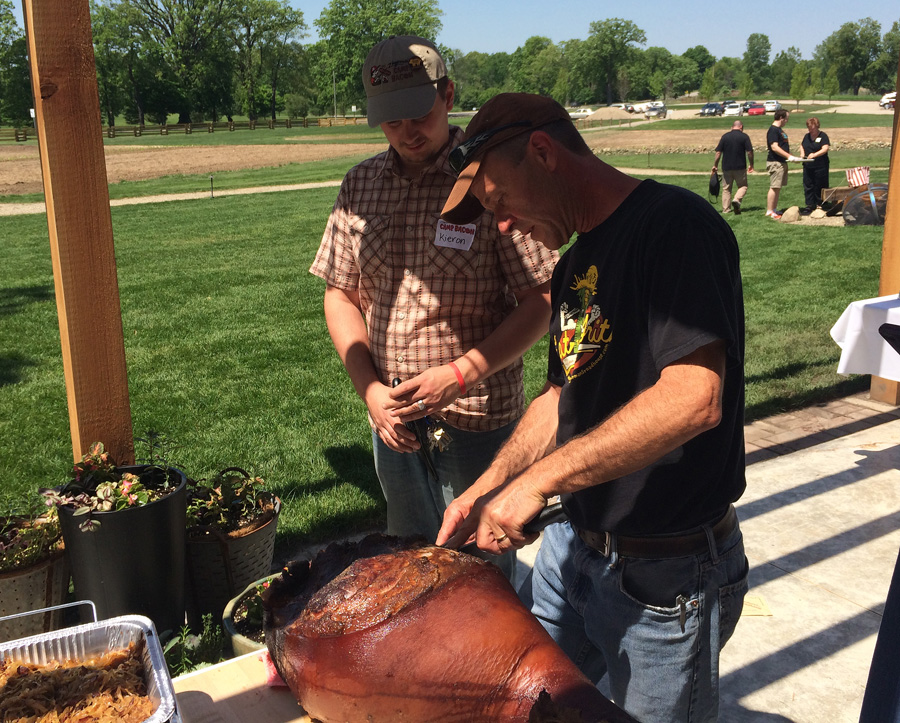
Just before lunch, Zingerman’s Roadhouse Chef Alex Young stepped in to talk about the menu, which included a very special Zingerman’s Cornman Farms ham. The ham came from one of Cornman Farms’ own hogs, and was brined for 60 days prior to smoking. Forty-eight hours before Camp Bacon, Chef Alex moved it into the farm smokehouse (built in 1888), where it absorbed the sweet smoky aroma of cherry wood. The effort and attention to detail paid off, and Campers were treated to a delicious, tender, traditionally made ham for lunch. After the meal, Campers went on a short walking tour of the farm led by Chef Alex.
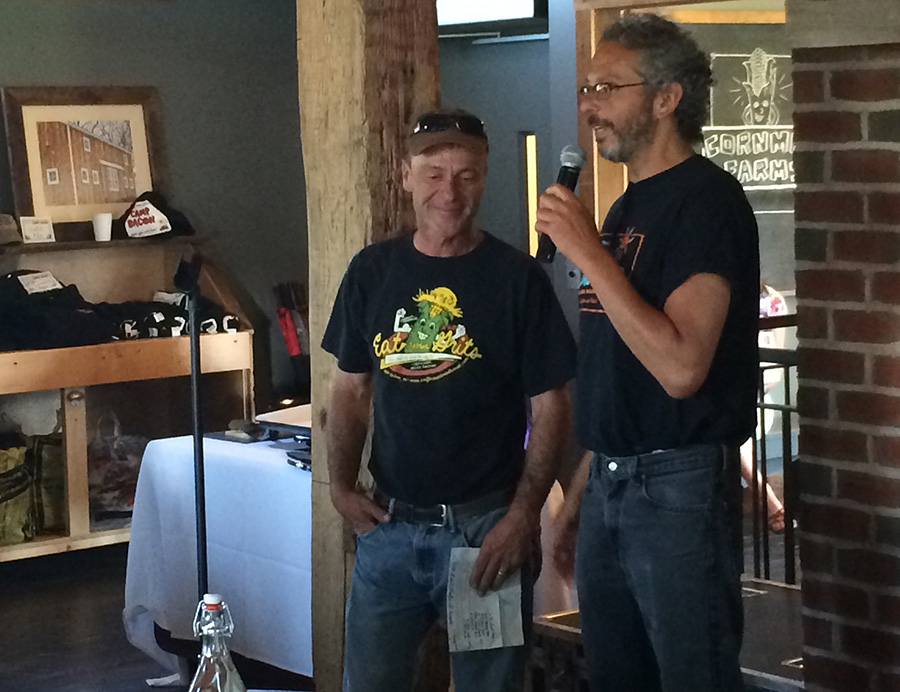
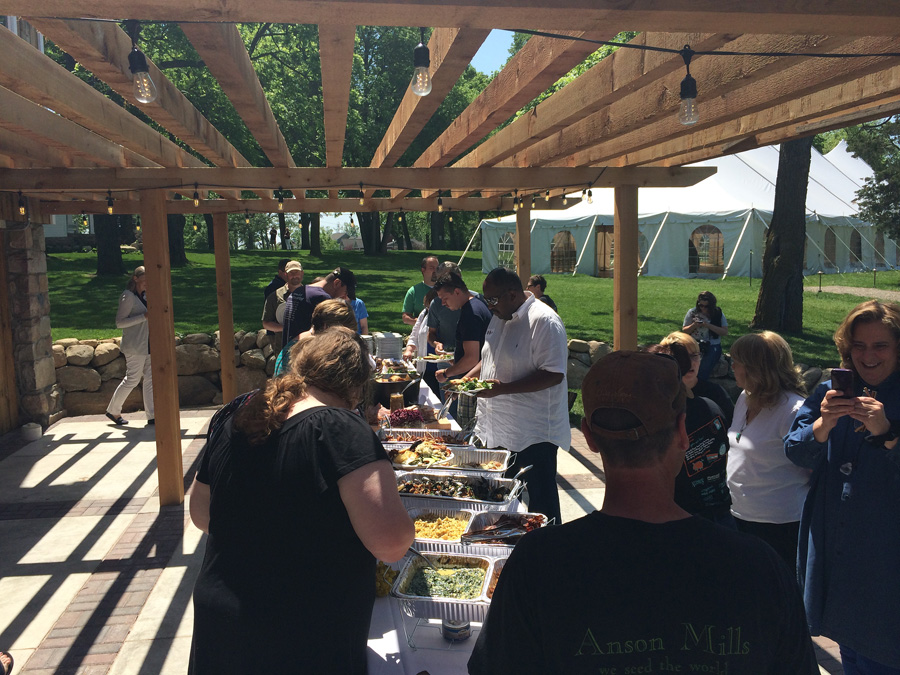
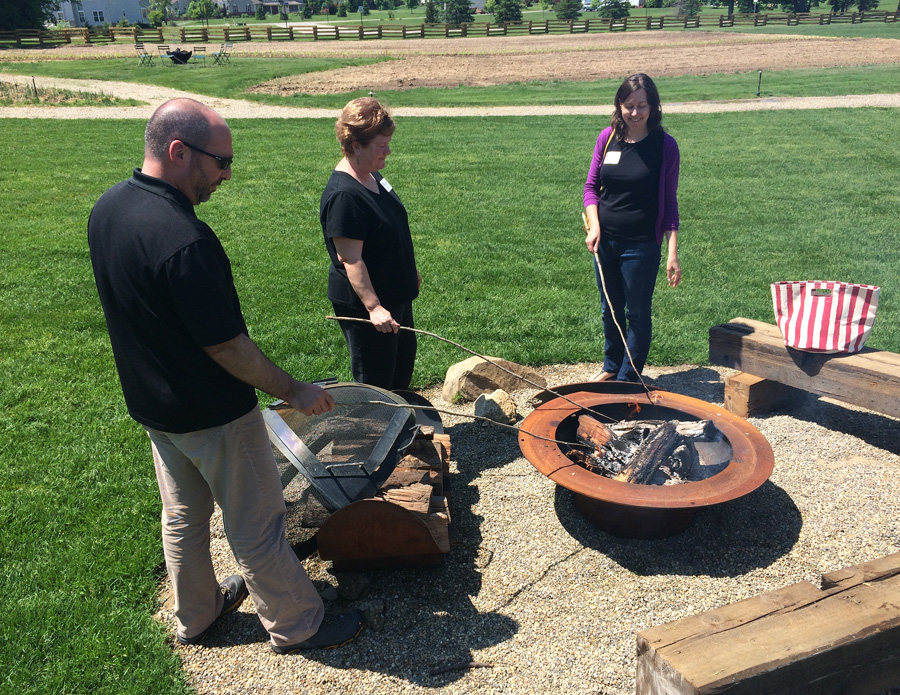
Once the tour was over, Ari interviewed Bob and Tanya Nueske about their multi-generational cured meat business based in Wisconsin. The Nueskes ancestors came to Wisconsin in the late 1880’s, bringing with them old-world skills of smoking and curing meat. In 1933, during the height of the Depression family patriarch R.C. Neuske decided to market his own smoked bacon, sausage, turkeys and hams in rural Wisconsin, and a legend was born.
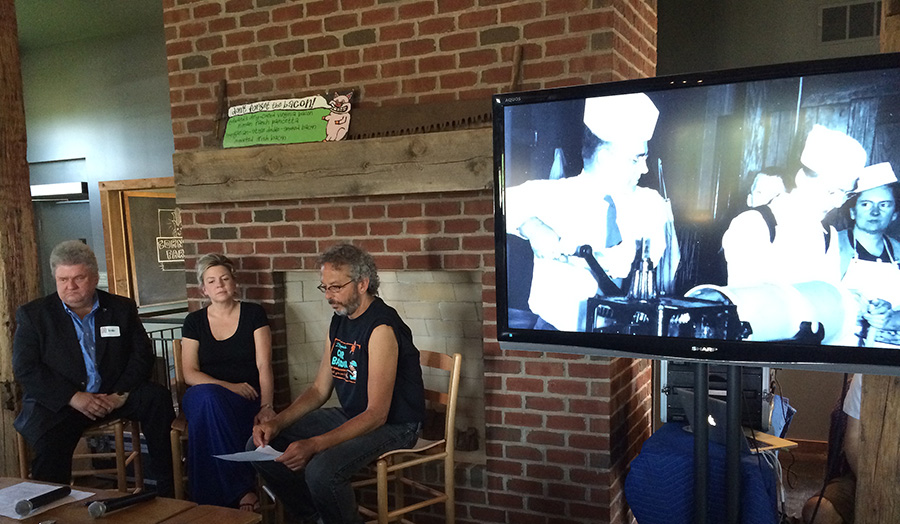
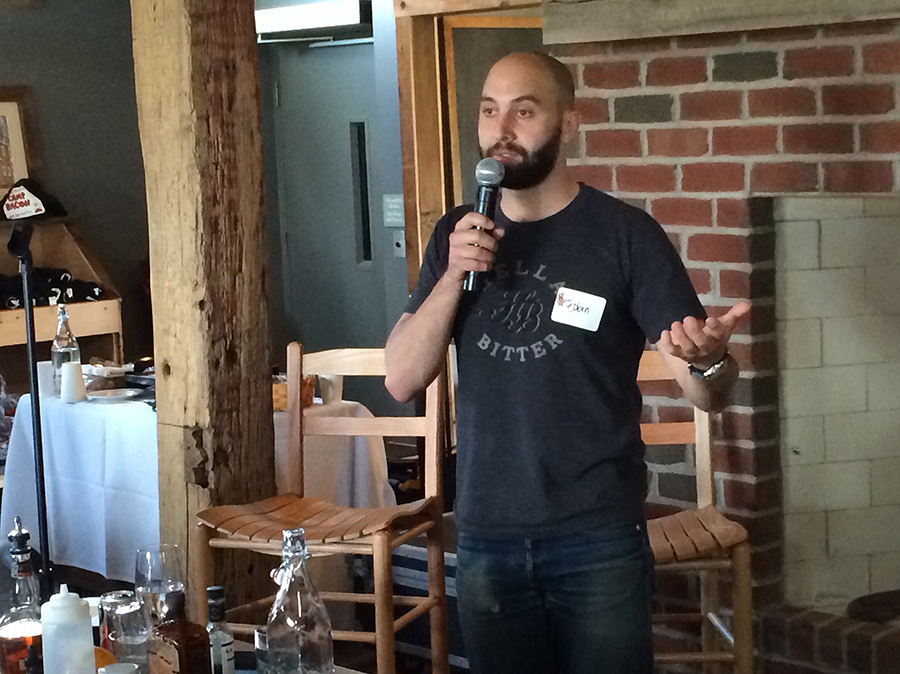
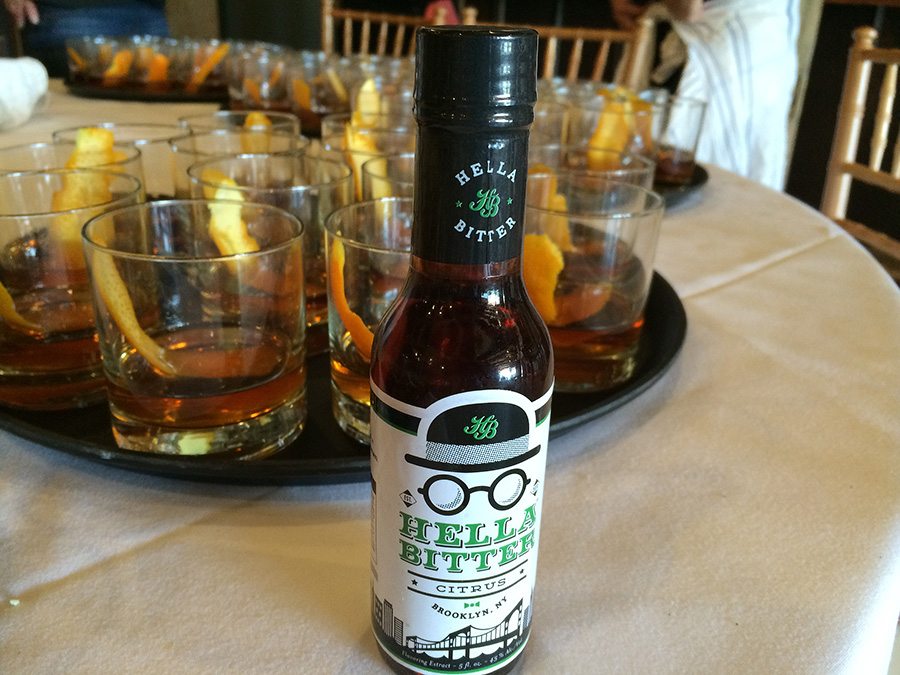
Next up, Tobin Ludwig of Hella Bitters stepped up to help shake off the mid-afternoon drowsiness with his variation on the classic Old Fashioned cocktail. The drink was made with a special edition bacon bitters, and the drinks were well received by the audience.
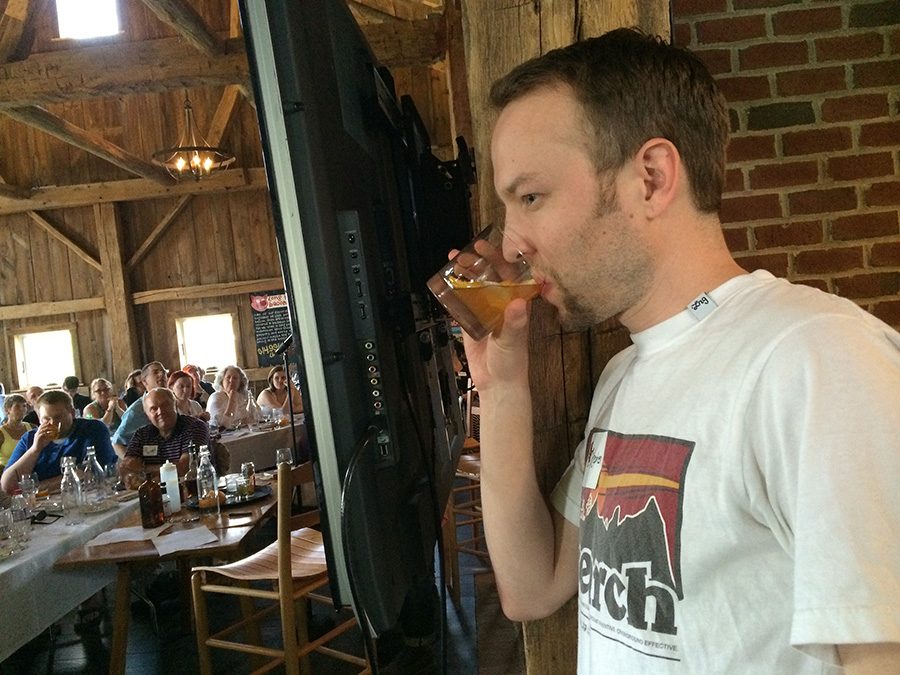
Zingerman’s Bakehouse partner Amy Emberling was next, and talked about the differences that various fats can make during the baking process. Amy shared three piecrust samples with Campers, then invited them to guess which were made with vegetable shortening, butter, or bacon fat.
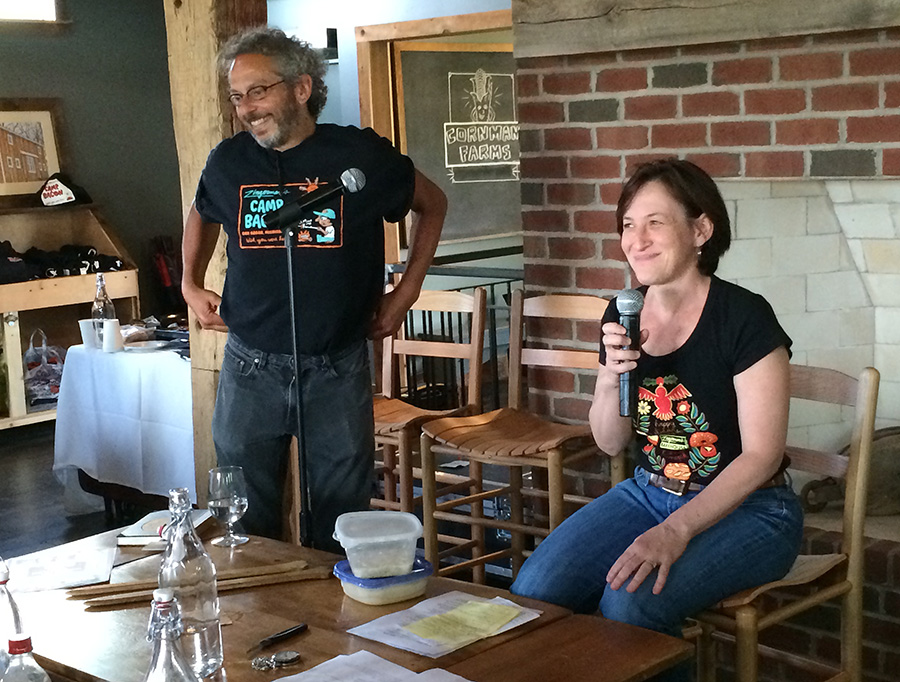
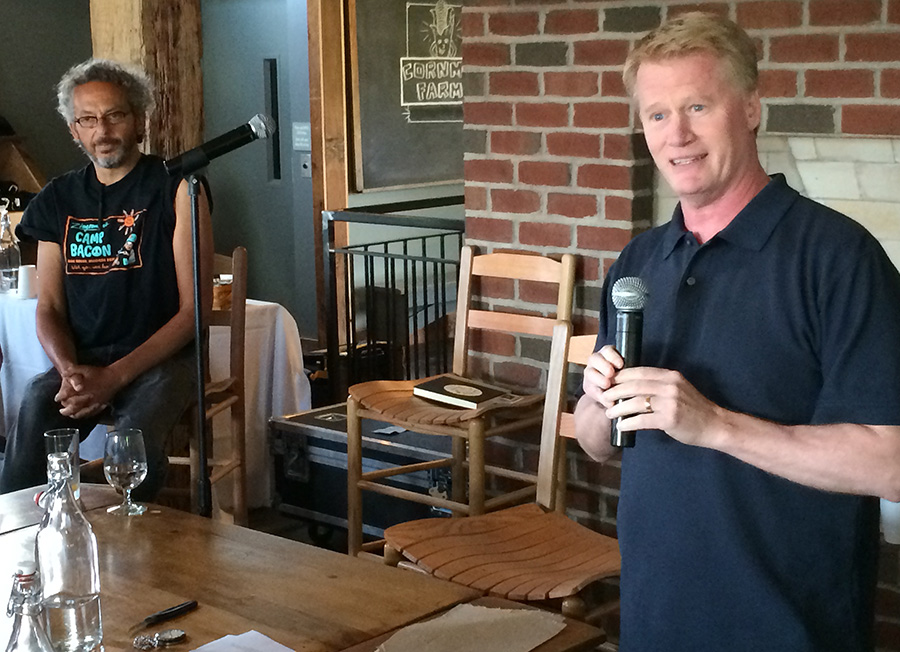
Finally, cleanup speaker John U. Bacon took the microphone to talk about his career starting as a sports reporter at the old Ann Arbor News, and moving into writing books such as Three and Out, Bo’s Lasting Lessons, and Fourth and Long. John entertained Campers with the trials and tribulations of carrying the name Bacon through this world.
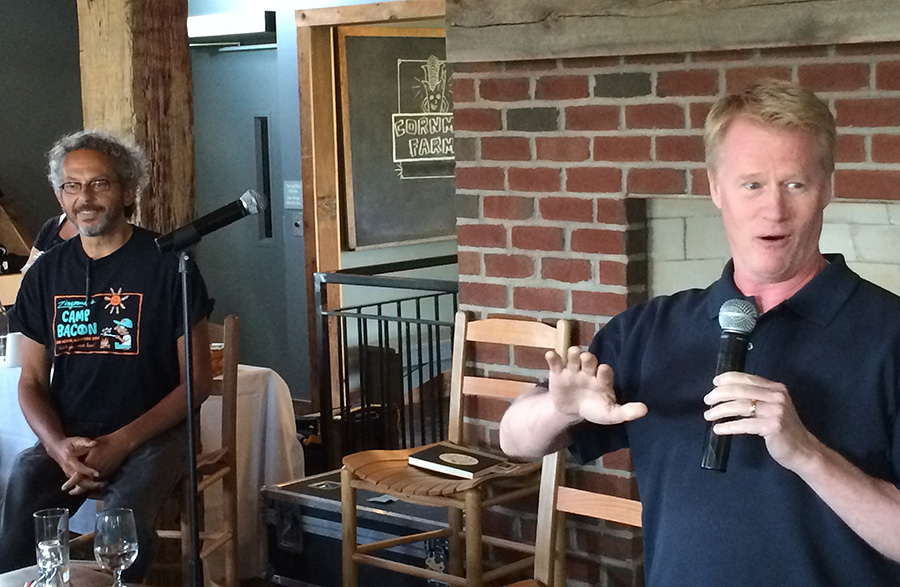
At the end of the day, Ari fittingly wrapped things up with a quote from John Maynard’s Adventures of a Bacon Curer. A fine tribute to a day filled with bacon.