
Tag: CAMP BACON
Zingerman’s 5th Annual Camp Bacon gets underway in just a couple short weeks. To help you prepare for our annual celebration of all things pork, we’re posting excerpts from the Zingerman’s Guide to Better Bacon.
Bacon and Eggs
A century ago, most urban Americans were pretty happy just grabbing a couple of slices of toast and coffee for breakfast. But a man by the name of Edward Bernays changed all that. As a public-relations pioneer, Bernays has been called both “the father of spin” and “the most influential man you’ve never heard of.” In his theory of PR, which he called “the engineering of consent,” he argued that, “If we understand the mechanism and motives of the group mind, it is now possible to control and regiment the masses according to our will without their knowing it.”
In the mid-1930s Bernays was working for Beechnut. While the company had long sold bacon, its sales were down and Bernays was struggling to find a way to get them back up. So he used his uncle Sigmund Freud’s (you read that right) psychological approaches to help convince the public that, among other things, bacon and eggs was the true all-American breakfast. He set up a national medical survey which “proved” that eating a hearty breakfast was the healthy way to go. He then sent the report out to five thousand physicians around the country, accompanied by a packet that talked about the value of eating bacon and eggs each morning. Seems to have worked darned well, since it’s hard to imagine a more typical start to the American day than a couple of strips of bacon with eggs, toast and a steaming cup of coffee.
If you prefer cereal with bananas to bacon for breakfast, you might find it interesting that Bernays later went on to lead the “marketing” of the U.S. government/United Fruit Company-sponsored coup in Guatemala in 1954.
We’ll see you at Camp Bacon 2014!

 The Bacon Ball at Zingerman’s Roadhouse
On Thursday, May 29, 7pm, Camp kicks off with a very special event featuring “the Ham Lady,” Nancy Newsom who will oversee a feast centered on ham, bacon, and all the good things that come from a pig. Nancy’s lauded country ham and aged prosciutto will be the star attractions, and James Beard award-winning chef Alex Young will prepare a menu highlighting Newsom’s delicious meats! This dinner brings in bacon and ham lovers from all over the country!
SORRY, THIS EVENT IS ALREADY FULL.
 Bakin’ With Bacon at Zingerman’s BAKE!
On Friday, May 30, instructors at our hands-on teaching bakery at Zingerman’s Bakehouse will share the finer points of baking with everyone’s favorite meat. Guests will use the power of bacon to flavor amazing baked goods including a version of our popular peppered bacon farm bread, bacon cheddar scones, and bacon pecan sandy cookies. Attendees will leave BAKE! with tested recipes, the knowledge to recreate them at home, and everything they made in class.
SORRY, THIS CLASS IS ALREADY FULL.
 Camp Bacon Main Event at Zingerman’s Cornman Farms
On Saturday, May 31, the Main Eventis changing venues this year and moving out to Cornman Farms in Dexter, MI. The festivities begin at 7:30 am with an amazing breakfast featuring plenty of bacon! We have a full day planned with special guests Bob and Tanya Nueske, Raul Martin, Amy Emberling, Nancy Newsom and more. The Main Event is a fundraiser for the Southern Foodways Alliance, an organization based at the University of Mississippi that documents, studies, and celebrates the diverse food cultures of the changing American South. “It’s my favorite food-based educational non-profit by a mile,” says Ari.
 Bacon Street Fair at the Ann Arbor Farmer’s Market
On Sunday, June 1, 11am – 2pm, vendors from Zingerman’s and many other businesses will be on hand sampling and selling their favorite bacon inspired creations and the event will benefit Washtenaw County 4H, an organization near and dear to Zingerman’s Roadhouse managing partner and chef Alex Young. “If you’d told me 10 years ago that I’d add farmer to my list of job titles I would’ve said you’re crazy. But, well, now I’m a farmer and the partnership we’ve developed with 4H has been indispensable for us at Cornman Farms and a big thing for my family, too. I’m really happy to help support them.”
This event is FREE!
Zingerman’s 5th Annual Camp Bacon gets underway in just a couple short weeks. To help you prepare for our annual celebration of all things pork, we’re posting excerpts from the Zingerman’s Guide to Better Bacon.
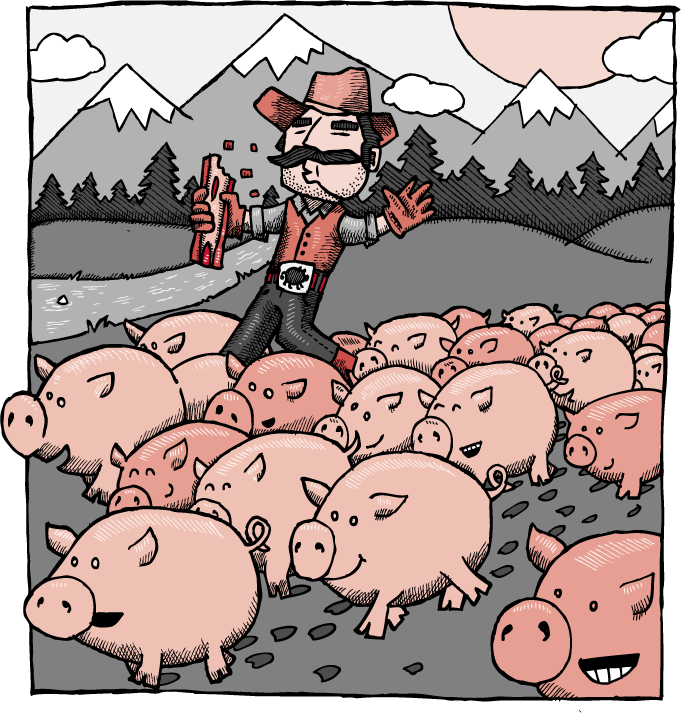
Sorry, I can’t resist the subtitle—the tune slipped into my head while I was out running one day, and I couldn’t get it out. So . . . if Peter, Paul and Mary had lived in the second half of the nineteenth century instead of the twentieth, their big hit could well have been, “Where Have All the Drovers Gone?” While you most certainly won’t see any such openings on Craig’s List, thousands of Americans once worked as drovers, the less glamorous (but probably more important) eighteenth-century piggy equivalent of cowboys like Rowdy Yates and Gil Favor from Rawhide.
In one of those interesting, now all-but-forgotten footnotes of history there was once an entire profession having to do with pork that’s completely lost to us today. It’s a line of work I certainly would never have thought about had I not come across it while doing some reading on nineteenth-century American agriculture. But once you read about drovers, the need for them seems obvious: in order for urban dwellers to get fresh pork to eat, pigs had to be brought from the farms on which they were raised in the rural areas of North America to the cities where they could be slaughtered, sold and served. Before the introduction of the railroads, there was really only one practical way to do so: the hogs had to walk. And since the very valuable pigs weren’t going to be allowed to make the trip un-chaperoned, they were shepherded along their routes by men known as “drovers.” Without the drovers there would have been no American pork industry. Bacon would have been forever limited to on-the-family-farm consumption.
While I’m sure others were at it in less recognizable places, the first formal record of North American drovers that I’ve found concerns William and John Pynchon. The Pynchon brothers started taking livestock from Springfield, Massachusetts, into Boston in 1655. By the end of the seventeenth century theirs had become a well-accepted profession. Farmers driving their own hogs generally had an easier time of it because the animals were comfortable with them. But more often, professional drovers went around the countryside buying a few hogs from each farmer they encountered (most farmers had only four or five pigs, one or two of which were typically to be kept for the family) and gradually gathering them up into a single, large herd. While the boss might ride a horse or wagon, most men walked their way through the hog drives.
Long-distance driving began in 1800 and probably reached its peak by about 1825. A long drive in those days could take three months—the herd made five to ten miles a day if they were doing well. To keep them moving effectively, domesticated pigs were trained to respond to the blowing of a conch shell. En route, drovers risked theft, porcine illness and bad weather: thunderstorms could cause the hogs to panic and stampede. And even under the best of circumstances weight loss was always an issue: pigs often dropped ten to twelve pounds during a drive (I’d guess the drovers lost some weight, as well).
A whole industry grew up around the drives. Drovers had to pay tolls on each hog whenever they traveled on a turnpike (in 1817 the Philadelphia-Pittsburgh route charged a toll of six cents per 20 hogs). A well-positioned stock stand on the turnpike might see a few hundred thousand pigs pass through in a year. The biggest season for driving was late fall, just before slaughtering time. Spring was popular as well, whereas summer heat and winter cold made the long cross-country walks almost impossibly difficult in those seasons. Innkeepers along the route were often paid in lame hogs, which could be turned into provisions for the table. Nor was droving an exclusively American occupation: a great tradition of bacon-making sprang up around Wiltshire, England, in part because the area was a resting point for drovers moving Irish pigs from the port of Bristol up to London.
The demand for drovers—here, in Britain, and probably everywhere else—began to drop off as the railroads came to dominate commercial transportation in the second half of the nineteenth century. Not surprisingly there was a great deal of opposition to the railroads along the driving routes. As you already know, the railroads won out and the drovers disappeared—as did other once-essential and now-unneeded occupations like ice harvesting and stagecoach driving. The only modern reference I’ve ever seen to drovers is the name of a Chicago-based band.
We’ll see you at Camp Bacon 2014!
The Bacon Ball at Zingerman’s Roadhouse
On Thursday, May 29, 7pm, Camp kicks off with a very special event featuring “the Ham Lady,” Nancy Newsom who will oversee a feast centered on ham, bacon, and all the good things that come from a pig. Nancy’s lauded country ham and aged prosciutto will be the star attractions, and James Beard award-winning chef Alex Young will prepare a menu highlighting Newsom’s delicious meats! This dinner brings in bacon and ham lovers from all over the country!
SORRY, THIS EVENT IS ALREADY FULL.
Bakin’ With Bacon at Zingerman’s BAKE!
On Friday, May 30, instructors at our hands-on teaching bakery at Zingerman’s Bakehouse will share the finer points of baking with everyone’s favorite meat. Guests will use the power of bacon to flavor amazing baked goods including a version of our popular peppered bacon farm bread, bacon cheddar scones, and bacon pecan sandy cookies. Attendees will leave BAKE! with tested recipes, the knowledge to recreate them at home, and everything they made in class.
Camp Bacon Main Event at Zingerman’s Cornman Farms
On Saturday, May 31, the Main Eventis changing venues this year and moving out to Cornman Farms in Dexter, MI. The festivities begin at 7:30 am with an amazing breakfast featuring plenty of bacon! We have a full day planned with special guests Bob and Tanya Nueske, Raul Martin, Amy Emberling, Nancy Newsom and more. The Main Event is a fundraiser for the Southern Foodways Alliance, an organization based at the University of Mississippi that documents, studies, and celebrates the diverse food cultures of the changing American South. “It’s my favorite food-based educational non-profit by a mile,” says Ari.
Bacon Street Fair at the Ann Arbor Farmer’s Market
On Sunday, June 1, 11am – 2pm, vendors from Zingerman’s and many other businesses will be on hand sampling and selling their favorite bacon inspired creations and the event will benefit Washtenaw County 4H, an organization near and dear to Zingerman’s Roadhouse managing partner and chef Alex Young. “If you’d told me 10 years ago that I’d add farmer to my list of job titles I would’ve said you’re crazy. But, well, now I’m a farmer and the partnership we’ve developed with 4H has been indispensable for us at Cornman Farms and a big thing for my family, too. I’m really happy to help support them.”
This event is FREE!
Zingerman’s 5th Annual Camp Bacon gets underway in just a few short weeks. To help you prepare for our annual celebration of all things pork, we’re posting excerpts from the Zingerman’s Guide to Better Bacon.
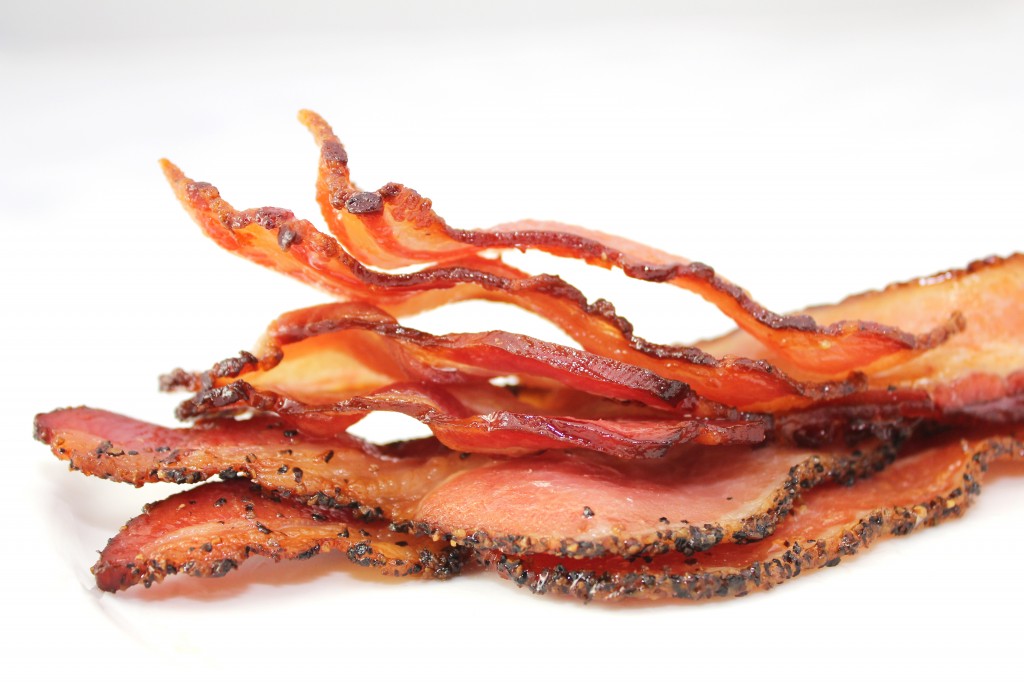
Well, I thought that was a pretty simple question. But bacon, like most things in life, turned out to be more complicated than I’d originally anticipated. Up until the latter part of the sixteenth century, bacon (or “bacoun”) was a Middle English word that people used to refer to pork of any sort. The term is likely taken from the French bako, Common Germanic bakkon and Old Teutonic backe, all of which refer to the “back,” the part of the pig typically used for bacon-making in Europe.
Interestingly, and oddly, bacon as we know it over here in the U.S. comes not from the back but from the belly and side of the pig. That seems to be an anatomical disconnect until you realize that in Europe the term “bacon” means something entirely different than it does over here. William Tullberg, whom I know from his work with Wiltshire Tracklements, an excellent line of British mustards and condiments, actually started his career working with the Harris family, who are responsible for the now well-known (in Britain, not here) Wiltshire Cure bacon. Tullberg explained that the belly is not where it’s at in the British bacon world. “An Englishman (even a quarter Swedish one, like me),” he writes, “thinks of bacon in terms of a whole cured Wiltshire side, gammon, back, streak, and shoulder. Asking for ‘bacon’ in a shop, he would expect to be offered sliced back or streak, smoked or green. The gammon is sold either as a joint to be cooked as ham, or sliced as gammon rashers, and the shoulder is sold as a joint, and when cooked, is often referred to as ‘shoulder ham.’”
Bacon Down Under
Lance Corporal Bacon is basically a block of pork fat with a small streak of pork meat. It got its name during WWI from Australian and New Zealand Army Corps troops, who were regularly served it as part of their rations. The name was bestowed because the thin strip of meat in this low-end, made-for-the-military pork belly echoed the single stripe on a lance corporal’s sleeve. Very witty, those Australians.
While I’m sure that that explanation makes perfect sense to William, he had me completely lost before he even finished the second sentence. I was wandering the British outskirts of Camp Bacon, with neither a compass nor a British-American dictionary to guide me. I’d heard the word “gammon” a million times, but I had no idea what one actually was. Fortunately, William was willing to assist, so… with his help and a couple of successful keyword searches I quickly learned that the term comes from old French, and refers to the rear leg of the pig. It was apparently used centuries ago to describe whole sides of pork, including both the back and the belly. Today, gammon is generally defined more narrowly to mean a ham: hence, a “gammon steak” is a ham steak. And “green” means cured but not smoked.
It’s not easy being green… or at least it’s not so easy to understand what all this is about. As William said, “I’ve seen many a mystified Englishman unable to understand that bacon in America means cured belly pork, complaining bitterly that his breakfast bacon and eggs was not right, because he expected sliced back bacon!” Maynard, the one-named British author of one of my favorite books about bacon, Adventures of a Bacon Curer, confirms the confusion. (Since you’ll be seeing his name many times as you read, I should mention that it’s pronounced in a sort of Anglicized French as “may-NARD,” with the emphasis mostly, though not fully, on the second syllable, rather than the way I grew up with here, which is more like “MAY-nerd.”) In recounting the story of his first trip to the U.S.—a visit with a bacon-making Pennsylvania Amish farm family—he writes that, “I thought it was a lovely bacon.” It was “streaky,” he explains, and not the sort that he was used to making in Britain, which would have been cured loin. The latter, he adds, “was not cured, they eat the loin as [fresh] pork.”
The terminology clearly causes confusion. So hopefully this glossary will help English visitors avoid embarrassment in the U.S., and Americans avoid any gaffes in the UK.
We’ll see you at Camp Bacon 2014!
Zingerman’s 5th Annual Camp Bacon gets underway in just a few short weeks. To help you prepare for our annual celebration of all things pork, we’re posting excerpts from the Zingerman’s Guide to Better Bacon.
 Bacon Glossary
Here are the terms you need to talk bacon with the pros!
Bacon: Over here in the U.S., cured and usually, though not always, smoked pork belly.
British Bacon: Today, this generally refers to the back and not the belly, cured in a brine solution but not smoked.
Canadian Peameal Bacon: Pork loin cured in a wet brine solution and then rolled in cornmeal. The real thing is sold raw and never smoked.
Dry Cure (a.k.a. Country Cure): Raw pork rubbed and then set into a dry solution of salt, sugar and spices (instead of a brine) to cure the pork before it’s smoked.
Fatback: The strip of fat from the top of the hog’s back, above the loin. Used extensively in old-style American cooking, it really has no meat on it whatsoever. In the South you’ll still see places selling fried fatback. Typically used to make lard and cracklins.
Flitch: The old English word for a side of bacon.
Green: The British term for cured but unsmoked bacon.
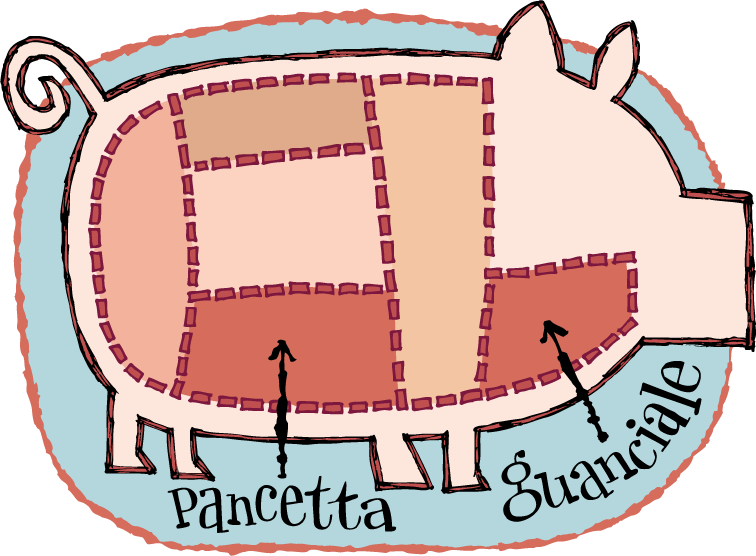
Guanciale: Italian-style pork jowl, dry-cured and unsmoked.
Irish Bacon: Same as British bacon, but often used for boiling.
Lardo: Italian-style pork back fat, dry-cured in slabs for months. Sliced and eaten raw.
Long Back or Long Middle: Used in England to describe bacon sold as loin with belly still attached.
Pancetta: Dry-cured but unsmoked Italian-style bacon made from pork belly.
Rashers: Slices of bacon, to a Brit.
Streak o’ Lean: Like fatback, but with (at most) a small strip of meat in it. Michael Stern, writing in Roadfood, says, “streak o’ lean provides maximum piggy flavor. If you never can get enough bacon, it’s the breakfast meat for you.” Sometimes smoked, sometimes not. Also like fatback, streak o’ lean can be floured and deep-fried to make a crisp little bacony snack.
Streaky Bacon: What British people ask for when they want American-style belly bacon.
Wet Cure: Bacon that spends a good bit of time in a saltwater brine, most often, though not always, with sugar and spices.
Wide: The wide side of the pork loin as it’s used for bacon—it’s from further up the top loin, toward the shoulder.
We’ll see you at Camp Bacon 2014!
Yesterday was the wrap-up event in the 4th Annual Camp Bacon: the Bacon Street Fair at the Ann Arbor Farmer’s Market.
On hand were folks from the Zingerman’s Community of Businesses, as well as vendors from near and far.
Here are some photo highlights of the day.
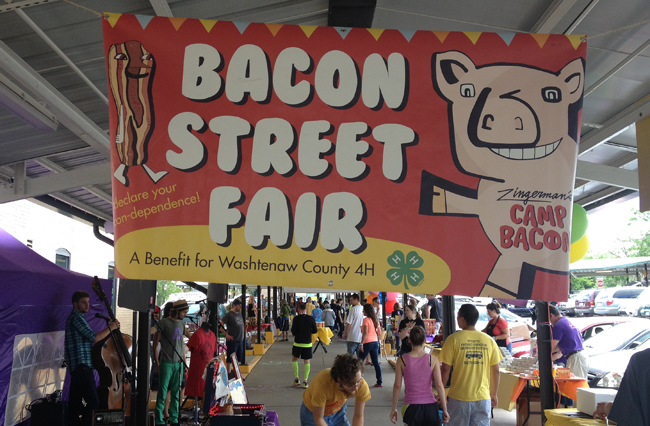
A welcoming banner.
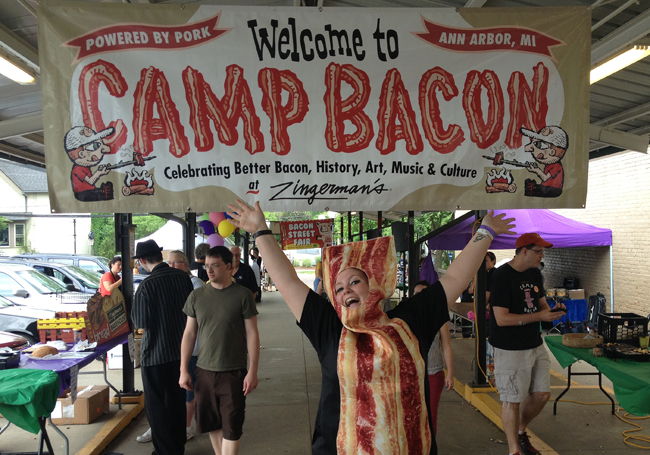
And a more personalized welcome from Ms. Bacon!
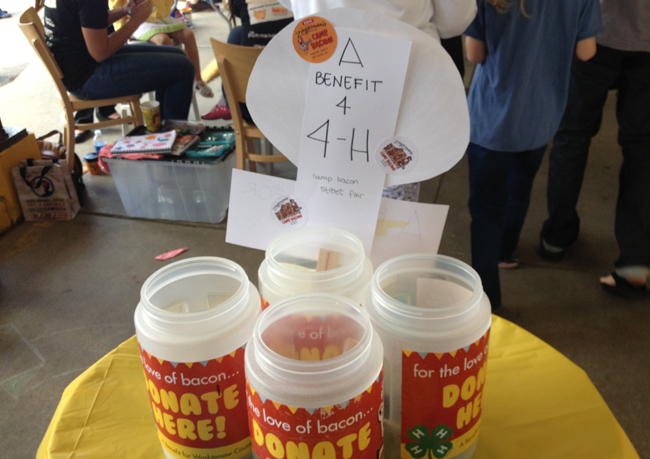
The Bacon Street Fair was a benefit for Washtenaw County 4-H and these jars were filling fast!
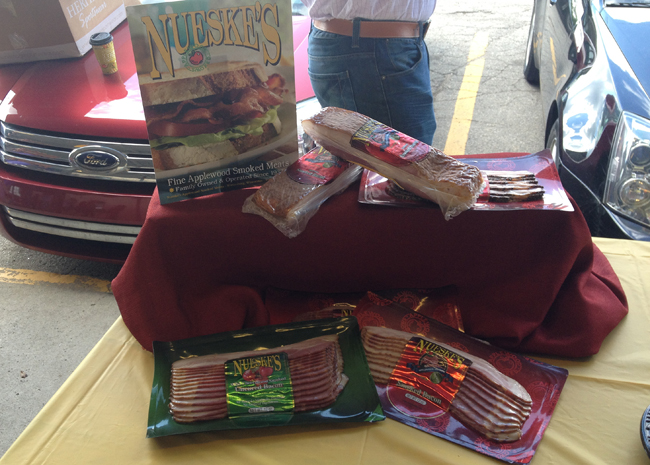
Our friends from Nueske’s stopped by…
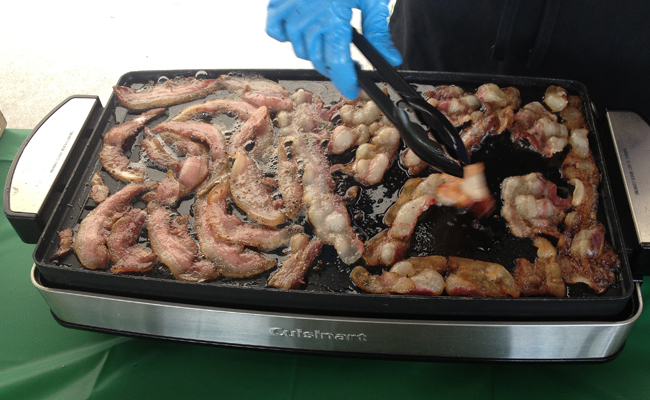
…and they brought some of their fabulous bacon to sample!
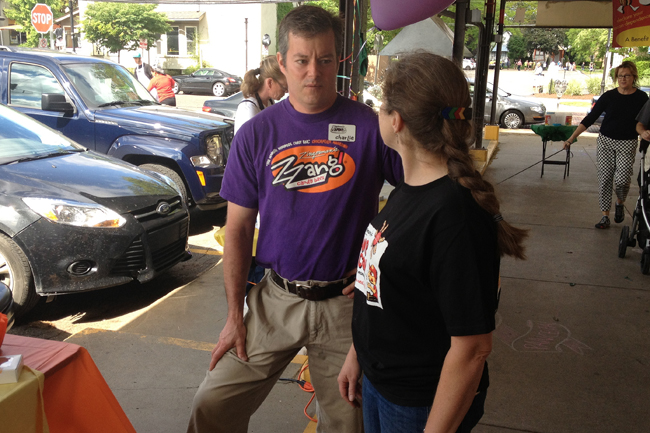
Charlie from the Zingerman’s Candy Manufactory was there with a special treat just for Camp Bacon.
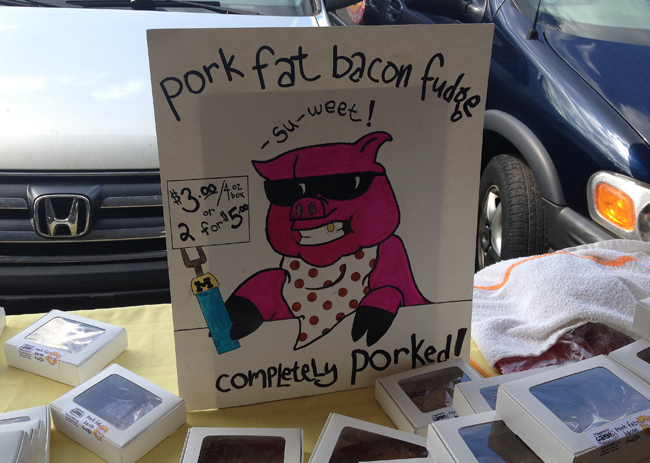
Pork Fat Bacon Fudge! Sweet, savory, and smoky!
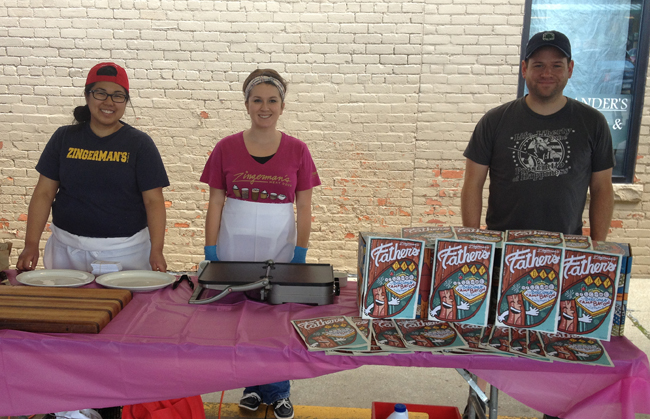
The Zingerman’s Deli staff ready with copies of the Father’s Day catalog. Bacon sampling in 3…2…1…
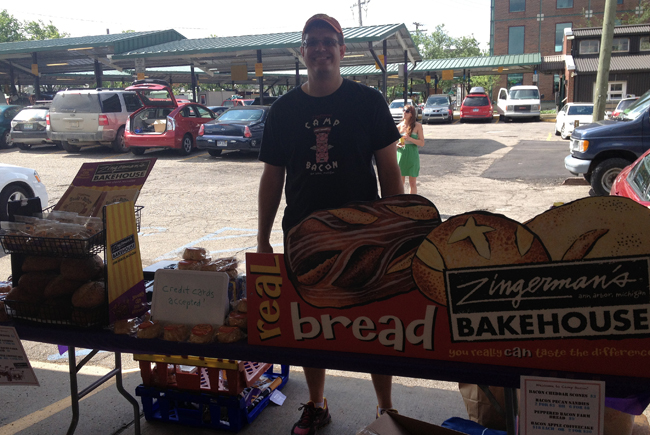
Shannon from the Zingerman’s Bakehouse with Bacon Cheddar Scones, Peppered Bacon Farm Bread, and other goodies!
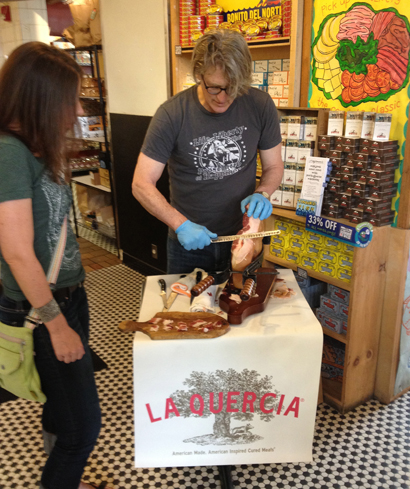
Inside the Zingerman’s Deli, Herb Eckhouse of La Quercia samples his lovely Acorn Tamworth Specllacia. Delicious!
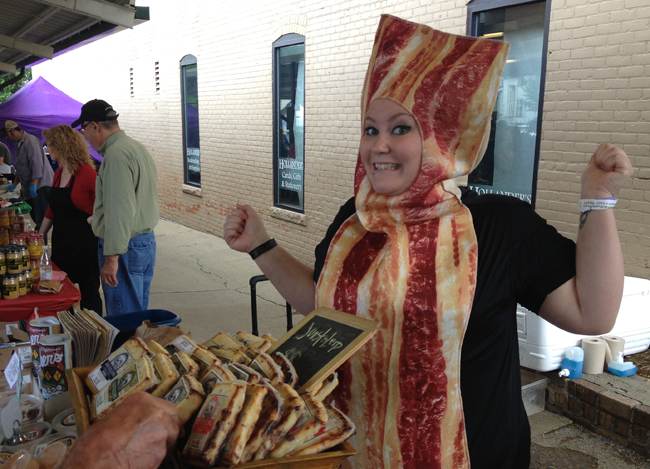
Ms. Bacon again! Here she is with offerings from the Zingerman’s Creamery!
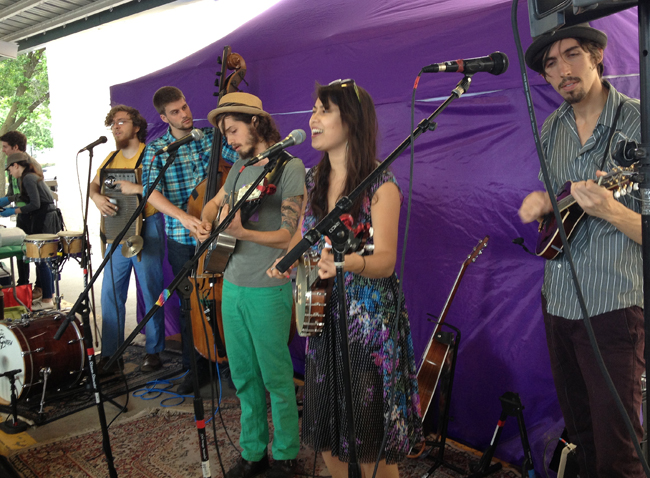
Music for the Bacon Street Fair was provided by the wonderful Appleseed Collective…
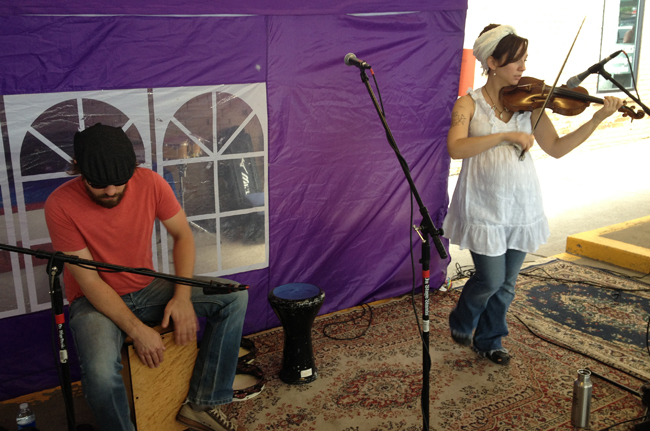
…and by the talented Randall and Erin of the Ragbirds!
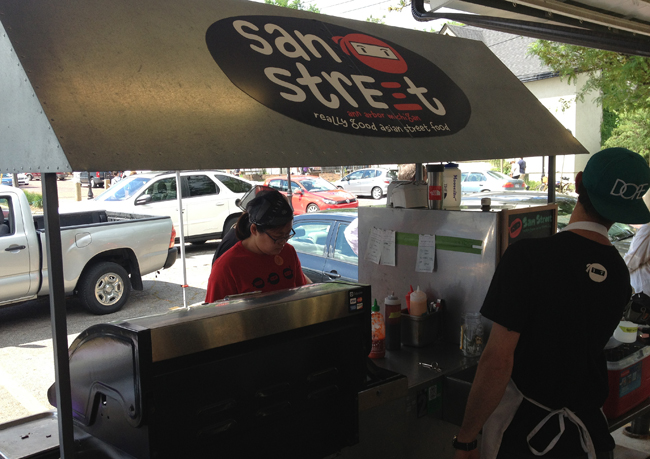
Jie Hye and the San Street crew were on hand serving their world-famous Pork Buns, as well as variety of other tasty Asian street foods!
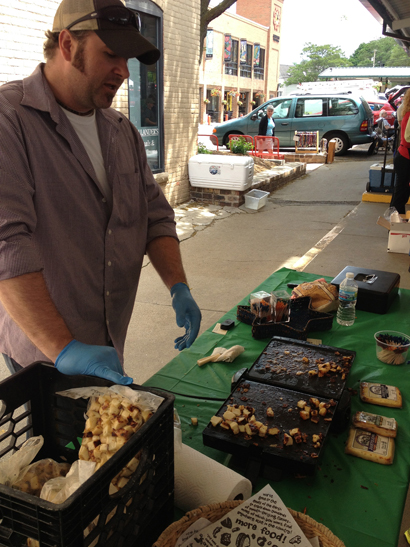
Jay Noble of Noble View Creamery sampled two different kinds of his pepper-laced Juustoleipa cheese: Jalapeño and Habañero!
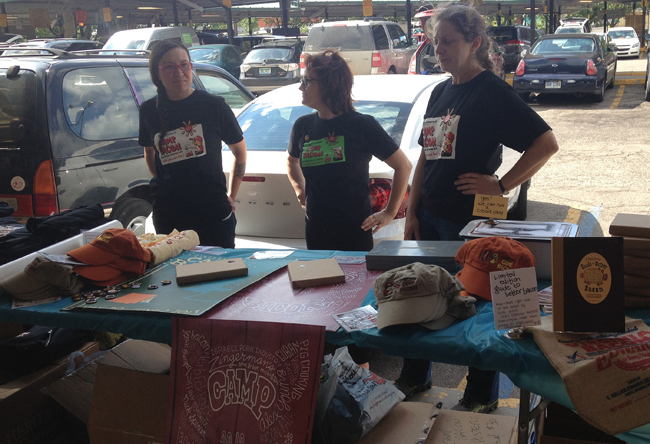
There was a pensive moment while the folks offering fine Camp Bacon memorabilia considered the possibility of a world without bacon…
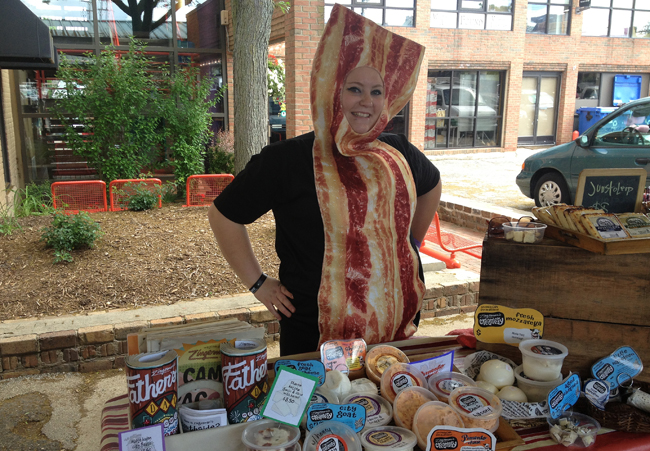
…but, Ms. Bacon kept things in perspective!
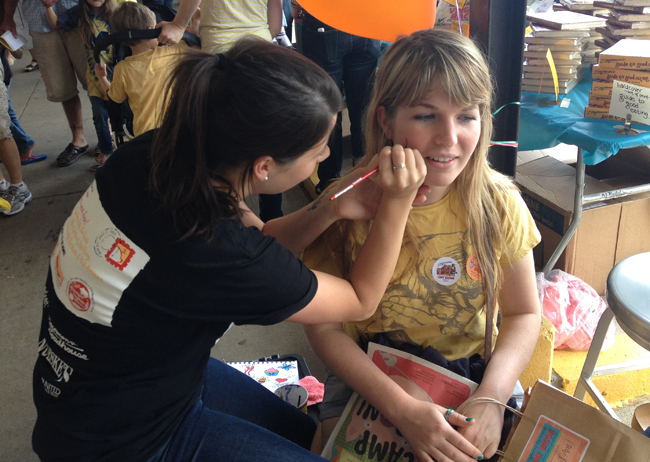
A camper stops to apply bacon-themed artwork…
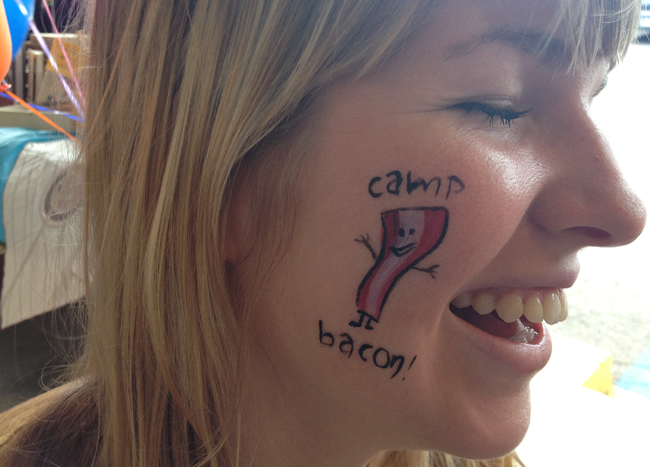
The beautiful result!
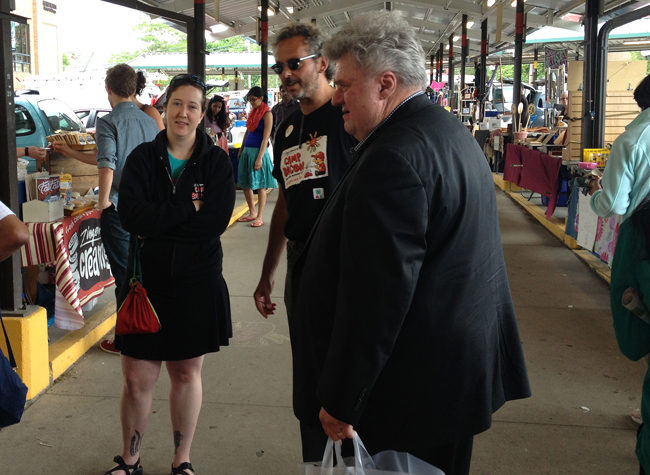
Aubrey of the Zingerman’s Creamery and Ari chat with Bob Nueske.
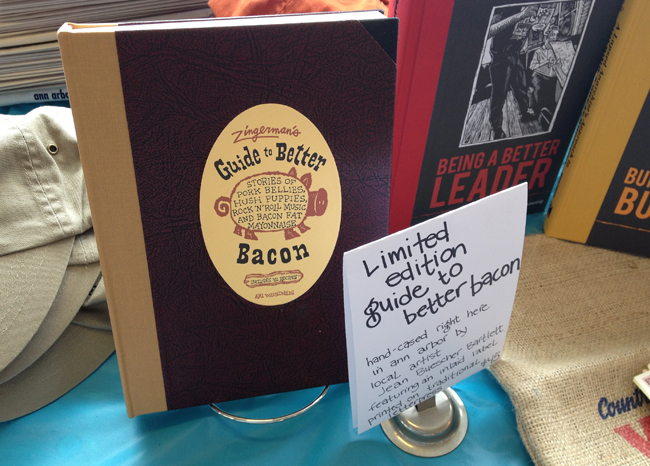
The book that started it all: The Zingerman’s Guide to Better Bacon. Buy your copy today!
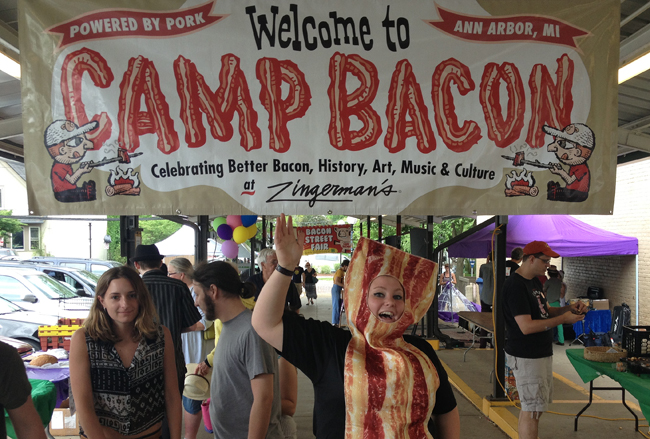
Thanks from Zingerman’s for coming to the 4th Annual Camp Bacon!
See you in 2014!
Here are more highlights from the Camp Bacon Main Event.
(see Part One here.)
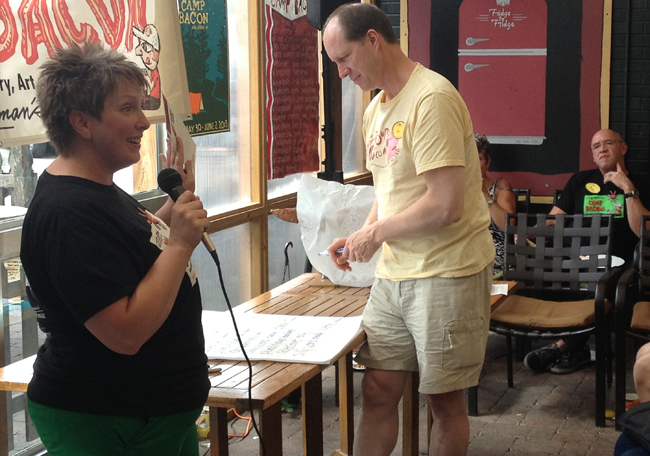
Tabitha leads the campers in Bacon Mad Libs.
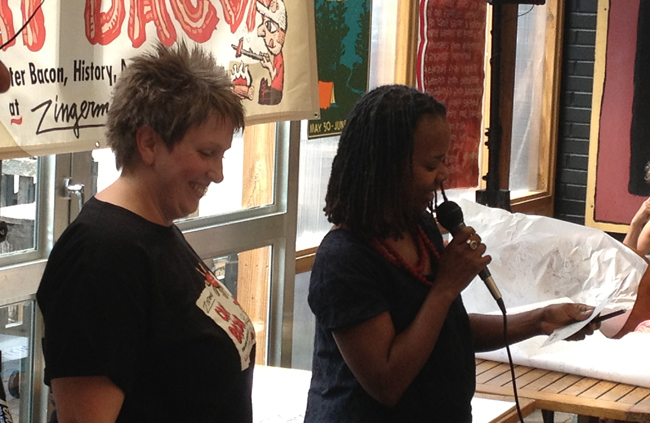
Audrey Petty reads the completed Mad Libs.
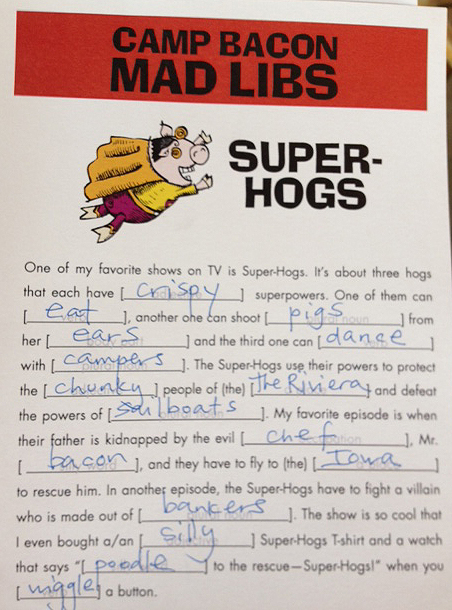
Here’s one of the hilarious results!
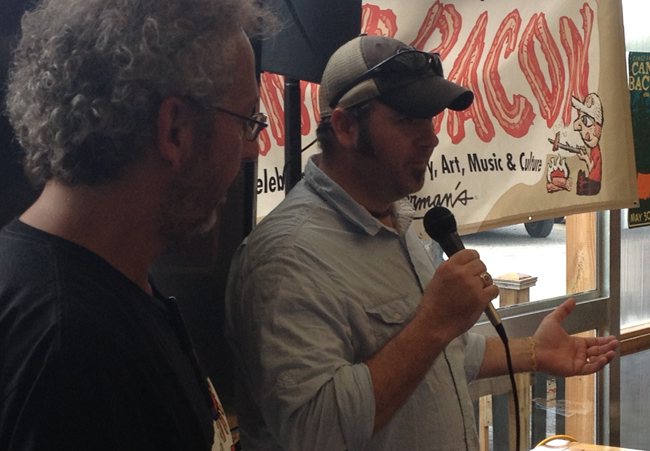
Ari with Jay Noble of Noble View Creamery in Wisconsin.
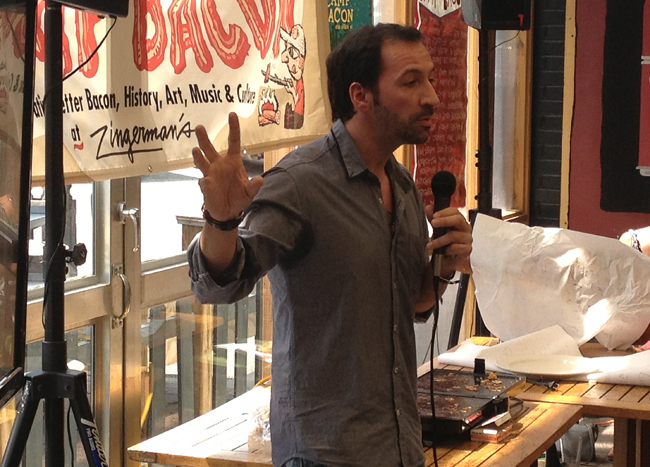
Raul Martín of Fermín Iberico hams. Raul talks about how this delicious, traditional Spanish ham is made.
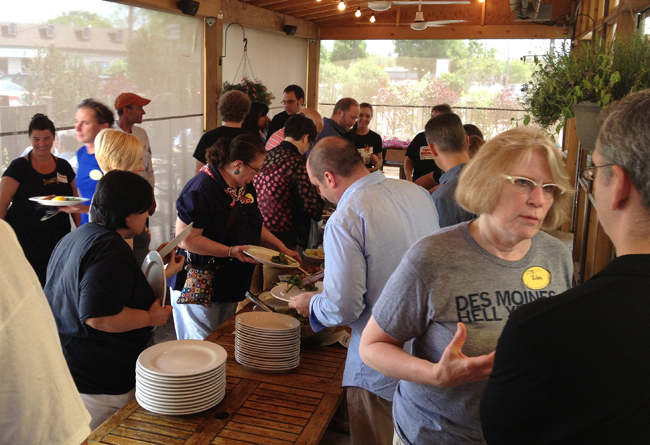
Break for lunch!
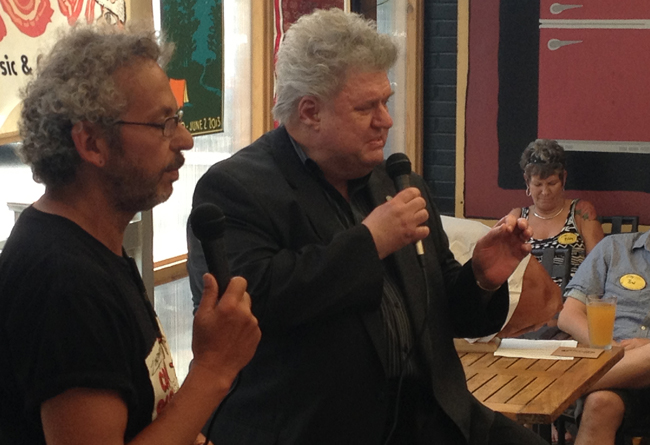
Ari with Bob Nueske of Nueske’s Applewood Smoked Meats. Bob shared an insightful anecdote in which he’d been away from his company for some time, then came back to find it running better than ever. He realized he’d been ‘micromanaging’ and resolved to stop immediately. As Bob says, the results speak for themselves. Sometimes you have to trust in your employees…
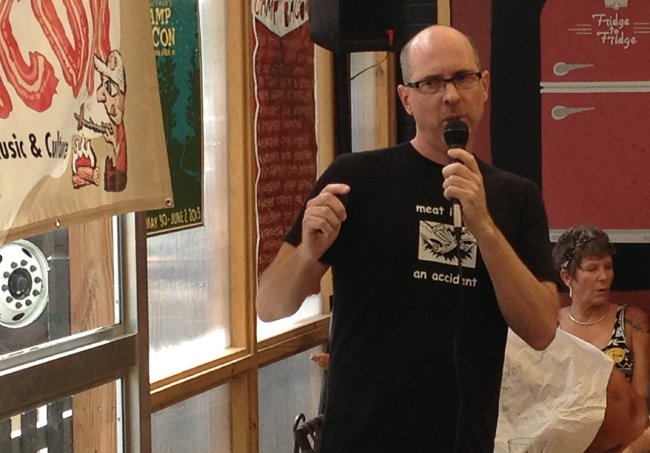
Keith Ewing draws on his experience in hog farming to talk about the inherent benefits and respect for the animals gained in using humane slaughtering methods.
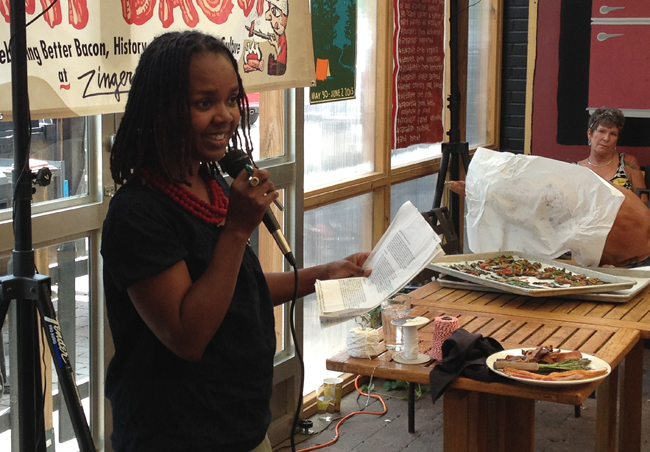
Audrey Petty reads more bacon poetry.
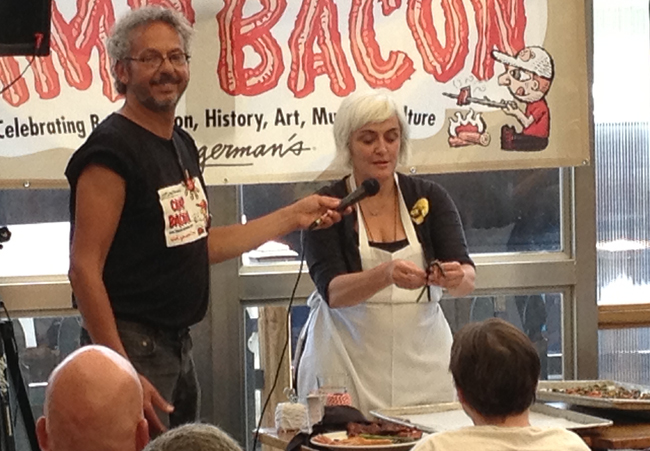
Seamstress extraordinaire, and couture designer Natalie Chanin demonstrates her bacon crafts with Ari’s assitance.
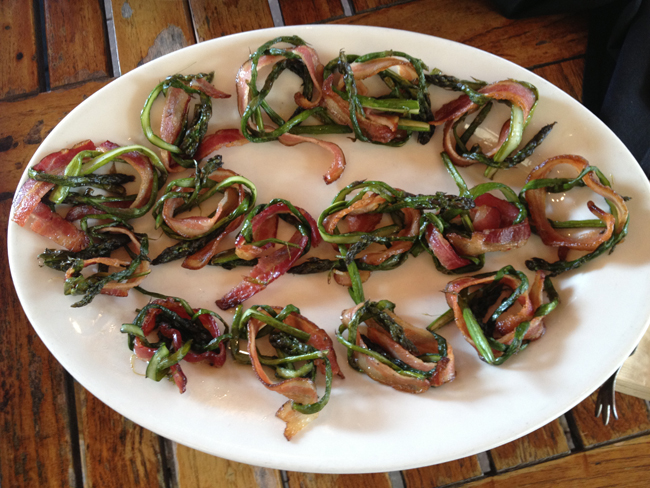
Here’s an example of Natalie’s deliciously edible work.
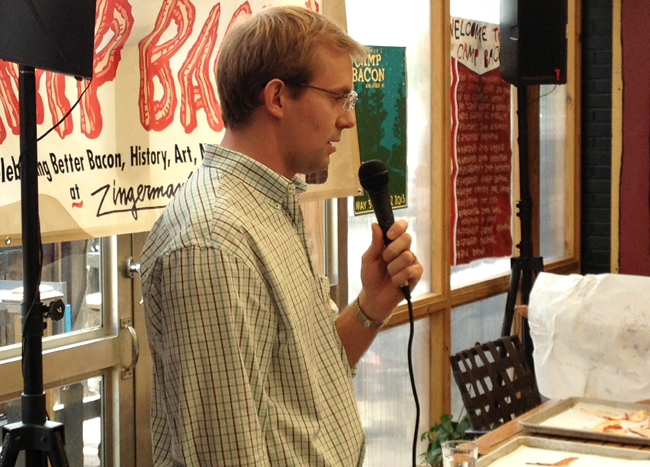
Nick Spencer of Chicago’s Jolly Posh Foods talks about the differences between British and American bacon, as well as the emergence of U.K. cuisine as a major force.
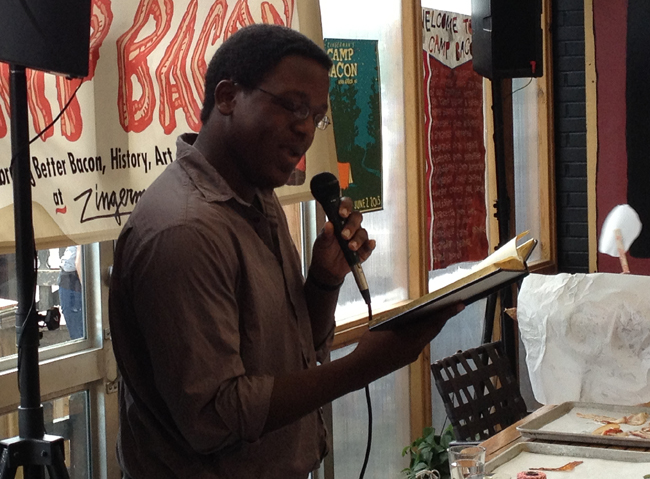
The Roadhouse’s own Justin Dennis reads bacon poetry.
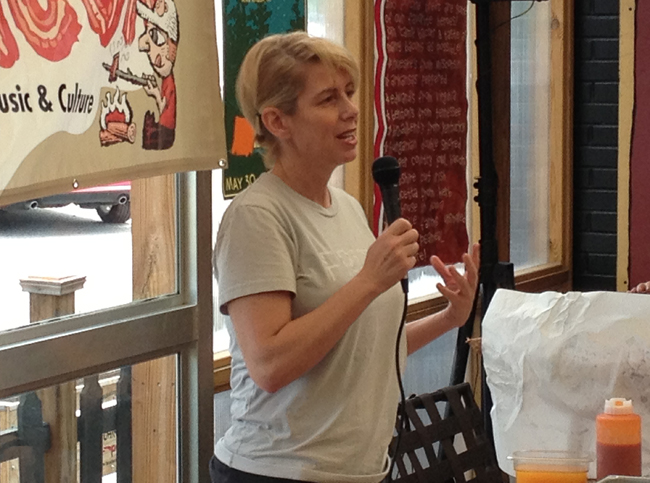
Chef Eve Aronoff of Frita Batidos talks about roasting pork using a Caja China (Chinese Box). Legend has it that mid-1800’s Chinese emigrés to Cuba developed this method as an efficient and portable way to cook meat.

The Caja China is a wooden box lined with aluminum. The pork is suspended inside between two racks, and coals are ignited on top. As the coals warm, their heat is conducted by the metal lining the box, and the pork cooks evenly throughout.

Eve and the Frita Batidos crew serve up delicious samples of the finished product.
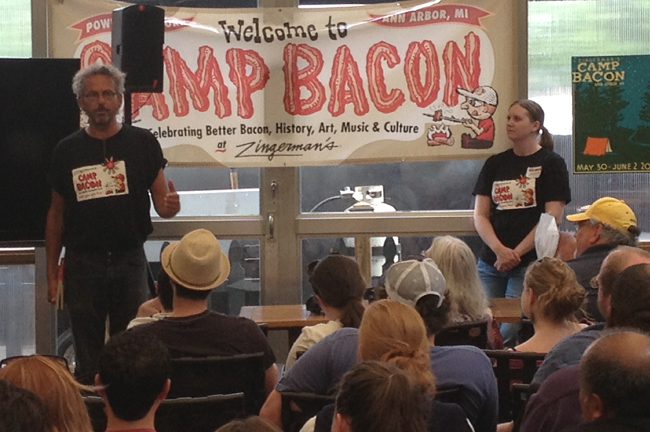
Ari And Joanie wrap up the Main Event with a heartfelt thanks to all of our 2013 campers.