
Tag: CORNMAN FARMS
Seed Selection, Feeding the Soil and Sustainable Price Structures
Wendell Berry, who keeps an insightful eye on the American landscape (both literally and figuratively), once wrote, “When you find a farmer or a forester who has united the inescapable economic concern with an equally compelling interest in ecology, that is when you had better stop and take notice.” I am lucky to work with one of those people. I’ve tried to stop and pay attention. This piece is written in the hope that a few others might pause and take notice, too.
That might, in a way, be easier said than done. Everywhere we turn, there’s a lot going on. Politics, kid’s soccer games, shopping lists, violence, social change. I can’t think of anyone I know—here at Zingerman’s or in the world at large—who’s walking around wondering if they’ll have enough to keep themselves busy tomorrow. As insightful writer and presenter Virginia Postrel posits, “The fundamental economic fact of contemporary society is that attention is scarce.”
To some extent I agree. But then again, I don’t. It’s a bit of a paradox, I suppose. I’d argue that while it’s often hard to get people to devote their attention to anything in particular, the truth is that most of us have plenty of attention available to put to use in making our lives into something truly special. If, I should add, we decide we’re going to. As Sam Keen writes in Inward Bound, “We are seldom too tired to do what we really want to do.” When we want to focus, I’m fully confident it can still be done. In fact, I’d argue you’re proving the point that focus is still possible in a positive way merely by reading this article!
Still, it’s not always easy to find the things we might benefit from paying attention to. Even here within our own little Zingerman’s Community, there’s so much going on that it’s easy to miss any number of important elements of our ecosystem. Cornman Farms—the agricultural part, at least—is easy to overlook. Unlike the majority of the places in which we do Zingerman’s business, our ten acres of agriculture get no daily visitors. You can’t come by to grab a loaf of Bakehouse bread and you can’t get a cup of Cornman blend coffee. You can’t easily bring your friends from out of town for lunch, and you don’t stop by on your way home to pick up a couple of heirloom tomatoes. While we hold magnificently marvelous weddings in the beautifully restored barn and farmhouse at Cornman Farms, no one’s actually trekking the half mile through the trees to our fields to get next to one of our tomato plants. The truth is that unless you pay close attention when you’re eating at the Roadhouse, or you’re really up to speed on the “secrets” of the Zingerman’s community, it would be easy to miss the fact that we even have a farm.
Farms generally don’t get famous, so we’re not alone. Best I know, there’s no James Beard award for “farm of the year” and the press doesn’t publish “Top Ten Farms Not to Miss in 2016” lists. In the grand scheme of everything we have going—Presidential visits, articles in USA Today, renovation projects at our Southside businesses, a new book on Beliefs, another book coming from the Bakehouse, ZingTrain classes being taught in Bratislava – some raised beds and a few bushels of heirloom tomatoes may not be the first thing that catches your attention.
And yet, I believe, ever more strongly every day, that the agricultural work at Cornman Farms is truly one of the most meaningful organizational accomplishments we have had in our nearly 35 years of doing business.
A Suburban Look at Sustainable Agriculture
Personally, I grew up with only a bit of the two things Wendell Berry was writing about bringing together. Economy and ecology were, I guess, present, but hardly front and center. Our middle class was much more focused on school, politics, and community activity than it ever was on money.
Ecology back then was barely a word, at least in the world I was moving in. Though my mother was, I now realize, a bit ahead of her time—she was recycling long before there was curbside pickup. My grandmother, in her own, old world way, was as well. She saved everything it seemed like, though probably more out of experience with poverty than frugality.
Doorknobs were regularly replete with used rubber bands and drawers were filled with saved plastic bags, other people’s pens, safety pins and bobby pins. However, farming was really far out. To me, as a child, food came from the grocery store.
I don’t think I ever gave much thought as to whether one tomato was any different than any other. The farm I knew best was the scientific one at the Museum of Science and Industry. It was the era, perhaps the peak, of industrial farming. Chemicals, straight lines, pesticides and power from dams and nuclear plants were going to save the world.
The Fall of American Farming
While the idea of farming as we do it at Cornman Farms has been getting more attention of late in the artisan food world, the truth is that most of the last 150 American years have been spent trying to get away from the farm! In the 1830s, when the house and barn were built, over three quarters of the population of the United States lived on a farm. In 1882, the year that Rocco Disderide arrived in the U.S. from Italy, about half the country’s population lived on a farm. By the time he opened his shop in 1902, in the current Zingerman’s Deli space, that number was down to a third of the people in the US. By the time we opened the Deli in 1982, it was down to a tenth of that—only about 3.4% of Americans lived on a farm. By the time the farmer I’m going to talk about started farming in the early aughts, it decreased by half again. To make the picture even bleaker, by the time we started farming at Cornman, nine out of ten American farmers were dependent on off-farm income to make their living.
All of which helps make clear that, back when we opened the Deli, college graduates were not racing to establish themselves as farmers. Getting a small sustainable farm started is not now, nor was it then, a quick way to find fame or fortune. In a society fixated on speed, old school agriculture works the other way around. The pace of “feet in the soil” agriculture is slow. A snail’s pace compared to most economic activity. However, to move faster would be incongruous; out of sync with the natural systems we all admire. As Wendell Berry writes, “the gait most congenial to agrarian thought and sensibility is walking. It is the gait best suited to paying attention, most conservative of land and equipment, and most permissive of stopping to look or think. Machines, companies, and politicians ‘run.’ Farmers studying their fields travel at a walk.” In that sense, maybe it makes sense that it’s taken me so long to put explore my thoughts on our farm.
The Story of Cornman Farms
The farmer I’m taking notice of here—per Wendell Berry’s beliefs—is also a chef, and also the managing partner at the Roadhouse. Alex Young came to work with us fifteen years ago—one year of transition into the organization by serving as the kitchen manager at the Deli, then, as planned, moving on to be the chef and partner at the Roadhouse. I don’t think that Alex grew up in a farm setting either, but at least he spent much of his youth in northern California where local produce and nature are a lot more prevalent than they were for me in the squared off streets of Chicago. Alex moved his family here to settle down in Dexter where his wife’s family had been farming since the early part of the 19th century. While his own upbringing was one of near constant shifting, the Arnold family had been on the same land for nearly two hundred years!
This September, the Roadhouse will celebrate its 13th anniversary. Alex and crew have won a James Beard award for their work; they’ve been written up in numerous publications, the most recent of which was a rather large and gorgeously glowing piece in USA Today by best selling author Larry Olmstead. (Check out Larry’s great new book Real Food, Fake Food!) The Roadhouse has been on TV half a dozen times, in the local press many more than that.
Food writers from across the country come to speak at special dinners featuring their cookbooks. While the agricultural work on the farm gets a few lines in all the articles, it rarely takes top attention. I guess the agricultural work is a kind of like the drummer in a famous band. The chef is the lead singer. While the drummer sits in the back and keeps the beat going, the singer gets all the attention.
The funny thing here is that in our case, the drummer and the singer, the chef and the farmer, are the same person. Alex does both. The chef at the Roadhouse didn’t just decide to buy from local farms (also a great thing mind you), he actually started one!
What is now an entire farm started as a hobby. Alex used it as something to take his mind off the stress of figuring out how to run a very large, very high-quality, restaurant. At the time he started, I remember Alex catching flak for taking his attention off the restaurant by doing something “unrelated.” But for Alex—it gave him a whole new perspective on what it meant to be a chef and run a restaurant.
Even still, farming wasn’t high on Alex’s bucket list. He was a chef. He loved to cook. He’d cooked all over the U.S. and Europe. He was good at it. He told me that one of the first times he cooked for other people was when he was 13 and his parents went out of town and he invited a few hundred people over for a BBQ. (That was the event at which the barbecue sauce we now all know as Alex’s Red Rage had its beginnings. He’s been tweaking it regularly ever since). In the early years of the Roadhouse, he used to sit on his porch, just up the road from where his wife’s relatives had started farming. he told me “That was my wishing tree. I used to sit out there and think about what it would be like to have a farm. I thought it would be cool to have a farm one day.” At that point though, it was probably more about the idea of having a farm than it was of doing the actual farming. Not that he was opposed to hard work—running restaurant kitchens is hardly a leisure activity. But he’d never farmed, never had a real sense of what was involved.
Somehow, early on in the stressful times that accompany nearly every restaurant startup, Alex had the idea to go out in his backyard and start growing some tomatoes. Over time he added a few other vegetables as well. One day he brought a few things in to the restaurant and started doing what he knew how to do best, which is cook with them. Spotting a regular customer sitting up front at the chef’s counter, he brought out some of what he’d prepared with the fresh produce. He still talks about that moment—when he experienced the emotional and culinary connection of watching a customer eat what he’d grown. Reflecting back on the good Mr. Berry, it strikes me that this was the moment—or at least one of them—when Alex first “united the inescapable economic concern with an equally compelling interest in ecology.”
Mark Baerwolf remembers those days: “I’d worked as a cook around town for years, and I came to the Roadhouse because I’d read Alex’s description of what he wanted the Roadhouse to be in an article in the Ann Arbor Observer. He’d explained how he wanted to explore American foodways by using local and organic produce, if possible. He and I started talking veggies and tomatoes because we both had gardens. He invited me out to see his backyard garden – and I never left. I’ve worked with Alex and the garden since 2006 while also working as a cook at the Roadhouse. I’d work during the day at the and head off to the restaurant for the evening. But I’ve been full-time on the farm the last three years. I am the best version of myself out in the garden, and I’ve met the nicest people from farming.”
Over the last decade, what started as digging a few rows of tomatoes has turned into a ten-plus-acre farm which produces multiple tons of produce for the restaurant. Cornman Farms is an integral piece of what we do at the Roadhouse. I don’t conceive of Cornman Farms as a purveyor to the Roadhouse—I imagine it as the back prep kitchen of the restaurant. To me, it’s not much different than the pit or the cutting table where we prep fish, or cut up whole sides of beef. It’s just part of the process—our process—of producing really good American food.
The connection between simultaneously growing our own vegetables in order to cook them in our own restaurant is a big shift in beliefs. This is not the way it’s been done, at least not in the second half of the 20th century. That’s not an overnight shift to make. As biologist Julian Huxley, the brother of Aldous Huxley, author of the aptly-titled for the purposes of this piece, Brave New World, said in 1961: “It is hard to break through the firm framework of an accepted belief-system and to build new and complex successors, but it is necessary.”
Alex’s insight, his willingness to twist the viewing lens, to shift his beliefs, makes very good sense. In an industrial restaurant, most of the food arrives already prepped, in boxes, cans or bags. One step up (in my judgment) would at least take whole commercial produce into the kitchen to work with. A better kitchen—the kind we would want to work with—would take the fresh produce, where possible, from farms with whom they have a relationship, and work with them to offer what was best in season. Certainly there are now a fair few places around the area, and many more around the country, who are doing that.
What Cornman Farms has become for the Roadhouse is, in my mind, merely taking that process one step further in the quality chain. The Roadhouse doesn’t just prep fresh produce—it grows it! In my fantasy, the farm would literally be located right out the back door so that people from the prep kitchen could walk out and talk to the folks growing in the fields. I think about asking the prep cook to run out back to pick some more tomatoes! But since we aren’t likely to be able to turn the Westgate Mall parking lot into a patch of organic produce, I think this is about as good as we’re gonna get for the moment. And I’ve been in some big hotel kitchens where it takes as long to walk from one side of the building to the other as it takes to drive all the way to Dexter.
Flowers and French Peppers
Turning all this passion into a financially workable model isn’t, as you can tell already, all that easy. The key has been finding things to grow that we feel great about, things that taste special enough to allow us to charge what we need to charge, that get the attention of food lovers who eat them. One way is flowers.
Amanda is all about them. Amanda Maurmann grew up in Ann Arbor (her father, Gene Hopkins was one of the architects who worked on the first Deli expansion back in 1986). After a number of years out east, she moved home and started working at the Roadhouse. Her passion for agriculture soon shifted her to working on the farm. You can see, and feel, her commitment in every conversation. She’s growing nearly 100 varieties of flowers on the farm.
Finding old school, organic flowers, flowers that aren’t laden with pesticides, flowers that look beautiful and are sustainably grown, is harder to do that, one might think. Most flowers you and I see outside the farmer’s market are the floral equivalent of industrial food. “I get so upset when I see industrial flower growing,” Amanda said. “Flowers cry out for bees and other pollinators, but to get those perfect blooms in mass plantings often times they spray, and end up killing the good with the ‘bad’, not to mention spraying it on the farm workers, too…”
While few consumers realize it, 80% of flowers sold in the US are imported, often from places with a lot looser and more dangerous agricultural policies than ours. What Amanda is experimenting with on the farm is something that’s aligned with the way we approach our food. Old varieties that look lovely, that enhance the look of the land, and if you buy them, your table, too.
Agriculture and Economy – Paying the price
All of this, I would imagine, sounds rather inspiring. It certainly does to me! The challenge—aside from the enormous amount of work it takes to restore the soil, choose the seeds, grow it all and harvest it—is trying to figure how to make the money work. It’s again, easier said than done. I’ve been turning this over in my head, gently, without sending myself into a total tizzy, much the way the crew at Cornman work the land. Thoughtfully, purposefully, with care, and with the intent of sorting out what’s really best over the long haul. It’s not about quick fixes. It’s about sustainability of food and finance. About bringing every element of existence into alignment, leaving our world—both in business and with raised beds—better than we found it.
Here’s what I wrote a few years ago in Part 1 of Zingerman’s Guide to Good Leading:
Paying the Full Price Up Front
I think that this idea of staying in business bleeds into a topic that hardly anyone ever really wants to talk about—charging enough for our products for our business to actually be financially viable over the long term. The funny thing about this is that even in the world of sustainable food production, there are still a whole lot of folks pushing for ever lower prices. Which is certainly their prerogative. It’s not like I’m an advocate of raising prices on principle. Nor have I ever thought that life is all about maximizing your financial return. And I definitely don’t think higher prices should be used to cover up inefficiencies.
But the reality is that higher prices that allow healthy, sustainably minded businesses to do all the things we’re talking about and still stay in business are, I think, a good and necessary thing. By contrast, driving prices down at all costs is the exact model that we all say that we want to get away from in the food world. And we know what happened there. Personally, I think back to what Michael Pollan wrote in a piece for the New York Times Sunday Magazine entitled “Unhappy Meals.” Among his principles of healthy eating, number five is “pay more, eat less.” He goes on to explain that:
“The American food system has for a century devoted its energies and policies to increasing quantity and reducing price, not to improving quality. There’s no escaping the fact that better food—measured by taste or nutritional quality (which often correspond)—costs more, because it has been grown or raised less intensively and with more care. Not everyone can afford to eat well in America, which is shameful, but most of us can: Americans spend, on average, less than 10 percent of their income on food, down from 24 percent in 1947, and less than the citizens of any other nation. And those of us who can afford to eat well should. Paying more for food well grown in good soils—whether certified organic or not—will contribute not only to your health (by reducing exposure to pesticides) but also to the health of others who might not themselves be able to afford that sort of food: the people who grow it and the people who live downstream, and downwind, of the farms where it is grown.”
Having worked in the food world for nearly 30 years now I’m still shocked and awed to hear, over and over again, stories of restaurants and retailers that were generally considered to be big successes who, it later turns out, never made any money. Although some of them charged high prices, they ran cost of goods numbers that simply weren’t viable, yet struggled along for years anyway. Some survived on infusions of cash from corporate parents, wealthy-from-other-work owners, or public stock offerings. Others stayed in business, in part, by not paying themselves a salary, either because they didn’t need the income or because there wasn’t any cash to pay it.
To the consumer, of course, these businesses look perfectly healthy. And the prices they charge set a standard that others see as the norm. But the problem is that using these failing businesses as a benchmark is akin to setting your weight target by looking at fashion magazines. In either case, the model (sorry, pun intended) is not very likely to be sustainable. It survives, maybe even looks glamorous for a bit, but eventually starves and collapses. And, in the process, it leaves the world around it—staff, suppliers, customers, and community—worse off than when it first arrived on the scene.
What that means to me on the upside is that we have to have the courage to charge what we need to charge to stay in business in a healthy way. That we have to back that up by delivering great experiences to those we interact with—staff, suppliers, community, shareholders, and of course customers. We have to share what we take in with all of those groups, so that everyone gets something positive out of the work that we do in order to create the kind of abundance we’re committed to delivering. We have to back that all up even more by using good business practices, careful costing, and effective purchasing, so that we’re not wasting cash that customers contribute to our cause.
To me, that’s the crux of what sustainable business is all about. Staying in business in order to sustain the lives and livelihoods of the people and the producers of our community.
Well, I’ve now worked in the food world for nearly 40 years, but there’s nothing else in what I wrote then that I’d change now. In fact, I might even say it more forcefully. What’s the point of doing all the work if we aren’t going to charge enough to cover what it costs us to do the work in the first place?
It’s a key part of Wendell Berry’s beautiful statement up at the top of this piece. “When you find a farmer or a forester who has united the inescapable economic concern with an equally compelling interest in ecology…” It’s the combination of the two that’s so special. Just having a high interest in economics alone leads to the unsustainable stuff that most anyone reading this essay has already long since come to view with suspicion. Having a compelling interest in ecology alone might lead you to appropriately recycle, reduce your carbon footprint, and support ecologically-minded non-profit organizations. The point here though is to “unite” the two. Ecology and economy. Each without the other is unlikely to get us very far. At least not very far in the direction we want to go.
While the country is happily moving up minimum wage and helping entry level folks move closer to making a manageable living (there’s still a long way to go, mind you), the reality is that most small farmers don’t even get that. When you own your own place, your own business, you don’t get paid by the hour. I think that’s a good thing—a vocation, a passion, something you really care about isn’t something you punch in and out for. While most of the folks in this country who care a lot about food, are all for increasing the amount of acreage managed by sustainable farmers, the reality is that most of those have a hard time making ends meet.
I’m determined to change that. Or, at least, I want to try. I believe that we can, in the same way that we’ve worked to make artisan bread baking, cheese-making, sandwich-making into a sustainable business, I don’t know why we can’t do the same with farming. The work that Alex, Mark, Amanda and everyone on the farm is doing is exceptional. When we started at the Deli in the early ‘80s, let’s just say that artisan cheeses and olive oils were selling for a lot less than they are now. We pay a lot more and, consequently, we also charge a lot more. The same is true for other traditionally made foods. People started to price their products not on “the market price,” but on some reasonable estimate of what they actually cost to produce. Did they push the envelope of what many folks “thought” that a piece of cheese or a bottle of olive oil ought to cost? Of course they did. But they did it anyways. If we really value what they’re producing, then it only makes sense to pay a price that allows them to make a modicum of a living.
Growing heirloom tomatoes doesn’t win headlines but it might just make a huge difference in the way we eat, and live, what happens on the planet and inside our bodies. When I talk about charging enough to cover costs we’re not talking about covering some huge salaries. Just the same sort of “good-for-our-industry, not-that-high, compared-to-many-other-industries,” kind of pay rates we try to pay here. And benefits like health care, paid time off and other things that most professions pretty surely take for granted.
Farms and Finance
To be clear, I’m not remotely the world’s expert on small-scale, sustainable agriculture. I’m just an outsider: the city kid who likes to cook and still feels comforted by the smell of warm asphalt in the sun, trying to figure all this out. Best I can tell though, the reality of most farming work is that it’s based on a couple of economic models that I don’t really want to emulate:
- a) pay migrant laborers below minimum wage
- b) get interns who will do the work for room and board – this isn’t a terrible model. It allows new folks to learn so they’re basically getting important education without having to pay for it.
- c) families living on off-farm income then doing a LOT of work on-farm for no real pay because they believe in what they’re doing, believe in agriculture and are deeply committed to maintaining their craft and their land.
With all due respect, I’d like to try a different model. One in which maybe no one gets rich, but in which the economic framework is as sustainable as the soil and the produce we’re working to grow in it. To set the strangeness of that structure into context: take out “farmer” and plug in pretty much any profession you want – attorneys, actuaries, accountants, automakers – imagine that they all had other jobs in order to make their profession work financially. Even the thought of it makes me laugh, though not really for good reasons.
It’s not an easy box to get out of. In her introduction to the New Farmer’s Almanac, Severine von Tscharner Fleming wrote that, “yes, labor is expensive and yet too cheap, food prices are higher than people can afford and yet lower than reasonable cost of production.” It’s all a bit paradoxically problematic. Which, frustrating as it seems at first, isn’t necessarily such a terrible thing. As Alfred Kazin wrote: “Man’s life is full of contradiction . . . a contradiction that is faced leads to true knowledge.” I look forward, then, to the creative energy we can unleash if we can sort out a healthier set of beliefs. Together, I’m convinced, we can figure this thing out.
Tag: CORNMAN FARMS
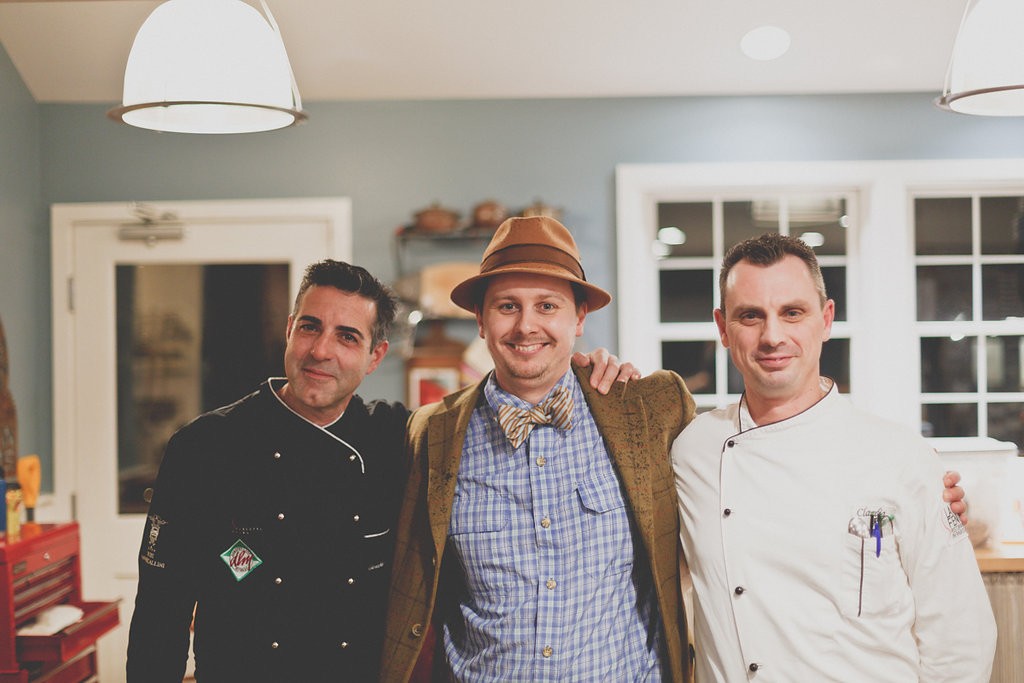
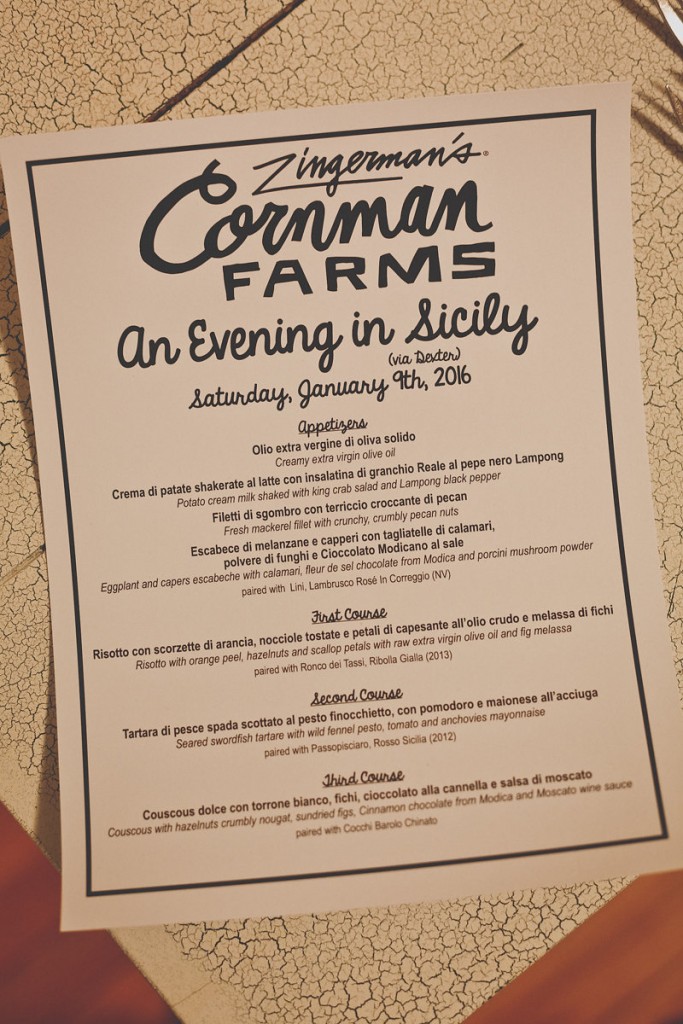
This past Saturday evening, we were very fortunate to welcome two friends and culinary luminaries to Cornman Farms for An Evening in Sicily Dinner, a very special evening of Sicilian food and camaraderie.
For over 30 years, Zingerman’s has been traveling the world to bring the most interesting and flavorful foods home to America. Beginning in the late 1990s, we turned that around and began to take our guests directly to the sources of these foods – places like Tuscany, Spain, and Sicily, and Zingerman’s Food Tours was born. Sometime during all those year of back and forth travel, we met Gioacchino Passalaqua, an Italian artisanal food exporter and native Sicilian and a partnership was born.
Recently, Gioacchino Passalacqua, who co-leads the Sicily Food Tour with Zingerman’s Food Tours, told us he was coming to town, and that he was bringing a one of Sicily’s top chefs with him. Claudio Ruta is a Michelin star recipient for his restaurant, La Fenice, in a beautifully restored 1800s farmhouse at the Hotel Villa Carlotta in Ragusa, Sicily. The area is renowned for its bounty of amazing foods, and Claudio brought many of those signature flavors along with him for the dinner. Gioacchino—an accomplished cook and sommelier in his own right— and Claudio created a menu that truly showcased the amazing the amazing foods of Sicily in six delicious courses with wine pairings.
Everyone was in full agreement that Chefs Ruta and Passalacqua brought some of the very best that Sicily has to offer to our cooler climes. It was a night that will remain in our memories, and we’ve put together a lovely photo gallery from Lola Grace Photography to share it with you.
See you soon!
Tag: CORNMAN FARMS
Cornman Farms Presents a Very Special Dinner
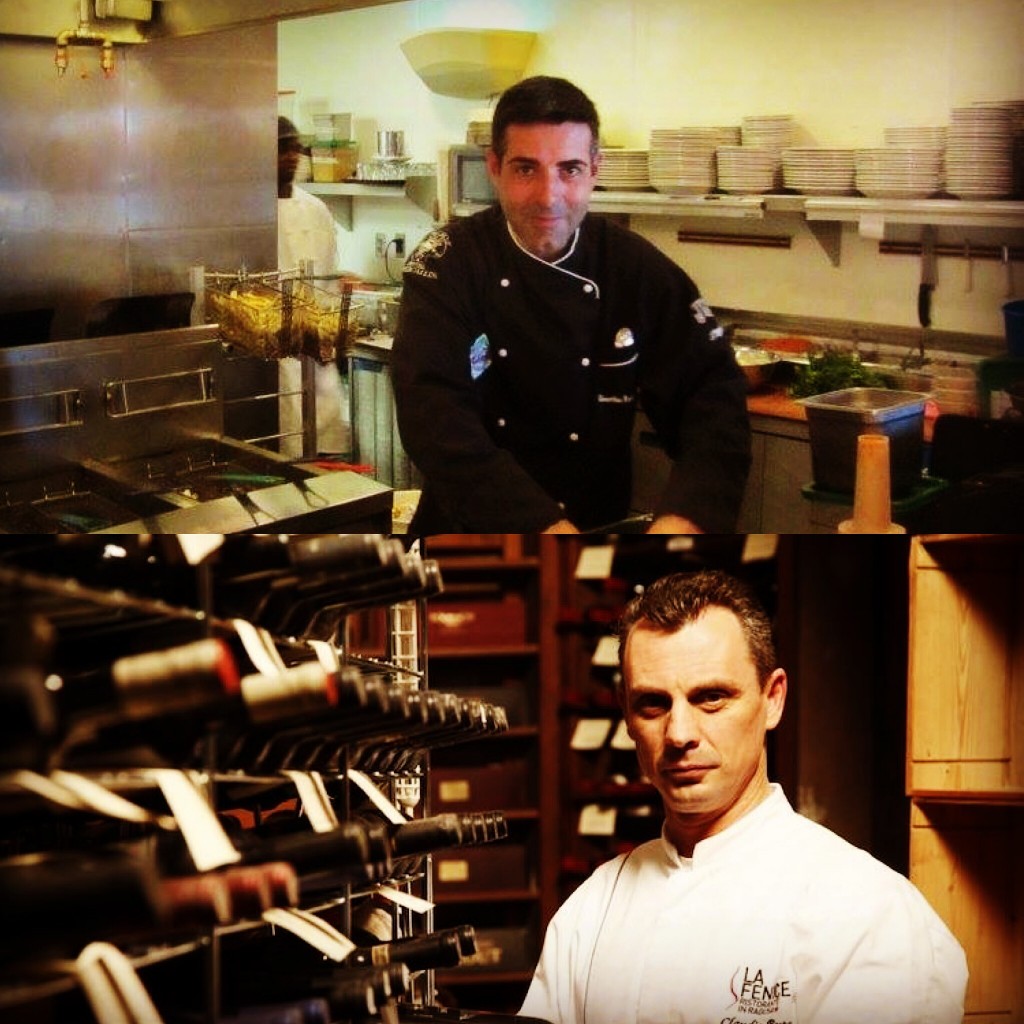
You won’t want to miss this event. Our friend, Gioacchino Passalaqua, an Italian artisanal food exporter and native Sicilian who co-leads the Sicily Food Tour with Zingerman’s Food Tours is coming to town Friday, January 8th, 7pm, and he’s bringing one of Sicily’s top chefs with him. Claudio Ruta is a Michelin star recipient for his restaurant La Fenice in the Villa Carlotta Hotel in Ragusa, Sicily. The area is renowned for its bounty of amazing foods, and Claudio is bringing many of those signature flavors along with him for a very special dinner at Cornman Farms in Dexter. With the assistance of Gioacchino—an accomplished cook and sommelier in his own right—Claudio will be preparing a menu with wine pairings that showcases the amazing foods of Sicily.
– Eggplant and capers escabeche with calamari, fleur de sel chocolate from Modica and porcini mushroom powder
– Fresh mackerel fillet with crunchy, crumbly pecan nuts
– Potato cream milk shaked with king crab salad and Lampong black pepper
First course
– Risotto with orange peel, hazelnuts and scallop petals with raw extra virgin olive oil and fig melassa
Second course
– Seared swordfish tartare with wild fennel pesto, tomato and anchovies mayonnaise
Dessert
– Couscous with hazelnuts crumbly nougat, sundried figs, Cinnamon chocolate from Modica and Passito wine sauce
Please join us!
Tag: CORNMAN FARMS

Put on your cape and sink your fangs into a spooky night of fun and good food at the 10th Annual Vampires’ Ball hosted at Zingerman’s Cornman Farms on Friday, October 30th, 6-1130pm. Vampires’ Ball is a festive, upscale gathering featuring food prepared by James Beard Award-Winning Chef Alex Young of Zingerman’s Roadhouse. Funds raised at Vampires’ Ball benefit Food Gatherers Community Kitchen and Job Training Program.
Dinner Package (6:00 – 11:30 PM): $200 each (limited quantity available)
- Drinks and appetizers
- Seated, multi-course dinner prepared by Chef Alex Young in the farmhouse and dessert from Zingerman’s Bakehouse
- All items included in the Drinks & Dancing package
Drinks & Dancing Package (7:30 – 11:30 PM): $60 each
- Dancing and entertainment, including music, costume contest, tarot card reading, and photobooth
- Two complimentary drink tickets
- Late-night snacks from Zingerman’s Roadhouse
- Premium goody bag
Sponsors
Batty Benefactor:

Ghoulish Gift:


With special thanks to:

About the Food Gatherers Community Kitchen and Job Training Program
The mission of the Food Gatherers Community Kitchen is to engage and nourish our entire community. Located in the Robert J. Delonis Center, Food Gatherers staff and volunteers serve more than 100,000 meals to people in need each year.
The Community Kitchen Job Training Program provides low-income and at-risk youth (ages 17-21) with instruction in basic culinary arts, food safety, work ethics and life skills. Students build firm foundations for success in future careers while decreasing the chances of entering the shelter system or other emergency services.
The Food Gatherers Community Kitchen and Job Training Program are essential efforts in our overall plan to alleviate hunger and eliminate its root causes in our community.
Tag: CORNMAN FARMS
A visit to Anson Mills
Chef Alex Young thinks a lot about Zingerman’s Cornman Farms, the farm next to his house in Dexter where we raise much of the food served at the Zingerman’s Roadhouse. He thinks about sustainable and organic farming practices. He thinks about growing heirloom vegetable varietals and saving seeds to improve the quality of the yield. He thinks about the future of the farm, and what that will look like for his son, Ethan. And he thinks about grain.
In the past year, Chef Alex has welcomed a long list of special visitors to the Roadhouse kitchens for the much-lauded special dinners. Most share his enthusiasm for high-quality ingredients, traditional foodways, and, of course, a full-flavored meal. But two visitors in particular reflected Alex’s commitment to a higher ideal when it comes to growing food for our tables: Austrian farmer Sepp Holzer, author, and creator of the Holzer Permaculture farming method; and Gary Nabhan, a founder of the modern seed-saving movement, author, and holder of the W.K. Kellogg Endowed Chair in Sustainable Food Systems at the University of Arizona Southwest Center. Clearly, it’s not just about a nice meal made from high-quality food; it’s about the big picture.
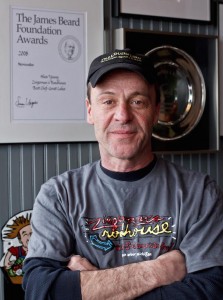
Earlier this spring, Alex and son Ethan took a trip down to South Carolina to visit one of the sages of the sustainable farming movement, Anson Mills founder Glenn Roberts. The mill has long been touted as the epicenter of an heirloom grains revival, and Roberts its chief evangelist. Alex has been using Anson Mills grains for over 12 years, and thinking a lot about grain these past few years. He has a vision of Cornman Farms heirloom varietals used to create delicious breads at Zingerman’s Bakehouse. He wants to grow enough to feed the animal herds at the farm. And he dreams of producing enough to sell to Glenn Roberts and Anson Mills. So they went to the source, and traveled to South Carolina to meet Glenn at the fabled mill for a tour and a conversation.
The mill still does things in much the same manner as it was done a hundred years ago. Glenn takes in grain from all over the region (and the country!) from farmers who grow his heirloom, or “land-raised” grains, as the seed men say. The farmers agree to grow the grain using sustainable, traditional, organic methods. In return, Glenn guarantees a certain per-bushel per yield and price and for their harvest – no matter what kind of year they’ve had. In particularly bad seasons, this has been a lifesaver for some of the growers. It’s an incentive – a kind of subsidy – which helps balance out the costlier, more labor-intensive growing criteria that Glenn insists upon. The result is very good grain, and a dedicated and loyal community of farmers all over the country.
On the morning of the Young’s visit, the mill was busy allocating various land-raised grains to their network of growers. The allocation process is fairly intensive, and involves a complicated set of metrics. These figures take into account such diverse elements as the system of crop rotation a farmer uses, and the geographic location of the farm, among many others. These allocation criteria are often crucial to the heirloom’s ultimate survival, and therefore taken very seriously.
Glenn then walked Alex and Ethan through the milling process. The grain is offloaded and sucked up through a complex drying machine which aerates the grain. The grain is “live,” which means that it’s a whole grain, and still contains the active germ, source of the grain’s vitamins, proteins, minerals, and healthy fats. It’s important that the grain’s temperature not be raised, as it can cause the seed to germinate or spoil. After the grain has been aerated, it’s ground and simultaneously blasted with CO2 to freeze it. The cooled grain is ground as close to its harvest time as possible, and kept frozen all through the packaging and shipping process. This helps preserve the grain’s nutritional value and robust flavor, the very reasons people seek it.
Alex and Ethan spent several hours talking with Glenn about the growing process, types of seeds and grains, and what might work best in Michigan, then moved on to visit a nearby 800-acre farm that sells to Anson Mills.
The farm was an impressive operation, with a huge drive-in barn dedicated to grain processing. The trucks come to the barn from the grain elevator, and the cargo is pumped to the top of a sorting tower roughly 15 feet tall. The tower uses gravity and a series of screens with sized openings to separate chaff from grain. The chaff goes back out to the field as compost, while the separated seeds go into a huge walk-in cooler filled with stacked pallets, each containing heirloom varietals awaiting shipment to the mill.
One of the farming practices that really caught Alex’s eye is Glenn’s use of polycropping, or polyculture, to help build and sustain his field soil. Simply put, polycropping is the cultivation of multiple crops in the same field. As plants use different micronutrients from the soil, they also create different micronutrients, thereby enhancing the soil with a greater overall nutrient density. Thus, polycropping is a sustainable, organic way in which a conscientious farmer can improve the fertility of his land without the use of chemical fertilizers. The result is healthier, stronger plants with more flavor in the crops themselves.
Alex will use this season to build the nutrient value of the soil through polycropping with several “cover crops.” A cover crop is a beneficial plant used to prevent soil erosion, build up the soil, and eventually act as “green manure” for planting season. Alex plans to use Abruzzi rye, dwarf sunflower, wild flax, native legumes, and dutch white clover. These cover crops will help restore the land, which has not been organically farmed for decades. It’s a rebuilding year, and these plants will grow, nourish, and ultimately provide fertile, organic matter for the soil.
After the farm tour, Alex and Ethan headed over to St. James Island, part of the Sea Islands archipelago, and home to the Clemson University Coastal Research and Education Center. While there, they were introduced to Dr. Brian K. Ward, a research specialist who focuses on crop rotations that benefit soils, grains, and vegetables. The research center applies modern science to help further the benefits of traditional agriculture, and provide more information about the building blocks that make up crops. Alex and Ethan were shown a robot that splices grafts to tomato plants, watched as scientists freeze-dried a slice of broccoli then analyzed its nutritional makeup, and were introduced to composter that utilizes bovine enzymes to break down plant waste into liquid fertilizer.
Then they were treated to a demonstration of a flame-weeder, a propane system that shoots a small, directed flame at the roots of weed plants, but fast and precise enough not to burn the crops themselves. Next up was a “roller-crimper” which is used to flatten, and crimp (or break) the cover crops into a fertile biomass prior to planting. The contraption looks like a big steamroller drum faced with 3-inch zig-zagged pieces of steel. The farm would then use a “vacuum drill” to punch through the green manure and plant seeds in the protected and nourished soil. The advantages to using this process are the fertilizing aspect, increased water retention for the soil, and weed-suppression. Both Clemson and Michigan State University are woking to adapt this method for widespread use. Alex and Ethan came away from their day of tours and education with heads full of ideas for Cornman Farms.
But the time had come to push work aside and enjoy the evening repast. There are numerous oyster beds surrounding St. James Island, and as the sun dipped low over the tidal flats along the coast, the Youngs found themselves seated in a small shack awaiting the arrival of the day’s catch. The boats came in, and delivered their bounty. Bushels of sea-fresh oysters were pressure-washed on a wide slab, then put into enormous pots to steam-cook. In a little while, the steamed oysters are spread over another wide slab to cool a bit, then scooped up with a flat gravel shovel (truth!), and delivered to the table. Clearly, they don’t stand on formality here.
Alex and Ethan feasted on oysters that had been in the water an hour before, thinking about what they’d seen and how it would work at Cornman farms. The ideas are laudable, a wonderful vision of a self-sustaining farm, and by extension a community that nourishes the people, the economy, and the future. Ethan says he wants Cornman to grow to rival that 800-acre farm they visited – but with the cutting edge research of the Clemson Coastal Center. “I’ve got big plans,” he says.
And Alex smiles.
Tag: CORNMAN FARMS
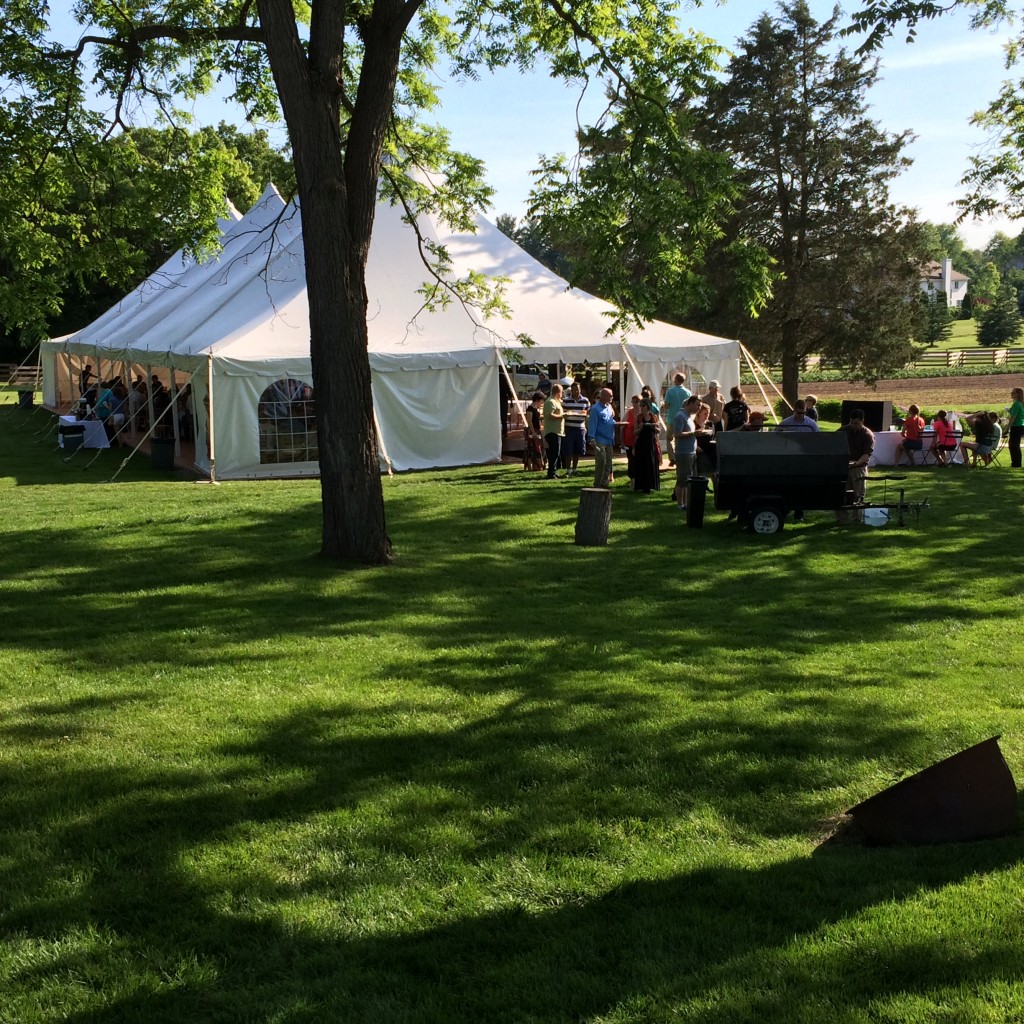
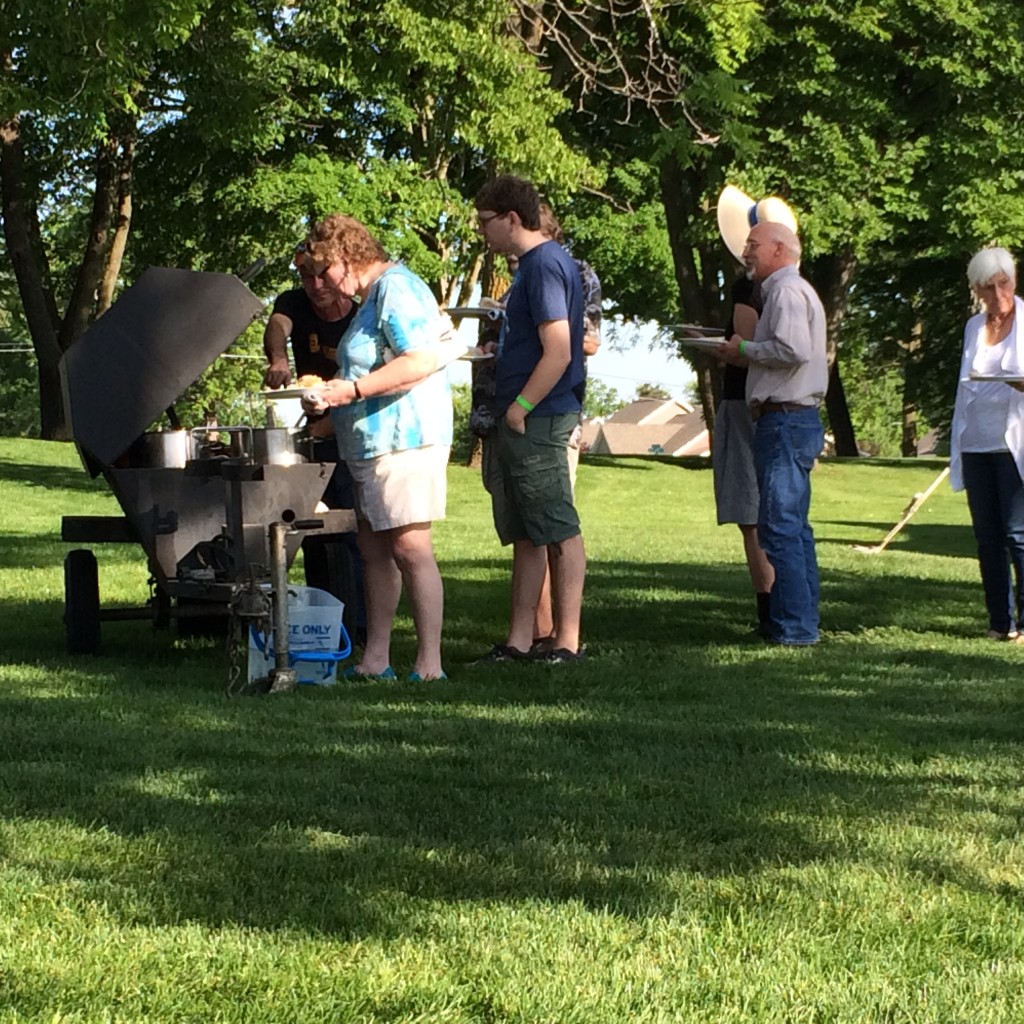
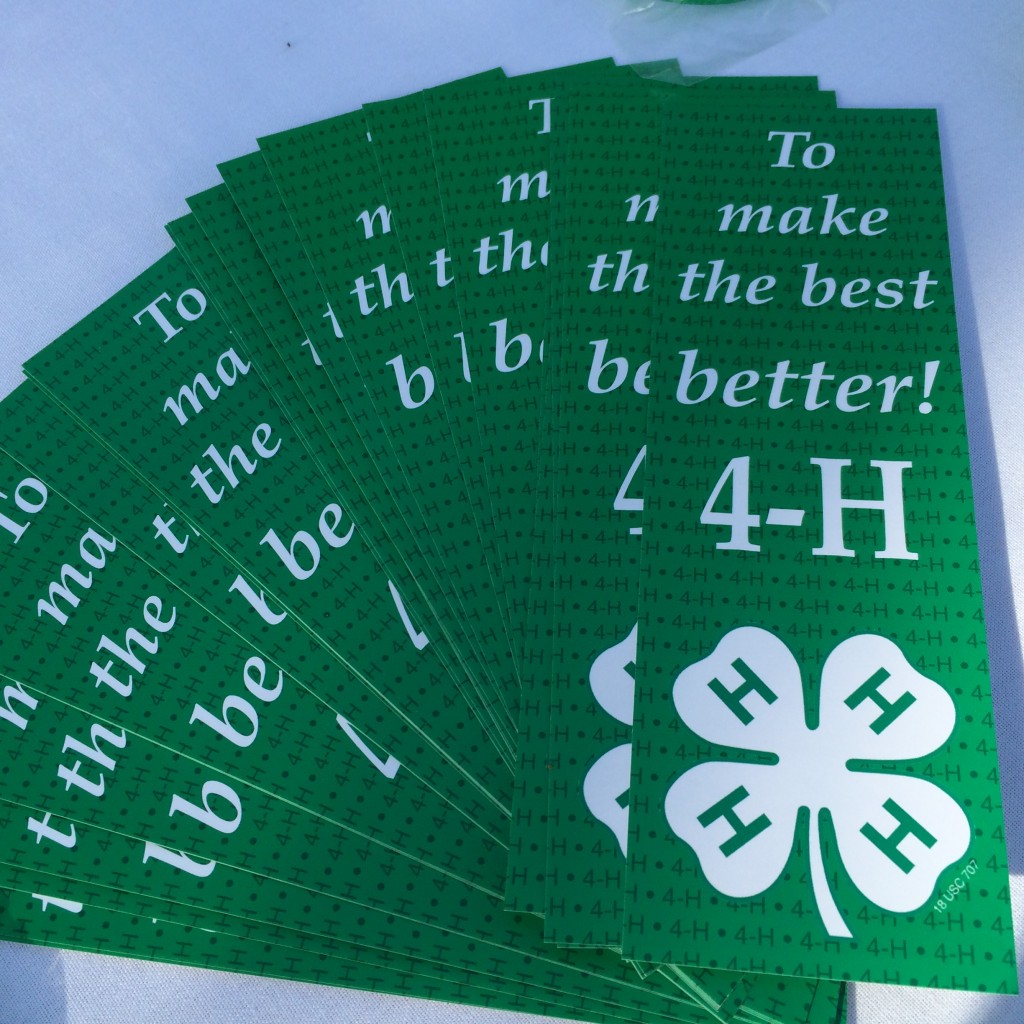
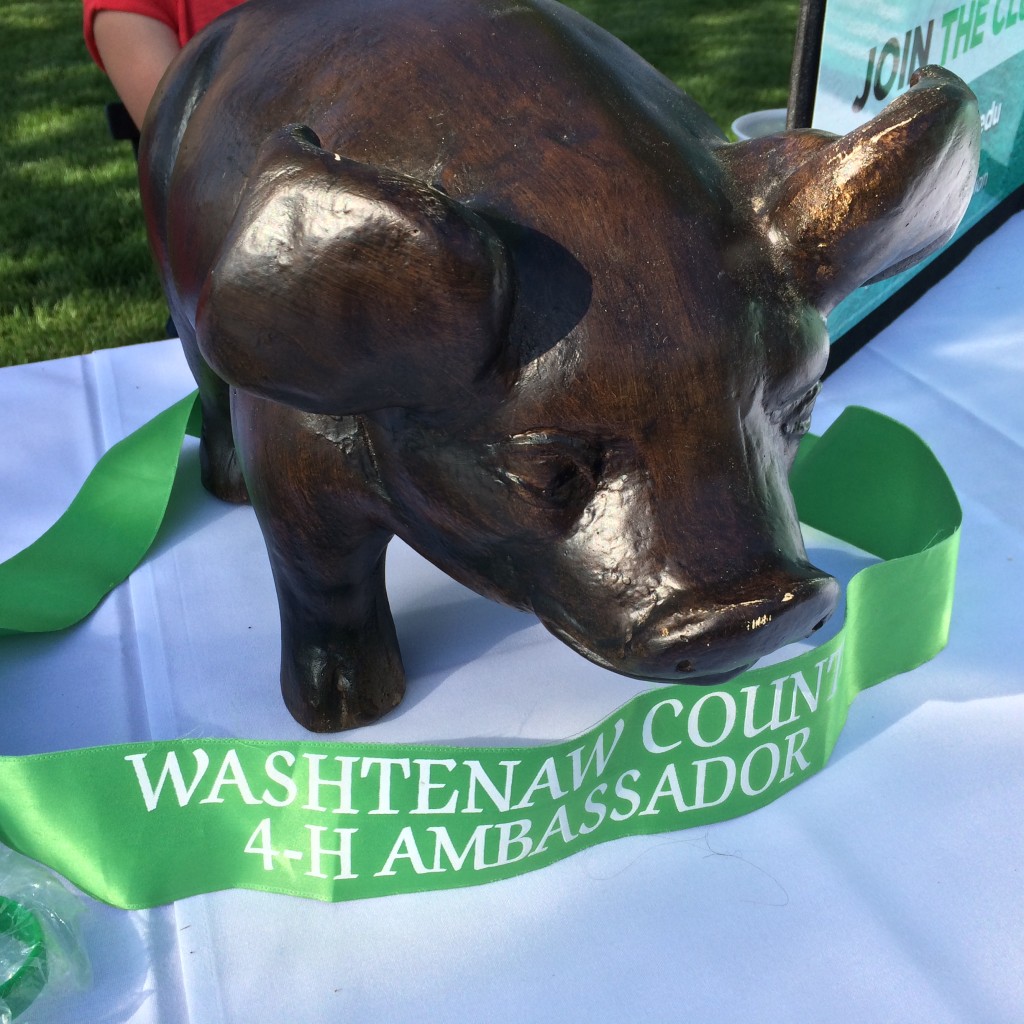
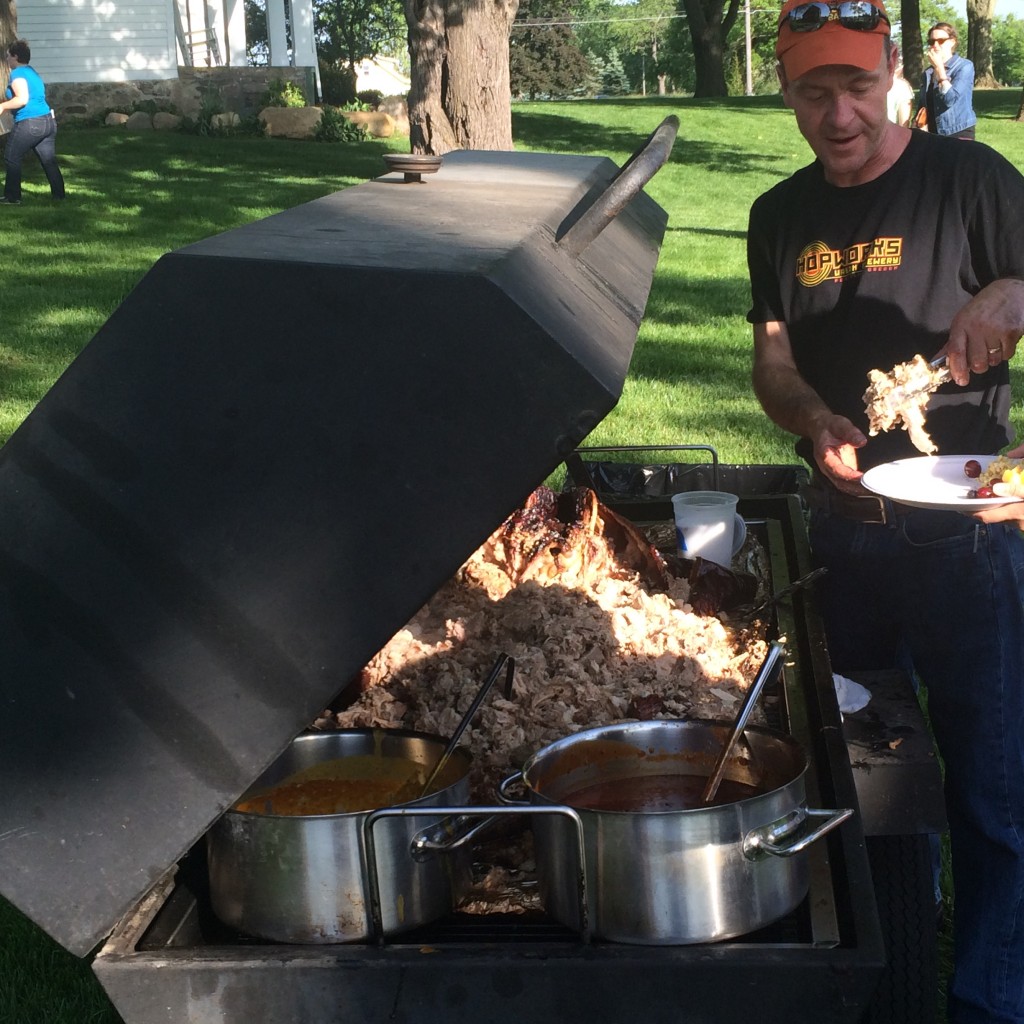
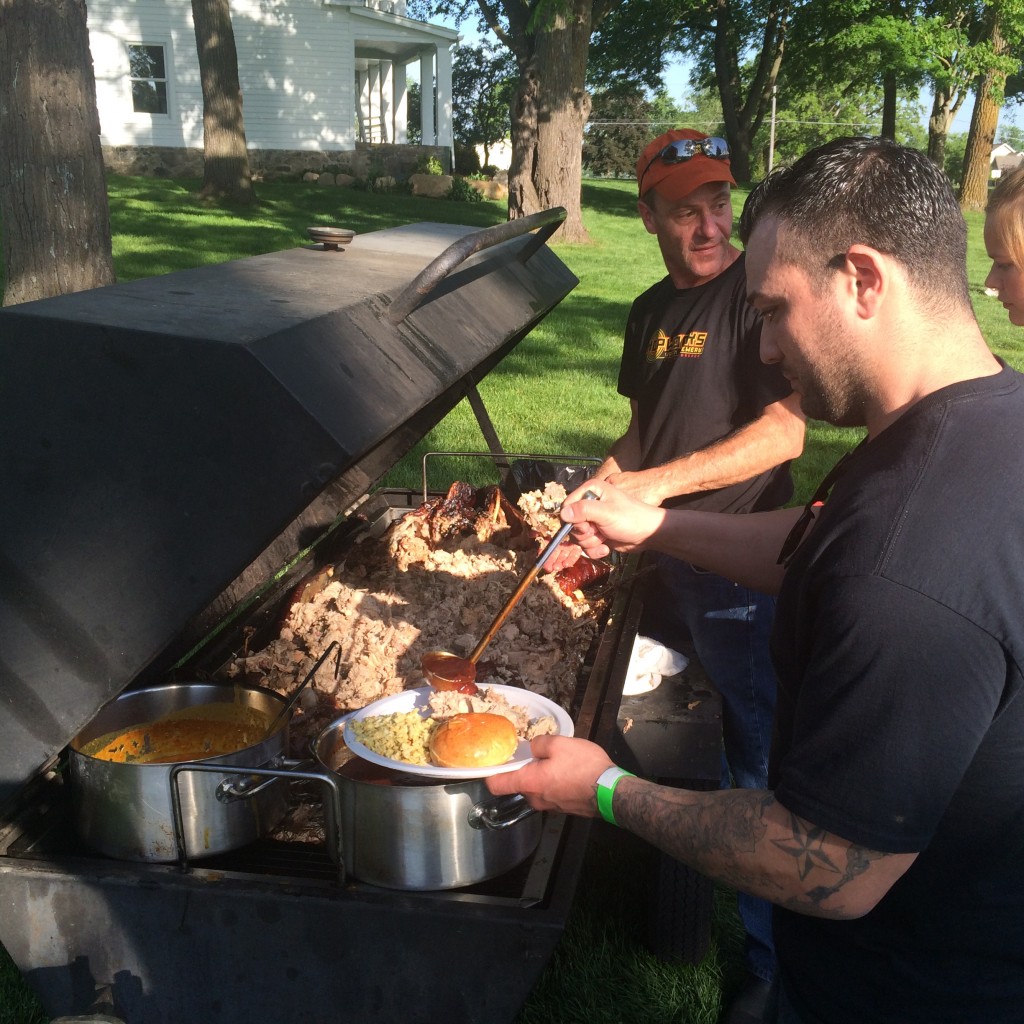
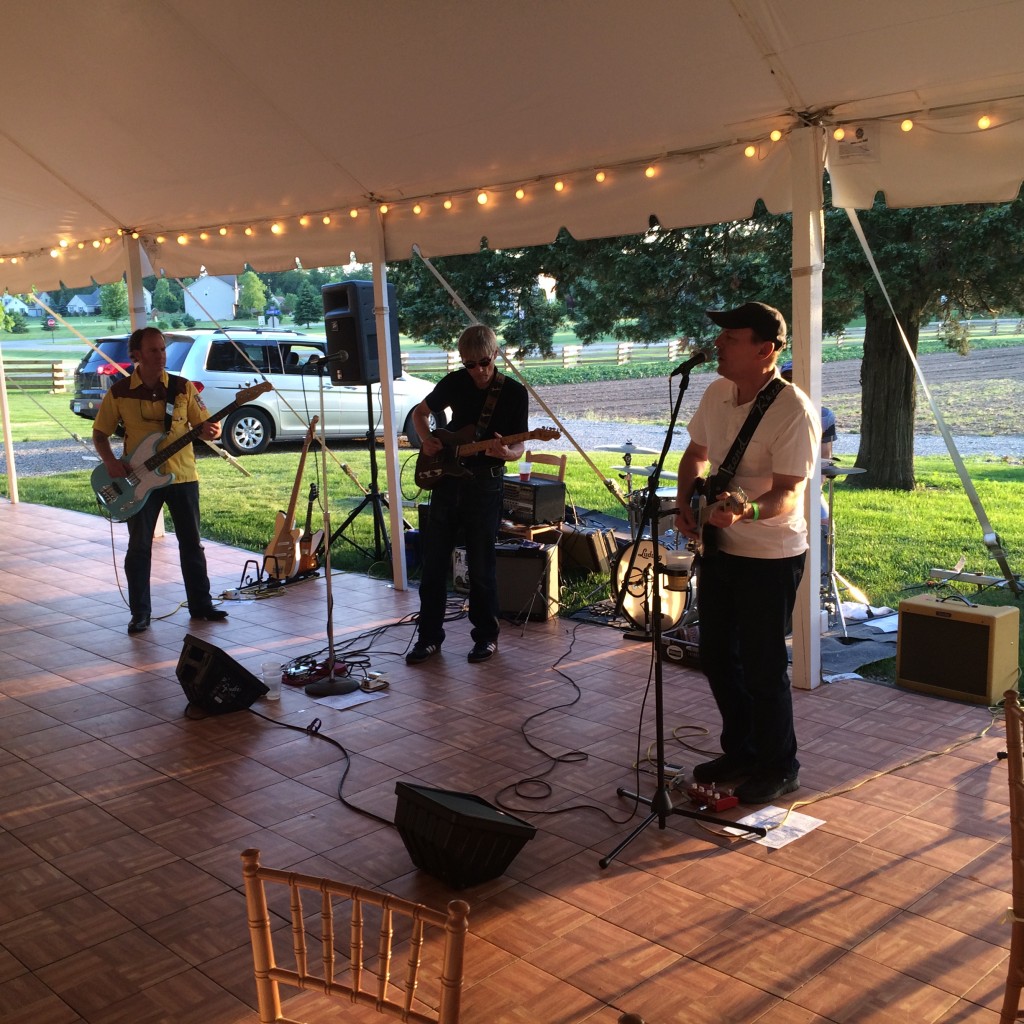
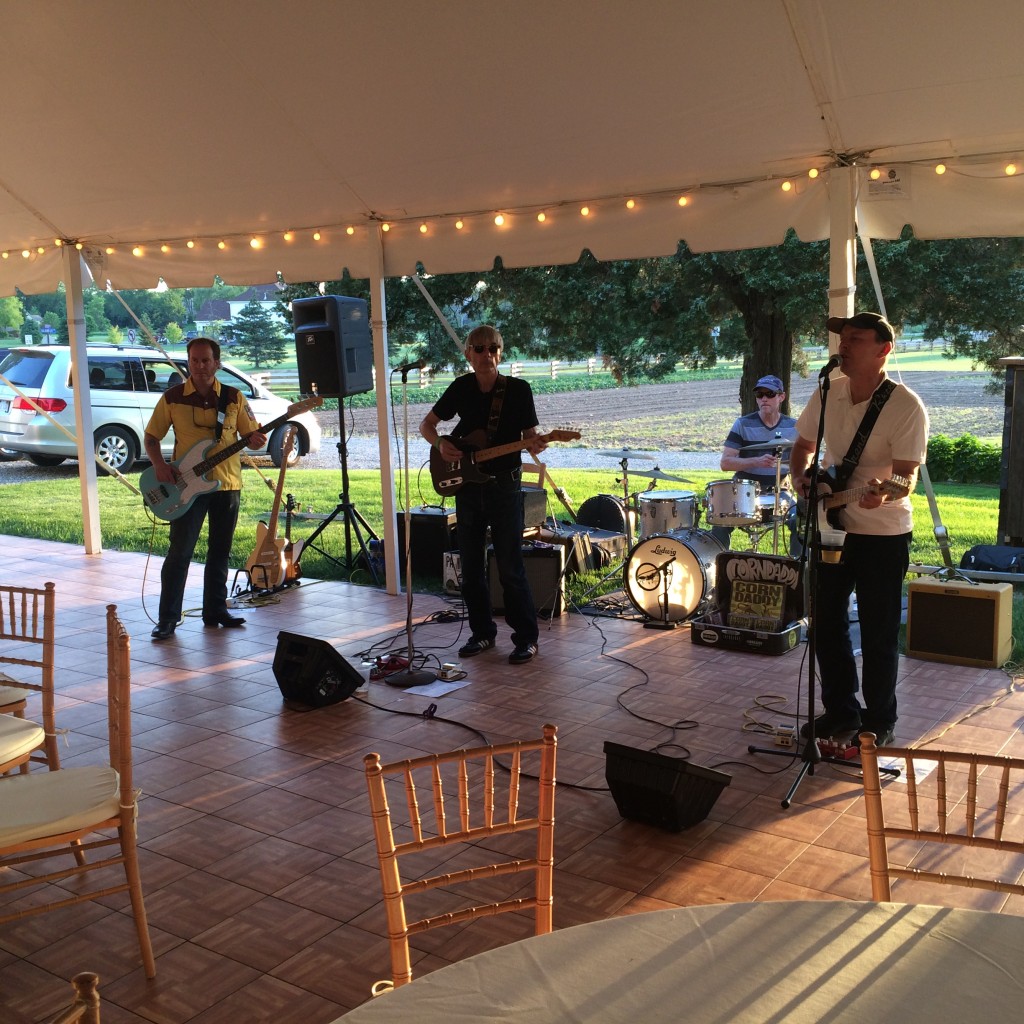
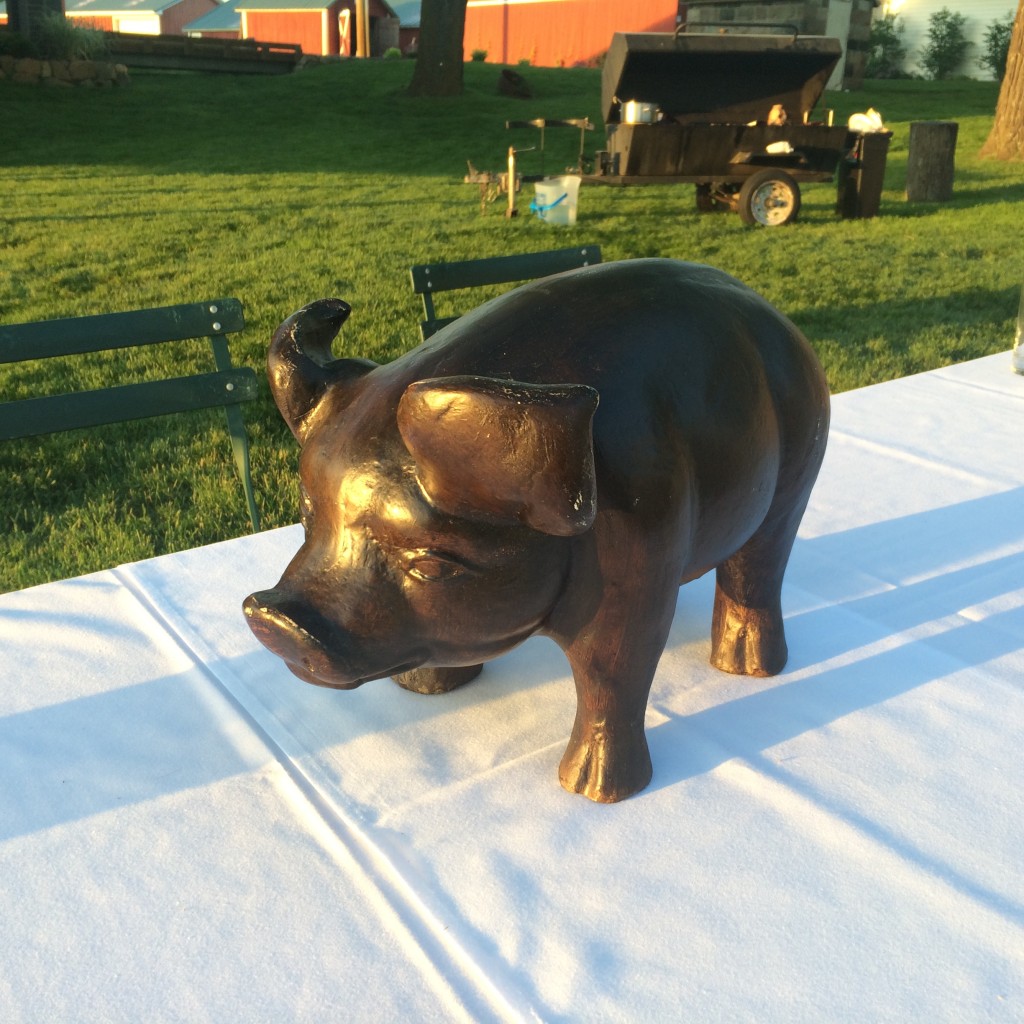
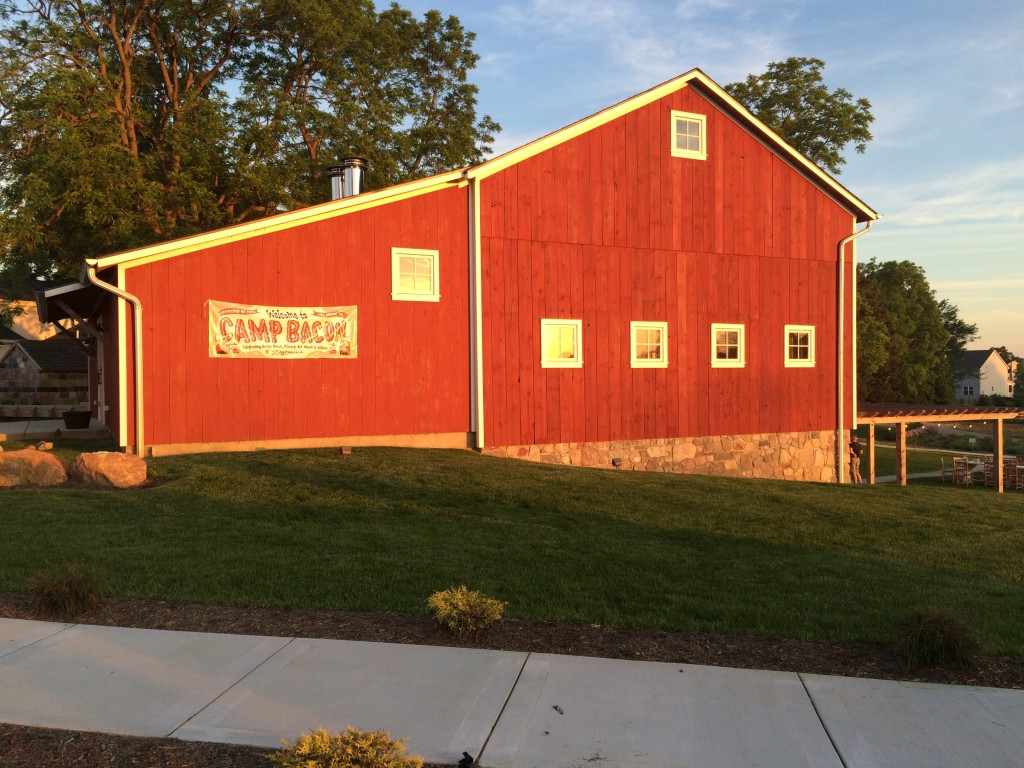
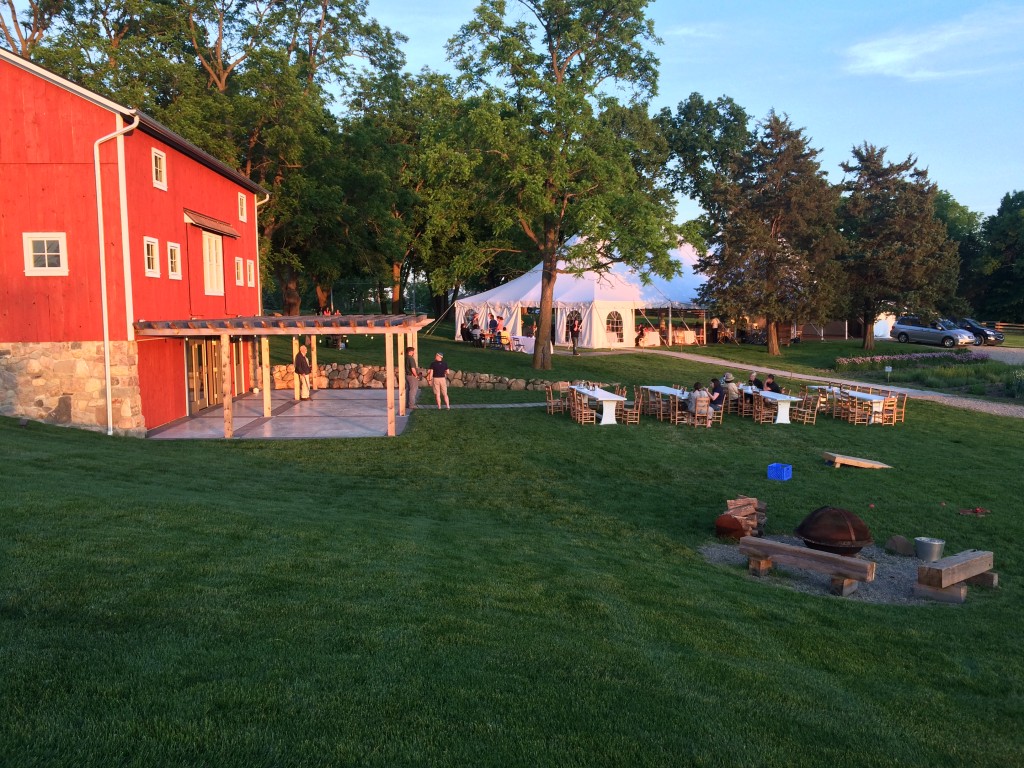
After we finished up the Main Event, the Camp Bacon day-long celebration of all things pork, Cornman Farms welcomed the crew from the Zingerman’s Roadhouse in to host the Pig Pickin’ Dinner, a whole hog BBQ. The dinner was a benefit for Washtenaw County 4H, and our crowd of nearly 200 folks were only too happy to support young farmers and fill up on delicious pork at the same time.
Roadhouse Chef Alex Young served up the pig, and diners chose from three of his special house-made BBQ sauces to give it that extra kick. Traditional sides, and refreshing beverages rounded out this classic meal, and we all watched the sun slowly sink over the farm. It was a great way to finish up a wonderful day of friends, fun, and food.
Here are some photo highlights from the event:


See you next year at Camp Bacon 2016!