
Tag: CORNMAN FARMS
Fight the feburary frost with flips and fizzes!
What do a Yard of Flannel, a British female spy from the 1600s, and an 1880s New Orleans bartender have in common? The next Cornman Farms cocktail class, of course! On Friday, February 27, 7pm, we’ll be exploring Flips & Fizzes out at the farm. The purpose of this session is to explore cocktails that require enthusiastic mixing techniques. We’ll be shaking and straining and flipping (pouring from one vessel to another repeatedly) with gusto!
We’ll make a Rum Flip (a.k.a. A Yard of Flannel, Bellow-Stop, or Crambambull), a drink that developed a cult-like following in the days of the American colonies. We’ll be toasting the Crescent City with the New Orleans favorite, Brandy Milk Punch. This classic has its origins in the surprisingly clear English Milk Punch, a beverage that was made popular in the 1600s by female playwright and spy for the British crown, Aphra Behn.
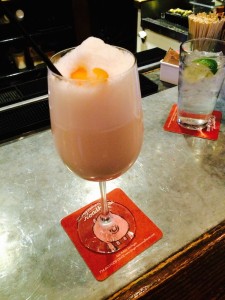
And we’ll finish the evening with the granddaddy of all shaken cocktails: the Ramos Gin Fizz. This is one of the most intense cocktails ever to rise to national stardom, and we’ve broken it down into simple-to-follow steps. The original recipe for the Ramos Gin Fizz calls for it to be shaken for TWELVE minutes! I shake mine for about two minutes, but if you can make it all twelve I’ll take your photo and give you a dollar!
We’ll cover the history behind the cocktails, explain the ingredients, and introduce both traditional and modern mixing techniques. Each guest will have the opportunity to actually craft (and drink!) all three cocktails in a relaxed and informative setting while enjoying delicious farm-fresh snacks. Want to channel your inner bartender and impress your friends with your new-found shaking stamina? Then this class is for you! Cost includes three cocktails, use of all necessary equipment, food, instruction, and take-home recipes. Is there a better way to spend your Friday evening? I didn’t think so! Reservations can be made through the Zingerman’s Community Events website.
Come join us on the 27th! This event is too much fun to miss!
Cheers!
Tag: CORNMAN FARMS
San Street Food
If you’ve spent any time at Ann Arbor’s Mark’s Carts in the past couple of years, you are no doubt aware of the incredible traditional Asian street fare served up by Ji Hye Kim at her San Street food cart. After years of great reviews from her guests, and a following of devoted fans that’s increasing with every meal, Ji Hye will bring her acclaimed food to Zingerman’s Cornman Farms for a very special dinner this coming Sunday, February 22, 7pm.
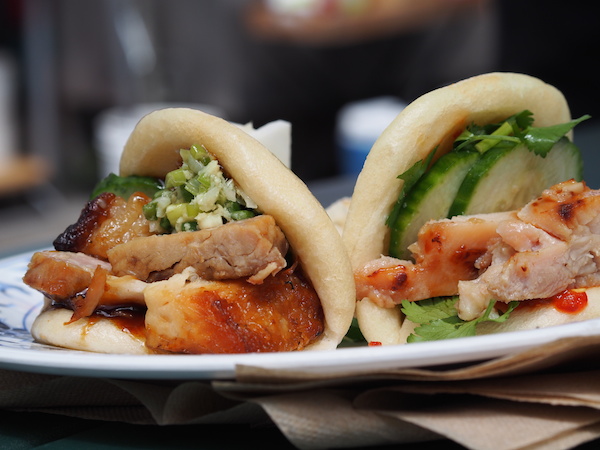
San Street is a local food cart and a pop-up restaurant with an emphasis on fresh, quality ingredients and exceptional flavor. As Zingerman’s latest partner, Ji Hye is moving San Street toward establishing a permanent restaurant. In the meantime, you can get a sneak peek (or taste!) of what’s to come at this Cornman Farms dinner!
Menu
Jeon + Kochi: Kimchi and pork pancakes (chive and pepper pancakes for vegans/vegetarians).
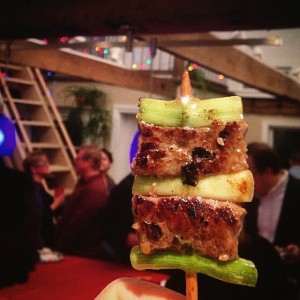
Beef and scallion skewers (rice cake and scallion skewers for vegans/vegetarians).
Gua Bao: Pork belly buns (Mushroom buns for vegetarians).
Tteokguk: Rice cake soup in rich beef bone broth (Budhist’s tteokguk with mushrooms for vegans and vegetarians)
Galbi Jjim: Slow braised beef short ribs and winter vegetables in soy garlic sauce. Served with purple rice and a trio of banchan (side dishes). Braised tofu and winter vegetables for vegans and vegetarians (rice and banchan are vegetarian already).
Grapefruit Brûlée: Grapefruit, Meyer lemon and mandarin oranges, brûléed with palm sugar and brown sugar. Topped with spiced orange blossom whipped cream.
Cocktail: Yuzu Soju with yuzu juice, yuzu marmalade and Soju, a popular Korean spirit.
Don’t miss this chance to enjoy an unforgettable night of great food and drinks.
Reserve your seat here
See you there!
Tag: CORNMAN FARMS
4H and the Future of Farming
It’s a warm July evening at the Saline County Fairgrounds and I am walking on the main thoroughfare toward Shed B. The Fairgrounds parking lot is filled with cars, pickups, horse trailers and livestock haulers of all makes and models. Families stroll through the fairgrounds, the children pulling the arms of their parents in the direction of another shed or one of the many enormous striped tents erected over animal stalls and pens. Simple signs nailed to the tent posts announce the occupants: “Sheep.” “Goats.” The place is crowded, and the air buzzes with anticipation.
I see Alex Young standing in front of Shed B, talking on his cell. “I’m here. Where are you guys?” He sees me and waves me over. Shed B is an enormous building with a roof, but no walls. Under the roof is a temporary corral strewn with hay and surrounded on three sides by stadium bleachers. The fourth side is a high wall hung with green bunting and a sign that reads “Washtenaw County 4H Youth Fair.”
Alex hangs up and we chat. This is my first 4H auction, and he’s giving me the rough order in which things will happen. Alex will buy a handful of animals this evening destined for the tables at Zingerman’s Roadhouse, as well as a couple for the herd at Cornman Farms. As we talk, several people stop by to say hello to Alex and they talk a little shop, speculating on the prices and condition of the animals. The atmosphere is one of friendly competition. “To me,” Alex tells me, “the beauty of 4H, is that it’s a community thing. It strengthens the bond between farmers.” In a little while, the people here will bid against each other for prize-winning cows, hogs, lambs, goats, turkeys, chickens, and even rabbits. And it’s all done in the name of a most worthy cause for all in attendance: the young farmers.
The 4H Youth Development Organization, known by it’s distinctive four-leaf clover symbol, has its roots in the early 20th
century efforts of an Ohio school principal named A.B. Graham. By promoting vocational agriculture in out-of-school clubs, Graham sought to arrest the decline of post-industrial revolution farming as young people left their rural roots for jobs in the city. Eventually, he partnered with the Ohio Agricultural Experiment Station and the Ohio State University. His clubs are considered the founding of 4H.
The club’s logo, a four-leaf clover with the letter “H” on each of the leaves, symbolizes the four values that club members work toward through the organization’s programs:
Head – Managing, Thinking
Heart – Relating, Caring
Hands – Giving, Working
Health – Being, Living
The activities this week are the culmination of a season (sometimes two!) of work on the part of the kids in 4H. This is fundamentally an exercise for the kids to learn the business of running a farm. They’re charged with raising an animal from birth, taking responsibility for its growth and development, and preparing for the day when they’ll compete with other 4H kids in the judging portion of the fair (which happened earlier in the week). The animals are entered into different classes and the kids are evaluated by their knowledge of the animal, and its overall condition (how well it was raised). These classes produce the top of class Champions and Reserve Champions that will garner the most attention and money at tonight’s auction. The young club members will parade their animals in front of an audience of family, friends, and neighbors while the auctioneer barks and prices hopefully go up.
The rest of the Young clan has joined Alex and I, and we make our way to the registration table just before the auction is set to begin. The 4H folks give Alex a packet of papers that includes a detailed list of the animals up for auction, and an orange bidding card with “888” written in magic marker. The numbers are issued once to each bidder, and this becomes their number for all time. As the numbers are issued in chronological order, so the lower the number, the longer the bidder has been involved in the 4H auction. As we’re seated, Alex greets an elderly couple in front of us. I notice that their bidding number is in the low single digits. Alex smiles and says, “Yup, they’ve been coming here a long time.”
Just after we sit down, the staff and auctioneer take their places behind the high green wall overlooking the corral and the auction begins. The north gate on the corral opens, and a teenage girl dressed in a plaid shirt and new jeans enters, smiling, with two of largest hogs I’ve ever seen. She parades the animals around the ring, keeping them in the center by touching their sides with a long, slender stick. Alex informs me that the breed is Chester White, which translates into a standard pinkish color on the actual pig.
The auctioneer is calling out the price per pound, which is how these animals are sold. “Starting out at two-ten. Two-ten now, can I get two-twenty?” At the edge of the ring stand several men whose job is spot bidders in the crowd and relay their bids to the auctioneer. The divide up the audience into thirds, scanning the bleachers for a raised orange bidding card. When they spot one, they let out a sort of cross between a word and a whoop. It reminds me of listening to a baseball umpire calling strikes or balls; the word itself is indecipherable, but the sound is emphatic.
“How about two-thirty? Two-thirty, two-thirty…” In answer, one of the spotters points to a bidder and yells, “Hunh-YEAH!!” The auctioneer barely slows down. “Two-forty, two-forty now. I have two-thirty, two-forty now. Two-forty…” Another spotter: “HOOP!” “Two-fifty now…” And on it goes until the bidding peters out, and the auctioneer ends the process, “Three-twenty? Nope? Three-ten, then. Once…? Twice…?” No reply from the crowd.
The auctioneer points to the winning bidder, “Three-ten. To bidder number…?” The spotter calls out the bidder’s number, which is recorded by a smiling woman to the right of the auctioneer. She consults a sheaf of paper, then reads out the winning bidder’s name. The audience applauds, and the teenager moves her hogs out of the ring to make way for the next pair.
Each of those hogs weighed roughly 300 pounds, and they sold for $3.10 per pound. Doing the math, I realize the winning bidder just paid nearly $2000 for the pair. Alex smiles, and nods. “Animals are expensive. Farming requires a significant investment for what is essentially a gamble.” And he’s right. A lot of things could happen to bring down the auction price. Disease, accident, or simply a lower-paying market. Factor in all the time, care, feed, and vet costs, and there is the possibility that these kids might not realize a good return on their initial investment. They might even lose money. This seems a tough, but necessary lesson about the farming life. For all the bucolic idealism we attach to the rural life, farming is still a business. And sometimes it’s a very tough business.
The bidding continues until hogs raised by Alex’s son Ethan come trotting into the ring. Alex is active in the bidding process, and price goes up. For a time, it looks like he might let the hogs go to a couple of other aggressive bidders, but at the last minute he jumps in with the winning bid. He tells me it isn’t all that unusual for friends and family to buy the animals of the 4H clubbers. While the idea is to teach the kids how the farming business works, community comes first. No one wants to disappoint the hopeful faces of the kids in the ring.
But the kids take their business lessons to heart. While we’re waiting for the next round of bidding, Kelly Young shows me some of the letters sent by 4H kids asking bidders to consider buying their animals. The letters are polite, and filled with details about the care of the animals. It’s charming to read their young sales pitches, but the letters are surprisingly effective and I find myself hoping these kids sell their animals at the highest price possible. As I’m reading the letters, another auction ends and I notice something else happening. The kids are seeking out the people who bought their animals, and giving them thank-you gifts. Usually, it’s something homemade, like cookies, along with a note of appreciation. In this noisy, crowded environment, it’s a touching gesture. Lessons well-learned, indeed.
As the auction moves from hogs to cows, sheep, and goats, Alex buys a lamb and two goats to add to the Cornman Farms herd. When the auction moves on to poultry, Alex points out some bidders from Meijer, Busch’s, and a couple of other food retail outfits. But, I say, surely, this isn’t an efficient way for them to source poultry for their respective chains? Alex tells me that these companies often buy from 4H auctions to donate to local food banks and shelters. It seems that 4H auctions bring out the best in everyone.
When I ask Alex to sum up the 4H experience, he says, “We need more farmers. Until very recently, the number of kids going into farming was on the decline. By having kids participate in 4H, we increase the likelihood that more of these kids will become farmers.” But, the positive impact reaches far beyond the local agrarian community. The implications are important for our country, as well. Simply put, “Our food is better for having more farmers,” says Alex. “If there are more farmers, we have more competition, and therefore a better selection of food. It’s important to keep our food supply healthy.”
As the evening winds down, the bleacher crowds thin out and people begin to drift away to gather in knots and talk. There’s a lot of laughter and everyone seems to be smiling. Alex and Kelly move through the crowd, stopping to chat, and talk about the upcoming Chelsea Community Fair happening in a few weeks. The Chelsea fair will also include an auction, so tonight’s process will be repeated with another herd of animals, another crowd of families and hopeful kids. It all fits neatly into the ancient cycles of the agrarian year, a continuous circle of renewal and harvest, of enjoying the bountiful gifts of the farming life.
Tag: CORNMAN FARMS
Authors Peggy Wolff & Bonnie Jo Campbell come to Cornman Farms for dinner!
Menu inspired by food essays from the ‘Fried Walleye and Cherry Pie’ collection
There are few things in life that make us as happy as good book – but a delicious meal might be one of them. Cornman Farms will be holding its Inaugural Book Club Dinner this coming Friday, December 5, at 6:30pm in honor of author Peggy Wolff and her outstanding book, Fried Walleye and Cherry Pie: Midwestern Writers on Food. The dinner will feature a conversation between Wolff and National Book Award finalist and Fried Walleye contributor, Bonnie Jo Campbell.
Ari recently caught up with Peggy to ask her a few questions about the collection.
Ari: The new book looks great—a real tribute to the foodways of our part of the world. How did it come together?
Peggy: Years ago I read an essay by (Pulitzer Prize-winning New York Times reporter) Rick Bragg about having a meal in his momma’s kitchen. His writing stunned me. It was about food, but it was also about the South, about his bone-naked love for his momma. And his ability to tell a story? It just transcended whatever food was on the table in his momma’s kitchen. I dog-eared that page and said to myself: I am going to do this—-but in the Midwest. I am going to invite authors and radio journalists, pastry chefs and food writers, and pull together a contemporary collection of Midwestern food writing. But it’s just never only about the food. I wasn’t looking for someone to deconstruct bratwurst. That’s someone else’s book. I stuck to one idea–we call it narrative food writing. And I never let go. That was the genesis of the book.
What were some of your biggest learnings from working on it?
Great question. I didn’t search out authors with farm roots but it turns out that six of my contributors had either grown up on a farm, or spent a lot of time on a grandparent’s farm, and chose to write about it! Publishing houses I pitched to–thought my collection would be a sentimental walk down “pie lane.” Ha!
Let me say that so many contributors did want to write about pie (I could put together an entire anthology on pie) but my collection of memoirs and essays is anything but a sentimental stroll through pie-land. In Fried Walleye, there is humor. There is horror. There is some very serious writing about how hard it is to feed a farm family. And some serious writing alluding to one farm boy’s mother who was having an affair. Another wrote about intermarriage with another culture and how that changes Thanksgiving around the farm table, and another writer tackled the disappearance of family dinnertime which has all but vanished today. I love these essays and memoirs; they seem to be effortlessly compelling storytelling.
What struck as you being unique about the Midwestern attitude to food and cooking?
You know, I have read these essays a gazillion times, and what I keep seeing, what I keep getting back to is that there’s a strength of character, a hardiness, and a willingness to go the extra mile. There’s an attitude to cooking that I could sum up this way: Midwesterners share the conviction that nothing is as eternally satisfying as feeding people you love.
We’re particularly lucky that Bonnie Jo Campbell is coming to read some of her great work at the dinner as well. Can you tell us a bit about her, and her writing?
Let’s talk about Bonnie Jo’s book Once Upon a River. Because that’s the book that I looked at to see how Bonnie wrote, what her writing style was. In this novel, the world is not kind to girls, especially one abandoned by her mother. So Margo Crane, a teen, needs to figure out life mostly on her own. Margo is the female heroine in the story and she learns to be a sharpshooter. In order to write this novel, Bonnie went and took gun lessons. And it shows, in the depth of knowledge about cleaning, loading, target practice, and shooting. It’s a page-turner.
We’re excited to have you at Cornman Farms for the dinner. The 1830s barn and farmhouse look great and this is the perfect venue for a Midwestern foodways dinner. Are you excited to come out to Ann Arbor?
Excited?! This is the most perfect place I could ever think of to bring a collection of Midwestern writing!
About the guests:
Peggy Wolff’s stories have appeared in the Chicago Tribune the Los Angeles Times and several other newspapers. She is the food editor for realizemagazine.com and has written articles on ultra sports, art, design and photography for numerous publications, including Chicago Magazine, Chicago Tribune SUNDAY Magazine and ArtNews. Peggy is a Chicago native who also spends her time in Park City, Utah.
Bonnie Jo Campbell is the author of several books including, Q Road, Once Upon A River, and American Salvage, among others. For her work, she’s won the AWP prize for short fiction, the Pushcart Prize, and she was a finalist for the 2009 National Book Award in Fiction. She was awarded a Guggenheim Fellowship in 2011. She lives in Western Michigan with her husband and a menagerie of animals.
See you there!
Tag: CORNMAN FARMS
Delicious feast includes beverage pairings with each course
We’re getting back to basics with our third farm-to-table dinner! Join us this coming Sunday, November 16, 5pm in our heated, historic barn for a crackling fire and our signature Cornmanhattan cocktail before dinner.
Then, we’ll move into our toasty farmhouse to enjoy a hearty menu inspired by the late autumn harvest. Our sideboard will be groaning with such delicacies as Cream of Celery Root Soup, Cornbread, Chestnut Roulade, Smoked Turkey, and a Sweet Dessert Tamale.
But, the real treat of the dinner is the sweet and delicious, a-maize-ing heirloom corn that inspired the name of the dinner. What’s so special about the corn, you ask? Well, back when corn was becoming more and more of a monoculture, with one particular breed dominating the market for American consumers, farmers were still hanging on to older, better-tasting corn varieties for use in their own personal gardens. In anticipation of this dinner, we grew a small plot of two very special, great-tasting heirloom varietals: Silver Queen, a holdover from the personal garden plots of Midwestern farmers; and Red Trentino, an increasingly rare species discovered in Italy by Anson Mills founder Glen Roberts. These two breeds are not available commercially, so this is the only place you’ll be able to enjoy this taste of the past!
See you there!
Tag: CORNMAN FARMS
Meet Zingerman’s Newest Managing Partner, Kieron Hales
We wanted to get the scoop on how Zingerman’s Cornman Farms came to be so we sat down with the guy who got the event space up and running
Zingerman’s News: Can you give us a bit of background on your career?
 Kieron: I grew up in the small farming village of Stoke Gabriel in Devon, England. As a child I studied the bassoon and was a member of National Children’s Orchestra and I got to travel a lot at a very young age. That experience made me realize that I wanted to see the world when I grew up but not because of music. While I was in music school, my home economics teacher saw how much I loved cooking and sent an application for the Specialized Chefs School in Bournemouth (a resort town on England’s south coast). I studied there for four years and graduated at 17 when I became a member of the Royal Academy of Culinary Arts.
As a musician and a chef I’ve traveled extensively—Ireland, France, Spain, Germany, Austria and the USA, to name few—and I’ve cooked in every kind of restaurant, from Michelin star restaurants to the Goldman Sachs dining room in New York to family owned independent restaurants.
Kitchens really are hidden worlds and everyone has their own memories of the kitchens they’ve inhabited. How did your experiences in all these different kitchen shape you and your work?
Being in so many different places really got me thinking about where food comes from and how it is produced. I’ve worked in kitchens where all the food is loaded off the same truck and kitchens where we went to the local market to select what we’d serve that night. I think that was when I started to realize that we’re all happier and healthier (both my restaurant guests and the restaurant staff) when we know where our food comes from. And I don’t mean just that we can say that it’s from this or that farm or producer but that we actually develop a relationship with the folks providing the food we eat. I discovered, after coming to Zingerman’s, that that idea is central to how all the business here operate. Every business develops close relationships with the folks that provide their raw materials—think about the Coffee Company’s ties to Daterra Estate in Brazil or the Bakehouse’s work with Westwind Mills or the Creamery’s work with their local goat’s and cow’s milk suppliers.
How did a kid from Devon end up here?
That path was unconventional to say the least. I was working at Fishes, a restaurant and B&B in Norfolk England, and buying cheese from Randolph Hodgson of Neal’s Yard Dairy. One Sunday morning, on my only day off of the week, Randolph called and said Ari was flying to London and going on a cheese tour and was hoping to stay at Fishes for the night. I had been to Zingerman’s and met Ari before on a visit to my sister, who lived in Saline with her family, and I jumped at the chance to cook for him. That evening was filled with conversation and great food and I joined Ari and Randolph for the cheese tour the next day. Within six months of Ari’s visit to England, I was back in the US visiting my sister, and we went to Zingerman’s Roadhouse for dinner with family friends, Wayne and Cheryl Baker. Wayne is a professor in the Ross School of Business and a long time friend of Ari’s, and he helped arrange for another meeting between Ari and me. Eventually we started talking about me coming to work there.
Cornman was actually founded by Chef Alex three years before I arrived at Zingerman’s in 2005. Anyone who has worked with him knows he’s tireless and apparently, running a nationally-renowned restaurant wasn’t enough for him so in his spare time he double-dug a garden plot in his backyard. I think he put in some potatoes and tomatoes. He tended it all summer and brought the harvest in one night make a few special plates for some regulars in the restaurant. As he tells, the experience of planting, growing, harvesting and serving food and seeing the reaction of his guests was overwhelming. At that moment, he started down the path to becoming a farmer.
I’d already spent a lot of time thinking about the best way to source the food I was preparing and already recognized how important it is to source locally so this seemed like the logical next step: cook in a restaurant that actually raises the food they serve every night. When I came here Alex was already building up his little garden into Cornman Farms and the whole idea got me very excited. As an organization, Zingerman’s is always pushing everyone who works here to think big, to think beyond their current position. So, I began scribbling down a vision for what I could do at the farm.
A few years ago, we were fortunate to have the opportunity to purchase the land on Island Lake Road from the Hoey family and it included the Greek-revival style house and a barn that dates back to 1837. That’s when the idea for our events business started to really take shape.
And, what exactly is that business?
My team and I are operating the events at Zingerman’s Cornman Farms. The barn has been beautifully restored by an amazing team headed by long-time friend of Zingerman’s Louie Marr. Rudy Christianson, a barnwright from Ohio, came up last summer to take the barn apart, piece by piece, ship it back to Ohio and restore the wood before sending back here to be reassembled by local builder David Haig (and I can’t let this interview end without a shout out to Craig who has been on site, tending to every detail for the better part of a year). Local architect Chuck Bultman oversaw the whole process and we couldn’t have done this without him. We’ve also completely remodeled the house and installed a commercial kitchen where we, along with the folks from Zingerman’s Roadhouse, Zingerman’s Deli, as well as San Street and Café Memmi, prepare food for our events.
The space is even more beautiful than I’d dreamed when I was writing my vision. The barn is amazing. It’s got all the rustic charm of a building that is going on 200 years old but it also has every modern amenity. The farmhouse is perfect for intimate gatherings, small farm-to-table dinners, and it has a full suite of rooms upstairs for brides to get ready for the big day. We had an event a couple weeks ago and by the end of the night, most folks had moved into the kitchen. It felt like I was hosting a party in my own home.
We’ve also got a huge tent out by the gardens which can hold upwards of 400 people. It’s a space that can serve so many different functions from galas to very large weddings, corporate events, anniversary parties but also more intimate gatherings.
What makes Cornman Farms different from another event space?
I think the biggest thing that sets us apart is that we are operating on a real working farm. It’s not just a pastoral backdrop. Chef Alex is still running the farm with his family (his wife Kelly is the Herd Manager) and longtime Farm Manager Mark Baerwolf (who also worked with me in the Roadhouse kitchen). Having a full scale farm has led to some interesting escapades. We’ve had to tell more than one curious guest to please not venture over into the adjacent goat barn at night. If our goats are going to give us great milk, they need their rest!
Putting on the events that we do, I feel absolutely blessed to be able to get much of the food right from the farm. I could envision a dinner where the guests could take part in harvesting the food they’d enjoy that night. This sort of idea is more common in Europe, the Italians call it agritourismo, and I can definitely see it catching on in a community like ours.
What events will Cornman Farms host?
I think the only limit is the guest’s imagination. We’ve done a handful of events so far and I really think the sky’s the limit. Weddings, birthdays, bar and bat mitzvahs, anniversary dinners, farm dinners, brunches. I envision wine, beer or coffee classes and tastings, cooking demonstrations, farm tours. Maybe we should have a contest where people try to describe and event that we actually can’t do!
What does that mean to you to be Zingerman’s newest managing partner?
It means everything. It’s such a high standard to live up to. The partners here have been encouraging me and helping me grow for so many years and now I’m in a position to have the same impact on the lives and work of others as they’ve had on mine.
For more information about Cornman Farms, check our our website!