
Tag: CORNMAN FARMS
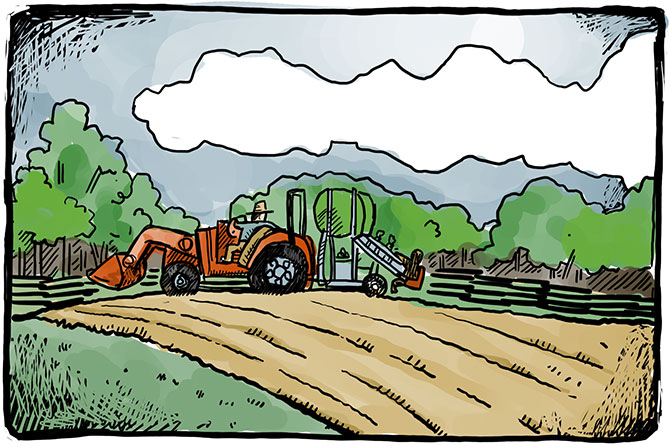
A chat with Farm Manager Mark Baerwolf
Mark Baerwolf is one of the original Roadhouse employees. Since 2005, Mark has divided his time between cooking at the Roadhouse and managing the agricultural operations at Cornman Farms. He helped open the restaurant, and soon found himself enamored of Executive Chef Alex Young’s dream of bringing fresh, pesticide-free produce to the dinner plate. When the opportunity to work on the farm came along, Mark jumped at the chance.
These days Mark spends his summers outside tending the crops growing on the farm and his winters poring through seed and farm equipment catalogs and planning for the next year’s harvest. You’ll still find him in the Roadhouse kitchen occasionally though now he’s more than likely preparing food that he raised.
This season has brought some big changes to Cornman. With the opening of the event barn at the farm house, we have also created a new garden space on the property. I toured the gardens with Mark out at the farm to learn a bit more about Zingerman’s work to bring the farm to the table.
“Heirloom vegetables are like a step back in time. They’re history on display.” Mark is talking about the new garden beds at Cornman Farms. The beds lie on the low ground near the restored barn, and Mark and his crew are busy planting herbs in the hot sun. His face is flushed, and he’s holding a handful of chive plants. “But heirlooms and such are not just about history, they’re also about connections to family and friends.”
Take the chives, for example. “They came from a friend of mine. They’re just chives, but they represent something deeper. They have a history that’s not really heirloom, but it’s important.” The plants, it turns out, are direct descendants of chives that were brought to Michigan nearly 70 years ago by Polish immigrants who’d originally arrived in Philadelphia in the early 20th century. When they decided to move to the Mitten in the late 40’s, the chives, and a bunch of other herbs and vegetables, traveled with them. “Like a lot of people who lived through that time,” says Mark, “they always had a little Depression survival garden going.”
“These are walking onions.” Mark goes on to describe the plant’s ability to spread by “walking.” When the onion stalks reach a certain height, they develop a tiny onion bulb at the top of the plant. As the bulb grows larger, it pulls the long stalk over to the ground, where it roots in. As the new bulb matures, it grows its own stalk and tiny bulb, and the process is repeated. This is how the plant “walks” itself over open ground to proliferate. “I got the walking onions from a server at the Roadhouse,” he says.
The gardens don’t really have an official name yet, but Cornman staff have been calling them the “Educational Garden” to differentiate them from the vast expanse of rows known as the “Production Garden,” which supplies the Roadhouse. “What you see here,” he says, gesturing to the new beds in front of the barn, “is a reflection of what’s happening out in the production areas. We wanted people to see a sample of the varieties of heirlooms we’re growing out here.” The garden integrates the ideas of traditional, beneficial, and sustainable farming practices they’ve been using at Cornman Farms for the past eight years.
Back inside the farmhouse, Mark shows me a website run by Slow Food USA called the Ark of Taste. The site is a knowledge repository of our collective food heritage here in the US. Listed within are all manner of heirloom fruits and vegetables, animal breeds, forgotten and “lost” foods, and even traditional and heirloom recipes. “I encourage the chefs at the Roadhouse to look here for inspiration. There’s so much great stuff here.”
Mark goes on to tell me that when it comes to the many varieties of heirloom tomatoes, squash, and peppers listed on the Ark of Taste, most are currently grown on the farm. The exceptions are the varietals more suited to southern climes, unable to handle our northern winters. “This year, we’ve got 40-45 different types of heirloom tomatoes growing out there,” says Mark. “Many of these heirloom breeds have documentation going back to the Civil War, some back nearly 200 years!” He also makes the point that the very oldest heirlooms were shared with European settlers by indigenous peoples who had likely been cultivating them for thousands of years.
“We really wanted to tap into this, to use heirloom breeds and recipes. A great example is the pepper vinegar we serve at the Roadhouse.” The recipe comes from an old Pennsylvania Dutch Civil War-era cookbook called Die Geschickte Hausfrau (“The Handy Housewife”) that used a spicy hinkelhatz pepper. Mark and Alex stared growing the hinkelhatz at the farm, added it to a good cider vinegar, and it has become a staple at the restaurant. “We used the heirloom pepper, the heirloom recipe. It was great way of carrying this food forward to the 21st century.”
When fully planted, the new garden will be a sort of microcosm of the larger farm. Guests will be able to stroll between the beds and see heirloom varieties of squash, peppers, tomatoes, potatoes, beans, and herbs of all types. And even though some might be “just chives,” they’ll all have a story. And whether it’s a tale of deep history from the early days of North American civilization, a connection to generations who came before, or just a great flavor, Mark is sure to know the story. And if you have a few minutes, he’d be happy to share it with you.
Want to learn more? Sign up for a tour of Cornman Farms and hear it from the people who work there! More information here.
Tag: CORNMAN FARMS
Second Cornman Farms Tomato Dinner at Zingerman’s Roadhouse!
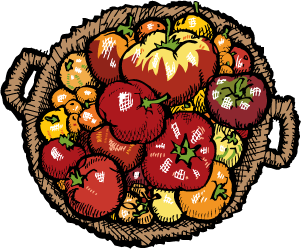 You asked for it! Due to overwhelming demand, we’re adding another Cornman Farms Tomato Dinner on Wednesday, August 27, at 7pm. Here’s your chance to relish the outstanding Cornman Farms succulent heirloom tomato varietals!
This dinner is easily the highlight of the harvest season, and our Cornman Farms Tomato Dinner showcases the best of the farm’s tomato crop. Chef Alex and the farmers have been caring for the tomatoes all through the spring and early summer, and now we get to benefit from their hard work. The tomato bar makes its return: numerous tomatoes varieties, handmade fresh mozzarella, really good olive oil, balsamic vinegar and fresh grown basil. You’ll want to fill your plate as many times as you can! Fresh Cornman Farms beef and pork round out this late summer feast, making it a meal to remember. Spaces for this dinner will likely go as fast as the first, so reserve your seat today!
See you soon!
Tag: CORNMAN FARMS
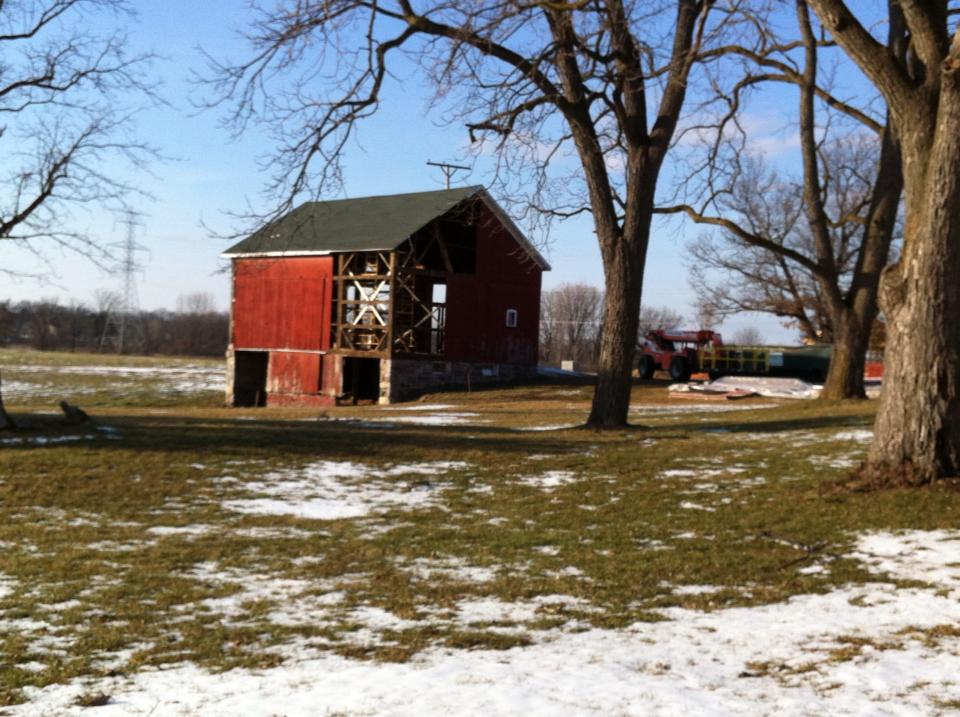
An interview with barn expert and architect Chuck Bultman on the history of the Cornman Farms barn.
Tell me a bit about the Cornman Farms project?
Cornman Farms… where should I start? It seems like I should start at the beginning but my chronology, with respect to the project, feels so small compared to the chronology of the site and the buildings. What is so amazing about this project, and this barn, is what we know. On most of my barn projects we are not able to piece together the history as well as we have here.
You see many barns across our country are basically orphans where they stand. As beautiful as they may be, they have no purpose and are expensive to maintain so they are mostly ignored. When we drive by them we may marvel, oblivious to the relentlessly decaying forces of water and wind the barns endure. Estimates say there are may be six hundred thousand old wood barns in America today. When I consider that only one hundred years ago there were 6 million farms, that number seems frighteningly small.
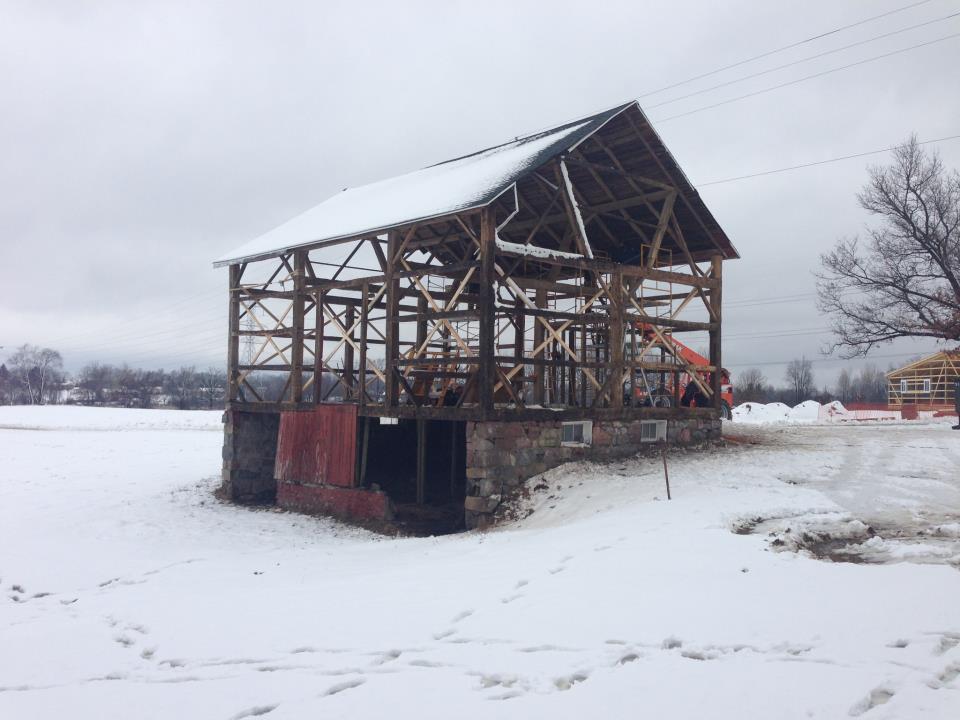
The Cornman Farm’s barn is a small Midwestern barn. It is only 30 feet by 40 feet, where most barns here are about 40 feet by 50 feet or 40 feet by 60 feet. And the smaller the barn, the harder it is to use it on the farm. This barn was also suffering. The west side had seen a fair amount of weather over the years, and had been repaired multiple times and was beginning to warp and buckle. And a number of the rafters were almost rotten through; something we only learned when we were dismantling the barn. Seven of them broke apart when they were being taken down. Had the roof caved in, or the wall buckled, I believe the barn would have been lost forever. Many Michigan barns fell this last winter.
So what we know… we know that this barn was built in 1837. Three years after the construction of the house; the same year that Michigan became a state. I remember the Bicentennial, and all of the celebrations associated with it, and I remember being proud for my country to pass such a milestone. My pride however has to pale in comparison to witnessing statehood, as you built the family’s farm. I have many times tried to imagine the mindset of the people who built it.
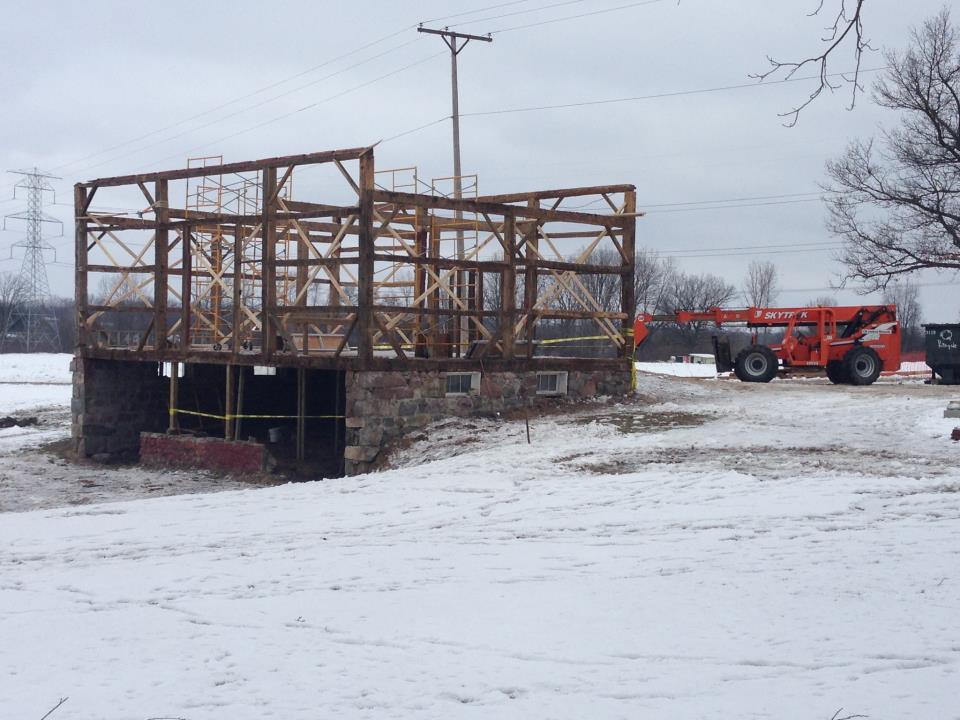
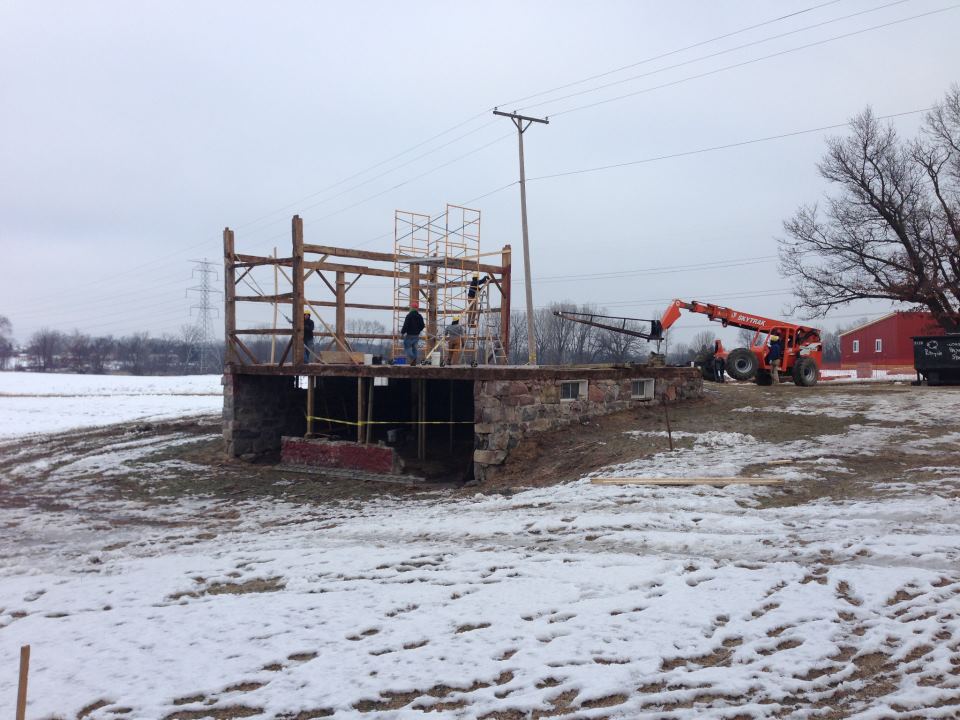
We also know that in 1895 the barn was moved and re-built on a basement foundation. This barn was originally built as a ground barn; it had no basement. But through the middle 1800’s the Farmers Almanac touted the value of having a basement to house animals and store manure. So during the late 1800’s barns from the Atlantic to the Midwest were commonly moved onto a basement making them bank barns.
How do we know the years so specifically?
Well there is a scientific method to date the year a tree was cut down. It is called dendrochronology. We used this method to have the timbers definitively dated. But all along we had some sense of the significance of the barn. I knew from when I first visited that the barn predated the Civil War as parts of it had the tell-tale signs of being cut with a water-driven sash saw; a tool which was quickly replaced with the advent of steam power during the Civil War.
With respect to the barn’s move in 1895, we were helped out by the fact that someone had a date stone placed in the foundation that reads 1894. As it turns out that was the year they built the foundation and then they moved the barn on it the following year; the dendrochronology has the new timbers being cut in 1895. We do not know where the barn originally was located but I suspect it was not far. (And for you conspiracy theorists, we never told the dendrochronologist that the building had 1894 written on it.)
Possibly the most astounding thing I have learned about this property along the way I learned by accident… sort of. Alex and I were doing a radio show prior to the barn’s re-raising. During the interview Alex was asked about his family’s connection to the Dexter area and for the first time he used a date. He said that his wife’s family, the Arnolds, had settled there in the 1820s. If the Arnolds lived only a half mile away from this property in 1837 that they would have probably participated in the original raising; it was expected that anyone who could lend a hand would help with all barn raisings. It made me very happy and proud to share the raising experience with the multiple generations of the Arnold family.
What’s your background? How did you get into this line of work?
I have always enjoyed a challenge. Wherever I have worked I always wanted the most difficult projects. So, years ago when I was asked to work with an old barn I was immediately intrigued… and a little concerned. I mean building around a barn was not usual and I had to not only worry about how you do it I also had to worry about the builder’s approach to it, and I had to worry about how the building officials would receive the news that they would be inspecting an old barn.
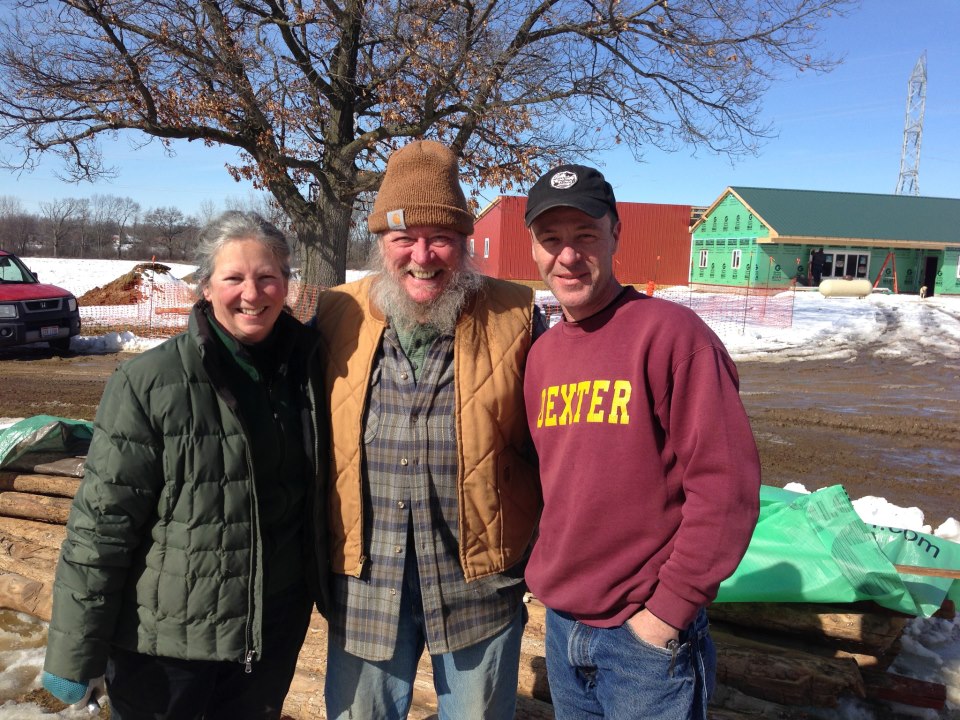
Well that project led to other barn projects. And to date I have converted barn projects in 5 or 6 eastern states and some in the Rocky Mountains and one in Arizona. I have been working with old barns now for 15 years and have fallen in love with the kinds of spaces you can make with them. I also am in love with the stories and the history. But sometimes the history can weigh on you as it did with the Cornman barn.
Maybe it’s because we knew so much, but the day before the barn was to be dismantled I found myself unable to not visit the site. It was a snowy cold Sunday in February and I was alone staring at the barn, considering its history. And all I could think was, who am I to be taking down this noble building for the first time in 170 years. (At the time we did not know that the barn had actually been apart once before; many times barns are moved without dismantling them.) It is an honor to be a small part of maintaining this precious piece of history.
Restoring a barn like this is no simple project. Can you tell us about the process?
Most of all restoring a barn is a struggle to respect the barn. How do you convert the barn for a new use and maintain the barn’s integrity? There are purists who will say that that is impossible because to do anything with a barn you have to change it, and then it will no longer be the barn that it was. I however look at it differently because I know that barns are not, and were never, static things. As we talked earlier our barn was altered and made into a bank barn in 1895 and that was just one change. There were many other changes, both great and small. At some point, probably in 1895, the roof was made to be steeper. Why? We are not sure. And those giant sliding barn doors that everyone romanticizes about, they are not original either. No, a barn of this age would have had swinging barn doors to direct the wind which aided in the hand threshing process.
From any barn’s beginning the farmer who used it would have always been adapting it to the changing farming needs. It may have started as a hay barn and then have made into a dairy barn, or a horse barn, or some such. I believe that barn conversions today may be more pronounced, particularly if the use is changed dramatically, but that is far better than letting the barn rot and fall down by the side of the road, which is the destiny for many.
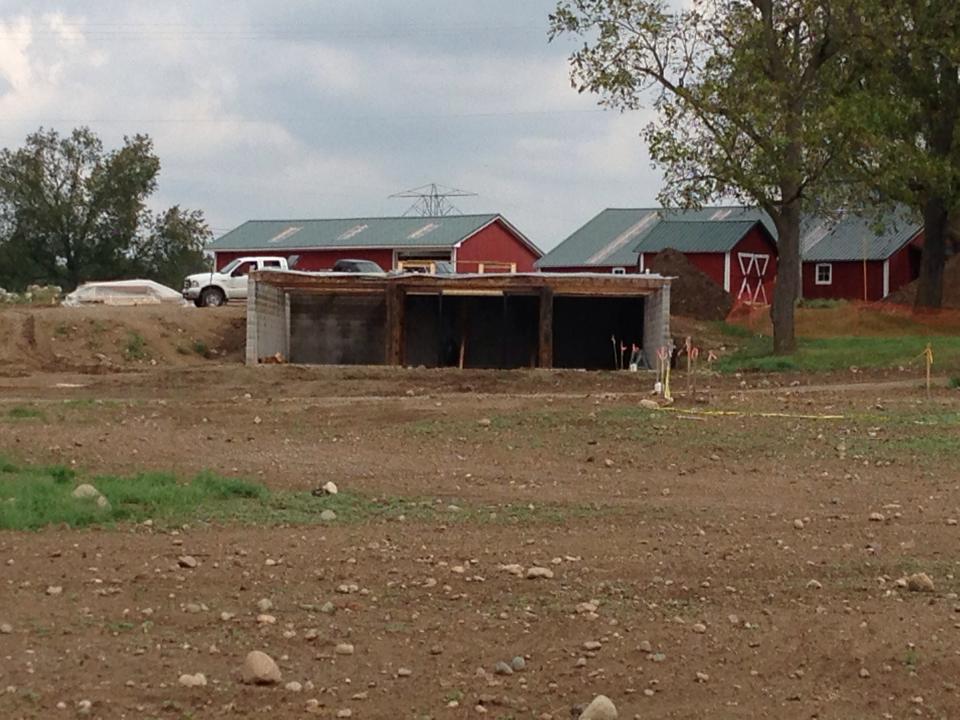
So for me the process includes how can I do the least to the barn to achieve the project’s goals and if I make changes how can I do that in sympathy with how the building was originally built. So when I ask for changes to the frame I ask that they be done with mortise and tenon joinery which is how old timberframing has been done for thousands of years.
This is why when we needed to restore this barn we approached timberframers Rudy Christian and his wife Laura Saeger from Burbank, Ohio. I have known Rudy and Laura for some years now, and they restored another barn for one of my projects. I also know that their philosophy with respect to barn restoration is sympathetic to mine. What we all believe is that, despite using 21st century techniques and tools, we can be a part of the continuum of the life of an old barn.
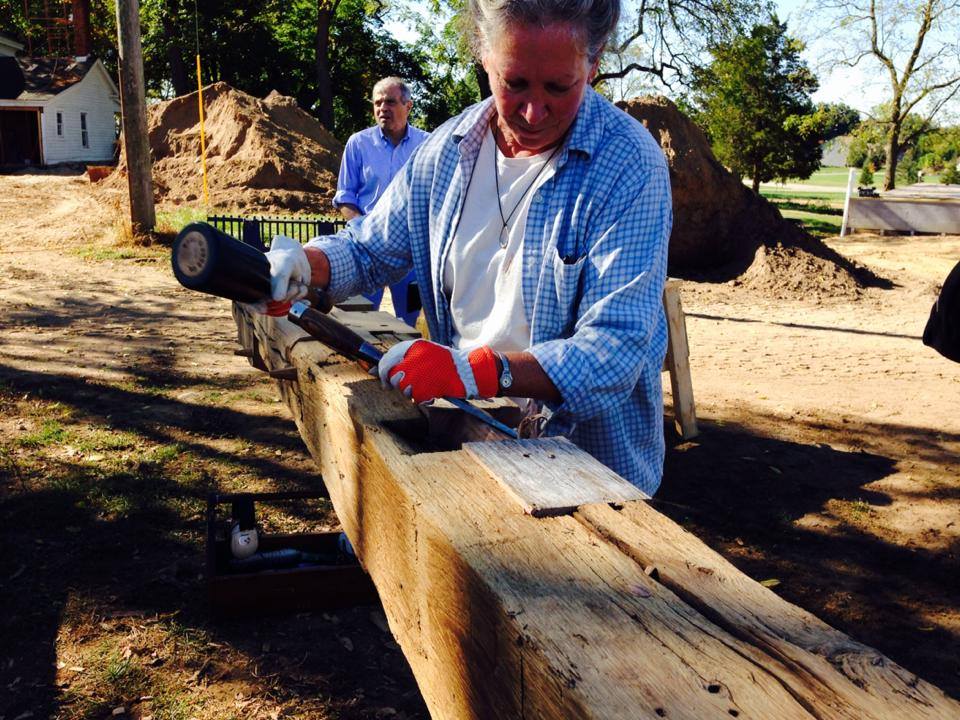
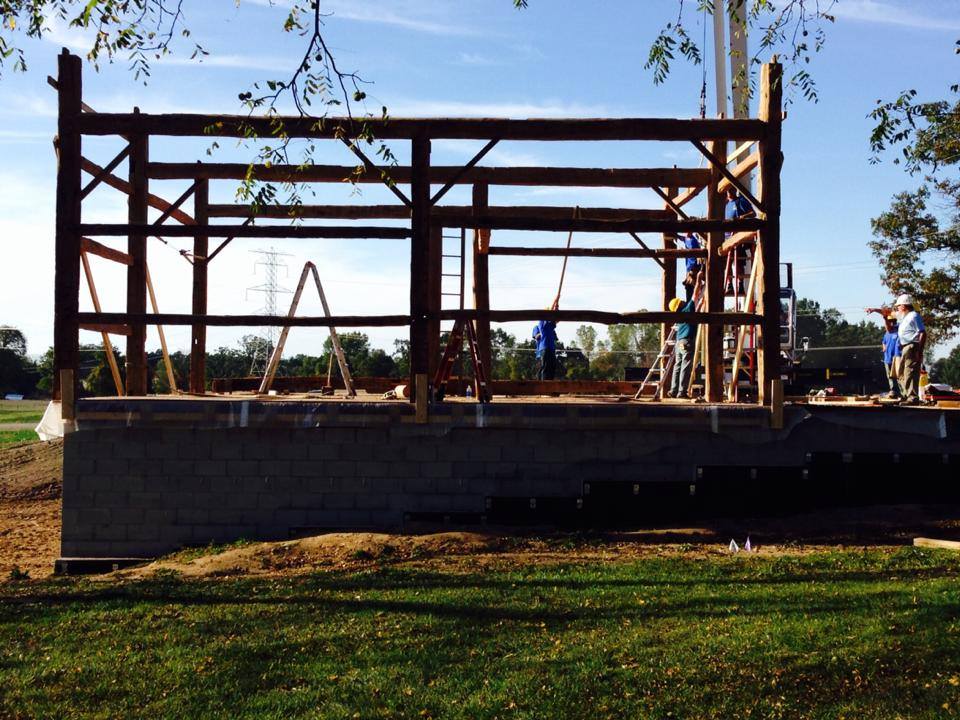
So aside from the background philosophy, a barn is restored by treating it exactly as it was treated when it was originally built. It can be dismantled by taking it apart in reverse order in which it was built. The boards can be stripped and then the frame unpegged and dismantled. Of course that is simply stated. It also helps to know the methods used for standing up a barn because the sequence matters.
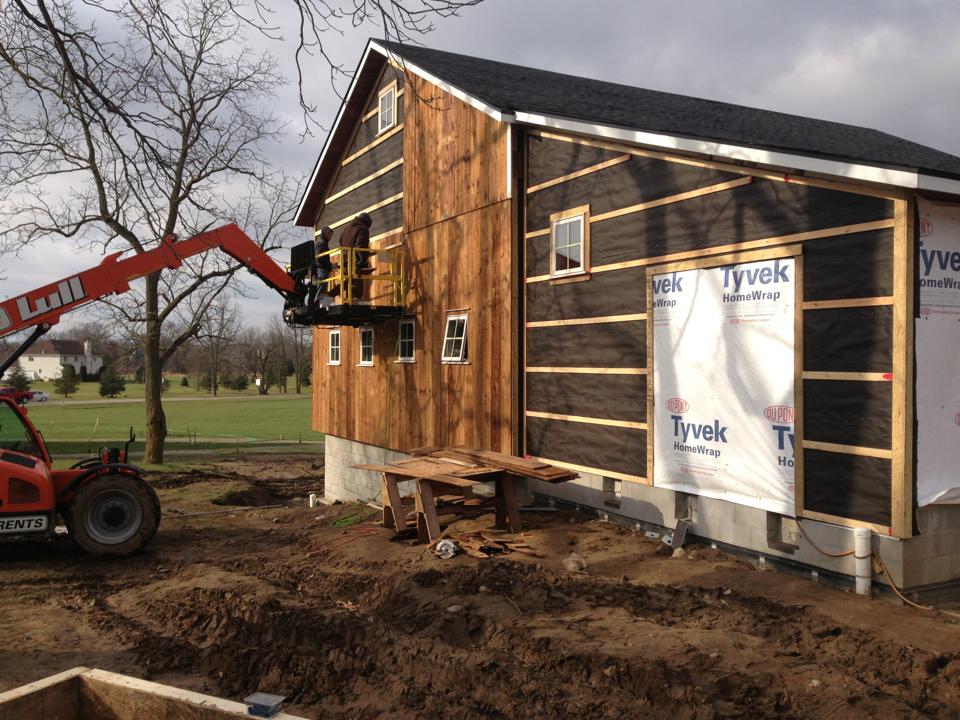
Once the pieces are evaluated, repaired and cleaned you get to have a traditional barn raising, as we did last September, where each bent (structural frame) is raised one at a time just like people reminisce about. We however use a crane and not a team of horses as it is safer, and there are more lawyers today.
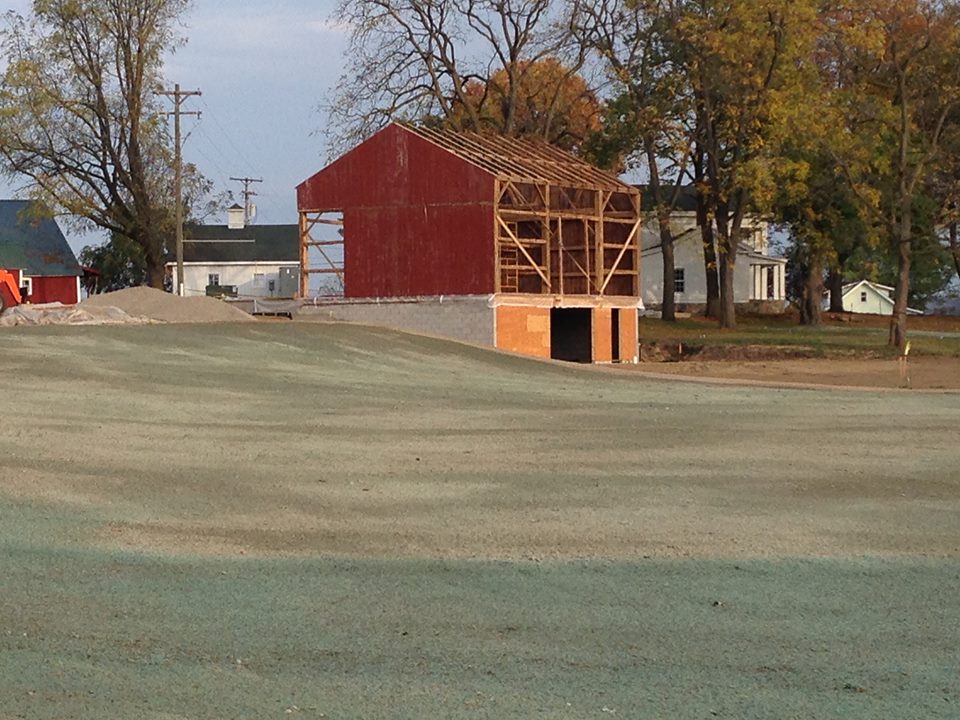
Listening to some of what you’ve said over the last few years there’s a certain poetry and personality in each barn you work with. Can you say more about this one?
What many people do not realize is that when this country was first settled the barn was more important than the house. You could live without a house, but not without a barn. Have you ever noticed in western movies the Dry Goods Store never sold tomatoes? Or cabbage? If you wanted vegetables you had to grow them yourself. And to have a garden you needed seeds and a safe place to store your seeds and a sheltered work area to process what you grew. You needed a barn. And so barns were well built, made to last, and usually were imbedded with a lot of consideration because of how important they were.
When the original Cornman barn was built it was well built. It was also a bit ‘sloppy’ as a timberframed building according to Rudy who pointed out that the layout was a bit crude. Maybe because it was so early and at the time this was a fairly remote place. Or maybe it was because the original timberframer was not the best; realities in our world were also realities in theirs.
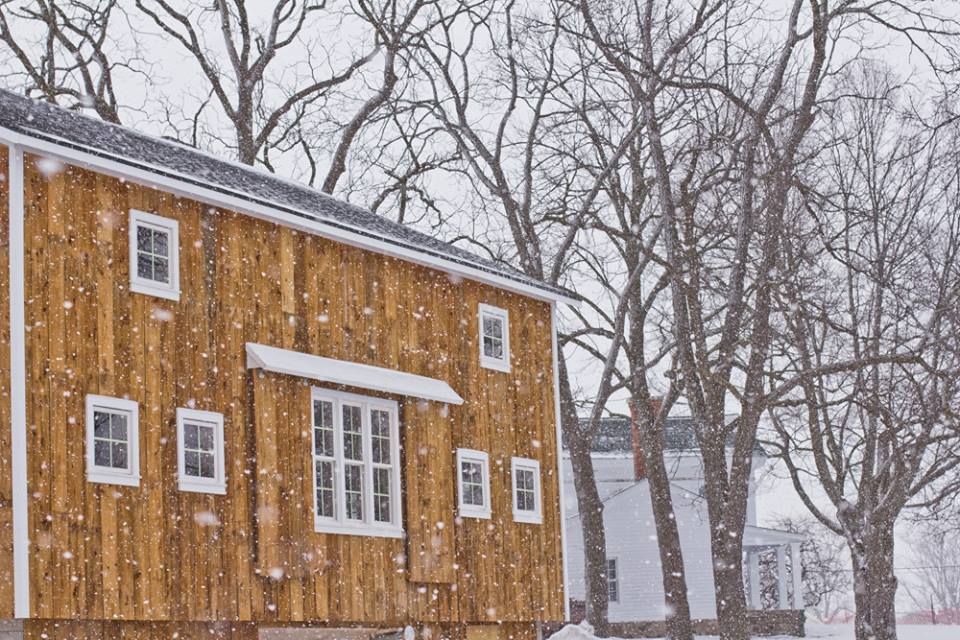
But when the time came to restore the barn and convert it to be a bank barn they did a great job. We know, for example, that they took the barn apart, as opposed to moving it intact, because the bottom of the barn had what are called free tenons, which could only have been installed if the barn was apart. They also were innovative when they rebuilt it. When we were dismantling it we found some odd wood embedded in the stone walls adjacent to the windows. No one knew why. As we poked around we found that the window sashes were installed to slide, and when open, they would disappear into this wood pocket in the stone. No one had ever seen or heard of that before in a barn.
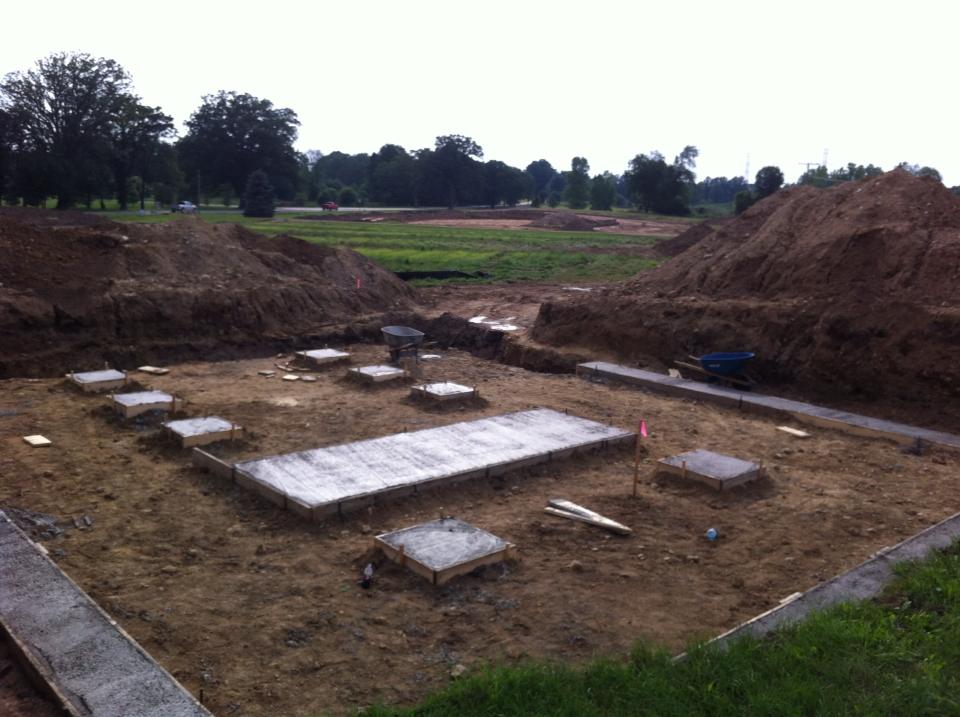
When they relocated the barn they were clearly very proud. They built the newly restored barn on beautiful stone walls that proclaimed the date of the restoration. These walls lasted 120 years. Sadly we could not keep the stone foundation as it was weak and compromised and because we have too many better techniques for dealing with water and drainage today. But the stone that was the foundation of the old barn has all been salvaged and reused on the farm. Much of this stone now graces the outside of our new foundation and the rest was used to build landscape walls around the property.
And of utmost importance when we rebuilt the stone on the foundation, we put the 1894 date stone right back where it had been for the last 120 years; at eye level on the east wall. We only made one significant change to the foundation, and we did it for all to see. To honor the work and dedication of everyone who helped make this project a success the west stone wall now has a stone that reads ‘2014’. It is our way of linking our work to the work of all of those who have labored at this farm for the last 177 years.
Tag: CORNMAN FARMS
Tour the Farm!
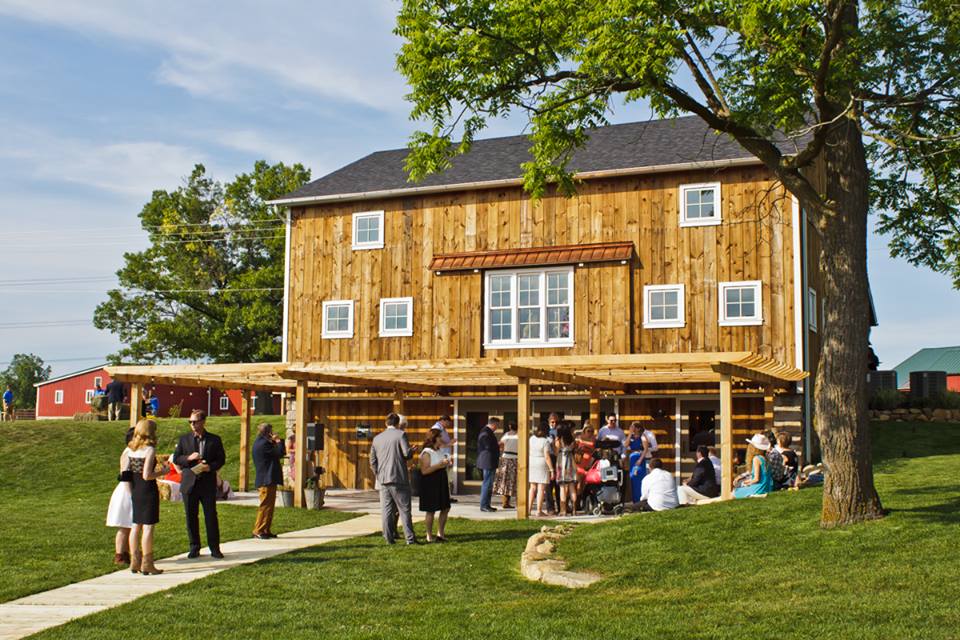
This past spring, Zingerman’s Cornman Farms opened its doors to the public and the response has been overwhelming! The Farm has hosted weddings, charity events, and even this year’s Camp Bacon Main Event!
But Cornman Farms is more that an events space: it’s an authentic working farm. So we’ve created a suite of tours that will allow our guests to learn about our farming practices, animal husbandry philosophies, and historic significance from the folks who actually run the farm. Check out the list below for all our tour options.
If you’re interested in a custom tour, let us know! We’d be delighted to create an experience to suit your needs. See you soon!
Intro to Zingerman’s Cornman Farms
Enjoy a fascinating introduction to Cornman Farms’ rich history, agricultural projects and humane raising of animals. We’ll even throw in a taste of one of our seasonal vegetables! Tour duration 60 minutes.
Art of Growing Great Vegetables
Take a deeper look at our farming practices! Spend some time with Farm Manager Mark, who takes care of all of our fruits and vegetables, and learn about the ins and outs of sustainable, responsible agriculture and honoring the local farming community. Take home a bag of something seasonally grown! Tour duration 90 minutes.
Harvest Tour of Cornman Farms
Available Labor Day through Thanksgiving only. Autumn is magical at Zingerman’s Cornman Farms. Let us teach you a bit about the harvest season here. We’ll even throw in some cider and tasty donuts! Tour duration 90 minutes.
Afternoon Delight
Spend the afternoon with us for an in-depth understanding of what makes Cornman Farms so special. This experience will include a behind the scenes tour of the Farmhouse, Barn, Goat Parlor, and Hoophouse, talks with our Produce and Animal Husbandry Managers, and our Events Department. Savor a delicious boxed lunch in our pre-Civil War barn overlooking our gorgeous educational gardens, and depart with a special gift from Cornman Farms. Tour duration 180 minutes.
The Big Tomato
For serious Farm Fans only! Enjoy a hearty breakfast in our lovely historic Farmhouse, then spend the morning with both our Produce and Animal Husbandry teams, tour the pre-Civil War barn, observe our goats and sheep in their homes, and pick a basket of seasonal vegetables to take home with you after a simple, lovely farm lunch. Tour duration 5 hours.
Reserve your seat today!
Tag: CORNMAN FARMS
April 11, 2014
Tag: CORNMAN FARMS
Host your event at cornman farms beginning may 2014!
For the past 8 years, we’ve been providing abundant harvests to Zingerman’s Roadhouse, growing tomatoes by the ton and raising goats galore. In 2014 we’ll open our own pastoral event venue with a lovingly restored pre-civil war Dinner Barn, Farmhouse & Grounds designed for weddings, bar and bat mitzvahs, family reunions, birthdays, anniversaries and hosting hands-on educational tours! Our roots are deep in Washtenaw County.
We welcome you, your family and friends to celebrate on our farm and to learn about sustainable farming & seasonal eating!
For more info, email [email protected] or call 734-619-8100
Like our Facebook page and watch the progress!