America’s secret fruit shows up on the Southside
|
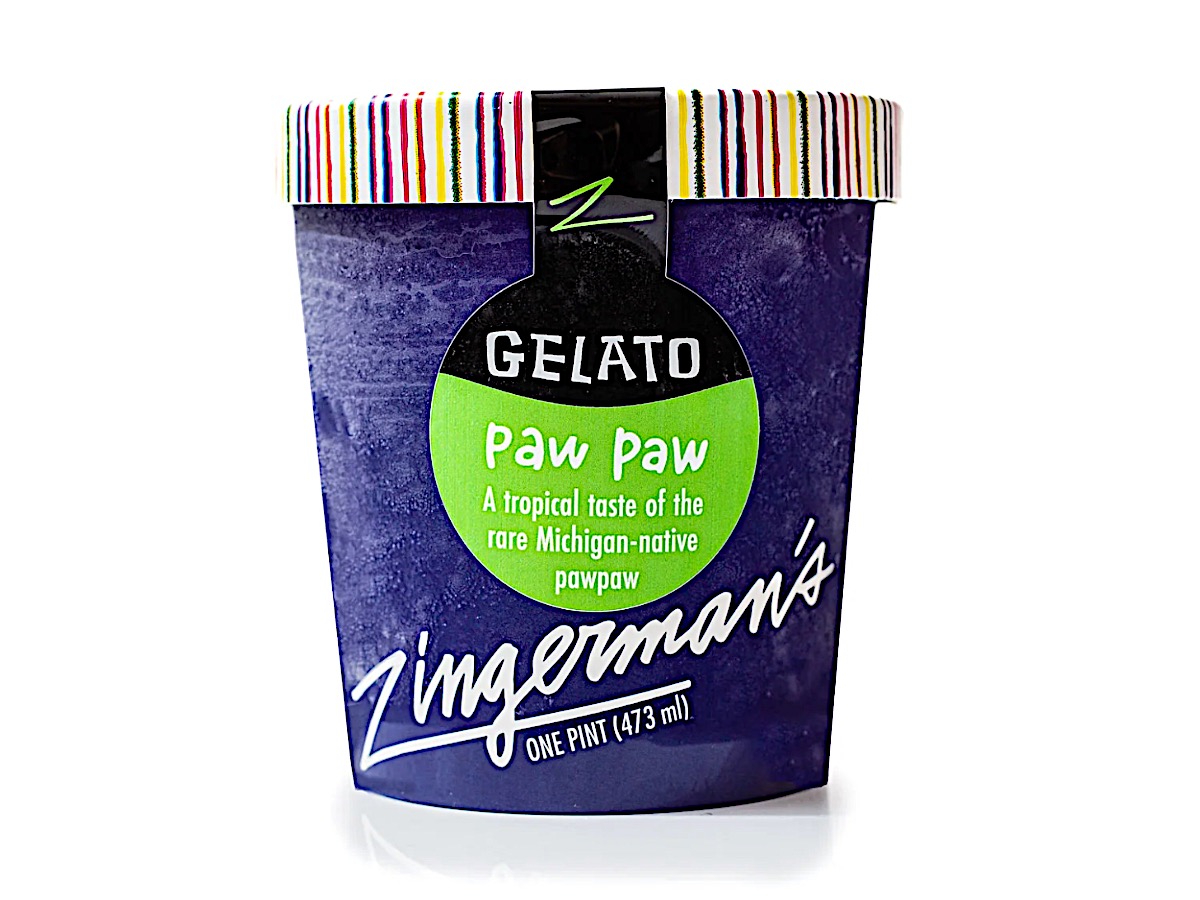
It was nearly 20 years ago that we started the project to make Paw Paw Gelato at the Creamery. At the time, hardly anyone in Ann Arbor knew this old American fruit. Today, I’m happy to say, paw paws are getting more and more popular! I’ve seen them in half a dozen shops around town. And we now have a good number of fans waiting for our annual autumn release of this super tasty gelato. I’m happy for paw paw’s increasing popularity. It’s the kind of traditional, delicious food with a great story that we love to work with. In the context of what I wrote last week about awe and wonder, the paw paw is pretty much a perfect example of the wealth of wonder-ful foods and drinks we get to work with every day.
Once upon a time, paw paws were very popular and far easier to find around these parts. Native to North America, they have been known historically by a range of wonderful monikers: Prairie Banana, Hoosier Banana, Indiana Banana, Poor Man’s Banana, Quaker Delight, and Hillbilly Mango. Paw paw trees are about 10 to 20 feet in height with long dark green, sort of droopy-eared leaves and the largest edible fruit that grows in North America. They look a bit like a mango, but with pear green-colored flesh. The fruits are ripe when their skin gets a bit darker and the perfume is more pronounced. One reason that paw paws pretty much disappeared is that, like many great heirloom varieties, it’s hard to grow, has a very low yield, and the fruit one does get requires a lot of handwork to process. Thanks to a couple of local farmers and the Creamery crew, the rest of us can just stick our spoon in and enjoy the fruits of their labor!
Even after a decade of doing this special gelato annually, most folks we encounter are still unfamiliar with this fruit. That said, it has slowly but surely built ever more fans! One of them is Roadhouse bartender Cori Scharmin: “It’s so freaking good! It tastes like a tropical fruit but it’s from here in Michigan. A little mango and it’s really banana-y. It’s really good and really different! I love it!” To my taste, the Paw Paw Gelato is slightly citrusy, kind of custardy, a bit like passion fruit and Cherimoya with a little hint of lime, a touch of vanilla, papaya, and ripe pear. Serious Eats said it’s “a riot of mango-banana-citrus that’s incongruous with its temperate, deciduous forest origins.”
You can get the Paw Paw Gelato at the Cream Top Shop (by the Bakehouse on Plaza Drive), the Roadhouse, and the Deli. Better still, ship some gelato to your cousin in California where paw paws will be an unknown culinary delight. Ask for a taste for sure next time you see us! Pairs beautifully with the Gingerbread Coffee Cake as well!
|
|
| P.S. The city of Paw Paw, Michigan is named for the fruit. It’s also the place where Malinda Russell was living when she authored A Domestic Cook Book back in 1866. It was the first such book published by a Black woman. Russell is featured in Patrick-Earl Barnes’ “Blacks in Culinary” art piece at the Roadhouse and is also featured in the center of the terrific t-shirt we made from Patrick-Earl’s piece—I get many compliments on it every time I wear it! Proceeds from the shirt go to the African American Cultural and Historical Museum of Washtenaw County. |
|
|
Want more from Ari?
Sign up for Ari’s Top 5 e-newsletter and look forward to his weekly curated email—a roundup of 5 Zing things Ari is excited about this week—stuff you might not have heard of!
Follow us on social media: Instagram, Facebook and Twitter, @zingermanscommunity.
A wonderful, semi-soft goat cheese with a gentle full flavor
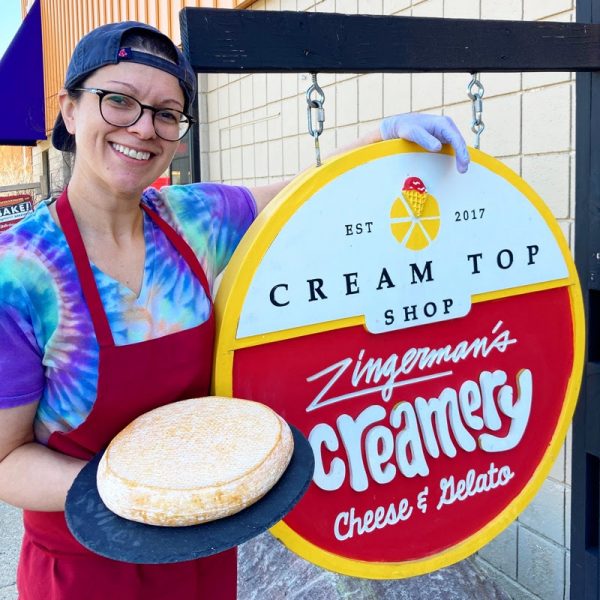
In the small lakeside town of Port Washington in Wisconsin, about half an hour north of Milwaukee, the folks at Blakesville Creamery are making some marvelous cheese. They started only 18 months ago, so the fact that their cheese is already this good is a tribute to their care and their craft. I’m particularly smitten with their Sunny Ridge!
The founder of Blakesville Creamery, Lynde Uihlein, has had a long career in land preservation and community activism. In 1990 she founded the Brico Fund, a non-profit focusing on helping advance women’s issues and environmental causes. While I don’t know that Lynde formally wrote a vision the way we’ve learned to do it here, it’s pretty clear that she had one in her head. Culture magazine writes that, “The folks at Wisconsin-based Blakesville Dairy Farm have had a cheesemaking dream for years but were waiting for the right time and resources to make it work.” Pandemic or no pandemic, they’re making those dreams into a reality. As the writer Varyer says, Blakesville Creamery is “part idyllic goat farmstead and part production and aging facility, built with the cheesemaker’s eye on precision, experimentation, and scale.”
Sunny Ridge is made in the tradition of the great European washed rind cheeses like St. Nectaire. In this case though, Sunny Ridge is made with the farm’s own fresh goat’s milk. The young wheels of Sunny Ridge are washed with beer from Is/Was Brewing in Chicago. The end result is full flavored and eminently accessible. It has a clean, complex, flavor that’s just right to appeal to cheese novices and to folks like me and Tammie who have worked with artisan cheese professionally for decades. Meaty, milky, and mellow at the same time with a nice touch of salt, it’s terrific (at room temperature) to snack on accompanied by fresh vegetables, or eaten with a chunk of French baguette from the Bakehouse. It’d be really tasty, too, with boiled Yukon gold potatoes. I’m not the only one who’s enamored of this new arrival—Sunny Ridge just won a Good Food Award a few months ago. The folks there said it’s “exceptionally delicious [and] also supports sustainability and social good.”
Order Sunny Ridge for pick up from the Creamery.
Want more of Ari’s picks?
Sign up for Ari’s Top 5 e-newsletter and look forward to his weekly curated email—a quick roundup of 5 Zing things Ari is excited about this week—stuff you might not have heard of!