
Tag: MADDIE LAKIND
An appreciation
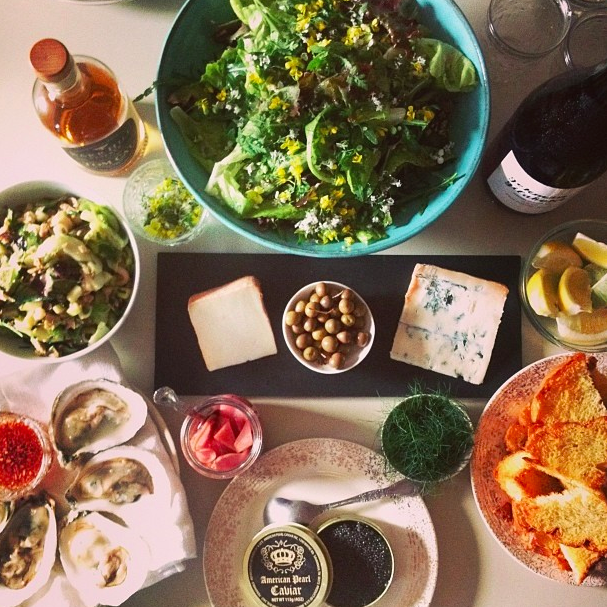
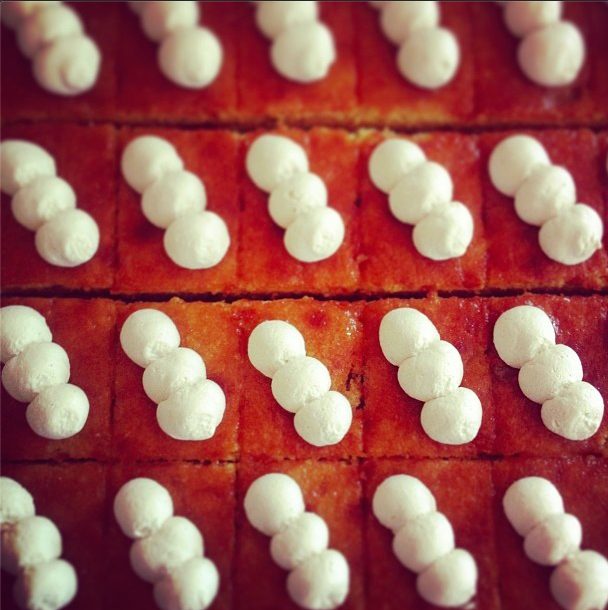
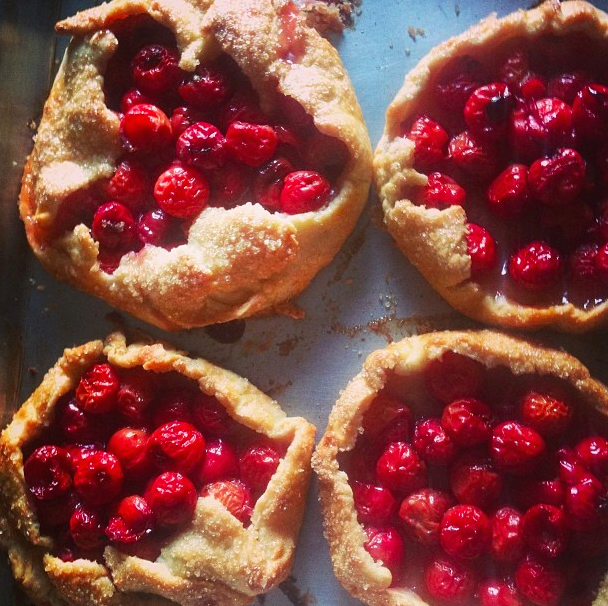
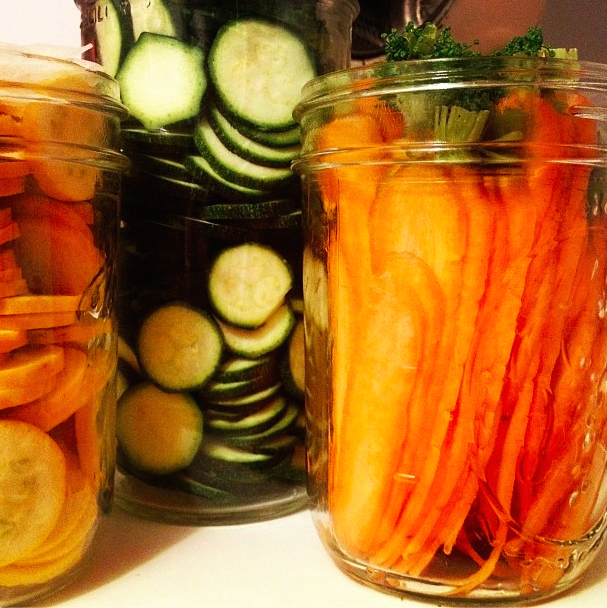
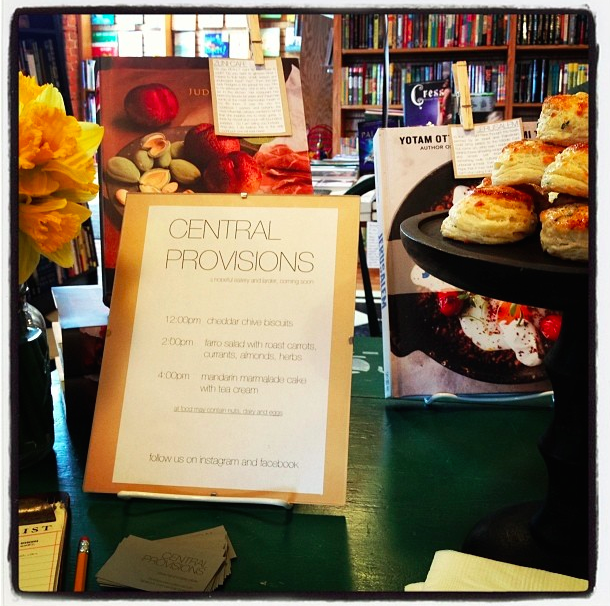
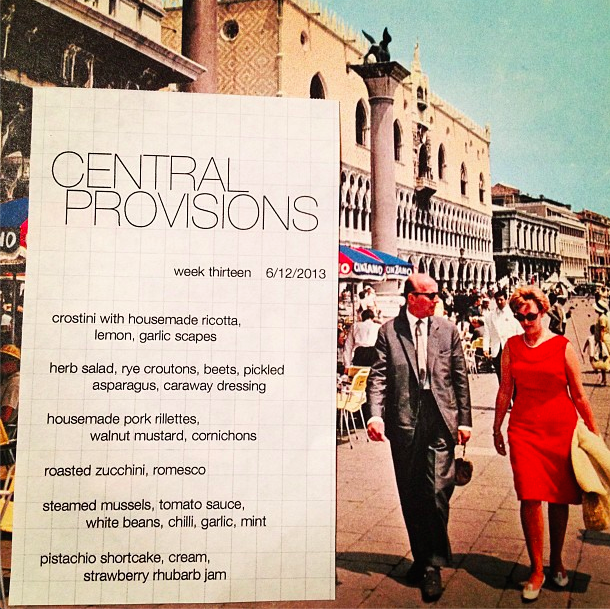
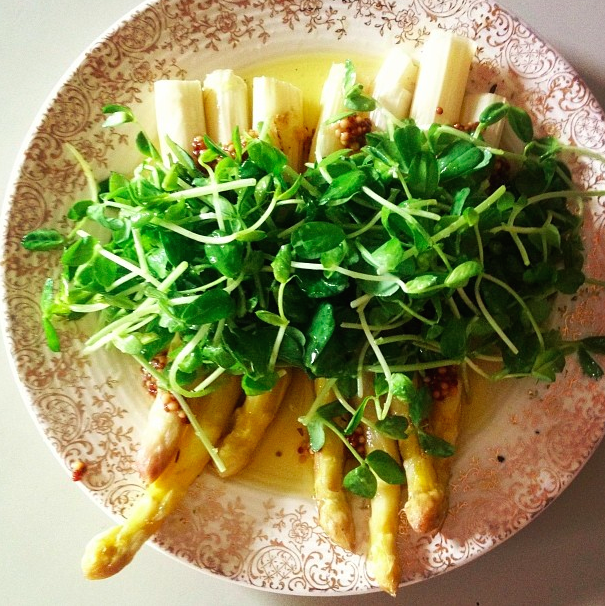
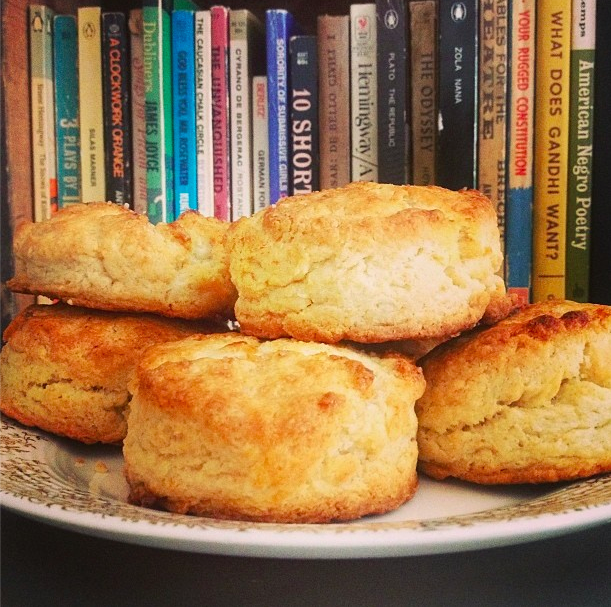
For those of you Ann Arborites who haven’t heard of Central Provisions yet, take note. Founded by my co-worker Steve Hall and his crazy talented girlfriend Abby Olitzky of Sweet Heather Anne, Central Provisions is what Steve and Abby call a “working larder” which includes part restaurant, part market, and part kitchen. Together they host dinners, cater events, and sell a plethora of homemade items like jams, pickles, and baked goods all with an emphasis on clean, simple flavors and locally sourced ingredients. I’ve had the good fortune of eating a number of meals with this dynamic duo and can say wholeheartedly that it is some of the most exciting food in Ann Arbor right now.
Since a picture is worth a thousand words—especially when it comes to pictures of food—I thought I’d let some of Steve and Abby’s Instagram account do the talking. So, without further ado, here are 10 reasons why I love Central Provisions and why I know you will, too.

and finally…
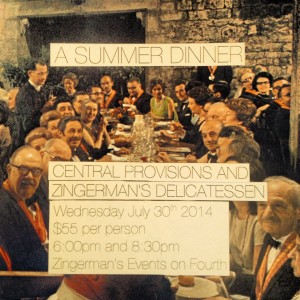 Don’t miss our upcoming Summer Dinner with Central Provisions at Zingerman’s Deli!
Two seatings!
On Wednesday, July 30 Zingerman’s Delicatessen hosts another special evening with Central Provisions and guest chefs Abby Olitzky and Steve Hall. For this summer meal, they will delve into our unique pantry again to feature favorite American foods as well as the seasonal bounty of their favorite local farms. Each dish will be paired with wine that complements and elevates each bite. Please join us for this wonderful dinner celebrating summer flavors and great eating! Sign up now—these dinners sell out fast! (There will be a vegetarian option available, just let us know)
See you at the dinner!
– Maddie
Celebrating Passover in Italy
Arugula…check.
Tomatoes…check.
Apples…check.
Arborio rice…check.
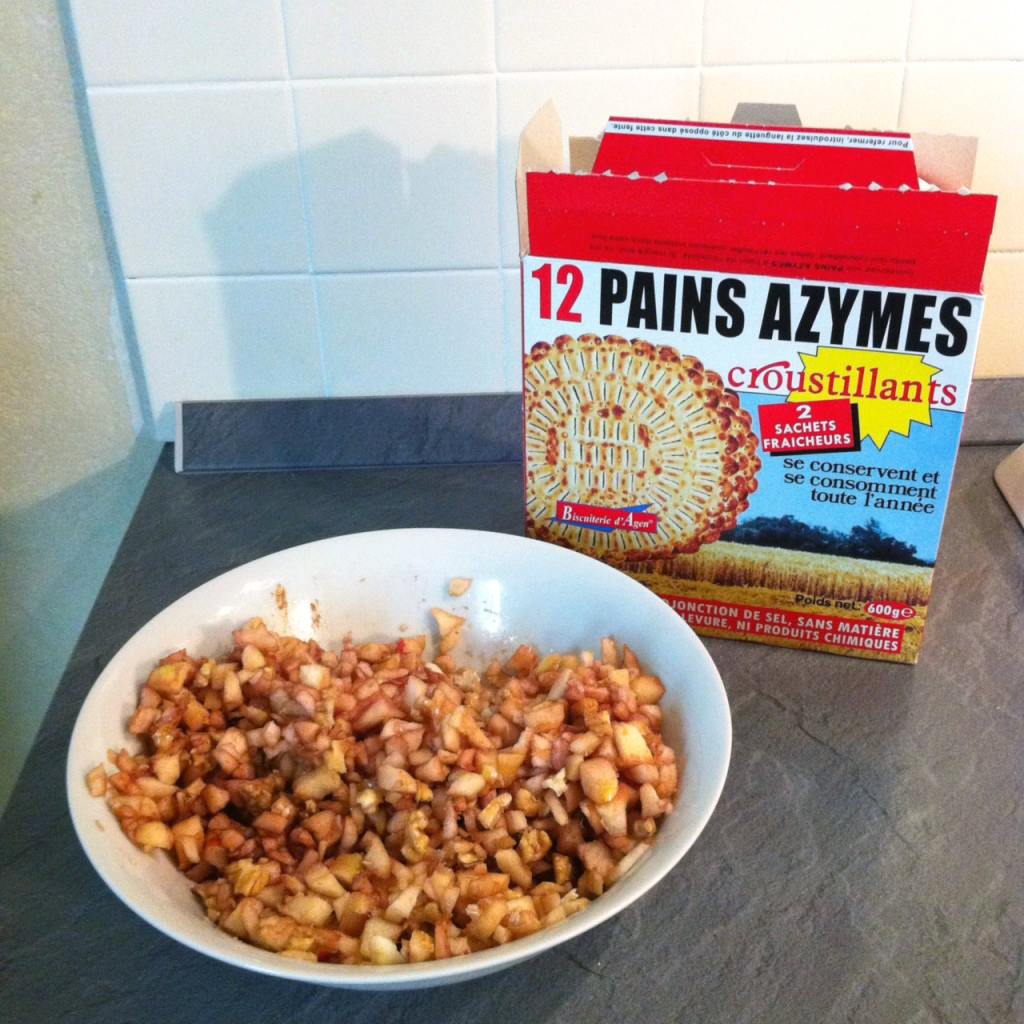
French Matzo…check??
If this is starting to sound like a game of Supermarket Sweep, you’re sort of on the right track. This grocery list did in fact exist at one time and, while only comprised of a few items, evokes fond memories of a very impromptu, very resourceful, and very delectable Passover Seder thrown together by a friend and myself while studying abroad in Florence, Italy two years ago.
Before delving into the mishegas surrounding this particular Seder, I must preface with the fact that Passover and I have had a love/hate relationship for pretty much my entire life. Growing up in a reform Jewish household just outside of Chicago, my family upheld a unique but lax set of Passover traditions come springtime. While we always either hosted or attended a Seder, it typically consisted of 90% eating and conversation and only about 10% prayer or religious ritual (my kind of holiday indeed). So it came as quite the shock to me that one of the most salient and dare I say heartwarming memories from the five months I spent in Florence was the aforementioned Passover Seder.
After arriving to Italy in late-January 2012 and spending three lengthy months navigating the ins and outs of Italian life, I found myself slipping into a bit of a homesickness rut. As romantic as my perceptions of Italy were while still at home, nothing prepared me for the culture shock of living in a new country. Granted, the copious amounts of pasta, gelato, and brick oven pizza definitely helped ease the stress, but nailing down a new routine and finding my groove in a place so drastically different from home turned out to be an emotional roller coaster.
Fortunately, one of my best friends Emma G. was scheduled to pay me a visit in Florence right around said time. As a study abroad student in Spain and a general detester of shellfish, cured meats, and excessive use of olive oil (pretty much the primary food groups of Spain), she had grown rather weary of the culinary landscape of her host country. Italy proved a haven of her personal food loves, so we both knew it would be a carb and dairy heavy weekend from the get-go. Coincidentally, her visit also fell right around the start of Passover and as two study abroad kids longing for a taste of home, we took it upon ourselves to recreate our very own Passover Seder in the heart of Florence.
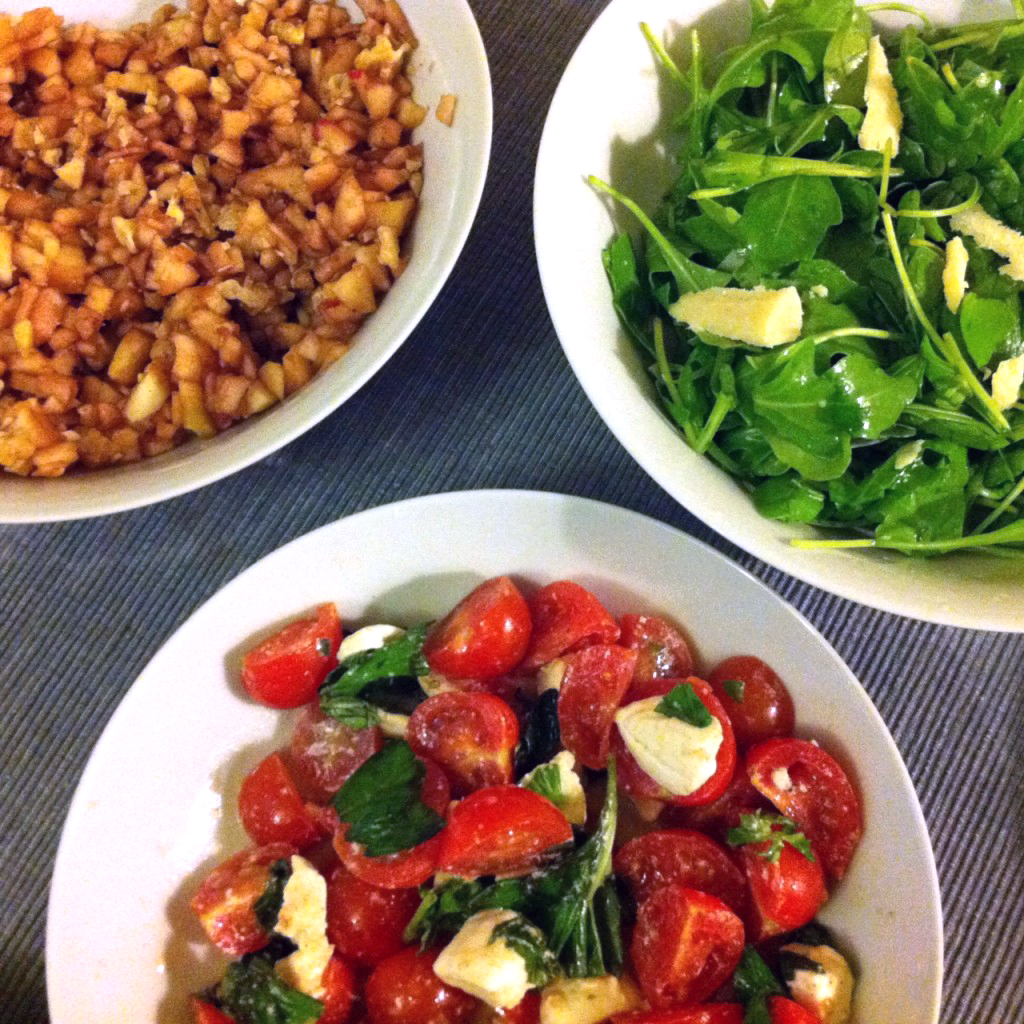
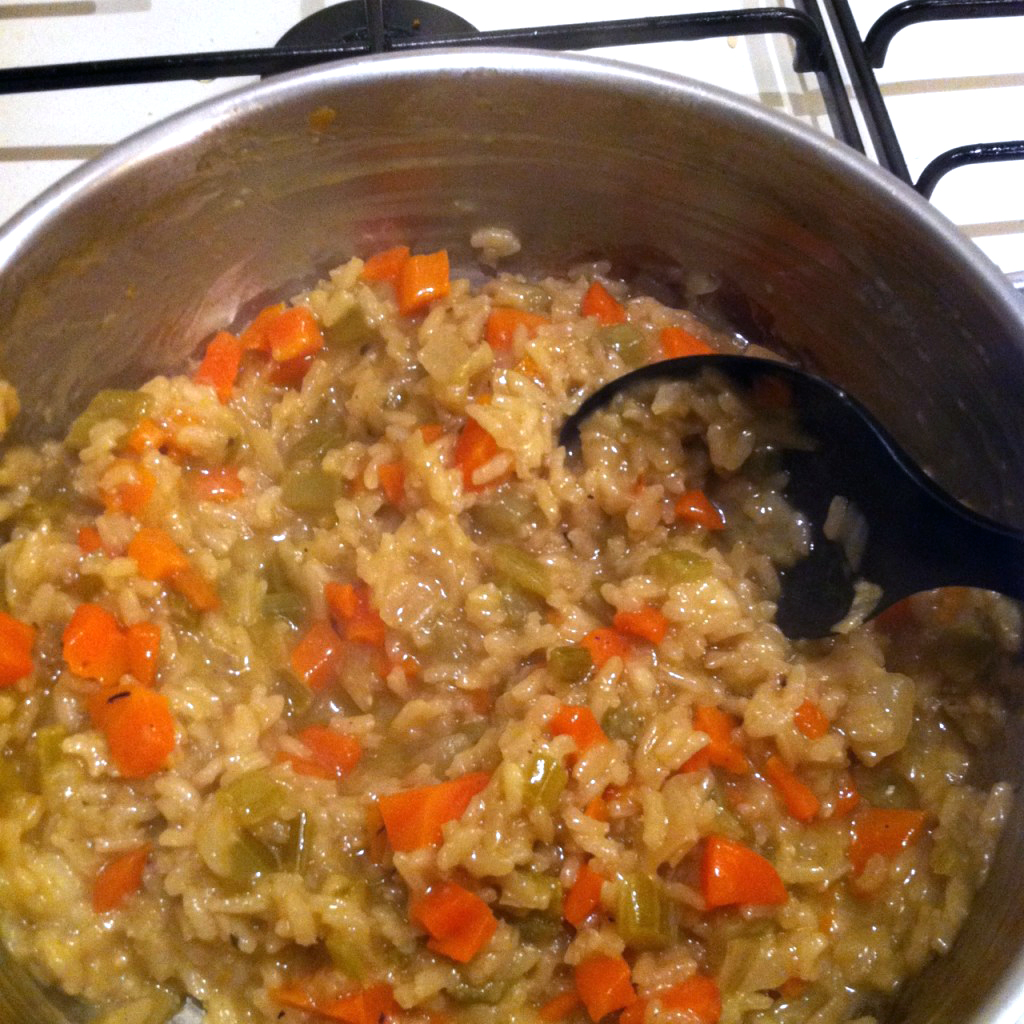
Right off the bat, we had a set of foods in mind we knew we would have to include in order to make it a both an authentic Jewish and Italian Passover Seder. After deliberating and narrowing down options, we eventually settled on a menu of charoset (a traditional salad comprised of finely chopped apples, walnuts, cinnamon, and wine traditionally piled on matzo), an arugula salad with grated Parmesan cheese, caprese salad, and risotto. For any fellow Passover celebrator, I a fully aware that risotto is probably the most inappropriate dish for a Passover Seder, but given it was Emma’s first time in Italy, grains were a very necessary component of our culinary lineup for the weekend.
While optimistic about our plan, the execution of the meal proved challenging to say the least, presenting a whole slew of roadblocks, the most challenging of which include:
- Lack of matzo. As shocking as it may seem, Florence is not home to too many Jewish holiday foods, outside of the offerings from one shoebox size Jewish grocery store near the Florence synagogue. Unfortunately for us, as it was the first night of Passover, the store was closed on this particular day leading us on a mad hunt around town for an unleavened bread in any form. I think we tallied in at five different grocery stores before finally stumbling on a box of French matzo crackers, which are round rather than square in shape and have a slightly puffier and chewier texture. No it was not the matzo we had in mind, but it more than did the trick.
- Lack of any and all Manischewitz products, particular their sweet cooking wine. In addition to being probably the most infamous and popular libation at Passover tables, this super sugary Kosher red wine is a crucial addition in charoset, giving it a distinct sweet/acidic tang that rounds out the fruity flavor of the apples. Scrambling for alternatives, Emma’s culinary creativity suddenly kicked into hyperdrive and lead to an ingenious creation that blew me away—Chianti wine (the king of Florentine wines) reduced down on the stove with a bit of sugar until becoming a syrup created nearly the same texture and flavor you would get from a traditional Passover sweet wine. Ten points to Emma. Charoset accomplished.
- Lack of prayer books and minimal memory of Passover Seder songs. Fortunately, this was the easiest fix of the bunch given Emma and I’s collective love of all things music. We figured a hefty Motown playlist would suffice just fine.
In light of all the kinks, the Seder surpassed all of our expectations. Emma got her long-desired pasta/tomato/cheese/veggie-filled Italian meal. We both got to indulge in our favorite Passover foods. And, most importantly, we caught up on much needed friend time—and about four hours of post-meal Mad Men on iTunes. Despite being in a foreign place with a language and customs different from our own, we found solace in each other’s company, in my cozy apartment on Via Ricasoli, in old and new traditions, and, most importantly, in matzo—even if it was French. To this day, it remains the best Seder I’ve ever attended.
— Maddie
A Note on Beautiful Food
My mom has always taught me to see the beauty in everything. And I mean everything. As a recreational painter and photographer, she is always looking to discover the special qualities in a place, a person, a work of art, or even a rusty piece of trash lying in the middle of the street. She has a knack for looking at the seemingly ordinary and turning it into something extraordinary. So, as the apple doesn’t fall far from the tree, it would make sense that this mentality would carry over to my work at Zingerman’s. I’ll explain.
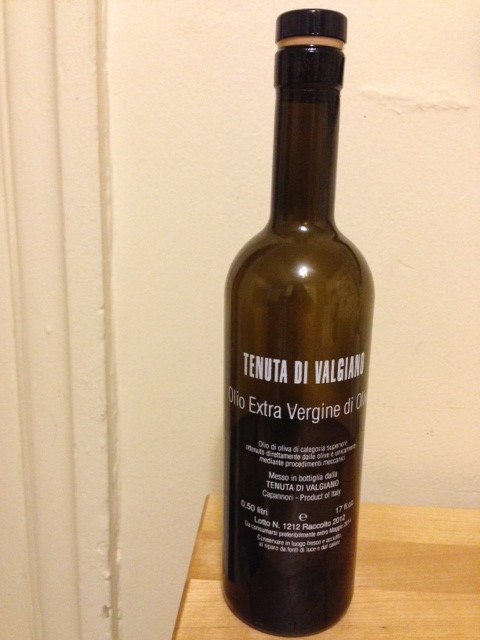 A few weeks back, on a leisurely day off work, I strolled into Zingerman’s Deli to do a bit of grocery shopping. As I approached the extensive wall of olive oils, I gravitated towards a bottle I had been eyeing for weeks. Tenuta di Valgiano, a beautifully balanced Tuscan olive oil with an equally buttery and peppery flavor. Given its heftier price point, I had a difficult time justifying the purchase; I am a mere eight months past my college graduation so you can do the math. And then a familiar line came into my head, my best friend echoing, “you deserve it”—our go-to line whenever one of us is on the fence about a purchase. With Emma’s comforting words and my own intrigue to drive me, I caved in and bought it.
Weeks later, as I continue to put this oil to good use in my kitchen, I keep wondering what drew me to this particular bottle. We carry upwards of fifty oils at the Deli, all of them distinct and delicious in their own way, and this was the one that popped out at me. Why? Obviously, the taste left a big impression and the tradition surrounding its production definitely added to the appeal. But, when I think back to my first sighting of this oil, what stuck out the most was the physical bottle itself. Shaped like a traditional wine bottle with an almost matte black finish, this bottle is simply adorned with bold white lettering stating the name and origin of the oil. That’s it. I know it sounds way too simple to leave any sort of impression, but that’s what I loved about it. The minimalism of the design really accentuated the beauty and boldness of the oil.
 That was a long rant about one bottle of olive oil, but this whole experience got me thinking about all of the interesting foodstuffs we sell at the Deli. While full flavor is first priority when it comes to product selection, we also look for traditionally made items with great stories attached to them. What my olive oil anecdote made me realize is that quite often these stories manifest themselves in the packaging and presentation of the product themselves.
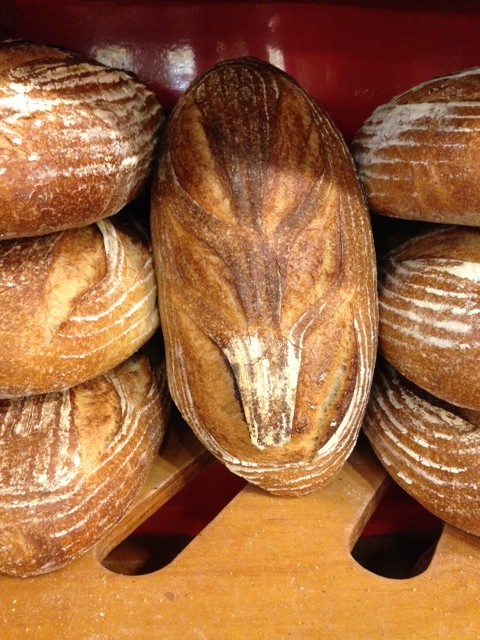
Take our famous Farm Bread from Zingerman’s Bakehouse. Inspired by the traditional loaves found at French dinner tables, this white/wheat blend is not only a bestseller at the Deli, but also consistently recognized for its beauty. The rough arrangement of cuts on top of the loaf isn’t just a random design, but is actually meant to depict a stalk of wheat—a visual expression of what lies beneath the crust.
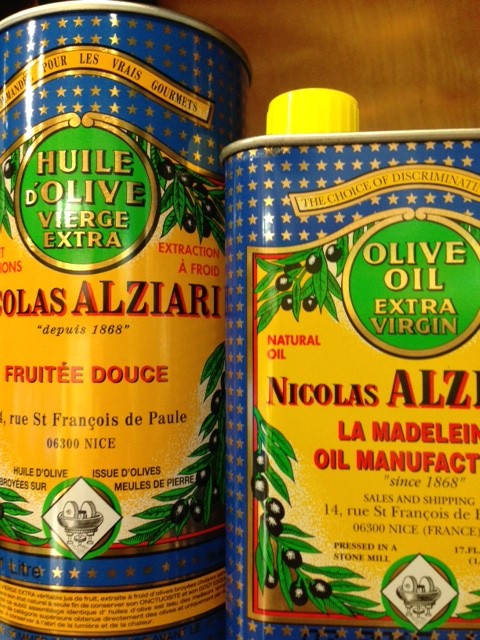 A very similar story can be told for Alziari olive oil, one of our most popular French oils sourced from the city of Nice. With a velvety mouth feel and light, buttery flavor, this oil is intended to capture not only the taste of Nice but the culture as well. This oil comes packaged in a square metal tin, painted a striking cerulean color and adorned with delicate designs. Taken all together, the presentation of the tin is meant to depict an old textile from southern France, further emphasizing the oil’s roots in its region.
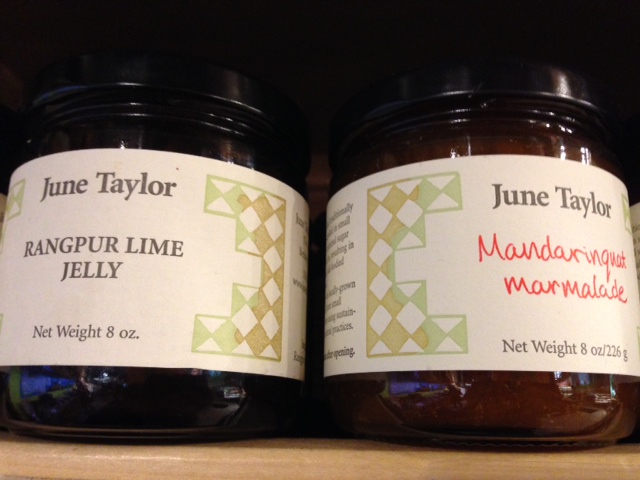
June Taylor fruit preserves are another standout product due to taste and appearance. As the reigning queen of specialty spreads, June Taylor of Berkeley, California has set the gold standard for small batch jams made with the freshest, seasonal produce available. Complimenting this old-fashioned, tried-and-true approach to jam making are her handmade labels, produced by a local artist. Using an original letterpress machine, each label is marked around the border with an asparagus green and beige geometric design, the origins of which I learned were inspired by the Book of Kells, an Irish book of Gospel containing numerous intricate illustrations. Within this border, the artist either prints or has June write the names of each spread, adding that extra personalized touch to a truly handmade product.
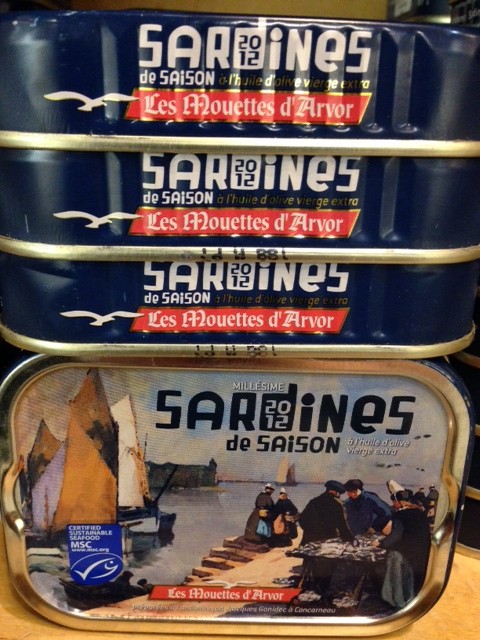 Perhaps the biggest standouts on the retail floor in terms of unique packaging are the Les Mouettes D’Arvor collection of vintage sardines. This line of sardines are aged anywhere from 1-4 years and each year’s vintage receives a distinct illustration on its tin. Les Mouettes commissions a different artist each year to paint the specific tin’s picture, always depicting scenes of fishermen and fishing culture. Bet you never thought you could score an authentic work of art with your sardine purchase, did you?
When shopping at Zingerman’s, taste is the ultimate test. But, unlike what our parents have lectured us about for so long, it’s also okay to judge a book by its cover and appreciate a product for all that it’s worth. More often than not, there’s a lot to be learned from those tiny labels on a jar of a jam, the rind of an aged cheese, or even the crust on a loaf of bread. As my mom continues to show me, there really is beauty to be found everywhere. You just have to be willing to look.
Please join us for:
The Secret Life of Preserves: with Special Guests: Noah Marshall-Rashid & James Beard Award Winner, Justin Rashid from American Spoon
For over thirty years, the folks at American Spoon in Petoskey, have elevated preserves beyond the supermarket variety that sits for months on the refrigerator door. Noah and his family use only fresh fruit and craft their preserves by hand to preserve the maximum amount of flavor from early glow strawberries, damson plums, sour cherries and more. Spend a cozy winter evening this coming Tuesday, February 4, 630pm at Zingerman’s Events on 4th, with Noah to hear the American Spoon story and taste the spreads that have made the company a Michigan icon.
I’ve officially hit the mid-winter food slump. Don’t get me wrong, I adore potatoes, could find a million ways to cook squash, and have no problem eating pasta for days. But what I really crave in the midst of these epic, sub-zero temperatures is fruit. Not flavorless, too-big-for-comfort grocery store fruit, but real farm-grown treasures that fill the Ann Arbor markets all summer long. Despite the limited supply of such delights this time of year, there is something that has helped me fill the void—jam.
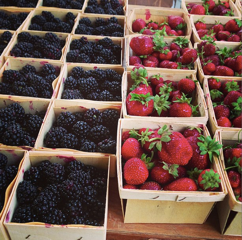
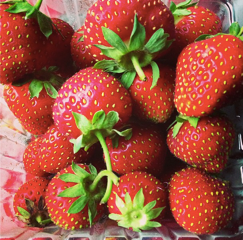
My first jab at jam making came during my junior year of college. The month was April and the first crop of spring produce had finally made its debut. Feeling the itch for some fresh, non-starch-based foods in my life, I made the trek across campus to do a bit of shopping at the Kerrytown Farmer’s Market. While taking my prerequisite stroll down the U-shaped walkway, I felt like I had reached produce heaven. Strewn across fold-up plastic tables were hefty bunches of skinny asparagus spears, English peas waiting to be plucked from their waxy pods, delicate artichokes tinted with shades of violet and army green, and carrots so petite and strikingly orange in color that they looked like a different vegetable entirely. But what really caught my eye were the pints of bite-sized strawberries and long stems of rosy rhubarb. Inspired by strawberry rhubarb pie, possibly my favorite dessert of all time, and a yearning to finally learn the art of jam making, I told myself that today was the day.
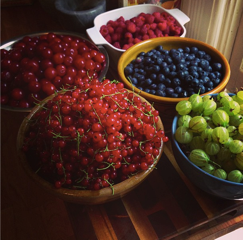
Fueled with both enthusiasm and eagerness, I left the market and paid a quick visit to the Ann Arbor library, checking out as many books on jam as I could find (and comfortably carry in my backpack). Next, Downtown Home and Garden for the full lot of jam making supplies: boxes of mason jars, a ladle for spooning the jam into jars, a funnel to get the jam in the jars without any spillage (an ideal product for my cleaning-crazed self), and a special set of tongs for lifting jars in and out of hot water baths. Who knew that a food product with only three ingredients—fruit, sugar, and some sort of thickening agent—would require such an extensive collection of equipment?
Upon arriving home, I jumped right in. I boiled a big pot of water and sterilized all of the jars. I washed the fruit and chopped them into tiny pieces. I cooked them down with a frightening (but necessary) amount of sugar, reduced the mixture down until it achieved a velvety texture, and then thickened the batch with a bit of lemon juice. After reaching the point where the mixture could coat the back of a spoon, I ladled my concoction into the jars, quickly capped them off, and re-dunked them in the water bath to sterilize again, making them safe to keep out of refrigeration for months. Within only a matter of an hour, I had gone from two bunches of rhubarb and four pints of strawberries to six jars of jam. Now that is some math I can get behind.
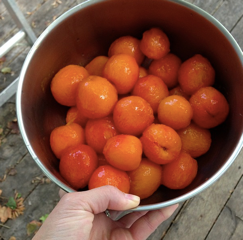
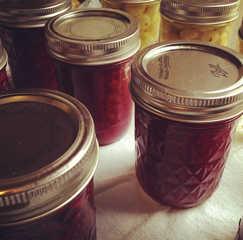
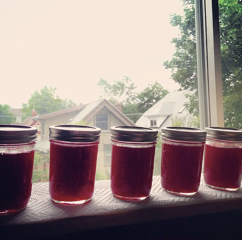
After sampling the first taste of my creation, I was hooked. And for summers to come, I continued to experiment with new flavors and combinations. Last summer, in particular, I entered into what you may call a “jam frenzy” of sorts. Apricot, blueberry, tomato, sour cherry, red currant, Concord grape, pears, gooseberries—you name the fruit, and odds are I cooked it down and put it in a jar. To me, the whole jam-making process feels almost like meditation. You set out with this intention, take all of the preparatory steps to achieve that intention, exercise great patience and concentration, and end up with something beautiful. While the process itself is fairly labor intensive, like any other skill in the kitchen, it just takes a bit of practice before it becomes second nature. I will continue to cherish those moments of kitchen calm, watching fruit transform into a tangible marker of a time, a place, and a season. For me, food doesn’t get much better than that.
Great gift suggestions from the ZINGERMAN’S Deli
This year was filled with a lot of firsts. I rented my first apartment as a non-student. I got my first full-time job. My best friend, with whom I’ve lived in the same city since we were in 3rd grade, moved to Chicago. And I got my very first Christmas tree and stocking. I know that the last item on that list doesn’t come off quite as significant as the others at first glance, but as a Chanukah-celebrating kid growing up around lots of Christmas-celebrating friends, I always received a major dose of holiday jealousy around this time of year. Don’t get me wrong, I love Chanukah and all of the customs that come with it, but there is something about traditional Christmas culture – cutting down and decorating a tree, listening to carols, hanging stockings, and enjoying the company of close friends and family – that has always appealed to me. Now that I am dating someone with strong Christmas traditions, I have the privilege of finally partaking in the rituals I’ve admired for so long.
With Christmas just days away, I’m sure many of you, like me, are scrambling to find those perfect stocking stuffers for your loved ones. In the hopes of sparking some creative gift ideas, I’m sharing my picks for unique and absolutely delicious stocking stuffers from the Zingerman’s Deli retail section.
Les Mouettes D’Arvor Vintage Sardines ($14.99/tin)
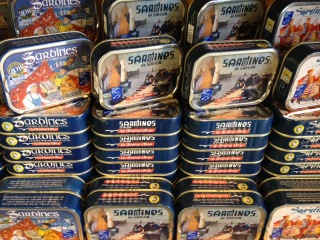 I know sardines must seem like an odd way to kick of a list of holiday stocking stuffers, but trust me that these sardines are special. Meaty French sardines are artfully arranged in a small tin, packed in olive oil, sealed, and left to age for anywhere from 1-3 years—therein lies the vintage aspect of these sardines. As these tiny fish grow older with time, they begin to tenderize, taking on a buttery and almost silky texture. While the ways to use such a decadent product are only limited to your imagination, I tend to opt for simple preparations that really let the fish shine. Place one or two filets atop a nice piece of crusty, buttered bread for a simple starter. Throw an entire tin-worth into a batch of your favorite pasta for an instant sauce. Or, take a fork and eat them straight out of the jar. With tins ranging from 2010-2013, these sardines make the perfect gift for avid fish-lovers and adventurous (or want-to-be adventurous) foodies alike.
Edmond Fallot Mustards ($7.99/jar)
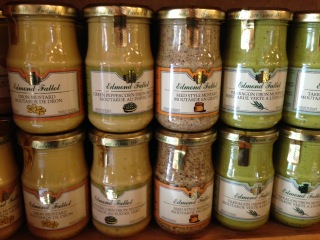 If there were one kitchen staple I couldn’t live without, mustard would rank high on the list. It’s a rarity that I don’t have at least one jar of the stuff in my refrigerator at any given time. My tried and true favorite mustards come from Edmond Fallot, a family run mustard business out of Burgundy, France. The Fallot family is famous for their well-balanced and perfectly spiced Dijon mustard, as well as a string of unique flavors. From whole-grain, to green peppercorn, horseradish, tarragon, and even honey balsamic, there is mustard for everybody on your holiday gift list. Now please don’t think that mustard must only be relegated to the commonplace sandwich condiment: the uses for these mustards are endless. Throw a teaspoon of your favorite mustard into vinaigrette for added thickness and depth of flavor. Spoon a bit onto your favorite fish or meat for an instant flavorful glaze. Or, simply place a jar on a cheese and meat platter and let the tasting begin.
Robert Lambert Hot Ginger Caramel Sauce ($17.99/jar)
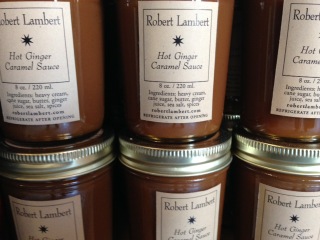 Despite its innocent sounding name, this caramel sauce is not for the faint of heart. Former musician turned artisanal specialty food producer Robert Lambert churns out some of the most unique and meticulously crafted jams, sauces, and other jarred delights on the market today. The Hot Ginger Caramel Sauce is no exception. Lambert starts with a thick and buttery caramel base and then spikes it with white ginger and a blend of warm holiday spices. The result is a sweet, toasty, and spicy sauce, ideal drizzled over a scoop of ice cream, a piece of pound cake, or, if you’re like me, eaten straight out of the jar like peanut butter. A favorite among adults and kids alike.
Bee Raw Sweet Yellow Clover Honey ($19.99/jar)
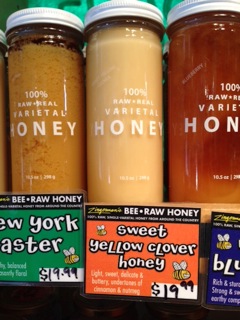 I’ve had a love affair with this honey since it arrived on our shelves over two years ago. Bee Raw’s line of honeys is all single-varietal and raw, meaning there is no processing or blending, but just honey in its purest form. The sweet yellow clover honey was unlike anything I had ever tasted before. A far cry from the super thick and overly sweet plastic bear honey we’ve grown so accustomed to seeing in the grocery store, this honey is light yellow and milky in color, texturally similar to a dense caramel sauce or softened butter. Flavor wise, it is sweet, but not too sweet, with faint floral and cinnamon notes. My favorite ways to use this honey range from: stirring into tea, spreading onto a hot piece of toast, drizzling in yogurt, or pairing with fruit and cheese. Also, the sleek cylindrical shaped jars are perfect for fitting into any size stocking on your mantel.
Jasmine Silver Needle Tea ($26.99/bag)
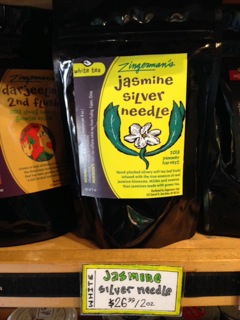 One of the newer items on the list, Jasmine Silver Needle tea, has been winning over tea-lovers this holiday season. A combination of white tea leaves and real jasmine blossoms from Fuding, Fujan China, Jasmine Silver Needle is simultaneously sweet, floral, and aromatic without coming off too strong or perfumey (a common problem I’ve encountered with most jasmine teas on the market). This tea also has a long life per cup, maintaining its strength and delicacy through up to four steepings. The perfect sipping tea for cozy snow days and a real treat for new and experienced tea lovers.
Want to come up with your own Zingerman’s stocking stuffers? Eager to create that perfect custom gift box/basket? Come visit us over at the retail department at Zingerman’s Deli. We are happy to help.
Happy holidays and good eats to you all!
*From time to time, we share the writing of our friends and co-workers on this site. Today’s guest post comes from Zingerman’s Deli staffer Maddie LaKind.
On a recent shift at Zingerman’s Deli, a co-worker approached me with an odd expression on her face. Eyes widened and head cocked to the side, I could tell something had caught her attention, but what?
“Where did you get that shirt?” she asked conveying a slight bit of envy as she examined my t-shirt—a camouflage shirt printed with a goofy cartoon red-nosed reindeer balancing baked goods in its antlers. The large Zingerman’s Bakehouse logo splayed across the back suggested that this particular shirt was a holiday-themed model that debuted at the bakery some years ago.

Casually, I replied, “I actually snagged it out of a bag of old work shirts that was left behind in the break room.
With a slightly disappointed note in her voice she said, “It’s a great shirt,” before heading back to work.
As I walked away from the interaction, I felt a wave of déjà vu rush over me. I’ve had this same conversation before, but with me on the inquisitive end. Suddenly, images of Zingerman’s shirts that I’ve admired among my fellow employees over the years came flooding back to me.
But I’m getting ahead of myself here. Let me explain:
Every Zingerman’s business has a similar dress code consisting of a simple t-shirt that must say Zingerman’s on it in some form or another. Yes, the Roadhouse servers and chefs have their own uniforms, and ZingTrain employees tend to err on the side of casual office attire, but otherwise t-shirts are the most widely-utilized articles of clothing in the Zingerman’s Community of Businesses.
Given Zingerman’s 31+ years of existence, you can imagine the range of stories that accompany such a wardrobe. To make it easy, I’ve organized Zingerman’s t-shirt stories into general categories that I’ve observed over the years—mind you this is an abridged list.
- There are the basic purchased shirts, bought at various Zingerman’s businesses (“I bought this shirt while out to dinner at the Roadhouse the other night.”)
- There are the earned shirts, given as a prize or thank you for doing something within the company (“I received my shirt whilst volunteering at Grillin’ for Food Gatherers.”)
- There are the nostalgic shirts, gifts or heirlooms from fellow employees (“This shirt got passed down from Chase, who left and then passed it down to Julie, who left and then passed it down to me.”)
- There are the found shirts, stumbled upon at non-Zingerman’s shops (“I saw this shirt while sifting through a rack at Value World.”)
- Lastly, a notable category, the homemade shirts that embody the creative talents of employees (“I designed this shirt myself”)
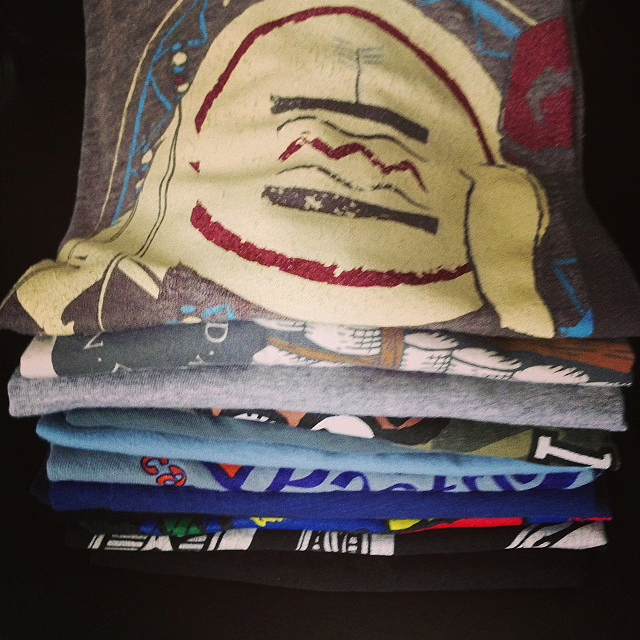
Given this complex work attire culture, I began to think about what makes a certain Zingerman’s t-shirt so intriguing or worthy of the awe and admiration I noted earlier. Why do employees care, or even pay attention? Sure, graphics and visual appeal play a big role. Comfort definitely gets calculated in there, as do rarity and exclusivity.
But, what I’ve realized is that like all of the products that fill the shelves of the Deli, the dishes that make up the menu at the Zingerman’s Roadhouse, or the notable coffees, cheeses, and breads that emerge from Zingerman’s businesses, the real draw of these shirts is the stories surrounding them. Whether dripping in Zingerman’s signature ‘muno’ font, emblazoned with quirky illustrations, or simply promoting a tasting or event, the shirts serve as tiny relics of times passed and memories had. Symbols of where we’ve been, how far we’ve come, and where we want to go.
For a piece of clothing as inherently simple as a t-shirt, I’d say that’s a pretty cool thing.