
Tag: Miss Kim
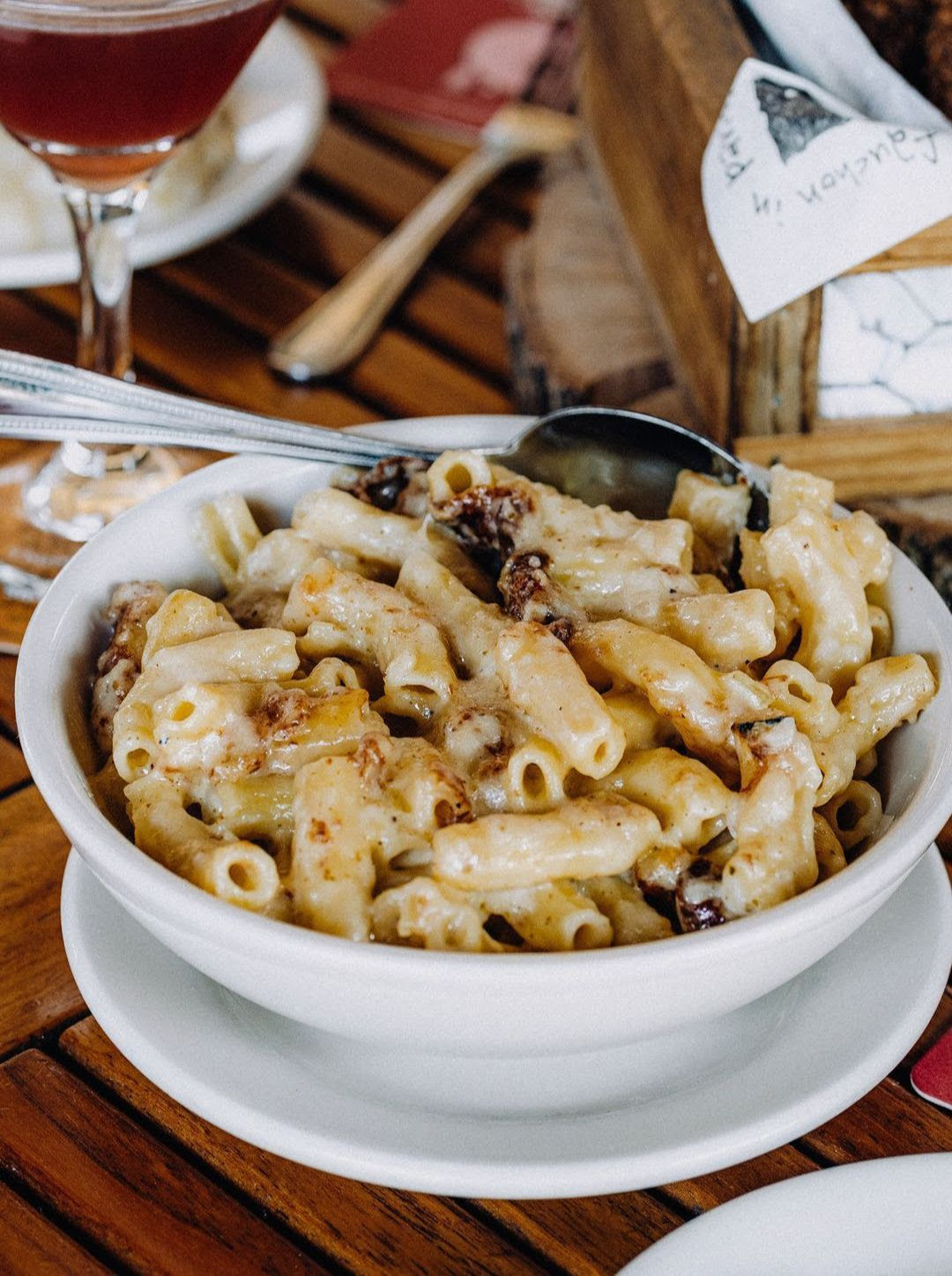
Miss Kim and the Roadhouse offer up delicious deals
|
Tag: Miss Kim
A Korean classic brought to a whole new locally-based level
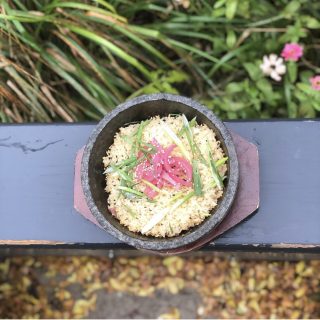
A few years ago, CNN Travel said that bibimbob was one of the “World’s 50 most delicious foods.” I believe that the bibimbob Ji Hye is cooking up at Miss Kim is some of the best of the best. While you can, of course, grab a flight to Seoul to sample this classic dish in its homeland, it will be quicker, easier, and a lot less costly to just make your way over to Kerrytown, sit down, order a beer or a glass of wine, and let the Miss Kim crew take it from there.
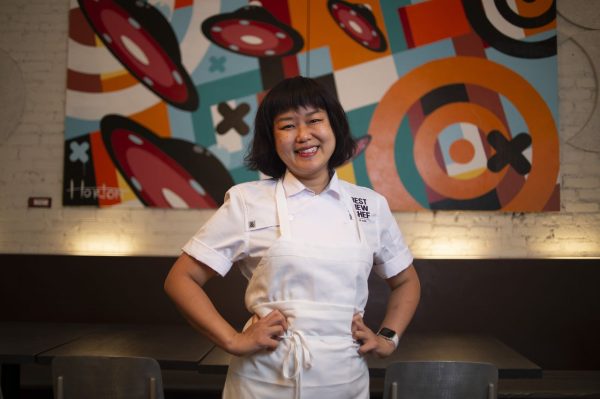
 Ji Hye, who was nominated this year for the James Beard Foundation’s “Best Chef: Great Lakes,” says:
Bibimbob is a versatile dish that appeals from the farmers to the kings. The dish is well designed for its casual convenience, even when enjoyed at the palace. I especially love the pantry clean-up and the ancestral ceremonial leftovers origin stories for their practicality. I also love that historical documents mention several different versions of bibimbob. It is still true in Korea these days, as a market stall specializing in bibimbob will show off at least a dozen mounds of vegetables to choose from to your heart’s content.
Though there are a number of different styles of bibimbob, they all feature a bed of rice, fresh local ingredients, and flavorful sauce. It’s the perfect cuisine to see how varied and unique regional Korean food is. Each region takes what is available locally and seasonally and puts its own stamp on it.
Although stone bowls have been used to cook rice in Korea for centuries, stone bowl bibimbob is fairly new, a 20th-century invention. But this is a kind of food evolution I love! Take the tradition and create something new that’s just so delicious. And it is perfect for the Michigan weather, as it keeps your food warm throughout the entire dinner.
Now we offer six types of stone bowl dishes at Miss Kim, some definitely inspired by the regionality of bibimbob:
· Beef bibimbob
· Tofu bibimbob
· Pork bibimbob over soy butter rice, inspired by Haejoo Gyoban from North Korea where the pork and the oiled rice (in our case, butter) make a rich bibimbob for a cold region
· Mushroom bibimbob with soy paste-based ssamjang, rather than gochujang. All vegan, inspired by Buddhist traditions.
· Potato Rice with potatoes in brown butter and soy butter rice, topped with pickled onions. Inspired by simply cooked rice from mountain regions of Korea
· Kimchi Fried Rice
Come in and enjoy this classic dish served in a traditional stone bowl—keeping your meal hot and delicious until the very last bite!
Book your next visit to Miss Kim now!
Want more from Ari?
Sign up for Ari’s Top 5 e-newsletter and look forward to his weekly curated email—a roundup of 5 Zing things Ari is excited about this week—stuff you might not have heard of!
Tag: Miss Kim
A very tasty treasure in Ann Arbor’s culinary ecosystem
One thing I’ve learned from traveling a lot over the years is that often, myself included, we can take local treasures for granted while we’re simultaneously letting ourselves be wowed by what we “discover” when we leave town. When I consider the context of the national culinary scene though, I’m reminded regularly of just how special the story of what Ji Hye and everyone at Miss Kim are doing really is. Here are three BIG reasons to make time to head over to the restaurant soon!
-
Gain a greater understanding of Korean cooking! While Korean barbecue, kimchi, and a mainstream version of bibimbob have gotten attention in the US in recent years, there is so, so much more to the amazing culinary traditions of the Korean peninsula. Ji Hye has done inspiring deep dives into the cooking of each of South Korea’s nine regions, as well as that of the impossible-for-any-of-us-to-visit-right-now North. She’s also gone back in history to study and cook food from the various Korean royal dynasties and to honor the influences of Japan and China. Each meal at Miss Kim then exemplifies our forty-year-long commitment to traditional food in a wonderfully memorable, exceptionally tasty way. Every visit is a chance to learn about the intricacies of what the thousands of years of rich Korean culture and history are all about.
-
The quality of Ji Hye’s cooking! Cooking well is not about headlines; to the contrary, it’s mostly about hard work, attention to detail, self-confidence, and an ability to learn from others while staying true to your own sensibilities. At Zingerman’s, we long ago committed to full-flavored food, which we define further to mean complexity, balance, and finish. Ji Hye’s work in the kitchen makes these come alive beautifully on every plate. Which is why food lovers from out of town consistently reach out to tell me how wonderful their meals at Miss Kim were. Kudos and respect to Ji Hye for working so hard and so successfully to master her craft!
-
Help support one of the many wonderfully positive immigrant stories in the U.S. I’m not here to argue formal immigration policy but it seems clear from any number of studies that the newest generations of immigrants—of which Ji Hye is one—are doing wonderful work to enrich the culture, economy, and educational work of the country. These are the positive stories of immigration, like the one in Malcolm Gladwell’s podcast, that are often not told, but certainly ought to be. Koreans have been coming to the U.S. and contributing positively to every part of the country, since the 1880s. The first significant wave of Korean immigration took place in the first years of the 20th century, about the same time my grandmother came to Chicago from Lithuania. Coming to a new place is not easy. We are all, in our own ways, moving into new “places” in our lives on a regular basis: not just new countries, but new jobs, new relationships, new communities, new stages of our lives. Ji Hye’s work to stay true to herself and yet adapt to local influences and ingredients is a model for the rest of us to learn from.
Whether you come to Miss Kim for lunch or dinner, whether you opt to dine or do carryout, you have the chance to benefit from all this and more with every visit. I feel fortunate to have someone as special as Ji Hye as a long-standing part of the ZCoB and here in Ann Arbor. In recent years, Miss Kim has gotten well-deserved recognition from Food and Wine, the James Beard Foundation, Bon Appétit, The New York Times, and more! Our town has been getting more and more recognition as one of the best places to live in the U.S. in great part for the richness of its cultural, and culinary, resources. Miss Kim, quietly, is a big part of what makes that happen. Kudos to Ji Hye and everyone in the restaurant for making the Miss Kim story so tasty and inspiring!
Book your next visit to Miss Kim!
Want more from Ari?
Sign up for Ari’s Top 5 e-newsletter and look forward to his weekly curated email—a roundup of 5 Zing things Ari is excited about this week—stuff you might not have heard of!
Tag: Miss Kim
Super smooth, wonderfully delicious tea
The Miss Kim black tea comes from Jeju Island off the south coast of the Korean mainland. Although most Americans won’t likely know it, the island is one of the most popular tourist destinations in Korea. Having read about it a bunch of late, I’m ready to go; it’s got the highest mountain in Korea, a five-mile-long lava tube 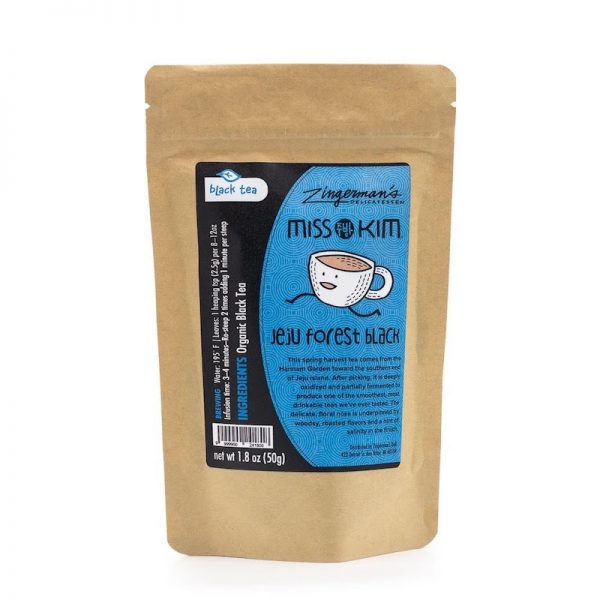 you can walk through; it’s famous for haenyeo, female divers who gather abalone and other seafood for up to five hours a day in the cold sea without scuba gear; and a world-famous, internationally-recognized ancient forest. Recently, the island was also listed as one of the new seven wonders of the natural world. If you have kids, there’s a teddy bear museum, and for folks like me, a tea museum too. Culinarily, Jeju has for centuries been famous for its “black pig,” a centuries-old breed of hog that has been called “the Kobe beef of pork.”
The tea comes to us from the folks at Osulloc Farms, the founder of which, Seonghwan Suh, made the advancement of Korean tea culture his life’s purpose. “We want to establish our traditional tea culture at any cost,” he said. Although Mr. Suh has passed on, the company’s commitment carries forward; their “beautiful dedication to spreading Korean tea culture continues by winning awards every year at world-famous prestigious tea competitions with sweat and passion to establish Korea’s tea culture.” The island’s volcanic soil contributes greatly to the uniqueness of the tea. To make it, young, spring-harvest tea leaves are oxidized and gently fermented using “bacteria extracted from traditional Korean soy sauce, or by aging it once again with natural ingredients in Jeju.”
I’ve been drinking the tea regularly for the past few months. It’s smooth, full flavored, nearly free of tannins. If you like black tea like I do, if you’ve been drinking “English Breakfast,” “Irish Breakfast,” or even high-quality Chinese Yunnan, you might well want to give this Korean tea a try. It’s a great match for the complex dishes that Ji Hye has so lovingly crafted. Come by Miss Kim this week, enjoy some of Ji Hye’s terrific traditional Korean cooking, and sip a bit of this lovely black tea at the same time.
P.S. You can also get it at the Deli and the Coffee Company. You won’t see the Korean Black Tea on the zingermans.com Mail Order site, but we’re happy to ship you some—email us at [email protected].
Want more of Ari’s picks?
Sign up for Ari’s Top 5 e-newsletter and look forward to his weekly curated email—a quick roundup of 5 Zing things Ari is excited about this week—stuff you might not have heard of!
Tag: Miss Kim
I haven’t been to Korea in summer since I moved away when I was 13.
Our summer break was about 6-7 weeks long – I can’t recall exactly. Around that time my Dad usually got a week off work as well and we’d go on a family vacance – that’s what we called family vacations in Korea. For some reason, we used the French word.
Being a peninsula, South Korea has two seaboards. Seoul, where I lived, is on the western seaboard and we’d go to the beach for a weekend sometimes. The southern beaches are quite nice, too, but for vacance my family always went to the Eastern seaboard. We thought it had better beaches. The drive to the eastern seaboard was pretty stunning—we drove through mountains to get to the coast.
We weren’t very wealthy when I was growing up. We couldn’t afford to stay in a hotel and we didn’t eat out much. When we got to the coast, we’d find a little village and then we’d find ourselves a villager who was willing to rent us a room in their house for cheap. The original Airbnb!
These were old homes, with the structure built around an internal courtyard. All the rooms opened into this courtyard so there was a little bit of privacy. The amenities were all in the courtyard. My family got a room in one of these houses and we all slept in it. Sometimes, some of the other rooms were also rented to visiting families and if you wanted it, there was camaraderie to be had with the other visitors or with your host family. Have you ever seen one of those Airbnb ads with all those beautiful people living in those amazing houses and they start making friends with the owners? That happened if you wanted and it was kind of cool.
Since we couldn’t afford to eat out even when we were on vacation, once we were all settled into our courtyard room, my mom would go to the local markets. She’d buy meats, fish, and accoutrements – typically lots of greens, different kinds of lettuce, always perilla leaves, often the Korean version of young swiss chard or mustard greens. She always packed kimchi, ssamjang, and rice from home. My dad had always brought along his camping kit, and then off we’d go to BBQ on the beach.
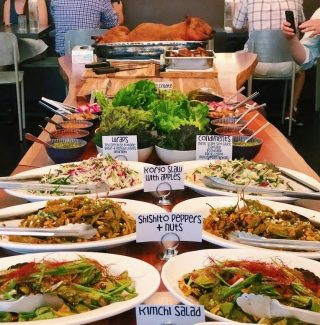
Once the grilling was done and the rice was cooked, it was time to eat. Basically, you looked for the biggest lettuce leaf you could find. Then you piled up as much stuff on it as you could fit in your mouth – and pop! – in it went! That’s how it’s meant to be – just one bite.
Ssam BBQ is one of my favorite parts of Korean food. Those bite-sized ways to express yourself. Your mom might show you how to make a bite when you were little but then you were on your own. You could make your own bite however you wanted it. You could try all kinds of different things.
I know it all sounds very romantic, but back then all I wanted was to live in a Marriott and eat in a restaurant. Now, I feel such nostalgia for those summer vacations. I yearn for that picnic on the beach and that feeling you got as a perfectly constructed bite exploded in your mouth.
Luckily, I now have a restaurant of my own, Miss Kim, so I took that Ssam BBQ and made it a party! Come try it on Monday, July 8th at our monthly Suckling Pig dinner, and help me keep the memory of those summer vacations alive!
Buy tickets here before it sells out!
Tag: Miss Kim
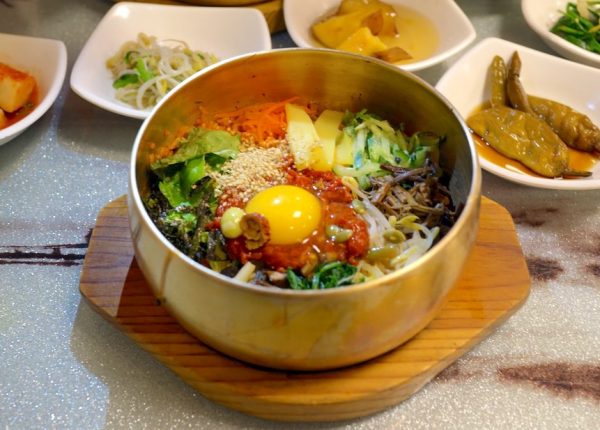
Have you ever tried bibimbob? Though there’s a number of different styles, they all feature a bed of rice, fresh local ingredients, and flavorful sauce. It’s the perfect cuisine to see how varied and unique regional Korean food is. Each region takes what is available locally and seasonally and puts its own stamp on it. Bibimbob in Jeolla Province boasts up to 20 ingredients, with rice cooked in beef stock, beef tartare and bean sprouts tossed in gochujang. That’s certainly different from the one from Tongyeong, a coastal city in Gyeongsang Province, where bibimbob is made with manila clams and seaweed tossed in anchovy soy sauce. Then there is the humble mountain vegetable bibimbob from Gangwon Province, delicious in its own simplicity.
I have been cooking professionally for about 10 years now, but I am not a classically trained chef. I am still a little wide-eyed when it comes to food, very much enchanted and finding inspiration everywhere—farmer’s markets, cookbooks, pouring through Instagram posts of other cooks, eating and exploring whenever I can.
When I started dreaming about a Korean restaurant, I agonized over what that means. What is Korean food? Is Korean food even Korean when it is done so far outside of the motherland? When something stumps me this way, I turn to learning. So I set my worries aside and studied Korean food. Educating myself on regional cooking was a joy because it’s fun for a food nerd like me, but it was also a relief for the self-doubting immigrant in me.
My ancestors took what is locally available and developed distinctive styles of Korean food for where they are. This shall be how I approach the Korean food at my restaurant, too—as a regional Korean food in Michigan.
 Learning about food, especially regional cuisine, shows me a window into people’s stories. I can imagine foraging for mushrooms and wild greens in the mountainous Gangwon Province to make the humble mountain vegetable bibimbob for my friends. I can imagine getting the freshest manila clams by the seaside and eating the bibimbob from Tongyeong in Gyeongsang Province. I can imagine living just outside of North Korea in China, mixing in cilantro and coriander seeds (which are more typically Chinese ingredients) into my napa cabbage kimchi.
I can see their lives and their stories, as I can see my own, using Ann Arbor’s own beets and leeks in my bibimbob at Miss Kim. It makes me feel alright, being an immigrant who knows where she is from and putting her roots down in her new adopted home.
For 2019, Miss Kim Korean Restaurant will be exploring different regional cuisine for their special dinner series every month. They travel to Jeolla Province on March 25th for 5-courses of modern and ancient cuisine, featuring the Jeonju bibimbob!