A coming together of Ashkenazi and Sephardic culinary traditions
With the holiday of Shavuot coming up in a few weeks, I’ve had the Jewish tradition of eating dairy foods and fish on my mind. I’m not sure exactly what led me to put this powerfully tasty combo together now, but I’m glad I did—it’s delicious!
Like most things I enjoy making, this one’s super simple. It reflects both the cuisine of the Sephardic Jewish Mediterranean and the foods of the Ashkenazi Jewish community of Northern and Eastern Europe.
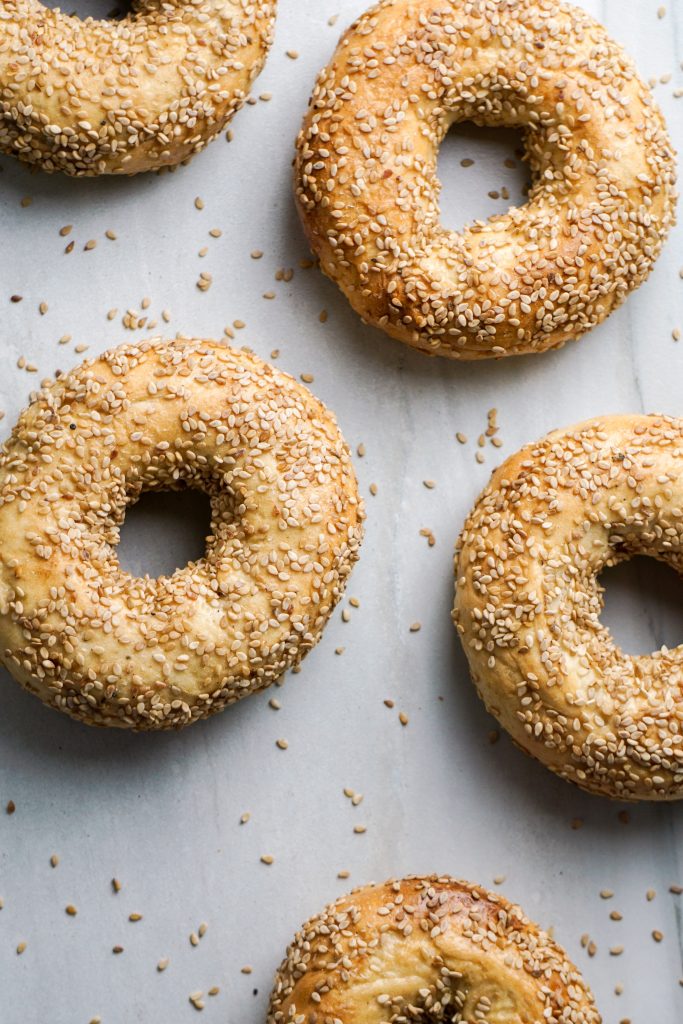
To make it, I started with one of the Bakehouse’s lovely Sesame Street Bagels, but take your pick; they’ll all be good. Toast until golden brown, then drizzle generously with one of our more delicate extra virgin olive oils—I’ve long loved the ROI oil from the Boeri family in the region of Liguria, the Italian Riviera.
Spread some room-temperature world-class Zingerman’s Cream Cheese on the still-warm bagel. Lay on some really good anchovies—as many as you like. I used the outstanding ones we get from Ortiz, from the Cantabrian Sea off the north coast of the Spanish Basque Country. I also love the anchovies from Fishwife, which hail from Spain as well but via California.
Grind on fresh black pepper and add any more vegetables you want: the pipparras pickled peppers from Spain, a couple of tomato slivers in season.
The warmth of the toasted bagel softens the cream cheese, and the creaminess of the cheese contrasts beautifully with the salty, meaty, umami tang of the anchovies. And when I think about it all culturally, I love that it’s a great coming together of the two main streams of Jewish culture in exile: the olive oil, anchovies, and herbs or capers from the Sephardic tradition, and the bagel and cream cheese from the Ashkenazi!
A meal that’s easy to make at home in a matter of minutes
I probably shouldn’t be surprised anymore that the best ideas so often start out as silly jokes. The Pimentuna casserole began about a decade ago with a bit of light culinary humor and ended up as a classically delicious, go-to, make-at-home Zingerman’s dish.
The whole thing started when my significant other, Tammie Gilfoyle, had the good idea to mix our Zingerman’s Pimento Cheese with tuna. I tried it, and she was right: it was terrific. This grew into the highly popular Pimentuna melt sandwich that ran as a special at the Roadhouse for a while, grilled on one of my Bakehouse favorites, Roadhouse Bread.
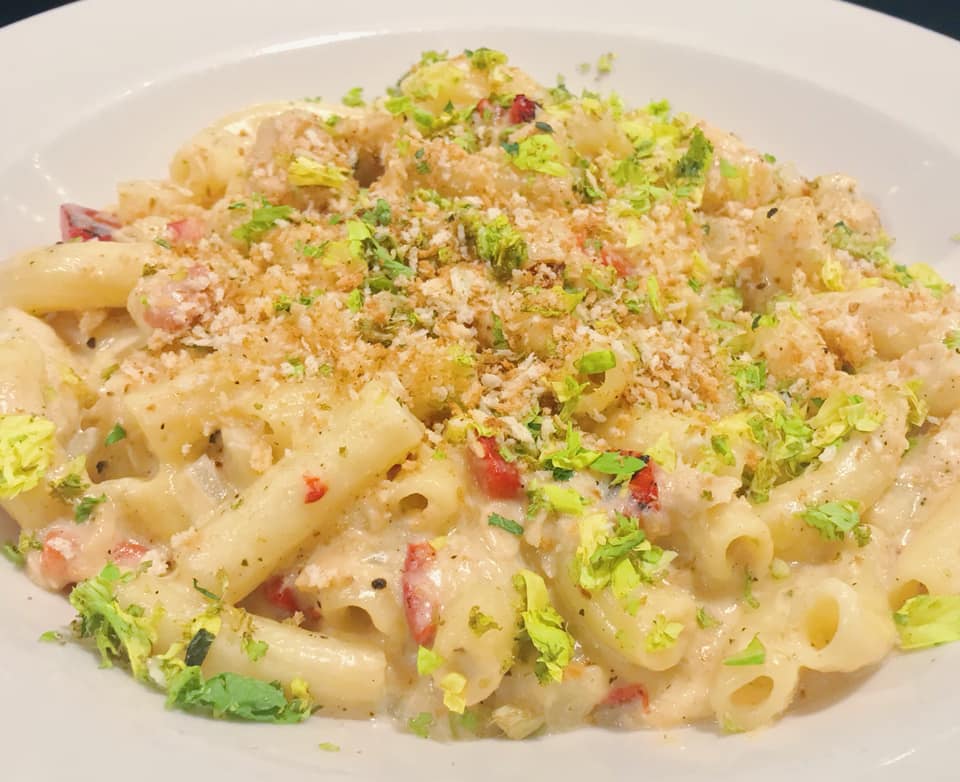
Making Pimentuna really couldn’t be much easier. Start with a container of Zingerman’s Pimento Cheese, and mix it with roughly the same volume of really good tuna. You can adjust the ratio, of course, to fit your taste. Add salt and pepper as you like, and you’re ready to go. Enjoy it in a sandwich or as a salad!
A year or so after all that, we were still joking around—this time with the notion that we ought to turn our new mix into a Pimentuna casserole. I would be a throwback to, and a takeoff on, the tried-and-true mid-20th-century classic. This sounded a little crazy at first, too, but then it started sounding better and better … and I decided to make it, tossing the Pimentuna with the Mancini family’s marvelous bronze die-extruded, slowly dried maccheroni.
The Roadhouse crew had the great idea to seal the deal by topping the dish with a handful of Zingerman’s Black Pepper Potato Chips to add some crunch. What can I say? Killer! Comforting, compelling, and definitely worth taking a few minutes to make for lunch!
A beautiful bit of British comfort food
to cook up at home!
I learned about this wonderful bit of British comfort food from David Lockwood, one-time Deli staff member, now long-time partner at Neal’s Yard Dairy (NYD) in London—through whom we get these wondrous wheels—selected specifically for us. David was so enthused that I couldn’t ignore his advice, and, as usual, he was right on. This combination is terrific!
This simple but delicious dish all begins with the exceptionally excellent Appleby’s Farmhouse Cheshire. The Deli just cut into a particularly tasty new wheel, specially selected for us by David and the NYD crew—which is why it’s been on my mind of late. It’s been nearly three decades now that we’ve been selling the Appleby family’s very fine farmhouse Cheshire cheese at the Deli. I first visited Abbey Farm at Hawkstone—about halfway between Birmingham and Liverpool—where Lucy Appleby was making her now-famous raw milk, traditional Cheshire, sometime in the late ’80s.
Best I can remember, I kind of just showed up at their centuries-old farmhouse. Remember back then there was no email, no cell phones, no websites. Just books, paper maps, and word of mouth! I had read about them in the writings of artisan cheese supporter Major Patrick Rance and was eager to experience the Cheshire in its home. Mrs. Appleby, already in her late ’60s at the time, invited me in to watch the cheesemaking, and then later that day to sit in the kitchen for tea, a bit of talking, and of course, some cheese tasting. The Cheshire she was making—true to what had been crafted in the county for so many centuries—was exceptional. It was then, and remains now, one of a kind, little known or understood outside of a handful of folks in the know.
For context, at the time I knocked on the Appleby’s door, there was almost no British farmhouse cheese available in the U.S. And, in fact, truly traditional cheese was on the verge of going extinct in the U.K. Cheshire had once been the most popular cheese in England—150 years ago there were thousands of makers in the area. Sadly, though, as our friends at Neal’s Yard Dairy share: “By the end of the war, only 44 farmhouse Cheshire cheesemakers remained. In view of such challenging market conditions, the story of the Appleby family is quite remarkable.”
In the context of what I wrote above, it’s clear that the Appleby family have repeatedly chosen hope, countless times, over all the many years they’ve been doing this. I can only imagine how difficult it was to continue to do the hard work to craft a difficult-to-make artisan cheese when literally everyone else was going in the opposite direction—it was nearly impossible to find retailers who would stock it or places and people who were willing to pay much more to get this handcrafted traditional version of one of Britain’s oldest cheeses. Every time I eat a bit I’m deeply grateful that they did.
The quote above from Historian Yuval Noah Harari’s statement, “Choices change history” is just as true in the cheese world as anywhere else. In this case, one person’s decision to choose hope, at a time when the artisan food world was at a historical low point, played an important part in helping the Appleby’s to do what they have done. Major Patrick Rance ran a small cheese shop in Streatley-on-Thames and became a passionate campaigner for the cause of traditional British cheese. Rance’s Great British Cheese Book came out the year we opened, 1982, and it served as a sign of hope for frustrated cheesemakers like the Applebys. Years later, Christine Appleby, Lancy and Lucy’s daughter, declared, “If it hadn’t been for him, we’d have given up years ago. He was the flagship of British cheese.”
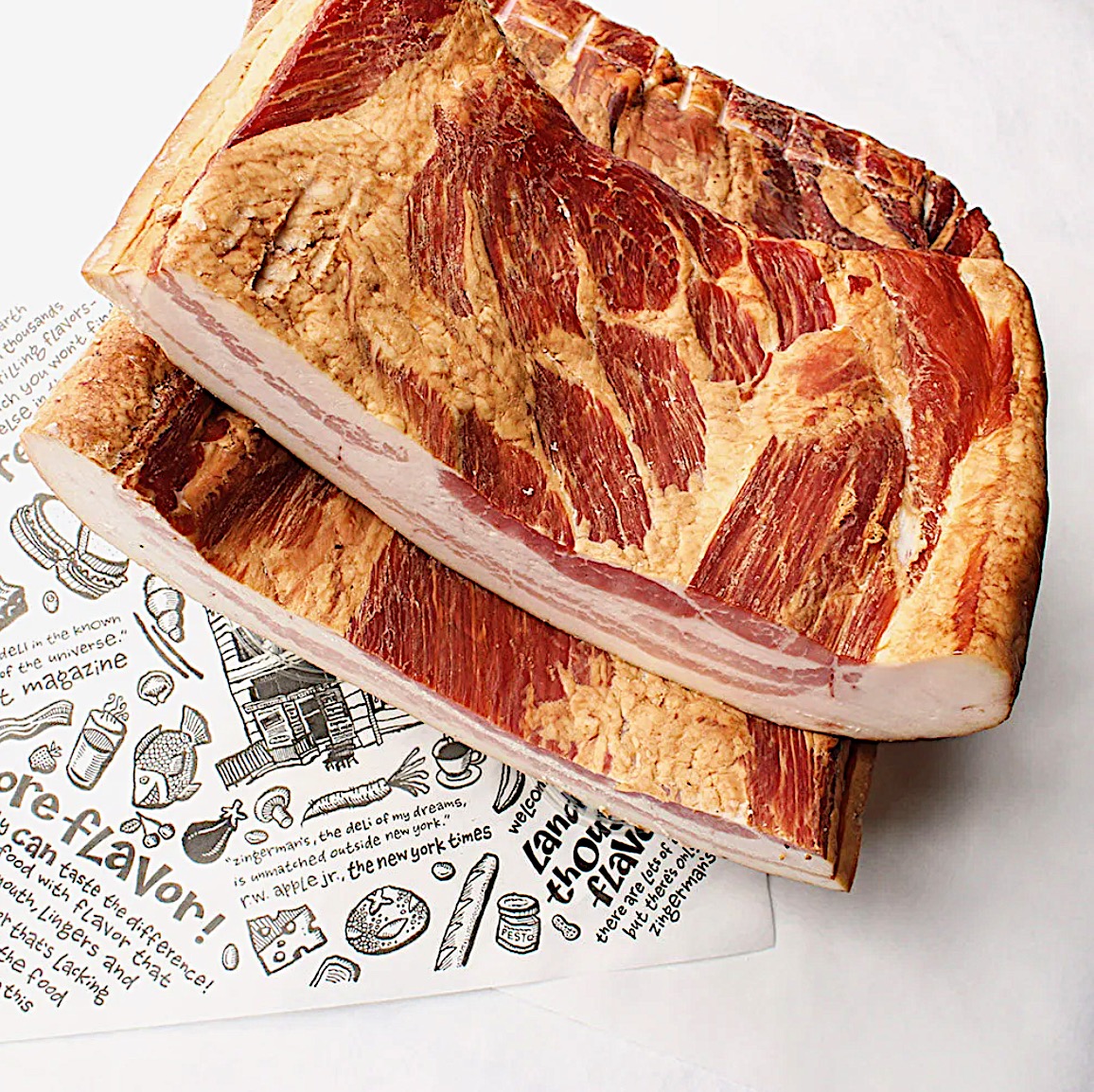
Thanks to all of the decisions to opt for hope, we all have the chance to enjoy this tasty treat! To make this little combo, it only takes a couple of minutes. Cook a couple slices of bacon per person—Nueske’s Applewood Smoked Bacon is always awesome. When the bacon is cooked but not crispy, crumble on a bit of the Appleby’s Farmhouse Cheshire. Cover it for a minute or so, until the cheese softens but doesn’t totally melt. Take out with a spatula and eat!
I like to also put it on a toasted Bakehouse brioche roll to make my own version of a British BLT. You can also add a fried egg, and a bit of lettuce, tomato, and mayo! As per what I wrote about extensively in “A Taste of Zingerman’s Food Philosophy,” it’s the coming together of simple, super quality, traditionally made ingredients to make for one impressively tasty treat.
Sign up for Ari’s Top 5 e-newsletter and look forward to his weekly curated email—a roundup of 5 Zing things Ari is excited about this week—stuff you might not have heard of!
Follow us on social media: Instagram, Facebook and Twitter, @zingermanscommunity.
Tag: RECIPES
Great summer vegetarian supper at the Roadhouse
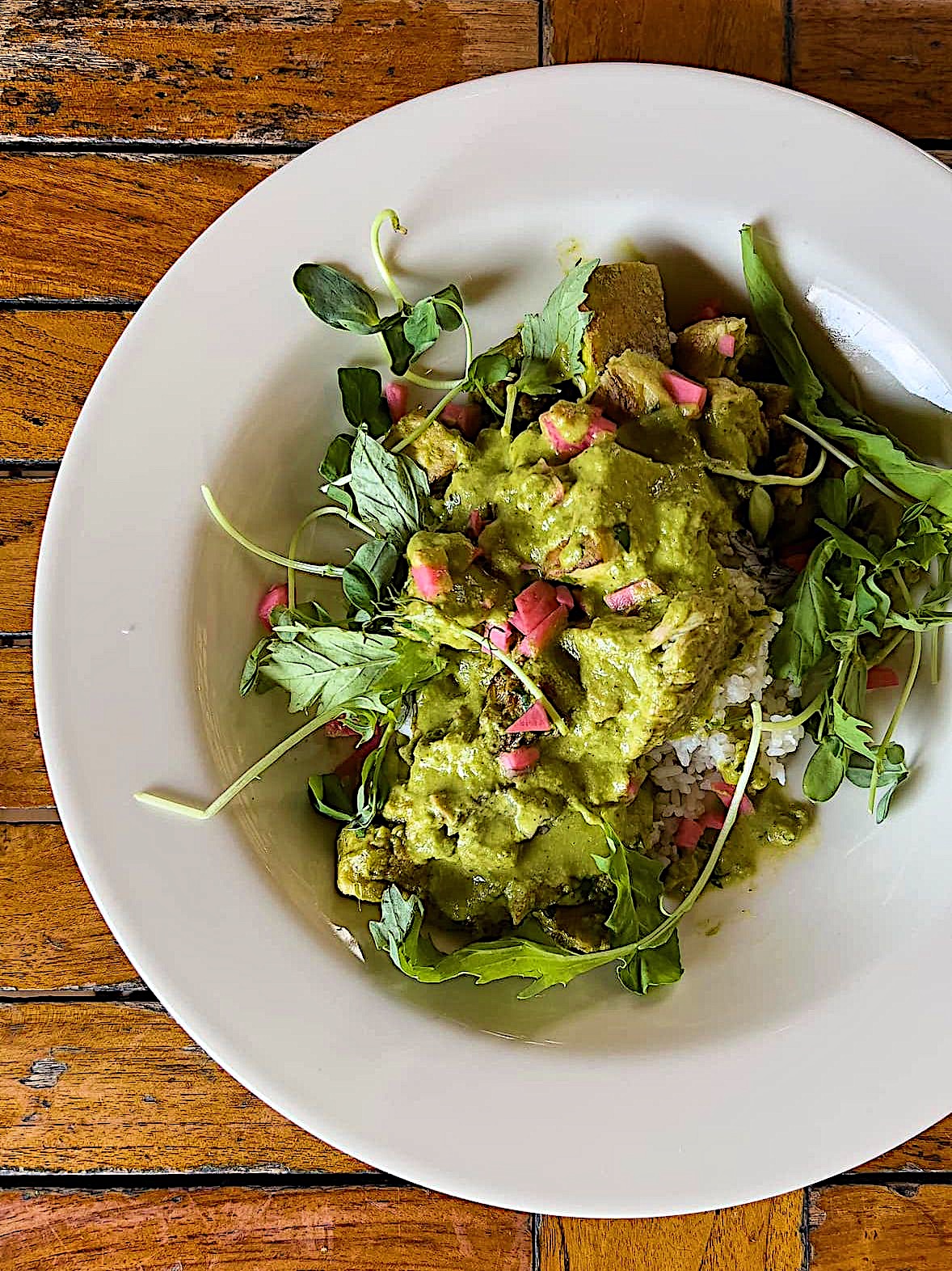
This summer special features some lovely local produce and the world-class, historically-significant, organic Carolina Gold Rice we get from Anson Mills down in South Carolina.
The main feature of the dish is the organic local Lion’s Mane mushrooms we’ve been getting from the fine folks at Stoney Creek Mushrooms. When the local Lion’s Mane come in, they’re huge—about the size of a head of cauliflower! The flavor is earthy, delicate, and delicious. The rice is less visually striking but no less delicious! It dates to the 17th century when it came to the Carolina coast from West Africa where it had been widely and skillfully grown for centuries. Carolina Gold (the name comes from its color when it’s still in the husk, in the field, shimmering in the sun) is the rice that made so many South Carolina planters wealthy, wealth that of course came via the unpaid labor of enslaved Africans.
West Africans were the tech minds that made the rice growing work. After Emancipation in 1863, the low yield/high labor of Carolina Gold, like most heirlooms, made it less appealing to farmers looking to make money and by 1920 it had completely disappeared from commercial sale. Seeds were found in a seed bank in Arkansas in 2000 and thanks to the folks at Anson Mills and a handful of others, it’s made a comeback. What we get from Anson Mills is field ripened (to bring out the rice’s natural full flavor), milled only when we order it to retain full flavor, and the germ (brush up on your grain anatomy here) is left in which a) makes it a perishable product and b) significantly enhances the flavor.
The crowning touch on the dish is the pesto. It starts with some beautiful, exceptionally aromatic, organic basil that’s coming in from a series of local farms, most particularly Tantré Farm in Chelsea and Tamchop Farm in Dexter. We take the fresh basil leaves and turn them into a pesto in the Roadhouse kitchen with olive oil, fresh garlic, Parmesan from Wisconsin, pine nuts, and a bit of Tellicherry pepper. The dish comes together beautifully—the gentle nuttiness of the rice, the herbal brightness of the pesto, and the delicate earthiness of the Lion’s Mane mushrooms. Swing by for lunch or dinner!
P.S. If you’re dining on a Tuesday, the Roadhouse offers any bottle of the 36 artisan American wines on its list at 30% off (this offer is extended every day for take-out orders!). The majority of the wines on the list are made by winemakers or wineries led by women or folks from underrepresented minorities—a great way to make diversity come alive in a practical and very tasty way!
Sign up for Ari’s Top 5 e-newsletter and look forward to his weekly curated email—a roundup of 5 Zing things Ari is excited about this week—stuff you might not have heard of!
Tag: RECIPES
Great, weekday meal for barbecue lovers
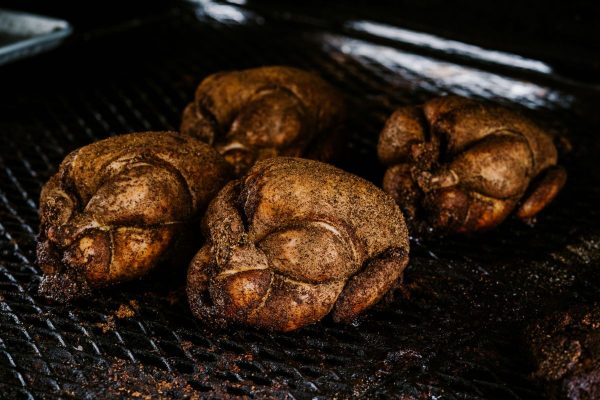
If Fried Chicken is the superstar singer on the poultry part of the Roadhouse menu, the Pit-Smoked Chickens would probably be the bass player. They’re happily in the background, grounded, steady, and really really good at what they do. And while that Fried Chicken is really really fantastic, I’ll offer that I eat far more of the Pit-Smoked Chicken. Honestly, it’s one of my favorite products in the ZCoB!
If it’s Monday, Tuesday, Wednesday, or Thursday, give some thought to swinging by and picking up one of these exceptional oak-smoked chickens from the Roadhouse. I can say from a LOT of personal experience that they make an exceptional evening meal! A whole Amish chicken, rubbed with our freshly ground, farm-to-table Tellicherry black pepper and salt, put on the pit to smoke slowly over smoldering whole oak logs for about three or four hours. We’ve had them on the carryout menu for the last few years, during which time they’ve been a very regular item at our house.
All you need to do is call ahead to order one, then swing by the Roadhouse and pick it up. (You can also just come by, but we’re only doing a limited number of these every day so … if it were me, I’d order ahead to make sure I got one.) The Roadhouse crew puts a bit of butter atop the bird, then wraps it really well in foil so you can get it home in good shape. Best bet, I think, is just to unwrap and eat. If you want to heat it up, either stick it in a hot (350° F) oven in the foil for a bit, or you can microwave it (after you take it out of the foil!) for a few minutes if you want to go more quickly. Since Tammie and I eat dinner late at night, we did the latter, and it worked out just fine.
The big news here though is that you can now get the Pit-Smoked Chickens inside the restaurant for dinner. We’re still on that same limited-times and limited-days schedule—Monday through Thursday, dinner only, and, when we’re out we’re out. The beautiful oak-smoked, Tellicherry black pepper-dusted bird comes plated with side dishes that make it a great dinner and a great deal! Start out by snacking on a glass of those incredible single-origin peanuts we’ve been getting from Elisha Barnes in Virginia and a small salad. Finish the evening off with a scoop of that Roadhouse Joe-lato!
If you have leftovers, I’ll share that they’re awesome for adding to soup or salad, making into smoked chicken salad, or just nibbling on out of the fridge when you need a snack. Tammie and I take the bones that are left behind and boil them with an array of vegetables to make a magically terrific broth. (When we serve it, we drop on a spoonful of that IASA peperoncino!)
Once again, the Roadhouse only smokes a limited number of these pit-smoked whole chickens Monday through Thursday. They come out in time for dinner and it can’t hurt to order ahead and have us hold one for you. It’s hard to believe a chicken could be life-changing but this might be it.
Sign up for Ari’s Top 5 e-newsletter and look forward to his weekly curated email—a roundup of 5 Zing things Ari is excited about this week—stuff you might not have heard of!
Tag: RECIPES
A taste of Zingerman’s Bakehouse Babka could be just right
More and more over the years people bring or send a Zingerman’s gift—a taste of Tree Town, it’s a terrific way to convey their own commitment to high quality and an easy way to share some of their connection with the community here in the Ann Arbor area. Sour Cream Coffee Cake, which we’ve been making for over 35 years now, is probably the most popular way to do that. Magic Brownies, which we’ve been making for almost that long, are another favored choice. I’d like to propose a third option, something that might well make for a great taste of Zingerman’s and Ann Arbor: the Bakehouse’s Chocolate Babka. While it’s not well known in the Midwest, in New York, Babka has long been a big deal. I tend to be a bit skeptical about trends in Tinsel Town, but folks on the East Coast could well be onto something with their regular Babka-eating.
While Babka is pretty easy to pronounce, it’s not easy to make. Melissa Clark, writing in the New York Times, says that:
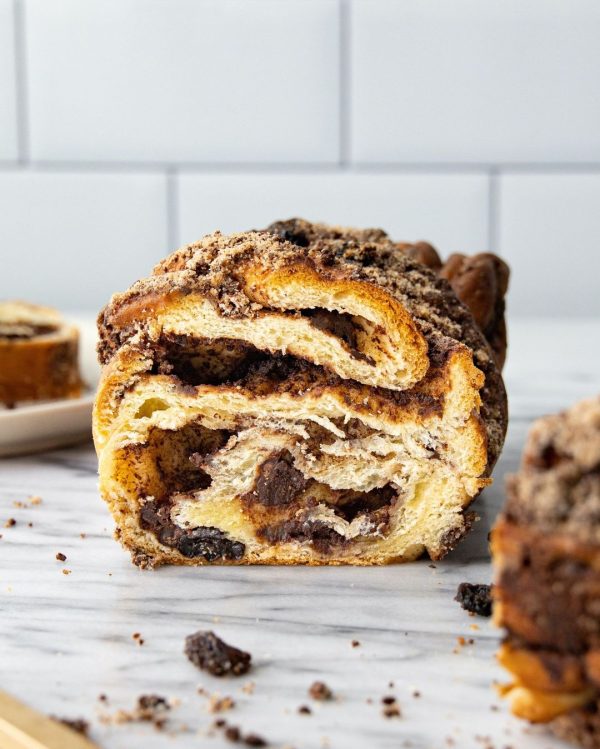
Baking a chocolate Babka is no casual undertaking. The Eastern European yeast-risen coffee cake has 14 steps and takes all day to make. But the results are worth every sugarcoated second – with a moist, deeply flavored brioche-like cake wrapped around a dark fudge filling, then topped with cocoa streusel crumbs.
If you’re from New York, the odds are reasonably high that you’re well familiar with Babka. If not, you’re in for a treat. Babka is traditional Jewish “sweet bread,” akin you could say to a light-textured coffee cake, or maybe a bit denser piece of Italian panettone. It starts with a rich, slow-rise yeasted dough made with lots of butter, real vanilla, and fresh egg yolks. That in turn is sprinkled with chocolate “crumble” and orange-syrup-soaked raisins, all of which get formed into a fine looking swirled loaf, and then baked off to a golden brown with a sensual cinnamon-sugar crust. The Bakehouse crew adds a good dose of dark chocolate on top and rolled into the middle as well. It’s already got a LOT of loyal fans, and it seems to be gaining more momentum all the time.
Babka’s history? Its roots are in Eastern Europe, very likely indigenous to Ukraine, where it would have been a part of an ancient fertility symbol used in the matriarchal system once in place in the region. The old forms of the Babka were likely much larger, somewhere from the size of a modern day panettone on up to some a few feet high. The original name was likely “baba,” meaning “grandmother”; with the “modern era’s” smaller sizes the name shifted to the diminutive, “Babka,” meaning “little grandmother.” Up until the 20th century, it’s unlikely that Babka would have had any chocolate in it, since chocolate came from the Western Hemisphere and became popular in Europe only late in the 19th century.
Earlier versions of Babka would likely have been closer to the Eve’s Apple Babka we make at the Bakehouse (a special bake coming in August). For those who want to return to the older, more true to traditional type offering, this is it. Still, I know, chocolate is likely to take the cake. Susana Trilling, author of the excellent cookbook, Seasons of the Heart, and creator and cooking teacher extraordinaire of the Oaxacan cooking school of the same name once wrote me to say that, “… bar none, Zingerman’s Bakehouse makes the BEST Babka I have ever eaten!! It was incredible.”
The Bakehouse’s Chocolate Babka will be available all summer on Wednesdays, Fridays and Sundays.
P.S. If you want to try making Babka at home, the recipe will be in the Bakehouse’s forthcoming cookbook, Celebrate Every Day, due for release October 3rd. Pre-order here!
Want more from Ari?
Sign up for Ari’s Top 5 e-newsletter and look forward to his weekly curated email—a roundup of 5 Zing things Ari is excited about this week—stuff you might not have heard of!