Tag: RECIPES
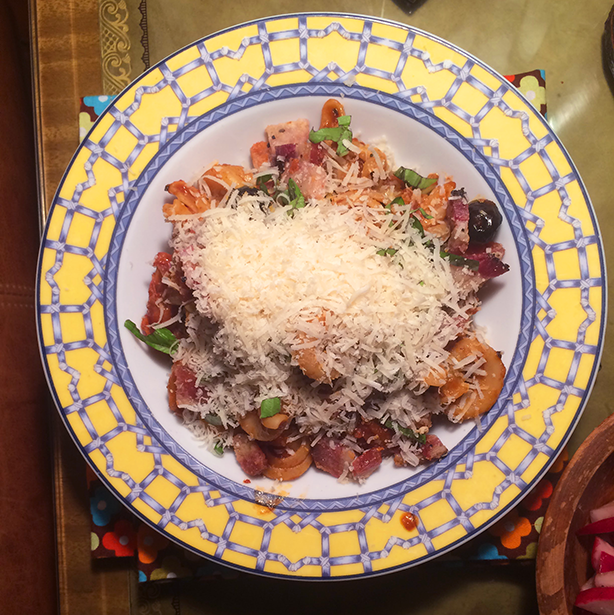
Welcome to Cooking with Grace! This is where Grace Singleton, a managing partner at the Deli, shares her favorite products and delectable home cooking tips with us. This week, she’s using one of the five new Parmigiano Reggiano varieties that the Deli is now carrying in this delicious pasta dish.
Now that we have all five of our Parmigiano Reggiano sources available at Zingerman’s Delicatessen—Valserena, Roncadella, Borgotaro, La Villa, and Ravarano—I’ve been having fun experimenting with different flavor combinations. Each of the five cheese producers has distinctly different flavor profiles, and this weekend I was experimenting with the Roncadella Parmigiano Reggiano
One of the challenges with all this great cheese is that I can’t choose which one I like best, so I currently have three different Parmigiano Reggiano varieties in my fridge. Not a bad thing, but my cheese drawer is petty full (although I seem to be eating it as fast as I bring it home)!
There are plenty of different ways to enjoy Parmigiano Reggiano, but the first thing most people think of using Parmigiano Reggiano on pasta. One of the things I love about pasta is that it’s fairly simple to make a great tasting dinner with just a few really tasty ingredients. Also, with the cooler weather this time of year, walking into a nice steamy kitchen where I’ve been boiling pasta feels warm and homey.
Now I generally don’t plan my meals out too far ahead. I like to look in my fridge and garden to see what I have on hand, or after a day of work, I’ll walk around the Deli retail area to see what inspires me or makes my mouth water. Recently, I was hungry and not in the mood to do anything too time consuming but also wanted to use some of the Parmigiano Reggiano I had in my fridge, so I decided on a two meat pasta recipe that features the Roncadella Parmigiano Reggiano. You can substitute different ingredients and flavor combinations, as that’s the fun part about cooking, but I was really fond of the depth of flavor that occurred when I combined the pancetta, the soppressata salami, dry-cured beldi olives, and the cheese.
An insider trick I learned from the talented women cooks we got to visit while we were in Italy was that in addition to serving Parmigiano Reggiano at the table on top of pasta, they also add the grated cheese into their pasta sauce as it is finishing on the stove. The freshly grated Parmigiano Reggiano adds some saltiness, but also can thicken the sauce and adds its own distinct flavor profile to it.
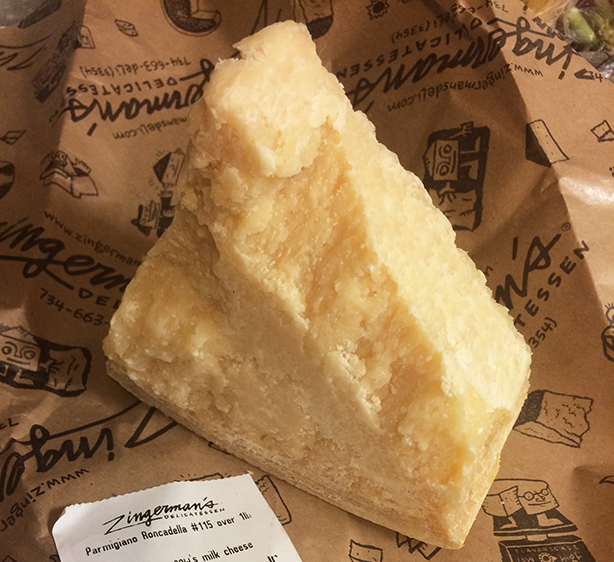
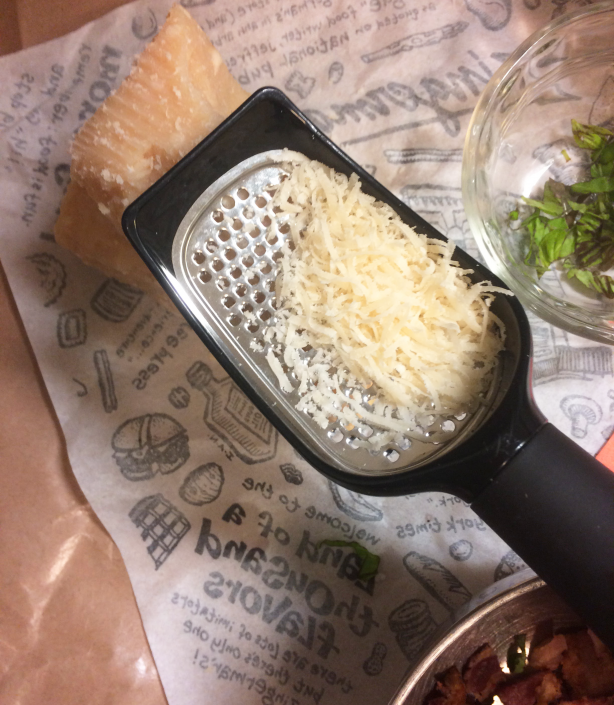
One of the unique characteristics of Parmigiano Reggiano is that it can melt into a sauce differently than other styles of cheese. The italians rate Parmigiano Reggiano on its friability (how it breaks into very small pieces), and it’s solubility (how it melts), and instead of the stringy stretchy elasticity that I think of when melting a gruyere or provolone cheese, Parmigiano Reggiano will dissolve into the sauce which makes it an ideal ingredient in pasta sauces, or other dishes in addition to being a tasty topping.
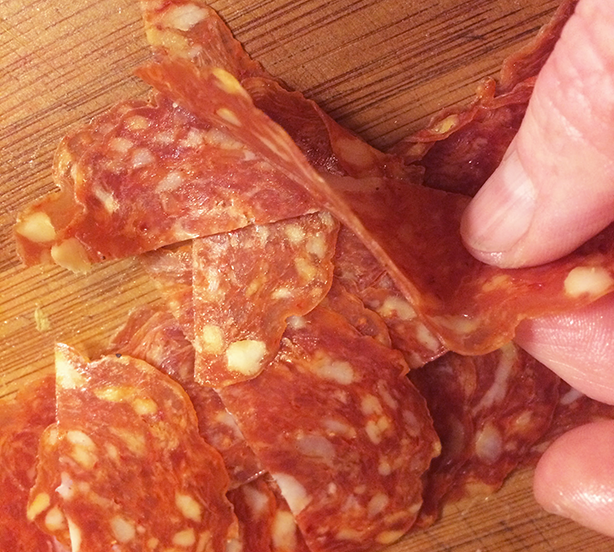
Pasta with Pancetta & Salami featuring Roncadella Parmigiano Reggiano
Serves 2-4, depending on your appetite
½ bag Gentile brand pasta, vesuvio shape
3 oz. of Framani rolled pancetta-sliced ¼” thick
½ cup chopped onion
½ cup fresh grated carrot
½ cup beldi olives*
2 cups plain tomato sauce.
2 oz. sopressata picante salami from Nduja- sliced and cut in half
1 cup+ freshly grated Roncadella Parmigiano Reggiano**
2 tbsp fresh chopped basil for garnish
Sea salt
Directions
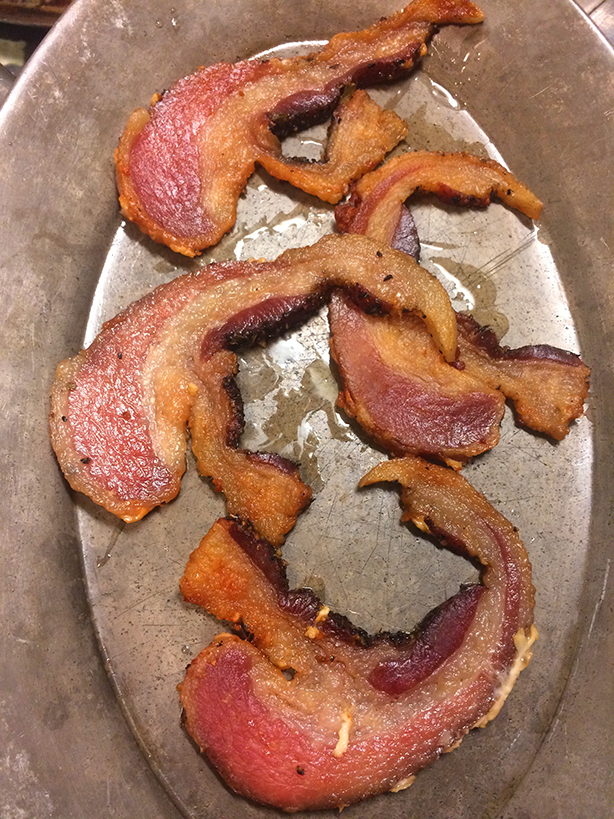
Using a large sautée pan, cook the pancetta over medium heat, until lightly browned on both sides and as crisp as you prefer it. I like to cook it through slowly until it’s medium brown on both sides, so it will be crumbly and crispy as a garnish on the pasta when it’s served.
Remove the pancetta from the pan and drain on paper towel, save for later. When it is cool enough to touch, chop into small (¼-½”) pieces
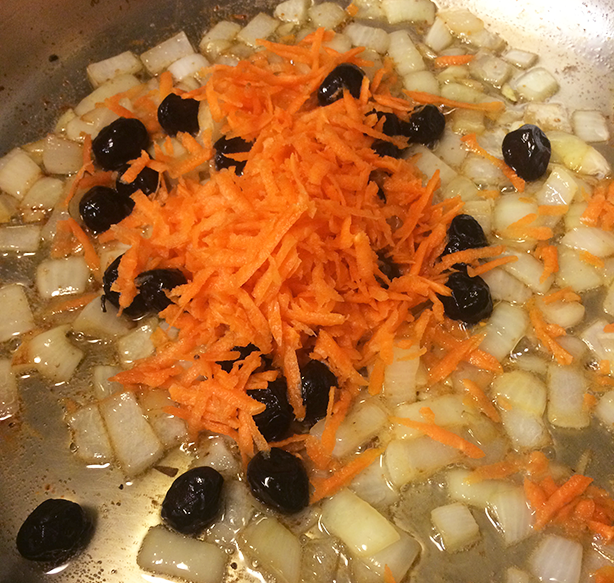
Add the onions to the pan and cook until translucent. Add the olives and carrots and cook a few minutes until the olives are warm and the carrots are tender, but still in tact, not soft.
Add the tomato sauce and cook until the sauce is warmed through and at the consistency that you like. If you prefer a very thick tomato sauce, you can reduce it down longer to remove more of the water. When the sauce is at the thickness you like, add the salami and ½ cup of grated Parmigiano Reggiano. Taste the sauce and add more salt or pepper to taste.
While your sauce is cooking, bring heavily salted water (it should taste like the sea) to a boil and cook according to package directions. Before you drain the pasta, save and set aside 1 cup of the cooking liquid.
Add the drained pasta to the tomato sauce in the pan, adding ¼-½ cup of the reserved pasta water, and cook for a few minutes to incorporate the flavor of the sauce into the pasta.
Serve freshly grated Parmigiano Reggiano cheese, the cooked chopped pancetta, and fresh basil on the side that each person can use to garnish their plates as they like.
Buon appetito!
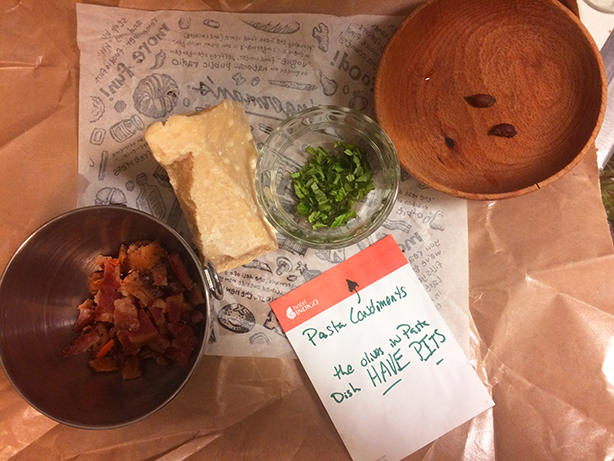
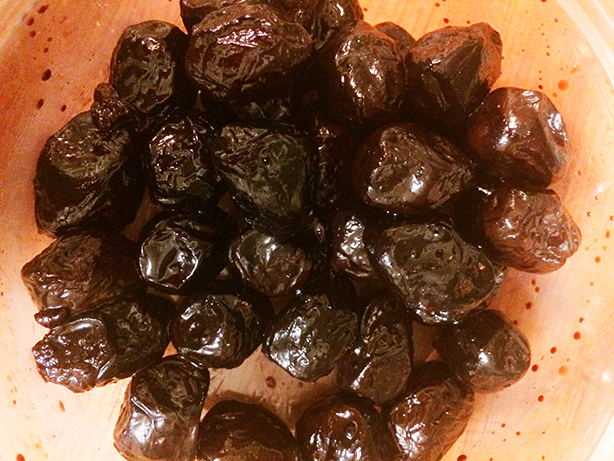
*a note on the olives- I like using whole olives that still have the pit in them. I find the texture of the olives, and the flavor are much better than the same brand and variety of olives that have been pitted. When I was in Italy, all of the olives that were used in recipes (baked in breads, used in salads, etc.) all contained pits. It’s just what they are used to—they expect olives to have pits. Here in the U.S., we’ve often made culinary choices that favor convenience over flavor, and most people would find an olive pit an unexpected and unwelcome visitor in a pasta dish. I actually think it helps me to follow my own commitment to eating more slowly and really savoring the food that I eat. I have to focus a bit more on what I am putting in my mouth, and eat a little more slowly, but the payoff is that I feel more satisfied after the meal. I’d make sure to warn your guests that there are pits in the olives.
**A note about freshly grated Parmigiano Reggiano. Fresh grated cheese is better, and it doesn’t have to be a chore. The pasta grater that I show in the photos is one of the graters that I discovered at the retail shop for Roncadella. The Consorzio Parmigiano Reggiano supplies these, and Marissa the cheese maker from Roncadella, gave us one along with some cheese samples when we visited. Because of that, I requested they ship us some to sell at the Deli. I love this grater and find it easier to use than a traditional four-sided box grater, or the newer style micro planes. The handle is large enough and long enough to grasp easily, and it makes grating fresh Parmigiano Reggiano simple and easy, plus it’s easy to clean. You can just bring the grater and a hunk of cheese to the dinner table on a plate and pass it around. No time spent in the kitchen grating cheese, and no left-over pre-grated cheese, because you overestimated or running back to the kitchen because you underestimated! The design of the grater allows it to hold the cheese as you grate it. You can grate almost a ¼ cup of cheese into this grater at one time and then sprinkle it over anything and everything—pasta, soups, salads. You may end up with a hunk of Parmigiano Reggiano on your table at every meal!

A clean slate, a fresh start. There’s no time like the New Year for a healthy dose of optimism. When it comes to Rosh Hashanah, that hopefulness is symbolized by one of our favorite things: sweets! Classic sweet dishes and treats, from raisin-laced kugel to every kind of rugelach, are favorites at New Year celebrations, the idea being that with every heavenly bite, prospects for the future become sweeter and, well, sweeter.
One of the best known examples of this High Holiday tradition is the custom of dipping apples in honey. But most of the best cooks and hosts we know don’t stop there—they make sure that honey is infused throughout their Rosh Hashanah meals. Of course, at Zingerman’s, we’re also big proponents of letting the honey (Tupelo, Idaho Snowberry, Scottish Heather—we love ‘em all) flow.
It’s really amazing how many dishes honey can find its way into. Vegetables, like carrots and turnips, can be glazed for a crowd-pleasing side. Even meat dishes can get the honey treatment. Honey-baked chicken is fantastic and easy to pull off, plus you can dress it up with herbs and root veggies. One of Ari’s favorites is Lamb and Honey Stew, a staple of the deli’s special Rosh Hashanah catering menu. The Sephardic dish (see the recipe on pg. 378 of Zingerman’s Guide to Good Eating if you’d like to make it yourself), isn’t too sweet, with the honey and saffron complementing each other in a deep, delicious way.

For Rosh Hashanah, challah takes on a round shape to represent the cycle of life, and it gets a little sweeter than usual, too, since, as with the apples, dipping challah in honey is also a tradition. The ones we make at the Bakehouse (Can you believe we sell 2,000 of them every New Year?!) are brushed with clover honey, and we even make one with rum-soaked raisins. If you’re a home baker, come into the deli and sample a few different jars to turn up the flavor on your own challah this year.
And if your sweet tooth is still crying out for more, we’ve got two words for you: honey cake. It’s the most enduring of traditional Rosh Hashanah desserts—there’s evidence that it’s been around since the 12th century! Spiced, rich, and nostalgic, it’s no wonder that it’s lasted so long, or that so many bakers hold fast to their beloved recipes. We take ours pretty seriously, too. We use buckwheat honey to give it big, bold flavor. Kind of like an exclamation mark at the end of the meal.
And, hey, if you want to add a little oomph to your apples and honey display, Ari has a tip for you: make it a spread. Lay out a few different varieties of apples and a couple of types of honey. “It makes for great conversation. Plus, they’re delicious!” he says.
Our honey sale starts today and lasts two whole weeks (September 26 – October 9)! Get 20% off all honey at the Deli—we have a big selection, so come and have a taste! Perfect timing for Rosh Hashana or a fall pantry stock up! Also check out our special Rosh Hashanah Catering menu here.
Zingerman’s 4th Annual Camp Bacon is just around the corner and to help get everyone prepared, we’re sharing tasty excerpts and recipes from Ari’s book, Zingerman’s Guide to Better Bacon.
Wittenberg Splits
This is the way Tanya Nueske and her family grew up eating hot dogs. They’re not hard to make and they really are darned good. To restate the by-now familiar: the better the buns and hot dogs, the better these are going to taste. I use buns from Zingerman’s Bakehouse, on which I put either Vienna all-beef dogs from Chicago (the ones I grew up with) or the Niman Ranch version. Take note that in Wisconsin “cheddar” always means orange cheese, never white. It won’t taste any different, but if you want to accurately replicate Tanya Nueske’s early life experience, white cheese just really won’t do.
Ingredients:
- 12 thick slices Nueske’s applewood-smoked bacon

- 6 jumbo hot dogs, split lengthwise
- 6 ounces sharp cheddar (the older the better), sliced
- 1 large dill pickle, sliced thinly lengthwise
- 6 hot dog buns, toasted
Procedure:
- Preheat oven to broil at 375°F.
- With a sharp paring knife, cut a line lengthwise along each hot dog, leaving a thin strip at the bottom so that the dog stays in one piece. Lay the sliced cheddar inside the split, then place a long slice of pickle atop the cheese. Wrap each hot dog in 2 slices of bacon and secure the ends of each strip with a toothpick.
- Place on a foil-topped baking sheet and broil for 10 to 12 minutes, or until the bacon is nicely browned.
- You can put your buns under the broiler for the last 2 minutes to toast them, too. Take out the toothpicks, put the dogs in the buns and eat ’em while they’re hot.
Serves 6 as a main course.
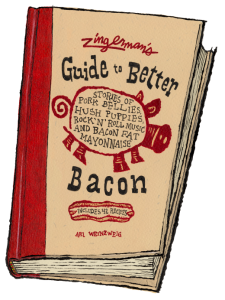
See you at camp!
Zingerman’s 4th Annual Camp Bacon is coming soon and to help get everyone prepared, we’re sharing tasty excerpts and recipes from Ari’s book, Zingerman’s Guide to Better Bacon.
Apple (or Pear) Bacon Crisp
Strange as it sounds to some, bacon really can beget a fine dessert. As someone at the Zingeman’s Roadhouse said when we had this on our dessert list a while back, “You might think bacon and apples sounds strange for dessert, but it’s basically like serving pork chops with applesauce.” Made sense to me. And for folks who love their bacon, it’s a very good way to get a bit more into their day.
The crisp is a great autumn dessert and would be excellent for both eating and engaging guests in conversation at holiday meals. You can do it with pears instead of apples, with equally good results. In truth, I almost like it better that way, but they’re both darned good! Take your pick, or, if you’re entertaining, do one of each and let your guests decide.
Ingredients:
- ¾ cup golden raisins

- 3 tablespoons bourbon
- 6 ounces sliced Arkansas peppered or long pepper bacon (about 3 to 4 slices), diced
- ¾ cup Muscovado (or other natural dark) brown sugar
- 9 to 12 ripe apples or pears (about 2½ pounds)
- 1¼ teaspoons cinnamon
- ¼ cup unsalted butter
For the streusel:
- ½ cup unsalted butter, chilled and cut into ½-inch pieces

- 1¼ cups flour
- ¼ cup Muscovado (or other natural dark) brown sugar
- ¼ cup sugar
- ¼ teaspoon fine sea salt
Procedure:
- Preheat oven to 400°F.
- Pour the bourbon over the raisins, mix well and set aside to soak for a minimum of 15 minutes, on up to a couple of hours (longer is better to my taste, but if you forget to do it ahead the shorter time will work just fine).
- Dredge the bacon in ¾ cup of brown sugar and lay on a foil-lined
- baking sheet with a lip. Sprinkle any of the remaining brown sugar over the top. Bake for 20 minutes or until very dark brown, crisp and caramelized. Carefully remove from oven and allow to cool.
- While bacon is cooking, slice the fruit (skin on) directly into a 9-inch round pan. After you’ve covered the bottom of the pan, sprinkle on some of the raisins, then a bit of the bourbon and the cinnamon. Add another layer of fruit, then the remaining raisins and cinnamon. Sprinkle the balance of the bourbon over the top and dot with the butter. (The sliced fruit may pile up over the lip of the pan, but it will settle while baking.) Sprinkle the candied bacon pieces evenly over the top.
- Reduce the oven temperature to 375°F.
- Make the streusel by combining the butter, flour, salt and sugars in a mixer or food processor. The mixture should be crumbly and somewhat dry. Sprinkle over the top of the apple mixture in the pan and pat down lightly. Go around the edges, pressing the streusel into the fruit to seal.
- Place the dish in the oven uncovered and bake for 30 to 40 minutes, until the juices are bubbling up around the edges and the streusel is nicely browned. Remove from the oven and cool for 15 minutes.
- Serve warm, with optional ice cream or gelato.
Serves 6 to 8 for dessert.

See you at camp!
Zingerman’s 4th Annual Camp Bacon is coming soon and to help get everyone prepared, we’re sharing tasty excerpts and recipes from Ari’s book, Zingerman’s Guide to Better Bacon.
Pasta alla Gricia
The background on this dish is provided in the section on guanciale (see page 118), so all I’ll say here is that it’s a really great bowl of pasta, and that the pepper is one of the key components of this dish, not a postscript, so use a lot of it. The more I eat this dish, the more I like it.
Ingredients:
- 1 pound spaghetti (I’m partial to Martelli, but you can pick from any of the great artisan brands including Latini, Rustichella and Cavalieri)
- 5 ounces (about 2 to 3 slices) guanciale, diced
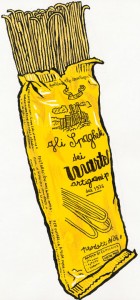
- Hot red pepper flakes (preferably Marash), to taste
- Freshly ground Tellicherry black pepper to taste
- 5 ounces Italian Pecorino Romano cheese, finely grated
Procedure:
- Bring a large pot of water to a boil. Add a generous amount of salt.
- At the same time, begin heating a heavy 12-inch skillet over medium-high heat.
- Add the pasta to the water and stir so that the noodles don’t stick.
- Fry the guanciale in the skillet until its fat is released and the nuggets begin to crisp. (If your guanciale is too lean, add a bit of olive oil to the pan.)
- When the pasta is approaching but not quite yet al dente, remove from the heat and drain.
- Add the pasta to the skillet with the guanciale and toss well to coat with the hot pork fat. Cook over medium heat for about 2 minutes, until the pasta is fully al dente. Stir regularly so that the pasta doesn’t stick. Add red pepper flakes and black pepper liberally to taste.
- Turn off the heat, add the grated Pecorino cheese and toss to coat. Serve hot, and pass the pepper grinder.
Variation:
In the spring, sauté 6 ounces of asparagus, cut into 1-inch pieces, along with the guanciale. I like the asparagus pieces lightly browned to bring out their full flavor.
Serves 4 as a main course, or 6 to 8 as a side dish.
See you at camp!
Zingerman’s 4th Annual Camp Bacon is coming soon and to help get everyone prepared, we’re sharing tasty excerpts and recipes from Ari’s book, Zingerman’s Guide to Better Bacon.
North Carolina Fish Muddle
“Bacon makes the soup”
—Provençal saying
I’m not sure how I first heard of this dish, but it has become one of my favorite ways to cook fish stew over the years. It’s clearly in the same culinary tradition as all the one-pot seafood stews made anywhere near the ocean—something between a thickened bouillabaisse with bacon and a fish-dominated, lightly tomato-based chowder.
Although I’d always seen this billed as “Outer Banks Fish Muddle” I was steered straight by Elizabeth Wiegand, author of the Outer Banks Cookbook. “Muddles are done both at the coast and up rivers, so some sources say,” she explained. “However, I’ve always considered them INNER coast.” What she’s saying makes good sense. As she pointed out quickly, while it makes a great summer getaway and provides for some fine fishing, the thin strip of land that is the Outer Banks has never been a good place for raising the pigs from which the bacon for this fish stew comes.
(As a pig-related side note, Elizabeth also shared with me that back in the nineteenth century the North Carolinian upper crust built homes on the Outer Banks, then ferried all their possessions across the bay: servants, supplies, pigs and cows all came over. The livestock liked to root under the houses, which in and of itself isn’t a terrible thing. But the small holes in the floors of the Outer Banks houses, which allowed floodwaters to drain, also allowed the smell of the animals to permeate their interiors. The latticework that became so typical of houses in this area was originally installed to keep the animals and aromas away from the living quarters.)
Most recipes for muddle rely on rockfish, so called because the fish hang out near rocks. You may know them as striped bass, which fisherman refer to as “stripers.” What I didn’t know until speaking with Elizabeth is that they’re also known along the Carolina coast as “Mr. Pajama Pants” because of the horizontal black stripes that run up their hindquarters. Better still, some folks call them “squid hounds” for their propensity to chase squid, one of their favorite foods. The spring and fall are prime striper seasons—one theory of muddle making being that people had end of the year get-togethers to cook up the new season’s fish (remember, the slaughter took place around New Year’s, as well).
There are a few thousand versions of muddle. In part because it’s so good, and in part because this book is about bacon, I’ve put the pork more out front than some other cooks might have done. With that in mind, I prefer to feature the bigger flavors of an Edwards’ or Benton’s. I use a mixture of different fish for greater complexity of flavor and texture, but it’s certainly great made exclusively with striped bass, as well.
The sliced bread isn’t in many recipes but it’s a great way to bring more bacon flavor to the dish. Elizabeth reminded me that many Southerners would use Saltines, which are, of course, widely considered a “traditional” bread down below the Mason-Dixon line. I have eggs listed as optional—most recipes don’t use them but I think they’re delicious. I’ve old references to doing the same in various versions, including one from Beth Tartan’s 1955 classic book, North Carolina and Old Salem Cookery.
Muddle is mostly considered a main dish, but you could certainly serve it in smaller portions as a soup course.
Ingredients:
- 8 ounces (about 4 to 6 slices) bacon, diced

- 2 medium onions, diced
- 1 large leek, washed well and thinly sliced
- 1 large or 2 medium carrots, diced
- 2 stalks celery, diced
- 1 clove garlic, minced
- 1 bay leaf
- 2 pounds fresh plum tomatoes, chopped (in the off-season I’d suggest using good-quality canned)
- An additional 4 ounces bacon, in a single chunk
- 1 tablespoon chopped fresh thyme leaf
- ¼ teaspoon hot red pepper flakes (I like the Marash red pepper flakes from Turkey)
- 2 tablespoons parsley, chopped, rinsed and squeezed dry
- 4 cups fish stock
- ½ pound pollock or other inexpensive white ocean fish, cut into 1-inch
- pieces
- 1½ pounds waxy potatoes (I like Yukon Golds), cut into ½-inch dice
- 1 pound striped bass or other full-flavored ocean fish, cut into 1-inch
- chunks
- 1 pound cod or other flaky white ocean fish, cut into 1-inch chunks
- Coarse sea salt to taste
- Freshly ground Tellicherry black pepper to taste
- 6 eggs (optional)
- 6 slices good crusty bread
- 3 to 4 tablespoons reserved hot bacon fat
- Bacon fat mayonnaise (optional, see page 172, Zingerman’s Guide to Better Bacon)
Procedure:
- 1. Brown the diced bacon over medium heat in a soup kettle or large Dutch oven until crisp. Remove and set aside. Remove the 3 to 4 tablespoons of drippings and reserve for garnish, leaving the rest in the pot. (If you don’t have enough fat in the pan, feel free to add a glug from the jar you’ve now started saving . . . right?)
- 2. Sauté the onion, leek, carrot and celery in the fat until soft. Stir gently to be sure they don’t stick.
- 3. Add the garlic and bay leaf and cook for 2 more minutes.
- 4. Add the tomatoes, bacon chunk, thyme, red pepper and parsley and cook over medium high for 10 to 15 minutes, until the tomatoes release their juices and begin to reduce.
- 5. Add the fish stock, pollock pieces and potatoes and bring to a strong simmer. Reduce heat to medium low. Simmer, uncovered, for about 2 hours. The muddle should be the texture of a moderately thick vegetable soup, so add more water if needed.
- 6. Remove the bacon chunk and set aside for future use. (At this point, the stew can be cooled and held in the refrigerator overnight, to be finished the following day. If you do so, be sure to bring the broth back to a strong simmer before continuing.)
- 7. Add the striped bass and cod, submerging them in the stewing juices, and bring back to a low boil.
- 8. Simmer for 5 to 8 minutes, until fish is just done. Add salt and pepper to taste. The stew should be thick and savory.
- 9. If using the eggs either poach them in a separate pot or do as I do and just crack them gently into the muddle when it starts to simmer, after you’ve added the final pieces of fish.
- 10. When the stew is just about ready, toast the bread. Rub each slice with some of the reserved bacon fat.
- 11. Warm the bowls in the oven. Ladle in the muddle and top with a slice of the toast. Place one of the poached eggs in each bowl. Sprinkle with the diced bacon.
- 12. You can also treat the muddle like a Marseillaise bouillabaisse by spooning a dollop of bacon fat mayonnaise atop the toast as a rouille. (It’s delicious!)
Serves 4 to 6 as a main course, or 8 as a side dish.