
Tag: RECIPES
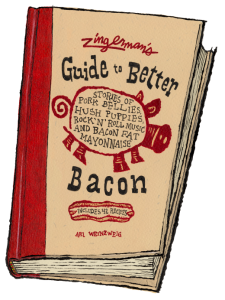
Zingerman’s 4th Annual Camp Bacon is coming soon and to help get everyone prepared, we’re sharing tasty excerpts and recipes from Ari’s book, Zingerman’s Guide to Better Bacon.
South Carolina Red Rice
This recipe is classic cookery from the South Carolina (and actually Georgia as well) coast. A staple dish of the Lowcountry—one of North America’s most interesting and important regional cuisines— you can probably find six hundred different recipes for red rice in Southern cookbooks. The dish uses meat—here it’s bacon, of course—as an accent, so that you’re eating the same sort of rice and vegetable-dominated diet that one might get in the Mediterranean (but, again, using bacon fat in place of olive oil). Glenn Roberts from Anson Mills says he gives credit for this dish to émigré Sephardic Jews, although they probably weren’t doing it with bacon as nearly everyone does today. In her book about Southern Jewish cookery, Matzo Ball Gumbo, Marcie Ferris shares a recipe that uses Kosher salami instead!
If you make Red Rice with Uncle Ben’s, out-of-season tomatoes and supermarket bacon the dish is going to be fairly unremarkable. For me, the Anson Mills Carolina Gold Rice is key to making the dish as exceptional as it can be. It’s a South Carolina low-yield, high-flavor rice varietal that dates back to the nineteenth century, so it’s the right rice to use for both authenticity and excellence of eating. Organically grown, field-ripened, custom-milled to retain all of the germ and most of the bran, it’s exceptionally flavorful stuff. You can certainly work with other varieties (most people do), but remember that, a) the flavor and texture of Carolina Gold is really something special, and b) you’ll need to adjust your cooking times and liquid-to-rice ratio a bit.
As to which pork to use, I like the Arkansas Peppered Bacon, but Sam Edwards’ dry-cured would be excellent, too. As in all Lowcountry cooking, the rice should really be in distinctive, individual grains when you’re done, rather than the creamily bound-together form you’d get from Italian risotto.
Ingredients:
- 2 cups Anson Mills Carolina Gold rice

- 4 medium tomatoes or 1 (14.5-ounce) can
- whole peeled tomatoes with their juice
- 8 ounces sliced Arkansas peppered bacon
- (about 4 to 6 slices)
- 1 small onion, chopped
- 2 cups chicken broth (preferably homemade or one of the better commercial brands: you may not end up using it all, but any leftover broth can be cooled and used later in the week)
- Coarse sea salt to taste
- Freshly ground Tellicherry black pepper to taste
Procedure:
- 1. Wash the rice in cold water three times, or until the water runs clear. This keeps the grains from sticking together.
- 2. Halve the tomatoes and squeeze the juice into a medium bowl. If you’re using canned tomatoes, use the juice from the can. You’ll want about 2 cups of liquid for cooking the rice, so top off the tomato juice with chicken broth if necessary.
- 3. Chop the tomatoes and set aside. You should have about 1 cup.
- 4. Fry the bacon in a heavy-bottomed stockpot over moderate heat until almost crisp. Remove from the pot and drain. (You’ll want about ¼ cup bacon grease, so add a bit from your stash if needed.)
- 5. Reduce heat slightly and add the chopped onion. Sauté, stirring occasionally, until nicely caramelized—about 20 minutes.
- 6. When the onions are just about ready, bring the broth and tomato juice to a boil in a medium-sized pan and reduce to a low simmer. If you’re working with unsalted broth, add 1 teaspoon coarse salt.
- 7. When the onions are caramelized, raise the heat in the pot a bit, add the rice and stir well. Sauté for a couple of minutes, stirring constantly, until the rice is very hot and shiny.
- 8. Stir the chopped tomatoes into the rice and cook for several minutes, stirring constantly.
- 9. Add the simmering broth into the rice, stirring well. Bring to a boil, cover the pan, reduce heat to low and cook for 10 minutes. Turn off the heat. (And don’t pick up that lid to look, either, OK?) Let stand, covered, for another 10 minutes.
- 10. While the rice is cooking, chop the bacon.
- 11. Remove the lid from the rice pot, add the bacon and stir gently. Flavor with salt and a generous dose of freshly ground black pepper, fluff with a fork and serve.
Serves 4 to 6 as a main dish.
See you at Camp!
Zingerman’s 4th Annual Camp Bacon is coming soon and to help get everyone prepared, we’re sharing tasty excerpts and recipes from Ari’s book, Zingerman’s Guide to Better Bacon.
Irish Bacon and Cabbage
As you’ve already learned, in Ireland it’s far more typical to cook bacon with cabbage than corned beef. I’d serve the dish with a little mustard and parsley sauce and maybe some hot mashed potatoes.
Ingredients:
- For the bacon and cabbage:
- 2 pounds Irish bacon (brined pork loin, not smoked), in a single chunk
- 1 carrot, roughly chopped
- 2 stalks celery, thickly sliced
- 2 leeks, washed well and sliced
- 1 medium onion, roughly chopped
- 2 teaspoons fresh thyme
- 1 tablespoon whole Tellicherry black peppercorns
- 1 large head green cabbage, core removed, cut into 6 pieces
- Coarse sea salt to taste
- Freshly ground Tellicherry black pepper to taste

For mustard and parsley sauces:
- 4 tablespoons unsalted butter
- 2 tablespoons flour
- ¾ cup bacon stock (reserved from cooking the bacon)
- ¾ cup whole milk
- 1 tablespoon brown mustard
- ¼ cup parsley, finely chopped, rinsed and squeezed dry
- Coarse sea salt to taste
- Freshly ground Tellicherry black pepper to taste
Procedure:
- 1. Place bacon in a large stockpot and fill with cold water to cover. Bring to a rapid boil, then immediately drain and rinse. Return the bacon to the pot with fresh cold water to cover again. Place on high heat, adding the carrot, celery, leeks, onion, thyme and peppercorns. Add more water if needed to just cover the bacon and vegetables. Bring to a boil, then reduce to a simmer. Cover pan loosely, allowing steam to escape, and cook for 1½ to 2 hours. The bacon should be fork tender.
- 2. Remove the bacon from the pot and set aside. Strain the stock and set it aside. Discard the cooked vegetables and return the stock to the pot, reserving the ¾ cup for making the mustard and parsley sauces. Return the bacon to the pot. Add the cabbage, placing the pieces around the sides. Cook over medium-high heat for 20 minutes, until cabbage is tender. Add salt and pepper to taste.
While the cabbage is cooking, prepare the mustard and parsley sauces:
- 1. Melt the butter in a small saucepan over medium-high heat. Sift flour directly into the butter, whisking constantly until the sauce thickens and a roux forms, 2 to 3 minutes. Slowly add the reserved stock, a bit at a time, whisking with each addition until thickened. Add milk a little at a time, stirring steadily, until incorporated. Split the resulting béchamel evenly into two serving bowls. Whisk the parsley into one bowl and the mustard into the other. Add salt and pepper to taste.
- 2. When the cabbage is tender and the sauces are ready to serve, remove the bacon from the pot. Cut into medium-thick slices. Ladle the cabbage into warm serving bowls along with the sliced bacon.
Serves 4 as a main course
see you at camp!
Zingerman’s 4th Annual Camp Bacon is coming soon and to help get everyone prepared, we’re sharing tasty excerpts and recipes from Ari’s book, Zingerman’s Guide to Better Bacon.
Emma Dencklau’s Iowa German Potato Salad
This recipe first came up courtesy of historian and long-time Zingerman’s customer Leo Landis, whom I met many years ago when he was working at the Henry Ford Museum in Dearborn. Leo moved back to his native Iowa a few years ago, but we’ve continued to correspond: I asked for his help in preparing a special “Foods of Iowa” dinner at the Zingerman’s Roadhouse, and in return he shared many lovely little bits of Iowa history and culture, one of which was this great bacon-powered potato salad.
The Dencklau recipe dates to the early part of the twentieth century and probably goes back to older roots in Germany. Emma’s family arrived here from Germany at the turn of the last century. According to the 1920 census she was born in 1902 in Webster County, about 100 miles north of Des Moines. Today the trip is about an hour and a half by car, but back then it would have been roughly two days each way on horseback. Looking down the census page you can see how many families in the area were of German origin, so it’s not surprising that potato salads like this were and are very common. Leo got the recipe from the grandson of the woman to whom it’s credited, which means it’s basically third-generation American by this point.
The vinegar is a key ingredient, whose quality is integral to the flavor of the finished dish. As I’ve said many times, I’m very high on the cider vinegar we get from Pierre Gingras in Quebec. It’s made from hand-picked apples, no windfalls, no dregs, then aged for over two years in oak barrels. In this dish it adds that lively vinegar zip, but because Gingras’ is so well-made and its flavor so well-rounded, the flavor of the finished dish is lively without seeming overly sharp. Rather than using tap water I used the cooking water from the potatoes, both because the starch in the water helps binds the sauce and because it brings its own flavor to the salad.
Emma’s exact recipe is below. I used the Nueske’s applewood-smoked bacon, since its roots are—as were Emma’s—both German and Midwestern. I’ve kept the original, large quantities because they more accurately reflect the way dishes were cooked back in Emma’s day. All the ingredients are portioned in nice round numbers, so you can easily halve or quarter the amounts if you want.
I personally don’t love sweet salads, so I when I make this at home I add almost none of the sugar that Emma calls for. By contrast I probably put in a bit more freshly ground black pepper. Regardless, the finished salad is darned delicious—very rich, but lightened on the palate by the goodly dose of vinegar.
Ingredients:
- 4 pounds potatoes (I prefer Yukon Golds or German butterballs because they’re delicious and buttery in their own right, and also because they absorb the bacon fat so beautifully)
- 1 pound sliced Nueske’s or comparable bacon (about 8 to 12 slices)
- 1 large onion, coarsely chopped
- 2 tablespoons flour

- ½ cup cider vinegar
- 2 tablespoons sugar (optional)
Procedure:
- 1. Steam the potatoes in their skins over salted water for 30 minutes or until well-cooked and fork tender. Remove them from the heat and allow to cool, reserving 1¼ cups of the cooking water.
- 2. Fry the bacon over medium heat until nearly crisp but still bendable, then remove it from the pan and cut it into 1-inch pieces. Leave the fat in the pan.
- 3. Reduce heat to low and add the onion to the pan. Cook over low heat until soft, stirring occasionally.
- 4. Raise heat to medium. Sift the flour over the onions, then stir steadily for about 5 minutes to make a roux. The flour and fat should become well bound and very lightly brown in color.
- 5. Slowly add the cider vinegar to the roux, stirring steadily until the sauce thickens. Repeat with the potato water, again stirring constantly until the sauce is thickened. Add the sugar if you like and, again, mix well. Remove from the heat.
- 6. Cut the cooked potatoes into 1-inch cubes and add them to the sauce along with the bacon pieces. Mix gently, but well.
- 7. Serve immediately, while the salad is still warm. It also keeps well in the refrigerator—you can serve it the next day and it’s still quite good, either cold or reheated.
Serves 4 to 6 as a main course, or 8 as a side dish.
see you at camp!
Zingerman’s 4th Annual Camp Bacon is coming soon and to help get everyone prepared, we’re sharing tasty excerpts and recipes from Ari’s book, Zingerman’s Guide to Better Bacon.
Wilted Salad
A great all-American dish dating back to the Colonial era, wilted salad uses bacon fat as the basis for a dressing in much the same way that olive oil is used to dress greens in the Mediterranean. The heat of the bacon dressing wilts the greens—hence the name. April McGreger, who grew up with bacon fat as the basis for a lot of her family’s food, told me that they called this “killt lettuce”—because the lettuce is “slain” by the hot fat, not because of any connection to Scottish menswear. The bacon’s flavor is a big part of the dish, so use whatever variety strikes your fancy. Because the fat will solidify once it cools, the dressing must be served warm.
Ingredients:
- 6 ounces mixed greens, washed and dried
- 6 ounces sliced bacon (about 3 to 4 slices)
- 2 scallions (greens and whites), thinly sliced
- 2 tablespoons cider vinegar
- ½ teaspoon sugar
- Coarse sea salt to taste
- 2 ounces cheddar cheese, diced (optional)
- ¼ cup walnuts or hickory nuts, lightly toasted and chopped (optional)
- Freshly ground Tellicherry black pepper to taste
Procedure:
- 1. Place the greens in a large, heat-proof serving bowl.
- 2. Fry the bacon in a heavy-bottomed skillet over medium heat until crisp. Remove from the skillet, drain and chop it. Reserve about 4 tablespoons of fat in the skillet (augment with a glug from your backup supply if necessary).
- 3. Add the sliced scallions to the pan and cook for a minute. Pour in the cider vinegar, sugar and a pinch of salt. Stir well and boil lightly for a minute.
- 4. If you’re using cheese or toasted nuts, distribute them over the greens. Pour the hot dressing over the top, toss well and sprinkle with the bits of cooked bacon and plenty of fresh pepper. Serve warm.
Serves 2 as a main course, or 4 as a side dish
See you at camp!
Zingerman’s 4th Annual Camp Bacon is coming soon and to help get everyone prepared, we’re sharing tasty excerpts and recipes from Ari’s book, Zingerman’s Guide to Better Bacon.
BLT in a Bowl
Basically, it’s everything great about the sandwich but served in a bowl, inverting the normal ratios of a BLT in order to make the lettuce and tomato the feature. Use good cider vinegar—I’m very partial to the oak-barrel aged one we get from Pierre Gingras in Quebec, or the one from Albert Katz out in California.
Ingredients:
- 8 ounces sliced bacon (about 4 to 6 slices)
- 1 slice good bread of your choice, preferably a bit stale, cut into 1-inch cubes
- 6 ounces good greens, washed, well dried and coarsely chopped (I like mustard greens, but of course any good lettuce will work)
- 1 big or 2 medium or 4 small ripe, in-season tomatoes, cut into ½-inch chunks
- 1 ripe avocado, cubed
- 1 tablespoon cider vinegar
- Coarse sea salt to taste
- Plenty of freshly ground Tellicherry black pepper to taste
- 1 tablespoon white vinegar
- 2 eggs
Procedure:
- 1. Fry the bacon in a skillet over medium heat. Remove the bacon from the pan, leaving the fat. Add the bread cubes and stir well. Keep cooking, stirring occasionally, until golden brown on all sides.
- 2. Meanwhile, put the greens in a pair of chilled salad bowls and top with the tomatoes and avocado. Sprinkle with salt, pepper and cider vinegar and toss well.
- 3. Add white vinegar and two inches of cold water to a sauce pan and bring to a boil. Reduce the heat and carefully break the eggs directly into the liquid. Cook until the eggs are lightly poached. Turn off the heat and allow the eggs to rest in the warm liquid.
- 4. Chop the bacon and add it to the salad bowls. Sprinkle with the croutons and remaining bacon fat and toss well. (If there’s not enough bacon fat for your liking, add a glug from your stash or augment it with a good olive oil.)
- 5. Gently remove the eggs from the pan with a slotted spoon and spoon one over the top of each salad.
- 6. Option: Drop the egg (figuratively) from the recipe and substitute a handful of blue cheese broken into small bits. I like to put the cheese on the salad before I add the croutons, so that the heat of the hot bread softens the cheese.
Serves 2 as a main course, or 4 as a side dish
SEE YOU AT CAMP!
Zingerman’s 4th Annual Camp Bacon is coming soon and to help get everyone prepared, we’re sharing tasty excerpts and recipes from Ari’s book, Zingerman’s Guide to Better Bacon.
Kieron’s Grilled Plantain with Mustard and Bacon
When Kieron Hales, sous chef at the Zingerman’s Roadhouse, first told me about this recipe, I thought it sounded a bit crazy. But, lo and behold, it’s actually delicious. Kieron hails (sorry, couldn’t resist) from England, but he learned this dish while he was working in Maine, from a Jamaican-born chef. The recipe works either on the grill or under the broiler, and you can make it with either ripe plantains or bananas. The latter will of course be somewhat sweeter, but both versions are quite good. Kieron recommends making it with a thickly sliced, very smoky bacon—consider Broadbent’s, Edwards’ or Benton’s. It’s also very good with the long pepper bacon from Arkansas—the tropical flavors of the plantains and bananas go well with the equatorial accent of the long pepper.
So yeah, it sounds strange, but tastes darned good!
Ingredients:
- 2 tablespoons dried mustard (preferably Colman’s English)
- ¼ cup water
- 4 large ripe plantains (their skins will be mottled or black) or bananas
- 4 teaspoons freshly ground Tellicherry black pepper
- 8 to 12 slices bacon (each plantain requires 2 to 3 slices)
Procedure:
- 1. Soak a handful of wooden skewers in water for at least 1 hour or overnight. (I used 6-inch bamboo skewers, but toothpicks will work, as well.)
- 2. Mix the dried mustard and water together with a fork until it forms a paste. Let stand for 30 minutes so that the mustard’s flavor can “bloom.”
- 3. If using the grill, bring to medium-high heat. Alternatively, you can do the whole recipe, start to finish, under the broiler.
- 4. Rub each plantain with 1½ tablespoons of the mustard paste and sprinkle with 1 teaspoon pepper. Wrap each plantain in bacon slices, overlapping by one-third the width of each slice as you go. Secure bacon to the plantain by inserting skewers crosswise and at angles as necessary.
- 5. Place the dressed plantains atop an oiled grill. If the plantains are very ripe, grill them for about 5 minutes, then turn and repeat on the other side for another 5 minutes. If the plantains are less ripe—with yellower skins—you’ll want to keep them on the grill longer (about 8 to 9 minutes per side).
- 6. Carefully remove the plantains to a baking sheet and place under the broiler for another 15 minutes, or until the bacon is crisped and the plantains are caramelized.
- 7. Take the pan from the broiler, carefully remove the skewers and cut the plantains into chunks. Serve hot, with some English mustard on the side for dipping.
Serves 4 as a side dish, or 10 to 12 as an appetizer