Tag: ZCoB

A beautiful Hungarian “biscuit” for breakfast, lunch, or dinner
In a sense, I can see now that our nearly 15-year commitment at the Bakehouse to make Hungarian baked goods one of our signatures is a strong example of a Promise Beyond Ableness—“When we aim for what we do not yet know how to do—but, if achieved, it would increase the ableness and performance of our beloved people, places, or causes.”
We made that promise back in 2010. Sixteen years later, it has played out very much as we envisioned. In 2026, we’re regularly baking about two dozen traditional Hungarian specialties, and nearly all of them have developed large, loyal followings—not only among the area’s significant Hungarian community, but also among folks like me who likely would never have known these pastries at all if we weren’t making them here.
Although aficionados have been enjoying them for years now, the Pogácsa (pronounced “poh-gotcha”) at the Bakehouse seem to have become all the rage. The word seems to have hit the street: these butter-laden, sour-cream enriched, dill-scented Hungarian “biscuits” are really, almost ridiculously, good! While they’ve been little known here—outside of our Hungarian-American communities, which know them well—Pogácsa are probably one of the most commonly served foods in Magyar culture. Mimi Sheraton lists them in her book, 1000 Foods to Eat Before You Die: A Food Lover’s Life! Thanks to the Bakehouse, you can knock the list down to 999!
Pogácsa are basically perfect little bites of buttery goodness. Made with sour cream, eggs, butter, and the layering of dough, Pogácsa are light and tender. In the marvelous, deservedly award-winning cookbook, Zingerman’s Bakehouse, co-author and Bakehouse co-managing partner Amy Emberling explains, they’re “rich and delicious rolls made in Hungary…eaten at breakfast, for a snack, for appetizers, or to accompany dinner. If you want to make a true Hungarian meal, Pogácsa are an essential component.”
The lovely green herbiness of the dill brightens up the buttery base of the Pogácsa beautifully. You can do anything with Pogácsa you would with biscuits. They’re great as they are! I also like to split them and toast them in a pan with a bit of Vermont Creamery Cultured Butter (yes, they’re already buttery to begin with, but more butter is better!) until the cut surface turns a beautiful golden brown. You can serve them on the side with almost any meal, morning, noon, or night. Use them to make Pogácsa sandwiches—a little bacon or sliced ham would be great. I like them with bits of cured ham like Prosciutto di Parma or cured, smoked, Speck—it takes about 20 seconds to put together, and it’s a truly terrific culinary combination.
They’re excellent as well to put a fried egg on, sprinkled with a pinch of hot Hungarian paprika. If you like, smash a just-cooked small potato onto one side of a split Pogácsa—sprinkle it with salt, pepper, olive oil, and a bit of Hungarian paprika and you’ll have a lovely hot potato and Pogácsa sandwich. Pogácsa are particularly good with the Liptauer cheese, and they’re also great with butter and anchovies or cream cheese and sardines. They’re also good with sweets—I’m really happy eating them with a combo of butter, honey, and black pepper. Or try one spread with our great artisan cream cheese and honey.
Stop by the Bakeshop and put a Pogácsa in your pocket! If you’re thinking of serving them for a big gathering, I’d suggest ordering ahead so we can make sure to have enough ready for you! One guest bought four dozen of them the other day—I believe Pogácsa have the potential to become, as they already are in Hungary, as popular as buttermilk biscuits that we make at the Roadhouse. They’ll be on special for the rest of February!
Pre-order Pogácsa
Tag: ZCoB
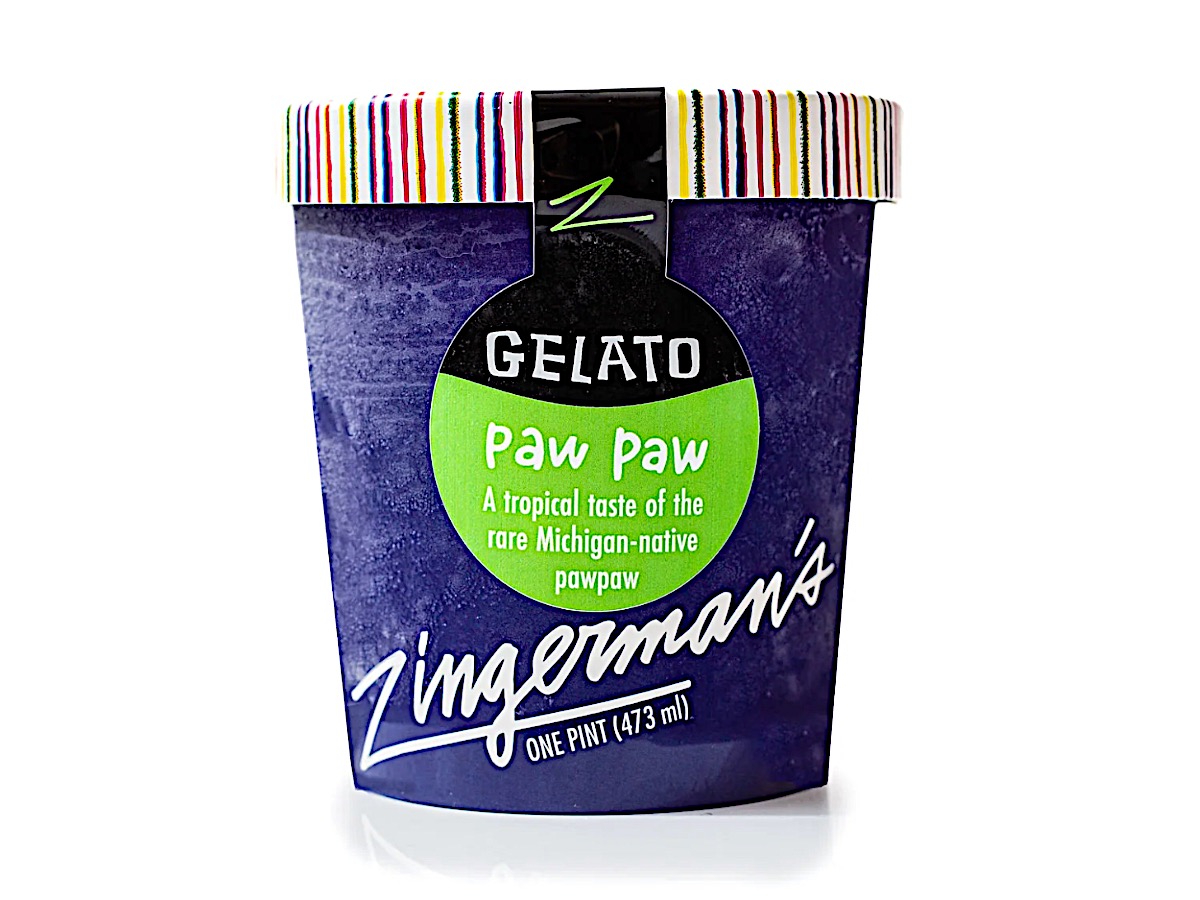
America’s secret fruit shows up on the Southside
|
| Check out all of the Creamery’s gelato flavors |
Want more from Ari?
Sign up for Ari’s Top 5 e-newsletter and look forward to his weekly curated email—a roundup of 5 Zing things Ari is excited about this week—stuff you might not have heard of!
Follow us on social media: Instagram, Facebook and Twitter, @zingermanscommunity.
Tag: ZCoB
5 Ways to Enjoy: Wild Fennel Pollen

Pollen So Good You’d Befriend a Bee to Get More
Fennel pollen is that special, though luckily there’s no need to pal around with pollinators to try it, you can buy it by the jar! It’s one of my favorites to reach for in my spice drawer, so I’m spreading the word about what makes it so exceptional.
Dubbed “culinary fairy dust” by our friends at Zingerman’s Mail Order, fennel pollen is exactly what it sounds like, pollen from the flowers of a fennel plant. Often grown for its bulb, fennel is somewhat unique in that you can consume the entire plant—the bulb, the stalk, the fronds, the seeds, and the pollen.
If you were growing fennel in your garden in hopes of procuring homegrown pollen, instead of harvesting the bulb, you’d let the plant keep growing until it flowers, pick the umbels (the flower clusters), dry them, and collect the pollen. Speaking from personal experience, that is indeed as labor-intensive as it sounds, which explains the relatively high price of this special spice. (Fennel pollen’s BFF in the Most Arduous Spices to Obtain Club might be saffron. The vivid reddish-orange stigma from the saffron crocus has to be harvested by hand—and there are only three stigmata in each flower!)
Given that fennel seeds (which are derived from cultivated fennel) cost [a quarter the price of fennel pollen], we wondered if the wild pollen could be worth the splurge. When we compared the two… we understood the hype: The delicate crunch of these golden granules and their remarkably complex flavor featuring hints of licorice and citrus and a honeyed, marshmallow-like sweetness overshadowed the fibrous texture and one-note licorice taste of the seeds. —Cook’s Illustrated
It is also perhaps part of the reason why, up until a couple of decades ago, wild fennel pollen was relatively unknown here in the States, unlike in Italy, where wild fennel is rampant. We have Dario Cecchini, an eight-generation Italian butcher in Tuscany, to thank for helping to popularize fennel pollen (head to Mail Order’s blog, The Feed, for the full story.), making it easier for more of us to enjoy it.
Fennel pollen can add that mysterious and sweet herbaceous flavor that transports you to a small town in Tuscany, just with a flick of your fingers. —Ji Hye Kim, Chef and Managing Partner of Miss Kim
Fennel is often confused with anise, and while they are entirely different plants, it is the closest flavor comparison for what fennel and fennel pollen taste like. Fennel pollen does have a slightly sweet, anise-like flavor (don’t be deterred, licorice haters, it’s milder than you might expect) and it’s very fragrant. Val Neff-Rasmussen, Product Buyer for Mail Order says, “It tastes like fennel seed, but lighter, more ethereal.”

5 of Our Favorite Ways to Use Fennel Pollen
- Make a Stand-out Main Dish
Fennel pollen plays well with different meats and fishes, but it’s an especially flavorful partner for pork. In fact, one of Zingerman’s Catering & Events many specialties is a Fennel Pollen Pork Shoulder rubbed with sea salt, fresh herbs, fennel pollen, and olive oil. Order theirs, or play around with your own blend.
Used a little of the [Wild Fennel Pollen] to season my whole roast chicken and it took the flavor and aromatics to a whole new level! This truly is a magic spice that makes anything you put it on so much more wonderful! Where has this been all my life?!? -Alicia C, Zingerman’s guest and pollen promoter
- Create a Flavored Salt
Make your own fennel pollen salt and then use it with abandon. If you’ve yet to delve into DIY flavored salts, start with 1 teaspoon per 1/4 cup of coarse, flaky salt, and then adjust to taste as you see fit. Sprinkle your new favorite salt over roasted veggies. Dip tempura vegetables in it. Use it to rim a glass (Bloody Marys?!). Dust it over sauteéd mushrooms or fried eggs.
- Try It with Tomatoes
Whether sprinkled over tomato soup or sliced tomatoes fresh off the vine, tomatoes and fennel pollen are a culinary match made in heaven. Food writer Max Falkowitz says fennel pollen “tastes like pure summer joy,” so you know it’ll play well with other seasonal produce, too.
- Pair Pollen with Fresh Cheeses
Like cream cheese or fresh goat cheese from Zingerman’s Creamery. For an easy appetizer, spread some fresh soft cheese on your vehicle of choice—a crostini, a cracker, a cucumber slice—sprinkle with fennel pollen, and enjoy
- Sprinkle It on Sweets
This is, admittedly, perhaps a bit more unexpected, but stay with me! Try sprinkling fennel pollen on vanilla ice cream or gelato. (Or on fennel ice cream! If you need a recipe, you can find one in my cookbook, Cooking with Scraps.) Or even yogurt along with a drizzle of honey. Try making fennel pollen sugar (start with the same suggested ratio for flavored salt, above, just swap in sugar). Fennel pollen pairs well with chocolate, too; sprinkle some on a batch of truffles or chocolate mousse. After all, Zingerman’s Deli and Zingerman’s Candy Manufactory often carry chocolate bars with fennel seed (See Exhibits A, B, and C), so fennel pollen is just another step in that flavorful direction.
Ready to see what the buzz is all about? Get a jar of Wild Tuscan Fennel Pollen at Zingerman’s Deli or have one shipped to your doorstep from Zingerman’s Mail Order.

Tag: ZCoB
Lisa started at Zingerman’s Roadhouse in 2004 as a server, worked her way up to Restaurant Manager in 2013, and now, as of August 18th, is Managing Partner! She has a passion for providing excellent service (she’s played an integral role in creating the service culture of the Roadhouse) and a focus on helping the managers and staff be the best they can be every day. Lisa answered a few questions to help us all get to know her a little better:
 What recent work are you most proud of at the Roadhouse?
It might sound cliché, and I’m certainly not the only one to feel this way, but the pandemic was the most challenging thing I’ve ever dealt with. We had so many ups and downs: having to furlough 80% of our staff, shifting to pick-up only and completely revamping our to-go food area, manipulating our floor plans, and then building back up our capacity and staffing. I worked side-by-side with our crew to help strategize, implement, and train staff on all of our changes. While it was extremely challenging at times, I enjoyed training and supporting our staff to help them provide top-notch service to each other and our guests. I’m proud that we made it through and are in a good place—and I’m hoping to help get us to an even better place!
What does good service mean to you?
Getting it right the first time, with any aspect of service. Consistency is one of the hardest things to achieve and I have spent much of my professional career teaching and training others on how to provide an accurate, friendly, and memorable experience every time someone steps foot inside the Roadhouse.
Why did you want to become a partner in the Zingerman’s Community of Businesses (ZCoB)?
I have had an interest in becoming a partner for the last 6 or 7 years after gaining experience as a manager; I wanted to move toward ownership and financial investment in the restaurant and the ZCoB. I love what I am afforded to do every day in the ZCoB. I’m grateful to work in an organization that values people and that strives to help improve staff not just while at work, but in their daily lives (outside of work) as well.
What’s been impactful about the Path to Partnership process?
Being reminded that even though you are leading your own business, you are also a representative of the entire organization. As a partner, I’m not just advocating for myself and the Roadhouse—all of the different ZCoB businesses are working together as a whole.
What is your first order of business as Roadhouse managing partner?
Continue what I’m doing right now and work on getting us fully staffed. The hospitality industry is known for having high turnover. Luckily, we have lower than most, but staffing is still a definite challenge right now.
What are you most passionate about in the Roadhouse’s Vision?
All of it, honestly. I am excited to carry all of our successes into the future. As well as to pick up meaningful improvements along the way. I’m honored to be able to lead in all different areas to get us to greatness. I am excited to do this with our team and make sure we continue to treat our employees well. I’m excited to make and keep the Roadhouse a great place to dine and work while achieving financial viability and beyond for many years to come. I am dedicated and passionate about getting us there.
Tell us about the No Drama or Calm is Contagious work at the Roadhouse.
The Calm is Contagious work at the Roadhouse started several years ago as somewhat of a joke. Restaurants can sometimes get a bad rap for being dramatic environments, so Ari asked if we should write a Bottom Line Change (BLC) on reducing drama in the restaurant. I laughed it off, not realizing that it would be an integral part of Roadhouse culture years later.
Ari wrote that BLC and we incorporated the concepts into our Welcome to the Roadhouse class. We include things we ask staff to do (and not to do). We also offer tools and resources for things like managing energy and staying grounded, all to help manage stress and conflict inside the restaurant. My experience with teaching the No Drama work and holding staff accountable is an important part of what makes our culture alluring, fun, and successful. I’m happy to teach it to any ZCoB business!
What are your current favorite items on the menu?
So many! Huevos Rancheros, the new Rice Bowl is phenomenal, the scallops, Smothered Grits, all of the heirloom tomato specials, and the shrimp we get from North Carolina are out of this world, so I add shrimp to a lot of things. I also tend to make a lot of stuff on the fly in the Roadshow!
What’s one of your favorite Roadhouse memories?
One of my favorite memories at the Roadhouse was moving from being a server to a front-of-house assistant manager. This was such a defining moment for me in gaining confidence and starting my leadership role at the Roadhouse.
Fun Facts
- Total Townie: I have lived in Ann Arbor all of my life and don’t plan on leaving! I love living in a diverse and educated town with so much to offer. I love having so many cuisines and tasty food options at my fingertips.
- Outdoor Lover: I love all that the many city and local parks have to offer being a runner and one who loves the outdoors!
- Former Vegetarian: I was actually a vegetarian when I started serving at the Roadhouse! That didn’t last long though, I felt really good about our sourcing. We work with smaller farms that utilize responsible and sustainable practices—and started eating meat again.
Tag: ZCoB
We’re matching donations throughout March up to $40,000!
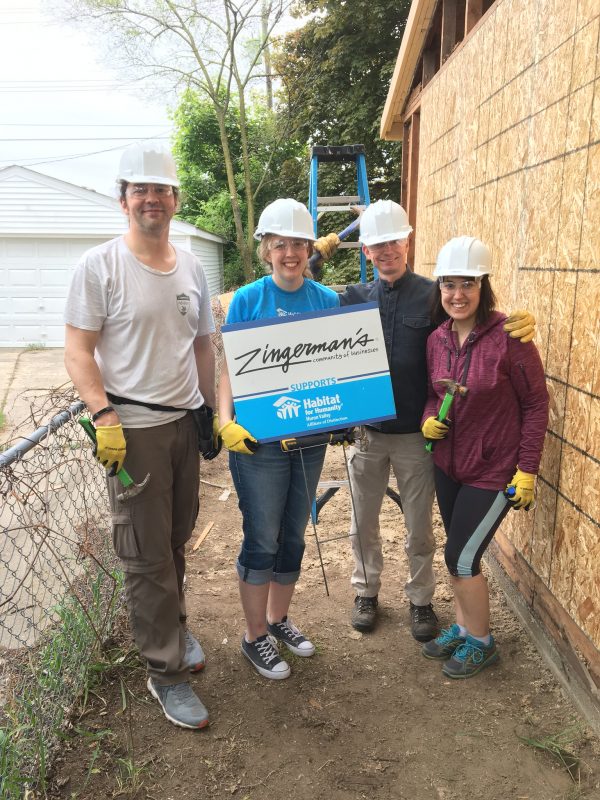 We’re celebrating our 40th anniversary on March 15th. If home is where the heart is, clearly our heart is in Ann Arbor. Four decades and eleven businesses later, we have remained and expanded in the area. To recognize the community we’ve called home since 1982, we’re sponsoring another Habitat for Humanity of Huron Valley home in Washtenaw County.
“At Zingerman’s, we’ve always been passionate about the work being done at Habitat. They are a tremendous organization giving people a fair chance at the security and joy of homeownership.” — Melaina Bukowski, Zingerman’s Community Giving Coordinator
Established in 1989, Habitat for Humanity of Huron Valley (HHHV) enriches our neighbors to build better neighborhoods through our volunteer, donation, partnership, and ReStore efforts. HHHV works to enrich Washtenaw County through a legacy of affordable homeownership for families and individuals of low income. In over 30 years, they’ve built or renovated more than 260 homes and provided more than 6,500 Home Improvement Projects. They’ve also engaged with more than 11,000 residents and community partners through community development activities and served roughly 1,000 through the Habitat Education Program.
“I can’t imagine a better way to celebrate Zingerman’s 40 years in Ann Arbor than to partner with Habitat for Humanity Huron Valley. As a member of the Habitat board, and as a volunteer on several build days, I’ve had the opportunity to meet Habitat homeowners and hear first-hand how Habitat has transformed lives and neighborhoods.” — Maggie Bayless, ZingTrain Founding Partner

Our Goal & How We’re Participating
Our goal is to raise $80,0000 for our local Habitat affiliate. The Zingerman’s Community of Businesses (ZCoB) will match cumulative donations in March, up to $40,000. Those funds will support the cost of rehabilitating two homes or building one new home. Zingerman’s staffers have assisted with Habitat builds before. They looking forward to working on the house(s) the community contributions will make possible.
“The ZCOB and HHHV have been close partners for over a decade. We are pleased to elevate our commitment towards an organization rooted in the basic premise that everyone deserves the right to affordable housing. As a member of the board of directors for Habitat, I am proud to be a part of two organizations whose generous spirits create actionable outcomes for deserving, hard-working humans trying to make a bigger difference not just in the local community but the world as well.” — Steven Mangigian, Zingerman’s Coffee Company Managing Partner
How You Can Participate
Donations can be made at h4h.org/zingermans. Donors can leave a public message with their contribution on the website, if they so choose. Funds will go directly to Habitat for Humanity of Huron Valley. We’re also accepting cash donations at most Zingerman’s locations.