
Tag: ZINGERMAN’S CANDY MANUFACTORY
Launched last summer, our Tastemaker Series spotlights influential culinary voices through highly personal product collections that reflect how they cook, eat, and gather. Every few months, a new individual collaborates with us and individually curates a special Zingerman’s Mail Order gift box. If, like me, you love knowing what foods fellow foodies are into, these collaborations will be right up your alley. Past tastemakers have included Jon Kung (Ortiz tuna), Dan Pashman (Zingerman’s Sea Salt Potato Chips), Matt Rodbard (Zingerman’s Pimento Cheese), and Abra Berens (Sour Cream Coffee Cake).
Each time we collaborate with a tastemaker, they get to hand-pick an armful of their favorite foods from our shelves—it needs to fit into a box so we can ship it to you after all. The lineup is always different, we all like different things after all, but they always reflect a shared passion for seriously flavorful food. Each Tastemaker Gift Box is around for a limited time (like our newest one with Anna Hezel!), so you’ll want to make sure to catch each one while you can.
Anna Hezel x Zingerman’s Tastemaker Box
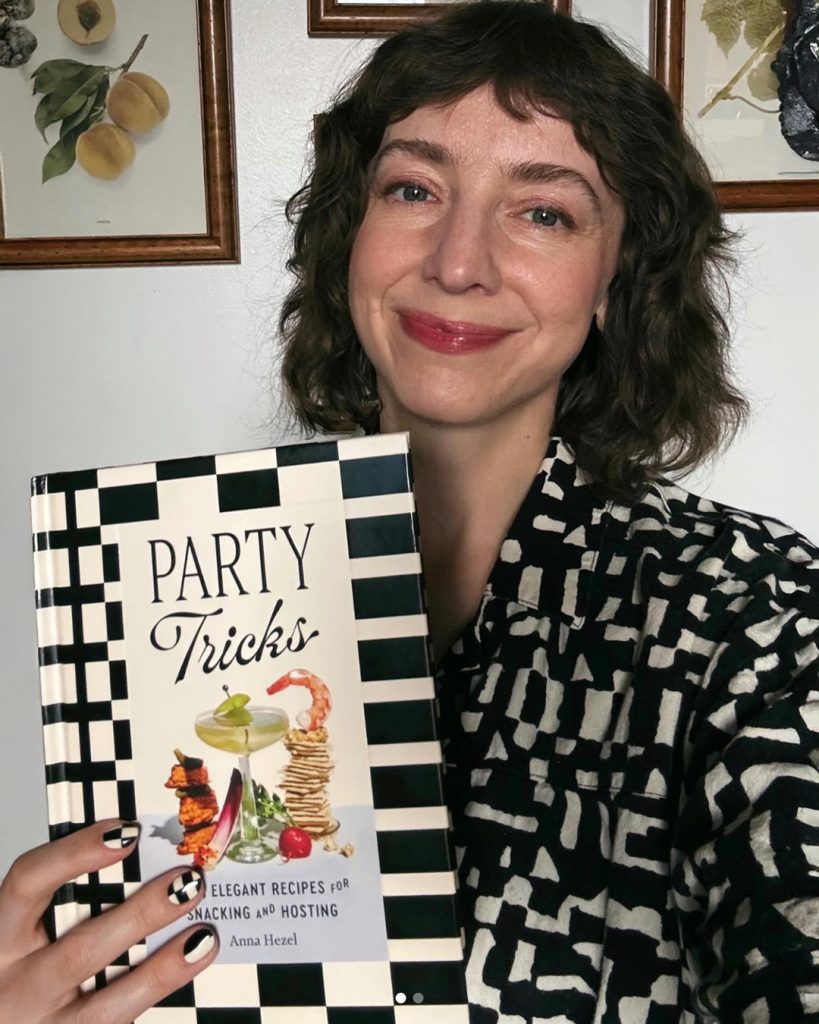
Anna Hezel is a Buffalo-born, Brooklyn-based food and culture writer, and a big fan of fancy snacks that come together in no time, but make any meal feel special. That’s actually the theme of her latest cookbook, Party Tricks, and of this special collaboration. As Anna explains:
“When I set out to write my latest cookbook, Party Tricks, I wanted to create a cookbook for the modern host—someone who has access to an ever-expanding array of international ingredients packed with flavor and character. I realized that stores like Zingerman’s (famous for its cheese, conserves, and cured meats) have changed the way we cook and host parties.
People who love to entertain can rely on this one-stop shop for all of the ingredients that do the heaviest lifting for a party. This selection of goodies is my ideal party in a box, where someone else has done all of the work of catching, cooking, and marinating the sardines, or curing and smoking the meat, or skinning the hazelnuts.”
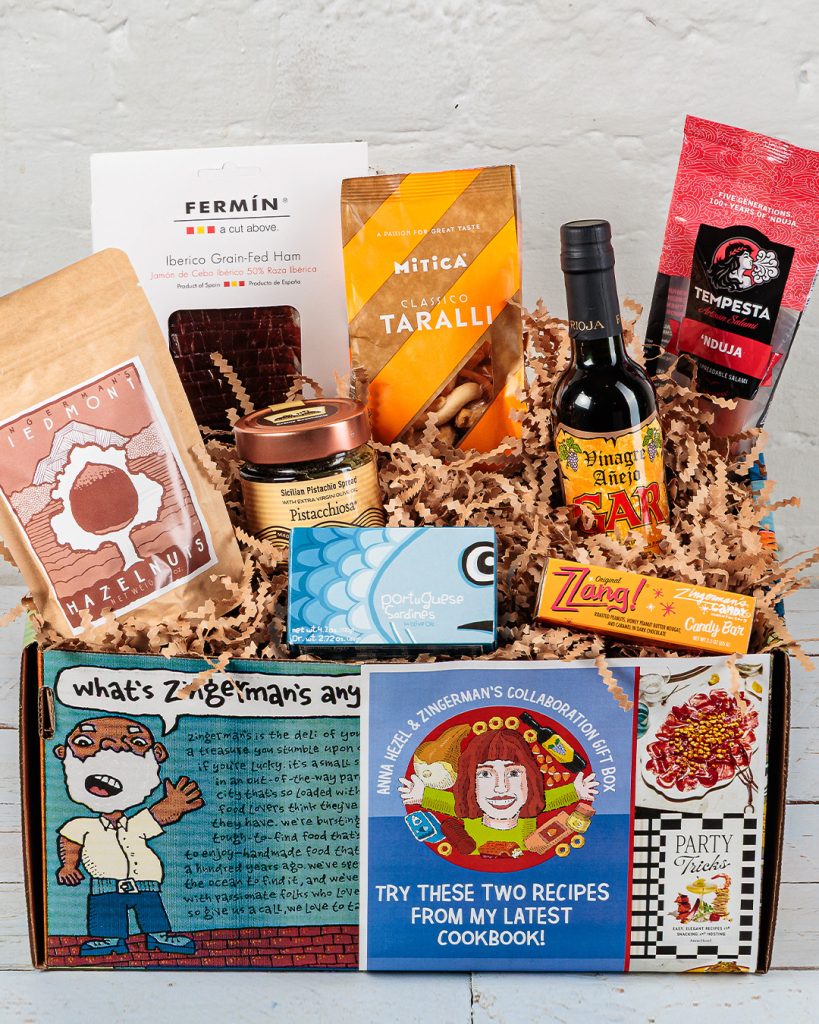
Not only does Anna’s box include a plethora of party-ready nibbles, but it also includes two of her recipes! Ready for a sneak peek? Here’s everything you’ll find inside, along with why Anna’s so smitten with them:
- Broadbent Prosciutto: “I love prosciutto, Serrano, and Iberico hams, and I think it’s so cool that Broadbent is doing their own take on this cured pork in Kentucky, incorporating their smoking technique.”
- Portuguese Sardines: “A classic tin of Portuguese sardines can become a rice bowl, a buttery pâté, or just a fortifying snack with a pile of crackers and some pickles.”
- Tempesta ‘Nduja: “This spicy, silky-textured sausage can do so many tricks in the kitchen. Melt it into a tomato sauce, use it to tinge a brothy soup red, or spread it on toast. In my book, I toast oyster crackers in melted ’Nduja for a peppery party snack.”
- Pistacchiosa Cream: “All summer long, I’m either spooning this into chia pudding or turning it into a magic shell ice cream topping by melting it with a spoonful of coconut oil.”
- Piedmontese Hazelnuts: “Toast these lightly in some butter to serve with the Broadbent Prosciutto (or your cured ham of choice). The next morning, your oatmeal will be happy to have any of the leftover butter-toasted hazelnuts.”
- Spanish Red Wine Vinegar: “Red wine vinegar may seem like the most basic pantry staple, but once you start to cook with a good one, like this one, you can’t believe you ever made vinaigrettes any other way.”
- Taralli Olive Oil Crackers: “Not too salty or rich, taralli can fit in at any party. Even when I’m just ordering pizza with friends, I love to set out a bowl of olives and a bowl of taralli, nestled among shards of Parmesan.”
- Zzang!® Candy Bar from Zingerman’s Candy Manufactory: “Every time I buy a candy bar at a gas station or pharmacy, this is what I’m actually craving.”
Ready for a snack-tastic experience? Ship yourself (or someone special) a shindig.
Peanut brittle and dark chocolate from the Candy Manufactory
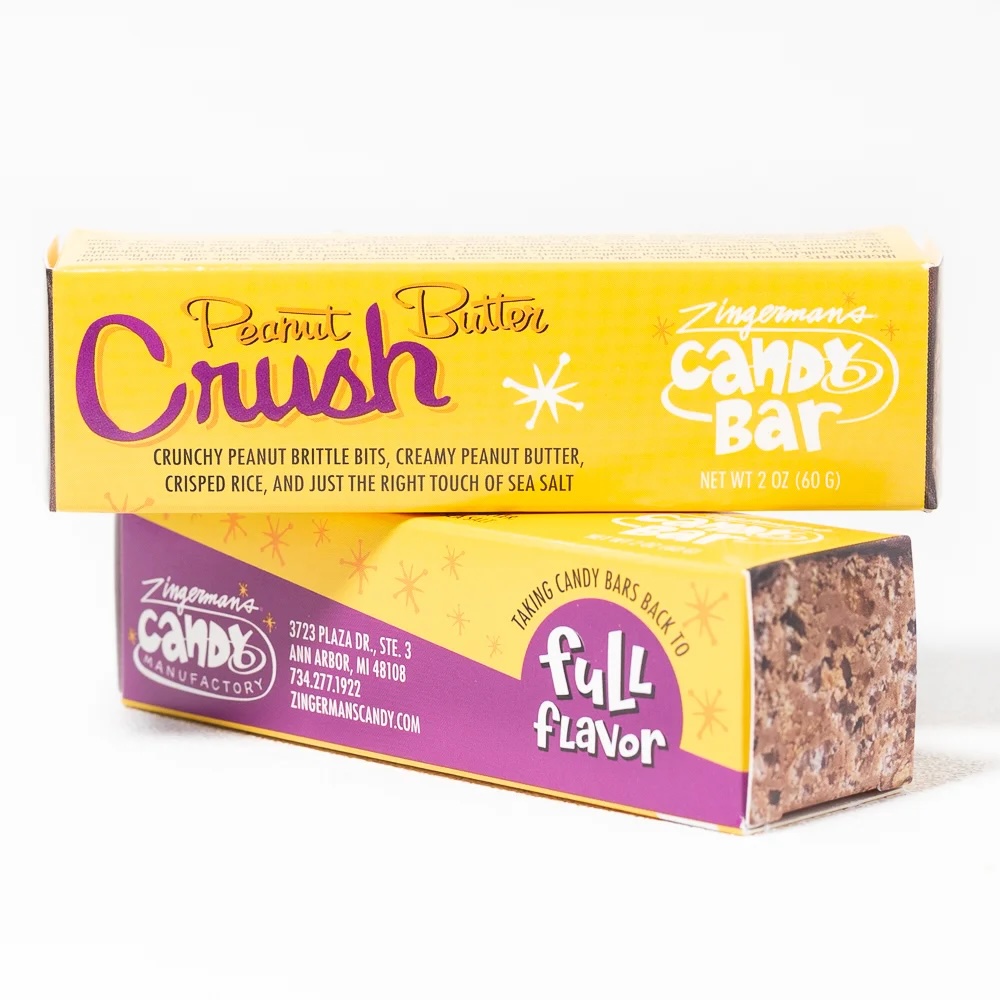
One of the most commonly asked questions I get over the years is, “What’s your favorite of the Candy Manufactory’s artisan candy bars? Here’s the answer: Peanut Butter Crush! A touch savory and subtly sweet, with dark chocolate and shaved slivers of artisan peanut brittle. What could be bad?
If you’ve never experienced a Peanut Butter Crush, I invite you to stop by and give one a try. The bar starts with shards of the Candy Manufactory’s marvelous peanut brittle blended with a touch of milk chocolate and a sprinkling of crisped and then crushed rice into a coarse-textured paste that reminds me a bit of eating good halvah, or maybe a peanut-based marzipan. Either way, it’s a truly terrific piece of modern confectionery art.
Essentially, it’s made by deconstructing chocolate-covered peanut brittle and turning it into a melt-in-the-mouth candy bar that lights up your tongue with just the teeniest touch of sea salt, offset against the dark Colombian chocolate with which it’s coated. Over the years, I’ve watched loads of people take their first bite, almost every time they emit something between a deep sigh and a solid “Wow!” They are really that good. I’m not typically a sweet eater, but even I get caught up in feeling compelled to eat another bite of this amazing artisan confectionery.
If you’re going somewhere this spring where a gift of chocolate might brighten someone’s day, consider these. You can also cut one into very small bites and savor along with a cup of the El Regalito coffee from Guatemala (this month’s Roaster’s Pick at Zingerman’s Coffee). While gifts for birthdays or anniversaries, of course, count, I guarantee an unexpected gift of artisan candy bars to someone you care about, accompanied by a card of appreciation on a random Tuesday, will evoke a response far greater. Unexpected generosity is pretty much guaranteed to hit the spot. Or maybe, in this case, I should say, crush it!
Crush a couple
A suggestion to serve two eggs “over Easter” with toast and bacon
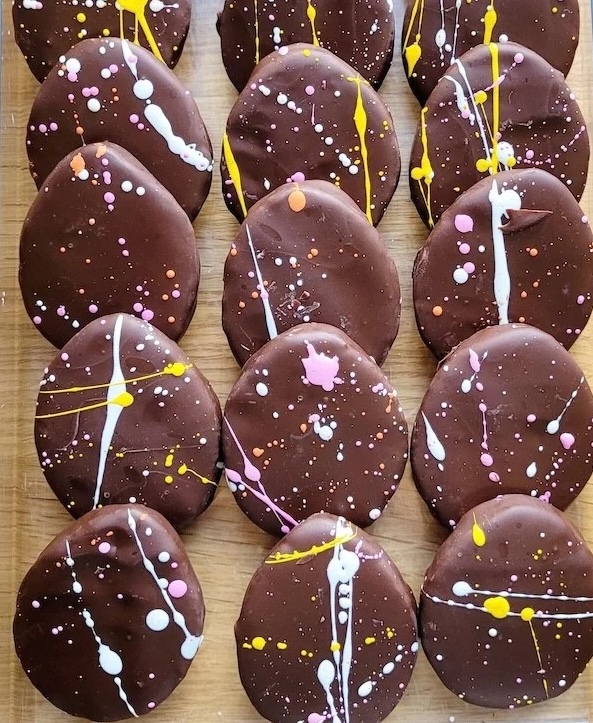
Pretty much any holiday-related candy evokes positive memories. Even industrial offerings, confectionery that isn’t really of particularly high quality, can still bring smiles to faces and warm hearts. We made these last year for the first time and people really loved them! Now they’re back and just as darned delicious! Seriously, if you’re having a gathering at home or work, buy a bunch, put them out as they are, and watch people’s faces. First curiosity—who doesn’t love chocolate? Then a tentative taste—they look good, but what’s in them? And third, for most of us, a big smile as the complex flavors of sweet and salt and bitter all begin to unfurl at the same time.
The good news here, though, is that these peanut butter-filled chocolate eggs that Jamie LeBeouf and the crew at the Candy Manufactory are crafting are both emotionally engaging Easter eggs and amazingly delicious regardless of anything to do with Easter. Whatever your motivation, they’re remarkably tasty!
About a centimeter thick, peanut butter-filled dark chocolate shells, the “eggs” really are exceptionally delicious. You get the slightly sweet dark flavors of the Guittard chocolate, set off against the slightly savory, terrificness of the St. Laurent Brothers peanut butter from Bay City inside. A small bit of sea salt takes the flavor up even further. The eggs are decorated for the holiday by Jamie and the craft crew at the Candy Manufactory!
In the spirit of the great, but all too often underappreciated European combination of bread and chocolate, I used the Dark Chocolate Peanut Butter Eggs to create a confectionery version of “eggs on toast with bacon”! It takes just a couple of minutes to make it, and it’s both pretty darned fun and flavorful.
To make it, start by toasting a small slice (a bit bigger than the chocolate egg) of Bakehouse Better than San Francisco Sourdough, Rustic Italian, or French Baguette. Spread with butter—I used that great Vermont Creamery Cultured Butter we have at the Bakeshop, Roadhouse, and Deli. Then, lay the chocolate egg on top. In the spirit of many people’s passion for chocolate and bacon, serve small bits of Nueske’s (or other artisan) bacon arranged on the side! And if peanut butter and jelly is a particular passion for you, put a small dab of artisan jam on the side as well! I tried all this out last year and it worked really well—a lot has changed in the world in the last 12 months, but here the culinary song combo remains the same. The combination comes together as well as ever and the idea of it is guaranteed to make your guests smile.
Alternatively, if you prefer to take a pass on the meat, you can use small slices of the amazing chocolate cigars we stock from the folks at Venchi in the north of Italy—they will look a lot like circles of just-cooked breakfast sausage.
The whole dish is truly delicious, lovely to look at, and pretty much a guaranteed conversation starter. If you serve one chocolate egg per person after dinner, you’ll have an amazing dessert! All that said, you can also just do what I did the other evening. Appreciate the artisan artistry of Jamie and the Candy Manufactory crew, eat the egg in small, tasty bites, and enjoy it just as the world-class work of confectionery art that it is.
And, hey, if you’re in a hurry, just pop one into a Bakehouse brioche bun, order a cup of coffee, and enjoy your “egg sandwich” for breakfast, lunch, or dinner!
An egg-cellent treat
An amazing, limited-edition offering from the South of France
It’s still three weeks until Easter, but given the limited nature of these exceptionally cool and super tasty confections from Provence in the South of France, you may want to hurry over to the Candy Store and get some of them before they’re all gone.
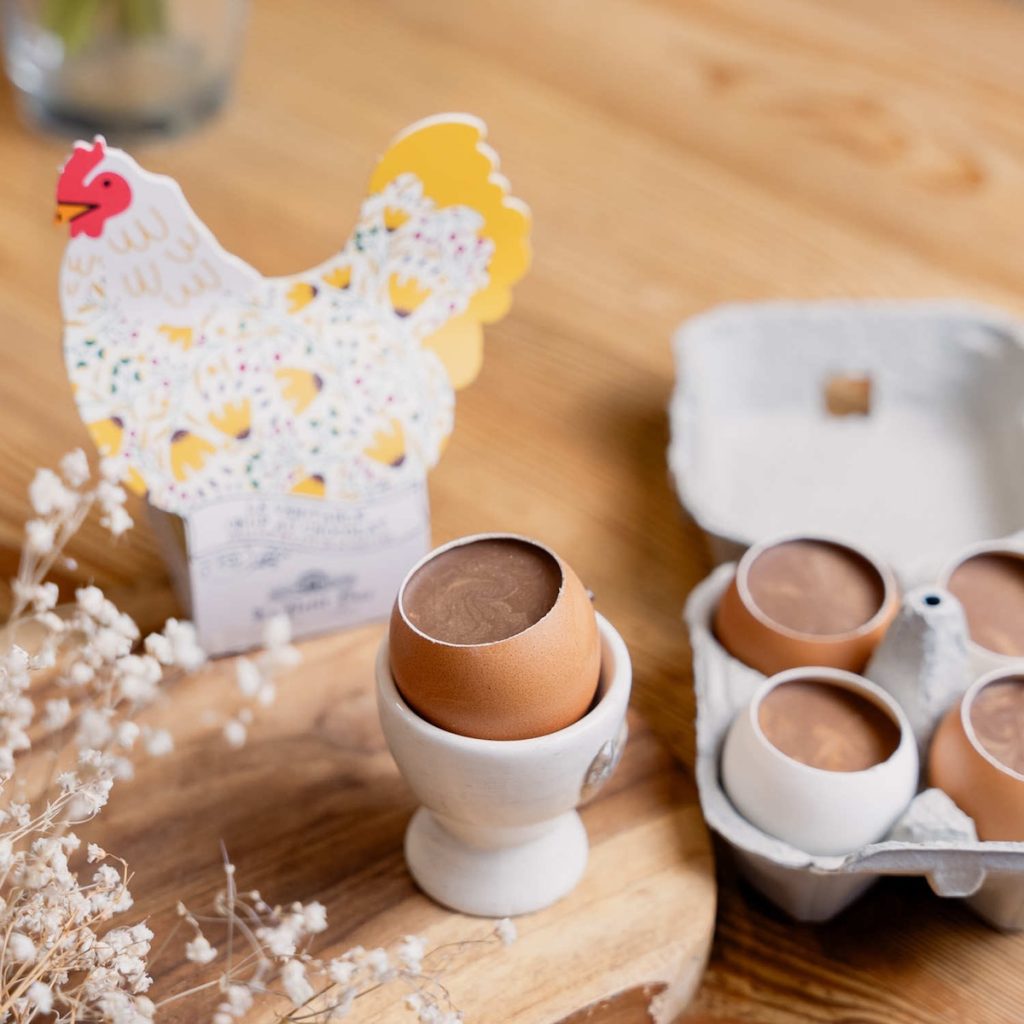
What are they? It sounds kind of wild, I know, but they are real eggshells, tops cut neatly off, cleaned and sanitized, then filled with chocolate hazelnut praline. They look gorgeous, and they taste totally great! Yes, you really crack the shell and peel it off before you eat! No, they are not laid by some kind of chocolate-eating French chicken. Inside is a blend that’s over half hazelnut praline and the other, 45% milk chocolate.
The eggs are all handcrafted by the crew at Le Petit Duc, one of France’s leading producers of artisan calisson (the classic dried fruit and almond confection of Provence). Le Petit Duc was founded in 1991 in the small Provencal town of Saint Remy. To set the scene, it’s the place where Vincent Van Gogh did many of his most famous paintings. In the winter of 1888, having recently arrived in the region, Van Gogh wrote to his brother, Théo, “The sun dazzles me and goes to my head, a sun, a light that I can only call yellow, sulphur yellow, lemon yellow, golden yellow. How lovely yellow is!”
Le Petit Duc’s small workshop is located near the house of Nostradamus, the famous historical French forecaster. They use a minimal amount of sugar—which I like—so the chocolate and nuts are the main flavor components. The Le Petit Duc team is all about going back to traditional ways, staying true to old techniques, and steering clear of post-modern shortcuts.
The instructions on the package suggest either sticking the egg in the fridge for around 15 minutes before peeling, or, alternatively, melting the chocolate (while still in its shell) in the microwave for a super quick 15 seconds before dipping toast pieces, as you might for a soft-boiled egg, for a version of the classic European bread and chocolate. Longtime Candy Store manager Allison Schraf says, “I can also see dipping shortbread, pretzel sticks, apple or strawberry slices, etc. Imagine serving this ‘breakfast for dessert but not really’ at Easter brunch!” They’re available as a single egg in chicken-on-a-nest packaging or as a 4-pack in an egg carton.
A gift of these eggs will both surprise and delight whoever you give them to! Or, if you’re having one of those days, maybe grab one for yourself and savor it with some of the Guatemala El Regalito Coffee that we have on as Roaster’s Pick this month.
An egg-citing treat
A contributor to happiness at so many levels!
In 1980, while I was still learning to cook the line, Mother Teresa’s team in India rescued a small orphaned boy from the streets of Calcutta. He was adopted in the U.S., where he grew up with the name Jaime Illien. Determined to pay back the world that had given him grace and a second chance at a good life, Ilien began years of work to start what is now recognized worldwide as International Day of Happiness. It has happened every year on March 20, ever since its formal inauguration in 2013. The idea is to actively encourage people to embrace happiness and spread positive feelings in small but meaningful ways, wherever we can. The work is to “encourage and advance the primacy of happiness, well-being, and democracy.”
It turns out that March 20th is also my good friend Shawn Askinosie’s birthday. I can think of no one better suited to have paired happiness and a birthday! I had the pleasure of seeing Shawn, without question one of the kindest, most generous human beings I’ve met, while I was in Austin for the conference on Perpetual Purpose Trusts. As I do everywhere I go, I tasted any number of chocolate bars I happened to see in local specialty shops. To my taste, none came close to the quality, complexity, balance, and finish that I find in every one of the bars I’ve bought from Askinosie.
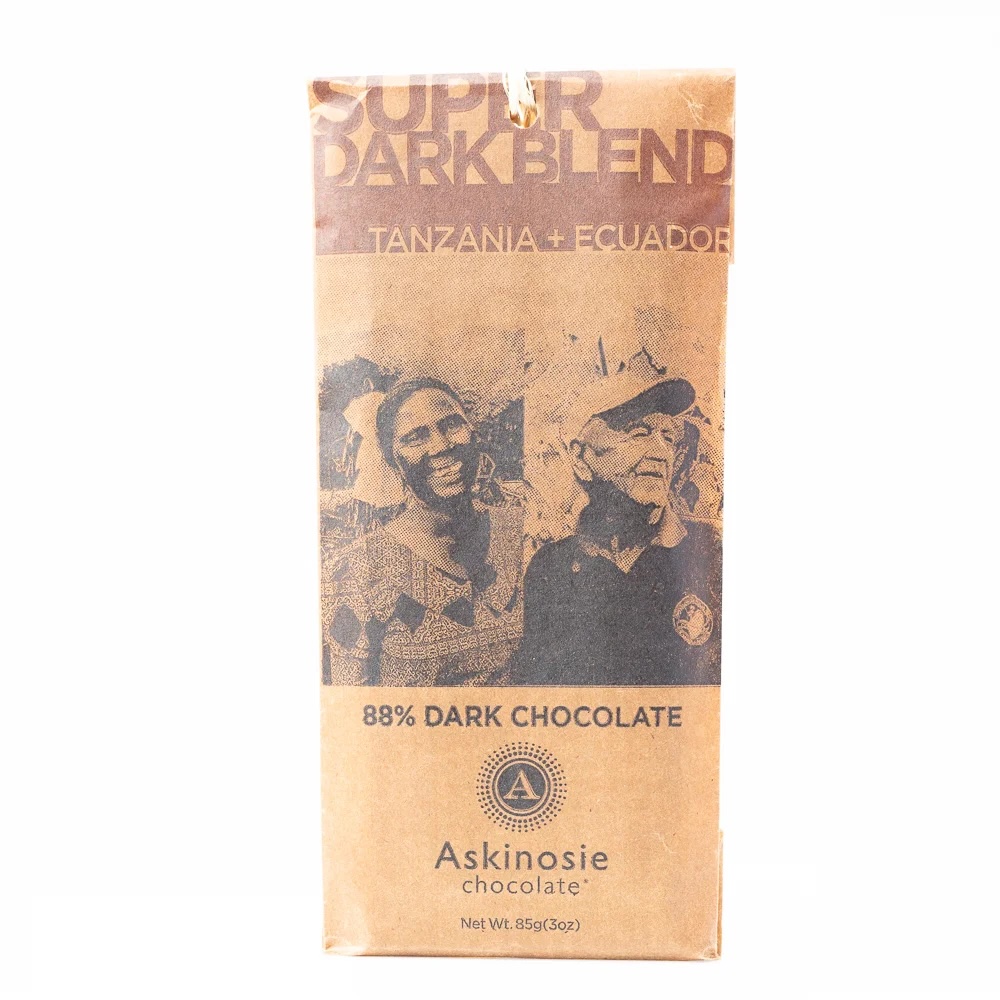
As he so often does, Shawn’s exceptional spirit of generosity has given us all a gift to mark the occasion. Not surprisingly, it’s chocolate. It’s actually the darkest chocolate bar he’s ever done: 88% cacao! That means that only 12% of every bite is not cacao; a bit of natural sugar and a tiny hint of organic vanilla bean.
This delicious bar is also a first for Shawn because it’s a dual-origin bar. Cacao from two of his longtime sources—the co-op farmers at Mababu, Tanzania, who provide the hard-to-find but delicious Trinatario cacao, and at San Jose Del Tambo, Ecuador, which grows the unique-to-the-region Arriba Nacional. Try each of the single-origin bars on their own—they’re terrific. I eat them both regularly.
To be clear: if you don’t like dark chocolate, definitely skip this one. The Super Dark Blend bar pushes chocolate to its limits. It’s darker than dark—delicious, edgy, and far from milky. Not for the faint of heart. Think of it as the heavy metal of the cacao world—but without the pounding bass. Surprisingly smooth and gentle, it still delivers some of the richest, most intense chocolate you’re likely to try. You could call it the heart of chocolate darkness. I love it. Bold, big, and full of terrific tannins, like a fine, full-bodied red wine. Notes of dark caramel and rich sorghum syrup linger on a long, clean, impressively gentle finish.
If you want to read more about Shawn’s superb work, check out his great book, Meaningful Work, co-written with his daughter, Lawren Askinosie—we have copies on hand at the Roadhouse. Or read about him in Part 4 of the Guide to Good Leading—he’s in Secret #45, “A Six-Pointed Hope Star”! If you like really dark chocolate, I hope—and believe—that you’ll love this bar!
Grab a bar at the Candy Store
Or at the Deli
The crew at Ocelot Chocolate is doing some truly wonderful work on the east coast of Scotland in the small city of Dundee. The three bars we began stocking last spring are delicious. And this new arrival took me by delightful surprise!
Like my friend Shawn Askinosie, founder of the amazing Askinosie Chocolate, all of Ocelot’s products are “bean-to-bar”—they work directly with farmers to facilitate the growing and fermenting of better-quality cacao, along with higher quality of life for the growers and their families. Farmers earn a living, you and I get chocolate we love, the land is cared for, and everyone comes out ahead. In the context of what I’ve written about apricots as the symbol for dignity and democracy, Ocelot’s work is a lovely “bowl of apricots” we can appreciate and admire! The folks at Ocelot work to advance the cause of women farmers, protect the native rainforest, and craft compelling, delicious, high-quality dark chocolate. And their packaging is all sustainable, non-toxic, and compostable—including the clear cellophane.
Unlike most of our other craft producers, Ocelot is bringing beans from the country of Congo, more specifically, from Virunga National Park. The majority of cacao from the region that gets to chocolate makers today is made for the mass market, but the Congolese cacao here is anything but. It’s exceptional at every level. Great flavor and also a great story. Part of the National Park’s mission is to provide safety for some of the world’s last Mountain Gorillas. It’s also to offer a safe space for farmers: the Park “seeks to build cacao supply chains in eastern Congo that protect farmers from the effects of armed conflict, helping them get their cacao to market without the fear of violence.”
The story of cacao in the Congo is, in a sense, a good example of turning the terrible into something far more positive. It was brought there in the latter years of the 19th century by the exceedingly cruel Belgian King Leopold. It is an example of what can go wrong when an unchecked autocrat takes control of a country. Leopold never even went to Congo, but throughout his life, he created extractive and abusive working conditions for Congolese people, all used to enhance his own wealth. The primary 19th-century colonial crop was rubber, and Congolese people were forced to work on the plantations solely for the benefit of Leopold’s bank account. When slavery was banned by Brussels in 1889 and 1890, Leopold worked around the restriction by requiring Native peoples to sell their harvests only to the state, i.e., his own business.
In the process, Leopold amassed a huge personal fortune. Atrocities committed in his commercial interest were beyond my ability to imagine. Roughly half the Native population was killed during Leopold’s rule. Since Leopold was given the land personally, it was not controlled by the state at the time. Work practices and treatment of the Indigenous people were terrible. Over time, the Belgian state managed to buy back the land from its own corrupt and greedy king in order to restrict the worst practices. Finally, in 1908, he was forced to sell the land back to the Belgian state.
When the Congo gained independence back in 1960, things began to go in more positive directions, and the quality of the cacao and the coffee both have continually gotten better. Today, the Virunga National Park’s farmers are an uplifting regenerative success story.
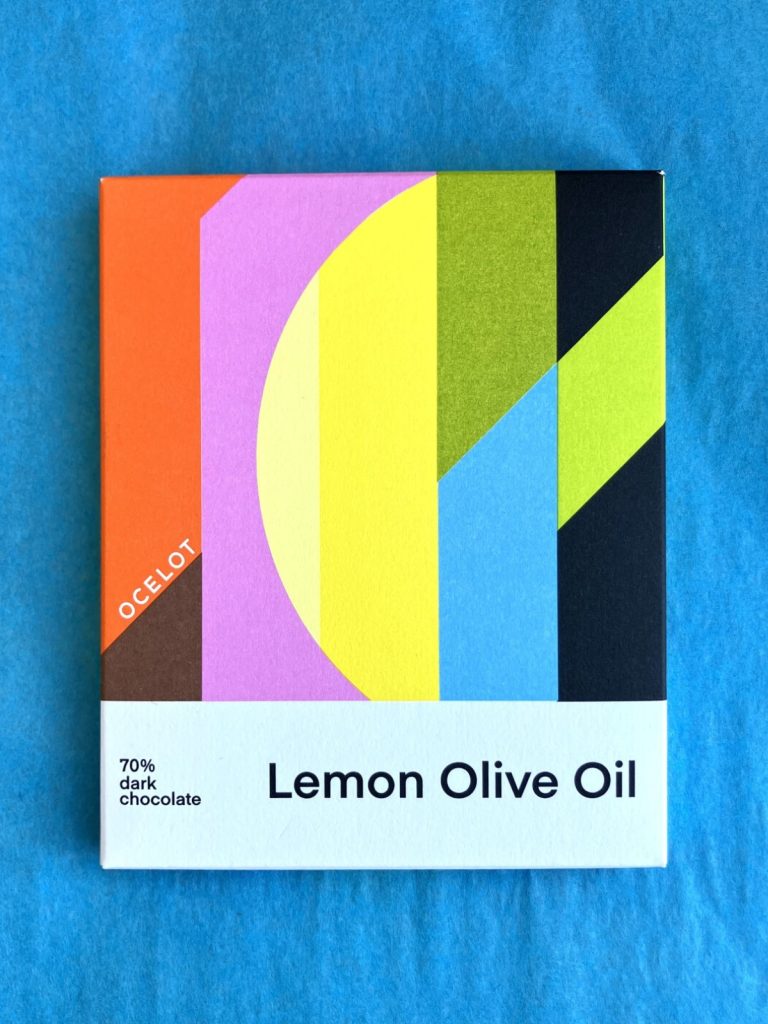
The Lemon Oil Chocolate, as I wrote about, is surprisingly delicious! Creamy from the olive oil in a way that sort of resembles dark milk chocolate, but instead of dairy, the Ocelot Lemon Oil bar has the beauty of really great dark chocolate, with aroma and flavor of the lemon olive oil to back into the mix. Part of what makes it special is the quality of the lemon olive oil. It comes from the De Carlo family in Puglia. The family has been working with olive trees on the land for over five centuries. Their oil comes from especially old trees, which means lower yield but more complex flavors! In this case, the combo is wonderful!
Swing by the Candy Store soon and score a taste of this terrific new arrival!
Score your square
P.S. We currently have 7 other flavors from Ocelot as well: Cinnamon Swirl, Sea Salt, Buckwheat, Black Cherry, Blood Orange, Femme/Milk Chocolate, and Olive Oil.